Bootstrap
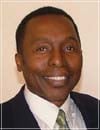
Jesse Gistand

Friday Night Bible Study - Acts 6:8-15

Acts 6:8-15
Jesse Gistand May, 16 2014 Audio
0 Comments
Acts

Sermon Transcript

Auto-generated transcript • May contain errors

100%
So if you will, if you would
look with me in Acts chapter 6 again, I'm going to read verses
8 through verse 15, and then we'll commence with the second
part of our second point in our outline under Stephan, a Christ-like
deacon, verse 8. And Stephan, full of faith and
power, did great wonders and miracles among the people. Then
there arose a certain Then there arose certain of the synagogue,
which is called the synagogue of the Libertines and Cyrenians
and Alexandrians, and of them of Cilicia and of Asia, disputing
with Stephan. And they were not able to resist
the wisdom and the spirit by which he spake. Then they suborned
men, which said, we have heard him speak blasphemous words against
Moses and against God. And they stirred up the people
and the elders and the scribes came upon him and caught him
and brought him to the council. They set up false witnesses,
which said, This man seeth not to speak blasphemous words against
this holy place and the law. For we have heard him say that
Jesus of Nazareth shall destroy this place, and shall change
the customs which Moses delivered us. And all that sat in the council,
looking steadfastly on him, that is Stephan, saw his face as it
had been the face of an angel. Now last week, we started off
dealing with the uniqueness of Stephan's role as a deacon, and
that he bore a certain messianic gifts. for which we have given
the title of our study, Stephan, a Christ-like deacon. And that really truly is to augment
and to magnify the office of deacon and to affirm what I have
stated for a long time that the office of deacon, the diaconate,
is really one of the models of Christ's humility and calling.
I told you last week that Christ is the ultimate deacon. Is he
not? He's the ultimate servant. He's
the ultimate minister. He's the ultimate deacon. And
a deacon's role was to care for the matters of the church, the
weak elements in the church, the controversies that had arisen,
according to chapter 6, between the Hellenistic Jews and the
Aramaic Jews, particularly the widows. And the apostles were
guided by God to establish the office of diaconate. Now we've
said before, the term diaconate does not manifest itself as an
office in Acts chapter six down the line, it becomes an official
title. But deacon, Stephen is one of seven deacons. And remember
what we learned, the seven deacons were Hellenistic Jews, they were
Greek speaking Jews. And it was God's purpose to raise
up these seven deacons to specifically address the issue that was at
hand, which issue was resolved as we learned last week. Look
over in verse seven. In fact, we'll start at verse
five. And the same pleased a whole multitude, that is, for the apostles
to draw the conclusion that they would continue in prayer and
in the ministry of the word while they would set aside a specific
office called the diaconate to address the physical and material
and the practical issues of the church. And everyone was pleased
with it, the whole multitude. And then we have the seven names,
Stephen being the chief of the name of whom we will now be dealing
with. But over in verse six, whom they
set forth before the apostles and when they had prayed, they
laid hands on them. And so we have in verse six, a model for
ordination, the laying on hands of the elders upon these seven
men. And we saw last week the result
of a God-guided, the result of a spirit-guided counsel always
leads to greater harmony, greater peace, and then more fruitfulness
in the church. We saw that. We saw that the
conflict and contention that was emerging out of verse 1 between
the Grecians and the Hebrews was really the potential of a
dissension and a division in the church of which if the apostles
had not sought the Lord's wisdom on how to deal with this, the
advancements that the church was making in Jerusalem could
have been halted and there could have been great scandal. God
gave them grace to overcome this trial and difficulty. And we
read in verse seven, the fruit of it and the word of God increased. Do you see that? And this was
a consequence of God's grace upon the leadership to recognize
that there was a necessary structure to implement in order that the
church does not now fall out in scandal because it was growing
in numbers. And the method by which they
were dealing with the practical needs were defective in terms
of making sure that people were not discriminated against because
we're dealing with discrimination here. The apostles said, listen,
we're not gonna get dragged into this as a part of our calling. We're gonna pray to the Lord
God and ask him to give us grace to resolve this. And the Lord
told the apostles to choose from among the people, seven men with
reputation, men who could be trusted, men who were qualified
to be able to deal with the menial task. And we saw that the fundamental
qualifications for the role of deacon were remarkably spiritual,
weren't they? that a deacon was not simply
to be someone who was chosen on a political level or a consequence
of nepotism, favoritism on the part of people just because he
had means and ways, financial accruement or some type of political
or social popularity. He still had to meet the essential
spiritual requirements to lead because even the practical things
in the church require fundamentally spiritual component as we can
get into trouble when we have leadership who is carnal and
driven by earthly passions that are more self-serving than then
that is necessary for the good of the church even deacons need
to be wise and so the net effect of that wise choice we see in
verse 7 is that the Word of the Lord increased and And what we
mean by the word of the Lord increase is that it spread the
context in which, and I made this statement last week, for
the spreading of the gospel in a manner in which it's supposed
to spread evangelically and sound abroad in different cultures
and regions, the context in which the spreading of the gospel is
going to take place normatively, normatively is in a context of
peace. Normatively, there are elements
in which wherein God will allow the stirring of certain kinds
of tribulations that will advance the gospel in another direction.
And there's a reason for that. We'll see that when we get into
chapter eight. But fundamentally, brothers and sisters, the context
in which the gospel grows and matures and prospers is in a
context of peace. And so we learn, I think James
chapter three, verse 18, the fruit of righteousness is sown
in peace by those that make peace. In other words, we are not to
be, as the people of God, given to contentions and debates and
tomos. We're going to have enough of
that simply because of the message we preach. That's coming our
way because of the message we preach, but we don't salivate
after those battles. We're men of peace, women of
peace. but we have to deal with that.
And so we'll see how that actually confront Stephen here in a moment
when we look at his unique calling to be the martyr, first martyr
of the New Testament church. So the word of the Lord increased
and the number of the disciples, what? Multiplied in Jerusalem,
what? Greatly. Do not miss that. absolutely marvelous because
remember what we're dealing with we're dealing with two authorities
coexisting in the same place right the dis the unauthorized
authority of the old Jewish system with this high priest in this
in his Sadducees as the political elite, and the Pharisees as the
religious lawyers of this element in old Judaism, and they are
vying for authority over the people. In fact, they are imposing
their authority on the apostles, and it's not working. And look
at our Lord and Savior Jesus Christ. He's taking the apostles,
placing them right in the context of old Jerusalem, and the gospel
is spreading like leaven in old Jerusalem. And just as the Sadducees
and the high priests in Acts chapter 5 are trying to stop
Peter and stop John from preaching, look at what happens in verse
7. Not only is the word spreading,
not only are the disciples multiplying, they're multiplying in Jerusalem.
And they're multiplying in Jerusalem what? Greatly. And here's the
last slide that's remarkable. And a great number of the what?
Were obedient to the faith. Now this too, again, demonstrates
the authority of Christ as Lord, as he told the high priest, hereafter
shall you see the Son of Man coming in great power and glory. He set his spiritual citadel
down in the midst of old Jerusalem and began to demonstrate through
his apostles his power to convert the very rebels that were opposing
him. A great number of the priests
came to the faith. when just one chapter back, it
was the priesthood who was saying to Peter and John, don't speak
in his name. And now they're being converted.
That itself is remarkable. We won't go into detail on that,
but it goes to show you what Stephen is gonna demonstrate
for us as we go through some of the attributes that were given
to Stephen by virtue of the spirit of God. It goes to show you how
important it is for us to continue to share the word of God, declare
the word of God and teach it. even where there's opposition,
even where there's opposition. Because while a leadership politic
may write up laws and statements, even on your job about, don't
talk about religion and don't talk about God, the common people
normally do not adhere to those kinds of rules. Common people
in general want to hear things about God. They simply want to
hear things about God that's right and reasonable and rational.
They want to hear somebody talk about God that knows what they're
talking about. This is really true. This is really true. The
vacuum in the soul of men demands that they hear proper, uh, uh,
exhortation, proper, uh, understanding, proper articulation of biblical
truth. Demands that because they hear
so much stuff that's wrong and so much stuff That's bad. And
so when you are a believer given to the knowledge of God and you
have an understanding of Scripture They want to hear you This has
always been the case. It's always been the case that
while you have opposition as the book of Acts demonstrates
but there were those who also said we will hear you again and
Then there were the elect Who believed? It's worth it, isn't
it? It's worth it to share the God,
share the gospel, if in sharing the gospel in those very tenuous
context, it results in the conversion of a sinner. It's worth it. And so I would remind you once
again of the precarious situation of believers around the world.
Pray for them as yourselves also being in the body. I heard once
again today of a very notable case where there was a Sudanese
woman who was formerly a Muslim, who is now being accosted, put
in jail, with her own baby, 20 months old, for her abandoning
Islam and embracing the gospel, Christianity. What it tells you
is that there's still a very strong and virulent, hostile
opposition to the truth. for which they need our prayers.
Because our tenure here in America is not like that. Can you imagine
a woman marrying an American soldier, converting from Islam
to Christianity, and then their government saying to her, you
are going to die for your claims unless you recant and abandon
Christianity for Islam. And she said, no, I won't. Amazing. No, I won't. Amazing. At the entry level consideration
of faith, That there is remarkable. We can talk about faith in terms
of the body of proposition that goes into what faith is. But
for her to say, no, I won't. And now suffer the consequences
is remarkable. It's absolutely remarkable. And
it's worthy of note because we're getting ready to actually look
at the first martyr of the New Testament. Now, again, we opened
up with verses 8 through 15, and will you again mark with
me verse 8, as I will share with you briefly what we talked about
under the first point of the gifts of the Spirit of God in
the life of Stephen, verse 8. And Stephen, rather, full of
what? Full of faith and power, did
great wonders and miracles among the people. Contextually, it
means that he was constantly doing miracles. He was constantly
doing wonders. And he was constantly manifesting
the gift of faith in his life. And under the first point in
your outline, I call this the evangelical power of the Spirit.
Obviously, the Spirit of God is the... He is the cause for
which faith is implanted in our life, is it not? But then faith
also manifests itself by works, does it not? And here in this
context, Stephen is being used by God mightily to demonstrate
works of faith and power and miracles by which many women
are drawn to the Savior. He is experiencing even those
apostolic gifts that uniquely were attributed to the apostles.
But here, Stephen is doing remarkable miracles. And again, I would
remind you that this was a constant thing. This was not a one-time
thing. He continually did great wonders and miracles among the
people. Can you imagine that? I told
you last week, when you want a deacon coming to your house
with that kind of giftedness and qualification, your mother's
sick, your father's sick, your brother's ill, and he demonstrates
such a fullness and capacity of the Spirit of God, that God
would be gracious enough to use Stephen the deacon, Stephen the
deacon, to heal your family members. And why does God give the capacity
for men to be able to exercise these gifts as they did in the
early church, to draw attention to the exalted Christ. All this
was designed to glorify God's Son, as we learned in chapter
3. And God, by this miracle, was
glorifying His Son. So under verse 8, under the first
point, I have the evangelical power of the Spirit, which required
a knowledge of God. We talked about that. Faith always
has as its premise a knowledge of God. Is that true? Always. And then we have the gifts of
sign wonders. It was in the imperfect verb
form. That's what I said. Kept doing these sign wonder miracles.
And then we noted in the book of Acts, the use of our word
plural, which is a term that Paul used frequently about the
filling of the Spirit of God in the life of the believer,
actually attributing to God the capacity for them to do what
they did. The filling of it, the term is
used back in chapter 4 where Peter is praying because they
have been persecuted for the gospel and Peter was filled with
the Spirit and they were filled with the Spirit and there was
a great earthquake and they went forth preaching the Word of God
boldly. One of the evidences of being
full of the Spirit of God One of the chief evidences is your
capacity not only to comprehend biblical truth, but to share
it with great confidence and great clarity in the midst of
opposition. As I've shared with you before,
it's easy to learn doctrine, even soul-saving doctrine, but
it takes grace to share that doctrine in the context of possibly
losing your job or losing your life. being affected by others
who are hostile towards you do we not need grace to tell men
and women about Christ when it costs us and We talked about
the fullness of that term plurale Plurot plurot will a plural actually
in the life of Stephen how that he was full of it The second
thing that I want to call your attention to now is in verses
9 and 10. I thought this was interesting.
And here we have now the conflict that emerges when you become
a person of the gospel. Verse 9 and 10 says, then there
arose certain of the synagogue, which is called the synagogue
of the Libertines, and then the Cyrenians, and then the Alexandrians,
and of them of Sicilia and of Asia. Now, what has Luke given
for us? He has given for us five categories
of Jews, right? He's given to us the Libertines
and he's given to us the folks in Alexandria. Then he's also given
us an interesting group. I think you guys will remember
the name, Simon Cyrene. And so the Libertines were a
group of people who ostensibly were liberated or freed from
Roman bondage. They were slaves in Rome. They
were Roman slaves, and they somehow obtained their freedom. They
were Jews, and they established a synagogue called the Libertines. One perspective on it a ladder
is perspective on the libertines was that also they held to a
much more sort of libertarian Theological construct, but it's
hard to hard to affirm that it probably literally means because
they're all Jews Probably literally means that they were freed from
slavery because the Jews were in captured they were they were
slaves many times throughout their history and even up to
the point of being slaves of Rome, because Rome dominated
Israel, as you know, in the second century BC up to the present
time in our context. And so we have what are called
the Libertines, the Cyrenians. Now the Cyrenians are folks The
Alexandrians are folks who are either from Egypt. Why would
we say that? Because the great Alexandrian
libraries were in Egypt. And you guys remember Alexander
the Great who started the whole Hellenistic culture back in about
330 BC. Remember that? He Hellenized
the whole Middle Eastern world. by and large and introduced the
whole Greek culture to Judaism. And this is where we have our
Old Testament scriptures in the Septuagint version, and many
people had become Grecian. And really what's interesting
is that Acts chapter six is for a moment, a brief moment focusing
in on the Grecian Jews. The whole text is about the Grecian
Jews. and is really dealing with sort
of inherent problem that exists among us, and that is the exaltation
of our ethnic groups. We saw that earlier, the idea
that somehow my ethnic group is better than someone else's
ethnic group. And here we are also having a
sort of conflict with that. Now, because you've got the Libertines,
these were Jews who were freed by the Romans, you have the Alexandrians,
these were Egyptians, And then you have the Cyrenians. And the
Cyrenians were of the state of Libya, which is also the African
region, as you guys would also mark. And so these are all Jews
from different areas. And then finally, we have this
next category of Jews, if we recall, the Sicilians. And the
Sicilians would be whom? The Italians. That's my Italian
brethren. Sicilian Jews. These are Italian
Jews. And it is just remarkable because
what the Spirit of God is, I think, guiding us into is our pecant
to categorize our own little groups. What difference does
it make whether you are a Sicilian Jew, an Alexandrian Jew, a Cyrenian
Jew, or a Libertine Jew? You're a Jew. But see, the problem
is, Stephen, or Stephan, which is probably the more appropriate
term. And then we have the Jews of
Asia, Asia Minor and Asia, that's the area in which Paul is going
to be doing a lot of work. And in fact, our studies in the
book of Revelation are centered in that part of the world, Turkey
and beyond. These are the areas that we're
dealing with. So we have the Asian Jews, and they're all five
of these groups, are in a philosophical and theological battle with a
Greek Jew named Stephan. That's the external sort of historical
context in which I want us now to begin to contemplate Stephan's
call to preach the gospel to all nations and what the result
is. You can probably read into the
text and think, with this category of Jewish sects, all five of
these different groups, to which the text tells us that Stephen
was preaching in their synagogues. Listen, then arose certain of
the synagogues which are called these groups and of Asia doing
what? Disputing with Stephen. So obviously
Stephen is making his way around as he's doing ministry. And these
groups are becoming aware of his proclamation of the centrality
of Jesus Christ. And they are now challenging
him, debating with them. That's what the word dispute
means to debate their reasoning. They're arguing, they're debating,
reasoning, arguing, and debating. This is why I bring you to the
second point. And that is the apologetic power
of the spirit of God. You guys see that in your outline?
The apologetic power of the Spirit of God. Distinctly different
than the evangelical power of the Spirit. The evangelical power
of the Spirit is the grace for you and I to set forth the propositions
of the gospel in a simple format of declaring Christ Lord is much
more declarative. I believe Jesus Christ is Lord.
The Bible tells us that God has made Him both Lord and Christ.
Believe on the Lord Jesus Christ and you shall be saved. Simple
propositions that are more evangelical in nature But once you get into
defending the gospel, you are now moving more more towards
an apologetic disposition. Apologetics now demands that
you have strong, strong reasoning skills and the capacity to actually
defend your evangelical proposition. That requires some understanding,
it requires some wisdom, it also requires a certain attitude of
standing when opposition comes. I think we're all, anyone can
be sort of capable and bold to share the gospel in a context
where the atmosphere is non-threatening. I think you can share the gospel
on an evangelical level when people will hear you or not hear
you and go on about their business, you're not paying a price. But
now here comes the challenge. When you say Jesus Christ is
Lord, Now a person says, well, how do you know that? Why do
you hold that position? Why are you holding that exclusive
view? You have to now defend that proposition. Right? That becomes a whole nother
engagement of which God calls us to do. Does he not? Does he
not call us to not only proclaim the gospel in an evangelical
fashion that has its own tenants? We'll talk more about that on
Sunday, but to also defend the gospel because God expects men
to oppose the exclusive claims of Christ. He expects humanity
to oppose this one true that there's one true and living God
that there's one way of Salvation and apart from that one way of
Salvation men will perish forever That that's those statements
and claims actually are Fighting terms in a world that's pluralistic
in a world that's hostile to God in a world that's hostile
to his authority Then when a person comes to you and begin to ask
the question, how can you hold that position? Now you have to
do what the word apologia actually indicates. And that's what defended.
You have to give an answer. You have to be able to defend
the gospel as first Peter, chapter three, verse 15, as you know,
that we have to be ready to give an answer to every man of the
hope of the calling, which is within us. Is that what it says?
But before it says that, you know what it says? We are to
sanctify the Lord God in our heart. what that means that means
I have to be knowledgeable of God in order to be able to defend
God so I have to have a commitment in my soul to know God in order
to declare God especially to defend his claims that true okay
so an apologetic Disposition is what Stephen here is demonstrating
mark what the text says it says in the latter part They were
disputing with him verse 9 and then verse 10 says and they were
not able to resist the wisdom and the spirit by which he what I Can imagine what Stephen was
saying to them can you In fact, the Bible tells us that we should
be able to do that to Titus chapter 2 verse 1 2 7 and 8 Let's look
at that briefly We'll come back here in a moment, Titus chapter
2. Now, again, Stephen is a remarkable, or Stephen is a remarkable deacon,
because he has now been raised to the level, he's been elevated
to the level of a prophet, of a teacher, of a preacher, and
now he is an apologist for the true claims of the gospel to
the Jewish people. So this was really a normative
process for the apostles, their process of preaching the gospel
to the Jew first. And then to the Gentile, set
them up for the necessity of being able to defend the claims
of the gospel. But we are told in Titus chapter two, verse one,
these words, thou therefore my son, I'm sorry, I'm in Timothy.
In Titus chapter two, verse one, but speak thou the things which
become what? Sound doctrine. And then look
again at verse two, that the aged men be sober, grave, temperate,
sound in the faith, in charity, and in patience. And then look
over again in verse 7 and 8. Listen to what it says. Now,
in all things showing thyself a pattern of good works, in doctrine,
uncorruptness. Do you see that? Grave and sincere
verse a sell speech that cannot be condemned that he that is
on the what? Contrary part so you have opposition
on the contrary part may be ashamed having no evil thing to say to
you and so the Apostle Paul had saw to it that That the gospel
was securely established by leadership in Crete This is where Paul is
writing as he speaks to Timothy our Titus rather to set forth
these standards, set forth these qualifications among the men.
And so they were called upon to teach sound doctrine. In fact, they were to refute
the game seers. They were to oppose them and
to demonstrate those who would oppose them that they might be
ashamed having no evil thing to say. The intimation is clear
that when once you start declaring the gospel, you're going to have
people making allegations and charges against the claims of
the gospel that are not true. Hence, go back to our text and
you'll see what I mean by that. They were not able to resist
the wisdom and spirit by which he spake. Stephen had the spirit
of God. Stephen had the spirit of God,
just like the apostles had the spirit of God. And he had the
promise, too, that the spirit of God would enable him to be
able to work through, reason through, understand and be able
to respond to the resistance that would be given to him Luke
chapter 21 verse 15 I'll just remind you of that so that you
can know that Stephen was not Stephen was not dealing with
merely his capacity to reason through intellectually propositional
truths he was aided by the Spirit of God as Christ said we would
be able to do if we would yield ourselves to him and do the preparatory
work Apologetics and that is to sanctify our heart Luke 21
verse 15. Listen to what it says He tells
us that we're going to be opposed. He told them that they would
be opposed at verse 12. Here it is Luke 21 12, but before
all these they shall lay their hands on you and persecute you
That's what Stephen is about to go through isn't he? Delivering
you up to the synagogues and in the prisons being brought
before Kings and rulers for my name's sake amazing Now watch
this, verse 13, and it shall turn to you for a what? An opportunity,
an opportunity, that's what a testimony is, an opportunity to declare
the lordship of Jesus Christ in the context of the gospel. Look at verse 14. Settle it therefore
in your hearts, not to meditate before what you shall answer.
For I will give you a mouth and what? Wisdom, which all your
adversaries shall not be able to gain, say, nor resist. Is it manifesting itself in Acts
6? Of course it is. Let's go back and work that through.
So the apologetic power of the Spirit of God is the gifting
of the Spirit of God to qualify certain people and maybe all
believers to a certain extent to be able to defend the true
claims of the gospel, to defend the fact that we believe what
we believe. And then furnish us with the
material to do that. That's John 14, 15, and 16. As
you know, he will come, he will teach, he will show, he will
guide. He will glorify Christ. He will
exalt him. He will bring back to our memory
what scripture says. He will help us rightly divide
the word. And then he will give us the
grace to communicate that word to people. And he will do that
effectively. We give God all the glory for
it. Yes, we do. We give him all the glory for
it. But be mindful now that this is in the context of opposition
to the truth. Opposition to the truth. So an
apologetic, a gift of apologetics is to deal with opposition. It's
to defend, it's to give an answer. And God promises to give us gospel
wisdom. It's a witness to the world.
And then the final point is there is a price for defending the
gospel. Is that not true? There's a prize. And that's what 11 through 15
really is going to bring out. So in verse eight, we have the
qualifications of Stephen, not only as a deacon, but a preacher
and a teacher and apologist of the gospel. And he's zealous. He's forward. He's evangelical. He's setting it forth. He has
come across a group of, uh, we would call these denominations
in the Jewish religion. That's what they would be. And
he has demonstrated to them the truth claims of the gospel concerning
Jesus Christ, and they are willing to debate him, and they're losing
the debate, aren't they? Verse 11 through 15 now. Then
they suborned men. You know what the word suborn
means, right? It means to pay persons off. to manipulate them,
to use them as false witnesses, to get them to act in an unprincipled
way to actually bear record against you. Stephan now is about to
be brought before the courts. He's about to be brought before
the courts. He's had a season. This is Revelation 11. Remember
the two witnesses as they preached the gospel? for a time, time
and a half a time. And after their testimony was
done, the beast rose up out of the bottomless pit to make war
against them. That's this text again. So remember
what I told you? When you're called of God, you
have a season in your life by which God uses you. And when
your season is up, then there will be a successful opposition
against you to silence your ministry, whether in the context of the
first century, it was death, or whether it was in the context
of church history, where your ministry now no longer has the
impact that it should. We all have a season. We don't
all have the luxury of believing that we're going to be able to
preach with boldness and success till the day we die. We all have
a season. And this is what I'm talking
about right now is really apostolic in nature because the apostles
had a season and then they died for the gospel. The component
of death for the gospel was such a normative part of the life
of the Christian in the first century that they understood
it actually as a passageway into their reward. It was the final
act of faith to Christ. This is what the book of Revelation
is going to teach us. He that overcometh will be able
to partake of those eternal blessings. And to overcome is to stand for
Christ until they kill you. Because martyrdom was the ultimate
expression of faithfulness to Christ. Mator being the Greek
word for witness. To bear witness to the truth
that you are ready to lay down your life. And that was normative
for Christianity early on. It's returning again. Don't know
how long it will be before it's here. But the believers sealed
his faith in the first century in blood. And Stephen will do
the same thing. Let's listen to The argument
as we deal with Point number three, which will prepare us
for chapter 7 We'll do a brief overview of chapter 7 according
to our outline and then we'll touch on it more fully next week
Chapter 7 is 56 verses. We will not do a verse-by-verse
Exposition our development of it. We'll just highlight the
portions of it that actually Develops Stefan's argument conclusion
and then his demise verse 11 then they suborn men which said
we have heard him speak blasphemous words against Moses and against
God you see that we've heard him speak blasphemous words against
Moses and against God I would ask the question what do you
mean by blasphemous words against Moses and against God who said
they were blasphemous I'm sure Stephen are stepping had a very
clear understanding through apostolic teaching of what the end of the
old covenant would be. And how that the law of Moses
would be established in another place, not to be annihilated
or removed, but to be subordinated to the rule and authority of
Jesus Christ. But that statement there, that
doctrine that Christ is the end of the law for righteousness
to everyone that believes so that faith prevails over the
works of the law is a threat to the legal system. So what
they read into Steffen's simple declaration of the lordship of
Christ and faith in him, which merits you a righteousness imputed
by faith to them, that was a demolishing of all mosaic authority. They
had overreached in their fear that that Steffen was denying
the significance and relevance of God's law as it was given
by Moses. And you can see how that could
occur, right? They spoke blasphemous words against Moses and against
God. I don't think so. I don't think
Stephen, Stephen was speaking blasphemous words, neither against
the law nor his God. And they stirred up the people.
There you go. That's what religious folk do
when they can't win the debate. They stir up people against you,
right? And the elders and the scribes and came upon him and
caught him and brought him to the council. Is that not Luke
21, 12? They shall take you up to the synagogue. Now look at
verse 13. And they set up false witnesses which said this man
ceases not to speak blasphemous words against this holy place
and the law. Now what's interesting is Stephen
had done a fabulous job of proclaiming the finality of the cross work
of Jesus Christ. end of the law for righteousness
the doom of the Old Testament system including the end of the
temple because Christ had clearly taught that to the disciples
that one of the telltale signs of the end of the Old Covenant
would be a demolishing and destruction of that Old Testament temple
and it would be clear this is we're talking about now, maybe
five or six or seven, or even at the most 10 years now here,
perhaps where the ministry is taking place from the time of
Pentecost, at least a few years at best. And they are telling
the people, Hey, listen, This temple is no longer the place
where we come in order to receive revelation from God. We come
to Christ by faith, apart from works. The intimation is, then
what are we doing with all of these ceremonies and priests
and sacrifices? And they are saying they are
no longer valid as a means to coming to God. And as these rulers
would read into that, and as these Jewish people would read
into that, they are saying, terms of the Gospels claims the end
of their religion and a man will fight for his religion to the
death when that's all he has a Man will fight for his religion
and so they suborn people But we are not surprised because
that's what they did to the master in that what our master said
in Luke 28 Luke 21 If they hated me, they will hate you What they
are going to do to you is what they did to me. So this is a
typical pattern with the enemy. The goal of the enemy is to actually
control you, to control the people of God, particularly religion,
control them. See, remember what I said that
we are dealing with? We're dealing with a dead authority,
a false authority over against a true authority and a vital
authority. And that false authority is seeking
to bind, bind the true authority. It's a sort of, again, the parody
of the devil mimicking authority in the religious context where
Christ already had told his disciples, I give you power over all the
enemy. I give you the authority to bind
and to lose. And yet you and I, according
to the mandate of the gospel, will be physically bound. But
the word of God is not bound. As we're going to see, they're
physically binding. Stephan is only going to advance
the gospel. is going to usher a next level
of persecution as well as spreading of the gospel. And Stephan is
going to be the point man for it. So notice what it says. For we have heard him say that
this Jesus of Nazareth shall destroy this place. Brothers
and sisters, No matter what the motive was and the distorted
manner in which these men heard the implication of Christ's Lordship
and the end of the law for righteousness, is it true that Jesus was going
to destroy that place? Absolutely. Absolutely. Did he destroy it? Indeed he
did. Indeed he did. They did have
something to worry about, didn't they? Now listen to what it says.
and shall change the customs which Moses delivered to us.
As Stephan is in each one of these synagogues, reasoning through
the scriptures, demonstrating the truth of Christ over all
of the sacrificial system, over all of the legal system, agricultural
system, civil laws that these Jewish brethren had, demonstrating
that Christ had fulfilled them. They began to see clearly that
what Stephen was preaching was freedom from that rigid fastidious
system of laws He was right. He was right They had to work
through what it meant now To live by faith in Christ alone
apart from those things that actually identified them as Jewish
people No more circumcision no more feast days and new moons
and Sabbath, no more distinct rules of what we eat and what
we shouldn't eat. All of this is our identity for
the last, what, 1,500 years. What are we going to do to demonstrate
our uniqueness as a Jewish people? Faith in Christ, trust in Christ,
And that too, if we were to think that through, that was a process
that took time to wane down. As you know, you don't read anywhere
in the Book of Acts where the apostles advocated a complete
annihilation of the system all at once. It was a gradual disintegration
of Judaism, which ultimately would be done by the Roman Titus
and Nero and Vespasian, as you know, coming in and destroying
the body politic in the temple. That would end their sort of
Central presence in the world in Jerusalem as a religion The
Apostles as well as Stephan and others would let the people know
through the prophetic word that that would occur verse 15 and
all That sat in the council here. He is standing in the council.
He's being Examined by the leadership. He's standing in defense of the
gospel Steadfastly on him. They look steadfastly on him.
They saw his face as it had been The face of in what? That's interesting. Again, so here's Luke writing
under inspiration of the Spirit of God. And what is he calling
Stephen here? A messenger. God's messenger. God's messenger with God's Word.
God's messenger with the Spirit of God so effusely upon his life
that all these people are looking upon him and they see something
different. Do you know what they see? The
glory of God. That's what they see, the glory
of God. They are witnessing their demonic opposition to God's servant,
God's messenger, God's angel for that moment. This is a crucial
point in Jewish history, as well as Christian history, because
we know what's going to take place in chapter seven. So let's
just work through our fourth point, our third point, the prophetic
power of the spirit, and kind of just highlight some of the
things that are going to take place in this chapter Then we'll
wrap it up because we've got a little bit of stuff that we've
got to work on in chapter 7 It opens up with these words then
said the high priest are these things so because the accusations
were raised against Stefan and he said men and brethren and
fathers listen That's bold isn't it? Men and brethren and fathers
listen hearken to me See, the spirit of God again is resting
on Stephan. He has given him a settledness,
a preparedness, a readiness to declare what he knows and what
he believes. And he's getting ready to set
forth. Here's what he says. He opens up really interestingly. Verse two, the God of glory appeared
unto our fathers when he was in Mesopotamia before he dwelt
in Koran. What is Stephen doing here? He's
demonstrating that he believes the Word of God. He's actually
using the Word of God as his defense, his argument. He's starting
first with Scripture. Is that not what occurred? If
you read Genesis chapter 12, if you read Genesis chapter 14,
you read Genesis chapter 15, you know what it says? First
of all, and the Word of the Lord came to Abraham saying, get thee
up out of your kindred's house. And in the second visitation,
the word of the Lord appeared unto Abraham. So whatever that
revelation was, it was a manifestation of the glory of God. The third
time is given to us in chapter 15 in chapter 15, verse one of
Genesis. And you will go there briefly
just to affirm what Stephen is implying when he says the God
of glory appeared unto our father, Abraham. Now, When Stephen opens
his mouth, he's opening his mouth with scripture. He's not opening
his mouth first and foremost with his own experience, is he?
He's opening his mouth with scripture. And since he's opening his mouth
with scripture and he's doing it in the context of defending
his gospel, is he not then, is it not fair to say that Stephen
is a presuppositionalist? Most of y'all don't know what
that means. Look at chapter 15, verse one. After these things,
the word of the Lord Came unto Abram in a what? Saying fear
not Abram. I am thy shield and exceeding
great reward And this is after he had already spoken to him
over in chapter 12 And chapter 12 verse 1 now the Lord had said
unto Abram get thee up out of thy country So the Lord had appeared
unto Abraham again chapter 12 verse 7 and the Lord appeared
unto Abram And the Lord appeared unto Abram and said unto him,
your seed will I give this land. And there builded he an altar
unto the Lord, who what? Appeared to him. This is what
Stephen means when he says, and the glory of God and the God
of glory appeared unto our father, Abraham. I believe that, don't
you? I believe that the God of glory
appeared unto Abraham because first I believe the Bible. So
my basic premise starts with what the word of God says. I'm
excited about the implications of the statement, but first and
foremost, I am thankful that what Stephen is doing in his
defense of his gospel is pointing them back to scripture. He's
saying the God of glory revealed himself to our father, Abraham,
yours and mine. Since we're all Jewish brethren,
our father Abraham heard from God and I can take you to the
text, whether it be the Septuagint, which was a very controversial
version, even in that day, or whether it was just the Old Testament
scriptures, he could have taken them back to the text and said,
the grounds for my gospel starts right here. the grounds for my
gospel starts right here. What does it mean that we are
pre-suppositionalist? We basically hold to the clear
declaration of scripture as the basis for our knowledge of God. We hold to the testimony of scripture
as our set of assumptions, that what God says is true, that the
basis and premise for what we believe comes from God's word,
that it's our starting point. It's our starting point. We don't
have a starting point before the Word of God. We don't have
a starting point beyond the Word of God. The Word of God is our
starting point. We actually believe God is because
God said He was. Right? That's what it means to
be a presuppositionalist. Now that's our sort of Theses
premise our premise for theses our basis for believing what
we believe is the Word of God But not just the Word of God
only we believe the Word of God But we believe the Word of God
because it says it but also Because the Word of God becomes the prism
through which we interpret everything in life Before I read the Bible
I was just as ignorant of God as anyone else I might I might
have been an agnostic I don't think that I was an atheist Because
to be an atheist is to also be a presuppositionalist. You know
that, right? To be an atheist, you have to have a set of assumptions
of which you say, I am this. That makes you a presuppositionalist.
And so the atheist has to be able to argue from his set of
assumptions or his set of premises. We argue from our set of premises,
but we can't argue from those premises until we come to know
those premises by them being revealed to us, are brought to
us in their claims through the gospel or through the word of
God. So prior to my coming to know God in Christ, I had no
knowledge of God. I was a pagan. I believed that
there was a God, but I couldn't defend him. I just, I guess I
had a sense in the context in which I grew up in that there
must have been a God. So I hadn't developed enough of a argument
that there was no God for me to be an atheist. I think, boy,
you're way out on a limb when you do that, right? I think it
can be pretty fairly easy to pick apart the atheist argument
for the assumption that there is no God. I mean, the moment
that you make that kind of statement that there is no God, you are
using an absolute, which is almost absurd, right? How can you say
in your little peon brain that there is no God? I mean, that's
a huge absolute, is it not? And we would say, how do you
know? Have you spanned the universe?
Have you covered every area of existence to determine that after
all of your searching, there is no God in the universe? So
for us, it's kind of observed for men to make that kind of
absolute statement. Nevertheless, you can do it. For us, we say
that there is a God because the Bible says so, first and foremost. Then we say there is a God because
I can look out on creation. And by virtue of creation, everything
that I see is consistent with what God's word says. Right. So my conscience actually bears
record with the testimony of scripture, and it bears record
with the testimony of creation that there is a God. It makes
sense to me, according to the propositions of scripture, that
God made the heavens and the earth. And then when I look at
the present heavens and the earth, which exist, I see the evidence
here. That's a kind of evidentialism,
but it's based upon a set of presuppositions, right? I look
and I go, yes, God made the heavens and the earth. My conscious bears
record with that. My conscious bears record. But
there's a third and much more important component for which
we would believe the word of God. And that's his power subjectively
experienced in our life. See, the word of God is powerful. and sharper than any two-edged
sword. It is alive and is able to penetrate into our conscience,
into our spirit, into our mind, and reveal the realities of God
to us in such a way that we are under the conviction that there
is a God. And in regeneration, that's what
happens. When God makes a man or woman
born again, He brings them to such a conviction of the truth
that they are persuaded that the Bible's the Word of God,
that the Bible is true, and that everything the Bible says is
true. It's powerful. Powerful. Powerful. And this
is what Stephen is dealing with, and I would submit to you that
this is what every man, woman, and child who has suffered for
the gospel has dealt with in terms of believing what the Word
of God says, in terms of believing what the Word of God says about
creation, and in terms of believing because of the experiential power
of the Word of God in their life. How do you stand up there as
a 12-year-old boy and let somebody cut your arm off for Christ when
all you have to do is deny Him? Do you guys understand what I'm
getting at here? When all you have to do is deny Him, the efficacy,
the efficacy, the efficacy of the power of the Word of God,
to grant faith over against that kind of threat is remarkable. It's remarkable. And it's the
kind of faith that God gives his people. It's the kind of
faith that is what we call saving faith. It's the stuff that was
definitely normative in first century Rome and even second
century Rome around the time of the persecution. of the early
church. They were simply told to recant. If you recant, you live. Can
you imagine that? All you have to do is say, Jesus
is not Lord. And when they said, no, we can't
do that, they faced horrific consequences. This is why it's
critical, brothers and sisters, for you and I to be so serious
and earnest about faith in Christ today. And so in your outline,
under the term prophetic power of the Spirit, I'm speaking to
the operation of the Spirit of God that's going to work in the
life of Stephan now to actually set forth his argument. This
is what is called a defense, his defense against the leadership
as he declares special revelation, a presuppositionalist position,
And then he asserts the promise of our fathers, the promise of
our fathers, and the promise of our fathers that he's going
to now develop as he states it in verses three and following
is basically Jewish history. It's just the history of the
scriptures. If he had the scriptures in front
of him and just read the historical accounts, he simply be setting
for this God of whom we believe because the Word of God has declared
him to us, because creation's testimony is consistent with
scripture, because the power of the Spirit of God has revealed
Christ to us in such a revelatory way, such a radical way. This
God has actually worked throughout the history of the people of
God. Historically to manifest his promises over and over by
the way brethren These are the promises that were given to us
and so point number two under that third heading is the promise
of the father's church history or as I would argue biblical
theology a biblical theology What Stephen is getting ready
to do as he works through the passages is to demonstrate that
all of the scriptures point to Christ That's biblical theology
He's going to give them a historiography of the call of Abraham, Isaac,
and Jacob, and then the whole of Old Testament scripture, and
the centrality of their promises rooted in Christ. We call that
biblical theology. And then we'll have summed up
the centrality of Christ, that is David's seed, which will be
his ultimate argument over in chapter 7. Let's see here. When
he works his way through, the wilderness and the discipline
of the children of God. We will see it over in verse
45. Let me start at verse 44. Our
fathers had the tabernacle of witness in the wilderness as
he had appointed speaking unto Moses that he should make it
according to the fashion that he had seen in the mount. Quite
remarkable too. I don't know if I touched on
it in that part, but here what Stephan is going to do as he
gives the history of Israel, as he gives the promises made
to Abraham, Isaac and Jacob, as he gives the historiography
of the children of Israel in the wilderness and then in the
promised land, he's gonna also give the promise of the Davidic
covenant to David. That's where we are now. Under
that Davidic Covenant David's son Solomon is going to build
what the temple so now his argument is going to be Solomon actually
put the temple in this proper perspective because they have
blown the temple out of proportion They made the temple everything
and here's what he says over in verse 44 and 45 and then also
verse 46 Our fathers had the had the tabernacle of witness
in the wilderness as he had appointed speaking unto Moses that he should
make it according to the fashion that he had seen. Which also
our fathers that came after brought in with Joshua into the possession
of the Gentiles, whom God drave out before the face of our fathers
unto the days of David. See, we're dealing with a historical
account of God's promises to the children of Israel very accurately.
He's jumping, but he's doing it very accurately, very accurately. Now watch this, who found favor
before God and desire to find a tabernacle for the God of Jacob. Now, who is this? This is David. You remember? God settles David
down in the kingdom. He puts all 12 tribes around
David. That was the only time all 12
tribes were under the authority of one king. They initially were
under King Saul, but they weren't really fortified until David. And then under David, David is
compelled to want to build a temple, verse 47. Stephan is reminding
these Jewish leaders about the temple, but Solomon built him
a house. Here it is. This is the turning
point, brothers and sisters. Here he goes. I'll be it. The
most high does not dwell in temples made with hands. What he's doing is he's clarifying
the limited scope and purpose of the temple. so that the temple
is not made to be something that the Jews were making it to be.
The all in all of their identity and their essence. Stephan is
putting it in his perspective, and then he affirms it by what
the prophet says. Listen to what he says. He says,
the most high God does not dwell in temples made with hands, as
said the prophet. Heaven is my throne. Heaven is
my throne and earth is my footstool. What house will you build me?
Saith the Lord of what is the place of my rest? Did not my
hand make all these things now verse 48 in verse 49 again is
a Significant point of interest for all of us Because I have
stated for the longest that unregenerate man in his religious quest to
satisfy deity until he comes into a real knowledge of God
is always given over to a material facade, temples and buildings
and elaborate expressions of worship. objects of veneration,
whether it's idols or images or temples, mankind, apart from
the Spirit of God, can only build external edifices by which he,
as it were, alleges to come into contact with some deity. And
I think that what Stephan is making clear to the Jews is you
have actually committed a kind of idolatry when you have elevated
the temple to such an height that the threat of the demolishing
of the temple would be sort of a death penalty on those who
would prophesy it. When your own prophet says that
God does not dwell in temples made by hands. But ladies and
gentlemen, are we not right now presently in this 21st century seeing the spectacle of religious
facade all over the world and particularly in relationship
to the coveted temple in Israel, the sort of trend of all of the
media is this conflict in Israel. And again, I don't want to digress
into what I see as a major propaganda piece here in the West. as it's
pushing towards its own objectives around the world and making room
and space for Israel. But even, isn't it fascinating,
even this virulent element of hostility against humanity, called
Islam, covets the temple dome and covets that space and covets
to build temples too. Isn't that interesting? Mankind
lauds and mankind woos at the edifices that the Catholic Church
has built all around the world. The Vatican is a fabulous place
to go to. Catholics are just awed by that
place. The Islamic religion, which is
this other major religion in the world, they laud their travels
to Mecca. and that big monstrosity that's
in Mecca. And that whole practice of bowing
down in Mecca as if there is a location on planet Earth that
brings you closer to God. And Israel also intimating that
life will not be right for humanity until a temple is re-established
in Jerusalem. And I think Christians are still
swayed by that whole thing. swayed by that whole thing. It's
just remarkable because the first century church that we are presently
studying is indicating that the gospel will take off and launch
itself into the whole of the world in a much more settled
and effective way when once this one particular stumbling block
is out of the way. And that's the Jewish temple.
That's this Jewish temple, of which temple it's been now 2,000
years. And it's still not recovered.
Though you hear all kinds of hullabaloo about it right now,
all kinds of talk among the Jewish people, even here in America,
they are trying to help a system to rebuild the temple. Listen
to it. I'll be done here. He says, Howbeit, the most high
dwells not in temples made with hands. As said the prophet, Heaven
is my throne. Earth is my footstool. What house
will you build me? Said the Lord. What is the place
of my rest? Hath not my hand made all these
things? He's getting ready to get in
trouble now. You do see that, right? You know what's interesting about,
and I'm going to stop here just for the record, because I actually
want to tease this out a little bit more, because from verses
51 to 60, we have some remarkable stuff going on. My sister said
it's on. So you see what Stephen did. He started with the historiography
of the revelation of God, as the scriptures would declare,
and the promises given to Abraham, Isaac, and Jacob, and their excursion
into the promised land, and the establishing of that monarchical
kingdom under David, what we would call the Davidic covenant,
and then the establishing of the temple by Solomon, and God's
disclaimer that he doesn't dwell in temples. And so Stephan is
at the peak of his argument. You stiff neck! We're in trouble
now. I mean, you know, we're in trouble. We're in trouble because I believe
Stephan is under the anointing of the Spirit. I believe the
Spirit of God has filled him so fully with the kind of clarity
of the issue at hand that he cannot, he's compelled to use
this terminology. Now, you and I in the 21st century
would be told that's not the way you do it. You do not use
these kind of pejoratives against the leadership. If you want to win them, you
have to be tactful. Right? This is an ad hominem. This is
pejorative. This is this is now it's it's
in line with the prophets. The prophets said the same thing,
didn't they? The prophets said the same thing. You stiff neck,
you stiff neck, you stiff neck. And all Stephen is doing is yielding
himself to the prophetic spirit. Because that's what the spirit
of God said through Jeremiah. You guys are stiff neck. He said
the same thing through the minor prophets. He says, you can't
turn your neck when God tries to turn you, you turn the shoulder.
He says, you stiff neck, you stiff neck. And so what's happening
here is a mirror has been raised up. And all the people that are
around Stephen. They're seeing themselves in
light of the testimony of scripture, because that's what the word
of God does is exposes you. And now the words that he's going
to set forth are going to be very poignant, very straightforward
and indicting. You stiff neck and uncircumcised
in heart and ears. What an analysis. You stiff neck
and uncircumcised. See, that's offensive. Listen,
there's nothing about that that we could say is unoffensive.
First you're stiff neck. That means you are rebellious
to the court. Then you're uncircumcised. That means you're not saved.
Isn't that what he's saying? You're not saved. You are not
a true Jew. Well, that's powerful. He just
threw the gauntlet down. It's crazy. And then he says,
you do always resist the Holy Ghost as your fathers did. Did Stephen cross the line? Was
he ready to go? He was ready to go. So that was
his last arrow. That was the arrow that he shot
into the heart of the King's enemies. He knew that was the
last one in his quiver. He knew now he's giving up his
life. This is called martyrdom. He was gonna shoot his last arrow
in the heart. And that's what he did. Which
of your prophets have not your fathers persecuted? Did Stephen
know it was coming? See it? Didn't he know? Did he
know? So you're persecuting me you persecuted them. This is
the trend. This is the trend and he's getting ready to cap
it off Is he not he getting ready to cap it off? Which one of the
prophets have not your father's persecuted and they have slain
them Which showed before of the coming of the just one here it
is again Peter did it John did it Stefan is doing it Paul is
gonna do it. I of whom you have been now the
betrayers and murderers. See, remember what we said when
we first started the study in the book of Acts? An essential
component to the preaching of the gospel by the apostles was
to continually indict the Jews for having killed the Messiah.
That was critical, a critical component. A component, by the
way, today, is lightly acknowledged even in the Christian church.
Lightly acknowledged. Because of the fear of anti-Semitism
and all of that type of stuff. But here Stephen is putting it
down. You have been the betrayers and
murderers of the just one. And then he closes out, who have
received the law by the dispensation of the angels and have not kept
it. as Stephen would have heard it,
was that the way that the law was given to Moses was by the
angels, and even Paul intimates that in Galatians chapter 3.
So he has given them a very clear historiography of their own journey,
and he has told them that you are guilty right now of the same
thing that your fathers are guilty of, killing every prophet that
pointed to Jesus Christ. That's it. Case closed. He's
done. He's done with his argument. There's no more debate, no more
discussion. Now we have to wait for the final
judgment. And when we come back next week,
we will look at that judgment because that judgment will show
us that when men and women stand for Christ, Christ stands for
them. All right, let's close in prayer. Father, thank you for this time.
Thank you for your word. Give us traveling mercies as we go
our way. We pray in Jesus name. Amen.
Jesse Gistand
About Jesse Gistand
Jesse Gistand has been pastor of Grace Bible Church of Hayward for 17yrs. He is a conference speaker, lectures, and has a local radio ministry. He is dedicated to the gospel of God's Sovereign Grace, and the salvation of chosen sinners through the ministry of gospel preaching. "Christ is All." Their website may be viewed at http://www.grace-bible.com.
Broadcaster:

Comments

0 / 2000 characters
Comments are moderated before appearing.

Be the first to comment!

Joshua

Joshua

Shall we play a game? Ask me about articles, sermons, or theology from our library. I can also help you navigate the site.