Bootstrap
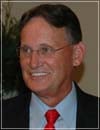
Larry Criss

In His Steps

Revelation 14:4
Larry Criss February, 16 2014 Audio
0 Comments
Larry Criss
Larry Criss February, 16 2014

Sermon Transcript

Auto-generated transcript • May contain errors

100%
Turn with me to the book of Revelation,
chapter 14. We'll only read the first five
verses. The apostle John writes and says,
And I looked, and, lo, a lamb stood on the mountain Zion, and
with him a hundred and forty and four thousand, having his
father's name written in their foreheads, And I heard a voice
from heaven as the voice of many waters and as the voice of a
great thunder. And I heard the voice of harpers
harping with their harps. And they sung as it were a new
song before the throne and before the four beasts and the elders.
And no man could learn that song but the hundred and forty and
four thousand which were redeemed from the earth. These are they
which were not befouled with women for they are virgins. These
are they which followed the Lamb whithersoever he goeth. These
were redeemed from among men, being the firstfruits unto God
and to the Lamb. And in their mouth was found
no guile, for they are without fault before the throne of God."
Now, I want you to turn back to chapter 4, and then we'll
come back to chapter 14 for our message, but chapter 4, The first
few verses will serve as an introduction to what we just read. It really
begins here. Verse 1 of chapter 4, After this I looked, and behold,
a door was opened in heaven. That's worthy of a behold, isn't
it? Heaven. God's presence. the Holy God, the Lord God. John says, here's a wonder. There's a way into the presence
of God Almighty. A door was opened in heaven.
And the first voice which I heard was, as it were, of a trumpet
talking with me, which said, Come up hither, and I will show
thee things which must be hereafter. Come up hither, John. A way has
been made. There's a door, there's an entrance
into glory, but notice the door singular, not plural, not doors,
but only one door. And I venture to guess that you're
thinking of that verse in John 9, John 10 rather, one of the
seven I am's of John's gospel. When our Lord said, the door. I am the door. By me, if any
man shall enter in, he shall be saved." When our Lord spoke
those words, he was speaking to the Pharisees. In chapter
9, he had healed the blind man. They had excommunicated him,
and the great shepherd found his sheep. And the man bowed
before his Redeemer and experienced his rich grace. The Pharisees
had followed him. And it was to those that our
Lord spoke these words. Because remember, the Pharisees,
they claimed to be speaking for God. They claimed to teach men
the way to God. Touched not, and taste not, and
handled not. A lot of their religion consisted
of that. As our Lord said, they like to
be seen of men, and they have their reward. When they pray,
they don't exercise real true prayer, not like the Lord taught.
Go in your closet, alone, shut your door, and then pour out
your heart to God. But the Pharisees didn't do that.
They stood on a street corner where everybody could see them
and hear them and say, oh, aren't they spiritual? Aren't they religious? Our Lord was speaking to them.
who claimed to be the way to God, and he said, you're not. You're not. You're thieves and
robbers. I'm the door. Only by me can
men enter in and be saved. And John says, behold, behold,
a door opened in heaven. That door into the very presence
of God, that door, into everlasting acceptance, that door into eternal
salvation. How can that be so? How can that
be so? Our Lord said again, what a statement,
I am the door. Any man, no matter who he is,
if he enters in by me, he shall be saved. How could he talk with
such certainty? After all, look at men, sinners,
everyone. Look how depraved, how fallen,
how loving darkness rather than light, and yet he makes this
statement. How can that be so? Because of this. The one who
made that claim is also that one that the apostles said concerning
He is able to save to the uttermost glorious Redeemer. That's the
kind of Redeemer I need, don't you, Lord? One that can save
to the uttermost all. That's what he said. If any man
enter in, he's able to save to the uttermost all that come unto
God by him, whether they're Jew or Gentile, whether they're a
proud Pharisee like Saul of Tarsus, or whether they're a despised
publican on the other end of the scale like Matthew. If they enter in by Christ the
door, they shall be saved. All enter the same way through
this one door, the Lord Jesus Christ. That's the door John
saw opened into the presence of God into heaven. And this
is what Paul tells us in Ephesians chapter 2 concerning our Redeemer.
Listen to this. We both, Jew, Gentile in the
context, for through him we both have access by one spirit unto
the Father. Oh, that's what the door that
John saw symbolizes, the access we have through our one mediator,
the Lord Jesus Christ. Back in Revelation chapter 4,
John saw this door opened in heaven and the voice saying,
Come up hither and I will show thee things that must be hereafter. Again, he speaks matter-of-factly,
doesn't he? No uncertainty whatsoever. I
will show thee things that must be hereafter. I like that, too. I like that much better than
they might be. They could be. Perchance they
might happen. No, that's the language of men. No, the language of the God-man
is far different. He said, John, I want to show
you things that must be, most certainly will be hereafter.
A week or two ago, whenever we had that severe weather and the
ice and so forth and all those accidents out on the road and
traffic, people stuck in traffic, I was watching one local reporter
interviewing somebody. He had slid off the road, but
he said, I'm all right, I'm all right. I was out there for hours,
but I'm glad it's over. He said, God was with me. I was
lucky. You ever heard people talk that
way? God was with me. I was lucky. I had God in one
hand and my rabbit's foot in the other hand. No, no, no. That
sort of talk just doesn't go together, does it? Not God in
luck. No, there's no such critter as
luck. No, our Lord and Redeemer says,
John, I'm going to show you things that must be hereafter with the
same certainty as when we read in John 4 concerning him that
he must, must go through Samaria. He must. And you know why. There's that lost sheep. There's one that he came especially
into the world for, one that his father, before he ever created
the heavens and the earth, before that, there was that one that
the father put into his hands. he became sureties for, meaning
he became responsible for, and for that one, in the fullness
of time, God sent forth his Son. Oh, yes, he must needs go through
Samaria, no question about it. And as he told Peter in the garden
that night when Judas came and betrayed him in Matthew chapter
26, Peter pulls out his sword. I
suppose he's trying to cut off the head, but he slashes off
the ear of the high priest's servant, Malchus. And our Lord
says to Peter, Put up again thy sword into its place, for all
that take the sword shall perish by the sword. Thinkest thou that
I could not now pray to my Father, and he should presently give
me more than twelve legions of angels? But how then shall the
scriptures be fulfilled that thus it must be? It must be. The cup which my
Father hath given me, I must drink it. If I bring many sons
to glory, I must trod the winepress alone. If any of those that the
Father gave me are made righteous in his sight, I must be made
sin for them." Oh, yes, he must. And then again in Luke's gospel,
after he's risen from the dead, he appears to his disciples and
he spoke these words. These are the words which I spake
unto you while I was yet with you, that all things must be
fulfilled. must be. Everything had been
fulfilled up to that time and everything concerning the Son
of Man shall be fulfilled after that time. All things must be
fulfilled which were written in the Law of Moses and in the
Prophets and in the Psalms concerning me." And then back in chapter
4 of Revelation, that great voice, that told John he would show
him things that must be hereafter. After all, he sets upon the throne.
That's why they must be, because he that sets upon the throne
rules over everything. It will happen because he makes
it happen. He wills it to happen. And then
he said this in verse 2 to John, I heard a voice from heaven as
the voice of many waters and as the voice of a great thunder.
Oh, I'm sorry, I'm in chapter 14, back in chapter 4, but he
said, come up hither, come up hither in verse 2, and immediately,
immediately, no sooner were the words spoken than he immediately,
I was in the spirit and behold, behold, a second behold, first
behold a door, now behold a throne. Oh, and behold that glorious
person that's sitting upon that throne. He said, come up hither. No sooner said than done. When he speaks, it's done. No sooner did he say, John, come
up here. Come up to where I am. No sooner
is it spoken than there John is in the presence of his Savior. Isn't that wonderful? Absent
from the body is to be present with the Lord. As quick as that
breath you just took, that's how quick we may be in the presence
of our God. Isn't that something? No wonder
they sing, worthy is the Lamb. And now, with that as an introduction,
look again, if you will, back in chapter 14, verse 1. Again, John says, after being
caught up among the many things he had seen up to this time,
now we're told, "'And I looked, and lo, a lamb stood on the Mount
Zion.'" A lamb stood. His father said to Christ the
Son, "'Set thou here till I make thine enemies thy footstool.'"
That's done, that's accomplished, and now he stands in the posture
of a victor, in the posture of absolute triumph. He stands with
complete victory, all enemies at his feet. What a Savior, what
a Savior, what a majesty is his. No wonder the theme of the redeemed
throughout eternity is this song, He's Worthy. Compared to who? No, that won't be brought up.
That'll never be a consideration. That'll never be a thought. They'll
never be a rival to him. They'll never be the question
in any heart of any redeemed sinner of that multitude that
none can number. There's no question about who's
worthy. There's no question about why
we're here. There's no question about how
we came to be here, who brought it to pass, or he that sits upon
the throne. Yes, he receives all the glory,
rightly so, because of him, as we read in Psalm 85, we receive
all the grace to bring us to heaven, all the grace to bring
us to heaven. That's a lot. That's a lot. That's a lot of grace for you,
Louis Cates, big sinner like you. It'd take a lot of grace
to take you to glory. It'd take a lot of grace to take
this sinner to glory and any sinner, but they're all brought
there. They all follow the Lamb. Look at verse 14. We'll consider
the 2nd sentence there, or verse 4, I'm sorry, verse 4 in chapter
14. Consider the 2nd sentence there
as our text. These are they which follow the
Lamb, whithersoever he goeth." Because did you notice in verse
1, oh, the glory of heaven is the Lamb, of course. He receives
in all things the preeminence. All the credit is due to him.
Unto thy name give glory. But did you notice he's not alone? and I looked and lo, a lamb stood
on the mountain Zion and with him, with him, a hundred and
forty and four thousand. These represent God's elect,
not a hundred and forty-three thousand and nine hundred and
ninety-nine. That would mean one was lost,
just one. Oh, but the great shepherd said,
my sheep hear my voice. and I know them, and they follow
me, and I give them eternal life, and they shall never perish."
No, they're all there, the same number that John saw in chapter
7. Let's look back there for just a minute, Revelation chapter
7, the exact number. But when John saw them here,
they were still on earth. They were still on earth. They
were still enduring great tribulation. They still had many a trial to
go through, many a battle to wage. In chapter 7, verse 3,
God says, "'Hurt not the earth, neither the sea, nor the trees,
"'till we have sealed the servants of our God in their foreheads.'
And I heard the number of them which were sealed, and they were
sealed a hundred and forty and four thousand, the same number
that was in glory." not one less, of all the tribes of the children
of Israel. Now they behold the Lamb before
the throne. They behold the King in his beauty. Why? Why? Because he said, all
that the Father gave me I should lose none, John 6, but should
raise them up again at the last day. What a claim. What a claim
that is. What power, what grace must be
in that one that can make such a claim as that? All that the
Father gave me, I shall lose none. I'll bring them all to
glory, and they are. They are. John saw them on earth.
In chapter 7 we read they came out of great tribulation, and
now they're before the throne of God. They're with the Lamb. That is indeed great grace and
mercy, is it not? But that's what the great shepherd
prayed. Father, I will that they also whom you have given me be
with me where I am, loved by him with an everlasting love.
chosen in him Christ in eternity past, accepted in him, justified
in him, called in him, redeemed by him, my soul, grace upon grace
upon grace, multiplied grace. Now he says, not only that, I
want them with me. I want them with me where I am.
It's as though he cannot do enough for them. And this is just what
Paul said, didn't he, in Ephesians 2? Concerning the salvation of
God's people, he said it's for this purpose, that God in the
ages to come might show the exceeding riches of his grace to us through
Christ Jesus. Indeed, it is rich grace, is
it not? Rich grace. Look how they're
described. in Revelation 14. Look what grace
has accomplished. Look what our Savior has done.
These are they which were not defiled with women. They are
virgins. They're pure. They've not worshiped
the God of Babylon. They've not bowed before the
whore. No, they're virgins. They follow
the Lamb wherever so ever he goes. They were redeemed from
among men, being the firstfruits of God. My, what grace! But there's more, there's more.
Speaking of these same ones, in their mouth was found no guile. They are without fault before
the throne of God. Isn't that amazing? Could anything,
could anything but God's rich grace accomplish such a work
as that? They're with the redeemed. That
rich inheritance they now enjoy that Peter said was always reserved
in heaven for us. As we said, consider just one
of the ways they're described, that second sentence. These are
they which follow the Lamb whithersoever he goeth. What a comforting thought. What
a description. What a description. They'll follow
the Lamb wherever he goes. Wherever he is, they shall be,
no matter what. No matter what. It is the will
of the triune God that they be with him. They follow him in
life, they follow him in death, and they follow him to glory.
They follow the Lamb wherever he is. I was reading an article
in a bulletin written by Brother Henry Mahan, What Is a Good Hope. Matter of fact, we used it in
our bulletin not long ago. But he closed his article with
the words of an old hymn. I thought they were good. It
says, These eyes shall see him in that day, the Lord that died
for me. and all my rising bones will
say, look who is like to thee. There shall I bathe my weary
soul in seas of heavenly rest and not a wave of trouble roll
across my peaceful breast." Is that not so? Is that not so? Remember our Lord said concerning
his sheep, they hear my voice and I know them and they follow
me. Perhaps John, turn back, if you
will, to his gospel, chapter 1, John chapter 1. Perhaps John
himself was one of these two disciples of John the Baptist
that heard him speak that day as Jesus Christ, Jesus of Nazareth,
walked by. We're told that Andrew definitely
was one of them, Peter's brother. He was one of the disciples.
And John always referred to himself as that disciple whom Jesus loved.
It doesn't describe him that way in this passage, but perhaps
it was John. One of these two in chapter 1,
where we read these words, verse 35. Again the next day, after
John stood and two of his disciples, that's John the Baptist, and
two of his disciples, and looking up on Jesus as he walked, he
said, Behold the Lamb of God. Behold the Lamb of God. What difference does it make
what we behold in this world if we never behold the Lamb of
God? What difference does it make being born in darkness if
we die in darkness? What difference does it make
what we accomplish in this world, in this life, Behold the Lamb of God. What
difference will anything else make? What difference will it
make? Behold the Lamb of God. And the two disciples heard him
speak and they followed Jesus. Then Jesus turned and saw them
following and saith unto them, What seek ye? They saith unto
him, Rabbi, which is to say, being interpreted, Master, where
dwellest thou? He saith unto them, Come and
see. They came and saw where he dwelt and abode with him that
day, for it was about the tenth hour. One of the two which heard
John speak and followed him was Andrew, Simon Peter's brother. Followed. Followed. That's the
description. We begin following him when he
opens our blinded eyes to behold the Lamb of God. Those who have
truly beheld the Lamb of God, they follow him. This is one
of the distinguishing marks of his sheep. They are identified
as his sheep because they follow him, because of this very thing.
They're known as followers of the Lamb. They're identified
by that. The one evidence, or rather,
the one is evidence of the other. They're followers of the Lamb,
and they do exactly that. James said, without your works, and I'll
show you my faith by my works, and I'll show you my faith by
my works." Yes, faith alone saves. There's no question about that.
Paul said, by grace are you saved through faith and that not of
yourselves. But what James is telling us
is this. The faith that saves is never
alone. Faith alone saves, but that faith
that saves, that faith that's genuine, that faith that is indeed
a gift of God, always has good works as its fruit, as the evidence
of it. If a man professes faith and
doesn't follow Christ, he's deceived, or he's been deceived or trying
to deceive. Our Lord himself made this very
clear, didn't he? Turn back, if you will, to John's
Gospel, chapter 6. Our Lord hath fed a multitude
of people with a few fish and loaves. Afterwards he crosses
the sea, and they follow him." But notice what he says to them
in John 6, verse 26. Verily, verily, I say unto you,
ye seek me not because ye saw the miracles, but because ye
did eat of the loaves and were filled." You're following me for what
you can get. Isn't it ironic and sad that
preachers today use that very argument to try to entice people
to follow Christ? You give and he'll give you more. That was what the accusation
of the devil was against Job. He told God the only reason he
served you because you blessed him because of what he can get
out of you? Oh, no. And this was the case with these.
Our Lord said, you didn't really see the miracle. You didn't see
the glory of who I am and what I've done by that miracle. All you see is that you're hungry. You only saw the bread that I
gave you. but you never saw the evidence
that the one who was giving it to you is he himself, the bread
of life. You never looked beyond that. And look what he says down in
verse 36. He makes this distinction. Well,
verse 35, I am the bread of life. He that cometh to me shall never
hunger, and he that believeth on me shall never thirst. but
I said unto you," these same ones that had experienced the
feeding and had followed him, he says, but I say unto you that
ye also have seen me and believe not. Does that make void God's
purpose, God's will, God's great salvation? Absolutely not. Christ says, all that the Father
giveth me, they'll come to me, they shall come to me, and him
that cometh unto me I will in no wise cast out." That's the
difference. That's the difference. We see
it again in this same chapter, in John chapter 6. Look at verse
66. Our Lord spoke what the multitude
considered some pretty tough things, pretty hard things. They even said so. This is a
hard saying. Who can bear it? And they turned
on their heels and walked away. Verse 66, from that time, many
of his disciples, professed disciples, went back and walked no more
with him. Aren't those sad words? Then
said Jesus unto the twelve, Ye, will ye also go away? What's
the difference between the multitude and these few? What's the difference? The work of grace in the heart.
Peter, verse 68, answered, Lord, to whom shall we go? That's the
attitude, and thank God for it. Child of God, when you lay down
tonight, before you doze off, thank God by his grace that he's
giving you a desire. He's given you a knowledge. He's
given you an understanding of he who is true, that you may
know Christ whom to know is life eternal. Bless his name for that. And that is why with Peter we
can say we don't have anywhere else to go. Where can we go? Where can we go? To whom can
we go? To what can we go? Religion? Man? Priest? Oh, no. Where can we go? Who else has
the words of eternal life? Who else is the Christ? Who else
is the Son of the living God? We must follow you. We must follow
you. Let them go. Let the multitudes
go. Let them follow the broad way.
We'll follow you. Oh, thank God for such grace
that makes us to differ from another. And that's the only
thing that ever has, hasn't it? Notice what we read in Revelation
14. These were redeemed from among men. Redeemed from among
men. Blessed are they who follow the
Lamb. They were loved from eternity.
They were chosen. They were redeemed. And in time,
they were called. As Paul again in Ephesians 1
wrote, Blessed be the God and Father of our Lord Jesus Christ
who has blessed us with all spiritual blessings in heavenly places
in Christ, never apart from Christ, in him, through him. He's that
door. We sang this hymn last Sunday.
It was in our bulletin. I'd like to just quote a verse
of it. It says, "'Tis not that I did choose thee, for, Lord,
that could not be. This heart would still refuse
thee, had thou not chosen me. Thou, from the sin that stained
me, hast cleansed and set me free. Of old thou hast ordained
me that I should live with thee.'" Let me read another verse. "'Twas sovereign mercy called
me and taught my opening mind. The world had else enthralled
me to heavenly glories blind. My heart owns none before thee,
for thy rich grace I thirst, disknowing, disknowing if I love
thee, thou must have loved me first. They follow the lamb,
but they follow him whether so ever he goes. Men in our day, or preachers
especially, sad to say, are more concerned about man's will than
they are God's will. They deny God's will at the expense
of man's will. For example, they say, oh, it's
terrible, terrible to say Christ didn't die for all men. That's
terrible. That's horrible. No, it's terrible. It's terrible to say that he
did, that he died for all men, that he bore the sins of all
men, and yet multitudes of those same men for whom he bore their
sins suffer the wrath of God for those same sins. That's what's
terrible. That's the slur upon God. Oh, no. Dear dying Lamb, I'll
quote it again. As I often do, scarcely preach
a sermon that I don't. Dear dying lamb, thy precious
blood shall never lose its power till all the ransomed church
in God, the 144,000, be saved of sin no more. The prophet said he shall see
of the avail of his soul and be satisfied. How could he be
content if one he shed his precious blood for is not with him in
glory. If he doesn't see every one of
them surrounding the throne, how could he be satisfied? How
could he be content? Satan would be more satisfied.
He would have more to be content with because he'd say, I snatched
one out of your hand. There's one you died for. There's
one you said would never perish, but they have, I've got them.
No, it'll never, never happen. that will never be. These are they that follow the
Lamb whether so ever he goeth. And they follow him all the way,
don't they? All the way to glory. They follow
the Lamb. That psalm we read earlier, you
remember what the last verse said? Listen to it again. Righteousness will go before
him and shall set us in the way of his steps. I perhaps told
you this story. I'm at the age now that I don't
remember, so I can retell it. And perhaps if I did tell it,
you don't remember me telling it. But when I was young, one
winter, I followed my father from the house through a deep,
deep snow. I was right behind him. He's
leading the way. And I was trying to place my
steps, my feet, right in his footprints, the ones he already
made. He was breaking the trail, so to speak. I thought of that
when I read that verse in Psalm 85. Righteousness shall go before
him, and he shall place us in his steps. Our Lord, from the
cradle to the grave, from the cradle The Calvary walked every
step of his life in perfect obedience to his Heavenly Father. In his
life, he honored God's law perfectly. I didn't come to destroy the
law, he said. I come to fulfill it, and he did. Every jot and
every tittle. Every step he took was in conformity
to God's absolute, holy righteousness and justice. And then he ascended
up Calvary's hill and offered himself a perfect offering without
spot to God, perfect. Everything he did, every thought
he had, every step he took, every word, every action, perfect. honoring to God Almighty, and
he takes a sinner like Larry Criss and puts him in the steps
of his Redeemer because when he did that, he was doing it
as our representative, as our substitute. He lived for us and
he died for us, and that's why we're made the very righteousness
of God in him, steps of acceptance. steps of perfect satisfaction,
those paths of righteousness the psalmist spoke of that the
Lord leads his people into for his namesake. They lead all the
way to heaven. That's what John saw. They follow
right up to the throne of grace. They end at the throne of grace. They end at the very person,
the Lamb before the throne who loved us. and gave himself for
us. As the hymn writer said, all
the way, all the way, my Savior leads me. Without fault before the throne
of God, what's heaven? It's where he is. Do we need to know any more than
that? What's the glory of heaven? He is. What's the cheap delight
of heaven to see his face? Verse 3 says, and they sung these
hundred and forty and four thousand, all God's redeemed, all his ransomed
ones. They sung a new song, a new song. They sung as never before. Old
Adam has moved out. Can you imagine how we'll sing
then? Right now, we have two neighbors.
Someone, I think it was Joe Terrell a while back, I read an article
he wrote about that. Right now, the believers, like
an apartment with two tenants, always a struggle. But in that
day, when we're made like him, old Adam's gonna be kicked out.
He won't live there anymore. Just one tenant, just one dwells
there now, and they're made like that one. John said, Behold,
what manner of love the Father hath bestowed upon us, that we
should be called the sons of God. And it doth not yet appear
where we shall be, but we know that when he shall appear, listen,
we shall be like him. We shall be like him. Oh, my! how we must sing, how we will
sing, for we shall be like him. These are they which follow the
Lamb, wheresoever he goeth. Bless his name. Amen.
Larry Criss
About Larry Criss
Larry Criss is Pastor of Fairmont Grace Church located at 3701 Talladega Highway, Sylacauga, Alabama 35150. You may contact him by writing; 2013 Talladega Hwy., Sylacauga, AL 35150; by telephone at 205-368-4714 or by Email at: larrywcriss@mysylacauga.com
Broadcaster:

Comments

0 / 2000 characters
Comments are moderated before appearing.

Be the first to comment!

Joshua

Joshua

Shall we play a game? Ask me about articles, sermons, or theology from our library. I can also help you navigate the site.