Bootstrap
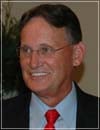
Larry Criss

Knowing Him

Philippians 3:10
Larry Criss September, 8 2013 Audio
0 Comments
Larry Criss
Larry Criss September, 8 2013

Sermon Transcript

Auto-generated transcript • May contain errors

100%
That song would serve as a good
introduction to the message. I am His and He is mine. Is there a greater blessing that
a man or woman can enjoy in this life than to have the sweet assurance
of knowing that I am His and He is mine? I am His and He is
mine. Back in Philippians chapter 3,
I like to begin the message by asking a question. And then,
according to God's word, answering that question. And the question
is this. What is a Christian? What exactly
is a Christian? How does someone become a Christian? Not according to what mom or
dad have told me. not according to Baptist theology,
not according to religious tradition, but according to God's Word. According to the Word of God,
what does it tell us becoming a Christian is? Can it be obtained
by joining a church, by learning Bible doctrine, correct Bible
doctrine? by being baptized. There are
denominations that teach that. To be baptized puts you in the
body of Christ. Or living a good moral life.
I can't tell you the number of times, and I'm sure it's your
experience as well, you that are believers, the number of
times people have told me that. that they believe by the life
they live, the good moral life that they live, they'll be accepted
by God. Is that scriptural? The answer
to those things are no. No. Most professing Christians,
and I emphasize that, professing Christians, and that's just about
everybody, that's just about everybody, trust no more than
those things we mentioned than we could have mentioned more.
but they trust no more than things like that as the reason of their
hope of salvation. Paul tells us here that at one
time he was in that boat. He was in that same boat. He trusted in things. Did you
notice that in verses 4 through 6? Paul lists there the things
he trusted in. Pretty impressive. Paul said,
if anybody, if anybody else, any man, thinks he has a reason
to trust in his flesh, that is in his own works, his own doings,
as the basis of his acceptance before God, Paul said, he's got
nothing on me. He said, listen to this. I can
put him to shame. I've got more reason to trust
in the flesh because I've done more. I've sacrificed more. Paul said, I was born of the
tribe of Benjamin. I was born a Jew, a stock of
Israel on my mother's side and on my father's side. I'm no mongrel. No, no, no. I'm no half-breed.
He said, I was a Pharisee. Another place he said he lived
after the strictest sect of the religion of the Pharisees. He was zealous, zealous, sincere. That's another thing. You've
heard folks say, don't you think that as long as a person's sincere,
that's all that really matters? Paul was sincere. Saul of Tarsus
was sincere. That day on the Damascus Road,
as he, riding upon his high horse, goes through the gates of Jerusalem
with a saddlebag full of warrants, authority to bind the Christians
that had fled from his persecution. He heard they were in Damascus,
so he'll drag them back there and give his voice against them,
that they might be persecuted, men, women, it didn't matter
to him. He was sincere all the time. Now think about this. All the time that Saul of Tarsus
was doing those things, right in the midst of that fierce persecution,
right in the midst of hating with all of his heart Jesus of
Nazareth and being convinced, being convinced beyond any shadow
of doubt that that Jesus, that carpenter's son, was an imposter. He was a deceiver, and Paul had
made up his mind that he would spend his entire life wiping
out every remembrance of that man. Everything that he could
do within his power, he was determined to do. Verse 7. But. But. Oh, what a sweet note that
is in the song of grace, but. The result, Paul tells us in
verses 7 and 8, the result of this experience on the Damascus
road that day, but. But. But God, Lord, that's what happened. But God, that's the explanation
of every true conversion. I don't mean profession. I mean
genuine conversion. That work of the God of glory
that gives a man a new nature, that raises him from spiritual
death to newness of life, that puts in him a new heart. That
requires a miracle. Nothing less can accomplish that,
but what things were gained to me, those I count a loss for
Christ. And I count all things lost.
They're done compared to this superior knowledge, this excellent
knowledge of knowing Jesus Christ. Paul said, now that's my desire.
That's my hope. What happened to Saul of Tarsus? How do you explain this drastic
change in this man? Christ revealed himself to Saul
of Tarsus. That's what happened. That's
what salvation is. It's not knowing what. Before,
Saul talked about what? The things he knew. The things
he did or refrained from doing. Touch not, taste not, handle
not, wear not, go not, be not. But now he says that was all
done. That's rubbish. What happened? Christ revealed himself to Saul
of Tarsus on the Damascus road that day, noon that day, when
the King of glory, when the eternal I Am, the mighty God, the everlasting
Father, the Prince of Peace, appeared to Saul of Tarsus, Saul
fell down. Who are you? Who are you? Can you imagine the thoughts,
the emotions in the heart of that rebel when the Lord Jesus
replied, I am Jesus? Not Jesus that you supposed to
be an imposter. No. Jesus, Lord of lords and
King of kings. It's me that you persecute. He
met the King of glory. He met who? Not things, but him. And Paul arose that day, a new
creature in Christ Jesus. That's the only explanation of
the change in Saul of Tarsus. First, let's consider this. Be reminded. As Paul said here,
to write the same things was not grievous, for you it is safe. To speak the same things for
me is not grievous, for you it is safe. Salvation is knowing
Him. It's knowing Him. To be a Christian
is to know Christ. I can't be saved otherwise. A
man can be a true child of God and be ignorant of a lot of things. I think evidence for that is
the apostles themselves. My soul, how little they understood
while they walked with the Lord those three and a half years,
how little they understood of the reason he came into this
world. but yet they knew him. And knowing him, they were saved
men. To be a Christian is to know
Christ. Listen to our Lord's words in
John chapter 10. Look what he says here. And when
he put forth his own sheep, he goeth before them. And the sheep
follow him, for they know his voice. They know his voice. He's revealed himself to them.
That was in verse 4 of John 10. And then in verse 14, he says
much the same thing. I am the good shepherd. I know
my sheep. I know who they are. And he said,
and am known of mine. I know them and they know me. It's a mutual acquaintance. Not
to know about Christ, but to know Christ himself. There's
a vast difference. A vast difference. I want to
know him, Joe. I want to know him. I want each
of you to know him. Every child of God here, every
parent, want that for their children. I want them to know Him more
than anything else. Oh, yes, I want them to be happy
in their livelihood, in their family. Oh, but more than that,
I want them to know Him, whom to know is life everlasting. And He can't be known through
another's experience of grace. My children can't know him by
a second-hand knowledge that I might pass down to them. It
doesn't happen that way. I must know him for myself as
the only object of true faith. Christ is the only object of
true faith. A hymn we often sing says, my
faith has found a resting place, not in device nor creed, not
in things. Faith can't rest there. True
faith won't rest there. It can't rest there. God won't
allow it. And if it does, that's proof
that it's not true faith. The hymn writer went on to say,
I trust every living one. His wounds for me shall plead. Faith looks to and embraces and
trusts Jesus Christ who said, come unto me. Come unto me, all
ye that labor and are heavy laden. Come unto me and I will. Not that I'll try to, I'll attempt
to, perhaps I can. No, he said, I will. You come
to me, heavy laden sinner, burdened down with a load of sin. carrying
that weight of guilt upon your shoulders, come to me and I'll
give you rest. I'll give you rest. Oh, what
a blessed rest He gives. What a rest it is to cease from
our own works and simply repose in the arms of Jesus Christ alone. That is indeed sweet rest. I
need no other argument. I don't, Mike. I don't. I need no other argument. I need
no other plea. It's enough. He's enough. It is enough that Jesus died
and that he died for me. God himself looks to the finished
work of his Son and says, it's enough. When His Son, knowing
all things were accomplished that He came into this world
to accomplish, knowing that He had put away all the sins of
all of His people, knowing that he had obtained eternal redemption
for us, knowing that he had brought in an everlasting righteousness,
knowing that he had purged our sins in his own body on the tree,
knowing all that was done, he cried, it is finished and gave
up the ghost. And God Almighty said, that's
enough. That's enough. I'm satisfied. My justice is satisfied. I can demand no more. My law
is satisfied. Enough. Enough. God is satisfied. And the believing sinner who
looks to Christ, he too can say, That's enough. He's enough. He's all I need. I can rest now. I can cease my own works and
rest in His. I can cease my own doing and
rest in what He has already done on my behalf. Oh, rest my soul
in Him. Sweet rest. It's so sweet to
trust in Jesus, isn't it? So sweet to trust in Him alone. Just from Jesus simply taking
life and rest and joy and peace, ceasing from self, ceasing from
sin, and the rest in Him, the glories of His person. the richness
of his grace, the sufficiency of his sacrifice, the greatness
of his salvation, his merit, his worth, his blood. Oh, Christ himself is the believer's
rest. Paul declares his desire now. Since meeting the Lord Jesus
Christ, his only ambition is to know him. Now it's not about
what, but about him. It's all about Christ. Turn back,
if you will, to Matthew chapter 16. Let's look again at a very
familiar passage of scripture. A conversation our Lord had with
his disciples. Matthew chapter 16, verse 13. When Jesus came into the coast
of Caesarea Philippi, he asked his disciples, saying, Whom do
men say that I, the Son of Man, am? Well, he knew very well what
they thought of him. He wanted to draw a confession
from the disciples. But he asked, What's the popular
opinion concerning me? And they said, Some say that
thou art John the Baptist, some Elias, and others Jeremiah's,
or one of the prophets. Many then, as today, say he was
a great prophet. We'll give him that. He was a
great teacher. Man, he was a very good example
of a moral life. But God, but God, but God Almighty
in the flesh, Savior, Redeemer, no, no. Verse 15, He asked them,
but whom say ye that I am? Whom say ye that I am? Am I more
than that to you? Do you believe me to be more
than what those others believe? Who is Jesus Christ to you? That's what he was asking. And
that's what I'm asking you. Who is Jesus Christ to you? Do you believe that he's the
Son of God? What do you think of Christ? And look what Simon Peter answered
in verse 16. Peter, like me, often spoke when
he should have kept quiet. But he was exactly right here,
wasn't he? Thou art the Christ, the Son
of the living God. You're the Messiah. You're that
one that God sent into the world. You're that one that we've heard
about all of our lives. You're that one that came to
redeem his people from their sins. You're God in flesh, is
what Peter said. There's very much at this time
that Peter had yet to learn. In this very chapter, he proves
his ignorance concerning much about our Lord Jesus Christ.
Just a few verses below what we just read. But he knew who
Jesus Christ was. And knowing that, with all of
his weaknesses, with all of his yet remaining ignorance, Peter
was a saved man. Our Lord tells him that, doesn't
he? Look at verse 17. Blessed art thou, Simon Bar-Jonah.
For flesh and blood hath not revealed it unto thee, but my
Father which is in heaven." Flesh and blood didn't do this. It
never does. It never does. Saving knowledge
is not the result of my learning certain things. It doesn't come
that way. This knowledge is the divine
revelation of the God of glory. This knowledge is a miracle of
God's grace. But my father, Peter, but my
father, that's the only explanation. But my father, how can any sinner,
how can any fallen son of Adam, in this life, truthfully be able
to say, I am His and He is mine. I have no doubt about it. I'm
a child of the King. Christ has redeemed me. Christ
has saved me from my sins. I'm His and He is mine. How is that possible? Flesh and
blood didn't do it. But God. In our day, we look
out and people see someone wealthy, someone famous. Oh, that's a
blessed man. If you could ask that rich man,
who when he died, as we all shall, and he lifted up his eyes in
hell, are you a blessed man? Were you a blessed man? He said,
my riches were a curse. My riches were a curse. Oh, had
I been born poor like Lazarus, then perhaps I would have solved
my need. Like him, I may have looked to
Christ. Oh, no, they were a curse. Peter,
you're a blessed man because my Father's done something for
you. He's revealed to you who I am,
the truly blessed man in this world. Or woman, is that one
who can say, Thou art the Christ. Thou art the Christ. You've been
blessed by grace and with grace. The prophet said, don't rejoice
in your strength. Don't rejoice in your might.
But he that rejoices in glories, let him glory in this, that he
knows me, God said. Rejoice in that. Blessed art
thou, Simon Barjon. And look what our Lord went on
to say in verse 18. And I say unto you, that thou
art Peter, and upon this rock I will build my church. Was he
talking about Peter? Well, that's a pretty flimsy
foundation, isn't it? No. He's speaking of the confession
that Peter just made concerning who Christ was. He's saying,
upon myself, Peter, upon the truth of what you just confessed
concerning me, I will build my church, and the result of that
will be that the gates of hell shall not, do you hear that,
shall not, no matter what, They shall not prevail against it. All believers in all times will
never perish. He'll never forsake one of his
own. They'll never be lost. The great shepherd of the sheep,
as he himself taught, seeks his sheep, finds his sheep, saves
his sheep. puts the sheep upon his mighty
shoulders, and carries them all the way home. He takes them all
the way to glory. All the way. My Savior leads
me, all glory to his name. Turn, if you will, to another
place. 1 Corinthians chapter 4. Look what Paul asked here. Another
question. He asked these believers in the
church at Corinth who were squaring off in factions and saying, I'm
of Paul and I'm of Apollos and I'm of Cephas, and Paul asked
them the question in verse 7, for who maketh thee to differ
from another? Who made you to differ? You differ,
yes, but who's responsible for it? It wasn't Paul and it wasn't
Peter and it wasn't Apollos. Is that which I trust the result
of my doing or God's doing? Is it the product of the preacher,
or the priest, or the church, or is it this, but God? Am I
His workmanship? Did my conversion require a miracle? Did it require a miracle? Did
it require nothing less than God's grace to make it happen? A decision doesn't do that, does
it? A decision just doesn't do that.
Walking up an aisle and repeating the sinner's prayer just doesn't
do that. It doesn't require grace to do that. It doesn't require
God to do that. Is this my testimony? Paul in
1 Corinthians 15 said, but, but, there it is again, but by the
grace of God, I am what I am. That's the only explanation.
Salvation is not my doing, but God's doing. It's not my work,
but His work. It's not what I do with God,
but what He does with me. It's not me assisting God to
save me, but it's God doing everything in the salvation of a sinner. Turn, if you will, to Galatians
chapter 1. Paul repeats it again here. He tells us how he came
to be a believer, how he became a Christian, and he tells us
his biography is one that's all of grace. In verse 13 of Galatians
1, Paul says, you heard of my conversation, the way I lived
my life in times past, in the Jews' religion, how beyond measure
I persecuted the church of God and I wasted it. and I profited
in the Jews' religion above many my equals in my own nation, being
more exceedingly zealous of the tradition of my fathers. But
when it pleased God, who separated me from my mother's womb and
called me by his grace to reveal his Son in me, that's what salvation
is. That's a good hope. through grace. The only good hope a sinner has
is the hope that God's unmerited, undeserved, free, sovereign,
ruling, reigning grace gives to him. Salvation by grace alone
through faith alone in Christ alone. That's a good hope. The
hymn writer said, bold shall I stand in that great day, for
who ought to my charge shall lay, while through Christ's blood
absolved I am from sin's tremendous curse and blame. Now briefly,
knowing him is what salvation is. A refresher course. Do you remember when you were
in school, the teacher would say, well, let's have a refresher
course. Let's just see what you've learned. Let's have a refresher
course. Knowing Him, child of God, and
I hope it'll be refreshing to your soul. To be reminded of
it. I have all I need. All I need. Now and forever. I have Christ. I have Christ. Having Christ,
I can lack nothing. Oh, child of God, here are the
words to you that he spoke to Peter. You're blessed. You're blessed. My Father has
blessed you with all spiritual blessings in heavenly places
in Christ. He has made Christ to be unto
us righteousness. and wisdom and sanctification
and redemption. I have a mediator and an advocate
with the Father. John said, when you sin, if you
sin, you have an advocate with the Father, Jesus Christ the
righteous. Paul said here in Philippians
3, in that day, in that day, every one of us here, every one
of us here, in just a brief time, very soon, shortly, when a few
brief days are gone, when this life, this vapor, this flower
that grows up in the morning and then it soon withers and
it's vanished away, will stand before God Almighty. God Almighty. When I close my eyes in death, I'm going to be ushered into
the presence of God Almighty. Not God that I would like to
imagine Him to be, but God as He really is. Paul said, when that day comes,
when that day comes, I want to be found in Him. Not having my
own righteousness, not that religious filthy rag I once trusted in,
but I want to be clothed in Him. I want to be clothed in the perfect
robe of Christ's perfect righteousness. That robe, that robe that the
Father Himself provided, that robe that He put on the prodigal
son when he came home and said, Father, I have sinned. You were
lost, but now you found. You were dead, but now you're
alive. Put the best robe on. The best
robe on him. Oh, how precious. I can only
imagine how precious Christ will appear in that day when I stand
before the holy God, robed in his righteousness, and God himself
looks and says, no fault at all. No fault at all. Oh, how precious,
how precious will Christ then appear. I'm justified from all
things. Knowing him, I have eternal life. That night, just before he was
taken, in the garden. He said, Father, you've given
me power over all flesh, that I should give eternal life to
as many as thou hast given me, and this is life eternal, that
they might know thee. Literally, he said, to know thee,
the only true God, and Jesus Christ whom he has sent. If I
know him, when the time comes for me to depart this world,
I can die with a good hope, with a good hope. Turn back, if you
will, to 2 Samuel chapter 23 and we'll wrap this up. King
David has come down to die. He's about to go the way of all
the earth. My soul, what a checkered life
the son of Jesse led, did he not? He knew what it was to sit
as a young shepherd boy and looking over the flock, seeing under
the midnight sky, oh, the Lord is my shepherd. He's my shepherd. I am his and he is mine. And he also knew what it was
like to cry out, against thee only have I sinned, oh my God,
and done this evil in thy sight. He knew. But he came down to
die. Verse 1 of chapter 23 of 2 Samuel. Now these be the last words of
David. David, the son of Jesse said, and the man who was raised
up on high, the anointed of God, of the God of Jacob, and the
sweet psalmist of Israel said, the Spirit of the Lord spake
by me, and his word was in my tongue. The God of Israel said,
the rock of Israel spake to me. He that ruleth over men must
be just, ruling in the fear of God. And he shall be as the light
of the morning, when the sun riseth, even a morning without
clouds, and the tender grass springing out of the earth by
clear and shining after rain. Although my house be not so with
God." Fellow Christian, we can all
say the same. We can all identify with that. My house be not so with God,
not like I would, not like I desire, not like I pray for. I want my
sons and my daughter, my grandchildren to know Him. But David says it
doesn't change this, yet. Yet. That despite my failings,
Yet he hath made with me an everlasting covenant, ordered in all things
insure. And David on his dying bed said,
This is all of my salvation and all of my desire. Every time
I read that, I think of another believer who was facing death
and said much the same thing. He said, I'm going like David
did. to depart. It's at hand. My executioner is at the door. But he said, I know whom, not
what. I know whom I have believed,
and I'm persuaded. I'm convinced. He's able to keep
that which I've committed unto him against that day. Complete
in thee, no work of mine can take, dear Lord, the place of
thine. Thy blood hath parted and bought for me, and I am now
complete in thee. Dear Savior, when before thy
bar all tribes and tongues assembled are, among thy chosen will I
be, at thy right hand complete in thee. I'm going to close. I want to ask one more question.
Do you know Him? Do you know May God reveal Christ
to you and in you today, today, now. May he enable you to behold
the Lamb of God, to know Him, to be found in Him. One hymn writer said, I can but
perish if I go, I am resolved to try, for if I stay away I
know I must forever die. Listen to this. But if I die
with mercy sought, when I the king have tried, this were to
die delightful thought, as sinner never died. That cannot happen. It cannot happen. He said, all
that cometh unto me, I will in no wise cast out. I stand in that place, don't
you? A sinner needing and seeking his mercy. And if you do the
same and you perish, I don't have a hope either. I'll perish
with you. But that won't happen. That won't
happen. A living testimony. of the proof, I'm evidence, that
the Lord Jesus Christ won't turn away any guilty, needy sinner
that comes to him. You're looking at one. You're
looking at the proof standing right here before you. Sometimes,
sometimes, before I'd come to this place, I'm lying in bed
night before, last night, thinking about the message, praying that
God will meet with us, The next day, sometimes, often, I have
to, as we say, pinch myself and think, my soul, is it true that God revealed
his son to me and I have the blessed honor to go preach the
unsearchable riches of Christ? Is it true that I am his? And He is mine. Come unto Him. And He won't cast
you out. He never has cast or turned away
a needy sinner that came to Him seeking His mercy. And He never
will. He never will. God bless you.
Larry Criss
About Larry Criss
Larry Criss is Pastor of Fairmont Grace Church located at 3701 Talladega Highway, Sylacauga, Alabama 35150. You may contact him by writing; 2013 Talladega Hwy., Sylacauga, AL 35150; by telephone at 205-368-4714 or by Email at: larrywcriss@mysylacauga.com
Broadcaster:

Comments

0 / 2000 characters
Comments are moderated before appearing.

Be the first to comment!

Joshua

Joshua

Shall we play a game? Ask me about articles, sermons, or theology from our library. I can also help you navigate the site.