Bootstrap
Larry Criss

Our Glorious Substitute

John 18:8-9
Larry Criss July, 28 2013 Audio
0 Comments
Larry Criss
Larry Criss July, 28 2013

Sermon Transcript

Auto-generated transcript • May contain errors

100%
John chapter 18. We'll read the first 14 verses
in the chapter. When Jesus had spoken these words,
he went forth with his disciples over the brook Kidron, wherein
was a garden into which he entered and his disciples. And Judas
also, which betrayed him, knew the place. For Jesus oftentimes
resorted thither with his disciples. Judas then, having received a
band of men and officers from the chief priests and Pharisees,
cometh thither with lanterns and torches and weapons. Jesus
therefore, knowing all things that should come upon him, went
forth and said unto them, Whom seek ye? They answered him, Jesus
of Nazareth. Jesus saith unto them, I am he. And Judas also, which betrayed
him, stood with them. As soon then as he had said unto
them, I am he, they went backward and fell to the ground. Then
asked he them again, Whom seek ye? And they said, Jesus of Nazareth. Jesus answered, I have told you
that I am he, if therefore you seek me, let these go their way,
that the same might be fulfilled which he spake, of them which
thou gavest me have I lost none. Then Simon Peter, having his
sword, drew it, and smote the high priest's servant, and cut
off his right ear. The servant's name was Malchus.
Then said Jesus unto Peter, Put up thy sword into the sheath.
The cup which my father hath given me, shall I not drink it?
Then the band and the captain and officers of the Jews took
Jesus and bound him and led him away to Annas I, where he was
father-in-law to Caiaphas, which was the high priest that same
year. Now, Caiaphas was he which gave counsel to the Jews that
it was expedient that one should die for the people. The title of my message is Our
Glorious Substitute. Our Glorious Substitute. Verse 1, we read, and we're told
that our Lord with his disciples crosses the brook Kidron and
enters into Gethsemane. He went forth. Can you picture
that? He went forth. As the great and
faithful shepherd of the sheep, he goes forth leading the way. leading the way to protect and
preserve his sheep, just as he said he would, as he always does. He did then, and he does now. It will be the boast, the claim
to the glory of our blessed King that of all those the Father
gave him, as he said, he should lose none. In John's Gospel,
chapter 10, let's look at a familiar passage here. This is exactly
what our Lord said he would do. Protect, preserve, keep, and
bring to glory every one of his sheep. None will be lost. In John chapter 10 verse 15,
as the Father knoweth me, even so know I the Father. And I lay
down my life for the sheep, for the sheep. and other sheep I
have which are not of this fold, them also I must bring." Notice
how matter-of-factly our Lord speaks. No uncertainty in these words
are there. Men try to place uncertainty
on them, but there's not. There's not. Our Lord says, other
sheep I have. I have them. They belong to me. The Father gave them to him.
He became responsible for the sheep before the world was ever
created. Them also, he says, I must bring. I must bring. And they shall
hear my voice, and there shall be one fold and one shepherd. Therefore doth my Father love
me, because I lay down my life that I might take it again. No
man taketh it from me. We see that in those verses that
we read in John 18. No man taketh it from me, but
I lay it down of myself. I have power. I have power. All power. To lay it down and
I have power to take it again. This commandment have I received
of my Father. Now back in John chapter 18.
Look what he says in verse 11. These were his words to Peter.
Impetuous Peter. Then said Jesus unto Peter, put
up thy sword into the sheath. The cup which my father hath
given me, shall I not drink it? Shall I not drink it, this cup? This cup. Is this the same cup
that he spoke of in his prayer when we're told he prayed so
intently, so earnestly, he struggled beneath this of being made sin, when the shadow
of the cross and all that that entailed was already casting
its shadow over his holy soul. And he prayed, Father, if it's
possible, Let this cup pass from me, this cup of your wrath, this
cup of the fury of a holy God, this cup that he looked into
and saw himself forsaken by God the Father, this cup of being
made sin. Peter, he says, I must drink
it. I must drink it. This cup that
the Father's given me, I must drink it. Aren't you glad that
he did? He drank the cup. He was made
sin. And you're sure and certain results
of that. No uncertainty about this child
of God. When we, in a few moments, we
who are believers, observe the Lord's Supper, drink the wine,
and take the bread, we are celebrating an accomplished redemption. an
accomplished redemption. We are celebrating that One who
loved us and gave Himself for us. We're remembering Him who
one time, one time entered into the holy place and there obtained
obtained, don't you just like that? Don't you rejoice in that? He got the job done. He obtained eternal redemption
for all of his sheep. Look in chapter 12 of John's
Gospel. This hour that was now upon them,
that he went forth to meet, he spoke of many times, but here,
In John's Gospel, chapter 12, look what he says at verse 23. And Jesus answered them, saying,
The hour is come. The hour is come, like no other
hour in history, that the Son of Man should be glorified. And
he tells us what he refers to in the next verse. Verily I say
unto you, except the corn of wheat fall into the ground and
die. That's Him. That's Him. It abideth
alone, but if it die, if it die, if He lays down His life for
us, if He's made sin for us, what's the result? It bringeth
forth much fruit, without a doubt, without question. Look again
in chapter 18 at verse 4. Jesus, therefore, knowing all
things that should come upon him, went forth and said unto
them, Whom seek ye? Knowing all things, before he
ever took that cup in his hands and pressed it to his lips, every
time, I doubt not, every time our Lord He who was God in flesh. He that created the world and
came into the world, and the world knew him not. I imagine
every time while he walked this earth that he looked out in a
meadow and saw a lamb grazing, he thought of himself as the
Lamb of God. Every time at the Passover, When
he saw that land without spot or blemish, sacrificed, he remembered. He was that land that would offer
himself without spot to God. Divine justice. had determined
before the foundation of the world that he should be that
sacrifice without spot offered to God. He knew that all of his
life. And long before that, long before
that, when he promised his father he would satisfy all the demands
of divine justice, Adam, when he fell in the garden and heard
the voice of God, he tried to hide. But the Lord Jesus Christ,
the second Adam, he steps out in front of this bloodthirsty
mob and identifies himself and says, I am he. This brook that our Lord passed
over Kidron. All the blood of the temple sacrifices
ran into that brook. It was here that all the waste
of the sacrifices were burned. The word itself means blackness,
filthy. And in Psalm 107, we read these
words. And it's speaking of Him. It speaks of our Lord Jesus Christ
with Psalm 110, I'm sorry. Psalm 110, verse 7. Listen to this. He, speaking
of our Redeemer, he shall drink of the brook in the way, therefore
shall he lift up his head. Now, our Lord didn't drink of
it literally, but he drank of it spiritually. He drank of the
filth of all the sins of all of his people. He who knew no
sin was made sin. Look, if you will, in Luke's
Gospel, chapter 23. Luke, chapter 23. Pilate, for
the last time, brings him out before the mob and says, I've
examined him and I don't find any fault whatsoever in him.
What shall I do with him? chapter 23, verse 22. And he said unto them the third
time, what, why, what evil hath he done? When they cried out
that he should be crucified. I have found no cause of death
in him. I will therefore chastise him
and let him go. And they were instant with loud
voices requiring that he might be crucified. Nothing less than
that will satisfy them. They required that he should
be crucified. And the voices of them and of
the chief priests prevailed. And Pilate gave sentence that
it should be as they required. And he released unto them him
that for sedition and murder was cast into prison, whom they
had desired. But he delivered Jesus to their
will. I am he. If it's me you seek,
let these go their way. Pilate delivered him unto them
that it should be as they required, but there was a voice greater
than theirs. Long before this, that required
the death of the only begotten Son of God. And that was the
voice of God Almighty. It's He that speaks these words.
Awake, O sword, against my shepherd, against the man that is my fellow,
my companion, one with me. Awake, O sword, against Tim,
saith the Lord of hosts. Smite the shepherd. Smite the shepherd. Therefore, he steps out before
them, identifies himself as that one whom they seek. You know
that the office of the high priest was to intercede on the behalf
of Israel and also to offer sacrifice. Our great high priest does that
too, does he not? He's prayed for his own in his
high priestly prayer in John 17, and now he comes forth. He comes forth to offer himself
without spot to God. He took the initiative, didn't
he? Didn't you see that in verse
7? He asked them again, the second time, whom seek ye? And they said, Jesus of Nazareth. He comes forth. Two thoughts. Verses 8 and 9 being our text. Two thoughts. Verse 8, you have
our glorious substitute. The substitute taken. Verse 9,
you have the sheep going free. Only one was taken. Look at verse
12. Then the band and the captain
and officers of the Jews took Jesus and bound him and led him
away. He's the only substitute for
sinners. The only one. He was set up as
such from everlasting. There was never another. Never
another. I remember hearing a silly little
song years ago in which they sang, suppose God searched over
heaven and couldn't find someone willing to be. No such thing
took place. There was never a possibility
that anyone else could be that perfect sacrifice before the
holy God. Who else could it have been?
Who else could meet precept of God's holy law. Who else did
God speak of in these words? This is my beloved Son in whom
I am well pleased. Who was he speaking of? The Lord
Jesus Christ. Who else could say this? I do
always those things that please the Father. Imagine that. When the Lord Jesus Christ entered
this world, through the womb of the Virgin. From the first
breath he drew when he entered this world, bone of our bones
and flesh of our flesh may liken to his brethren. Because they
were flesh and blood, he likewise took hold of the same, that he
might be a merciful and faithful high priest. From the first moment
he entered this world, drawing his first breath until he expired
upon the tree, saying, Father, into thy hands I command my spirit. Every step of that holy light,
every thought, every motive, every action, every word was
perfect. Always perfect. Perfect in thought. Perfect in deed. Perfect in motive. Perfect in action. Never a sin,
not a trace of it. No wonder God the Father said,
this is my beloved son, in whom I am well pleased. Hear ye him. Turn, if you will, to Isaiah,
chapter 63. The prophet asked a question. Isaiah chapter 63. In verse 1, he asks, Who is this
that cometh from Edom with dyed garments of basra, this that
is glorious in his apparel, traveling in the greatness of his strength? Look at verse 5. And I looked,
and there was none to help, not one. And I wondered that there
was none to uphold. None but him. He was alone in
the work of the redemption of his people. This is what he says,
doesn't he? He answers the question in verse
3. I have trodden the winepress
alone. all alone, and of the people
there was none with me." Who is this? He answers the question
in verse 1. I, the speaking righteousness,
mighty to save. Was he successful? Did Christ
redeem his people? This is important. Did Christ
redeem his people, or did he only make them redeemable? Did what Christ do on the cross
accomplish something? Or did it only make it possible
if man adds something to it afterwards? Did He really put away the sins
of His people or only make it possible that they should be
put away? Did He then and there justify
or only attempt to justify? Did Christ actually, upon the
cross, by His death, did He really accomplish something or only
made something possible? Did He redeem His people or did
He not? That's important. In Hebrews
chapter 1, concerning that one by whom God created the worlds,
we're told when he had by himself, oh bless his glorious name, what
a redeemer. when He had by Himself purged
our sins. He sat down. Yes, Peter. The cup which my
Father gave me, shall I not drink it? The cup of wrath, the cup
of being made sin, shall I not drink it? And having drunk it,
it's gone, bless God. The work is done. He accomplished
eternal redemption for us. He obtained it. Turn, if you
will, back to Psalms. Psalms chapter 85. Psalm 85,
rather. Look what we read here. Was he
successful? Did He obtain eternal redemption
for us? Did He do all that the Father
gave Him to do? Bless His name, yes. This is
what we remember. This is what we celebrate in
the Lord's Supper. This is what gives the believer
comfort. This is a good hope through grace.
Nothing else is. Not what I've done. No wonder
so many professing Christians never have assurance. They don't
deserve to have it because they're looking to themselves. They're
looking at what they've done. My soul, how could you have any
peace? It would be a false if you did.
It would be a false hope, a false assurance. Oh, but when I look
to Him, When I look to that one hanging upon the cross of Calvary,
when I hear him cry, it is finished. Oh, I can rest all the weight
of my soul upon him and have peace with God. Look in Psalm
85. This is what we read. Lord, thou
has been favorable unto thy land. that was brought back to captivity
of Jacob. Thou has forgiven the iniquity
of our people. Thou has covered all. All. All their sin. All their sin. All their sin is gone. All their
sin is purged. The blood of Jesus Christ, God's
Son, cleanseth us from all sin. Selah. Stop. Pause, the word means. Think
about what you just read. Think about that. Thou has covered
all their sins. Verse 3. Thou has taken away
all thy wrath. all thy wrath. Thou hast turned thyself from
the fierceness of thine anger." Many hands, the hymn writer said. Many hands were raised to wound
him. None would interpose to save. But the awful stroke that
found him was the stroke that justice gave. When God forsook
his son, his son cried out, My God, why hast thou forsaken me? Martin Luther said and looked
over that verse and thought and thought and thought and finally
rose up in exasperation and said, My soul, who can understand it?
Who can explain it? Who can enter into that? God?
Forsaken of God? And so it was. Isaiah chapter
53. The fifth evangelist Isaiah has
been referred to, because he has such a clear vision of the
suffering Savior. Isaiah chapter 53, verse 3, speaking
of our Redeemer, Speaking of that one who stepped forth and
said, whom seek ye? And said, I am he? I am he. He is despised and rejected of
men, a man of sorrows and acquainted with grief. And we hid, as it
were, our faces from him. He was despised and we esteemed
him not. Surely, he had borne our griefs
and carried our sorrows, yet we did esteem him stricken, smitten
of God, and afflicted. But he was wounded for our transgressions,
and he was bruised for our iniquities. The chastisement of our peace
was upon him, and with his stripes we are healed. Verse 8, he was
taken from prison and from judgment, and who shall declare his generation?
for he was cut off out of the land of the living. For the transgression
of my people was he stricken." Why? What was the outcome? What was the purpose of all that? Did he endure what he endured
for a chance? Was he made sin for a maybe? Or did he actually accomplish
something? Isaiah didn't stop there. Look
in verse 10. Yet it pleased the Lord to bruise
him, to crush him. He hath put him to grief. When
thou shalt make his soul an offering for sin, what shall be the result
of that? He shall see his seed. He shall
prolong his days. And the pleasure of the Lord
shall prosper in his hand. He shall see of the travail of
his soul, and he shall be satisfied. He shall be satisfied. How could
he be satisfied? from the throne of His everlasting
majesty, He looks down and sees one, one for whom He suffered,
one whose sins He bore away on the tree in His own body, and
see that same one suffering for those same sins. How could He
be satisfied? And the answer is, it can never
happen. It will never be. He shall see. all for whom he
suffered. He shall see the fruit of all
those for whom he was the glorious substitute. And by his knowledge
shall my righteous servant justify many, for he shall bear their
iniquities." Bless God, it is finished. Augustus' top lady
wrote a hymn. One verse of it is this. If thou
hast my discharge procured and freely in my room endured the
wrath, the whole of wrath divine, payment God cannot twice demand. First at my bleeding surety's
hand and then again at mine. And he won't. He won't. Oh no, God is faithful and just
to forgive us of our sins. Now back in John chapter 18,
look at verses 8 and 9. The latter part of verse 8. Our
Lord says, let these go their way, that the same might be fulfilled
which he spake of them which thou has given me. I lost none. If the shepherd is taken, The
sheep go free. Notice he says, let these go
their way. These. These. What will become
of these once they've taken the shepherd? These are weak. Feeble, helpless creatures. They've proven it again and again
and again. But I don't need to look to Peter
or James or John for evidence of that. I'll look at myself.
What a weak, powerless creature I am. Oh, apart from God's grace,
if God would withdraw His grace from me for a moment, I would
run back into the world happy to do so. That's a fact. That's
a fact. What will become of the sheep?
Oh, listen to the voice of the great shepherd. He says, let
these go their way. Let these go their way. And that
wasn't a request, Joe. bless his name. That wasn't a
request. He wasn't saying pretty please.
No, that was a command. He commanded them to let his
sheep go. That one who said, that was giving
me power over all flesh. Is that the Christ that you serve?
Is that the Christ you believe in? Is that the Christ you worship? He deserves all the praise. That
one who said, all power in heaven and in earth is mine. Yes, he voluntarily gave himself
to them to do as they will, but he also demanded, take me, take
me. But these must go free. You can't have both of us. You
can't have both of us. The death of Christ in the room,
the stead of his people, enduring what they should have, being
made sin for them, demands, demands, as a matter of justice, that
they must go free. He speaks the God's law and says,
let them go. Let them go. I've satisfied you. He speaks to the sin that enslaves
us and says, let them go their mind. Turn, if you will, back
a few pages in John, to John chapter 6. Oh, I love these verses,
don't you? John chapter 6, verse 37. Here our Lord speaks again matter-of-factly. He doesn't speak in buts and
maybes, but certainty, shalls, and wills. In verse 37 he says,
All that the Father giveth me shall come to me. And him that
cometh unto me I will in no wise cast out. For I came down from
heaven to make something possible, to take the first step. No, I
came down from heaven not to do my own will, but the will
of him that sent me. And this is the Father's will
which hath sent me, that of all which he hath given me I should
lose nothing, but to raise it up again at the last day. This is what they sang of at
the Red Sea when they crossed over. Thou and thy mercy has
led forth the people which thou hast redeemed. Paul said whom
he did predestinate. Then he also called. when the King of glory comes
forth the one that He redeemed and says to the sin that enslaves
them, let them go. They're mine. I say unto thee,
live. You have an example of that,
don't you? And that rebel, that religious bigot, that blind Pharisee,
Saul of Tarsus, I was a blasphemer. I was injurious. I'm not worthy
to be called an apostle. But, but, but when it pleased
God, who called me by his grace and
revealed his son in me. Oh, bless his name when it pleased
God. Mike, you read it a moment ago.
We were dead in trespasses and sin, but God, that makes a difference. That makes a difference, does
it not? Of them which thou hast given
me have I lost none. None shall perish. None shall
ever be lost. The blood of Christ demands it.
God's purpose in salvation is in perfect agreement. In Psalm
84 we read, Every one of them in Zion appeareth before God. Every one of them. Those who
were chosen Those who were redeemed, those who were called, those
who are preserved in Christ Jesus and kept by the power of God,
none are lost. The great shepherd keeps them
all, he protects them all, and in Zion, in glory, he'll present
them back to himself. before God the Father, a glorious
church, not having spot or wrinkle or any such thing, but that it
should be holy and without blemish, to his everlasting praise, thou
art worthy." Turn, if you will, to Hebrews chapter 9. As we said earlier, in the Lord's
Supper, We remember the success of our Redeemer. We rejoice in
the accomplishments of our glorious substitute. This is what the
scriptures say concerning his death. In Hebrews chapter 9,
verse 11, but Christ, but Christ. Paul turns away from those sacrifices
that can never take away sin. and says, but Christ, being come
a high priest of good things to come by a greater and more
perfect tabernacle, not made with hands, that is to say, not
of this building, neither by the blood of goats and calves,
but by his own blood. He entered in once into the holy
place, having obtained eternal redemption for us. For if the blood of bulls and
of goats and the ashes of an heifer sprinkling the unclean
sanctifyeth to the purifying of the flesh, how much more shall
the blood of Christ, who through the eternal Spirit offered Himself
without spot to God, purge your conscience from dead works to
serve the living God." How much more? How much more? From whence this fear and unbelief?
Has not the Father put to grief His spotless Son for me? And
will the righteous judge of men condemn me for that debt of sin
which Lord was charged to thee? No. No. No. Complete atonement thou hast
made, and to the utmost farthing paid what e'er thy people owed. How then can wrath on me take
place if sheltered in thy righteousness and sprinkled with thy blood? Turn then, my soul, unto thy
rest. The merits of thy great high
priest speak peace and liberty. Trust in his efficacious blood,
nor fear thy banishment from God, since Jesus died for me."
He died for me. He gave himself. He loved me. And he gave himself for me. I
am he. Take me. But my sheep go free. Bless his
name. Bless his name. Amen. Amen.
Larry Criss
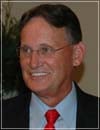
About Larry Criss
Larry Criss is Pastor of Fairmont Grace Church located at 3701 Talladega Highway, Sylacauga, Alabama 35150. You may contact him by writing; 2013 Talladega Hwy., Sylacauga, AL 35150; by telephone at 205-368-4714 or by Email at: larrywcriss@mysylacauga.com
Broadcaster:

Comments

0 / 2000 characters
Comments are moderated before appearing.

Be the first to comment!

Joshua

Joshua

Shall we play a game? Ask me about articles, sermons, or theology from our library. I can also help you navigate the site.