Bootstrap
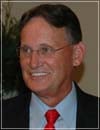
Larry Criss

Jesus Our Refuge and Anchor

Hebrews 6:19
Larry Criss April, 21 2013 Audio
0 Comments
Larry Criss
Larry Criss April, 21 2013

Sermon Transcript

Auto-generated transcript • May contain errors

100%
Turn with me to Hebrews chapter
6. Hebrews chapter 6. We'll begin reading at verse
9. Paul, beginning, I believe the
writer to be Paul, beginning in chapter 2 of Hebrews, is writing
and encouraging God's saints. And he gives, as the reason to
do so, a reminder of their Redeemer. And he continues that same here
in chapter 6, beginning at verse 9. He says, But beloved, we are
persuaded better things of you, and things that accompany salvation,
though we thus speak, referring to what he said previously in
this chapter. For God is not unrighteous to
forget your work and labor of love which ye have showed toward
his name, in that ye have ministered to the saints and do minister.
And we desire that every one of you do show the same diligence
to the full assurance of hope unto the end. That ye be not
slothful, but followers of them who through faith and patience
inherit the promises. For when God made promise to
Abraham, because he could swear by no greater, he swore by himself."
That's a very strong expression. God swore by himself, saying,
Surely blessing I will bless thee, and multiplying I will
multiply thee. And so after he patiently endured,
that is Abraham, he obtained the promise. For men verily swear
by their greater, and an oath for confirmation is to them an
end of all strife, if a man says or promises he'll do something,
he'll swear by the heavens or so forth, that he'll do it, and
people think, well, that settles the matter. He really means what
he's saying. He's taken an oath. This is what
the writer tells us God did. God has taken an oath. He swore
because he could swear by none other, none higher than himself,
that he would fulfill his promise. Verse 17, wherein God, willing
more abundantly to show unto the heirs of promise the immutability
of his counsel, confirmed it by an oath, that by two immutable
things, in which it was impossible for God to lie, we might have
a strong consolation, who have fled for refuge to lay hold upon
the hope set before us. which hope we have as an anchor
of the soul, both sure and steadfast, and which entereth into that
within the veil, whither the forerunner is for us entered,
even Jesus, made an high priest forever after the order of Melchizedek. As we said beginning in verse
9, or actually in chapter 2, the apostle is encouraging believers
to persevere, to continue on, to follow after that they might
apprehend. He is encouraging them to persevere
in their faith, their faith in God and in Christ. He reminds
them in verse 10 that God's not unrighteous to forget your work
and your labor of love. God forget? God forget, there's
a verse comes to mind that God forgets our sins. He's buried
them in the sea of his forgetfulness and he will remember them no
more. They'll never be brought up against
the child of God. Oh, but on the other hand, our
work of faith and our labor of love, Paul says God will never
forget. He exhorts them in verse 11,
be diligent. Be diligent. This requires all
diligence. This requires our most strenuous
effort. Be diligent, determined to do
this, to believe God fully, to be confident, be assured of your
hope in Him. Paul speaks of it as the full
assurance of hope until the end, until this life is over. assured
of God's promises, God's oath, assured of His faithfulness.
This encourages us to persevere, to go on looking to that One
who is within the veil. The remainder of the chapter,
Paul gives us a good reason why we should do so. why we should
be diligent in persevering, in honoring our God as we make our
journey through this world. He gives us solid ground why
we should. For a sinner, a sinner truly
saved by the grace of God, this full assurance of hope that Paul
speaks of in verse 11, and then gives reasons for, which we'll
look at in a moment in the remainder of the chapter, but for a sinner
truly saved, truly saved by the grace of God, his assurance of
that, of God's great salvation, is not presumption. It's not
presumption on his part. For example, when Paul wrote
to Timothy, setting him present, he said, Timothy, for I know
whom I have believed. Timothy, I know whom I have believed. Paul had his eyes on the only
object of faith. And that is Jesus Christ. The old hymn writer expressed
it like this, and we've seen that old hymn sometime. My faith
has found a resting place. A resting place. True faith always
does. God gives us faith to behold
His Son and when we do, the object of faith, we rest. Oh, how sweet
it is just to rest. You've heard me say, that religion
will wear you out. Some of us have gone down that
road to do this and do that and don't touch this and don't touch
that and don't wear this and don't look at that and you feel
like you're in chains. You're afraid to turn left or
right lest you sin. Oh no, the object of faith sets
us free and we rest in the sweet arms of our glorious Redeemer. This is what Paul speaks of when
he says, I know whom. setting his eyes steadfastly
on the only object of his faith, that is, Jesus Christ, he could
go on and say this, because I know whom. Timothy, right now, setting
in this dungeon cell, right now, I have my eyes fixed upon my
Redeemer. Therefore, because that's the
case, Paul could also say, and I'm persuaded, With my eyes fixed
on Him, knowing Him, I'm persuaded that He's able to keep that which
I've committed unto Him against that day. You see the connection
there. Oh, the more we see of Him, the
more our eyes are fixed upon Him, the more we study Him, so
to speak, the more we see of Jesus, the more we know of His
glorious person and His glorious works, the more of sureness of
hope we have. As long as our eyes are fixed
upon the only object of faith, the Lord Jesus Christ, we too
can say with Paul, looking unto Him, I'm assured, I'm assured,
I'm confident, I'm persuaded that he's able to keep, that
he's able to keep Timothy. Not that I'm able to keep, or
you're able to keep, but he's able to keep whatsoever all things
that I've committed unto him against that day. Mr. Toplady, who wrote his most famous
hymn, I suppose, Rock of Ages, but he wrote more than that.
In one of them, he expressed it this way. My name on the palms
of his hands, eternity will not erase. Impressed on his heart,
it remains in marks of indelible grace. Yes, I to the end shall
endure, as sure as the earnest is given, more happy but not
more secure than glorified spirits in heaven. What do you think
of that? Did Mr. Toplady go too far? No. No. For a child of God, a sinner
truly saved by the grace of God, to have assurance that what he
began, he'll carry on till the day of Jesus Christ, is not presumption. That's just believing our God. And Paul in these verses that
I read to us, and throughout the book, he encourages us to
that very thing. To have full assurance of hope,
he says in verse 11 again, all the way to the end. You have a evidence, a beautiful
picture of this, one of my favorite portions of scripture. As I've
probably told you before in Revelation chapter 7, John said the elder
is escorting him around glory. And John said, behold, Behold,
I saw a multitude that no man could number, of all kindreds
and people in tongues. And they all stood before the
Lamb with palms in their hands, all dressed in white robes, and
waving the palm leaf of victory, and all singing the same song,
glory to the Lamb, glory to the Lamb, worthy is the Lamb. And
the elder said, John, Who are these? And where did they come
from? And John admitted he didn't know. He confessed, I don't know. He
told the elder, you tell me, thou knowest. And you remember
what the elder said, these are they which came out of great
tribulation and have washed their robes in the blood of the Lamb. Therefore, are they before the
throne of God and worship Him in His holy temple. Now among
so many blessed things we can learn from that, portion of scripture,
I think we shouldn't overlook this. What the elder was reminding
John of, John who was exiled at the time, who was on the Isle
of Patmos, thrown out there because he was for the testimony of Jesus
Christ, for preaching of the gospel. But the elder reminds
John, those you see before the throne were once like you. They
were on earth too. They endured heartache too. They endured hardship and tribulation
too. I've heard fellas say, well,
it's speaking of when it says they came out of great tribulation,
it's speaking of the seven years. You wish. Just seven years and
it's over? Oh, no, no. From the time God
calls us out of darkness and we take up the cross until we
enter glory, there'll be tribulation. Through much hardship you shall
inherit the kingdom of God. But here's the point, John. These
you see before the throne. These that are basking in the
eternal light of God's countenance, God smiles upon them as the apple
of His eye. John, it was not always so. They, like you, were on earth.
They, like you, are now in your great tribulation. But John,
they all came out. They all came out. They were
no different than you. But they all came out. The same
grace, and the same sacrifice, and the same great salvation. Oh yes, the same mighty Savior
proved sufficient for them. He brought them out. And John,
He will bring you out. All of those who have fled for
refuge that lay hold on the hope set before us shall be brought
out. The reputation of our Savior
is at stake. His honor is at stake. His glory
is at stake. Because He said, of all those
that the Father gave me, I should lose none. And if He fails to
bring even one of that multitude that the Father entrusted into
His hands, if He fails to bring even one of them to glory, then
it'll be to His dishonor. And that can never be. That can
never be. If it could be, they would not
sing, worthy is the Lamb. Oh, but He has redeemed us, effectually,
with an eternal redemption and with an everlasting salvation. Beginning in verse 12, Paul,
in order to encourage God's people in every age, in every age, not
just these Hebrew believers, But believers in every age. Abraham,
he uses as an example, whom we're told in Romans, is the father
of the faithful. So what he says here is for God's
people, whenever they lived, we're pilgrims and strangers
passing through this world. Are we not? No matter when we
make our journey, that's so. In next Sunday's bulletin. There
are a couple of articles by Brother Henry Mahan. One of the articles,
he's commenting on Philippians 3 and 1. To write the same things
unto you for me is not grievous, but for you it is safe. And the
title of the article is The Old Story is Forever New. And Henry gives four points.
And I'll just share one with you, and you can read the rest
next Lord's Day. He says, we never grow weary
of hearing this old story, the gospel, and gathering together
to hear it. And one of the four reasons he
gives for doing so is this, to often hear his word preached
refreshes our spirits. Does it not? It brings peace
to our hearts and beauty to our countenance. And I like what
he said here. One can look at flowers and readily
see which flowers are most often watered. watered by the dew of
God's grace preached in that glorious gospel of the blessed
God. And I was reminded of that. I
was reminded of that several times this week. But once in
particular, I corresponded with someone who shared this with
me. They said, this is why I must
have a steady diet of gospel preaching. Must have. It is the word that comforts
us and we have to be reminded of that. Is it not so? Is it
not so? Must be reminded again and again. Oh, I love to tell the story. to those that know it best. Does
this describe you? Or once a month, or once every
three months, or just whenever it's convenient enough? If it's
so, you need to be concerned. Oh, but to those who know their
need, those who see the Savior, those who know the story, I love
to tell it. Do those who know it best seem
hungering and thirsting to hear it like the rest?" And this is
what Paul speaks of here. He reminds them, using Abraham
as an example, that which God promised Abraham, He promises
to all His own. God swore by Himself. These two immutable things that
he mentions in verse 18 are God's promise and His oath to fulfill
it. Those are those things and they're
bound to come to pass. Now I want you to look with me
if you will at verses 18 and 19, 18 through 20. The title
of my message is Jesus our refuge and anchor. He's referred to
as our refuge in verse 18 and verse 19 our anchor. But I would like to go to the
end of the chapter and see the reason why we have such a refuge. See the reason we have such a
sure, steadfast anchor. And Paul gives it. Look at verse
20. Well, let's read verse 19 and
20. Which hope we have as an anchor of the soul, both sure
and steadfast, and which entereth into that within the veil, whether
the forerunner is for us entered, even Jesus. That's the reason
we have such a refuge. That's the reason we have such
an anchor, because it enters into the veil. where Jesus is,
into the holy place, into heaven itself, like Jacob's ladder that
he saw in his dream at Bethel. It reached from heaven, or rather
from earth to heaven. And Paul is telling us here,
our refuge, our hope, our anchor is entered in to glory. We can
trace its foundation to Christ Himself, our forerunner, Paul
says, who hath for us, notice that in verse 20, for us entered
within the veil. Whether the forerunner for us
is entered, rather, Jesus Christ Himself. Turn, if you will, to
chapter 9 in Hebrews. Chapter 9. Now you know what
Paul is referring to when he says within the veil. Of course,
in our context, he's speaking of Christ in glory, in the presence
of God, appearing there for us. But he's referring to the temple.
And the holy place was separated by a veil from the most holy
place. and into the most holy place,
the priest went only one time, only once a year. The high priest,
he's the only one who could go into the most holy place. And
he could only do it once a year on the Day of Atonement. In Hebrews
chapter 9, let's read a few verses beginning at verse 1. Now Paul
describes the holy place and the most holy place. Then verily,
the first covenant had also ordinances of divine service and a worldly
sanctuary. For there was a tabernacle made.
The first wherein was the candlestick and the table and the showbread,
which is called the sanctuary. And after the second veil, the
tabernacle, which is called the holiest of all. behind the veil,
which had the golden censer, and the ark of the covenant overlaid
round about with gold, wherein was the golden pot that had manna,
and Aaron's rod that budded, and the tables of the covenant,
and over it the cherubims of glory, shadowing the mercy seat,
of which we cannot now speak particularly. Now when these
things were thus ordained, the priests went always into the
first tabernacle, accomplishing the service of God, but into
the second went the high priest alone, once every year, not without
blood, which he offered for himself and for the errors of the people. That was the veil. in the holy place, separating
the holy place from the most holy place, that was rent in
twain by the hand of God. And you remember when that happened?
You remember when that happened? When that veil, veil of separation
was rent in two, was torn asunder by the invisible hand of God.
It was when Jesus Christ, upon the cross, entered into the most
holy place to obtain eternal redemption for us, and after
doing so, After doing so, after accomplishing that, he cried,
it is finished, bowed his head, gave up the ghost, and God Almighty
said, that's enough. That's enough. And that huge
veil was rent in twain, we're told, from the top to the bottom,
signifying that God was well-pleased with the sacrifice of His Son. And Paul tells us Jesus, our
forerunner, entered into the presence of God for us. For us. Now, we could camp out
there a while for us. We read there in chapter 9 a
minute ago about the golden censer. What did that represent? Oh,
Christ now entered in the presence of God for us. It demonstrates
the merits of His rich grace. There you saw the manna, but
now we see Christ, the bread of life. There was Aaron's rod
that budded, but now we see Christ with the rod of absolute power
and sovereign dominion. Power over all flesh. We saw the cherubims over the
mercy seat. Oh, but now we see Christ. Now
we see Christ once forever sacrificed for us. This is what he spoke
of on the Mount of Transfiguration. Turn back, if you will, to Luke's
Gospel, chapter 9. Luke is the only one that tells
us what the subject of conversation was with Moses and Elijah. Matthew
and Mark tell us about this, but they don't tell us what they
talked about. But Luke does. Moses and Elijah
appear with the Lord Jesus Christ on the Mount of Transfiguration.
Verse 30, and behold, there talked with him two men, which were
Moses and Elias, and appeared in glory, who appeared in glory
rather, and spoke of his decease. The word is exodus, his exodus,
which he should accomplish at Jerusalem. Turning, if you will,
to chapter 18, as the time drew near, His exodus, His death that
He should accomplish at Jerusalem. He speaks of it again and again
to His disciples. And in Luke 18, not long before
the time was, He says in verse 31, Then He took unto Him the
twelve, and said unto them, Behold, behold, look. Oh, we look now, child of God,
do we not? We go up to Jerusalem, see our
great High Priest. Oh, behold, hear Him, see Him
by faith, entering into the very holy place, into the very presence
of God. Behold, we go up to Jerusalem,
and all things that are written by the prophets concerning the
Son of Man shall be attempted, I shall take a stab at, I will
partly do, No, no. That wouldn't comfort a pilgrim,
would it? No, look what he says. Look what the captain of our
salvation declares. Shall be accomplished. shall be accomplished." All that
He came into this world to do shall be accomplished. All that
God the Father gave Him to do, He says plainly, shall be accomplished. And He did it for us. He entered in one time. Romans
9, into the holy place, and there obtained eternal redemption for
us. Oh, glory to His name. That's why He cried, It's finished.
And that's why God tore the veil separating the holy place from
the most holy. Now we, in Christ, see the fulfillment
of all that that temple. and the holy place only typified. We see Christ, our everlasting
Savior, having obtained eternal redemption for us, having purged
our sins. He says in chapter 1 of Hebrews,
Christ, the expressed image of the Father. Turn there, if you
will, Hebrews chapter 1. Oh, this is a glorious, glorious
verse of Scripture. In verse 2 of Hebrews 1, He hath
in these last days spoken unto us by His Son, whom He hath appointed
heir of all things, by whom also He made the worlds, who being
the brightness of His glory, and the express image of His
person, and upholding all things by the word of His power, when
He had by Himself, highlight that, when He had by Himself,
trod the winepress alone, he said, and of the people there
was none with me. When he had by himself what? Purged our sins. Oh, blessed
Redeemer. Glorious substitute, you accomplished,
just as you said, eternal redemption for us. When you went to Calvary
and you were made sin, it was that we might be made the righteousness
of God in Him. Oh, you carried our sins away
by the sacrifice of yourself. You brought in an everlasting
righteousness, and now we're made the very righteousness of
a holy God. All the righteousness that God
Almighty demands, we have. We have it in the person of our
glorious Redeemer. He entered in and did all of
that for us. Turn, if you will, back to Hebrews
chapter 9. This is what we're told. In Hebrews
9, the entire chapter tells us this, but look at verse 24, and
then we'll go on. Hebrews 9 and 24. For Christ
is not entered into the holy places made with hands, which
are the figures of the true, but into heaven itself, now to
appear in the presence of God for us. For us. The sacrifice is accepted, Righteousness
is brought in for us. Justification bestowed for us. For us. And look what Paul says. Look what Paul says in verse
14 of chapter 9. Well, we should read verse 13
as well. After stating that Christ has attained eternal redemption
for us, Paul says in verse 13, For if the blood of bulls and
of goats and the ashes of an heifer sprinkling the unclean
sanctify it to the purifying of the flesh, how much more? How much more shall the blood
of Christ, who through the eternal Spirit offered Himself without
spot to God, purge your conscience from dead works to serve the
living God? How much more? One hymn writer
put it this way. with His eye upon the sacrifice,
with His eye upon Christ, crucified for us. He wrote, Arise, my soul,
arise. Shake off thy guilty fears. The
bleeding sacrifice in my behalf appears. Before the throne my
surety stands. My name is written on His hands. Isn't that comforting? Doesn't
that feel good? Doesn't it? With His holy garments
on, as holy as God's own Son. Oh, that feels good. That's so
comforting, so secure, so warm, wrapped up in the righteousness
of the Lord Jesus Christ. Now look back, if you will, in
Hebrews chapter 6. Paul in verse 18 refers to Christ
as our refuge. We might have strong consolation. who had fled for refuge to lay
hold upon the hope set before us." Refuge. Singular. Singular. There's only one. Our
hope and strong consolation is Christ alone, rock of ages, only
one, cleft for me. My safety, my acceptance, my
security is dependent upon and determined by my refuge. Not me. My safety depends upon
that One in whom I have fled for refuge. He's the Rock of
Ages, and those who run into Him are safe. Are safe. I'm pretty sure that the writer
had in his mind when he used this word in Hebrews 9 and 18,
those cities of refuge that God designated to be places of safety
for any manslayer that was fleeing from the avenger. There were
certain cities designated as cities of refuge. And once that
manslayer entered into one of those cities, and those cities had road signs, so to speak,
with refuge pointing to them. Refuge. Refuge. And that manslayer who felt the
avenger, on his heels, running, looking for a city of refuge. There were signs along the way,
and Moses was commanded. to be sure, once a year, to go
out and clear the highway of any obstacle in the road to the
city of refuge, that none would be hindered. You see it, don't
you? Our refuge is Jesus Christ. And once that guilty soul fled
to a city of refuge, he couldn't be touched, could he, Lord? He
couldn't be touched. As long as he was within that
city, one of them's name even means a fortified place, a stronghold. Remember what our Lord told Moses?
The eternal God is thy refuge and underneath are the everlasting
arms. Is Christ your refuge? Is Christ
your refuge, O weary pilgrim? Rest easy. Rest easy. Just fall down. Just fall down on this refuge. Fall back into the everlasting
arms of this secure and certain refuge and enjoy strong consolation
knowing that you're safe in Him. O Jesus, lover of my soul, let
me to thy bosom fly, while the nearer waters roll, while the
tempest still is high. Hide me, O my Savior, hide, till
this storm of life is past. Safe unto thy haven guide, O
receive my soul at last. In Revelation chapter 6, the
heavens Depart as a scroll because he that created him says time
shall be no more Heaven and earth shall pass away and the king
of glory The mighty God the everlasting father is descending and men
seeing great men were told the mighty men kings of the earth,
but how strange they react and They're hiding in rocks and praying
for the rocks to fall on them and cover them. Why? Why? Hide us from the face of Him
that setteth up on the throne. Because the great day of His
wrath has come and who shall be able to stand? Who shall be
able to stand? Who shall be able to stand? As
it was in the days of Noah, our Lord said, so shall it be in
the days of the Son of Man. They were eating and drinking
and marrying, just going on their merry way as always, until the
flood came and took them all away, swept them into eternity,
swept them into the presence of God. Oh, my refuge! How precious will He appear then?
When I stand there and hear Him say to multitudes, depart from
Me, and they're saying, wait a minute, we did all these things
in Your name, but He says, depart from Me into everlasting darkness. What's my hope? What's my hope? When I'm standing in the presence
of that same mighty, righteous, holy God, what's my hope? My refuge. My hope is built on
nothing less than Jesus' blood and righteousness to be found
in Him. In verse 19, Paul says, He's
also our anchor, which hope we have as an anchor of the soul,
both sure and steadfast. The believer's life is sometimes
compared, often in Scripture, compared to a voyage on a sea,
a voyage aboard a ship at sea. And sometimes we can sing with
David what John read earlier. He leadeth me beside the still
waters. And that's wonderful. That's
wonderful when that's the case, when we, by God-given faith,
can look to Christ like lying beside still waters, so peaceful,
so secure. But at other times, often at
other times, we cry out of the depths, out of the depths. Oh, God, the storms of life are
raging. They're raging. I feel like I'm
going down for the last time. O thou that rulest wind and water,
stand by me. The psalmist said of those occasions,
they that go down to the sea in ships that do business in
great waters, these see the works of the Lord and his wonders in
the deep. For he commandeth and raiseth the stormy wind which
lifteth up the waves thereof. They mount up to the heaven.
They go down again to the depths. Their soul is melted because
of trouble. They reel to and fro and stagger
like a drunken man, and are at their wits' end. Then they cry
unto the Lord in their trouble, and He bringeth them out of their
distresses. He maketh the storm a calm, so
that the waves thereof are still. Then are they glad, because they
be quiet. So He bringeth them unto their
desired haven." When I read that, I thought about what our Lord
told his disciples that day when he said, let us pass over into
the other side in Mark 4. And he got a pillow and went
down in the hinder part of the ship and went to sleep. And a
great storm arose. Master, master. Don't you care
that we're going to perish? But they had on board that ship
an anchor. An anchor of the soul, both sure
and steadfast. They could not perish unless
he perished with them. And all see the captain of our
salvation. Our anchor. My soul, what manner
of man is this? Quiet, he says. Peace. And the waves lay at His feet. They obeyed the voice of their
Master. And the disciples say, have you
ever seen anything like this in your life? What kind of man
is this? Even the winds and the sea obey
Him. And we read in verse 1 of chapter
5, and they passed over into the other side." We have an anchor
that keeps the soul steadfast and sure while the billows roll,
fastened to the rock which cannot move, grounded firm and deep
in the Savior's love. He says, they shall never perish. Is that your anchor? Is that
your refuge? Turn with me to Hebrews chapter
12 and we'll wrap this up. Hebrews chapter 12. Hebrews 12
and verse 25. Read this with me. Look at this.
We read, See that ye refuse not him that speaketh. For if they
escape not who refused him that spake on earth, much more shall
we not escape if we turn away from him that speaketh from heaven,
whose voice then shook the earth. But now he hath promised, this
is God saying, yet once more I shake not the earth only, but
also heaven. And this word, yet once more
signifying the removing of those things which are shaken, as of
things that are made, that those things which cannot be shaken
might remain. Wherefore, we receiving a kingdom
which cannot be moved, let us have grace whereby we may serve
God acceptably with reverence and godly fear. For our God is
a consuming fire. I know in our day that the end
of the world, God bringing all these things to an end is looked
upon by most as a fairy tale, but it's not so. The writer tells
us here that God Almighty one day is going to shake this world. Easier than what I'm shaking
this handkerchief. We just read it. And everything,
everything, that's not anchored on the Lord Jesus Christ, everything
and everyone. who doesn't have Christ as their
refuge, as their anchor, when God shakes this world, this religious
world, everything that's not upon Christ is going to drop
into hell, drop into hell. Oh, but to those, to those who
are on this shore and steadfast anchor, He speaks of that kingdom
which cannot be moved, cannot be moved. The end of life. has been referred to as our last
crossing of the River Jordan. When I remembered that, I also
remembered old Pilgrim's Progress. And that story ends with Pilgrim
crossing over to the other side. And the messenger from the celestial
city, from heaven, with the summons, the issue for other pilgrims,
it's time to come home. One by one, they're called home,
those that pilgrim met along the way. And a summons comes
for a Mr. Valiant for truth. And old Bunyan
wrote this, when the day that he must go hence was come, many
accompanied him to the riverside, into which as he went in he said,
death Where is thy stay? And as he
went down deeper, he said, grave, where is thy victory? And so
he passed over. They all came out. And so he
passed over, and all the trumpets sounded for him on the other
side. He passed over where our forerunner
has already entered for us. What an anchor. What a refuge. God bless you. Thank you for
your attention.
Larry Criss
About Larry Criss
Larry Criss is Pastor of Fairmont Grace Church located at 3701 Talladega Highway, Sylacauga, Alabama 35150. You may contact him by writing; 2013 Talladega Hwy., Sylacauga, AL 35150; by telephone at 205-368-4714 or by Email at: larrywcriss@mysylacauga.com
Broadcaster:

Comments

0 / 2000 characters
Comments are moderated before appearing.

Be the first to comment!

Joshua

Joshua

Shall we play a game? Ask me about articles, sermons, or theology from our library. I can also help you navigate the site.