Bootstrap
Larry Criss

The Rock Higher Than I

Psalm 61:2
Larry Criss April, 7 2013 Audio
0 Comments
Larry Criss
Larry Criss April, 7 2013

Sermon Transcript

Auto-generated transcript • May contain errors

100%
As we said a moment ago in the
reading, we'll come back to Psalm 61. We'll look at a few others
just by way of example coming through our text. Someone once
said that the best commentary on Scripture is Scripture. I
wouldn't argue with that. So the best commentary on the
Psalm is to consider a couple other Psalms. The psalm, the
word psalm, means praise. And the psalms are about the
worship of our great God and Savior. You need not turn there,
but in Luke's gospel, you remember after our Lord rose again from
the dead, just exactly like he said he would, that he appeared
to two disciples as they walked to Emmaus. And as he deliberately
joined himself to them and engaged in conversation, he said these
words to them. Then said he unto them, these
two disciples, these broken-hearted disciples, because prior in this
chapter, when he asked them, why are you so sad? They said,
well, we had trusted concerning Jesus of Nazareth. We had trusted
that he should have been the Messiah. And now they weren't
sure. No wonder they were heavy-hearted.
But in verse 25, our Lord says, O fools, and slow of heart to
believe all that the prophets have spoken. Ought not Christ
to have suffered these things and to enter into his glory?
And beginning at Moses and all the prophets, he expounded unto
them in all the Scriptures the things concerning himself." Now,
in case there would be any doubt, when we read all the Scriptures,
that that would include the Psalms, on down in the same chapter,
after he appears that same evening to the eleven, he says these
words. These are the words which I have
spoken to you while I was yet with you, that all things must
be fulfilled which were written in the Law of Moses and in the
Prophets and in the Psalms concerning me. Then opened he their understanding
that they might understand the Scriptures. And he said unto
them, Thus it is written, and thus it behooved Christ to suffer
and to rise from the dead the third day, and that repentance
and remission of sins should be preached in his name among
all nations, beginning at Jerusalem." Now, turn, if you will, to Psalm
115. As we said, the word Psalm means
praise. and the Psalms direct us to the
worship of our great God and he alone. In Psalm 115, we read
these words, not unto us, O Lord, not unto us, but unto thy name
give glory for thy mercy and for thy truth's sake. Praise
belongs to God alone. And the Psalms direct us again
and again as believers. as fellow pilgrims and strangers
in this world to look unto the God of our salvation and none
else. Turning, if you will, to Psalm
121. Psalm 121. We're directed to do that very
thing here. The 121st Psalm. We read these words. I will lift
up mine eyes into the hills from whence cometh my help. My help cometh from the Lord
which made heaven and earth. We must lift our eyes and not
look for help, not for grace, not for mercy from anyone else,
because all we see around us right now I look at you and you
know what I see? Flesh and bone, just like me. We're all made of the same thing.
So if I would look for help, for my eternal salvation, to
anything here below, I'd look in vain. Because if I look to
the right, if I look to the left, I see men, women, like myself. So there can be no help there. Therefore, the psalmist says,
with him, he directs our gaze to look not to ourself, but to
look to him from whence cometh our help. I will lift my eyes
unto the hills. I will look above myself. I will look beyond myself. From whence cometh my help? My
help cometh from the Lord. Oh, the Lord God, which made
heaven and earth. You remember in Isaiah chapter
six, he said, in the year that King Uzziah died, I saw also
the Lord high and lifted up. I lifted up my eyes. Momentarily
looking below, I seen an earthly king. And he died. He went the
way of all flesh. Oh, but I, like David here in
Psalm 121, the prophet said, I looked above this. I looked
above this fleshly grass, and I looked to the God of glory. And what did he see? He saw God's
train filling the temple. He saw Him that setteth upon
the throne forever and always." Our King always rules, brother
Lloyd. He's always ruling and reigning
for the salvation of His people and His own eternal glory. And you remember the reaction
of the prophet when he saw God as He really is? You remember
what he did? I know that you do. This is what
he exclaimed after seeing God. After being impressed somewhat
with the majesty of God, seeing God as He is, as much as God
was pleased to reveal Himself to him, Isaiah exclaimed, Woe
is me! Woe is me, because I'm undone. I'm undone. I'm a man of unclean
lips. I don't know what the prophet
considered himself to be before that, but when he saw God, he
saw himself as he really was. In the presence of God, in the
presence of such purity, Such holiness, such absolute righteousness,
the prophet could only exclaim and confess, woe is me. So will any sinner that is ever
impressed with the majesty of our great God. But not only did
Isaiah confess concerning himself that he was undone and a man
of unclean lips, he looked around. He looked around and said, well,
everybody else is in the same boat. Amen. There I dwell amongst
the people of unclean lips that are undone as well. Therefore,
therefore, we have a better understanding considering that while the psalmist
directs us with him to lift up our eyes away from self. look away from self and look
to our God which made the heaven and the earth. Look at Psalm
123 along the same line. Again, we read in verse 1 of
Psalm 123, unto thee left up mine eyes, O thou that dwellest
in the heavens. O our great God, we look beyond
self and we look to you. Turn back to Psalm 19. One or
two more, then we'll come back to Psalm 61. But Psalm 19, verse
1. The heavens declare the glory
of God, and the firmament showeth his handiwork. Day unto day uttereth
speech, and night unto night showeth knowledge. There is no
speech nor language where their voice is not heard. So we behold
that which is to us, that which is most visible to us as evidence
of God's majesty and power, the heavens and the earth. What an
indication of His power and might that He simply spoke it, wielded
it into existence, His creation. Oh, no wonder the psalmist said,
I'll lift up my eyes into the hills to my God which made the
heavens and the earth. But we don't stop there, do we?
A child of God doesn't stop there. We don't stop and worship the
creation. We don't become, there's already
too many of these around, we don't become frog kissers and
tree huggers and not observe behind the creation the hand
of our great Creator. Oh no! The heavens, the earth
are an indication of His glory and His greatness. Paul said
in Romans chapter 1, that men worship the creation rather than
the creator. How much they do that today.
But he said, this is an evidence of the greatness of our God.
We don't stop short and ooh and ah over the creation. No, we
go beyond that. By his grace, being awakened
to a sense of who he is and say concerning him, our God is in
the heavens. doing whatsoever he hath pleased. Like the old hymn writer said,
I see the, O Lord my God rather, when I in awesome wonder consider
all the worlds thy hands have made. We certainly do, and we
should, but we don't stop there. I see the stars. I hear the rolling
thunder. Thy power throughout the universe
displayed. Then what do I do? What do I
do? Then sings my soul, the only
proper thing for a child of God to do. Then sings my soul, my
savior God to thee. These things are an evidence
of how great thou art. And this is where the psalmist
directs us to look again and again. The Psalms lead us to
true worship. Do you know the word worship
means to prostrate? That's rebuilding, isn't it?
That's as it should be. Let's look at one more, Psalm
130. Considering who God is and who we are before Him, that we're
in His hands and not the reverse, As the psalmist confesses here
in Psalm 130 verse 1, this is where we are by nature. This
is where we were when God found us. When he came to us in that
time of love and reached down his hand for me, where was I? I was in the depths. the depths
of spiritual darkness, the depths of spiritual death, the depths
of depravity, the depths of my sin, and I would yet be there. The only reason I'm not is because
He came and He reached down His mighty hand for me. This is what
the psalmist says in verse 1. Out of the depths, That's where
I'm at. Out of the depths have I cried
unto thee, O Lord, and he heard me. And therefore we should give
glory to him, not unto us, O Lord, not unto us, but in thy name's
sake give glory for thy mercy and for thy truth's sake. Let me read just a few verses
in Revelation chapter 4. You can turn there with me. In
Revelation chapter 4, We're told here in verse 9 of the four beasts. And in verse 9 we read, and when
those beasts give glory and honor and thanks to Him, to who? To Him that sat on the throne.
His thrones never vacated. When Isaiah saw Him, Millenniums
before this, He was on the throne. When they see Him afterward,
He's on the throne. God's always on His throne. He's
always ruling. And then look at verse 10. Not
only do the four beasts ascribe glory to our God, so do the four
and twenty elders. They fall down before Him that
sat on the throne, and worship Him that liveth forever and ever,
and cast their crowns before the throne, saying, Thou art
worthy. Not us, not anyone else, not
angels. You don't share your glory with
another God. Thou art worthy, O Lord, to receive
glory. You deserve that. You have that
coming. It's your right as God. Thou
art worthy, O Lord, to receive glory and honor and power, for
thou hast created all things. And for thy pleasure they are
and were created. Now look at verse 11 of chapter
5 in Revelation. John said, And I beheld and I
heard the voice of many angels. Round about the throne, they
joined the four beasts and the 24 elders with the same declaration
of God's glory. Round about the throne, and the
beast and the elders, they joined them. And the number of them
was what? Not just four beasts and 24 elders. John says 10,000 times 10,000,
and thousands of thousands. They stand before the throne
and before the lamb and they see him as he is and they all
have the same reaction. Verse 12, saying with a loud
voice, worthy is the lamb that was slain to receive power and
riches and wisdom and strength and honor and glory and blessing. And every creature not only the
10,000 times 10,000, and thousands of thousands, but every creature
which is in heaven, and on the earth, and under the earth, and
such as are in the sea, and all that are in them, heard I saying,
blessing and honor, and glory and power be unto him. unto him our great God that setteth
upon the throne and to the lamb forever and ever and the four
beasts said Amen Amen, that is we agree. Let it be so Amen,
that's as it should be and the four and twenty elders fell down
and worshiped him that liveth forever and ever That sounds
familiar doesn't you remember? when Paul in Romans 11 was writing
about the wisdom, the knowledge, the mercy of God. And he said,
how unsearchable are thy riches and thy knowledge past finding
out. And he bows down just like the
elders did, just like the thousands did, just like David did, just
like Isaiah did. Paul takes the same place before
the throne of His great God. And He bows down, He prostrates
Himself in true worship and looks up and says, Of Him, and through
Him, and back to Him are all things, everything, to whom be
glory both now and forever. And He said, Amen. Amen. These
Psalms, 150 of them, are songs of praise to teach us, to remind
us, to direct us to ascribe greatness to our God. Most of them were
written by David, but not all of them. Not all of them. Even the majority of those that
are written by David directs our attention beyond David to
behold a greater than David. They speak of Christ, but they
also speak and record the real experiences and feelings of God's
people in every age. I think that's why we're drawn
to them. We read our own biography there. Perhaps we wouldn't confess it,
but when we read Words like these, and I know they apply especially
to Christ, but they were David's experience as well. when he said,
My God, why hast thou forsaken me? Especially Christ, of course,
he has the preeminence, but David had experienced that. He was
feeling in his heart that God had forsaken him. Of course he
had not, but David was being honest. And the Psalms record
the honest expressions and feelings of every child of God in every
age, their joy and their sorrow, the blessings and the burdens,
the doubts and the fears. Remember what that father said,
the father of the demon-possessed son that he brought to Christ?
After the disciples had failed to cast out the demon, he brought
him to the Lord. And he said, if you can believe,
our Lord told him. And he said, I believe. Help
thou mine unbelief. That's the honest expression
of a believer. And though they were all written,
these Psalms, by different men, covering a period of over 900
years, we find recorded there the same expressions of feelings,
the same experiences of God's people everywhere at any time. I think, as I said, that's why
we identify with them. We read these Psalms and we find
a kindred spirit. We can say to ourselves, I've
been there. Out of the depths, I've been
there. Broken hearted, I've been there. Heavy hearted, yes, I've been
there. But I've also been here. I know
the joy, the peace, the comfort of singing, the Lord is my shepherd. Oh yes, I've sinned, but the
Lord is my shepherd and I shall not want. You notice that Psalm? Psalm 23. It's not the song of
a dead shepherd. That's not the theme. David is
talking about his living, ever-present, great shepherd of the sheep.
He writes in the present tense. The Lord is, not was my shepherd,
will be my shepherd. The Lord is my shepherd. He shall
be all the days of my life. He speaks of a living, risen,
reigning shepherd. In Hebrews chapter 13, we read
that the God of all peace that brought again from the dead,
our Lord Jesus Christ, and don't you love this definition of Him? That great shepherd of the sheep. The Lord is my shepherd. That's
why I shall not want I shall not lack anything because he's
my shepherd. And in Psalm 24, there the writer
speaks of Christ as the chief shepherd. The chief shepherd. And he brings all of his sheep
home. He'll bring them all to glory. It speaks of him as the king
of glory. Open up, ye everlasting gates,
and the king of glory will come in. but he doesn't enter alone. He's entered into the holy place,
there to appear in the presence of God for us. He's our forerunner. He said in John 10, My sheep
hear my voice, and they follow me, and I lead them out. I lead them out. another's voice
will they not follow. They don't know the voice of
a stranger, but they know the shepherd's voice, the chief shepherd,
and I call my own by name, and I lead them out, and they follow
me. We talked about that right before
service, didn't we? When they hear His voice, they
follow Him. They follow Him in time when
He calls them out of darkness into His marvelous light. They
follow Him all the days of their life, and they follow Him, bless
His name, all the way to glory. That's His will for them, the
will of the Father as well. He prayed that, didn't He? Father,
I will. And their will was not in contradiction
to one another, of course not to triune God. He said, Father,
I will that those also whom thou has given me be with me where
I am that they may behold my glory. Again and again in the
Psalms, you run across the little word, Selah. Seelah, the Lord
is my shepherd. Open up ye gates, open up your
doors, ye everlasting gates, and the king of glory will come
in. Seelah, think about it. Pause over that for a while. Our chief shepherd, our great
shepherd, the good shepherd will bring all of his chosen home. Now let's look back for a few
moments to Psalm 61. We'll just consider the first
two verses. There's enough there to occupy what time we'll be
here. Verse one, David says, hear my prayer, O God, or hear
my cry, O God, attend unto my prayer. From the end of the earth
will I cry unto thee. He says, hear and attend. It's not enough just to be heard.
Lord, I want you to attend to my cry. I want you to hear my
cry. The Pharisees, our Lord said,
loved to pray just to be heard. They like to make a show of it.
They like to stand on street corners and pray. And he said,
they have their reward. But David says, not so with him. He says, Lord, hear my cry and
attend unto my prayer. He wanted God to take notice
of his prayer, to take notice of his need, and he will. He
will. Christ himself taught us so,
did he not? In Luke chapter 18, concerning
the widow and the unjust judge, he applied that to God's people
and said, will God not avenge His own elect that cry day and
night unto Him though He bear long with them? And of course,
the answer is yes, He sure will. And David prays that very thing.
Hear my cry, O God, attend to my prayer. From the end of the
earth will I cry unto Thee. From the end of the earth, true
prayer reaches God. Distance is no problem to the
ever-present. everywhere present God. How can distance, how can time,
how can circumstance affect our ever-present God? Whether we're
praying to him from the end of the earth, or from the belly
of a whale, from a broken heart, or on a mountaintop of true worship
and joy, God will hear our prayer. He's promised never to leave
us or to never forsake us. You remember what our Lord told
his disciples the last time he appeared to them on Mount Olivet?
Go into all the world and preach the gospel, the glorious gospel
of the blessed God. Preach the gospel to every creature. All power is given unto me, he
said, in heaven and in earth. Go ye, therefore. and preach
the gospel to every creature. And lo, lo, isn't this comforting? Know this. I don't send you on
a fool's errand. I don't send you on a mission
that won't be accomplished. Lo, I'm with you always, even
until the end of the world. I'll be with you until the ages
of the ages are ended and time shall be no more. Yes, God hears and answers, takes
notice of the cries of his dear children. Because true prayer,
children of God, begins with him. True, real prayer, real
prayer begins with God. Real prayer returns to God. Therefore, it surely will be
heard by God. Our Lord Jesus Christ told his
disciples, your heavenly Father knoweth. Your heavenly Father
knoweth. Before you ask, but ask. He knows. Isn't that full of comfort? God
knows. God knows. My children, when
they were still very young, still at home, do you know they never
one time ever come to me worried, concerned, fretful, whether there
would be anything to eat for them that day, or whether they
would have clothes to wear the next day. It didn't cross their
mind. It shouldn't. As a matter of
fact, Lonnie, it would have hurt my feelings if my young sons
or daughter would have come up to me and said, Dad, we just
doubt. We're not sure you care enough or are able enough to
provide food for us today. We're just not sure there'll
be a meal on the table. That would have hurt my feelings.
Our Lord and Master says, the same one who said I ascended
to my father and your father and my God and your God, he says
your heavenly Father knoweth that ye have need of all these
things. Turn if you will to Luke chapter
12. Let's read those words, that passage from where I just quoted. Luke chapter 12 verse 22. Therefore I say unto you, to
his disciples, our Lord says, therefore say unto you, take
no thought for your life, what ye shall eat, neither for the
body what ye shall put on. The life is more than me, then
the body is more than raiment. Consider the ravens, for they
neither sow nor reap, which neither have storehouse nor barn, and
God feedeth them. How much more are ye better than
the fowls?" He didn't live and die for the fowls of the air,
did he? And which of you with taking
thought can add to his stature one cubit? If ye then be not
able to do that which is least, why take ye thought for the rest?
Consider the lilies, how they grow, they toil not, they spin
not. And yet I say unto you that Solomon,
in all of his glory, was not arrayed like one of these. If
then God so clothed the grass, which is today in the field and
tomorrow is cast into the oven, how much more will he clothe
you, O ye of little faith? And seek not ye what ye shall
eat, or what ye shall drink, neither be ye of doubtful mind. Neither be ye of doubtful mind. Got to plead guilty to that.
But also I have to admit, there's no reason for it. God's never
gave me a reason to doubt Him. To doubt His mercy, to doubt
His promises, to doubt His power, to doubt His wisdom. Neither
be ye of doubtful mind. And our Lord goes on to tell
us why. For all these things that the nations of the world
seek after, and your Father knoweth, Your Father knoweth that ye have
need of these things. Isn't that comforting? Your heavenly
Father knoweth. And as Paul wrote also in Romans
chapter 8, of our heavenly Father, our God, nothing can separate
us from the love of God. that God who is also our father
that knoweth what we have need of. Nothing can separate us from
the love of God which is in Christ Jesus. He that gave us his own
son, how shall he not freely with him also give us all things. Back to Psalm 61, David said,
hear my prayer, O God. Hear my cry, brother, O God,
and attend unto my prayer. Job, did God hear your cry? When your heart was overwhelmed
like David said his was at this time, did God hear your cry? When you sat in dust, cough,
and ashes after hearing one heart-breaking, heart-rendering report after
another, did God hear your prayer? Did He come to you? And Job would
say, yes. Abraham, did God hear your prayer? Yes, Moses, you were at first reluctant to
go before Pharaoh. Who am I? Who am I that I should
go before Pharaoh? Did God hear your prayer? Oh
yes. During all those wilderness journey,
God heard his prayer. Before they commenced that journey,
Remember at the Red Sea? No way out. No escape. They were ready to hang Moses.
It's your fault. And Moses, we read, cried unto
his God. You remember what his great God
and Savior told him? The same great God and Savior
that we serve today, that changes not. Moses, stand still. Just stand still. That's the
hardest thing in the world for us to do, isn't it? Stand still.
A sudden crisis overtakes us and first thing we want to do,
got to do something. I've got to take this matter
into my own hands. The hardest thing to do is just
stand still. Just stand still, be quiet, and
see what God will do. Stand still and see the salvation
of the Lord. It's his salvation, and he shall
bring it to pass. He shall accomplish it. Remember
Elijah on the mount with all those false prophets? Was it
400 of them? And Elijah said, We'll build an altar. We'll put
our sacrifice upon it. We'll water it. And then you
call up on your God, all 400 of you, go ahead and call up
on your God. And I'll call up on mine. And he told the people
that God who answers by fire Let him be God. Elijah, did God
answer a prayer? Well, you know he did. And remember
what Elijah told the people? Now let him be God. That is,
confess him as God. Bow down to him as God. And worship
him as God. There is none other. Does God
hear and answer a prayer? Ask that poor leper. Ask him
if God incarnate doesn't answer a prayer. when he came to him
in the disease of cankerous leprosy and cried out, if you will, you
can make me clean. Did he hear your prayer? Did
the God of glory, the God-man, the man who himself was God,
did he condescend to hear the prayer of one poor cankerous
leper? Oh, he did more than that, the
leper would say. He touched me. Glory to His name,
He touched me. And when He did, when He touched
me at the same time, He said, Be thou clean. Does He answer
prayer? Look at me, without a spot, without
a blemish, without any such thing. Oh yes, He answers prayer. And He does the same for all
His children, does He not? Accepted and to be loved. as
accepted as he is, without a spot of sin, without blemish, justified,
not guilty in the sight of God. Barnimaeus? Does he answer prayer? And we could go on and on and
on, couldn't we? Example after example. What should
we do then? Well, Paul said, seeing then
that we have such a high priest, Jesus, that is passed into the
heavens. We have a high priest who can be touched. He identifies
with. He knows what it was like to
be lonely. He knows what it was like to
be rejected. He suffered in all points and
was tempted in all points just like we were. Therefore, come
to him. Unburden your soul to him. Lay
out all your heartache before Him, He can identify with it. Come to the throne of grace,
because on that throne of grace sits the King of grace, sits
grace personified, and He'll give help and grace in time of
need. Oh yes, He hears and answers
prayer. Let us come to him and just keep
coming to him and continue to come to him until we come to
him in glory where he is and we awake in his likeness. David had already been anointed
king, had already, I should say, ascended the throne as king,
but at the time he wrote this psalm, he was in exile. No wonder he cried, my heart
is overwhelmed. Because the one who tried to
take his kingdom was not an enemy from another country, but the
son, Absalom, his own son. Many a rebellious son has broken
the heart of their father, haven't they? Or mother. Absalom, Absalom,
oh my son, Absalom, David would afterwards cry, would to God
that I could have died for thee. David was in exile because Absalom
wanted the throne. No wonder, he prays, God, hear
my cry. Attend unto my prayer. I cry
unto thee where my heart is overwhelmed. Overwhelmed. The word is covered
up. covered up, smothered, smothered. When the heart overwhelms, smothered
with grief, covered up with grief. When it is in that condition,
it affects the whole man, doesn't it? When the heart's out of order,
it sends a chill to all the members, does it not? The heart, the cenadela
of the soul, guard your heart. Keep your heart because out of
the heart are the issues of life. Let not your heart be troubled,
our master said. But even so, men at their best
are just still men, are they not? Like Peter found out. He's just a man. I'll never,
never deny you, but he did. When my heart, David says, is
overwhelmed. Notice, he doesn't say if it's
overwhelmed. There's no if about it, brothers
and sisters. Our hearts will be overwhelmed,
covered up, smothered. The analogy here is of a drowning
man. A man that's shipwrecked. out at sea, going down for the
last time. He sees a rock. Oh, if I can
get to that rock. But he can't. He can't. He's overwhelmed. He's covered
up. Therefore, he says, lead me to
the rock, God. I can't get there by myself.
I can't put myself upon it. Lift me up by your mighty arm. Lead me to that rock which is
higher than I. Oh, the sea rocks, the waves
roll. and they're going over his head,
and he's about to drown. And like Peter, Lord, save me. Save me, I perish. David cries,
Lord, lead me. Lead me. My heart's overwhelmed. I feel like a drowning man. I'm covered up with grief and
sorrow. I'm shipwrecked. come and lift
me up to that rock that is higher than I. And he does, doesn't
he? He leadeth me. He leadeth me. Beside the still waters, he leadeth
me. He leadeth me in the paths of
righteousness. I can't go there by myself. Oh,
but he leads me. The great shepherd finds us.
But not only that, remember, In his parable concerning the
lost sheep, he says the shepherd goes out and searches for it
until he finds it. And when he finds it, he says,
well, get back home the best way you can. You should have
never wondered off and got in this shape. No. He finds it. And he reaches down with the
love and the tenderness of the great shepherd of our souls.
And he says he picks it up. and puts it on his shoulder and
he carries it all the way home. All the way home. Oh, that's
such a comfort to this weak sinner that he's going to carry me all
the way home on his broad shoulders of omnipotent grace. Let me read
a passage to you, a few verses in Isaiah chapter 43. I find these very comforting.
Perhaps you want to turn there. Isaiah chapter 46. I'm sorry. Chapter 46. Look what our Lord
says in verse 3. Hearken unto me, O house of Jacob
and all the remnant of the house of Israel, which are born by
me from the belly, which are carried from the womb. I was
there. I brought you into this world.
I was there when you came in. And I'll be there when you go
out. Yea, David said, though I walk
through the valley of the shadow of death, I'll fear no evil,
because thou art with me. You've been with me all my life,
and you're going to be with me then. From the womb to the tomb,
thou art with me. Oh, what about when I'm growing
old and feeble? What about when my life becomes
a burden, as we sing, and I'm nearing Jordan? What about then? Listen, and even to your old
age, I am he. And even to whore hairs will
I carry you. I have made and I will bear,
even I will carry and will deliver you. I read an article just the
other day from a bulletin of Bible Baptist Church in Madisonville,
Kentucky. The article was by Maurice Montgomery
and he said, I can't help but notice I'm getting more and more
forgetful. I forget things. And he said,
I wonder, will the time come that I'll forget my own loved
ones? Will the time perhaps come that
I'll forget my Lord and Savior? He said, perhaps. But my comfort
lies here, that he'll never forget me. He'll never forget me. Even into your hoar hairs, I
will carry you. David says, when my heart is
overwhelmed within me, lead me to the rock that is higher than
I. In verse five, he says, I will
abide in thy tabernacle. He's in exile now. He's not in
the tabernacle of God, but he prays to the God of the tabernacle. And he says, my heart's overwhelmed.
Lean me to that rock, the rock that is higher than I, that rock
that is greater than all my troubles, that rock that is greater than
my overwhelmed and breaking heart. to that rock where I find grace
greater than all my sin. That's a lot of grace. That's
a lot of grace, isn't it? Grace greater than all my sin. He says of this rock on which
he's put you and I, that he's led us to and put us on. He says,
the gates of hell shall not prevail against it. This rock, our rock,
the Lord Jesus Christ, He's weathered all the storms. All of His people
have ever passed through. All those that are on this rock
of ages, they've not been exempt from storms. Not one of them. Not one of them. But not one
of them has ever at any time of that multitude that none can
number, not one has ever been washed off the rock, the foundation
of the church, which is the Lord Jesus Christ. I'll wrap this
up. Look at Psalm 62. We have the
same expression here. Truly, my soul waiteth upon God. Psalm 62 and 1. From him cometh
my salvation. He only is my rock and my salvation. He is my defense. I shall not
be greatly moved. Oh, then to the rock, let me
fly. To the rock that is higher than
I. Verse 6 of that same Psalm. He only is my rock and my salvation. He is my defense. I shall not
be moved. And God is my salvation and my
glory, the rock of my strength, and my refuge is in God. David said, then I, lead me to
the rock that is higher than I. But David, you are a king
yourself. Oh, but this rock is the king
of kings. and the lord of lords. Let me
close by reading a couple of verses from one more of the Psalms.
Psalm forty. Look at it with me. Let's read
the first three verses together. Psalm forty. I waited patiently
for the lord and he inclined unto me and heard my cry and
he brought me up also out of a horrible pit and god help us And he set my feet upon a rock
and established my goings. And he put a new song in my mouth,
even praising to our God. Many shall see it in fear and
shall trust in the Lord. Amen. Amen. God bless you.
Larry Criss
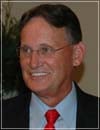
About Larry Criss
Larry Criss is Pastor of Fairmont Grace Church located at 3701 Talladega Highway, Sylacauga, Alabama 35150. You may contact him by writing; 2013 Talladega Hwy., Sylacauga, AL 35150; by telephone at 205-368-4714 or by Email at: larrywcriss@mysylacauga.com
Broadcaster:

Comments

0 / 2000 characters
Comments are moderated before appearing.

Be the first to comment!

Joshua

Joshua

Shall we play a game? Ask me about articles, sermons, or theology from our library. I can also help you navigate the site.