Bootstrap
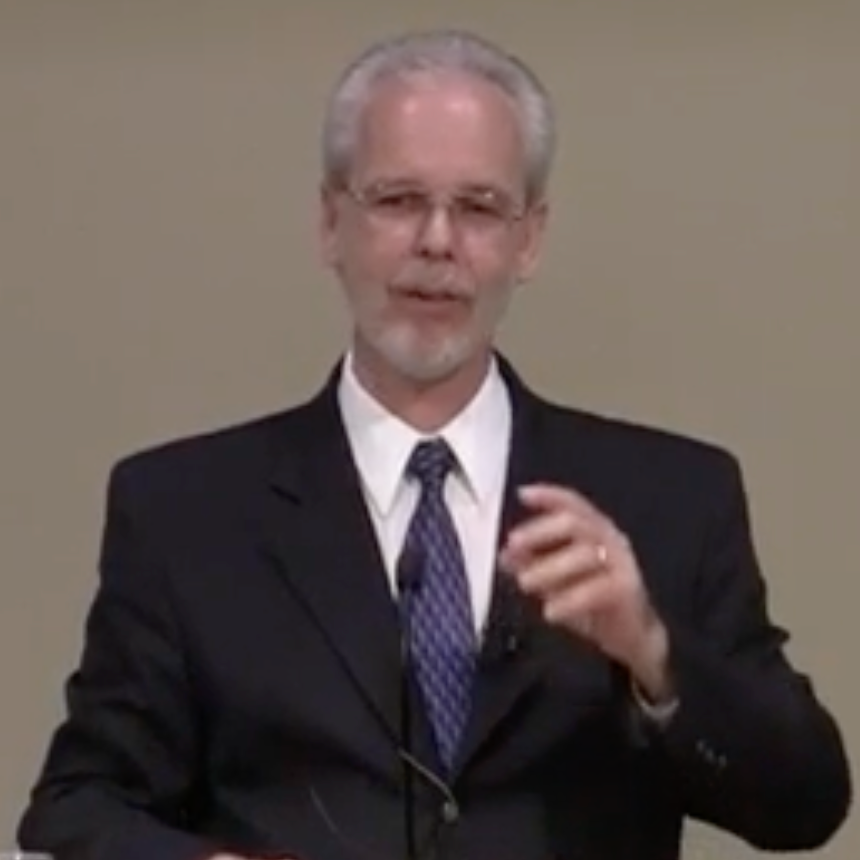
Mark Daniel

Faith: Where Does it Come From?

Romans 1:16-17
Mark Daniel November, 25 2007 Audio
0 Comments
Mark Daniel
Mark Daniel November, 25 2007

Sermon Transcript

Auto-generated transcript • May contain errors

100%
Let me ask you to turn with me
to the book of Romans, chapter 1. Let me say just a quick word by way
of apology, I suppose. We live in probably the most
media-saturated civilization that's ever lived on the face
of this planet. That makes us extremely good
at judging presentations. This is sadly in our society
viewed as just another form of public speaking. And if you're
rating me as a public speaker, you will rate a very poor public
speaker. I encourage you though to break
out of our society and out of our culture. And what we're doing
here is not a performance. It's not a presentation. We're
looking for Christ in the Scriptures. When I come to church and someone
new sings, I do what you do. I listen to how well they sing.
I shouldn't do that. Someone I haven't heard preach
comes and preaches. I listen to how well they, you
know, can fit across the message. And that's just a tragedy. When
I come for one reason only, I come looking for Christ. Just want
to sit with Christ, worship Christ. I find all I need. I find exactly
what I came for. I urge you to do that this morning.
And my subject this morning is faith, and I'm asking this question
about it. Where does it come from? Now,
the importance of that question is made evident by the fact that
there is such a thing as false faith. The Apostle Paul speaks
of it in 1 Corinthians 15. Let me read you a couple of verses
from that chapter. Moreover, brethren, I declare
unto you the gospel which I preached unto you, which also you have
received and wherein you stand, by which also you were saved,
if, now he says not everyone who says they're saved is saved,
but he says if certain things happen, if certain things fall
through, it's evidence that you were. By which also you were
saved, if you keep in memory what I preached unto you." If
you don't forget the gospel, if you don't forsake it and go
back to something else and say, after all, I think they're all
about the same thing. He says, if you keep in memory what I
have preached unto you, unless you have believed in vain. Now, vain faith is primarily
what the word vain means. It's empty faith. It's void of
spiritual substance. It's sourced in human effort
alone. Now that's what makes this thought,
where does faith come from, so important. Faith is identified,
true faith that is, is identified by two basic elements. It's source and it's object. If you're wrong on the source,
you'll be wrong on the object. That makes it paramount that
we understand where our faith comes from. And I hope that by
the end of this message that we'll do what Paul urged the
Corinthians to do, that we'll examine ourselves whether we
be in the faith, whether our faith is true or false. Believing
in vain is nothing more than believing in our ability to believe. That's what our principle religious
emphasis is in our country, to just believe because you can.
That faith is just believing your own ability to believe.
It's believing for no other reason but simply the satisfaction of
our sinful conscience so we can go on to other things. True faith,
then, is distinguished from false faith in that central element. Where does it come from? The
source of true faith is God alone. It comes only from Him. The source
of false faith is man alone. The object, then, of true faith
is Christ only. The object of false faith is
itself. We assume that we're saved because
we believe the right doctrines. We've happened upon the right
words and we believe the right things. Then in that case, our
faith originates from human reason and its object is limited to
a few things that we believe about Christ. If we take for
granted that we're saved because we decided to believe In that
instance, our faith is sourced in human will, and its object
is a false Christ who is powerless to save unless we help him with
our own faith. If we imagine ourselves to be
saved because we've arrived at a place of exceptional moral
sensitivity, we've got a better heart, a good heart, an emotion
that we sense inside that feels good. In that case, faith is
reduced to an expression of the human heart. And its object is
a false god who supposedly loves everybody, but is powerless to
save a woman without their consent. It's essential, then, that we
do what Paul said and examine ourselves, whether we be in the
faith. Now, let's take a look at two
verses in chapter one of Romans, and I want you to understand
what I'm trying to say. Verse 16, For I am not ashamed of the gospel
of Christ, For it is the power of God unto salvation to everyone
who believes, to the Jew first and also to the Greek, religious
or irreligious alike. For therein is the righteousness
of God revealed from faith to faith. As it is written, the
just shall live by faith. Now, let me first draw your attention
to the associations between the words in this passage. Verse
17 holds the very heart of what's said in these two verses in that
redundant phrase, from faith to faith. The mere repetition
of the words draws our attention to that part. There's something
he's saying here that needs to be examined closely. And actually,
the whole meaning of that phrase hinges on the two small prepositions
that precedes that word faith in that passage, from faith to
faith. That word from, as you can tell,
is a word that speaks of source. Literally, it would probably
be just as well understood as out of faith. And the to carries
the idea of not just to a point, but into faith. That's what Paul
is saying. Out of faith, into faith. Simply put, it goes like this.
There is a work of faith that only God can perform. Out of which flows our experience
of faith, which we are ushered into by his work of faith. Out
of a faith that he does, into a faith that we experience with
all our hearts. That simply says, in its final
analysis, is that faith can never be. This is a simple statement. I hope you understand the gravity
of it, because it is not preached in the false gospel of our day.
Faith cannot be produced in or by a human heart, mind or will. There's nothing in the human
being that can produce or even have a hand in producing faith.
And yet, at the same time, God's wonderful work of faith, out
of which our experience of faith flows, makes it such that the
faith He produces within us, totally outside and without our
help, is one we enter fully into, I believe with all my heart.
It had nothing to do with that coming about. It came to me. I didn't ask for it and didn't
want it. And yet it's such a wonderful thing because now it's mine.
It's all mine. And I fully enter into that.
So let's begin then in understanding this passage in the middle of
the verse and work outward from faith to faith leads us over
to Ephesians chapter two, because this is not the only passage
that speaks of faith in this way. Ephesians chapter 2, let's
read first beginning with verse 8. Here Paul speaks of faith using
the same preposition that he used back in Romans 1. For by
grace are you saved or were you saved through faith and that. I know there's a discussion about
what that means. That always refers to the nearest
antecedent, that is, the thing that's closest to it that precedes
it, unless there's some better reason to believe it refers to
something further back. That, I'm convinced in this passage,
is referring to faith. Because no one really debates.
No one really would come up and say, my salvation came forth
out of me. No, that's not even an argument. No one would profess that. And
no one really professes that grace is something that, you
know, that I've worked up. No, grace must come to us. Those
two elements are clearly not of us. So that is reserved simply
for that last thing. Apparently, even from the very
beginning, this thing of faith, because it is the experience
of a human being and there are always cheap imitations for all
the good things God does. But even back then, there was
this temptation to say that faith is something that we do. in order
to get God to do what He does. It's not that way. He says very
clearly here, by grace are you saved through faith and that
not of yourselves. That of yourselves, that little
word of, is the same preposition that Paul used speaking of faith
back in Romans 1. He said, and that is not out
of you. It's not sourced in you. That's
what he's saying. He's speaking of faith the same
everywhere he speaks of it. This thing of faith coming to
believe, Christ didn't come from you. It didn't come from me.
I didn't work that up. It wasn't something that my wit...
Isn't it amazing the synonyms that people use to speak of faith
these days? They can speak of faith, or they
can speak of a decision, and to them it means the same thing.
They speak of faith, or they speak of a choice, and for them
it means the same thing. And it's neither one. It's not
a volitional thing, and it's neither is it an intellectual
thing. Faith is not a matter of hearing this message and finding
your interest piqued in a new thing, something you've never
heard before, a predestination. I don't know what's in the Bible,
but I don't know what it means. And so you get interested and you hear a
little more and a little more. And finally, you get enough information
together where you start to weigh that out and you evaluate the
Scriptures. And then at the end of that mental
exercise, you say, I think there's enough evidence for me to believe
this. And so I believe. It's not that. That's out of
you. It's not out of you. Faith is not out of you. He goes
on, that not of yourselves or out of yourselves, it's the gift
of God. It's God's gift to you. Faith
is God's gift. Now, I know in our way of looking
at a gift, from human to human, you can do two things with it.
I can stick it out to you and offer it. You can take it. Or
you can turn it down, or you can take it and give it to somebody
else because you don't want it. But that's not the way God's
gifts are. Look back in verse 4. Here's
the description of the gift of faith in its very essence. But
God who is rich in mercy, faith is an act of God's mercy. It's
not an act of man's will, it's an act of God's mercy. It's God's
will in action. But God who is rich in mercy
for his great love wherewith he loved us. Not that I love
God and I'm going to decide to believe in him because I take
pity on him because he loves everybody and can't get anybody
to love him back. Faith is not my love to God.
It's God's love to me. It's not me choosing him. It's
his mercy choosing me. In verse five, he gives the very
essence of that wonderful work of faith. Even when we were dead
in sins, hath he quickened us together with Christ." And he
goes right back to what he says a few verses down in verse 8,
by grace. Or you say, what's the work of
grace? It's the work of faith, out of which. That work of faith
only God can do, out of which flows our experience of faith.
Out of faith into faith. And the very essence of the out
of faith is oneness with Christ. You know what a good definition
of faith is? As good as any I know. Faith is the evidence of the
presence of Christ. Only people who have been made
one with the Son of God believe. Now that's surely an act that
we can't take, we can't enter into that. Go on back to verse
9. That's why it says, not of works. And there's that preposition
again. It's not out of works. This thing of coming to truly
believe and rest in Christ and trust the gospel and believe
it as God's very word is not something that comes out of something
we do. A walk down an aisle, a kneeling
at an altar, or a chat with your pastor, anything you can do can't
work that up. You can't make that come out
of you. It's not out of yourself internally or out of yourself,
of your works externally. It can't be produced. Lest any
man should boast, if it could, then salvation would not be by
grace. Verse 10, he says two things
that take us right back to this same thing. For we are His workmanship. That word workmanship says two
things to me. A believer. A believer is the
product of God alone. God makes believers. I'm a believer. I've heard people talk about
that. Are you a believer? I'm a believer. They're sharing common experiences
that they have produced for themselves. God makes believers. No believer
has ever walked this earth that God hasn't personally sent the
very person of His Son into their very being and made them one
with Him. And how can you doubt when you're
one with the very thing you're believing in? The very person
you believe in is in your very being. We are His workmanship,
we're His product, and that makes faith entirely His accomplishment.
And He cements that as the core essence of faith by this little
word. created in Christ Jesus. There's not very many ways you
can turn that word. Creation in the Scriptures, and always
we interpret God's Word in its own context. Creation in the
Scriptures is not remaking something. Oh, my heart, my heart fills
me when I hear people speak any more of how that God made, made
me, made me better. God's making me better. No, if
God's doing anything, He made something brand new. Created
in Christ Jesus. Created through union with Christ. That is the faith. The work of
faith. The essence of faith out of which
flows our experience of faith. It's not of us and not of our
wounds. Faith can never originate in
the mind, heart, or will of a man. There's nothing in a person capable
of such a divine miracle as believing. God has got to create in us something
that did not exist before in order for us to believe. How
cheap, how cheap and how simplistic is the faith of this world. Oh,
just believe. Just make your mind up and believe.
Oh, just look at the verses. You'll see that there's enough
information there for you to say that it's rational enough,
logical enough to believe. No. Know how cheap that is. People who just say, I decided
to believe. Oh no. No. Faith is a divine work of
grace. It's the coming together, the
merger of the very being of Christ with your very soul. Oneness
with Christ is God's work of faith. I like that last verse in Luke
7 where Christ had been discussing with Simon the Pharisee, and
he finally turns to that woman and he says, Thy faith hath saved
thee. Was it the faith she worked up?
That's the way most people read that little equation. Your faith
plus Christ's death equals righteousness, salvation. If you put your faith
to it, it'll work. Oh no, it wasn't hers because
it was what she put together. It was hers because God gave
it to her. It was given to her by divine gift, the very Son
of God. His Spirit abode in her heart.
She had no choice but to believe. It was given to her by God. And
now we can understand back in our original text in Romans 1.
I believe with that information we can understand the relationship
between faith and righteousness. For in this passage, the core
is faith is preceded by righteousness. Look back in verse 16. For I
am not ashamed of the gospel of Christ, for it is the power
of God unto salvation. Let's stop there just for a minute.
The gospel is, these are Paul's literal words, the gospel is
the power of God. Now, we need to be very careful
about that. Some folks say that there's actually power in these
written words on this page. Some folks put the power in the
words. Or they say, well, maybe not the written ones, but the
spoken ones. When these words are uttered into the air and
sound waves go forth, there's power in those sound waves. Other
folks say, no, no, it's not the words written or audible, it's
the concepts. This gospel's got powerful concepts. Isn't it interesting that in
neither case, when this gospel was in the mouth of the Son of
God upon this earth that many people looked at and said, can't
be anything to that. Many folks who said they believed
it turned and left them. If it's not powerful enough within
the words of God's Son reading it and speaking it and talking
about the concepts, if it's not powerful enough in his mouth
to save people, then the power can't be in the words, can it? What's he mean then when he says
the gospel is the power of God? He means exactly what the people
in Samaria meant when they spoke about Simon the Sorcerer. There's
an almost identical phrase, grammatically, to one there. They looked at
all these fancy miracles and miraculous things that Simon
the Sorcerer was doing and they said this about him. This man
is the power of God. Now, what did they mean by that?
Did they mean that this man and God are the same thing? I mean,
this man is God. I don't think that's what they
meant. Well, he's something like a God. I mean, he's got, he has
God's power of his own and he can do things, you know, I don't
think they meant that. I think what they meant was that
God, surely anybody can do things like this. And they were mistaken
in their evaluation, but their thoughts were surely if anybody
can do things like this, God is manifesting his power through
him. That's what they were saying.
And that's exactly the same way that the gospel is the power
of God. It is. Oh, hear me clearly, please.
This gospel is the only means by which God demonstrates His
power and salvation in this world. It's the means of His power.
The gospel has no power. If the gospel itself was the
power, every time it was spoken, people would be saved. Oh, the words of the gospel can't
save you, but in the hand of God, no one No one that God speaks
the gospel to can resist believing the truth of it. Oh no, the power
is of God. You can read them, you can hear
them, you can watch messages, you can go to seminary and study
them in their original languages, but there is no power in the
gospel. And that's why he goes on down
and says the power is of God. For in verse 17 he explains that
phrase. For therein is the righteousness
of God revealed. Now, that therein carries the
idea not of, if it's therein in the literal sense, that in
the gospel is the revelation of the righteousness of God,
then that would be saying that if you could just understand
the words, you could understand cognitively this revelation of
God. That's not what he's talking about. Actually, it carries the
idea of for thereby. by means of the gospel is the
very righteousness of God revealed. Now, we need to understand revelation
then. Faith has something to do with a revelation. If we can
understand how God understands revelation and what He actually
does when He reveals His righteousness, then we can understand a whole
lot about faith. Look in Galatians chapter one,
verse eleven. Paul speaking about the source
of his gospel and the source of his believing. But I certify
you, brethren, that the gospel which was preached of me, the
one I preached to you, is not after man. It's not according
to human thinking. It's not something that men worked
up. For I neither received it of man. Man was not the source
from which I received it. Neither was I taught, and it
wasn't through that intellectual operation of finally putting
things together piece by piece until I decided to believe it.
He said, here's the way I came by that. It was by the revelation
of Jesus Christ. Now, it would be a true statement
to understand that as saying, Christ taught me the gospel.
And that's not a bad phrase. But that only encompasses a very
small part of what Paul was saying. It wasn't that not a man taught
me, but Christ taught me. He's saying that the very subject,
the very substance of the revelation was Christ. He said, I learned
this from Christ because I learned it in Christ. This was through
the revelation of Jesus Christ in me. How do you know that's
true, Mark? How can you put that meaning
on that text because I can read verses 15 and 16? But when it pleased God, who
separated me from my mother's womb, and called me by His grace,
and notice the precision of these words, to reveal His Son in me. Not to me, as though it was an
intellectual act that God was just teaching me things, but
it was a personal revelation. He revealed His Son in me. What
is believing? What is this work of faith out
of which flows our experience of faith, which we enter into?
It is the revelation of Jesus Christ in me. To reveal God's
powerful revelation of righteousness through the gospel then is not
intellectual, as though we're saved by doctrine or ideology. It's not volitional, as though
we're saved by personal determination. Neither is it emotional. as though
we're saved by an act of humility or love. God's revelation of
righteousness, out of which our experience of faith flows, is
first of all personal. Paul wrote in another place,
we are made the righteousness of God in Him. Isn't it only
logical that if the substance of my faith is the presence of
Christ in me, that where the righteous Son of God is, His
righteousness will be? Absolutely. Absolutely. How do you think that we can
be accepted in the Beloved apart from the Beloved? You can't be
accepted in the Beloved outside of the Beloved. It's accepted
because the very one who is now one with me is accepted at the
right hand of the Father. And he's in me. That righteous
work of redemption he worked out is mine. Paul said, with
Christ I was crucified and I was too. Not only that, but the very
righteous nature of the Son of God is in me. I'm so much one
with Him that His nature is my nature. And because of that,
I'm as righteous as He. Don't look too hard. You won't
see it. But it's true, nonetheless. No,
this revelation of righteousness is not ideological. It's personal. It's the very person of Christ.
It's real. Paul, speaking to the Colossians,
tried to, in his bottom line statement of what this mystery
is that we preach Sunday after Sunday and Wednesday after Wednesday,
he just says, well, it's just Christ in you. The hope of glory. That's faith. That's faith. That's
where it comes from. Not only is it personal and real,
but Peter says it's precious. This thing of faith is a precious
thing. It's not a cheap thing that you
can reel off at some emotional service somewhere and decide
to go to heaven. Oh no, it's more precious than
that. But the trial of your faith being much more precious than
of gold that perishes, though it be tried with fire, might
be founded to praise and honor and glory at the appearing of
Jesus Christ, whom having not seen, no, not with these eyes,
nonetheless you'll love in whom Though now you see him not again
physically, yet believe him. You rejoice with joy unspeakable
and full of glory. Just as faith, as I said earlier,
is the evidence of the presence of Christ, equally so, where
he is present, righteousness is present. Faith is the evidence
of righteousness revealed. Now let's finish by looking at
what Finish what ends there in our text. Faith was the heart
of verses, preceded by righteousness and followed by life. Verse 16, verse 17, the very
last phrase, as it is written, also this is exactly what God's
always done for his people, Old Testament and New Testament alike,
and this is what the old writer was saying, the just shall live
by faith. And that word by, interestingly
enough, is that same preposition we've been talking about. The
just shall come to life out of a work of faith that only God
can do, into an experience of faith that he cannot lose. It's
the very presence of Christ within. The just shall come to life through
that work of faith. That's exactly what he's saying.
No amount of rationalizing the gospel can give you life. No
amount of agonizing at an altar or in your room trying to decide
whether you can really, truly, truly believe strong enough will
give you life. The presence of Christ, He is
life. And there's that third element.
If faith, the very underlying substance of faith is Christ
Himself, where He is righteousness is. And where he is, life is. This phrase is used two other
times in the New Testament. Let me just read them to you.
One's in Galatians chapter 3, verses 11 and 12. But that no
man is justified by the law in the sight of God, it is evident.
For the just shall live by faith. Not only do we come to life out
of this work of faith, which is Christ in you, the hope of
glory. that we continue in life that way. Oh, how I agonized. Thirty-six years, I was a religionist. I had produced my own faith.
I had polished it. I had refined it. I had made
it look as real as anybody else's. I was proud of it. I'd worked
hard on it. And yet, when I was by myself,
it took every effort that I had to maintain it. And even my best
efforts, always sooner or later, would end with a time of extreme
despair and doubt. I don't think I'm saved. Some
little something would come up in my mind, and I would say,
you know, you're not saved. I'd say, oh, yes, I am, and I'd
polish on my faith. I do, I do, I do, I do believe.
It was a miserable life. It was a faith I made, and therefore,
it was a faith I could lose. True faith comes out of the presence
of Christ. I didn't ask him to come. I didn't
want him to come. He just came anyway. Kara sang
earlier about being conquered by Christ. Paul called himself
the prisoner of Christ. He abducted me. Took me captive. Would not lead me to my foolish,
homemade faith. He gave me himself as the very
substance of my faith. I don't try to continue believing
any more than I tried to start. His very presence continues to
be the substance of my faith. of them who believe to the saving
of the soul, those who believe to the end, those who are faithful
to the end of their belief. Now faith, the very next verse
is this, now faith is this, it is the substance of things hopeful. It is the fact that yes, as Peter
wrote, I don't see Christ, I don't audibly hear Christ, There's
no way I can prove to you that Christ is in me, but there is
a spiritually substantial reality of union with Christ whereby
I cannot keep from believing the gospel and trusting Christ.
I am made to do it, forced to do it, against my will, as Maurice
Montgomery says, with my full consent. I'm glad it's that way. It's the evidence of things not
seen. The very evidence of that which
we hope for and cannot yet see. The very evidence and reality
and proof of that is Christ in me. And that leads me right back
to that verse I mentioned at the beginning. Paul said, examine
yourselves whether you be in the faith. And he's not talking
about whether you're believing the right doctrine. It's whether
you have true faith or false faith. The only way to know that
is where it comes from and he talks about that in that verse
as well. He says, don't you know your own selves? How that Jesus
Christ is in you? Isn't it interesting that he
spoke of faith and he said the proof of it is whether Christ is in
you or not. So I leave you with this simple test to know whether
your faith is real faith or not. Did it come from you? Or did
it come from God? Did you produce it and do you
have to keep cobbling on it to keep yourself believing? Or does
it come from the very presence of Christ? You know, a true believer,
one of God's sheep, will have no problem throwing away that
old, wrinkled, tarnished, dead, lifeless, evil faith that they
produced. A true believer will say, why
did I carry that around all these years anyway? And they'll look
and they'll say, you know, I could never have done this for myself.
I could never have made myself believe in a God of electing
grace. I wanted to believe in the God
who would save me because I earned it. I could never believe in
a Christ who died for His elect alone. I wanted to be the one
who did better than the others who did their part to make Christ's
death a success. And believing in a Holy Spirit
that only comes to certain ones, not the one who tries to get
everybody to believe. I didn't want to believe in one
like that. I could have never brought myself to believe with
all my heart in the God who chose His own people, sent His Son
to so effectively die for them that He will not lose the one,
and the Holy Spirit who won't let you slip out of this life
without coming into contact somehow with the gospel of grace and
being powerless against it. There is a work of faith. out
of which flows our experience of faith. And that work of faith
is Christ in you, the hope of the Lord. Let's pray.

Comments

0 / 2000 characters
Comments are moderated before appearing.

Be the first to comment!

Joshua

Joshua

Shall we play a game? Ask me about articles, sermons, or theology from our library. I can also help you navigate the site.