Bootstrap
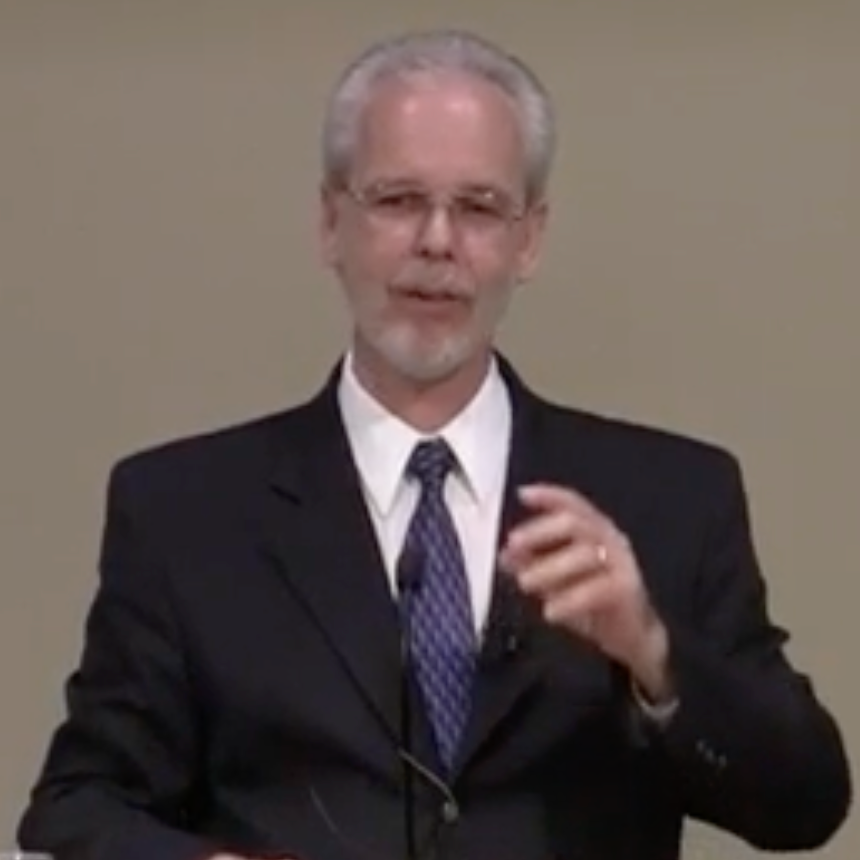
Mark Daniel

Is Christ Your Passover?

1 Corinthians 5:7
Mark Daniel January, 28 2007 Audio
0 Comments
Mark Daniel
Mark Daniel January, 28 2007

Sermon Transcript

Auto-generated transcript • May contain errors

100%
While you're turning to 1 Corinthians
chapter 5, let me just say that as many of you already know,
the Lord has made it clear that our assignment in Albany, Georgia
was always intended to be temporary. And much like the Apostle Paul
and Barnabas, once they had made their first tour, went back to
the church that sent them out, you guys sent us out and you
were stuck with us. We'll be back, Lord willing. We'll make
a few preparations, sell the house and things like that, and
just would appreciate your prayers in that regard. We say it an
awful lot, just remember it's in prayer, but I've come to understand
the importance of prayer. It's not so much to get what
you want. is to make sure that we understand where it comes
from. We just pray because we can't do it ourselves. And it
honors God that way. So if you would honor God with
us in praying for what we can't do for ourselves. I'd like to
ask one question this morning and just read one piece of verse
seven. My question is, is Christ your
Passover? Let's read that on the very end
of verse seven. For even Christ, our Passover, is sacrificed for
us. Now, the answer to this question,
is Christ your Passover, is far simpler than most people make
it. Many preachers miss the point entirely when they put it this
way. If you repent, if you believe,
if you confess, if you're faithful, Christ will become your Passover.
That's not what I'm asking. Those who listen to them and
respond to this question likewise and say, yes, Christ is my Passover
because I, and you can fill that in with anything you want. It
just shows the fact that you didn't understand the question
in the first place. The issue is not what are you
doing and what am I doing to make Christ our Passover, but
the question I'm asking and what this passage is asking is, did
Christ himself make himself my Passover? Did he make himself
your Passover? That's the issue of the gospel.
The issue of the gospel is that. The matter of whether or not
Christ was sacrificed for you was settled when God made him
a sacrifice for sin on Mount Calvary some 2,000 years ago.
That question was settled. If he was not your Passover then,
there's nothing within your power to make him your Passover now.
The very fact that there are those who would insist otherwise,
that there is something you must do to make Christ your Passover
is just an admission of the fact that he failed to be your Passover
then, and is not worthy to be your Passover now, if you have
to make him so. To say that you must make Christ
your Passover is simply to confess that He alone did not succeed
and He's insufficient to save you now. I know this. That if Christ was not my Passover
before I entered this world, He will not be my Passover when
I leave it. That means simply this. Here's
where the Gospel puts us. He alone determines whose sins
are passed over He alone gets the glory for saving sinners,
and He alone has left us completely at His mercy. If the decision
is up to us, it's not mercy. It's something that we accomplish
on our own. We deserve some credit in that, but it's mercy, and
therefore it's at His discretion. Now, the point of this passage
is, and the point of everything I have to preach today is simply
this. Christ becoming or being our Passover is not an option,
but it's a divine necessity. God put it this way, when I see
the blood, I will pass over you. He didn't say, when you see the
blood, then I'll pass over you. When you claim the atonement,
I'll pass over you when you make a decision for Christ. I'll pass
over you. He said all he needed to say was the blood. He didn't
need your opinion. He didn't need your decision.
He doesn't require anything from when I see the blood. I will
pass over you period period. That's that's the question. Is
Christ your Passover when his blood was spilled, the awful
requirement was met and the Passover was established. It was established
for everyone whose sins he bore in his body. That's the way God
works. That's the truth of the gospel.
Now, since we can't make him our Passover, there is a very
urgent question that arises out of that. How can I know? How
can I know if he is my Passover? Now, that's an urgent question. Because if it's already settled,
and nothing I can do to change it, all that's left is a need
to know. Do you need to know? That's a
good sign. If you really need to know, that
is a good sign that God's doing something for you. Because the
simple truth is this, if your heart finds rest in the effectual
sacrifice of the Passover lamb, if your mind is confident of
the surety of Him passing over, the sins and the death of everyone
he died for, then you can be assured of this, that if you
rest in that, Christ is your Passover. Always has been, is
now, and always will be. He's a permanent Passover for
all for whom he suffered. Now, let's look at these few
words in this part of verse 7. I want to preach a very simple
message this morning. I only want to talk about the
sacrifice and its effects. Now, it says in verse seven that
Christ, our Passover, first of all, is, that's old English,
it's literally a past tense verb, it's was. It carries a sense
of completion. Christ, our Passover, was sacrificed,
past tense. We're not talking about looking
at something that happened in the past and making it into something
else by doing something now in the present. We're talking about
something that happened in the past and was finished and accomplished
and established in its results for the present. Christ, our
Passover, was sacrificed. It's already done. It's out of
our hands. It's out of our wills, beyond
our wills, beyond our works. Christ cannot become anything
to us now that he has not already become for us on the cross. He was sacrificed. Look over
in Hebrews chapter nine. The portion I want us to look
at there this morning. The overwhelming purpose of these
scriptures is to emphasize this fact that if this was a past
successful act. Look at Hebrews 9.22. And almost all things are by
the law purged with blood. Now, the almost doesn't mean
that there was some purging without blood. He was just saying that
when you read through the Old Testament, just pretty near everything you
see in it's got blood on it. That's what he's saying. Just
about everything's got blood on it in the Old Testament. Almost
all things are by the law purged with blood, and without shedding
of blood is no remission. You know, not many people have
trouble with that. I think most folks understand the judicial
implications of a sinner. rank, undefiled, helpless, hopeless,
powerless to do anything for himself, and a holy God who cannot
accept him, will not accept him, they cannot get together, and
a substitute who intervenes, bears the sins of the sinner,
fully accomplishes the requirements of the holy God, and therefore,
judicially makes him righteous. No one really has a problem with,
by the shedding of blood, his remission of sin. But what people
don't understand much these days, I don't know about you, but I
don't see very many people who understand that with the shedding of blood,
there must be remission of sin. That's the goodness of the gospel.
That's the truth of the Passover. The shedding of the blood has
happened, and therefore there must be forgiveness of sin. Let's
look down through the rest of these verses. Verse 23. It was
therefore necessary that the patterns of things in the heavens
should be purified with these, that is, with these sacrifices
of animals. It was necessary that it be that
way. It was the only way on earth that we could illustrate the
truth of God's holiness and his absolute inability and unwillingness
to accept anything with sin in it. But he said it was also necessary
that the heavenly things themselves, the spiritual realities themselves,
be purified with better sacrifices in these. And then he begins
his discussion of the Lord Jesus. For Christ's is not entered into
the holy places made with hands. He didn't just go into the tabernacle
or the temple and offer the best animal sacrifice that anyone
had ever seen. No, far more than that, far more perfect. These,
he says, are just figures of the true, just shadows and types
and representations of the reality of Christ. But he entered into
heaven itself. Now, to appear in the presence
of God for us, we're talking about a Passover that has taken
place in heaven. This is a Passover that has been
accomplished before God. Verse 25. Nor yet that he should
offer himself often, frequently, in the same way that the high
priest enters into the holy place every year with the blood of
others. For then must he have often suffered since the foundation
of the world. Even if we're only talking about
The annual sacrifice of the atonement, that yearly sacrifice, which,
by the way, my understanding of that is this. There were many,
many other sacrifices. That's the whole cycle of the
Old Testament, sin, sacrifice, sin, sacrifice, and the wheel
ever turned. Every time someone would sin,
they'd bring a sacrifice, the appropriate burnt offering, the
appropriate animal was brought to make sin, demanded a sacrifice. every year they would come in
and they would do a sort of cover-up that was the day of atonement
was to cover everything that that's my best if we don't recover
every year that even if we just said Christ would only have to
be like the law in the yearly sacrifices how many times through
the ages when it had to be crucified only work like that It took something
to appease God, and that was only good until the next time.
And that was the problem with the law. That's the problem with
religion's Christ. It only covers the current need. It can't go beyond that. It can't
cover everything in the past, and it can't cover everything
in the future. It's only good for one thing at a time. Look at
what the writer of Hebrews says here. He puts that foolishness
to rest. For then must he have often suffered
since the foundation of the world, if that's the way it worked,
but now It's not like that. Not with Christ. Those were just
the images. Now, once. What a beautiful word. Once. Can you imagine a priest worn
out with offering bulls and goats and sheep? Once? We not only
have to do this one time? One time. But now, once. In the end of the age, in the
end of the world, hath he appeared? And here's something no Old Testament
priest ever did. To put away sin. If we wanted to translate that
in a modern way, we would have probably used the word unknow.
You know, you know laws that are oppressive. You know, you
know things that you need to get out from under. I've got
some sin I need to get out from under. I have a sinful nature
that's tremendously oppressive to me. I need to know there is
some way to get out from under this. One sacrifice. forever has put away, annulled,
abolished, completely excused every last sin. Let's read that
again. Once, you can add the words for
all in there, it's perfectly good because the word carries
that idea. Once and for all in the end of the world hath he
appeared to put away sin by the sacrifice of himself. Now, just
how much did it get put away? He appeared to do it. Did he
accomplish that? Look at verse 27. And as it is appointed unto
men once to die. Same word. The exact same word.
Once for all. He's making, he's not, I used
to read that verse and the only way we ever used to use that
was to frighten people into making a decision. One of the men wants
to die, better get up here. Need to get this thing right.
He's not talking about that. He's still making a he's still
making a comparison between the law and Christ and the absolute
completion and the absolute success of his finished work. He says,
just in the exact same way that people only die once reincarnation. I'm sure it was a beautiful invention
of some Hindu way back younger in India. However, it's not true. You only get to do that one time
one life. one day. He's making the same
thing about Christ's death. Only one time, and it'll never
have to be gone back through again. You only get to live one
time. You're only going to die one
time, and you won't have to come back. In the same way Christ
bore the sins of many, bore their transgressions, put away their
iniquities, absolutely saved the people he died for one time
in the same way that we do. He won't come back again. It's
not necessary. It's not necessary, it's a done
deal. It's appointed unto men once to die, but after this the
judgment in the same way, that word so in 28 says, this is what
we're talking about in that same way as the permanence of death.
So Christ was once permanently offered to bear the sins of many. And here we begin to see the
second thing that I want to talk about in this sacrifice. It was
a past sacrifice completed successfully in the past. And it was completed
for a particular people. I heard Henry Mann say one time
years ago, I was still in Africa, and he said, Mark, you can't
understand the scope of Christ's death until you first understand
the effect of it. Now, if you're coming at it the
other way and you're saying, well, I know Christ died for all people, so
what you're saying about a death that put away all sin he died
for, if in your mind he died for all, you can't make heads
or tails of this message. You'll be forever turning in
that circle. But if you start not with all men, not with the
world and not with everybody, like we live in this all-inclusive
world now, but if you start where you ought to start, if you start
with Christ, it's not hard to understand. He put away sin. He abolished that stuff. It can
never come back. It's dead. You only die once.
It's dead and gone and it won't come back. And if you understand
what he accomplished, then you understand that he only did that
for many. Not a misprint. Perfectly good
translation in our Bible. Not a misprint. He died not for
all. There were three or four ways
in Greek they could have said he died for all. But he didn't
want to say he died for all, because he didn't die for all.
He put away sin. He didn't just make it possible
to get out from under sin, or he didn't make it possible to
have a Passover. He put away sin. And all those sins he put
away have a Passover. Obviously, he didn't do that
for all, but he did it for many. A great many. People that no
man can number. From every kindred, tribe, and
tongue. Don't rule yourself out yet.
Well, if he'd only died for many, I may not be in there. And you
just may well be. But he died for many. This is,
you don't have to change, you don't have to tamper with the
surety of the atonements. don't bother that goodness sake
you're treading on heavenly ground when you do that this is what
christ did before god in heaven it's not something that was done
in a tent in the wilderness or in a temple in jerusalem this
was done before god don't tamper with that it's not your business
just believe the truth christ put away sin for all he died
for how do i know if i am there well let's go on that's what
the subject of the message is it's christ or apostle if christ died for all sinners
then everyone's sins must be passed over because this scripture
teaches that he put them away. If you did it for everybody,
then everybody's sins are gone. But if, as Paul wrote, if Christ,
our Passover, was sacrificed for us, let me ask you a question. Is there not a difference between
us and them? Ours and theirs? Obviously there
is. Obviously there's a big difference.
the righteous in the Bible and they're the wicked. There are
believers and there are unbelievers. And you can't find in your Bible
that Christ died for a single unbeliever. He died for believers. If you read John 3,16 or write,
you read it that way for it literally says, For God so loved the world
that he gave his only begotten Son that all believers should
not perish but have everlasting life. And we died for believers.
He didn't die for unbelievers. He didn't die for the wicked.
If he died for the wicked, the wicked are going to be in heaven.
If he died for unbelievers, and it doesn't matter if you believe
or not, the believers are going to be in heaven because of what? Because
he put their sins away. He annulled them. Don't mess
with the sacrifice. Just realize that it obviously
wasn't for everyone. Let me finish reading this one
in Hebrew. Just like death, Christ was once offered to bear the
sins of many unto them who look for him. shall he appear the
second time without sin unto salvation. Now think about that
a minute. What does that mean without sin?
Did he come the first time with sin? Why not? He was the son
of Mary, but he wasn't the son of Joseph. He did not inherit
Adam's sinful seed. No, he didn't come with sin in
the first place. So what's it mean? He will come
the second time without sin if it doesn't mean he came the first
time with sin. He'll come the second time without sin because
while he was here. He appeared with sin. I love
that verse that Peter wrote. He said that he himself bore
our sins. He appeared with sin in his body
on the tree. That's what he's talking about.
He'll come back and those sins won't be with him. They were
with him once. They were so much with him that when God saw them,
as we read earlier in Psalm 40, He said there are more than the
hairs of my head. He claimed them as his own, but he won't come
back with them the second time. Why? Because it was a successful
sacrifice. Because he put them away. Because
he did what he came to do. He sacrificed himself for the
sins of many. Thank God the successful sacrifice
is there. There is a sure, there is a Passover.
There is a Passover. The only thing that we need to
understand is, is it your Passover? Is it my Passover? Now the second
thing I wanted to talk about is Not only is it a past sacrifice
and a sacrifice with a particular scope, but I want you to understand
that it's a sure effect. For Christ, our Passover, that's
as literal a translation as you can get of that original word.
It's a passing over. It's a forgetting about it. There's
nothing there. You just go right on by. It's
a passing over. Our Passover was a sacrifice
for us. Look back at Exodus 12 with me
for just a verse or two. Exodus 12. Let's look at verse
12. Here's God speaking to Moses. For I will pass through the land
of Egypt this night and will smite all the firstborn in the
land of Egypt, both man and beast, and against all the gods of Egypt
will I execute judgment. I am the Lord. and the blood
shall be to you for a token now understand this the blood shall
not be a token to you it'll be a token for you that's the that's
the idea this is not you know that this is a token to you this
is not to teach us about the blood this is a token for you
to God the blood shall be a token for you for the token upon the
houses where you are when I see the blood I will pass over you
and the plague shall not be upon you to destroy you when I smite
the land of Egypt. Look on over in verse 21. Then Moses called for all the
elders of Israel and said unto them, draw out and take you a
lamb according to your families and kill the Passover. You shall
take a bunch of hyssop and dip it in the blood that is in the
basin and strike the lintel of the two side posts with the blood
that is in the basin and none of you shall go out at the door
of his house until the morning. For the Lord will pass through
to smite the Egyptians, and when he sees the blood upon the lintel
and on the two side posts, the Lord will pass over that door
and will not suffer the destroyer to come into your houses to smite
you. God makes it clear that where
that Passover is, who Christ was sacrificed for there by necessity
must be a passing over. Look with me, one final passage
in Romans chapter 8. You can read in verse thirty
thirty one. What shall we say then to these
things? If God be for us. Who can be
against us? I like that better without the
italicized words. It's just a simple it's almost
it's like a mathematical equation. Mathematical equations are so
good because they're always the same. 2 and 2 is always 4. 2 and 3 is always 5. It's always the same every time.
This reads like that. God for us? Who against us? It's always that way. If God's
for you, there's nothing that can be said to the contrary.
He goes on and explains that. He who spared not his own son
but delivered him up for us all. Now notice he didn't say delivered
him up for all, he delivered him up for us all. And again,
we're emphasizing that second person pronoun. There is a difference
between the second and the third, the us and the them. He delivered
him up for us all. But he doesn't say he delivered
him up for them all. He delivered him up for us all. And here's
the question about that. If he did that, if he loaded
Christ with my sins, if he bore them in his body, so much so
that he took my place that God killed me in him, If he did that,
how shall he not with him also freely give us all things? Now, what are these all things?
It's the same things that he mentioned there in verse 31.
What shall we say to these things? And he began that back up in
verse 29. For whom he did foreknow. It's that eternal love of God
before the foundation of the world. I've loved you, he said,
with an everlasting love. That's what Christ purchased
for me. You know, God could have never loved me from all eternity
if not from His perspective, His eternal perspective, had
He not seen me in Christ. He only loved me eternally because
He conceived ahead of time. He saw me in Christ. And because
of that, He foreknew me. That doesn't mean He knew that
I would make a decision somewhere down the road. It meant that
He loved me in advance. He loved me before I was even
created to be loved. He loved me before there was
ever a man who was my ancient ancestry. He loved me before
I ever came into this world. He foreknew me. He also did predestinate
those he foreknew to be conformed to the image of his son. What
Christ has purchased for me is everything that's required for
God to predetermine. What a wonderful thought. I don't
know why I ever ran from that. What a beautiful thing that God
would so love me in advance. as to predetermine everything
in my foolish life. The fact that I've lived the
way I've lived only is a testimony to what I would do if I could.
And yet, over top of that is a predestinating grace of God
that had me in the right place at the right time. I met up with
a cassette tape. Henry Mahan asked me four questions. If Christ died for everyone,
what does His blood have to do with salvation? If God loves
everyone, what does His love have to do with salvation? If
the Holy Spirit's calling everyone, what does the Holy Spirit have
to do with salvation? If God's will to save everyone,
what's His will got to do with salvation? I couldn't answer
one of them. How'd I end up there? Predestinating grace. Christ purchased that for me.
He purchased that for me. He foreknew me. He predestinated
me to be conformed to the image of His Son. He's making me just
like Christ, the firstborn among many brethren. Moreover, whom
he did predestinate them, he also called that moment in my
life when I could no longer justify the foolishness that I was doing
in religion and had. I didn't make a choice for Christ.
I was left without a choice. He called me. Do you ever think
about that thing about making a decision for Christ? Can you
see somebody walking up to Paul? The Lord has just slapped him
off his donkey on the way to Damascus. He's sitting there
in the dusk, no rubbing his eyes, and he says, Are you ready to
make a decision for Christ? No, I think that's already been
made. I think the Lord has already decided that for me. Oh no, then
he also called Christ, purchased that for me. Whom he called,
then he also justified. I have no sin. No, not one sin before God, because
Christ purchased that for me. And then whom he justified, them
he also glorified. My glorification is as sure as
though it was already done. Now, if he delivered him up for
us in order to add these things, how can he not give us these
things? Paul's talking about a spiritual
impossibility. It cannot be. The price was paid. The price was accepted. The deal
is done. We even do that as mere sinful
men. We know better than that. If you have a debt and I go down
and pay it, and then they tell you you still owe it because
Mark paid it and you didn't, that won't even apply in a sinful
society. Don't you think God's at least as righteous as we are? Oh, my, infinitely more so. The
price was paid. God said it was enough. There
is a pass-up, and it cannot be revoked and cannot be taken back. He says. Verse 33, then, if that's
the way it is, just tell me who. Who shall lay anything to the
charge of God's elect? It's God that justifies. But Mark, I know that guy. I
know his life. He cannot be righteous. God says
he is. Who can say he's not? You can
say all you want. God says he's right because God
sees differently. God sees through the blood of
Christ and finds not one speck of sin. That man got a Passover. That woman has a Passover. And
when it comes time for God to execute judgment on this world,
they are going to be Passover. Because Christ purchased it. It's God that justifies. Well,
who's he who condemns them? Go ahead, step on up, if you
will. Say what you want to. Here's the whole crux of the
matter. If you understand anything, this will settle all arguments.
Who can condemn one of these? It's Christ that died. We're
not talking about a bull or a sheep or a goat. We're not talking
about your best good works. We're not talking about a good
teacher going about doing good things. We're talking about a
sacrifice. We're talking about a sacrifice
that puts sins away. Who's going to condemn a single
one of those? And yet there's more. Look at
what he says there. What more could there be? But
he uses those words, yea, rather. It's Christ that died. That settles
all arguments. Yea, rather. That means more
importantly. What could be more important
than the sacrifice of Christ? The success of it. Yea, rather. That is risen again, the proof
that it worked. All you have to do to understand
the truth of that is ask what if he hadn't been raised again?
What would have shown? Son, that was a good attempt.
You tried hard. You fought a great battle, but
you just didn't put him away. And therefore, when I punished
you for sin and killed you, you did not put them away. I'm going
to leave you there. But the fact that he raised him from the dead,
what's that mean? That means he put him away. That
means that he annulled every sin that he died for. That means
that God was pleased with everything he did. Yea, rather. Only one
thing more important than the sacrifice is the success of it.
And that's what we're preaching about today. There is a sure
and certain Passover. There will be an absolutely irrevocably
passing over of every single one of these for whom he died
when it comes judgment day. Their judgment is passed. It's
already been paid. There's no other, no further
transaction required. Well, when we get to heaven,
we'll still have to give account for those little sins we do.
Show me that in the Bible. I've already been there. In the
person of my representative, I've already been there. God's
already unleashed the full wrath of his holiness against me and
my sin in the person of my Savior. I have a Passover this morning.
Do you have a Passover this morning? Do you have any other hope of
salvation than this? Mark, I understand what you're
saying. Do you find any other thing, any other conclusion to
this, was that just when he hung on that cross, your only hope
was that your sins were in that ugly mass of sin that was upon
him? Do you have any other hope than that? Do you see, as a result
of that then, are you convinced of the hopelessness of any efforts
you would have to try to make him your Passover? Do you see
the foolishness of that? That if he didn't die for you,
then nothing you can do can change that. Do you see that? Have you
come to that place? Do you resign yourself to his
sovereign will and admit that your salvation is entirely up
to God and he only looks at Christ and who he died for? That's all
God's looking for. Can you resign yourself to that? Can you just
stop? You know, faith is not getting
up and doing something. Faith is actually going the other way.
You'll find the first time you ever believe is when you stop
trying to. This is just fact. Gospel fact. Bible fact. The
truth of Christ. And you just say, it's this way. Can you walk away? Good question,
Mark. Is Christ my Passover? I don't
know. But you know what will be will be. And I suppose I'll
just have to let it play out, and we'll see if I'm in or if
I'm not. Can you do that? Can you do that? Do you absolutely
have no need to know? Or is there a gnawing, hunger,
a pain, a heart pain? Couldn't go another second, can't
go another minute. I've got to know. Do you remember that time
when you found some place somewhere in your heart, some corner, got
away from everybody, you said, Father, I understand. You've
made it perfectly clear to me. You chose the people. And I may
not be in them. But Lord, I'm just asking if...
I know you can't go back and re-choose and you don't add anybody
to it. But Lord, I need to be in that
number. And I know the death has already
been done. Christ died once and it won't
be done again. And whoever sinned wrongly, that's those who are
going to be saved. The same ones God's chosen. Lord,
I don't know if you died for me or not. But I just know that
everyone you died for must be saved. Is there not some way
I can be in that number? Lord, I just want, I need to
know. I need to know. And in all that
stuff that makes no sense to my natural mind, I just finally
come to this place. To pray as a sinner makes no
sense to the natural mind. It's already cut and dried. It's
been established before the foundation of the world, and yet I found
myself saying, Lord, I don't know how, but if there's some
way, that he could be my Savior, and that what he did could have
been done for me, and that what you chose, I could be in that
number, Lord, have mercy on me. I don't understand it, just have
mercy on me. And I found the sweetest response. He who comes unto me, they need
to know who the me is. It's the Christ I've been preaching
to you today. If that's the Christ you're coming to, you'll hear
the same response. He who comes unto me, I will
in no wise cast out. This isn't the only Passover
there is. Is it yours? Oh, may the Lord make you aware. May he make you to understand.
Find your place before him today and may you know. May he show
you that if he is or if he isn't. May the Lord bless you today.

Comments

0 / 2000 characters
Comments are moderated before appearing.

Be the first to comment!

Joshua

Joshua

Shall we play a game? Ask me about articles, sermons, or theology from our library. I can also help you navigate the site.