Summary
John Newton exemplifies God's sovereign grace transforming a wretched sinner into a saint through Christ's finished work, moving from African slave trader and blasphemer to devoted preacher and hymn writer. His dramatic conversion during a violent storm at sea illustrates Romans 5:20—"where sin abounded, grace did much more abound"—as Newton's pre-conversion depravity and subsequent sanctification demonstrate the infinite sufficiency of God's grace independent of human merit or ecclesiastical standards. His enduring hymns, particularly "Amazing Grace," reflect his theology that saints are made by God's grace manifesting Christ's exaltation, not by human ecclesiastical requirements, making Newton a powerful testimony to justification and transformation through the Gospel.
Questions Answered in This Article
What does the Bible say about grace?
The Bible teaches that grace is God's unmerited favor towards sinners, enabling salvation and transformation.
Ephesians 2:8-9, Romans 5:20
What does the Bible say about God's grace?
The Bible teaches that God's grace is unmerited favor towards sinners, demonstrated supremely through Christ's sacrifice.
Ephesians 2:8-9, Romans 5:20
How do we know John Newton's conversion story is true?
John Newton's conversion is documented in his writings and his transformation from a blasphemer to a preacher of grace is attested by historical accounts.
1 Timothy 1:15, Romans 5:8
How do we know God's grace is true?
God's grace is validated through the transformation of lives and the fulfillment of His promises in Scripture.
Titus 2:11-12
Why is grace important for Christians?
Grace is central to the Christian faith as it provides the foundation for salvation and empowers believers to live righteously.
Ephesians 2:8-9, Romans 6:14
Why is John Newton an important figure in Christian history?
John Newton is important for his profound conversion and enduring legacy as a preacher of God's grace.
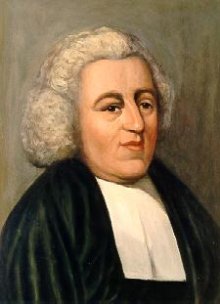
We must distinguish very carefully between what men call saints and what God calls saints. Ecclesiastical saints are so called after an earthly standard. The lives of men are examined, and if they pass the human requirements of saintliness which have been set up by the church courts, then they are called saints. But when God makes a saint, He does it by exalting the Lord Jesus Christ and manifesting His grace to a sinner.
Of all the examples which I know in the history of church, the most outstanding is that of John Newton, who became known as the second founder of the Church of England. One of his hymns has become famous in America - where it is more sung than in England. This English Preacher wrote:
Amazing grace, how sweet the sound,
That saved a wretch like me:
I once was lost, but now am found,
Was blind, but now I see.
As a child, his mother taught him many verses of Scripture by heart, and when she died, he was no more than six years of age, but the Word was written on his Heart. He was reared in the home of a relative who was not a Christian, and became an apprentice seaman. Wild and dissolute, he deserted from the British navy and ran away to Africa in order, as he put it in his memoirs, "that I might sin my fill." He had the reputation of being able to curse for two hours without repeating himself. In Africa he fell in with a Portugese slave-trader, and while this man was absent from his home, John Newton was treated like a dog by the black woman who was the chief of the trader's harem. For months he was forced to grovel in the dirt and pick up his food with his mouth from the ground, being lashed by a slave if he touched it with his hands. Thin and emaciated, he decided to escape inland. Remember that this was the Africa of the 18th Century.
He survived horrible ordeals, and reached a spot on the coast where, with a signal fire, he drew a small boat from a passing ship, the captain thinking that he was a native wishing to sell ivory. As he was a skilled navigator he became the ship's mate, and soon after, when the captain was ashore, broke out the ship's rum and got the whole crew drunk. The captain, upon his return, struck him so violently that he fell overboard and would have drowned in his drunken condition, had not a sailor speared him in the thigh with a boat hook, making a wound so great that, ever afterwards, John Newton could put his fist in the scar.
Weeks later, as the ship was returning to Britain, a great storm blew it off course. They passed north of Ireland and came, still in great storm, off the coast of Scotland where the ship almost foundered. It was in this great storm, when Newton had been manning the pumps for days, that he cried out to God, and was wonderfully saved in a moment. It was of this storm that Cowper wrote:
God moves in His mysterious ways
His wonders to perform:
He Plants His footsteps on the seas
And rides upon the storm.
John Newton, from the time of his conversion, when God had suddenly made him a saint through the finished work of Christ in grace, became a pillar of the Church of England, chaplain to Parliament, preaching before the King. The old African blasphemer was the one who wrote the hymn:
How sweet the name of Jesus sounds
In a believer's ear:
it soothes his sorrow, heals his wounds
And drives away his fear.
On his monument in Westminster Abbey, where he lies buried, we read that he had been "a slave of slaves," but that the Lord had delivered him out of bondage. His sin had abounded, but God's grace flooded over the mountains. Newton described his experience in a great poem:
In evil long I took delight,
Unawed by shame or fear,
Till a new object met my sight,
And stopped my wild carear.
I saw One hanging on a tree,
In agonies and blood:
Who fixed His languid eyes on me
As near His Cross I stood.
Sure, never till my latest breath,
Can I forget that look:
It seemed to charge me with His death,
Though not a word He spoke.
My conscience felt and owned the guilt,
And plunged me in despair,
I saw my sins His blood had split,
And helped to nail Him there.
Alas! I knew not what I did,
But all my tears were vain:
Where could my trembling soul be hid?
For I the Lord had slain.
A second look He gave, that said,
I freely all forgive.
This blood is for thy ransom paid,
I died that thou mayest live.
It is no wonder that John Newton was a great preacher of grace. He had learned that where sin abounded grace did much more abound: grace overflowed: grace was infinite. And he had become the astounding example of the fact that grace is not withheld because of sin.
Comments
Your comment has been submitted and is awaiting moderation. Once approved, it will appear on this page.
Be the first to comment!