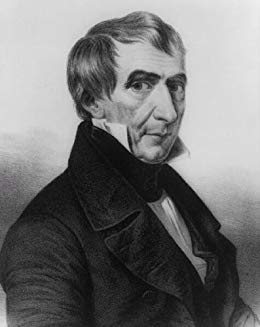
The article "The Completeness of Forgiveness (Part 1)" by Henry Law addresses the theological doctrine of complete forgiveness of sins as articulated in Scripture. The author emphasizes that forgiveness is absolute and originates from God's infinite character, supporting his assertion with multiple biblical references, including Psalms 103:3, Colossians 2:13-14, and Isaiah 43:25. Law argues that Christ’s atonement ensures that all sins are fully pardoned—from the smallest transgressions to the most egregious offenses—thus no single sin remains unwashed by His blood. The doctrinal significance of this teaching is profound for Reformed theology, as it underscores that believers are eternally secure in their standing before God, liberated from guilt and condemnation through complete reconciliation via Christ's sacrifice.
Key Quotes
“He who has fled for refuge to a Savior's wounds looks out from his high watch-tower and limitless forgiveness spreads before him.”
“When forgiveness smiles from heaven, it smiles forever and never darkens into avenging frown.”
“Forgiveness is complete—their sins have been cast as far as the east is from the west.”
“I even I am He that blots out your transgressions for My own sake and will not remember your sins.”
What does the Bible say about the completeness of forgiveness?
The Bible teaches that God forgives all our iniquities completely, with no sin remaining unpardoned.
Furthermore, various scriptures convey that God blots out sins completely. In Isaiah 43:25, He declares, 'I, even I, am He that blots out your transgressions for My own sake and will not remember your sins.' This portrayal of God emphasizes His initiative and desire in providing unwavering forgiveness. The completeness of forgiveness reassures believers that every sin, regardless of its nature or magnitude, is entirely addressed through Christ's redemptive work, thus enabling a joyful and confident relationship with God.
Psalm 103:3, Romans 8:1, Isaiah 43:25
How do we know God's forgiveness is complete?
God's forgiveness is complete because it is based on His infinite grace, and He declares that He will remember our sins no more.
Moreover, Christ's sacrifice confirmed this completeness; His blood fully paid the penalty for our sins, which means there remains no outstanding debt. Colossians 2:14 states that God has 'canceled the record of debt that stood against us.' This total cancellation underscores that God does not merely overlook or forget sins partially but genuinely removes them entirely, thus guaranteeing that believers can fully cherish their forgiven status before God.
Why is the concept of complete forgiveness important for Christians?
Complete forgiveness is vital for Christians as it affirms their status before God without condemnation and empowers them to live joyfully.
Additionally, this complete forgiveness enables Christians to exhibit grace in their relationships with others, fostering an attitude of love, mercy, and forgiveness that mirrors God’s own heart. This transformative understanding instills hope and joy, empowering believers to proclaim the good news of salvation, as they rejoice in their position of acceptance before God, amidst their struggles and doubts. The assurance that all sins are forgiven encourages a life of worship and gratitude, marking the true Christian experience.
Who forgiveth all thine iniquities; who healeth all thy diseases; - Psalms 103:3
"Who forgives all your iniquities."
Forgiveness of sins has been reviewed in relation to its NEED, its SOURCE, and its PROCURING CAUSE. Attention now rests on its COMPLETENESS. At the outset let it be stated, that here it eludes full grasp and exhausts description. It presents itself as a boundless ocean without shore—as a depth unfathomable by human line—as a sky without horizon—as an expanse ever widening as steps advance. He who has fled for refuge to a Savior's wounds, looks out from his high watch-tower, and limitless forgiveness spreads before him. He who washes in the fountain opened in the Redeemer's side, retains not the shadow of speck. His career, once so black, now vies with the whitest snow in purity. The rapturous song is on his lips, "Who forgives all my iniquities."
It is a charming exercise to traverse the path which leads to this conclusion.
The completeness of the forgiving act is apparent from the essence and character of Him who forgives. This grace proceeds alone from God. All His acts are steeped in heavenly infinity. When then He forgives, He forgives like a God—fully, without measure, without restraining boundary. When forgiveness smiles from heaven, it smiles forever and never darkens into avenging frown.
The procuring price, also, proclaims complete forgiveness. Payments demand equivalent remission but this payment is infinitely worthy; therefore there can be no bounds to the recompense obtained. It must be entire—perfect.
Let it be granted that sins overtop the heights of heaven; forgiveness soars unspeakably above their summit. Let sins exceed the sea's innumerable sands; forgiveness outnumbers the total mass.
Moreover, the payment is made to secure heaven for a multitude which no man can number. But heaven can receive no inhabitant stained with one speck of evil. If one dark spot remains, its shining portals refuse admission. Hence, if forgiveness be only partial, the gracious purpose of the Savior's death is frustrate—heaven could not receive a white-robed multitude. But the many mansions will be all filled. The corollary is sure—forgiveness is complete.
But in the believer's journey to his heavenly home many sad days darken. Trials in various forms assail him; languor, disease, weakness, and pain, bring him into the gloomy chambers of depression; the spirit faints; the pillars of strength totter; the mind is feeble to grasp inferential proofs; mental vision will scarcely read aright the largest letters of argumentative conclusion. Our wily adversary is skilled at these seasons to infuse a train of fears and doubts.
Hence the Spirit in His tender love has provided abundant support to counteract. He presents strong consolation for the heirs of faith. He has erected secure fortresses into which they may flee and rejoice. These fortresses are the positive assurances of God's Word—that glorious testimony of His mind and will—that seal of His faithfulness—that record of His immutable decrees—that treasure-house of delights—that garden of most sweet refreshments. In frequent phase, in diversified forms, in copious images, the announcement re-echoes that the believer's forgiveness is forever complete. The glorious theme is, "There is therefore now no condemnation to those who are in Christ Jesus." God forgives all their iniquities.
Minds are well garrisoned which have these precious declarations prominent in memory, and ever ready for relief. Let it then be a glad task to meditate on some sayings of our God, planted by the Spirit in the paradise of truth. Their purpose is eternal consolation. Their power keeps the heart from sinking amid billows of despondency. They strike the key-note of unending hallelujahs. They present a cup overflowing with true joys.
I. Here the Scripture which introduces this section of the subject stands foremost. It is an assertion so simple, that none can misapprehend; so large, that it defies addition. David in rapture of devotion is ardent to enumerate His mercies. He chides his flagging soul—he strives to rouse his inner man. He exclaims, "Bless the Lord, O my soul, and all that is within me bless His holy name. Bless the Lord, O my soul, and do not forget all His benefits." When he proceeds to unfold the catalogue, what mercy outstrips others in claiming primary praise? What heavenly dealing takes the topmost place? It is forgiveness—forgiveness godlike and complete. Hear the announcement—
"Who forgives all your iniquities."
Let believers learn the happy art of using this word expertly, intelligently, with undoubting faith. Satan will often strive to bring our sins to remembrance. They readily appear in frightful mass, in vast accumulation. They swarm in all periods of life—in childhood's dawn—in blooming youth— in the prime of manhood—when the shades of declining age cast gloom. Offences crowd to light, openly committed or allowed in secret—acted in every condition and relationship of life—at home, in the family, abroad, in solitude, in the busy haunts of men, in the sanctuary, in the closet, in prayer uttered or neglected, in ignorance, in clear intelligence, when conscience slumbered, and when its voice gave warning, amid misgiving and in daring audacity, in defiance of convictions, in disregard of resolves and vows! Who can count the hideous spectres which are ready to revive and terrify the conscience? But when all sins in all their aggravations threaten, the multitudinous array may be confronted with this relieving word—"Who forgives all your iniquities."
Let the emphatic monosyllable "all" be prized. It is not said some, or few, or many—but "all." God so completely pardons that not one iniquity remains unpardoned. Thus forgiveness gloriously shines in splendor of completeness. Let believers beseech the Spirit so to increase their faith that they may clearly see and clasp to the heart this blessed article of salvation.
Sometimes the idea occurs that Bible-statements fail in general and universal design—that they are the peculiar property of the special speaker. Thus the doubt may arise whether the word of David extends beyond his own persuasion. Paul appears to dissipate misapprehension; he gives this comfort to the Church—"You, being dead in your sins and the uncircumcision of your flesh, has He quickened together with Him, having forgiven you all trespasses." (Col. 2:13.)
Thus the assertion of David is adopted by Paul—what the patriarch states the Apostle re-echoes. Let all believers admit the wide assurance, and place the foot of faith on all their sins obliterated by the Redeemer's work. Let them embody among their chief joys the truth so strikingly repeated, and shout— David's word and Paul's repetition are alike from heaven—"Who forgives all your iniquities." He has "forgiven you all trespasses."
Paul in this Scripture not only proclaims the completeness of forgiveness—he enforces it by illustration. He thus continues—"He canceled the record that contained the charges against us. He took it and destroyed it by nailing it to Christ's cross." (Col. 2:14.) First, the guilt is significantly portrayed—there is the record in antagonistic force. It is against to us as a fearful adversary. This record is the law's inexorable decree. But vain is this opposition—it is blotted out, canceled, thoroughly expunged, completely wiped away. Let the condemning record of ordinances be searched for—it cannot be seen—it is blotted out. To the believer, then, the law is no more an opponent fierce in threats—it is decked with smiles, as a calm and sweet rule of life.
The next announcement adds, "He took it and destroyed it." He has so removed it that it can no more obstruct the road to heaven. The gracious mode of removal is also expressed. Consolations are multiplied.
Christ took it and destroyed it, "having nailed it to His cross." That which is nailed to the cross cannot but expire. When Christ is thus nailed the condemnatory power of the law is also transfixed. By the flowing blood the penalties are completely paid—therefore the claim against us is completely abrogated, annulled, extinguished, death-stricken, crucified. In Christ uplifted on the accursed tree judicial wrath receives extinction. Let these expressive terms be duly weighed. They witness that forgiveness is complete—they swell the note, "Who forgives all your iniquities."
II. The pregnant meaning of the term, "blot out," demands still further thought. The Holy Spirit again and again selects it to express COMPLETE ERASURE. Isaiah gives confirming witness—he sweetly sings, "Pay attention, O Israel, for you are my servant. I, the Lord, made you, and I will not forget to help you. I have swept away your sins like the morning mists. I have scattered your offenses like the clouds. Oh, return to me, for I have paid the price to set you free." (Isaiah 44:21, 22.)
Here is the same expression heard from Paul's lips. The interpretation changes only to enlarge and deepen the assurance of complete forgiveness. In the mind of the Apostle sins appear as a debt registered in a book of reckoning; in the mind of the Prophet they are represented as thick clouds hanging in black folds in the skies. In each case they are blotted out. Let the Prophet's image be considered. Suppose the skies to be overcast; let the canopy above be as the curtain of night; then let the sun dart forth its piercing rays—where now is the obscuring mass? It is dissipated—dispersed— scattered—obliterated. Evanescence has absorbed it—no trace is left—the vault above is fair in brightness. In like manner, when the hand of grace exhibits the blood of Christ, the darkness disappears—appalling shade is chased away—the believer realizes complete forgiveness, and rightfully adopts the strain, "Who forgives all your iniquities."
The Holy Spirit deepening this truth adds line to line, and multiplies reduplication. In the catalogue of prophecies the same image had before occurred—"I even I, am He that blots out your transgressions for My own sake, and will not remember your sins." (Isaiah 43:25.) The fact of complete extinction is thus again announced, and free grace shines brightly as the originating cause. Let faith be acted on the glorious word, and let joy have free course.
III. David presents another image worthy to be cherished. A grand note sounds in verse 12 of this Psalm—"As far as the east is from the west, so far has He removed our transgressions from us." The figure pictures immeasurable distance—it represents space too vast for step to traverse or for eye to scan. Let a traveler move from the west striving to reach the east—the distance mocks the effort; as advance is made, the horizon continues as quickly to recede. In this picture is seen the infinite removal of transgressions. Legal vengeance never again can overtake offence—it disappears in undiscoverable regions. This blessing is the achievement of redeeming blood. It places impassable expanse between the offender and avenging pursuit—it completely, entirely, everlastingly liberates, relieves, rescues. They who believe the record may sing aloud, "Who forgives all your iniquities."
IV.
Other images display the truth. Hezekiah in the joy of pardon pours forth his soul in praise. His words are worthy to be often and deeply pondered. Let his ecstatic utterance be heard—"You have in love to my soul delivered it from the pit of corruption—for You have cast all my sins behind Your back." (Isaiah 38:17.) Expressive is this picture. It is obvious, that objects "behind the back" cannot be before the face. The eye no longer can discern them— they are as completely hidden as if their existence had ceased. Thus our gracious God no longer fixes an avenging look on sins forgiven. Omniscience is His attribute; but omniscience fails to view them. Let this glad assurance be among the believer's treasures. Let him renew the strain, "You have cast all my sins behind Your back." "He forgives all my iniquities."
V.
The mind of the Spirit which pervades Scripture again appears in Jeremiah's proclamation—"In those days and in that time, says the Lord, the iniquity of Israel shall be sought for, and there shall be none; and the sins of Judah, and they shall not be found, for I will forgive the remnant I spare." (Jer. 50:20.)
It is here supposed that search for sin is made but the investigation fails. Sin is declared, in reference to wrath against God's people, to be a nonentity. They who prosecute the scrutiny are constrained to confess they "cannot be found." Let this grand comfort be fully embraced. Let the song be prolonged, "He forgives all your iniquities."
VI. Again—when Micah ends his prophecy, in high glow of rapture he exclaims, "Who is a God like you, who pardons sin and forgives the transgression of the remnant of his inheritance? You do not stay angry forever but delight to show mercy. You will again have compassion on us; you will tread our sins underfoot and hurl all our iniquities into the depths of the sea." (Micah 7:18-19.)
The whole passage is bright as the mid-day sun in tidings of complete forgiveness. Let the last words only be noted. Where will all our sins be cast? Not on the surface of the waves—then they might float, be grasped, and brought again to land. No! they shall be deeply buried in ocean's lowest caverns, in the abyss of mighty waters, in the profundities of unfathomable depths. No more can any line extend to their concealing grave—no toil or skill can any more upraise them. They lie utterly beyond recovery—extrication is impossible. Thus the Apocalypse describes utter destruction—"A mighty angel took up a stone like a great millstone, and cast it into the sea, saying, Thus with violence shall that great city Babylon be thrown down, and shall be found no more at all." (Rev. 18:21.)
Is all the fruit now gathered from Scripture's tree of complete forgiveness? No—abundance yet remains. Laden branches still drop their golden treasures—but at present enough has been said to awaken the full flow of gratitude.
Are there any who feel that they cannot sing, "Bless the Lord, O my soul, who forgives all your iniquities"? The warning against such is fearful. They claim no portion in forgiveness! If they are unforgiven, what is their present condition—what their future doom? Let not the warning be unheeded. There is a broad path leading downwards to a prison-house where forgiveness never comes.
The COMPLETENESS of Forgiveness (part 2) "I, even I, am He that blots out your transgressions for My own sake, and will not remember your sins."—Isaiah 43:25
The Holy Spirit in the plenitude of His love seems never to weary in multiplying statements to console, enliven, and strengthen the children of faith. His abundant evidence of the completeness of forgiveness is proof. We are not left to the partial light of slender rays of hope—to constructive arguments from obscure premises—to a fabric of conclusion resting on unstable foundations. We are not sent to extract soul-ease from weak and ambiguous terms. Much is so strongly and so exuberantly said, that the beaming cup of instruction on this point can scarcely hold more. The pastures of this truth are green and spacious and refreshing—the river of this comfort flows on in broad and deep channels. Whoever are wise will largely use this full provision. Let them listen to the cry, "Eat, O friends, drink—yes, drink abundantly, O beloved." They will not grieve the Spirit by refusing to be cheered, when He so strives to cheer.
Let minds now revert to a precious statement on the completeness of forgiveness. Casual reference has already been made to it; but it stands out in proportions so grand and noble that it demands enlarged attention. Let it be heard again—"I, even I, am He that blots out your transgressions for My own sake, and will not remember your sins."
Thought here contemplates—(1) the Speaker, "I"; (2) the repetition, "I, even I"; (3) the completeness "that blots out your transgressions, and will not remember your sins"; (4) the moving cause, "for my own sake."
I. The SPEAKER. Whose voice thus proclaims obliteration of transgressions? "Hear, O you heavens, and give ear, O earth;" hear, you sons of men, and all who breathe the breath of life. A silver trumpet thus introduces the word— "Thus says the Lord, your Redeemer, the Holy One of Israel." "I am the Lord, your Holy One, the Creator of Israel, your King." Jehovah speaks from His high throne—our God announces this complete remission. If other lips had thus addressed offenders, the word might have been empty, worthless, vain, and even worse—it might have relieved no doubts—healed no wounds— diffused no peace. Sin is terrible, because it is an offence against God. The offended One alone, can remit its penalties. There is sound intelligence in the question, "Who can forgive sins but God alone?" "To the Lord our God," and to the Lord our God alone, "belong mercies and forgivenesses." It is rich mercy that the sole Dispenser of forgiveness here speaks. He whose hands alone contain the gift, opens them wide to scatter the blessing; He who only holds the key, unlocks His treasure-house of pardon.
II. The REPETITION. "I, even I, am He." The Person who forgives, twice shows Himself. This reduplication cannot be without strong cause—weighty motive must impel the Speaker; for there are no superfluous words from divine lips. It is at once apparent that our God, in the riches of His grace, desires thus to awaken attention, to rivet thought, to banish apprehension, to deepen confidence, to inscribe the truth deeper on the heart, to engrave it vividly and indelibly. Hence the timidity of doubt assumes the aspect of impiety— incredulity becomes insult. Here not only simple repetition appears; it appears with super-added emphasis—"I, even I." I, whom so many provocations have outraged; I, on whom your every movement has heaped affront; I, to whose happiness your salvation is not needful; I, whose justice would gain everlasting glory from your endless punishment—"I, even I, am He that blots out your transgressions."
This important view is powerfully established by the context. Let it be heard in illustration of forgiving grace.
The preceding verses exhibit Jehovah arrayed in robes of majesty. As Creator He claims service from the creatures of His hands; He demands the due revenue of adoration—"This people have I formed for myself—they shall show forth my praise." The scene then changes; and He confronts them with appalling charges. In these, as in a mirror, the vileness of the human heart is seen. Worship is not rendered; prayer is withheld; communion is shunned and avoided.
"But you have not called upon Me, O Israel." Here is the sin of utter disregard—proud indifference cares not to seek communion. Here is the haughty language—Who is the Lord that I should seek Him? When such disregard prevails, service will be regarded as intolerable burden—it will be felt as an oppressive yoke. Hence the next words utter the reproach—"But you have been weary of Me, O Israel." Dreadful indeed is the state of alienation, when the worship of the Most High is shunned as irksome drudgery! It follows, "You have not brought Me the lambs of your burnt offering, neither have you honored Me with your sacrifices." The picture of irreligion darkens in frightfulness—all appointed ordinances are neglected; all due observance is withheld.
God then condescends to reason with these children of impiety. He shows that His demands imposed no burden—on the contrary, they were light and easily discharged. "I have not caused you to serve with an offering, nor wearied you with incense." But though requirements gave neither cost nor difficulty, they were contemned, and parsimonious neglect evinced. "You have bought Me no sweet cane with money; neither have you filled Me with the fat of your sacrifices." The reproach is next adduced, that not only honor, reverence, service, worship, were withheld; indignities were also heaped on God, and masses of sins were piled upon Him. He is weighed down—He is crushed—He is buried beneath the grievous load. "You have made Me to serve with your sins—you have wearied Me with your iniquities."
Such is the picture of man's hardness, ingratitude, and contempt of God. Much might most justly have been expected—provocation is the only return. Can a poor worm of earth thus venture to scorn Jehovah—to wrong Him—to tread Him beneath insulting feet? But it is so. The charge is unanswerable. What can the consequence be? Will patience cease to forbear? Will wrath arise? Will indignation blaze? Will fury stride forth? Will heaven's thunder peal, and lightnings tear, and the gaping earth devour? Will plague and pestilence do their worst? Will the broom of destruction sweep such offenders into the abyss of ruin?
The sentence follows. "I, even I, am He that blots out your transgressions for My own sake, and will not remember your sins." What exquisite pathos— what melting tenderness—what marvelous grace! How godlike—how unlike the utterance of man! Can eye behold and not overflow with tears? Can heart hear and not melt? Such is our God—such is our Gospel. Can we marvel that it triumphs and wins souls! Thus the Gospel is the proclamation of free, complete forgiveness; and thus it goes forth, conquering and to conquer. "I, even I; am He that blots out your transgressions for My own sake, and will not remember your sins."
III. Thus the focal luster of the word is reached—the completeness of forgiveness. God ordains forgiveness absolute, unbounded, unrestricted, unlimited, unfenced by boundaries, unconfined by barriers. He erects a lofty throne, on which this grace supremely reigns. This lesson is inculcated by the often repeated term, "He blots out." The Spirit again and again draws attention to the significant expression. David, out of penitential depths, pleads with God for entire remission of his guilt. This is his chosen phrase "Have mercy upon me, O God, according to Your loving-kindness—according to the multitude of Your tender mercies blot out my transgressions." Again "Hide Your face from my sins, and blot out all my iniquities." Agonizing for complete forgiveness, his wrestling cry adopts the term "blot out."
It is true that the word has different shades of meaning, according to its context; but its main and general significance is neither vague, nor obscure, nor indistinct. It generally places sins in the most formidable light as registered and recorded debts. It displays them as written in the pages of a book of reckoning, rigidly—exactly—without extenuation; and then leads to the fact that they are completely erased—obliterated; expunged. Not merely crossed-out, for then they might be read again, and subsequent demand be made; but so eradicated that no trace can be discerned. The reckoning page no longer holds a single charge—no letter recording a claim remains. This general message is beyond dispute—one confirmation will suffice. Moses prays, "Yet now, if You will, forgive their sin; and if not, blot me, I ask You, out of the book which You have written." And the Lord said unto Moses, "Whoever has sinned against Me, him will I blot out of My book." Hence blotting out imports obliteration from the pages of a book. The term thus expresses complete erasure from condemning records.
To stamp reality on the picture of complete forgiveness, to fill to the brim the cup of grateful joy, let thought go forth to meet the Great White Throne. Behold, the books are opened; the register of sins disclosed. Where can condemning entries be found? Doubtless, innumerable charges had been noted; no violation of the Law had been overlooked. Expectation now looks for accusations to be certified; for sentence to be pronounced; for condemnation to be inflicted; for the mandate of execution to issue. But where is the charge? No statement of sins appears—omniscience finds them not. The accuser is baffled, foiled, and silenced. Proof fails. No evidence remains on which to base his charges.
But where are the sins? Without controversy they were perpetrated and recorded. They are "blotted out." By whom? Whose hand can reach and touch that book? I, says the Almighty God—"I, even I, have blotted out your transgressions for My own sake." I have sprinkled the page with obliterating blood; I have cleansed it with the purifying merit of a most precious death. Thus all indictments vanish. Thus justly, righteously, gloriously is the believer absolved—thus he is completely, utterly, everlastingly pardoned. "There is therefore now no condemnation to those who are in Christ Jesus." (Romans 8:1.)
Can believers desire more? Are they not more than satisfied? Is not the heart swelling and breaking with adoration? Will they not renew the song—"Who is a God like unto You, who pardons iniquity, and passes by the transgression of the remnant of His heritage?" Will they not exultingly reiterate, "All manner of sin shall be forgiven unto the children of men"?
But while called to such exuberant delight, gloom may occasionally cloud the brow. The believer may realize that all his sins are pardoned, and erased from accusing documents; that condemnation cannot touch him; that reconciliation is his purchased treasure; that smiles of favor beam around him; that heaven's bliss and glory shall be his everlasting portion. But the vexing thought may intrude, that God's memory will continually recall his many and his mighty sins. He tremulously may reason, If I cannot forget, will not God remember too? Amid all tokens of divine love, will not my mind revert to former scenes, and be downcast? I shall see, or think I see, amid heaven's smiles, a reminder of my sinful course on earth.
Let such thought be cast into oblivion's lowest depths. It is unscriptural—it is derogatory to the glorious Gospel of free grace. Mark how the word contradicts it—"I will not remember your sins." This forgetfulness is a bright article of the Covenant of Grace. It is there clearly announced—"I will forgive their iniquity, and I will remember their sin no more." (Jer. 31:34.)
Let none say, How can this be? Let it not be objected, such mental process is contrary to all experience—it is alien to the properties of retentive thought. Let it be remembered that we are now dealing with God—His ways are not our ways. It is impious to limit Him to human incapacity—what is impossible to the creature is possible to Him. The question is—Has He thus spoken? If so, it must be true, and will be realized to the full extent. The immutable word is, "I, even I, am He that blots out your transgressions for My own sake, and will not remember your sins." No reverting look will ever recall the believer's guilt—the smile of bright, eternal forgiveness cannot be clouded. Forgiveness is complete.
IV. The moving cause may not be overlooked. The Holy Spirit again gives it prominence. God's glory is the ultimate design of forgiveness. Man reaps eternal benefit; but the spring from which the blessing flows is high in heaven. Man and man's deeds are universal provocation—in him there is no moving merit. If God did not originate forgiveness for the glory of His name, no sin could have been blotted out. But God's glory is His final end; therefore He blots out transgressions "for His own sake."
Thus He maintains a glorious name. Thus heaven shall re-echo with His praise, and eternity prolong, the grateful hallelujah. Thus all His attributes shall be displayed in one blaze of light. Mercy, tenderness, love and patience; shall not be eclipsed by justice, holiness, and truth. One portion of perfections shall not gain priority; but all shall sit harmoniously on one throne. Therefore, for His own sake, He opens a door for this complete forgiveness to go forth.
Who will not now pray with David, "For Your name's sake, O Lord, pardon my iniquity, for it is great." And with Daniel, "O Lord, hear; O Lord, forgive; O Lord, hearken and do; defer not, for Your own sake, O my God." (Dan. 9:19.)

Comments
Your comment has been submitted and is awaiting moderation. Once approved, it will appear on this page.
Be the first to comment!