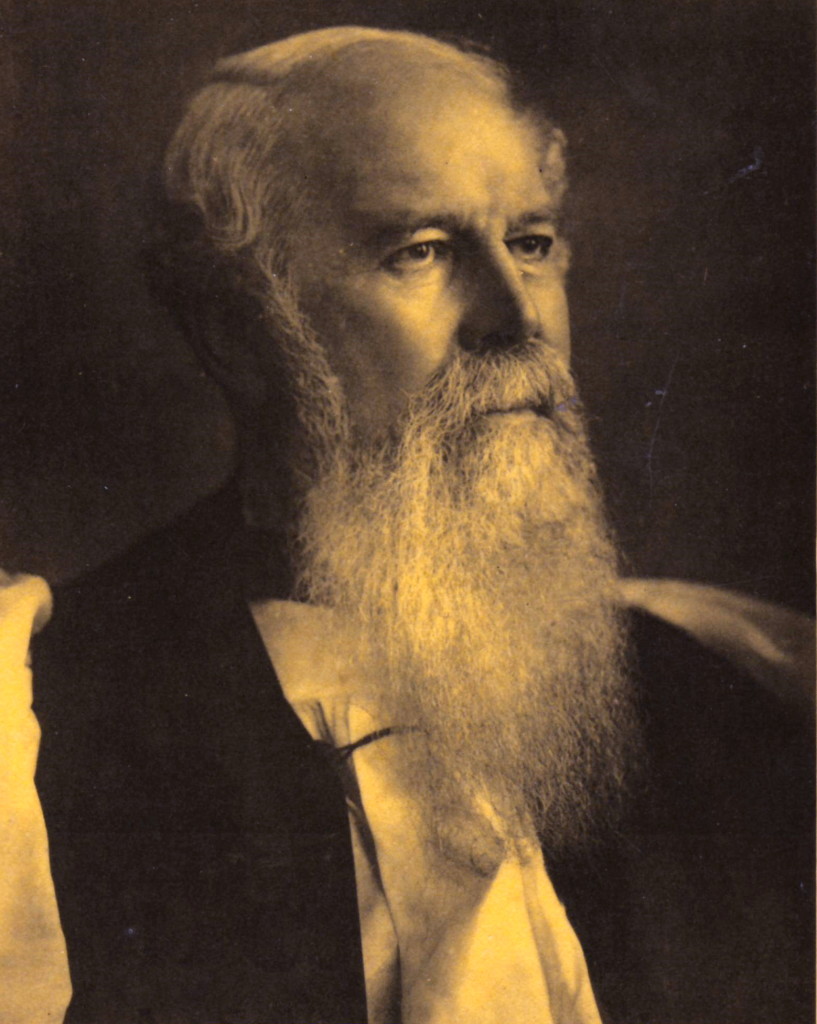
In J.C. Ryle's "Expository Thoughts on Matthew 19:1-15," the primary theological focus is on the sacredness of marriage and the value of children in the eyes of Christ. Ryle argues that marriage is an institution ordained by God, intended to be unbroken except for the cause of sexual immorality, referencing Matthew 19:6 where Jesus states, "What God has joined together, let not man separate." He also discusses how societal health hinges on the sanctity of marriage and the nurturing of children. Furthermore, Ryle emphasizes Christ's tenderness towards children, illustrated by Jesus welcoming them and asserting that "the Kingdom of Heaven belongs to ones like these" (Matthew 19:14), which endorses the importance of early spiritual instruction. This underscores the importance of a biblically grounded understanding of both marriage and child-rearing within a Reformed context, demonstrating their significant implications for familial and societal wellbeing.
Key Quotes
“The relation of marriage ought to be highly reverenced and honored among Christians.”
“Allow the little children and don't forbid them to come to me, for the Kingdom of Heaven belongs to ones like these.”
“It is only too true that thoughtlessly entering into marriage is one of the most fertile causes of unhappiness.”
“Let us begin from their very earliest years to deal with them as having souls to be lost or saved.”
What does the Bible say about marriage?
The Bible teaches that marriage is a sacred union meant to be lifelong, only to be broken in cases of infidelity.
Matthew 19:4-6, Genesis 2:24, Malachi 2:14-16
How do we know that children are important to Jesus?
Jesus demonstrated His love for children by welcoming them, stating that the Kingdom of Heaven belongs to those like them.
Matthew 19:14, Mark 10:14
Why is a high view of marriage important for Christians?
A high view of marriage fosters strong families, which are foundational to the health of society.
Matthew 19:5-6, Ephesians 5:22-33
In these verses we have the mind of Christ declared on two subjects of great moment. One is the relation of husband and wife. The other is the light in which we should regard little children, in the matter of their souls.
It is difficult to overrate the importance of these two subjects. The well-being of nations, and the happiness of society, are closely connected with right viewsupon them. Nations are nothing but a collection of families. The good order of families depends entirely on keeping up the highest standard of respect for the marriage tie, and on the right training of children. We ought to be thankful, that on both these points, the great Head of the Church has pronounced judgment so clearly.
With respect to marriage, our Lord teaches, that the union of husband and wife ought never to be broken off, except for the greatest of all causes, namely, actual unfaithfulness.
In the days when our Lord was upon earth, divorces were permitted among the Jews for the most trifling and frivolous causes. The practice, though tolerated by Moses, to prevent worse evils—such as cruelty or murder—had gradually become an enormous abuse, and no doubt led to much immorality. (Malachi 2:14-16.) The remark made by our Lord's disciples shows the deplorably low state of public feeling on the subject. They said, "If this is the case of the man with his wife, it is not expedient to marry." They meant of course, "if a man may not put away his wife for a slight cause at any time, he had better not marry at all." Such language from the mouths of apostles sounds strange indeed!
Our Lord brings forward a widely different standard for the guidance of His disciples. He first founds His judgment on the original institution of marriage. He quotes the words used in the beginning of Genesis, where the creation of man, and the union of Adam and Eve, are described, as a proof that no relation should be so highly regarded as that of husband and wife. The relation of parent and child may seem very close, but there is one closer still— "A man shall leave father and mother, and cleave to His wife." He then backs up the quotation by His own solemn words, "What God has joined together, let not man put asunder." And finally He brings in the grave charge of breaking the seventh commandment, against marriage contracted after a divorce for light and frivolous causes—"whoever divorces his wife, except for sexual immorality, and marries another, commits adultery; and he who marries her when she is divorced commits adultery."
It is clear, from the whole tenor of the passage, that the relationship of marriage ought to be highly reverenced and honored among Christians. It is a relationship which was instituted in Paradise, in the time of man's innocency, and is a chosen figure of the mystical union between Christ and His Church. It is a relationship which nothing but death ought to terminate. It is arelationship which is sure to have the greatest influence on those whom it brings together, for happiness, or for misery, for good, or for evil. Such a relationship ought never to be taken in hand unadvisedly, lightly, or wantonly; but soberly, discreetly, and with due consideration. It is only too true, that thoughtlessly entering into marriage is one of the most fertile causes of unhappiness, and too often, it may be feared, of sin.
With respect to little CHILDREN, we find our Lord instructing us in these verses, both by word and deed, both by precept and example. "Little children were brought to him, that he should lay his hands on them and pray." They were evidently tender infants, too young to receive instruction, but not too young to receive benefit by prayer. The disciples seem to have thought them beneath their Master's notice, and rebuked those that brought them. But this drew forth a solemn declaration from the great Head of the Church—"Allow the little children, and don't forbid them to come to me; for the Kingdom of Heaven belongs to ones like these."
There is something deeply interesting both in the language and action of our Lord on this occasion. We know the weakness and feebleness, both in mind and body, of a little infant. Of all creatures born into the world none is so helpless and dependent. We know who it was who here took such notice of infants, and found time, in His busy ministry among grown up men and women, to "lay his hands on them and pray." It was the eternal Son of God, the great High Priest, the King of kings, by whom all things consist, "the brightness of the Father's glory, and the express image of His person." What an instructive picture the whole transaction places before our eyes! No wonder that the great majority of the Church of Christ have always seen in this passage, a strong, though indirect, argument in favor of infant baptism.
Let us learn from these verses, that the Lord Jesus cares tenderly for the souls of little children. It is probable that Satan specially hates them. It is certain that Jesus specially loves them. Young as they are, they are not beneath his thoughts, and attention. That mighty heart of his has room for the babe in its cradle, as well as for the king on his throne. He regards each one as possessing within its little body an undying principle, that will outlive the Pyramids of Egypt, and see sun and moon quenched at the last day. With such a passage as this before us, we may surely hope well about the salvation of all who die in infancy. "The Kingdom of Heaven belongs to ones like these."
Finally, let us draw from these verses encouragement to attempt great thingsin the religious instruction of children. Let us begin from their very earliest years to deal with them as having souls to be lost, or saved, and strive to bring them to Christ. Let us make them acquainted with the Bible, as soon as they can understand anything. Let us pray with them, and pray for them, and teach them to pray for themselves. We may rest assured that Jesus looks with pleasure on such endeavors, and is ready to bless them. We may rest assured that such endeavors are not in vain. The seed sown in infancy, is often found after many days. Happy is that church whose infant members are cared for as much as the oldest communicants! The blessing of Him that was crucified will surely be on that church! He put His hands on little children. He prayed for them.

Comments
Your comment has been submitted and is awaiting moderation. Once approved, it will appear on this page.
Be the first to comment!