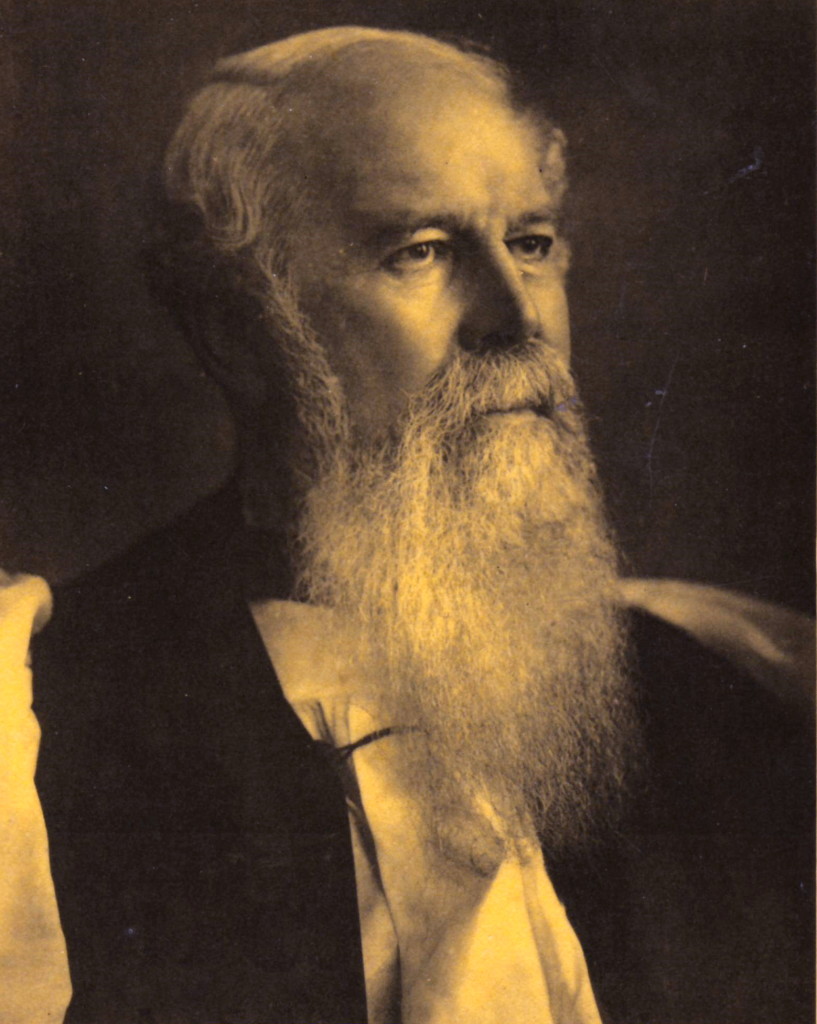
The article by J.C. Ryle on Mark 11:1-11 primarily addresses the significance of Jesus' public entry into Jerusalem, emphasizing the theological implications of His approaching crucifixion. Ryle argues that this act deliberately draws attention to the gravity of His mission—where the Son of God is about to offer Himself as the ultimate sacrifice for sin. The public nature of this event is backed by the collective witness of the crowds, reflecting prophecies regarding the Messiah (e.g., Zechariah 9:9) and reinforcing the importance of Christ’s death as foundational for Christian faith (1 Peter 2:24). Moreover, Ryle highlights Christ's voluntary poverty during this event, using the borrowed donkey as a symbol of His humility and identification with the marginalized. This theme conveys that poverty in itself is not sinful and underscores the dual nature of Christ, both divine and human, inviting believers to find comfort in His ability to empathize with their struggles. The practical significance lies in appreciating Christ’s sacrificial love and understanding that one's material circumstances do not determine their worth before God.
Key Quotes
“He came to Jerusalem to die and He desired that all Jerusalem should know it.”
“The eternal Son of God was about to suffer in the stead of sinful men—the great sacrifice for sin about to be offered up.”
“To be like Him in circumstances cannot be in itself wrong.”
“The honest poor man is as honorable in the sight of God as the richest king.”
What does the Bible say about the significance of Jesus' triumphal entry?
The Bible highlights Jesus' triumphal entry as a deliberate act to publicly proclaim His identity as the Messiah before His crucifixion.
Mark 11:1-11, Zechariah 9:9
How do we know Christ's death is central to Christian faith?
Christ's death is central to Christian faith because it is the atoning sacrifice for sin, essential for salvation.
Romans 5:8, John 1:29, 1 Corinthians 15:3-4
Why is the concept of Christ's humility important for Christians?
Christ's humility, exemplified in His earthly life, teaches Christians the value of servanthood and reliance on God.
Philippians 2:5-8, Mark 10:45
The event described in these verses, is a singular exception in the history of our Lord's earthly ministry. Generally speaking, we see Jesus withdrawing Himself from public notice—often passing His time in the remote parts of Galilee—not infrequently abiding in the wilderness—and so fulfilling the prophecy, that He should "not cry, nor strive, nor let His voice be heard in the streets." Here, and here only, our Lord appears to drop His private character, and of His own choice to call public attention to Himself. He deliberately makes a public entry into Jerusalem, at the head of His disciples. He voluntarily rides into the holy city, surrounded by a vast multitude, crying, Hosanna, like king David returning to his palace in triumph. (2 Sam. 19:40.) All this too was done at a time when myriads of Jews were gathered out of every land to Jerusalem, to keep the Passover. We may well believe that the holy city rang with the tidings of our Lord's arrival. It is probable there was not a house in Jerusalem in which the entry of the prophet of Nazareth was not known and talked of that night.
These things should always be remembered in reading this portion of our Lord's history. It is not for nothing that this entry into Jerusalem is four times related in the New Testament. It is evident that it is a scene in the earthly life of Jesus, which Christians are intended to study with special attention. Let us study it in that spirit, and see what practical lessons we may learn from the passage for our own souls.
Let us observe, in the first place, how public our Lord purposely made the last act of His life. He came to Jerusalem to die, and He desired that all Jerusalem should know it. When He taught the deep things of the Spirit, He often spoke to none but His apostles. When He delivered His parables, He often addressed none but a multitude of poor and ignorant Galileans. When He worked His miracles, He was generally at Capernaum, or in the land of Zebulon and Naphtali. But when the time came that He should die, He made a public entry into Jerusalem. He drew the attention of rulers, and priests, and elders, and Scribes, and Greeks, and Romans to Himself. He knew that the most wonderful event that ever happened in this world was about to take place. The eternal Son of God was about to suffer in the stead of sinful men—the great sacrifice for sin about to be offered up—the great Passover Lamb about to be slain—the great atonement for a world's sin about to be made. He therefore ordered it so that His death was eminently a public death. He over-ruled things in such a way that the eyes of all Jerusalem were fixed upon Him, and when He died, He died before many witnesses.
Let us see here one more proof of the unspeakable importance of the death of Christ. Let us treasure up His gracious sayings. Let us strive to walk in the steps of His holy life. Let us prize His intercession. Let us long for His second coming. But never let us forget that the crowning fact in all we know of Jesus Christ, is His death upon the cross. From that death flow all our hopes.
Without that death we would have nothing solid beneath our feet. May we prize that death more and more every year we live; and in all our thoughts about Christ, rejoice in nothing so much as the great fact that He died for us!
Let us observe, in the second place, in this passage, the voluntary poverty which our Lord underwent, when He was upon earth. How did He enter Jerusalem when He came to it on this remarkable occasion? Did He come in a royal chariot, with horses, soldiers, and a retinue around Him, like the kings of this world? We are told nothing of the kind. We read that He borrowed the colt of an donkey for the occasion, and sat upon the garments of His disciples for lack of a saddle. This was in perfect keeping with all the tenor of His ministry. He never had any of the riches of this world. When He crossed the sea of Galilee, it was in a borrowed boat. When He rode into the holy city, it was on a borrowed beast. When He was buried, it was in a borrowed tomb.
We have in this simple fact, an instance of that marvelous union of weakness and power, riches and poverty, the godhead and the manhood, which may be so often traced in the history of our blessed Lord. Who that reads the Gospels carefully can fail to observe, that He who could feed thousands with a few loaves, was Himself sometimes hungry—and He who could heal the sick and infirm, was Himself sometimes weary—that He who could cast out devils with a word, was Himself tempted—and He who could raise the dead, could Himself submit to die?
We see the very same thing in the passage before us. We see the power of our Lord in His bending the wills of a vast multitude to conduct Him into Jerusalem in triumph. We see the poverty of our Lord in His borrowing a donkey to carry Him when He made His triumphal entry. It is all wonderful, but there is a fitness in it all. It is appropriate and right that we should never forget the union of the divine and human natures in our Lord's person. If we saw His divine acts only, we might forget that He was man. If we saw His seasons of poverty and weakness only, we might forget that He was God. But we are intended to see in Jesus divine strength and human weakness united in one person. We cannot explain the mystery; but we may take comfort in the thought, "this is our Savior, this is our Christ—one able to sympathize, because He is man, but one Almighty to save, because He is God."
Finally, let us see in the simple fact, that our Lord rode on a borrowed donkey, one more proof that poverty is in itself no sin. The causes which occasion much of the poverty there is around us, are undoubtedly very sinful. Drunkenness, extravagance, profligacy, dishonesty, idleness, which produce so much of the destitution in the world, are unquestionably wrong in the sight of God. But to be born a poor man, and to inherit nothing from our parents—to work with our own hands for our bread, and to have no land of our own—all this is not sinful at all. The honest poor man is as honorable in the sight of God as the richest king. The Lord Jesus Christ Himself was poor. Silver and gold He had none. He had often nowhere to lay His head. Though He was rich, yet for our sakes He became poor. To be like Him in circumstances, cannot be in itself wrong. Let us do our duty in that state of life to which God has called us, and if He thinks fit to keep us poor let us not be ashamed. The Savior of sinners cares for us as well as for others. The Savior of sinners knows what it is to be poor.

Comments
Your comment has been submitted and is awaiting moderation. Once approved, it will appear on this page.
Be the first to comment!