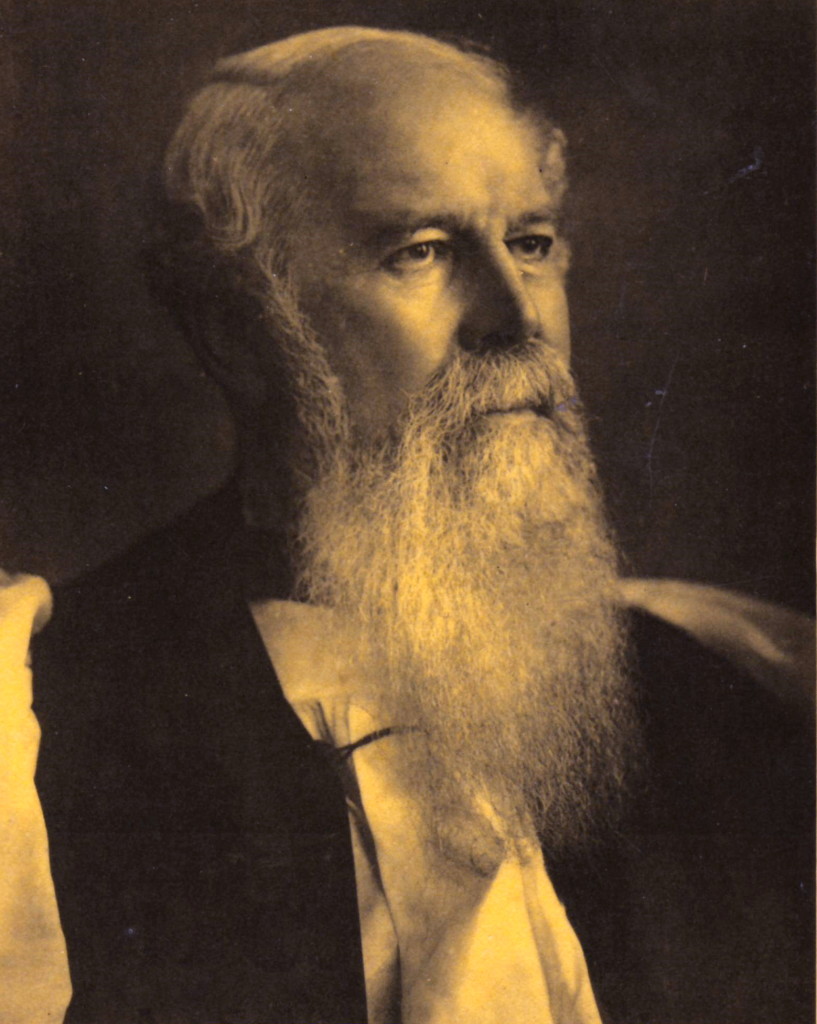
This article by J.C. Ryle addresses the profound theological implications of John 8:21-30, emphasizing themes of seeking Christ in vain, the distinction between believers and the ungodly, and the eternal consequences of unbelief. Ryle presents a clarion call to earnest faith, arguing that many may appear to seek Christ but do so from false motives or without genuine heart transformation, a notion substantiated by Proverbs 1:28-29. He contrasts the fate of those who reject Christ with the hope offered to true seekers, reinforcing the pivotal truth found in Ezekiel 18:32 and John 15:19 that believers are set apart. The significance of this discussion lies in its doctrinal assertion that only sincere faith in Christ can prevent dying in one's sins, reiterating the gravity of unbelief as the ultimate sin that endangers the soul.
Key Quotes
“A man may have many religious feelings about Christ without any saving religion.”
“There is no safety but in seeking Christ while He may be found and calling on Him while He is near.”
“Let us settle it in our minds as one of the great foundation truths of our faith that there is a hell.”
“Unbelief is the special sin that ruins men's souls.”
What does the Bible say about seeking Christ in vain?
The Bible warns that it is possible to seek Christ in vain, as seen in John 8:21-30, where Jesus tells the unbelieving Jews they will die in their sins despite their search.
Additionally, the danger of persistently resisting divine light is significant. Scripture illustrates that individuals can quench their consciences and reject God's knowledge until God decides to no longer hear them (Proverbs 1:28-29). Such warnings encourage all to earnestly seek Christ while He may be found, as true seekers will never find their efforts in vain. Instead, those who genuinely come to Christ will be accepted, as He promises not to cast them out.
John 8:21-30, Proverbs 1:28-29
How do we know the doctrine of hell is true?
The truth of hell is affirmed in Scripture, particularly through Jesus' own words, which highlight the fate of the unrepentant.
It is a fundamental tenet of the faith that just as there is an eternal heaven for the redeemed, there is also an eternal hell for the wicked. To overlook this truth is to misinterpret the loving nature of God, who desires that all come to repentance (Ezekiel 18:32). Addressing the existence of hell serves as a warning and a call to avoid judgment, emphasizing the love of God by imploring sinners to flee from the coming wrath.
John 8:24, Mark 9:46, Ezekiel 18:32
Why is it important for Christians to be separate from the world?
Christians are called to be separate from the world, as their citizenship is in heaven and they should not conform to worldly values.
Furthermore, maintaining this distinction is crucial for spiritual health and witness. Christians must live out their faith publicly, displaying the principles of their new identity in Christ. This may involve embracing a lifestyle that honors God in contrast to the values of the surrounding culture, ultimately leading to a life that glorifies Him and bears witness to others about the hope found in Christ.
John 8:23, John 15:19
This passage contains deep things, so deep that we have no line to fathom them. As we read it we should call to mind the Psalmist's words—"Your thoughts are very deep." (Psalm 92:5.) But it also contains, in the opening verses, some things which are clear, plain, and unmistakable. To these let us give our attention and root them firmly in our hearts.
We learn, for one thing, that it is possible to seek Christ in vain. Our Lord says to the unbelieving Jews, "You shall seek Me, and shall die in your sins." He meant, by these words, that the Jews would one day seek Him in vain.
The lesson before us is a very painful one. That such a Savior as the Lord Jesus, so full of love, so willing to save, should ever be sought "in vain," is a sorrowful thought. Yet so it is! A man may have many religious feelings about Christ, without any saving religion. Sickness, sudden affliction, the fear of death, the failure of usual sources of comfort—all these causes may draw out of a man a good deal of "religiousness." Under the immediate pressure of these he may say his prayers fervently, exhibit a strong spiritual feelings, and profess for a season to "seek Christ," and be a different man. And yet all this time his heart may never be touched at all! Take away the peculiar circumstances that affected him, and he may possibly return at once to his old ways. He sought Christ "in vain," because he sought Him from false motives, and not with his whole heart.
Unhappily this is not all. There is such a thing as a settled habit of resisting light and knowledge, until we seek Christ "in vain." Scripture and experience alike prove that men may reject God until God rejects them, and will not hear their prayer. They may go on stifling their convictions, quenching the light of conscience, fighting against their own better knowledge, until God is provoked to give them over and let them alone. It is not for nothing that these words are written—"Then shall they call upon Me, but I will not answer; they shall seek Me early, but they shall not find Me—for they hated knowledge, and did not choose the fear of the Lord." (Prov. 1:28, 29.) Such cases may not be common; but they are possible, and they are sometimes seen. Some ministers can testify that they have visited people on their deathbeds who seem to seek Christ, and yet to seek in vain.
There is no safety but in seeking Christ while He may be found, and calling on Him while He is near—seeking Him with a true heart, and calling on Him with an honest spirit. Such seeking, we may be very sure, is never in vain. It will never be recorded of such seekers, that they "died in their sins." He that really comes to Christ shall never be "cast out." The Lord has solemnly declared that "He has no pleasure in the death of him that dies,"—and that "He delights in mercy." (Ezekiel 18:32; Micah 7:18.)
We learn for another thing, how wide is the difference between Christ and the ungodly. Our Lord says to the unbelieving Jews—"You are from beneath, I am from above—you are of this world, I am not of this world."
These words, no doubt, have a special application to our Lord Jesus Christ Himself. In the highest and most literal sense, there never was but One who could truly say, "I am from above—I am not of this world." That One is He who came forth from the Father, and was before the world—even the Son of God.
But there is a lower sense, in which these words are applicable to all Christ's living members. Compared to the thoughtless multitude around them, they are "from above," and "not of this world," like their Master. The thoughts of the ungodly are about things beneath; the true Christian's affections are set on things above. The ungodly man is full of this world; its cares, and pleasures, and profits, absorb his whole attention. The true Christian, though in the world, is not of it; his citizenship is in heaven, and his best things are yet to come.
The true Christian will do well never to forget this line of demarcation. If he loves his soul, and desires to serve God, he must be content to find himself separated from many around him by a gulf that cannot be passed. He may not like to seem peculiar and unlike others; but it is the certain consequence of grace reigning within him. He may find it brings on him hatred, ridicule, and hard speeches; but it is the cup which his Master drank, and of which his Master forewarned all His disciples. "If you were of the world the world would love His own, but because you are not of the world, but I have chosen you out of the world, therefore the world hates you." (John 15:19.). Then let the Christian never be ashamed to stand alone and show his colors. He must carry the cross if he would wear the crown. If he has within him a new principle "from above," it must be seen.
We learn, lastly, how dreadful is the end to which unbelief can bring man. Our Lord says to his enemies, "If you believe not that I am He, you shall die in your sins."
These solemn words are invested with peculiar solemnity when we consider from whose lips they came. Who is this that speaks of men dying "in their sins," unpardoned, unforgiven, unfit to meet God—of men going into another world with all their sins upon them? He that says this is no other than the Savior of mankind, who laid down His life for His sheep—the loving, gracious, merciful, compassionate Friend of sinners. It is Christ Himself! Let this simple fact not be overlooked.
They are greatly mistaken who suppose that it is harsh and unkind to speak of hell and future punishment. How can such people get over such language as that which is before us? How can they account for many a like expression which our Lord used, and specially for such passages as those in which He speaks of the "worm that dies not, and the fire that is not quenched"? (Mark 9:46.) They cannot answer these questions. Misled by a false charity and a morbid amiability, they are condemning the plain teaching of the Scripture, and are wise above that which is written.
Let us settle it in our minds, as one of the great foundation truths of our faith, that there is a hell. Just as we believe firmly that there is an eternal heaven for the godly, so let us believe firmly that there is an eternal hell for the wicked.
Let us never suppose that there is any lack of charity in speaking of hell. Let us rather maintain that it is the highest love to warn men plainly of danger, and to beseech them to "flee from the wrath to come." It was Satan, the deceiver, murderer, and liar, who said to Eve in the beginning, "You shall not surely die." (Gen. 3:4.) To shrink from telling men, that except they believe they will "die in their sins," may please the devil, but surely it cannot please God.
Finally, let us never forget that unbelief is the special sin that ruins men's souls. Had the Jews believed on our Lord, all manner of sin and blasphemy might have been forgiven them. But unbelief bars the door in mercy's face, and cuts off hope. Let us watch and pray hard against it. Immorality slays its thousands, but unbelief its tens of thousands. One of the strongest sayings ever used by our Lord was this—"He that believes not shall be damned." (Mark 16:16.)

Comments
Your comment has been submitted and is awaiting moderation. Once approved, it will appear on this page.
Be the first to comment!