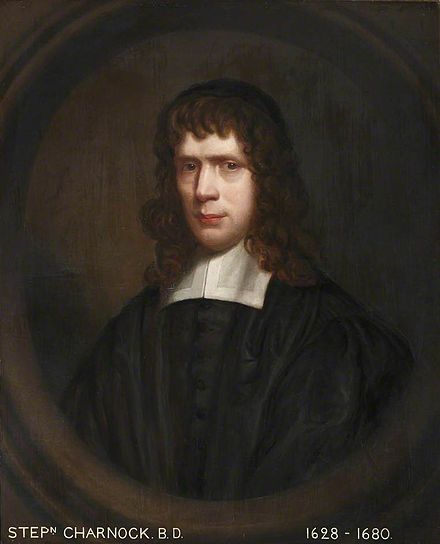
The main theological topic addressed in Stephen Charnock's discourse is the voluntariness of Christ's death. Charnock argues that Christ's sacrifice was a conscious act of will, supported by numerous Scripture references, including Ephesians 5:2, John 10:18, and Isaiah 53:7. He emphasizes that Christ's death was not only predetermined by God's covenant but also willingly undertaken by Christ Himself, demonstrating His profound love for humanity. The author articulates that this divine voluntariness holds significant doctrinal implications, affirming the necessity of Christ's consent for the sufficiency and acceptability of His sacrifice before God. The central significance of the teaching lies in the assurance that redemption was secured through Christ's active and willing participation in His own sacrifice, which should inspire believers toward a similar willingness in their own walks of faith.
Key Quotes
“The most generous example to imitate is the person of our Saviour; the most efficacious motive to persuade to that imitation is the sacrifice of our Saviour.”
“His offering was a free-will offering... Love renders any work delightful.”
“Though his death was violent in regard of man, yet this doth not abate the voluntariness in regard of himself.”
“Having despatched the first doctrine about the voluntariness of Christ's death from those words hath given himself, I proceed to speak of the acceptableness of it...”
What does the Bible say about Christ's voluntary death?
The Bible teaches that Christ willingly gave Himself as a sacrifice for our sins, demonstrating profound love and obedience (Ephesians 5:2).
Ephesians 5:2, John 10:18
How do we know Christ's sacrifice was voluntary?
The voluntary nature of Christ's sacrifice is evident in His unwavering commitment to fulfill the Father's will and His own declarations of willingness (John 10:18).
John 10:18, Matthew 26:39
Why is Christ's love important for Christians?
Christ's love is foundational for Christians, as it epitomizes self-sacrifice and serves as a model for how believers should love one another (Ephesians 5:2).
Ephesians 5:2, John 13:34-35
And walk in love, as Christ also hath loved us, and hath given himself for us, an offering, and a sacrifice to God of a sweet smelling savour, Ephes. v. 2.
THE exhortation in this verse to a mutual love, depends upon what the apostle had urged in the end of the former chapter, where he had endeavoured to persuade them to a kindness and tenderheartedness to one another, and backed it by the pattern God had set them in his pardoning grace; and in verse 1, of this chapter, he extends that motive to all other duties, and draws a general maxim for their observance; that they ought to imitate God in all things imitable by a creature: "Be ye therefore followers of God as dear children," verse 1. Consider the great example God hath set you, and as you have obligations to him, not only as your God, but your Father; so imitate him, not only as creatures, but as children, and express in your lives those admirable perfections, which he hath engraven on you by regeneration, and especially his patience and meekness in bearing, and his love and kindness in pardoning, those that injure you.
Observe: Those that lay claim to a relation to God, without imitation of him, are not children, but bastards.
They may be of his family by instruction, not by descent. There is no implantation in Christ, without an imitation both of the Creator and Redeemer.
He doth prosecute the exhortation in this verse: '' Walk in love;" let the perpetual tenor of your lives be in love; and that by the example of Christ, as before he had done it by the example of God, which indeed Christ had in person urged to his disciples before his departure from them: "I have given you an example, that ye should do as I have done to you," John xiii. 14,15. and amplifies this example of the love of Christ.
1. From the effect. His passion. 2. The manner of it. Voluntary ;" hath given." 3. The subject of it; "himself." 4. The end of it; "a sacrifice." 5. The event and fruit of it.
"A sweet-smelling savour." A fragrant odour, which by a metalepsis is put for the appeasing God, it having a wonderful force to appease the wrath of God, which was inflamed against us. The most generous example to imitate, is the person of our Saviour; the most efficacious motive to persuade to that imitation, is the sacrifice of our Saviour; the course of our lives ought to be in love, not only an act, a spurt, but a walk. "As Christ hath loved us:" and as of similitude, not of equality; we cannot equal the stature of Christ's affection, but we may draw in our life lineaments like to his.
The latter words are the subject of this discourse: “Loved us." This is the first spring of all the actions of Christ towards us, and the passion of Christ for us; there could be no other motive, as it respected us. Our misery might excite his pity, but his affection produced his passion; he loved us, as God, in common with his Father; he loved us, as man, by a participation of our nature. In this love, there is his divine will as a priest, his human will as a sacrifice; he pitied us while we were insensibly hurried down by the devil to a gulf of perdition: love was the only impulse, love excited him, love prepared him, love sent him, love offered him; the highest assurance of his love, was the loss of his life, the excellency of the fruit shows the goodness of the tree.
"Has given himself." He was given by God, yet he offered himself; there was a joint consent: "The Son can do nothing of himself, but what he seeth the Father do," John v. 19. It is spoken after the manner of men, as sons learn of their fathers, and imitate them in their actions. Christ's giving himself, implies the Father's giving him.
"Himself." He was both the priest and the sacrifice; he offered not gold or silver, or a whole world, but himself, more precious than millions of worlds, composed only of angels and innumerable spirits, as excellent as the omnipotence of God could create.
"Himself." Not only his body of flesh, not only his soul a spirit, but himself, his whole person. His soul, his body, himself, the Son of God, and the Son of man; he loved us as he loved himself, above what he loved himself, shall I say? He exposed his life for us, his most holy person for us; the act of his murderers is not regarded as a sweetsmelling savour, but his own act of obedience.
To whom did he thus give himself? "To God." To that God, to whom, by our base apostasy, we had rendered ourselves obnoxious, and had fallen under his deserved wrath. Our Saviour was God's before, as he was the Son of God, but he delivers himself to God, as a mediator, a victim to satisfy for our sins, and reconcile us to our injured Creator; he offered himself to God, as the judge and revenger of sin, the guardian of the law, the assertor of his truth in his threatening; he appeared before God as sitting upon a seat of justice, that he might open to us a throne of grace.
To what end did he deliver himself? "An offering and a sacrifice." Not like an offering, or like a sacrifice, but an offering, a sacrifice; not to do us a small kindness, but to offer his life for us; he would die in our stead, that we might live by his death; not only an offering, but a sacrifice, an incense to be consumed into smoke, a sacrifice to be stuck and bled to death; all the offerings and sacrifices of the law were completed in Christ. All his life wherein he acted for the glory of God, was an offering; in his death, he bled and expired as a sacrifice; he underwent a death, not honourable, but ignominious, and not only ignominious among men, but joined with the legal curse of God. As he was the Son of God, he gave himself, having power to do it, John x. 18.
Unless he had been the Son of God, he could not have been a sufficient sacrifice for us.
"For a sweet, smelling savour." He gave himself with an intention to be accepted, and God received him with a choice acceptation. Sacrifices under the law were accounted by God as a sweet savour, Lev. i. 9. iii. 16. Exod. xxix. 41. This expression is first mentioned at the time of the sacrifice of Noah, Gen. viii. 21. so God is said to smell an offering, 1 Sam. xxvi. 19. God accepted Noah's sacrifice, and took an occasion from thence of declaring his counsel to Noah, that he would not destroy the world, implying, that he would in time recover it by the promised Seed. A smell is here attributed to God. As good scents recreate and refresh the sense of a man, so did the sacrifice of Christ please and content God. Our sins had sent up an ill savour to heaven, had disturbed the rest of God. Christ expels our ill scent by the perfume of his blood, and restores a sweet savour in the heavenly places, “purifying the heavenly things himself," Heb. ix. 23. God being a pure Spirit, could not be taken with the smoke of the legal lambs, nor refreshed with the fumes of incense; but both God and believers under the old testament had a content in them, as they were shadows of this sweet sacrifice, which was intended for the appeasing God, and securing the offending creature. What the legal sacrifices could not perform, as being earthy, mean, and too low for the acceptation of God, and delighted him no otherwise than as they referred to Christ, that this sweet sacrifice of the unblemished Lamb of God, possessed with a perfect love both to God's glory and man's safety, performed, and sent up such a fragrance to the nostrils of God, that he approved both of the priest and the sacrifice, infinitely above the best sacrificers and sacrifices under the law, and changed his countenance towards the filthy creature, that had raised such noisome streams in his presence.
The things observable are many: 1. The love of Christ was the spring of his passion. 2. The person of Christ was consecrated for us, and given to us.
But the only things I shall take notice of, are, 1. CHRIST WAS A VOLUNTARY SACRIFICE. 2. CHRIST WAS AN EFFICACIOUS SACRIFICE.
Doct. THE SACRIFICE AND SUFFERINGS OF CHRIST FOR US WERE FREE AND VOLUNTARY. His offering was a free-will offering. It is expressed in the same chapter: “He gave himself for the church," Eph. v. 25. His voluntariness was typified by the paschal lamb, a lamb being the mildest of all creatures, resisting neither the shearers nor butchers, Isa. liii. 7. All his work is assigned to his love, Rev. i. 5, 6. His love was antecedent to his shedding his blood, and our being washed in it. Love renders any work delightful. The Sun of righteousness hath not a less bridegroom spirit and cheerful disposition in running his humble race, than a sun in the heavens is expressed to have, by the psalmist, in running his natural race in the heavens, Psa. xix. 5. He was not made poor by force, but became so, and laid aside his own riches for our sakes, 2 Cor. viii. 9. He became destitute of the advantages other men enjoy, that from his worldly poverty we might become rich in spiritual graces. He was not emptied of his glory by another, but made himself of no reputation: he took upon him the form of a servant, it was not imposed upon him by constraint: he was not debased by others, till he had humbled himself to the lowest degree of humility. He could have resisted them when they lifted him up upon the cross, but he would be obedient to the determination of his Father to the last gasp, Phil, ii. 7, 8. The hiding the majesty of God under the form of a servant, his descent not only to the earth, the lowest dregs of the world, the footstool of the Divinity, but to the most abject and forlorn condition in that earth. His taking the similitude of weak flesh, and running through all the degrees of reproaches and punishment, even to the grave itself, were voluntary acts, the workings of his love, that he might rescue us from a deserved hell, to advance us to an undeserved heaven, and make us partakers of that blessedness he had voluntarily quitted for our sakes. He willingly put himself into the condition of a servant, which is to be at the beck of another, and have no will but that of his master's. He submitted his reason and affections to God, to be employed in his work according to his will. He had an absolute power over his own body, John x. 18. yet he made a free offer of it, and subjected it to the penalty to be inflicted on him. One place more: “For their sakes I sanctify myself," John xvii. 19. It cannot be meant of his consecration to his office of priesthood, that depended upon the call of his Father; he was constituted a Priest, not by his own intrusion, but the Father's election, settled by an oath; the Father, and not himself, glorified him in this regard, Heb. v. 4, 5: nor of his habitual and inward holiness, for so he was sanctified by the Spirit in his conception, and filled with all graces, Luke i. 35. John iii. 34; but it is meant of his offering himself a sacrifice: his 'Father made him a Priest, the Spirit made his human nature fit to be a sacrifice; his own will made him an actual offering.
In the handling this doctrine, I shall do these four things.
I. Lay down some propositions for explaining this.
II. The evidences of this voluntariness.
III. The necessity of it.
IV. The use.
I. Propositions for explaining it.
1. The Father's appointing him to be a sacrifice doth not impair his own willingness in undertaking. The Father is said to send him, and deliver him, John iii. 34. Rom. viii. 32. Not that the Son was over-persuaded, or came only out of obedience, without any inclination of his own. The Father being the root and fountain of the Deity, all actions are originally ascribed to him, though common to all; so he is first in order of being, as he is first in order of working. The Father is said to deliver him, because the first motion of redemption is supposed to arise from the will and motion of the Father; yet the love of Christ was the spring of all mediatorial actions, and his taking our nature on him; and therefore he is no less said to give himself than the Father is said to give him to us, and for us. God is said to set him forth, Rom. iii. 25. yet he is said to come, Matt. xx. 28. Not thrust out, or forced to come. God lays our sins upon him, yet Christ is said to bear them. His engagement was an act of choice, liberty, and affection. He could not be constrained by his Father to undertake it. His will was as free in consenting, as his Father was in proposing. The Spirit is said to be sent by the Father and the Son, to take of Christ's, and show it to us, to fit those for heaven that are given to Christ; yet his distributions are according to his own will, 1 Cor. xii. 11. dividing to every man according as he will. If you consider Christ as one God with the Father, there is but one and the same will in both: will belongs to essence, or nature; the essence of God being one, there are not in God divers "wills, though the Godhead be in divers persons, because the power of willing is the nature, not a personal propriety. The decree of redemption was joint in Father and Son. What Christ decreed as God, he executed as man. And what he willed from eternity, he began in time to will as man. Christ, as God, gave himself to death with the same will, and by the same action, as the Father gave him; but as man, he gave himself by a will inspired by the Father. Yet for our conception's sake, the scripture represents things so as if they were distinct wills, which yet we must not imagine, any more than because the scripture in condescension to our weakness represents God with eyes, and ears, and hands, we must conceive God to have a fleshly body like ours.
2. The necessity of his death impeacheth not the voluntariness of it. Many things are voluntary, which yet are necessary; there are voluntary necessities. God is necessarily, yet voluntarily holy; the devils are necessarily, yet voluntarily evil. It is not in their power to become good, yet they are carried to evil with a complete will. Man desires to be happy by a natural, and therefore necessary inclination, yet willingly and without constraint. This death was necessary by a determination of God; voluntary, by a cheerful submission of Christ. The election of the good angels rendered then' standing necessary, but the adherence of their wills to God made their standing also voluntary. Grace did not force them against their will, nor God's determination of Christ render him a sacrifice against his mind.
(1.) It was voluntary in the foundation. The decree was not necessary, but an act of divine liberty. Nothing can incline God to an act of grace, but his own most holy will. Christ being at liberty whether he would espouse our interest or not, his undertaking to manage it was a pure voluntary act, arising from his own will. He was not bound to become a creature, and take upon him the form of a servant, but his entering into that condition was an act of free choice and condescension. No reason can possibly be supposed, why the Son of God, and Lord of the creation, should make himself lower than the angels for us, by any necessity of his own condition. There was, indeed, a necessity for us who could not be redeemed without him, but no necessity arising from the divine nature. If a creature ready to be famished be in a place where there is only one person of ability and sufficiency to relieve him, there is a necessity on the part of the poor creature to be relieved, and relieved by that person, since there is no other to help him, but there is no necessity on the part of the sufficient person to relieve him; the help he affords him will be a mere act of charity. This act of Christ is therefore called grace: "The grace of our Lord Jesus Christ, that though he was rich, yet for our sakes he became poor," 2 Cor. viii. 9. nothing could move him to become either a creature or a servant in a created state, but the yearnings of his own bowels towards fallen and miserable man.
(2.) It was necessary after this engagement. His engagement to make himself liable to punishment in our stead was free, but when he had entered into bonds to the Judge of heaven and earth, he was then in his power to be delivered up to death, according to that obligation which he subscribed and consented to; he was then legally, and by his own consent, bound to perform what he had undertaken, and could not justly detract. The promises of Christ are without repentance, as well as the gifts of God. After Christ had put himself into the state of a creature, and form of a servant, the homage due from a creature to God, and the work of a servant after his ear was bored, was necessary, and could not be refused by him. He had then broke his word passed to his Father in the covenant of redemption, had he absolutely declined it. "He ought to die as Christ;" Luke xxiv. 46. that is, as clothed with our nature for such an end. He needed not to die, as he was the Son of God by eternal generation, and lay in the bosom of his Father; but it was necessary as he was made under the law, made Christ, that is, anointed to such a purpose. It was necessary also, in regard of the truth of God laid to pawn in several promises, prophecies, and legal representations; but still the fountain of all this was the free bubbling up of infinite affection to mankind. Yet this necessity was a necessity of immutability, not of constraint. The holy and unchangeable will which complied with the first proposal, remained in force till the final execution. The will of the eternal Spirit, whereby he offered himself to his Father, was immutable. It is a necessity arising from himself, and the perfection of his own nature; from his own holy will, not from any constraint. God cannot be constrained, liberty is so essential a property of the divine nature, that though it may determine itself, it cannot constrain itself. To be God is a term of infinite power, to be constrained is a term of impotency: these are contradictions in the Godhead. Besides, in his human nature he could not sin, he could not be overcome by the devil, he could find nothing in him as a foundation to stand upon, John xiv. 30. He could not do any thing against his Father. But to desert his suretyship had been contrary to that law to which he had subjected himself; the word of the oath, whereby he was constituted a priest, had been fruitless. It had been the utter ruin of all the gracious decrees of God, because all the elect were “chosen in him," Eph. i. 4, 5. the covenant with Abraham and the patriarchs had been null; the oath which he sware to them, broken, Luke i. 73. and the foundation of their faith falling, the whole superstructure had been dissolved, and they would have believed God in vain. All this necessity is no plea against his willingness. The obligation which the truth of God lays upon him, after he hath promised, doth not diminish his first kindness and grace in making the promise. As the necessity of his death did not extenuate the Jews' sin in butchering him, so neither doth it lessen Christ's willingness in laying down his life after he had voluntarily entered into our bonds.
(3.) Though his death was violent in regard of man, yet this doth not abate the voluntariness in regard of himself. Judas betrayed him, the Serjeants apprehended him, Pilate condemned him, and the soldiers crucified him: these were but instruments to execute “the counsel of God," Acts iv. 28. yet he need not have been apprehended unless he would; he showed his power to escape, not only the united force of the Jewish nation, but of the whole world, by striking his apprehenders to the ground with the majesty of his looks. He that can rescue himself from the hands of men, and will not, may be said to die willingly, though he die violently.
They slew him as murderers, and made him a sacrifice to their revenge, not to God, “with wicked hands," Acts ii. 23. and with wicked minds too. He was the sole offerer of himself, as it respected God, and advantaged us. Judas willingly delivered him, Pilate with an imperfect will condemned him, the Jews delightfully reproached him, but the intention of none of them was to make him a sacrifice of redemption. It was for “our sakes he sanctified himself," John xvii. 19. but it was not for our sakes the Jews butchered him. Judas delivered him for the silver, and Pilate condemned him to preserve his grandeur; but he delivered himself with an excessive affection for us. His murderers had no regard to the making him an expiation for the sin of the world; his oblation to God as a sacrifice, was an act purely of his own will at the very time of his death, not of his enemies' rage. In this capacity his death was solely the fruit of his love, and the hovering of his soul over the lost sons of Adam; it did not arise from a necessity of nature, but the will of his mercy to us; he gave himself, and gave himself out of love, Gal. ii. 20. Enemies did not give him, nature did not give him. The inward transports and affections of his soul, the actings of his choicest graces, whereby his offering was rendered acceptable to God, his murderers were not the cause of; they had not force enough to crucify him, had not a joy been set before him, which made him “endure the cross," Heb. xii. 2. that is, the things wherein he rejoiced, as those things are called our hope, which are the object of our hope. The joy of Christ, which made him despise the shame and ignominy of the cross, was the glorious good he should procure by his suffering, the expiation of sin, reconciliation of God, the new creation of the world; for the producing and ripening such fruits did he hang upon the tree. This gave him contentment and pleasure in the midst of his indignities, and this was increased, not impaired by the fury of his enemies. Though his death, in regard of men, was violent, yet, as the death of a sacrifice, it was wholly voluntary.
(4.) When our Saviour seemed unwilling to it in the time of his agony, he was then highly willing. This was when he prayed earnestly that the cup might pass from him, and begins, “Father, save me from this hour," John xii. 27. The smugglings of innocent nature do both times end not only in a gracious submission to the will of God, but in an ardent desire that the will and glory of God might have their full accomplishment. "But for this cause came I unto this hour, therefore, Father, glorify thy name," do thine own work, and finish every part of thy will in me, and what thou hast appointed me to undergo. The state Christ was in must needs admit of some shrinkings in his nature, encompassed with our infirmities; he saw the comfortable influences of God suspended, the indignation of God for our sins breaking out, the guilt of innumerable iniquities imputed to him, and the law with all its curses edged against him, and himself left to bear the weight of all this, and conflict with a wrath no creature ever bore before. The apprehensions of all these meeting in a clear understanding, could not but raise suitable passions of fear and trouble in his human nature. If he had not known the greatness of the punishment he was to endure for our redemption, he had undertaken to ransom us from he knew not what. If he had not feared it, he had not been a sensible man; if he had not trembled at it, he had not been an innocent man. Suitable affections to God in his carriage towards us, are the necessary duties of a creature. God is the object of fear in his vindictive justice, which Christ then was to be subject to. It had not consisted with that reverence which Christ always showed to God, not to be sensible of the sharpness of those punishments which were then providing for him as a substituted criminal in our stead. Though the person of our Saviour was but one, yet he, having two natures, had two wills, a divine and a human, otherwise he were not God and man. If he had not a human soul, he were not a man; and if he had not a human will, he had not a human soul; as he truly took our nature, so he took the laws of it, whereby it cannot love pain, but shun whatsoever it apprehends hurtful to it. As death was an evil against nature, he desires to decline it; as it was to be an atonement for sin, and appeasing of wrath through the dignity of the sacrifice, he desires to undergo it; he regarded it as man, and so had some reluctance to it; he regarded it as a man designed for such an end, and therefore submitted to it. "But for this cause came I unto this hour." As it was a dissolution of nature, a fruit of God's displeasure against sin, and should for a time exclude his soul and body from the fruition of the divine favour and glory, though the personal union should not be dissolved, he startled at it; for the more Christ loved the sense of the divine love, which he enjoyed in his life, the more grievous would the apprehension of the want thereof be. But when he considered, that he was united to that nature, that he might suffer in it, and lay it down as a sacrifice to that Justice which brandished a naked sword against man, that without it the world could not be freed from that misery sin had hurled it into, he then put his neck under the cross. As a patient, who considering the potion offered as bitter, abhors it, but remembering the intention of the physician, and the beneficial qualities of the medicine, doth readily accept it: both the abhorrence and the acceptance are acts of the same will upon divers considerations; or rather the abhorrence is an act of nature regarding :t as distasteful, the acceptance is an act of reason regarding it as wholesome. Now, was not the will of Christ as Mediator as victorious in the issue over the reluctance, as it had been in the capacity of a man desirous of the removal of the cup? The human will yields to the divine will, and conforms itself, not only in a quiet posture, to the resolves of God, but in an ardent desire that his will might be performed. There was more of obedience in "Thy will be done, not mine," and more of ardent affections in “Father, glorify thyself," than there was of reluctancy in “Let this cup pass from me," or," Save me from this hour." He disclaims the will of his human nature, to perform the will of his Father's mercy.
II. Wherein this voluntariness of Christ's death appears.
1. He willingly offered himself in the first counsel about redemption to stand in our stead. When our necks were upon the block, and the blow from justice was otherwise unavoidable, Christ steps in, diverts the blow from us to himself, and declares himself willing to suffer what we had merited, that we might escape upon that suffering. The Father proposed it, the Son consented to it: the will of God is antecedent to the consent of Christ, “I come to do thy will, O my God," Psa. xl. 7. which will was the will of God for our sanctification through the “offering of the body of Christ," Heb. x. 10. Though he knew every thorn in the way he was to pass, the greatness of the wrath he was to undergo, yet his heart leaped into the Father's arms with a full and ready consent at the first overture. The Father proposed it not with more affection than the Son entertained it with delight, “I delight to do thy will, O my God." He was loth to leave expressing it, “I come;" that is not all, "I delight to do thy will;" nor doth it rest there, "Thy law is within my heart:" it is so settled, that it cannot be rooted out but with the utter dissolution of my heart. Thus in the volume, or the beginning of the book, it is written of him. In the book of Genesis, in the first promise, the second person in the Trinity, who is supposed to appear to our first parents after the fall, represents himself a suffering Saviour, and testifies his own consent to the suffering he was to undergo, as the seed of the woman by having his heel bruised by the serpent, and the victory he was to obtain by breaking the serpent's head. When the counsel was resolved upon, Christ is said to "delight in the habitable parts of the earth," Prov. viii. 31. His consent was passed before the world was; it was a delight to him, because of the glory of God's grace, to be made illustrious in the sacrifice of himself. It cannot be meant of the first creation, for that is supposed, and there could be no exulting delight in that, since the defilement of it by sin presently succeeded the laying on the top-stone. It is meant therefore of the restoration of the world, which was to be wrought by this wisdom of God. Some, to invalidate the deity of Christ, understand by wisdom in that book and chapter an intellectual habit, which is ridiculous. The antiquity of the wisdom here spoken of, is before the mountains were settled, and before there were any fountains abounding with water. The wisdom here described was present with God, when he made the world. It was entirely familiar with him, there was such a familiarity between God and wisdom, as between a father and a son, verse 30. "I was by him as one brought up with him," and peculiarly the delight of God.
2. The whole course of his life manifests this willingness. His will stood right to this point of the compass all his life. He never had any defect in his understanding, nor did his memory of what was appointed for him ever fail him. In the time of his life he frequently mentioned the tragedy to be acted upon him, the manner of his death by lifting up on the cross, John iii. 14. And he who was intimately acquainted with the prophets, knew every circumstance of his death predicted in them. Many enter the lists with difficulties out of ignorance, but the willingness of our Saviour cannot be ascribed either to ignorance or forgetfulness. He knew long before that Judas was to betray him, before such a design entered into the heart of Judas, John vi. 64. yet cashiered him not from his family. He foretold the hour of his death; his desires were strong for it, he was straitened till he was baptized with that bloody baptism, Luke xii. 50. He had little ease in his own bowels, as though it were a kind of death to him cot to be a sacrifice; and when Peter would have dissuaded him from suffering, he useth him as smartly as he would have done the devil: "Get thee behind me, Satan," Matt. xvi. 23. implying that in that speech he was the same enemy, by giving him the same title. And the night before, he doth solemnly oblige himself to suffer by his deed, as well as he had before by his word; he makes his testament in the institution of the supper, and delivers his will into the hands of his disciples. His heart was bent to wade through it; he gave them his blood in the sacrament, to show how freely he would pour it forth the following day in a sacrifice; the free distribution of his body to them represented the free offering up his body for them.
3. At the time of his death, he manifested this voluntariness in his whole carriage. When the time drew near, he declined it not; he would enter Jerusalem with hosannas, as if, when he went to his death, he went to his triumph; and indeed it was so, for by that oblation of himself upon the cross, “he triumphed over principalities and powers," Col. ii. 15. He went into the garden, which was as it were the bringing himself to the door of the tabernacle to be offered to God. He had at the passover bid Judas execute quickly his traitorous intention, and now quickens the high priests' dull officers to apprehend him, when he told them twice, himself was the person they sought. He summoned not one angel to take arms for his rescue, though he could have commanded legions to attend him; but as he had rebuked Peter before for dissuading him, he now rebukes him for defending him; moved thereto by an ardency of zeal to drink the cup: "Shall I not drink of the cup which my Father hath given me?" John xviii. 11. He would not court the protection of Herod by working a miracle to please his curiosity. As he would have no relentings himself, so he would not endure them in others; and therefore dissuades the women from expressing their natural affection in a few tears, Luke xxiii. 28. His soul was not wrung and torn from him, but he rendered his spirit into the hands of his Father, and cried with a loud voice before that last act; so that he died not by a defect of strength, but by an ardency of will. He was more delighted with his sufferings for us, than we can be with the greatest worldly pleasures and grandeur, and valued reproaches for us above the empire of the world. To conclude: his soul was not torn from him, but “he poured it out," Isaiah liii. 12. even that which was dearest to him, as a man doth water, freely and willingly out of the vessel, “he poured out his soul unto death ;" he ordered death to come and fetch it.
III. Why this voluntariness was necessary.
1. On the part of the person.
2. On the part of justice.
3. On the part of acceptation.
1. On the part of the sacrifice itself. He was above any obligation to that work he so freely undertook for us. When he made himself of no reputation, it was a work of his charity, not of necessity; and he was bound in no other bonds, but those of his own love. Nor could he be over-ruled to any thing against his own consent; for, being God “equal with the Father," Phil. ii. 6. he was subject to no law, nor could be constrained to bend under the terms and penalties of it. Christ as the second person was not under a law any more than the Father; for he was “in the form of God," that is, had the same essence with God. Suppose he had been incarnate without entering into any bonds for us, though so far as he was man, he was bound actively to obey ihe precepts of the law, yet not bound to endure the penalties of the law, unless he had been a transgressor of the precept: he was to have obeyed it as a creature, but not suffer the curse, unless he had been a guilty creature.
But he was not only made under the law, as an innocent creature, but “in the likeness of sinful flesh," Rom. viii. 3. as like as possible could be, sin only excepted ; and therefore observed those ceremonial precepts which concerned creatures, as sinful; as circumcision, though he had no lust in his human nature to be cut off, and baptism, though he had no stain to be washed away. And indeed, as he was not, so he could not be a transgressor, being secured by his conception from any original taint, and by the hypostatical union from any actual spot: if he could possibly have been a transgressor, the salvation of the elect had been contingent. Being a creature, of the seed of the woman, he may be supposed to be under the condition of the covenant of nature; yet not violating that covenant, he could not justly die for himself.
2. Necessary on the part of justice. The satisfaction for sin was to be made by death, because man upon his revolt from God, was by the immutable law bound over to death. Man could not satisfy the law but by death, and so must have lain under the bonds of that death for ever, and no convenient way could be found for his rescue, unless some one, who was not obnoxious to that penalty by nature, should suffer in his stead that death which he owed. Now, had it not been an injustice to inflict a punishment upon a person purely innocent, and unwilling to render himself in the place of the criminal? No man can be justly constrained to pay either a pecuniary or criminal debt for another without his own consent, either actual at the time of paying or suffering, or legal, when, by entering into the same bonds, he hath made himself legally one person with the debtor or offender. Had not Christ voluntarily undertaken it, justice had been wronged instead of being satisfied. It could upon no account have been just to punish one that had not been guilty upon his own score, or by substitution. The satisfaction of justice in one kind had been an injury to it in another. Well then; the will of Christ could not have saved us without his suffering, because, as the law had denounced death, justice was to be satisfied by death. Nor could the sufferings of Christ have saved us, without his will; for none can be an involuntary surety: had he not consented to have our sins imputed to him, the punishment of our sins could not have been inflicted on him. To take from any what is not due, and when they are unwilling to part with it, is rapine.
3. Necessary in regard of acceptation. Christ s consent was as necessary as God's order. Had Christ suffered for us without the consent of his Father, the Judge of the world, though his sufferings had been of infinite value, because of the dignity of his person, yet God had not been obliged to look upon us as concerned in him, nor count him to us, or for us; and had not Christ consented that they should be for us, they could not justly have been accepted for us, or applied to us. It had been an alienating the goods against the will of the donor. As God's order makes his sacrifice capable of being satisfactory, so the consent of Christ makes it capable of being accepted for us, and applied to us. The heathens would not offer a beast that came struggling to the altar; but God, under the law, regarded not the reluctance of the sacrifice, but the free-will of the offerer, which was necessary to make the sacrifice a sweet savour. How much more necessary is the voluntariness of that person who was to be both sacrifice and priest! Love belongs to the integrity of a sacrifice, a burnt body without charity is of no value, 1 Cor. xiii. 3. The merit of his death depended not upon the act of dying, or the penal part in that death, but upon his willing obedience in it, in conjunction with the dignity of his person; and without this, his soul might have expired without being a sacrifice. As the disobedience of Adam rendered the world obnoxious to wrath, so by the voluntary oblation of Christ, justification is conferred upon believers, Rom. v. 19. His love made his sacrifice a sweetsmelling savour. By the pouring out his soul is our redemption wrought, "He shall divide the spoil with the strong, because he poured out his soul unto death," Isa. liii. 12. or, He shall partake of the spoil with the strong', he shall take us as his own spoils, who were before the devil's prey, and restore to us that blessedness which the devil rifled us of. We are restored, and himself exalted, not merely because he died, but because he died willingly. In vain had we hoped for the benefit of a forced redemption. IV. Use.
1. The way of redemption by a sacrifice was necessary. Why should Christ so willingly undertake this task, be a man of sorrows, lay himself down into the grave, if the atonement of our sins could have been procured at an easier rate? He that made the world by a word, would have redeemed us by a word, if it had been consistent with his own honour. It is at least necessary for God's greater honour, and man's surer benefit. The application of it to us must be as necessary as the oblation of it for us. Think not a few tears, the heat-drops of a natural repentance, can expiate those sins for which Christ thought the best blood in his heart so necessary to be shed.
2. The death of Christ for us was most just on the part of God. What Christ did willingly submit to, God might justly charge upon him as a due debt. That man who will enter into bond to secure the debt to the creditor, or satisfy for the criminal to the governor, may justly be sued upon default of payment by the one, and arrested for default of appearance by the other; what he promised may justly be demanded of him.
3. How wonderful was the love of Christ 1 To accept so willingly of such hard conditions for us, and die so ignominiously upon the cross we had deserved! He knew the burden of sin, he knew the terrors of hell, yet he did not shrink from the imputation of the one, or the sufferings of the other; it was not a willingness founded upon ignorance, but upon a clear-sighted affection. He was willing to be reproached, that we might be glorified; he would be like to us, that we might be conformed to him; and took our human nature, that we might in a sort partake of his divine. O wonderful love! to open his breast to receive into his own heart the sharp edge of that sword which was directed against us. Had not his feet been well shod with love, he would soon have turned back, and said his way was unpassable. A courtesy is enhanced by the greater ingrediency of the will in it; our Saviour had a double will in this matter, the will of the divine, and the will of his human nature, like two streams from distant parts meeting together in conjunction. Worse than devils are we, if we are not ravished with so great an affection, which made him leave the heaven of his Father's presence for a time, to pass through our hell in the dregs of the creation.
4. How willingly then should we part with our sins for Christ, and do our duty to him! O that we could in our measures part as willingly with our lusts, as he did with his blood! He parted with his blood when he needed not, and shall not we with our sins, when we ought to do so, for our own safety, as well as for his glory. Since Christ came to redeem us from the slavery of the devil, and strike off the chains of captivity, he that will remain in them, when Christ with so much pains and affection hath shed his blood to unloose them, prefers the devil and sin before a Saviour, and will find the affront to be aggravated by the Redeemer's voluntariness in suffering for his liberty. How willingly should we obey him, who so willingly obeyed God for us! Christ did not let his enemies snatch away his life, but laid it down; our duties should jiot be wrung from us, but gently distil from us. The more will in sin, the blacker; the more will in obedience, the sweeter. It is in this we should imitate our great pattern.
Having despatched the first doctrine about the voluntariness of Christ's death, from those words "hath given himself;" I proceed to speak of the acceptableness of it, from this latter clause of the verse. Allusion is made here to the perfume God commanded under the law, Exod. xxx. 34. The spices were to be pounded, and afterwards put into a censer, to be dissolved into a sweet fume, in the Levitical service: Christ was bruised by his humiliation, to be rendered a sweet perfume to God.

Comments
Your comment has been submitted and is awaiting moderation. Once approved, it will appear on this page.
Be the first to comment!