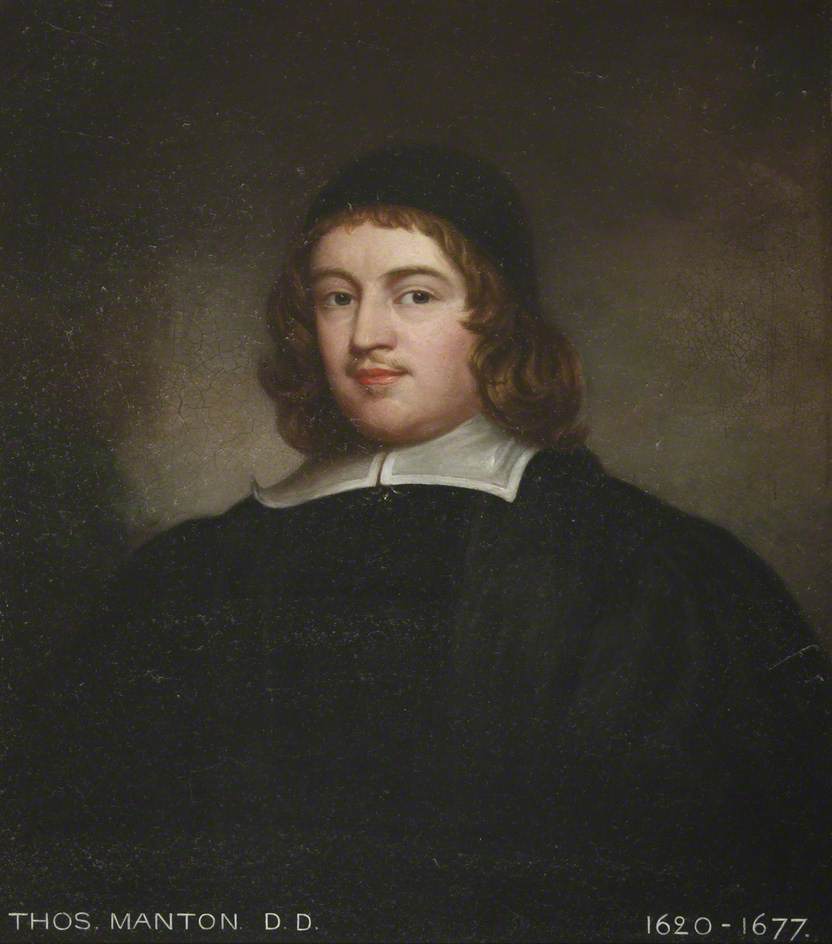
The main theological topic addressed in Thomas Manton's commentary on James 1:7 is the relationship between faith, doubt, and the expectation of receiving blessings from God. Manton argues that while God's bounty is abundant, doubts stemming from a lack of faith can prevent individuals from receiving blessings. He supports this claim with various Scripture references, including 1 Corinthians 8:6, which emphasizes the singular role of Christ as the mediator of blessings, and Mark 9:23, illustrating that all things are possible for those who believe. Manton points out the practical significance of this teaching, noting that Christians should not deceive themselves with vain hopes, but instead rely on their faith in Christ to confidently approach God in prayer for blessings. This commentary serves as a sobering reminder that spiritual assurance rests on faith, not on one’s actions or superficial sentiments.
Key Quotes
“That man should not think... to check his vain hopes.”
“The reason we do not receive what we ask for lies in ourselves not in God.”
“We must ask the Father but it comes to us through Christ.”
“What an excellent ground of hope we have... when we reflect on these three things in prayer—the Father's love, the Son's merit, and the Spirit's power.”
What does the Bible say about receiving from God?
The Bible indicates that one must not doubt when seeking from God, as wavering faith hinders receiving His blessings.
James 1:7, 1 Corinthians 8:6, John 14:13
How do we know faith is important in prayer?
Faith is crucial in prayer as it opens the heart to receive God's gifts and blessings.
Mark 9:23, Mark 6:5-6, John 14:13
Why is Christ the mediator between God and man?
Christ acts as the sole mediator, reconciling believers to God and conveying His blessings.
1 Corinthians 8:6, John 14:6, Ephesians 4:3
That man should not think he will receive anything from the Lord.
Thatmanshouldnotthink. James does not say, “He shall receive nothing,” but Thatman shouldnotthinkhewillreceive. Whatever God’s overflowing bounty may give them, they can expect nothing. Or else, That man should not think, in order to check his vain hopes. Man deceives himself and seduces his soul with ungodly hope. Therefore, the apostle says, Thatmanshould not think—that is, deceive himself with a vain hope.
Hewillreceiveanything. This kind of doubting does not spring from faith and only frustrates praying. God’s people do have doubts but are victorious over them. Therefore, it should not be thought that any doubt makes us incapable of receiving any blessing. This only happens when doubt is allowed to persist.
FromtheLord. That is, from Christ. In the New Testament, Lord most often applies to Christ, the mediator; and Christ the mediator commends our prayers to God and conveys all blessings from God. Therefore, the apostle says, “Yet for us there is but one God, the Father, from whom all things came and for whom we live; and there is but one Lord, Jesus Christ, through whom all things came and through whom we live” (1 Corinthians 8:6). The heathen had many gods, many intermediate powers who were agents between the gods and men. “Yet for us,” says the apostle, “there is but one God,” one sovereign God, “the Father,” the first spring and fountain of blessings, and “one Lord”—that is, one mediator, “Jesus Christ, through whom all things came.”
Notes on Verse 7
Note1. Although unbelievers may receive something, they can expect nothing from God. That manshouldnotthink. They are under a double misery:
(1) They can have no thoughts of hope and comfort, as they have no assurance of a promise. Oh, how miserable this is, to toil and still to be left in uncertainty—to pray, and to have no sure hope! When the task is over, they cannot look for acceptance or a blessing. The children of God have a more certain hope: see 1 Corinthians 9:26. So Solomon says, “The truly righteous man attains life” (Proverbs 11:19). The righteous have God’s infallible promise and may expect a blessing. But the wicked, whether they run or sit, have no hope. Whether they run or sit still, they are in the same condition; if they run, they run uncertainly; if they pray, they pray uncertainly. They are like a slave who does his work not knowing whether he will give satisfaction; so, when they have done everything, they are still left in uncertainty. They pray and do not look for success in prayer; they perform duties but do not see the blessing of duties.
(2) If they receive anything, they cannot expect it to come as a promise or as a return for prayers. When the children are fed, the dogs may have the crumbs: all their comforts are just the crumbs of God’s bounty. It is a great misery when blessings are given to us by chance rather than covenant. A person may be ashamed to ask of God, who is so slow to honor him.
Note2. Thatmanshouldnotthink. Men usually deceive themselves with vain hopes and thoughts: see Matthew 3:9. Ungodly confidence is rooted in some vain principle and thought; so men think God is not just, hell is not so hot, the devil is not so evil, nor the Scriptures so strict. The apostles meet with these ungodly thoughts everywhere: see 1 Corinthians 6:9-11. Men are persuaded that if they can offer any excuse, all will be well. But God is not deceived. So consider your private thoughts. All corrupt actions are based on some vain thought, and this vain thought is strengthened with some vain word. Therefore the apostle says, “Let no one deceive you with empty words” (Ephesians 5:6). In spiritual things we are happy when we have seduced our souls with a vain hope.
Note3. Hewillreceive. The reason we do not receive what we ask for lies in ourselves, not in God. He givesgenerously, but we doubt as we pray. He wants to give, but we cannot receive. Men are discouraged when they are distrusted; and certainly when we distrust God it is not reasonable we should expect anything from him. Christ said to Martha, “… if you believed, you would see the glory of God” (John 11:40)—that is, power, love, truth in their glory. Omnipotence knows no restraint but is discouraged by man’s unbelief. Therefore Mark 6:5-6 says, “he could not do any miracles … he was amazed at their lack of faith”; he could not because he would not, not because of any lack of power in him, but because of the disposition of the people. When the father comes for a possessed child and says, “Teacher … if you can do anything … help us,” Christ answers, “If you can? Everything is possible for him who believes” (Mark 9:17-23). The distressed father says, “If you can do anything”; our holy Lord says, “If you can?” as if he had said, do not doubt my power, but look to your own faith; I can if you can. If we were prepared to receive what God wants to give, we would not be long without an answer. God can do all things for the comfort of believers; faith is his immutable ordinance. So if we receive not, it is not because of any lack of God’s power, but because we lack faith ourselves.
Note4. Anything. God thinks the least mercy too good for unbelievers. In the days of Christ’s life on earth he offered everything you could wish for: “You have great faith! Your request is granted” (Matthew 15:28). Ask what you will, and he will give it. But mercy shrinks at the sight of unbelief!
Note5. FromtheLord. The fruit of our prayers is given to us from the hands of Christ. He is the person through whom God blesses us: “I will do whatever you ask in my name, so that the Son may bring glory to the Father” (John 14:13). Note, “I will do it.” Christ receives the power to convey the blessing; we must ask the Father, but it comes to us through Christ. We are unworthy to converse with the Father; therefore, Christ is the true mediator. God is glorified when we come to him through Christ. You must come to the Father in the Son’s name and look for everything through the Spirit; and as the Spirit works as Christ’s Spirit, to glorify the Son (John 16:14), so the Son gives glory to the Father. What an excellent ground of hope we have when we reflect on these three things in prayer—the Father’s love, the Son’s merit, and the Spirit’s power! No one comes to the Son but by the Father (John 6:65); no one comes to the Father but by the Son (John 14:6); no one is united to the Son but by the Holy Spirit: therefore we read of “the unity of the Spirit” (Ephesians 4:3).

Comments
Your comment has been submitted and is awaiting moderation. Once approved, it will appear on this page.
Be the first to comment!