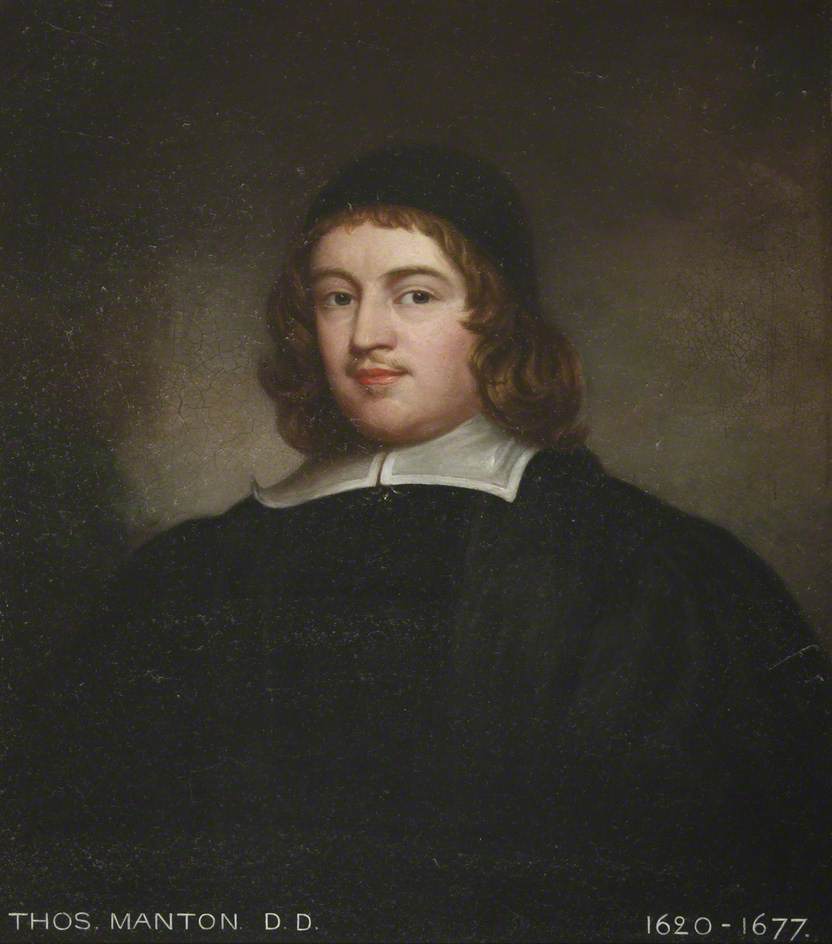
The main theological topic addressed in Thomas Manton's commentary on James 2:5 is God's preferential option for the poor and the implications of this for Christian behavior, particularly in the context of favoritism. Manton argues that God has sovereignly chosen the poor in the eyes of the world to be rich in faith, thereby highlighting the inherent dignity and spiritual wealth of believers regardless of their socioeconomic status. He supports his argument with Scripture references such as Matthew 11:25, which indicates that the Gospel is hidden from the wise and revealed to children, and Romans 8:29, demonstrating that God's choice is purposeful rather than contingent upon human merit. The practical significance of this doctrine serves as a call for Christians to recognize and honor the spiritual status of all believers, irrespective of their worldly wealth, while also challenging the affluent to reevaluate their standing before God and their treatment of others.
Key Quotes
"Has not God chosen those who are poor in the eyes of the world to be rich in faith and to inherit the kingdom he promised those who
What does the Bible say about God's choice of the poor?
The Bible teaches that God has chosen the poor of this world to be rich in faith and heirs of the kingdom.
James 2:5, 1 Corinthians 1:26
How do we know election is true?
Election is affirmed in Scripture as part of God's sovereign plan, evident in passages like Ephesians 1:4-5.
Ephesians 1:4-5
Why is the concept of being 'rich in faith' important for Christians?
'Rich in faith' signifies a deep, abiding trust in God, essential for a believer's spiritual life and experience.
James 2:5, Romans 8:29
Listen,mydearbrothers:HasnotGodchosenthosewhoarepoorintheeyesoftheworldtobe rich in faith and to inherit the kingdom he promised those who love him?
In this verse the apostle gives another argument against showing favoritism: you will despise those whom God, out of his wise ordination, has called to the greatest honor. He gives an example in a threefold dignity that the Lord puts on the godly poor: they are chosen by God, rich in faith, and heirs of the kingdom.
Listen,mydearbrothers. He attracts their attention and still gives them the loving name that he had used previously. It is usual in Scripture to preface all weighty matters with a call for attention: “He who has ears, let him hear” (Matthew 13:9). James says in the council of Jerusalem, “Brothers, listen to me” (Acts 15:13). Here the apostle uses this preface partly to stir them up to consider the dispensation of that age. So in 1 Corinthians 1:26 the apostle Paul says, “Brothers, think of what you were when you were called. Not many of you were wise by human standards”; that is, seriously consider the matter of God’s calling in these times. James also uses this preface because he is about to warn against being perverse. When the matter concerns our case, it calls for our close attention.
HasnotGodchosen? That is, through the special gift of grace he singled out the poor to inherit life. This puts down the pride of great people, as if God should respect them for their outward dignity. The first choice that God made in the world was for poor men. Therefore we often read that the poor received the Gospel; not only the poor in spirit, but the poor in purse. God chose fishermen to preach the Gospel, and poor people to receive it. Few were won that were of any rank in the world, so that we might not think that the spread of the Gospel happens through the advantage of human power and props, but through divine grace.
Poorintheeyesoftheworld. That is, with regard to outward enjoyments. First Timothy 6:17 speaks about “those who are rich in this present world.” There is another world that has its riches, but those who own land there are usually poor and despised. The saints are described as those who do not have their hopes in this world (see 1 Corinthians 15:19) or who are poor in this world; that is, in the opinion of the present world they are vile and abject.
Richinfaith. This may be taken in two ways. It may mean a high degree of faith, like the woman in Matthew 15:28 of whom Jesus said, “Woman, you have great faith.” So when the apostle Paul urges believers on to an abundance of spiritual gifts and graces, he says, “Let the word of Christ dwell in you richly” (Colossians 3:16). Or richinfaith may be in contrast with worldly poverty. And note that God is said to have chosen…toberichinfaith. Such an expression is used in Romans 8:29—“predestined to be conformed to the likeness of his Son”; it is clearly taught by the apostle in Ephesians 1:4—“For he chose us in him … to be holy”—not because we are good, but thatwemightbe good. This cannot be seen as the cause of faith; for as he chose us to be rich infaith, so he chose us to be heirs of glory. Therefore, this does not indicate the cause of God’s choice but the purpose; not that they were so, but that they might be so.
To inherit the kingdom. Glory is often pictured as a kingdom.
Hepromised. Promises of this nature are everywhere: “I love those who love me” (Proverbs 8:17); “showing love to thousands who love me” (Exodus 20:6).
Thosewholovehim. See the reasons why this grace is specified, given in the explanation and notes on 1:12. Note the order used by the apostle: he puts first election, then faith, then love.
Notes on Verse 5
Note1. God often chooses the poor of this world. The lion and the eagle are passed by, and the lamb and the dove are chosen for sacrifice. The Gospel was “hidden … from the wise and learned, and revealed … to little children” (Matthew 11:25). God shows the glory of his power in preserving truth that is not supported by worldly arguments. Usually he shows his power by using weak means. Moses’ hand became leprous before it performed miracles (Exodus 4). Jericho was blown down with rams’ horns, and Goliath slain with a sling and a stone. God shows the riches of his goodness by choosing the poor. A thief was made the delight of paradise, and Lazarus was taken to Abraham’s side. God reveals his wisdom by replacing people’s outer defects with this inner glory. Levi, who had no inheritance among his brothers, had the Lord for his inheritance. So then:
(1) You who are poor, bless God; it is out of mercy that God should look on you. This comforts your poor state; rejected by the world, you are chosen by God. He who is happy in his own conscience should not be made miserable by other people’s judgment. “Let not any eunuch complain, ‘I am only a dry tree.’ I will give them an everlasting name” (Isaiah 56:3, 5). Do not be discouraged though you are outwardly poor. The poor man is known to God by name. In Luke 16:19-31 he has a proper name, Lazarus; whereas the rich man is merely called “a rich man.” However, we forget the poor and remember the rich man’s name and title.
(2) You who are rich, do not consider this as the favor of God’s people. Luther said, “profess that you will not be contented so; you will not be quiet till you have the tokens of God’s special mercy.”
Note2. There are poor people in this world and poor people in the world to come. The rich man, who lived in luxury every day and was dressed in fine linen, wanted a drop of water to cool his tongue. Augustine says, “He wanted a drop, who would not give a crumb.” You are left with your choice—to be rich in this world, but poor in the world to come; though here you wallow in a sea of pleasures, yet there you may want a drop of water to cool your tongue.
Note3. The poor of this world may be spiritually rich. The apostle’s riddle comes true: “having nothing, and yet possessing everything” (2 Corinthians 6:10); nothing in the world, but all in faith.
Note4. Faith makes us truly rich; it is the open hand of the soul that receives all of God’s bounteous supplies. If we are empty and poor, it is not because God’s hand is closed, but because ours is not opened. A person may be poor despite abundance of wealth. It is grace alone that makes you excel forever. So then, you who are poor, do not envy other people’s wealth; you who are rich, do not indulge yourselves in these pleasures. They are not true riches, nor can you always call them your own.
Note 5. The Lord only loves the godly poor. There are a wicked poor whose hearts are ignorantly stubborn, whose lives are viciously profane. Christ says, “Blessed are you who are poor, for yours is the kingdom of God” (Luke 6:20). This is explained by the evangelist Matthew: “Blessed are the poor in spirit” (Matthew 5:3).
Note6. All God’s people are heirs; they are the only heirs. They are heirs by virtue of their sonship. “If we are children, then we are heirs—heirs of God and co-heirs with Christ” (Romans 8:17). Jesus Christ was the natural son and the natural heir; and we, being adopted sons, are adopted heirs. In Hebrew 1:2 Christ is called “heir of all things,” and he has invested us with his own privileges. Consider what an heir the child of God is, one who has received the same privileges as Christ; and therefore the apostle says he is a “co-heir.” In a spiritual way, as we are able, we shall possess the same glory that Christ has. So then, you who have tasted the grapes of Eshcol and have experienced your adoption, you may be confident that God will never alter his purposes of love.
Again, they are heirs who not only look to inherit the goods of their Heavenly Father, but himself. God does not only make over heaven to you but himself: “I will be your God”; God is yours.
Note7. The faithful are heirs of a kingdom. Heaven and glory are often pictured in this way. Kingdoms are for kings; and every saint is a spiritual king. Christ “has made us to be a kingdom and priests to serve his God and Father” (Revelation 1:6). First Peter 2:9 says that we are “a royal priesthood.” These two dignities are joined together, because their kings were once priests; and the heads of the families were the priests. They are kings because of that spiritual power they have over themselves, sin, Satan, and the world; and because they are kings, therefore their glory must be a kingdom.
Again, Christ is a king; and therefore they are kings, and his kingdom is their kingdom. Being united to Christ, they possess his royalty. Again, there is a very great similarity between the glory we expect and a kingdom: “Do not be afraid, little flock, for your Father has been pleased to give you the kingdom” (Luke 12:32). It is called a kingdom because of its splendor and glory. The apostle gives a suitable exhortation in 1 Thessalonians 2:12, “Live lives worthy of God, who calls you into his kingdom and glory.” Remember, you will one day be a king with God in glory.
Note8. Heaven is a kingdom that is promised. It is not only good, thus attracting your desires, but certain, and so supporting your hopes. Look on it not only as a kingdom, but as a promised kingdom; and count him faithful who made the promise. Heaven is not only prepared but promised. You need not have just vague hopes but a steadfast confidence.
Note9. The promise of thekingdom is made to those who loveGod. Love is the result of faith and the ground of all duty, and so the best indicator of a spiritual state. Those who do not believe do not love. They cannot obey if they do not love. Look, then, to this grace. Do you love God? When promises have conditions attached to them, we cannot take comfort in the promise until we have fulfilled the condition. As Christ asked Simon Peter, “Do you love me?” so ask your own soul, “Do you love God?” Confront the soul with it again: “Do you indeed love God?” The results of love are many. Those who love God love what belongs to God.
(1) They love his glory. Their great desire and delight is to honor him, so that they may in some way be useful to the glory of God. The sin mentioned in 2 Timothy 3:2, “lovers of themselves,” is the opposite to this. When all that people do is concerned with self-respect, they have little love for God.
(2) They love his commandments. “This is love for God: to obey his commands. And his commands are not burdensome” (1 John 5:3). Duty is their delight, and ordinances their solace.
(3) They love his friends. They love Christians as Christians, no matter how poor they may be. Love of the brothers is very important: see 1 John 3:14.
By these yardsticks you may judge yourselves.

Comments
Your comment has been submitted and is awaiting moderation. Once approved, it will appear on this page.
Be the first to comment!