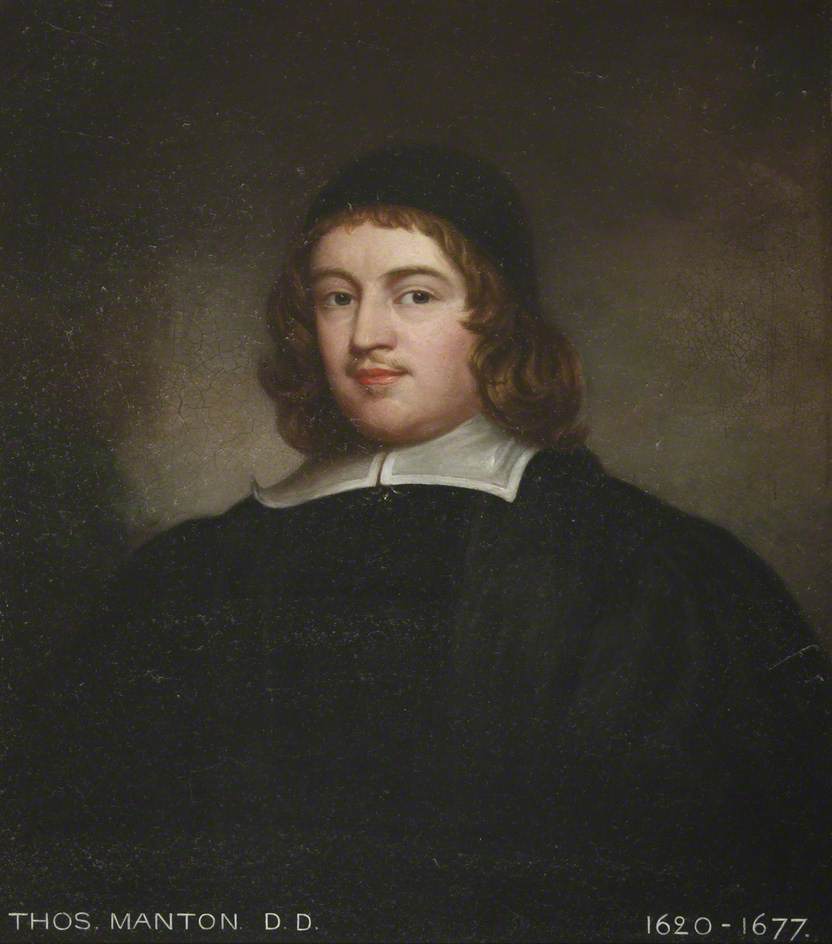
The main theological topic addressed in Thomas Manton's commentary on James 2:18 is the relationship between faith and deeds in the life of a believer. Manton argues that true faith is demonstrated through actions, as mere verbal profession of faith is insufficient and can be likened to the faith even demons possess. He underscores that authentic faith must be validated by deeds, referencing Matthew 11:4-5 to illustrate how Christ's own works testify to His faith. The theological significance of this discourse lies in asserting that faith without corresponding deeds is a hollow profession, emphasizing that genuine faith naturally manifests in righteous actions as evidence of transformation. Manton’s insights challenge believers to reflect on their own lives, ensuring their faith is accompanied by the fruit of good works as an expression of their relationship with God.
Key Quotes
“The apostle does not introduce them by saying You stand on your faith and I on my deeds but says Show me your faith without deeds and I will show you my faith by what I do.”
“Deeds without faith are like a building without a foundation; mere acts of nature varnished with common grace.”
“Empty profession of faith may have more of fashion in it than power, but profession honored with deeds is love's rule to judge by.”
“Deeds are not the foundation of faith but evidence of it.”
What does the Bible say about faith and deeds?
The Bible teaches that true faith is evidenced by deeds, as seen in James 2:18.
James 2:18, Matthew 7:24, Matthew 11:4-5
How do we know that faith is genuine?
Genuine faith is shown by the good deeds it produces, as stated in James 2:18.
James 2:18, John 14:15, Acts 9:11
Why is it important for Christians to have good deeds?
Good deeds are vital for Christians as they provide evidence of true faith and demonstrate God's grace in action.
James 2:18, Psalm 1:1-2, Matthew 25:41-43
Butsomeonewillsay,“Youhavefaith;Ihavedeeds.”Showmeyourfaithwithoutdeeds,andIwill show you my faith by what I do.
The apostle amplifies this argument against an empty faith by imagining a dialogue between a believer and a boasting hypocrite. So the dispute does not lie so much between faith and deeds as between faith pretended and faith revealed by deeds. The apostle does not introduce them by saying, “You stand on your faith and I on my deeds,” but says, Showmeyourfaithwithoutdeeds,and I will.…” That is, show me a warrant for your faith, and I will soon prove my own.
Butsomeonewillsay. That is, some true believer may come and argue like this with a boasting hypocrite.
“Youhavefaith.” Whatever you say, that is all you have—a mere profession of faith, or at best just some historical assent; the apostle grants that not only to them but to the demons (verse 19).
“Ihavedeeds.” He does not mean deeds without faith; that is contrary to what the text says: I will show you my faith by what I do. Deeds without faith are like a building without a foundation, mere acts of nature varnished with common grace. You boast with your tongue about faith; I shall not boast but will produce deeds that are a real commendation. Christ produces no other testimony but his deeds (Matthew 11:4-5).
Showmeyourfaithwithoutdeeds. There are various readings of the original Greek. Some manuscripts read only, “Show me your faith”—and I will soon demonstrate mine. The best copies have withoutdeeds, and the meaning is: you lack the truest testimony and demonstration of faith. Now show me such a faith; that is, make it good by any warrant from the principles of our religion.
AndIwillshowyoumyfaithbywhatIdo. That is, soon demonstrate it to the world, or soon show it to be true faith out of the Word.
Notes on Verse 18
Note 1. A good way to convict hypocrites is to show how grace works in true Christians. The apostle begins a dialogue between them; in the same way Christ compares the two builders (Matthew 7:24 ff.). Do we live as true Christians do—as those who through faith and patience inherit the promises?
Note 2. Show me your faith without deeds. In all our hopes and conceits of grace we should always look to the warrant we have for them. Can I show or prove this to be faith or love by any rational grounds or arguments from Scripture? Presumption is a rash trust, without any actual or clear ground. It is good to believe “as the Scripture has said” (John 7:38), to cherish no persuasion without seeing a clear warrant.
Note3. Deeds are evidence of true faith. Graces are not dead, useless habits; they will have some results when they are weakest and in their infancy. As soon as Paul was born again, God said of him, “he is praying” (Acts 9:11). Newborn children will cry before they are able to walk.
(1) This is the evidence by which we must judge. Many Scriptures lay down evidence taken from sanctification and the holy life; they were written for this very purpose: see especially Psalm 119; 1 John 3:14, 19; 5:13. In many places promises are given, with descriptions taken from the meekness, piety, and good deeds of the saints: see Psalm 1:1-2; 32:1-9. Good deeds are the most obvious sign; all causes are known by their effects. Apples, leaves, and blossoms are evident when the life and sap are not seen.
(2) This is also the evidence by which Christ must judge: “judged according to what they had done” (Revelation 20:12). “Away from me, you evildoers!” (Matthew 7:23). They claimed to believe, but they had no deeds. See also Matthew 25:41-43.
Application. You must make use of this note to judge yourselves and to judge others.
(1) Yourselves. When the causes are hidden, the effects are obvious; therefore you can test graces by their results. Deeds are not the foundation of faith but evidence of it. Comfort may be increased by seeing good deeds, but it is not built upon them.
(2) Other people may be judged by their works. Where there is knowledge and a good life, it is not Christian to suspect the heart. Profession of faith may be counterfeited, but when it is honored with deeds you must leave the heart to God. To be faultless and look after orphans and widows is purereligion (1:27); that is what reveals it. Empty profession of faith may have more of fashion in it than power; but profession honored with deeds is love’s rule to judge by.

Comments
Your comment has been submitted and is awaiting moderation. Once approved, it will appear on this page.
Be the first to comment!