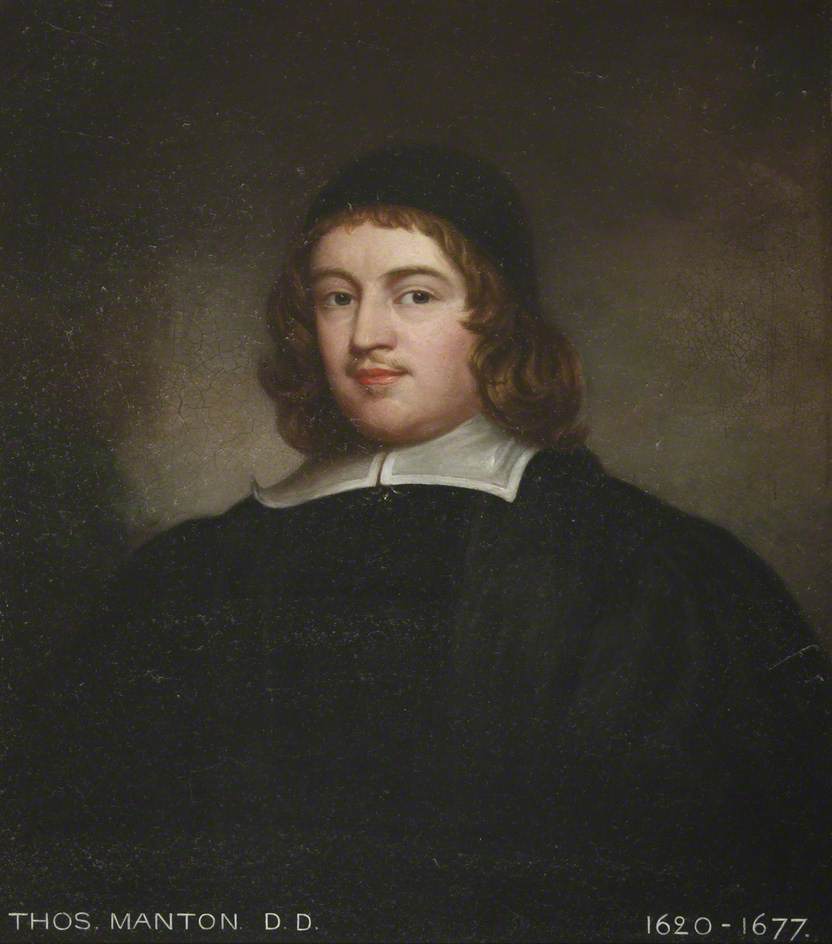
In his commentary on James 2:19, Thomas Manton addresses the nature of true faith versus mere intellectual assent, emphasizing the insufficiency of the latter for salvation. He argues that while acknowledging God's existence is necessary, it is not enough, as even demons possess this form of belief, which leads only to horror and condemnation. Manton supports his argument by referencing Deuteronomy 6:4, 1 John 4:2, and Romans 5:1, illustrating that authentic faith involves both knowledge of and a relational trust in Christ, not mere acknowledgment of truths. He highlights the doctrinal significance of this distinction, noting that true faith must unite believers with Christ, resulting in peace rather than fear. Manton's commentary calls Christians to examine their faith for a transformative connection with Christ, as opposed to a superficial understanding that shares common ground with demonic belief.
Key Quotes
“Mere assent to the articles of religion does not imply true faith.”
“Do not rest content with the demons' faith. Can the demons be justified or saved? They believe there is a God, that there is a Christ, that Christ died for sinners.”
“Light that gives us no comfort is only darkness.”
“All knowledge of God apart from Christ is uncomfortable.”
What does the Bible say about faith and belief?
The Bible teaches that mere assent to God's truth, like that of demons, is not saving faith.
James 2:19, Romans 5:1, Ephesians 3:12
How do we know that true faith is important for salvation?
True faith is critical for salvation because it connects us to Christ, granting us peace and justification.
Romans 5:1, James 2:19
Why is the distinction between belief and true faith important for Christians?
This distinction is vital because it emphasizes that true faith goes beyond mere knowledge and requires a personal relationship with Christ.
James 2:19, Romans 5:1
You believe that there is one God. Good! Even the demons believe that—and shudder.
This example shows what sort of faith he is arguing against—namely, the sort that consists in mere speculation—which can no more save anyone than looking at the sun can take you to the sun itself.
You believe. That is, you assent to this truth; the lowest act of faith is called believing.
ThereisoneGod. He gives this instance, without limiting the matter to this, partly because this was the first article of the creed, the fundamental truth in religion, and the critical difference between Christians and pagans. He means to include assent to other articles of faith.
Good! He approves of this assent as being good, though not sufficient; it is not saving, but it is good as a preparation and is required: “Hear, O Israel: The LORD our God, the LORD is one” (Deuteronomy 6:4; see also 1 John 4:2).
Eventhedemonsbelievethat. That is, they assent to this truth and to other truths revealed in the Word.
Andshudder. This word signifies extreme fear and horror of spirit; it comes from a word that implies the noise that is caused by the sea. Now, this clause is added not to imply (as some people suppose) that the demons do more than assent, having an experience of some type in their feelings, but to disprove this kind of faith and to show that it is not saving. The demons have an assent that causes horror and torment, but they do not have a faith that causes confidence and peace, the proper fruit of justifying faith (see Romans 5:1; Ephesians 3:12).
Notes on Verse 19
Note 1. Mere assent to the articles of religion does not imply true faith. True faith unites us to Christ; it knows his person. It is not only an assent to a Gospel proposition; you are not justified by that, but by being one with Christ. It was the mistake of former ages to make the promise rather than the person of Christ the formal object of faith. The promise is the warrant, Christ is the object; therefore, the way Scripture talks of this, faith terminates in him. There is not only assent in faith, but consent; not only an assent to the truth of the Word, but a consent to take Christ. There must be an act that is directly and formally about the person of Christ. A person may be right in opinion and judgment but of vile affections; and an ungodly “Christian” is in as great a danger as a pagan, idolater, or heretic, for even if his judgment is sound, his manners are heretical. True believing is not an act of the understanding only but a work of “all your heart” (Acts 8:37).
I admit that some expressions of Scripture seem to lay much weight on assent, such as 1 John 4:2 and 5:1, 1 Corinthians 12:3, and Matthew 16:16-17. But these passages either show that assent, where it is serious, comes from some special revelation, or else, if they give assent as evidence of grace, we must distinguish contexts. The wind that blows on our backs blew in their faces; and what draws many people to assent to the Gospel discouraged them. Therefore do not be satisfied with mere assent; this costs nothing and is worth nothing. There is an “embodiment of knowledge” (Romans 2:20) as well as “a form of godliness” (2 Timothy 3:5). An “embodiment of knowledge” is nothing but an idea of truth in the brain, when there is no power or goodness to change and transform the heart.
Note2. Good! It is good to acknowledge the least appearance of good in people. So far so good, says the apostle. To commend what is good is the best way to mend the rest. This is a wonderful art of drawing people on further and further. So far as it is good, acknowledge it. “I praise you,” says Paul, and later on, “I have no praise for you” (1 Corinthians 11:2, 17). Jesus loved a young man for his moral excellence (Mark 10:21). It was a hopeful step. The infant working of grace should be embraced on the lap of commendation or, like weak things, fostered with much gentleness and care.
Note3. The demons assent to the articles of Christian religion. This comes about partly through the subtlety of their natures—they are intellectual essences, and partly because they have seen miracles of providence. They are aware of the power of God in rescuing people from their paws; so they are forced to acknowledge that there is a God and to consent to many truths in the Scriptures. Many truths are acknowledged at the same time in Matthew 8:29, “Son of God … have you come here to torture us before the appointed time?” Paul commanded a spirit “in the name of Jesus Christ” (Acts 16:18). And an evil spirit answered the sons of Sceva, “Jesus I know and Paul I know about, but who are you?” (Acts 19:15). The spirit acknowledged that Jesus as the Master and Paul as the servant and messenger had mightily shaken his power and kingdom. So then, never rest content with the demons’ faith. Can the demons be justified or saved? They believe there is a God, that there is a Christ, that Christ died for sinners. A Christian is to exceed and go beyond demons—indeed, beyond other people, beyond pagans, beyond hypocrites in the church.
Note4. Horror is the effect of the demons’ knowledge; the more they know of God, the more they shudder. They were terrified at a miracle or any glorious revelation of Christ’s power on earth. So you may learn:
(1) Light that gives us no comfort is only darkness. The demons have knowledge but no comfort and so are said to be “kept in darkness” (Jude 6). The more they think about God, the more they shudder. It is miserable to have only enough light to awaken conscience and enough knowledge to be self-condemned, to know of God but not to enjoy him. The demons cannot choose but abominate their own thoughts of God. Do not rest until you have the sort of knowledge of God that gives comfort: “in your light we see light” (Psalm 36:9). There is light in this light; all other light is darkness.
(2) All knowledge of God apart from Christ is uncomfortable. That is the reason the demons shudder; they cannot know God as a Father but as a judge, not as a friend but as an enemy. Faith looking at God as Father and friend gives peace to the soul: see Romans 5:1. “Love drives out fear, because fear has to do with punishment” (1 John 4:18). This is the misery of demons and damned men and natural men, that they cannot think of God without horror; whereas this is the great solace and comfort of the saints, that there is a God: “your name is like perfume poured out,” full of fragrance and refreshing (Song of Songs 1:3). Salt waters strained through the earth become sweet. God’s attributes, which are in themselves terrible and dreadful to a sinner, bring us comfort and sweetness when they come to us through Christ.

Comments
Your comment has been submitted and is awaiting moderation. Once approved, it will appear on this page.
Be the first to comment!