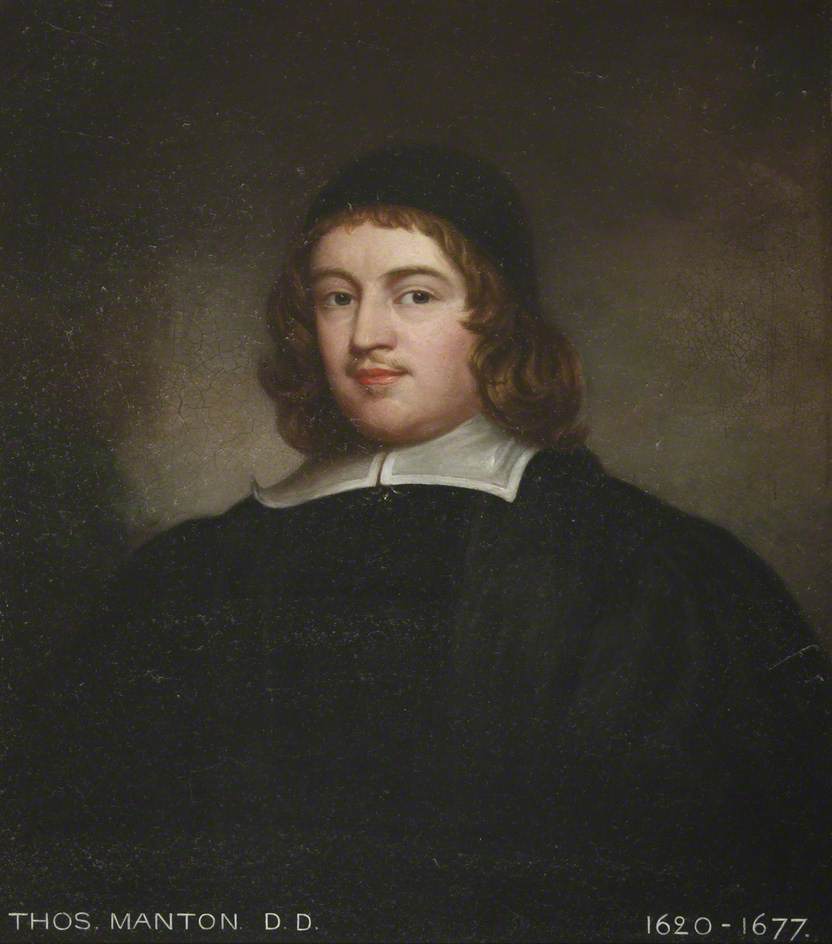
In this commentary on James 2:25, Thomas Manton explores the theological implications of Rahab's faith, emphasizing that genuine faith necessarily produces works. Manton argues that Rahab’s faith, despite her sinful background as a prostitute and a Gentile, resulted in an act of obedience to God, thus demonstrating righteousness. Key Scripture references include Hebrews 11:31, which posits Rahab's faith as active rather than merely professed, and Joshua 2, where her actions of harboring Israelite spies exemplify trust in God’s sovereignty. The doctrinal significance lies in the affirmation that even seemingly small acts of faith, rooted in divine influence, can validate one’s faith through works, ultimately challenging believers to reflect on the authenticity of their faith expressions.
Key Quotes
“In the same way was not even Rahab the prostitute considered righteous for what she did when she gave lodging to the spies and sent them off in a different direction.”
“The meanest faith must justify itself by works and gracious effects.”
“The greatest trial of faith is in acts of self-denial.”
“Even a cup of cold water because he is my disciple... is not courtesy but duty and will not lose its reward.”
What does the Bible say about faith and works?
The Bible teaches that faith must produce works; without them, faith is dead (James 2:26).
James 2:26, Hebrews 11:31
How do we know that Rahab's faith was genuine?
Rahab's faith was proven genuine by her actions when she harbored the spies (James 2:25).
James 2:25
Why is the example of Rahab important for Christians?
Rahab's example shows that even those with a troubled past can demonstrate faith and be accepted by God.
Matthew 21:31
Inthesameway,wasnotevenRahabtheprostituteconsideredrighteousforwhatshedidwhen she gave lodging to the spies and sent them off in a different direction?
Here James gives another example. But why does he mention Rahab?
(1) Because this act of hers is made an effect of faith: “By faith the prostitute Rahab, because she welcomed the spies, was not killed with those who were disobedient” (Hebrews 11:31). It was indeed a great act of faith for one who had lived among the heathen to be persuaded of the power of the God of Israel and of the right they had to that land. Her faith was brought about in her by divine instinct, in response to the report that was given of God and his works.
(2) Because this example can well be joined with the previous one. Some might object that not everyone could go as far as Abraham, the great pattern of all believers. But the least faith must produce works as well as the greatest, and so James gives Rahab as an example of the weakest faith.
a. As for her person, she was a woman, a prostitute, and a heathen when God worked on her. With so many disadvantages, it is to be presumed this was as low an example as could be given.
b. As for the act itself, it was accompanied by weakness, by a lie, which indeed is here suppressed, or at least not mentioned, lest it should deface the glory of her faith.
(3) Because there might be some doubt about this example. They might object that mere profession was accounted faith in Rahab, and she was a prostitute. James replies that in Rahab the doctrine might be made good, for her faith, however weak, yielded some self-denying act or fruit.
But you will ask how this is pertinent to the purpose, to prove that pretense of faith without works is not enough to acquit us of hypocrisy. I answer that you must think of it like this: if she had only said to these messengers, “I believe the God of heaven and earth has given you this whole land to possess, yet I dare not show you any kindness in this city,” it would have been only the dead, barren sort of faith James discusses here. But this belief prevailed so far with her that she did something helpful for them, though she incurred present danger and the tortures that the rage of her citizens would inflict on her for harboring spies.
Now I come to the words:
In the same way. This relates to the previous example of Abraham.
EvenRahabtheprostitute. Lyranus thinks that the word for prostitute was her proper name; others think it only indicates that she was a hostess, a woman who kept a tavern. But the article—the prostitute—and the fact that this is repeated as a notable circumstance seem to imply that she was indeed a woman of disrepute; and it is mere folly to excuse what God wants to be made known for his own glory.
Was…consideredrighteousforwhatshedid. That is, she was shown to be sincere and honored by God before all the congregation. There was a special instruction to save her and her household when all her countrymen were slain, and afterwards she was joined in marriage with a prince of Israel.
Whenshegavelodgingtothespiesandsentthemoffinadifferentdirection. The story is in Joshua 2. But is not this act questionable? Is it not treachery? Did she not sin against that love and faithfulness she owed to her country? She did not sin, because she had a warrant and a special revelation from God that the land of Canaan, and so her town, was given to the Israelites (Joshua 2:9-11). And being won to the faith, she was to leave her Gentile family and be incorporated in the people of Israel and so was bound to promote their interest, as Calvin points out. But you will say, “If there was no sin, why was her action so good? Was it no more than civility or necessary prudence and caution, since she was persuaded of this?” I answer:
(1) There was much faith in it, in believing what she had heard of God in the wilderness and the desert places of Arabia and magnifying his power and ability to destroy them. The people of her city were in great strength, they thought themselves safe within their walls; but God had revealed the truth to her by some special instinct, and she was confident of Israel’s future success. And so, as Origen observes, she acknowledged what was past, believed what was present, and foretold what was to come.
(2) There was obedience in it, for whatever she did in this, she did out of reverence and fear of God, whom she knew to be the author of this war; and though there was some weakness in the action, it was mostly a duty.
(3) There was self-denial in it. It was an action that might have had very dangerous consequences for her; but to demonstrate her fidelity to God she overlooked the threats and cruelties of her own people.
Notes on Verse 25
Note1. God may often choose the worst of sinners. Faith is acceptable in a prostitute; those who set out late for heaven often make more way than someone who professes faith early on. The only women counted in Christ’s genealogy are those who were stained with some infamy: idolatrous women, adulterous women, in Christ’s own line—such as Rahab, Ruth, Bathsheba, Tamar. Chrysostom gives the reason: “he came to save sinners, and therefore wanted to be known to come from sinners according to the flesh.” Manasses was received after witchcraft, Paul after blasphemy (1 Timothy 1:13), and all as precedents in which God would show mercy and long-suffering; so it is with Rahab here. So you will see that Matthew 21:31 says, “The tax collectors and the prostitutes are entering the kingdom of God ahead of you.” The most odious and despised sinners, when they turn to God by repentance, find grace and a place in Christ’s heart.
Note2. The meanest faith must justify itself by works and gracious effects. Rahab, a Gentile convert, not only professed faith but preserved the spies. Do not let hypocrites plead that everyone is not like Abraham. Are you like Rahab? Can you produce any evidence of your faith? The meanest sort will show itself by some effect or other. The smallest faith, even if it is like a grain of mustard seed, will have some branches.
Note3. Believers, even if they justify their profession, are still monuments of free grace. It is Rahabtheprostitute, even though she was justified by works. The scars and marks of old sins remain not to our dishonor, but to God’s glory.
Note4. Ordinary acts are gracious when they flow from faith and are done in obedience, as when Rahab received the messengers. Entertainment in such a case is not civility but religion. Even “a cup of cold water … because he is my disciple” (Matthew 10:42) is not courtesy but duty and will not lose its reward. In Hebrews 11 many civil and secular acts are ascribed to faith, such as fighting battles, saving children, etc., because they were directed by faith to spiritual ends and were performed by supernatural strength.
Note5. The great trial of faith is in acts of self-denial. Such was Rahab’s, to prefer the will of God rather than the safety of her own country; and such was Abraham’s in the previous example. Self-denial is the first thing that must be resolved in Christianity (Matthew 16:24). A person is not revealed when God’s way and his own lie together. Your great inquiry should be, “In what way have I denied myself for God?”
Note6. God hides his eyes from the evil that is in our good actions. Here mention is made of receiving the messengers, but no mention of the lie. The person who drew Alexander, who had a scar on his face, drew him with his finger on the scar. God puts the finger of mercy on our scars. See 5:11—YouhaveheardofJob’sperseverance; we have heard of his impatience, his cursing the day of his birth, etc., but no complaints are here mentioned.

Comments
Your comment has been submitted and is awaiting moderation. Once approved, it will appear on this page.
Be the first to comment!