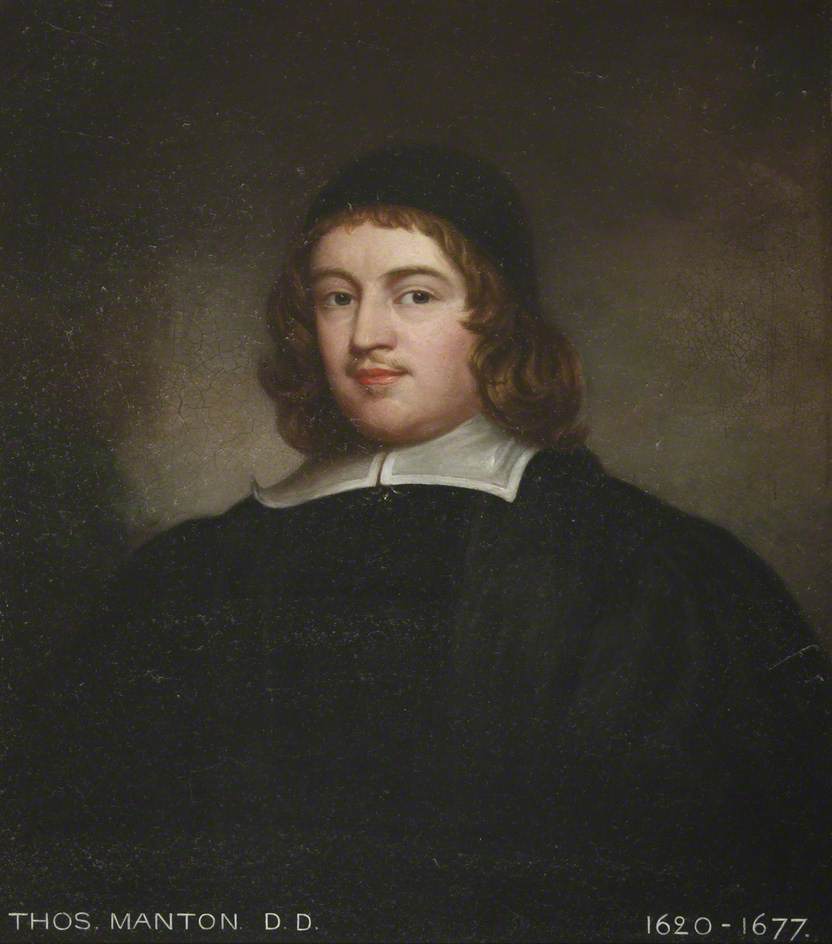
The main theological topic addressed in Thomas Manton’s commentary on James 2:26 is the relationship between faith and works, emphasizing that genuine faith necessarily produces good deeds. Manton argues that an empty profession of faith, devoid of works, is as lifeless as a body without a spirit, evidencing the necessity of faith manifesting itself through actions. He supports his claim by referencing Galatians 5:6, which underscores that true faith operates through love and serves as a corrective to the notion that works are merely an accessory to faith. The significance of this doctrine lies in the Reformed perspective that genuine faith is not only a matter of belief but also an active, living commitment that glorifies God and benefits the believer, distinguishing true faith from a mere intellectual assent which is ineffectual and devoid of spiritual vitality.
Key Quotes
“As the body without the spirit is dead, so faith without deeds is dead.”
“Faith without works is dead... not that works are the soul of faith but that works are the companions of faith.”
“Mere profession in respect to true faith is only like a carcass... it is noisome like a rotten carcass.”
“It cannot unite you to Christ so that you may possess his righteousness nor give you a feeling of his Spirit.”
What does the Bible say about faith and works?
The Bible teaches that faith without works is dead, meaning genuine faith must produce good deeds.
Thomas Manton elaborates that the concept of faith is often misunderstood. Some doctrines suggest that charity or works are the essence of faith; however, he argues that while works are essential, they are not the core that animates faith. Instead, they serve as evidence of a living relationship with Christ, showcasing the transformative power of faith. The comparison illustrates that just as a corpse may resemble a living person without the breath of life, a faith void of works lacks true life and purpose.
Moreover, this dead faith is not a legitimate expression of true saving faith as outlined in Galatians 5:6, which states that faith must work through love. It is imperative that Christians recognize that without actions that reflect their beliefs, their faith remains merely an external profession, ultimately ineffectual in achieving the vital union with Christ and His righteousness.
James 2:26, Galatians 5:6
How do we know that faith must have works?
Faith must have works as evidence of its authenticity, as shown in James 2:17-20.
Furthermore, the role of works as evidence of faith can be seen throughout the scriptures. In Matthew 7:23, for instance, Jesus rejects those who profess faith yet fail to exhibit the works that align with a true commitment to Him. This illustrates the concept that mere profession, without the fruits of obedience and charity, is insufficient for salvation. Manton warns against the danger of a superficial faith, likening it to a corpse that bears no life, highlighting that a living faith will inevitably bear fruit in good works that glorify God and benefit others.
Thus, the call for works is not a legalistic demand but an organic expression of a vibrant faith. As believers engage in acts of love and service, they reflect the character of Christ and contribute to the building up of the church, showcasing the life-changing impact of their relationship with Him.
James 2:17-20, Matthew 7:23
Why is believing in living faith important for Christians?
Believing in living faith is crucial for Christians as it demonstrates their genuine relationship with Christ.
Furthermore, embracing the concept of living faith serves as a safeguard against the perils of complacency. Many may profess to have faith, yet their lives reflect no evidence of spiritual vitality. Manton emphasizes that this disconnect renders such faith dead and ultimately leads to spiritual decay. Believers are called to examine their faith against the backdrop of their actions, ensuring they align with the transformative power of the gospel.
In essence, living faith is important not only for personal assurance of salvation but also for the witness it provides to the world. Authentic faith that produces good works is a testament to the life-changing impact of the gospel. It encourages unity within the body of Christ as believers engage collectively in actions that reflect His love, mercy, and grace, ultimately pointing others to the saving power of Jesus.
Matthew 28:19-20, Galatians 5:22-23
As the body without the spirit is dead, so faith without deeds is dead.
Here the apostle concludes the whole argument, showing how little is to be ascribed to an empty profession of faith without works. It is like the body without the spirit of life.
Asthebodywithoutthespirit. In the [KingJames] margin we read breath, in the [NIV] text spirit. Many people prefer the marginal reading, because it is not “as the body without the soul,” but asthebodywithoutthespirit or breath. Cajetan is of this opinion, and his words are notable because they fully accord with Protestant teaching. “By spirit,” he says, “is not meant the soul, but the breath; for as the body of a beast is dead when it does not breathe, so faith without works is dead, breathing being the effect of life, as working is of living faith. So it is clear what the apostle means when he says that faith is dead without works, not that works are the soul of faith, but that works are the companions of faith, as breathing is inseparable from life.” By this exposition, their doctrine that charity is the soul of faith and their distinction between unformed and formed faith fall to the ground. However, I think the Greek word in the text is not to be translated “breath” but spirit or “soul,” the substance that gives life and movement to the body, for this is what the word means elsewhere: “Into your hands I commit my spirit” (Luke 23:46); “Lord Jesus, receive my spirit” (Acts 7:59).
The meaning is, then, that faith without works is like a body without a soul. And yet it does not follow that charity or works are the soul of faith, for the comparison does not hold in regard to animation but in regard to operation. As in the body without a soul there is only the outward shape but nothing to show life, so in empty profession of faith there is some appearance of faith, but no fruits to demonstrate its truth and life. It differs as much from faith as a carcass does from a living man.
Is dead. That is, it cannot perform the functions of life or of a man.
Sofaithwithoutdeeds. The Roman Catholics understand this to mean true, justifying faith. But dead faith cannot be true faith, just as a carcass is not a true man; and a true faith cannot be without works (see Galatians 5:6). We must understand this, then, to mean an external profession of belief, which because of some resemblance to what is true is called faith.
Is dead. That is, false or useless to all the ends and purposes of faith.
Notes on Verse 26
For practical notes, see verses 17 and 20. Here only note that mere profession, in respect to true faith, is only like a carcass. It is so in two respects:
(1) It is noisome like a rotten carcass, just as a worldly Christian is the carcass of a true Christian. When those who claim to be Christians but are worldly come near to Christ, he goes further off, as you would from what is offensive: “Away from me, you evildoers!” (Matthew 7:23). He cannot endure their presence.
(2) It is useless for all the purposes of faith. It cannot unite you to Christ so that you may possess his righteousness, nor give you a feeling of his Spirit. In short, it brings no glory to God and gives no comfort to the person who has it, nor any benefit to others; it is of no more use than a dead body when the spirit has gone.

Comments
Your comment has been submitted and is awaiting moderation. Once approved, it will appear on this page.
Be the first to comment!