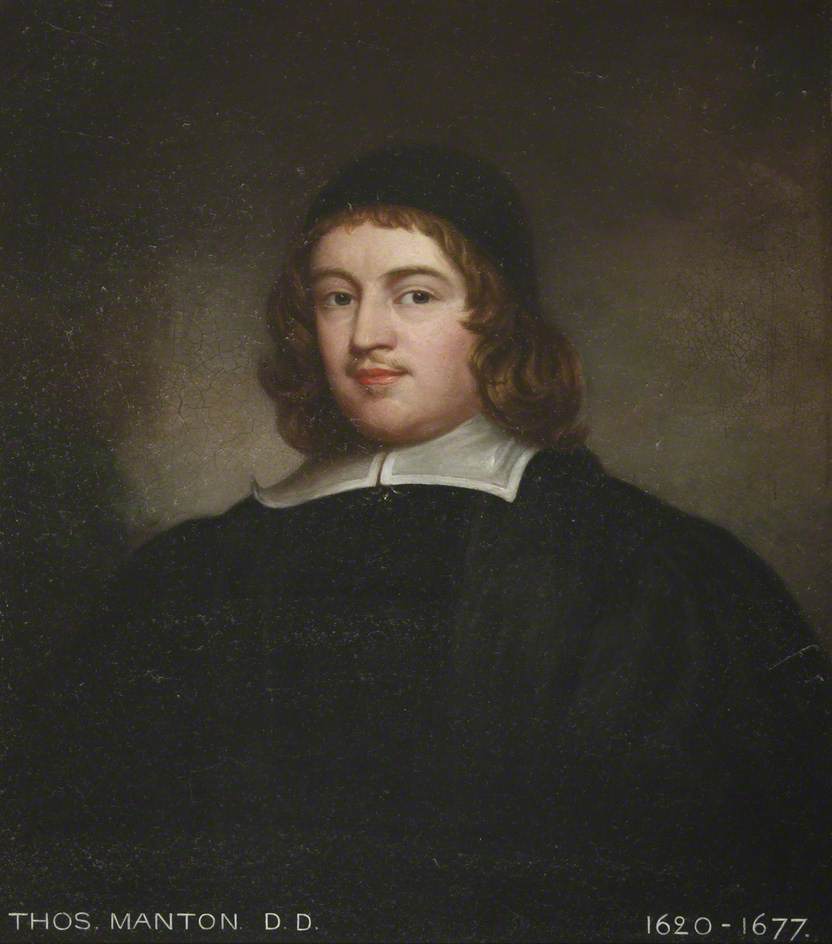
Thomas Manton's commentary on James 3:7-8 focuses on the nature and power of the tongue, emphasizing its uncontrollable and sinfully dangerous character. He argues that while humanity has dominion over the animal kingdom, the tongue remains a part of human anatomy that cannot be tamed by human effort alone, exposing the depth of human depravity and the moral impotence of man after the Fall. Manton supports his arguments through various Scripture references, including references to creation (Genesis 1:26), the nature of sin (Matthew 19:23-26), and the necessity of divine assistance (Psalm 141:3). The significance of these verses lies in their demonstration of humanity's need for God's grace to control the tongue and the acknowledgment of our struggle with sin, reinforcing key Reformed doctrines of total depravity and reliance on divine grace for spiritual discipline.
Key Quotes
“But no man can tame the tongue; it is a restless evil, full of deadly poison.”
“Though we have lost our power, God must not lose His right; weakness does not exempt us from duty.”
“Come before God humbly, bewail the depravity of your nature manifested in this uncontrolled part of the body.”
“A wicked tongue is venomous and hurtful.”
What does the Bible say about the tongue?
The Bible describes the tongue as a restless evil, full of deadly poison, which cannot be tamed by man (James 3:8).
James 3:8
How do we know the doctrine of sin is true?
The Bible illustrates sin's pervasive impact, including the unruliness of the tongue, showing that we cannot tame ourselves (James 3:8).
James 3:8
Why is self-control important for Christians?
Self-control is essential for Christians as it reflects obedience to God and the power of grace in taming our unruly nature (Proverbs 16:32).
Proverbs 16:32
Allkindsofanimals,birds,reptilesandcreaturesoftheseaarebeingtamedandhavebeentamed by man, but no man can tame the tongue. It is a restless evil, full of deadly poison.
Having shown the cursed influence of the tongue, James shows how difficult the cure is. Wild beasts are more tractable and may be brought to hand sooner than an evil tongue; it is wilder than the wildest beast.
All kinds of animals, birds, reptiles and creatures of the sea. The list is long so that he can show how far human skill has reached. Stories abound of how lions have been tamed and used to hunt like dogs or draw a chariot like horses (see Pliny in his NaturalHistory) and about how birds have been tamed and so on. In short, nothing is so wild in nature that human skill and hard work has not made it serve human use. This is a fruit of the dominion God gave man over the creatures in the beginning. Through an instinct in their nature everyone obeyed him and served him. But man rebelled and lost his command over himself and over the creatures. Even over his tongue, asmall part of his body, he has no dominion. That is the purpose of this illustration.
Arebeingtamedandhavebeentamedbyman. It is as if he said, “It not only has been done in ancient times, but we still see it done today.” He uses this distinct expression to show that he not only means the subjection of the creatures before the fall, or some miracles such as the great fish not hurting Jonah (Jonah 2) or the lions and Daniel in their den (Daniel 6), but also what is ordinary and is frequently experienced.
Butnomancantamethetongue. The old Pelagians read this as a question, as if the sense were: “Man can tame all other things; can he not then tame himself?”—implying that man can surely do this. This is quite contrary to the apostle’s intention, which is to show how unruly the tongue is. Others, to avoid the apparent harshness of the sentence, say James is speaking about other men’s tongues—who can stop them?—as if it were a saying similar to Psalm 120:3, “What will he do to you, and what more besides, O deceitful tongue?” That is, how shall I stop it? But this also does not agree with the apostle’s intention; he does not say how we should bridle other men’s tongues but our own. The meaning is, then, that no one can do it by himself.
Itisarestlessevil. Some take this causally: it is the cause of sedition and unruliness. But I think it means what was formerly expressed: it is an evil that cannot be controlled. It is a metaphor taken from animals that are kept in cages or chained. God has, in the structure of the mouth, made a double barrier of teeth and lips and through grace laid many restraints upon the tongue, and yet it breaks out.
Fullofdeadlypoison. This is an allusion to poisonous creatures. The tongue is as deadly, and has as much need to be tamed, as venomous beasts. Besides, some beasts carry their poison in their tongues, as the asp does in a sac under the tongue, which, when they bite, is broken, and then the poison comes out. That is why it is said, “They make their tongues as sharp as a serpent’s” (Psalm 140:3).
Notes on Verse 7
Note1. Observe the tractableness of the animals to man, and the disobedience of man to God. Wild animals are tamed, snakes are charmed by our skill, but we are not charmed by all the enticements and allurements of heaven: “Their venom is like the venom of a snake, like that of a cobra that has stopped its ears, that will not heed the tune of the charmer, however skillful the enchanter may be” (Psalm 58:4-5). The ox, a creature of great strength, is obedient to man, a weaker creature; but we kick our heel against God, as the prophet says: “The ox knows his master, the donkey his owner’s manger, but Israel does not know, my people do not understand” (Isaiah 1:3). Fallen man may learn mildness and obedience from the animals, and yet God has more power to subdue, and we have more reason to obey.
Note2. Observe the greatness of man’s folly and impotence in ruling his own soul. Though he tames other things, he does not tame himself. We seek to recover our loss of dominion over the creatures, but who seeks to recover the power that he once had over his own soul? How can we look to have our dominion over inferior creatures when through our wrong desires we make ourselves like one of them? We all want sovereignty but not holiness. Men seek to conquer others but not themselves. Solomon says, “Better … a man who controls his temper than one who takes a city” (Proverbs 16:32); that is the nobler conquest, but we do not achieve it. It was Augustine’s complaint that we do not tame the beasts in our own hearts. The evil tongue is the worst snake.
Note3. See the depth of human misery. Our own skill is able to tame the fiercest animals and make them useful—animals as strong as lions and elephants, as well as birds and snakes. But alas, there is more rebellion in our affections; sin is stronger, and our will cannot tame it. We may teach animals to do things contrary to their natural dispositions—elephants to crouch, horses to dance; but man is “a beast that will not easily come to hand,” as Plato said.
Note 4. Skill in subduing creatures is a relic of our old superiority. The heathen discerned that we once had dominion, and the Scriptures plainly assert it: “Let us make man in our image, in our likeness, and let them rule over the fish of the sea and the birds of the air, over the livestock, over all the earth, and over all the creatures that move along the ground” (Genesis 1:26). Next to God’s glory, they were ordained for man’s service and benefit. All the animals were to come to Adam and receive their names, which was a kind of formal submission to his rule. To maintain this rule, God gave man wisdom, and instinct in the creatures through which they obeyed him. But ever since the fall this right was forfeited, and the creatures rebelled against obeying man. But the elect have a new right in Christ, which reinstates them to absolute rule over the creatures. Then the creation will be freed from the bondage of corruption and will be subject to the children of God (see Romans 8:19-22). But for the present this dominion is exercised in a much more inferior way than it was in innocency.
Notes on Verse 8
Note1. The tongue is barely subdued for any good use. And in this life God does not give absolute grace to avoid every idle word. This refutes the idea of the power of free will alone; we cannot tame one part of the body. Consider the offenses of the tongue and you will see that you must walk humbly with God. If it cannot be tamed, what shall we do? Why do you tell us to bridle it? I answer:
(1) Though we have lost our power, God must not lose his right. Weakness does not exempt us from duty; we must bridle the tongue, though we cannot do this ourselves.
(2) Even if we cannot bridle it, God can. “It is hard for a rich man to enter the kingdom of heaven … but with God all things are possible” (Matthew 19:23, 26). Difficulty and impossibility as to the creature’s endeavors are established, that we may fly to God. The horse does not tame himself, nor the camel himself; man tames the beast, and God tames man. You tame a lion, and you did not make it; but God made you, and shall he not tame you?
(3) To those who attempt it and do what they are able, God will give grace; he never fails a diligent, waiting soul. Our first desires come from him, and so does their accomplishment; offer yourselves to do his work.
(4) Though we are not altogether without sin, we must not stop resisting sin. Sin reigns where it is not resisted; it only remains in you where it is opposed.
But you will say, what is our duty? I answer:
(1) Come before God humbly; bewail the depravity of your nature, manifested in this uncontrolled part of the body. This was one of the sins that Augustine confessed; he said his tongue was always an Etna throwing out fire. Tell God about it.
(2) Come earnestly. This was one of the occasions when Augustine in his Confessions sobbed, “Lord, give what you command, and command what you wish.” He said this about lust and about the evils of the tongue. Cry for help—“Set a guard over my mouth, O Lord” (Psalm 141:3).
Note2. Restlessevil. There is an unbridled license in the tongue. When the mind is full of ideas, the tongue is keen to utter them. Therefore, we should use not only spiritual care but a holy restraint: “I will put a muzzle on my mouth” (Psalm 39:1). You need to look to the heart. Humble the heart into sweet submission.
Note3. Fullofdeadlypoison. A wicked tongue is venomous and hurtful. As Bernard observes, it kills three things at once: the person who is slandered (his reputation, from bad reports) and the person to whom it is told (he believes a lie) and himself (with the sin of defamation). Bless God when you escape those deadly bites; nothing but innocence will keep you safe. But if this is your lot, bear it with patience; there is a resurrection of reputations as well as of persons.

Comments
Your comment has been submitted and is awaiting moderation. Once approved, it will appear on this page.
Be the first to comment!