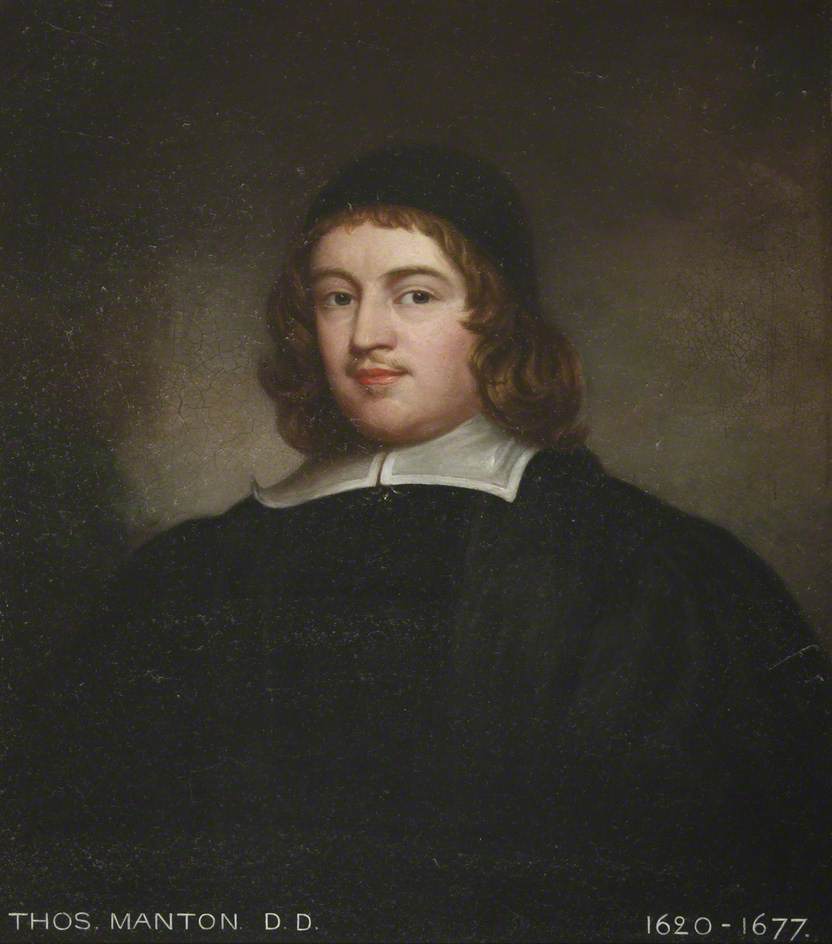
In Thomas Manton's commentary on James 4:12, the central theological doctrine examined is the exclusive authority of God as the sole Lawgiver and Judge. Manton argues that human judges operate as God's deputies, bound by His ultimate authority which governs the conscience and establishes moral laws. He refers to Scripture such as Isaiah 33:22 and James 4:12 to emphasize that all judgment and law must align with God's standards, dismissing human authority's ability to dictate morality. The practical significance of Manton's exposition lies in exhorting believers to uphold God's commandments and maintain a healthy fear of His omnipotence, thus avoiding the sin of presumption and reliance on worldly wisdom in daily affairs, which can lead to moral decay and spiritual neglect.
Key Quotes
“There is only one absolute and supreme Lawgiver whose will is the rule of justice.”
“In external policy human laws and edicts are to be observed. But he is speaking about the interior governing of the conscience where God alone judges by the Word.”
“It is a vain thing to promise ourselves great things without the permission of providence.”
“Submit to God and what you decide on will be done.”
What does the Bible say about God's role as the Lawgiver?
The Bible emphasizes that God alone is the ultimate Lawgiver and Judge, with authority over both spiritual and moral laws.
James 4:12, Isaiah 33:22
How do we know God is the only true Judge?
We know God is the only true Judge through Scripture, which asserts His unique authority over judgment and the laws governing human conscience.
James 4:12, 1 Peter 2:13, Psalm 19:7
Why is avoiding human judgment important for Christians?
Avoiding human judgment is crucial as it places reliance on God's ultimate authority over morality and conscience.
James 4:12, 2 Thessalonians 2:4
ThereisonlyoneLawgiverandJudge,theonewhoisabletosaveanddestroy.Butyou—whoare you to judge your neighbor?
James persists in the same argument. God the Lawgiver is the only Judge; and who are you to invade or usurp his role?
There is only one Lawgiver. But you will say you can name many others—Lycurgus, Zaleucus, Solon, etc.—many who also had power of life and death, and many now who make and dispense laws. How can this sentence be true? I answer: Grotius thinks the apostle means Christ by this expression, in contrast to Moses, arguing against those who want to continue the ceremonial law and make distinctions between days and foods, etc. Now, James says, we in the Christian church have only one Lawgiver, Christ and not Moses. These two must not be yoked and coupled together. But this is too contentious and makes the text mean more than the context permits. More probably James means:
(1) There is only one absolute and supreme Lawgiver, whose will is the rule of justice. Others are directed by an external rule and prudent considerations of equity and safety, and in this they are simply God’s deputies and substitutes, either in the church or in government: “You are not judging for man but for the LORD, who is with you whenever you give a verdict” (2 Chronicles 19:6).
(2) In spiritual things no one else can give laws to the conscience. In external policy human laws and edicts are to be observed. But he is speaking about the interior governing of the conscience, where God alone judges by the Word; for he is speaking against those who want to set up their own will as a rule of sin or duty in things that do not matter one way or the other.
God alone can give laws to the conscience. “The LORD is our judge; the LORD is our lawgiver; the LORD is our king, it is he who will save us” (Isaiah 33:22). Take them in a spiritual sense, and the words are exclusive: God, and no other, is our exclusive Judge, our only Lawgiver, etc. God knows the conscience, and therefore God only must judge it and give laws to it. God only can punish the conscience for sin, and therefore only he can declare an act to be a sin. It is the privilege of his Word to be “perfect, reviving the soul” (see Psalm 19:7).
Objection. An objection may be framed against this doctrine out of Romans 13:5, where it says, “Therefore, it is necessary to submit to the authorities, not only because of possible punishment but also because of conscience.” So human commands seem to oblige the conscience.
Solution. I answer that they do so in a way, but not in the order and manner that God’s do.
(1) Not directly and immediately, but by the intervention of God’s command. As a Christian is bound to perform all civil duties for religious reasons, we are bound in conscience even though human laws do not bind conscience. “Submit yourselves for the Lord’s sake to every authority instituted among men” (1 Peter 2:13). It is God’s command that binds my conscience to obey man’s. “Obey the king’s command, I say, because you took an oath before God” (Ecclesiastes 8:2)—that is, not only for fear of men, but chiefly to not wrong your conscience toward God.
(2) Not universally and unlimitedly. I must obey God on the mere sight of his will. But I must examine human laws to see if they are just and in accordance with love and public safety; and in many cases active obedience must be withheld. Peter and the apostles said, “We must obey God rather than men!” (Acts 5:29). There are many such cases. Conscience is bound toward God, even if we can see no reason for it, no good from it.
(3) Not absolutely. Whatever God commands, I am bound to do even in secret, even if it is contrary to my own thinking. But the principle of submission to man may be fulfilled by suffering a penalty because we forbear from obeying as required; and in some cases a person may do the opposite in private, where the thing does not matter and there is no danger of scandal or contempt for authority. So then, listen to no voice but God’s in your conscience, no doctrines in the church but Christ’s. When men brought in strange doctrines, they “lost connection with the Head” (Colossians 2:19). No offices, institutions, and worship must be allowed other than those he has appointed. Antiquity without Scripture is no sure rule to walk by. We must not look to what others did before us, but to what Christ did before them all. The authority of the church is not like this. She is “the pillar and foundation of the truth” (1 Timothy 3:15); that is, she is to display Christ’s mind, as a post displays a king’s proclamation.
The church has some power in rites of decency and expediency and order, by virtue of the general canon in 1 Corinthians 14:40 (though that text appears to be a restraint rather than an allowance and does not so much enlarge as moderate church power). But in the most important matters the church can only declare laws, not make them; and though she can indicate what is appropriate to order and decency in things that do not ultimately matter, those directions should still be managed so that they do not detract from the nature of the thing. And though Christian liberty may be restrained, it must not be infringed.
It is antichrist’s harmful intent to usurp authority over the church of God, and this is the very spirit of antichristianism—to give laws to the conscience. Calvin says, “Men would have us more modest than to call the Pope Antichrist; but as long as he exercises a tyranny over the conscience, we shall never give up that term; indeed, we shall go further and call people members of Antichrist if they take such snares on their consciences.” Setting up another lawgiver is truly antichristian, for then there is one head set against another, and human authority against the divine. Paul describes Antichrist in 2 Thessalonians 2:4: he “sets himself up in God’s temple, proclaiming himself to be God”—that is, making himself absolute lord of consciences, bringing them to his obedience, working them to his advantage.
Theonewhoisabletosaveanddestroy. This indicates God’s absolute power to do what he pleases with man either temporally or spiritually. This power is given to God everywhere: “See now that I myself am He! There is no god besides me. I put to death and I bring to life, I have wounded and I will heal, and no one can deliver from my hand” (Deuteronomy 32:39; see also 1 Samuel 2:6 and Isaiah 43:13).
Note1. Absolute supremacy is only appropriate to one who has absolute power. The power of magistrates is limited by the will of God, because they depend on him and can do nothing except as they are enabled and authorized by him (John 19:11).
Note2. God has absolute and supreme power over men and can do with them whatever he wants. And therefore we must:
(1) Keep close to his laws with fear and trembling; there is no escaping from this Judge (1 Corinthians 10:22). Eternal life and eternal death are at his disposal (Matthew 10:28).
(2) Observe his laws with encouragement; live according to Christ’s laws, and he is able to protect you: “Our God is a God who saves; from the Sovereign LORD comes escape from death” (Psalm 68:20). He can save his people, and he has many ways to bring his enemies to ruin. Your friend is the most dreadful enemy of those who oppose him; he “holds the keys of death and Hades” (Revelation 1:18).
(3) Be all the more humbled if you break his laws. Oh, what will you do with this Lawgiver who rebukes you by a glance, turning you into hell? Have you enough courage and strength to withstand God? (See Ezekiel 22:14.) What will you do with him whoisabletosaveanddestroy? Wool overcomes the blows of iron by yielding to them. There is no way left but submission and humble prayers. God may be overcome by faith but not by power: “let them make peace with me” (Isaiah 27:5). By humble supplications you may struggle with God and “overcome” (Genesis 32:28).
Butyou—whoareyoutojudgeyourneighbor? That is, what a distance there is between you and God! What a sorry judge you are compared with him! The same question comes in Romans 14:4.
It is good to shame pride with the consideration of God’s glory and our own baseness. He is able to save and destroy. But you—who are you… ?
Nowlisten,youwhosay,“Todayortomorrowwewillgotothisorthatcity,spendayearthere, carry on business and make money.”
Having spoken about people who held the law in contempt, he now speaks against those who hold providence in contempt, promising themselves a long time in the world and a happy ending to their worldly projects, without any sense or thought of frailty or the sudden strokes of God. In this verse he gives a most accurate representation of their thoughts.
Nowlisten. This is a phrase that provokes them to think, like awakening conscience or citing them before the presence and tribunal of God. The same words are used in 5:1.
If we want to know how evil our actions are, it is good to review and reflect. We sin and go on in sin because we do not stop to think. There should be wise consideration beforehand to prevent sin, and faithful recollection to prevent going on in sin. God complains, “No one repents of his wickedness, saying, ‘What have I done?’” (Jeremiah 8:6). This recollection cites the soul before three bars: conscience, God’s eye, and God’s throne or tribunal. It rouses the light of conscience by comparing the action or speech with a principle of reason or the Word, as in the present case. Thus: Am I Lord of future events, that I determine them so confidently? Do things depend on my will? Are my life or actions in my own power? It draws the soul into God’s presence, thus: do I want the jealous God, who disposes of human events and successes, to take notice of such speeches? And before God’s judgment seat thus: would I defend such actions or speeches before God’s tribunal? Will these worldly deliberations endure the severe search and trial of the great day?
Youwhosay,“Todayortomorrowwewillgotothisorthatcity…” He imitates the way of speaking, or the thoughts, of the Jewish merchants. “Now we will go to Alexandria, or to Damascus, or to Antioch” (their usual trading places).
Note1. Worldly hearts are all for worldly projects. Thoughts are the purest offspring of the soul and reveal its temper. People are what their desires are. “The noble man makes noble plans” (Isaiah 32:8). Worldly people are projecting how to spend their days and months buying and selling and making a profit. The fool in the Gospel is thinking of enlarging his barns and pulling down his houses and building bigger ones (Luke 12:17-18); this engrosses all his thoughts. One apostle describes such people in these words: “Their mind is on earthly things” (Philippians 3:19). Another says they are “experts in greed” (2 Peter 2:14); that is, they earnestly work out how to promote their gain and earthly aims. Gracious hearts are occupied with gracious projects and how they can be more thankful (Psalm 116:12)—how they can be more holy, more useful for God, more fruitful in every good work—what they must to do inherit eternal life. Think how much better this is, how much more appropriate to the purpose of our creation and the nature of our spirits. We were sent into the world not to grow great and pompous, but to enrich our souls with spiritual excellence.
Note2. Worldly people think to enjoy their pleasures before they obtain them. People usually feed themselves with the pleasure of their hopes. Sisera’s mother’s ladies looked through the lattice, taking pleasure in the thought of a triumphant return (Judges 5:28-30). Thoughts are the spies and messengers of the soul; hope sends them out after the thing expected, and love after the thing beloved. When we look forward to something keenly, the thoughts spend themselves in creating images and suppositions of the happiness of enjoyment. If a poor man were adopted into the succession of a crown, he would take pleasure in thinking about the future honor and pleasure of the kingly state. Godly people, who are called to be “heirs together with Christ,” are wont to preoccupy the bliss of their future state, and so in a way they only feel that to which they are looking forward.
Similarly, worldly people charm their souls with whispers of vanity and feed on the pleasant anticipation of that worldly delight to which they look forward. For example, young heirs spend on their hopes and riot away their estate before they possess it. So then, be careful—it is a sure sign of worldliness when the world is in your thoughts so often that you are always deflowering worldly pleasures by anticipating worldly desires and sin, and you have nothing to live on or to entertain your spirit with but these ideas of gain and pomp and the reversion of some external pleasure.
Note3. Again, you may see their confidence in future events: “Wewillgo…spendayear there…” Note that worldly affections are usually accompanied by worldly confidence and are certainly much encouraged by it. They are doubly confident: confident of the success of their efforts (“Wewill…makemoney”), and confident of their lives continuing (“Wewill…spendayear there”). Desire cannot be nourished without assuming success. When people multiply their efforts, they little think of God or of the changes of providence; it is enough to undo their desire if they think it could be disappointed. Besides, when the means exist, there is not much we ascribe to the highest cause. First the world steals away our affections, and then it intercepts our trust; there is not only adultery in this (4:4) but idolatry (Ephesians 5:5).
The world is not only our darling but our god; and that is the reason why worldly people are always represented as people who confidently assume things will happen. For example, in Luke 12:19, “I’ll say to myself, ‘You have plenty of good things laid up for many years. Take life easy; eat, drink and be merry.’” Or Job 29:18—“I will die in my own house, my days as numerous as the grains of sand.” They think now they have enough to secure them against all chances. So then, be careful about your confidence and trust; when you are getting an estate, is your expectation founded on faith or desire? When you have gotten an estate, on what is your assurance of contentment based—the promises or your external welfare?
Note4. Worldly people are confident not only of the present but of their future welfare, which shows that the heart is stupidly complacent and utterly unaware of the changes of providence. “Tomorrow will be like today, or even far better” (Isaiah 56:12). “In their thoughts their houses will remain forever” (Psalm 49:11 [see NIV footnote]). People love to enjoy their worldly comforts without interruption, thoughts of death, or change. Every day is like a new life and brings sufficient care with it; we need not look at such a long time. But worldly people, in their cares, provide not only for the next day but for the next year, being confident they have a next year; they do not want even to think about things changing.
“Spendayearthere,carryonbusinessandmakemoney.” He gives the chief example of carrying on business because too often these worldly thoughts and hopes and confidence are found in businessmen. But he means it of all sorts of people who undertake anything confident of their own wisdom and hard work, without the permission and blessing of providence.
Note 5. Businessmen are very liable to thinking and speaking that savors of worldly presumption and confidence. At the stock exchange and markets they are always talking about commodities and profit and trading, without any thought of God. “The merchant uses dishonest scales; he loves to defraud” (Hosea 12:7). Your ordinary business takes you from place to place; take God along with you wherever you go. Of all people you should be most astute; in your business be mindful of God and of yourselves—of God’s providence and your own frailty—so that you are neither too much in the world, nor too confident in your own hard work.
Note 6. From the whole verse, note that it is a vain thing to promise ourselves great things without the permission of providence. To say, “We will go” or “we will do such and such” is vain, for we are not lords of our lives, nor lords of our own actions: “My times are in your hands” (Psalm 31:15). “Do not boast about tomorrow, for you do not know what a day may bring forth” (Proverbs 27:1). Today we are, and tomorrow we are gone; we cannot tell what may be in the womb of the next morning. It is the same with our actions: “what [the righteous and the wise] do” is “in God’s hands” (Ecclesiastes 9:1). To get things done, and to do them successfully, we need counsel and a blessing. The prophet speaks of this: “I know, O LORD, that a man’s life is not his own; it is not for man to direct his steps” (Jeremiah 10:23).
But when do people promise themselves great things without the leave of providence? In many ways. The main ones are these:
(1) When they undertake things without prayer. You may speak of success only when you have asked God’s permission: “Submit to God and … what you decide on will be done” (Job 22:21, 28).
(2) When they are too confident of future contingencies and events without any submission to the will of God and boast merely on human likelihood (see Exodus 15:11 and Judges 5:28-30). “‘May the gods deal with me, be it ever so severely, if enough dust remains in Samaria to give each of my men a handful.’ The king of Israel answered, ‘Tell him: “One who puts on his armor should not boast like one who takes it off”’” (1 Kings 20:10-11). Ben-Hadad wanted to strip Samaria so bare that he would not leave any dust there, but God disappointed him.
(3) When people’s efforts are set up in the place of God, we think everything depends on mundane causes, and so we neglect God.
(4) When people promise themselves a time to repent later on. Many think to themselves, “I will pursue pleasure and profit, and then spend my old age devoutly and quietly; first build and trade and bustle in the world, and adjourn God to the aches and dull phlegm of old age.” Foolish man decrees all future events as if they were all in his own control. So then, remember God all the time; this is a good idea for princes and for people who advise about public affairs. How often they prove unhappy because they do not seek God! The natural exercise of your faculties and the help of God’s grace all depend upon God’s good pleasure.

Comments
Your comment has been submitted and is awaiting moderation. Once approved, it will appear on this page.
Be the first to comment!