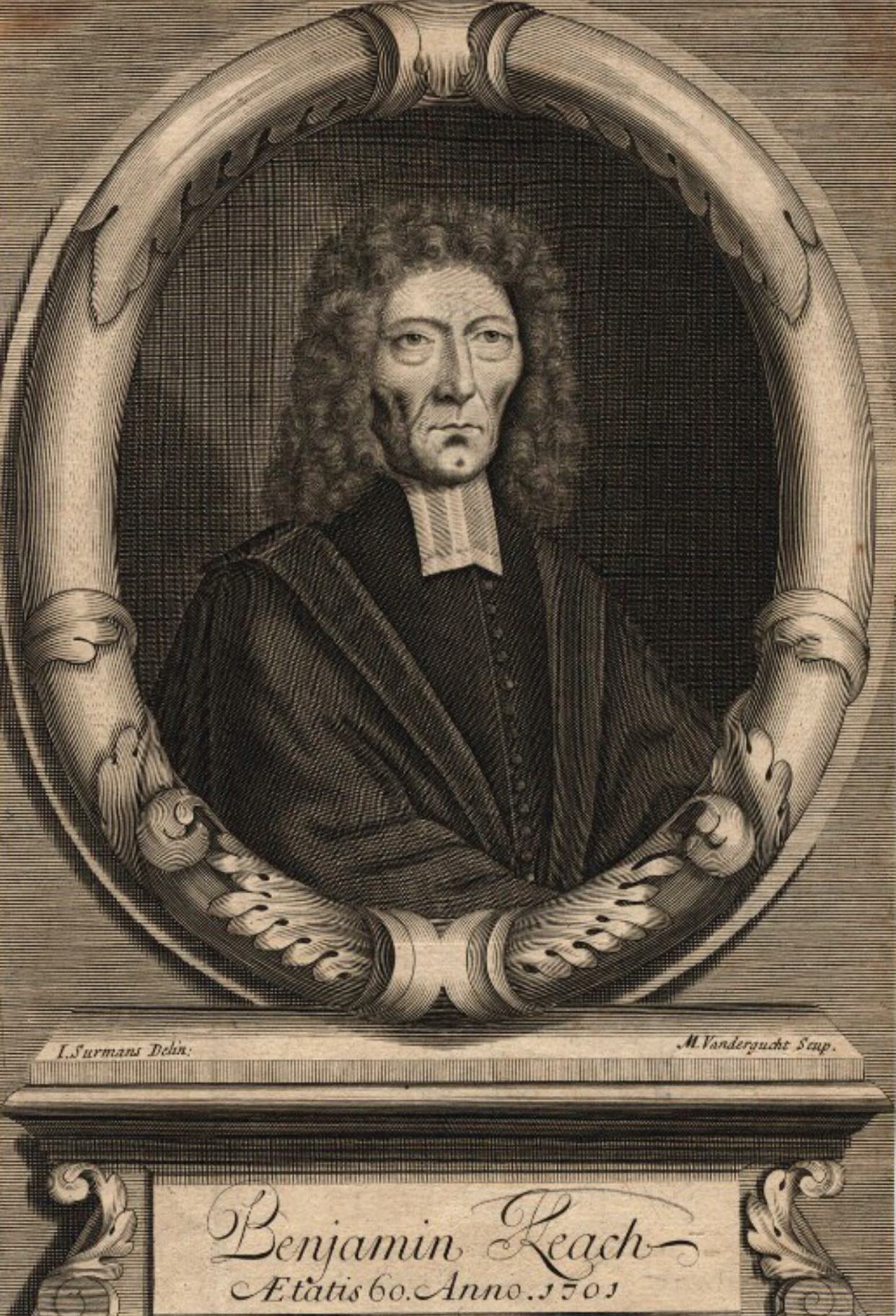
The main theological topic of Benjamin Keach's "Conscience a Witness" is the nature and function of conscience in the life of a believer. Keach argues that conscience serves as a natural power endowed by God that reflects a person's moral state, either accusing or excusing them based on their alignment with divine commandments as found in Scripture (Romans 2:15-16; 1 John 3:20). He emphasizes that conscience must be properly informed by God's Word to provide accurate testimony regarding a person's condition, noting that a misguided conscience can lead one to false conclusions about their spiritual state. Scripture references, including Romans 8:16 and 1 John 2:3, reinforce the idea that the Holy Spirit works in tandem with the conscience to bear witness of one’s relationship with God. The practical significance of this doctrine lies in the call for believers to maintain a good conscience, as it not only serves as a witness in life but will also function in the final judgment to reveal hidden things (1 Corinthians 4:5), urging Christians to live transparently and in accordance with God's will.
Key Quotes
“Conscience is a natural power with which God hath endued the soul of man by creation for his comfort if he walk uprightly or for his torment if he walk in evil ways.”
“This faculty or natural power called Conscience only appertaineth to men and not to any irrational creatures.”
“A good Conscience is better than a good name; it is better than a good trade; it is better than a good estate.”
“Consider Conscience keeps a register of all thy thoughts and actions... what you forget and is quite gone out of their memories is set down in the book of Conscience.”
What does the Bible say about conscience?
The Bible describes conscience as a witness to our actions, either accusing or excusing us based on our alignment with God's law.
Romans 2:15-16, 1 John 3:20, Romans 8:16
How do we know conscience is true?
Conscience must be informed by Scripture for it to give true testimony about our actions and intentions.
1 John 2:3, Romans 8:16
Why is a good conscience important for Christians?
A good conscience provides assurance and peace, serving as a witness of one's sincerity before God.
2 Corinthians 1:12, Romans 2:15-16, Hebrews 10:22
CONSCIENCE A WITNESS
"I speak the truth in Christ, I lie not, my Conscience bearing me Witness in the Holy Ghost," &c. Ro 9:1.
"If our Hearts condemn us, God is greater and knoweth all things" 1Jo 3:20.
"Their Conscience in the mean while accusing or excusing, in the day when God shall judge the secrets of men by Jesus Christ, according to my Gospel" Ro 2:15-16.
Conscience is in these scriptures called a Witness. We shall,
1. Show what Conscience is.
2. Run the parallel.
First, Conscience is a natural power, with which God hath endued the soul of man by creation; for his comfort, if he walk uprightly; or for his torment, if he walk in evil ways. We do not imagine, that conscience came not into the world until Adam's fall; for this were to suppose Adam in paradise to be a man without Conscience. Conscience indeed, as an accuser and condemner, came not in until then; for as long as Adam obeyed the commandments of God, there was no cause that Conscience should accuse him; but as soon as he had sinned, Conscience flew in his face.
Secondly, Conscience we (1.) say is a natural power, which the soul of man hath," &c. Now, saith Mr. Lockier, whether this power be in the understanding only, or partly in the understanding, partly in the will, I find controverted amongst the learned; some speak of it as a distinct faculty. This power we speak of, I conceive, saith he, to be a reflect act of the practical understanding only transcendently. (2.) By the power of the Holy Ghost. St. John confirms that it is a reflect act of the practical understanding only, where speaking of this power in the soul, he saith, "And hereby we know that we know him, if we keep his commandments," 1Jo 2:3, that is, as if you should say, We do view our ways by the Word of God, which is an act only of the understanding; and finding them to be in some measure level with the holy rule, we have this comfortable reflection back upon ourselves, that our faith is not a fancy, but a faith that works by love, and also sincere and saving. Paul confirms the second, that it is a reflect act of the understanding transcendently seconded by the power of the Holy Ghost: "My Conscience bearing me Witness in the Holy Ghost:" that is, my conscience transcendently seconded and assisted by the Holy Ghost, doth strongly testify to my soul, that I am full of bowels towards my kinsman after the flesh, and could do anything, or suffer anything for their good. The order according to which the Holy Ghost strikes in Conscience is this;
The understanding makes a double proposition, one grounded in the word of God the other in the heart of man; as thus: He that keepeth the commandments of God, truly loves God; but I do keep the commandments of God. This is grounded in the heart of man, and then draws a conclusion from both, therefore I do love God truly. This conclusion, whilst holy, and drawn from divine premises, to wit, the Word of God, and true grace in the heart, the Spirit of God strikes in with the soul in making of it, and assists the weak soul, so that he concludes with strong confidence, he is sincere, or loves God in truth; and not only secretly assists, but seconds him, and saith the same thing to man that his own Spirit doth: "The Spirit beareth witness with our spirits, that we are the sons of God," Ro 8:16. If the premises be corrupt which the understanding makes, (for the heart makes propositions suitable to the light that is in the intellectual part) then the devil, that lying spirit, strives in and seconds the soul in that corrupt conclusion, which he collects from corrupt principles concerning himself, thereby to ruin and undo the soul in ignorance and unbelief.
Thirdly; This faculty, or natural power, called Conscience, only appertaineth to men, and not to any irrational creatures. Brutes want reason, and therefore are not capable subjects of Conscience; yet against reason and conscience men oftentimes do worse than a beast.
Fourthly; conscience is a natural power in man, which compares his ways and thoughts by some rule; and according as his ways agree or disagree with that rule, so answerably doth it bear witness with or against him.
If the understanding be enlightened with truth, to wit, the Word of God, then Conscience compares the ways of a man by a perfect rule. But if the understanding be enlightened with natural or moral principles only, then Conscience compares a man's ways according to those principles only, and so by an imperfect rule.
So far Mr. Lockier, and others, as to what Conscience is.
METAPHOR
I. A Witness gives in testimony according to his light, or that knowledge he hath of things; and if he hath a perfect knowledge of this or that he speaks and testifies, his testimony is good, and ought to be received.
PARALLEL
I. So Conscience gives in testimony according to that light and knowledge that is in the understanding, for it only speaks and makes propositions according to its light; if it be misguided by Satan, or corrupt nature, or false principles, its testimony is not good, nor to be regarded, but deceives and abuses the soul, as a false Witness doth, who appears to speak in the behalf of a guilty person. And on the other hand, it may, for want of a clear light and understanding, condemn such as it should clear. And hence many that are very wicked and vile, both in practice and principle, are very confident that their state and condition is good, and their poor deluded souls are peremptory many times, and wiser in their own conceit, than seven men that can give a reason. In them is fulfilled that of the apostle, "Their minds and Consciences are corrupt." And on the other hand, for want of a little light, some good men by the testimony of their Consciences are ready to condemn themselves, and give up all their hope, notwithstanding their being justified and accepted by Jesus Christ.
METAPHOR
II. A Witness therefore must be thoroughly examined, to find out how or by what means he comes to know this or that he gives testimony of.
PARALLEL
II. So must a man strictly examine his own Conscience, how it comes to have knowledge of things, of which it either accuseth, or excuseth: for this ought always to be received as an undoubted truth that the Word of God is the very rule and guide by which Conscience should be steered, and by the clear light of which it ought at all times to give in its testimony, either for or against a man. Saul thought he ought to have done many things against the name of Jesus of Nazareth; his heart did not witness against him, when he consented to Stephen's death, because his Conscience wanted light, it had not perfect knowledge of things: and hence he saith, that "What he did, he did it ignorantly, in unbelief," 1Ti 1:13. But should another man, who knew Jesus of Nazareth was the Son of God, and those persecuted people were the people of God, have done so, Conscience would have been Witness against him, and have flown in his face, yea, condemned him for it without repentance, to the lowest pit of hell.
METAPHOR
III. A good Witness, one that hath perfect knowledge of all things laid to a man's charge, if he can make it out that he is wronged, how is such a Witness to be valued!
PARALLEL
III. So a good Conscience, I mean a Conscience rightly enlightened by the Word of God, if it give in testimony for a man, that his heart is sincere, and his life holy, and that he truly loveth and feareth God, notwithstanding the false charge of the enemy; how is the testimony of such a fitness to be valued by a Christian! hence Paul saith, "This is our rejoicing, the testimony of our Conscience," 2Co 1:12.
METAPHOR
IV. A good and faithful Witness will speak the whole truth, and clear the matter, so far as he knoweth, or can speak to it, upon all occasions.
PARALLEL
IV. So a good and well-guided Conscience will speak all the truth, and clear the matter between God and the soul, so far as he hath light; and will deceive no man or woman, if they do but hearken to him.
METAPHOR
V. A good and faithful Witness will not be bribed or daunted, but speak in behalf of a man who is falsely accused, and to the utter shame and conviction of the guilty person.
PARALLEL
V. So Conscience, rightly guided by God's Word, will speak peace to a godly and sincere person, let who will condemn him; and will speak terror to the wicked and impenitent sinner, let who will speak peace and comfort to him. Conscience will deal plainly, if it may be heard, and be not stifled, or put out of a capacity of bringing in its testimony.
METAPHOR
VI. A just and impartial Witness is greatly dreaded by a wicked and guilty person.
PARALLEL
VI. So Conscience, who is an impartial Witness is greatly dreaded by some ungodly souls. O how fain would they fly from those terrible accusations of their own consciences, if they knew how! some from the horror that ariseth from hence have hanged themselves, and others, cut their own throats, and some have several other ways laid violent hands upon themselves.
VII. A great and faithful Witness, who hath perfect knowledge of things, and will not be bribed, who can and will as it is believed, and found by experience, speak fully to a cause, though it be to the utter shame and ruin of all guilty persons, is many times grievously abused by malicious men, who hate that their abominable deeds should be brought to light, or laid at their doors; nay, not only so, but some have been stifled, strangled, and traitorously murdered; as the ever renowned Sir Edmund Bury Godfrey was by bloody Papists, the 12th of October, 1678, whom they knew could witness many things against them to detect their cursed and never-to-be-forgotten hellish plot.
PARALLEL
VII. So poor Conscience, who is known and daily found to be a true and faithful Witness, one that will not be bribed or corrupted by frowns or flatteries, who knoweth all the secret lusts, pride, malice, treasons, thefts, adulteries, that lie in the heart, and all manner of wickedness, that vile sinners are guilty of, and layeth it daily to their charge, is hated, and much struck at; nay, such is the wickedness of men, they endeavour to stifle it, and sear its tongue with hot irons; nay, and put out its eyes; nay, so far as they can, they endeavour to murder it, that it may not be able to Witness against them any more, but that they may sin without controul. Of these the apostle speaks: "Who being past feeling, have given themselves over unto all manner of lasciviousness, to work all uncleanness with greediness," Eph 4:19. "Having their Consciences seared with a hot iron," 1Ti 4:2.
METAPHOR
VIII. It is a very great wickedness, to lay violent hands, or treacherously to abuse and stifle the king's faithful Witnesses, especially when called to give in their evidence in matters of great moment, wherein the honour and sovereignty of the king is greatly concerned.
PARALLEL
VIII. So it is a great and horrible wickedness for any soul or sinner to go about to stop the mouth of, or treacherously to abuse poor Conscience, who is the great Witness of the King of heaven and earth, in this lower court, and that in matters wherein his honour, and glorious right and sovereignty, is much concerned; nay, not only his Witness, but judge to sit upon the bench, to hear and determine all causes, if rightly informed, according to the great law-book of the Gospel, and to pass sentence of life and death, or to acquit and discharge.
METAPHOR
IX. A Witness is required to speak the truth, when he comes before a court of judicature, the whole truth, and nothing but the truth and he that is a true Witness will do it. And hereby many times most horrid evils are brought to light, and publicly detected; yea, secret things are discovered, that the guilty person thought would never have been, known, which makes him ashamed and confounded for ever.
PARALLEL
IX. So Conscience in the day of judgment will speak the truth, the whole truth, and nothing but the truth. Though now oft-times it be blinded, and at a great loss, for want of
light or by being misguided, it gives in false testimony, and quits the guilty, and condemns the innocent; but in that day_it will recover such perfect light and knowledge, that it will decide the cause clearly the right way, and will by this means bring to light all the hidden things of darkness, 1Co 4:5, even all those cursed abominations of the heart, all secret things, that it and God were only privy to, and will lay open all the horrid evils that have been done in the dark. Then men shall be forced to confess their secret adulteries, murders, treacheries, and self-revenge; together with all their bloody and black combinations, conspiracies, and hellish plots, carried on in secret cabals, managed by ungodly Papists, or others, notwithstanding all their oaths of secrecy; Conscience, if it come not to light before, will in that day lay all open before the eyes of men and angels, to the shame and eternal confusion of all ungodly ones.
METAPHOR
X. A just and impartial Witness, that clearly and very fully giveth in testimony against a person, in a fair trial, finally stops his own mouth, and the mouths of all others, and leaves the cause clear, for the judge to pass sentence against him.
PARALLEL
X. So the consciences of wicked men, in the great day, will give in such clear and full evidence against them, touching all the evils they shall then be charged with by the just Judge of heaven and earth; that all flesh shall for ever be silenced, and God shall be clear when he judgeth. "Which show the works of the law written in their hearts, their consciences also bearing Witness, and their thoughts in the mean while accusing or else excusing one another, in that day when God shall judge the secrets of all men by Jesus Christ, according to my Gospel," Ro 2:15-16. And hereby all the mouths of unbelievers will be stopped, and they all be found guilty before Christ.
INFERENCES.
I. THESE things being considered, it may stir up all persons to take heed how they act at home and abroad, when they go out, and when they come in, when they lie down, or rise up, because Conscience observes all that is said or done, nay, is privy to all thoughts of our hearts, and one day will witness for us, or against us.
II. Let Christians, whatever they do, labour to keep a good Conscience. A good Conscience is better than a good name; it is better than a good trade, it is better than a good estate. And for further motives to this needful duty,
1. Consider, Conscience keeps a register of all thy thoughts, words, and actions;, what you forget, and is quite gone out of their memories, is set down in the book of Conscience.
2. Consider, Conscience is a Witness, an impartial witness, an accuser of evil; and though it lie still a great while, it will rouse up at last, and with its cruel charges and accusations harass the soul: as in the case of Joseph's brethren: "And they said one to another, verily we are guilty concerning our brother, in that we saw the anguish of his soul, when he besought us, and we would not hear; therefore is this distress come upon us," Ge 42:21.
3. Conscience is not only a Witness, but a judge, and hath power to condemn the wicked and the guilty soul; it sits upon the throne, as God's attorney-general to award life or death, as the states and conditions of men are. "If thy heart condemn thee, God is greater," &c., Joh 3:20-21.
4. Conscience doth often the work and office of a tormentor; woe to them that fall into its enraged hands here, but much more sad will it be with them whom it shall torment in hell. It is it that is "the gnawing worm that never dies, where the fire shall never be quenched," Mr 9:44. But,
5 There is no bearing in this world the pain and torment of an accusing Conscience. Tiberius the emperor, was so followed with grief and horror by his own Conscience, that he confessed in the senate-house he suffered death daily; and Charles the ninth of France, that monster of mortals, after the dreadful massacre, could never endure to be awakened in the night without music, such was the dreadful anguish and horror he found in his own Conscience. Francis Spira also may be here recited among the rest, whose Conscience terrified him at that rate, that the account of his fearful case is left to posterity. It was Conscience that put Judas into such an amaze, and forced him to hang himself, after he had betrayed our blessed Saviour. And many other examples, both ancient and modern, we meet with, both of men and women, that have destroyed themselves, as not being able to bear the cruel torments of an accusing Conscience: and others from hence have confessed their guilt, and so delivered themselves into the hands of justice.
6. That man can never have good days, that keeps an evil Conscience.
7. On the other hand, he that hath a good Conscience needs never be sad, nor can he be without good days; for as trouble and horror of Conscience is the greatest trouble, so peace of Conscience is the greatest joy. That man can never want music, saith Mr. Caryl, that speaks in consort, and is harmonious with himself. A good Conscience is the poor man's riches, and the rich man's chiefest jewel, a jewel worth keeping. It is, saith one, the best pillow to sleep on, and the best dish to feed on. "A good Conscience is a continual feast," Pr 15:15, so the Geneva translation. A good Conscience with a dinner of herbs, is all varieties; but a bad Conscience makes all feasts and pleasures like the hand-writing on Belshazzar's wall, Da 5:5.
8. Labour to get and keep a good Conscience, because an evil one spoils all the good and best actions of thy life: it renders thy prayers sinful.
9. Consider, Conscience is privy to all thou thinkest, knoweth what evil hath been done by thee in private, seeth all the evil thou hast committed, and all the good thou hast omitted the doing of; and one day, if evil, it will lay all open before the eyes of God, angels, and men, and come in as a Witness, to charge and condemn thee for ever, Ro 2:15. O therefore get a good Conscience.
10. Take heed how thou carriest thyself towards Conscience, because it hath a regal power in thy soul, a commission either to accuse or excuse: and if it condemn thee as an unbeliever, or as a false hypocrite, by the light and authority of God's Word, God will also, assuredly, condemn thee, unless thou repent, in the great day, 1Jo 3:20.
11. Consider what a glorious mercy it will be, to have such a friend as Conscience Witness for thee, when thou art wrongfully accused and condemned by men. This was that which bore up Job, and holy Paul, in their troubles. "My heart shall not reproach me," &c., Job 27:6. "This is our rejoicing, the testimony of our Conscience," 2Co 1:12.
Quest. Some possibly may enquire here, How a good Conscience may be known, or what characters may be given of it?
Answ. I shall give you some rules to judge of a good Conscience, both negatively and positively.
First, Negatively.
1. A blind, ignorant, and misguided Conscience is not a good Conscience. Some think that God concerns not himself with their actions, take no notice of their hearts, words, or lives. Others think that God is made up wholly of mercy, and tremble not at his justice, and so conclude it is an easy thing to get to heaven. One that I have heard of, said, That if it were as easy to get the riches of this world, as it was to get heaven, he would not care; or to that effect: not remembering that it is as hard o enter into the kingdom of heaven, especially for rich men, as it is for a camel to go through the eye of a needle, Mt 19:24, and that the righteous scarcely shall be saved, 1Pe 4:18. Others think, that those men are fools that make such a stir and ado about religion, thinking that is the best religion that is easiest to the flesh, and is most free from outward trouble; whereas the scripture saith, that "Whosoever will live godly in Christ Jesus must suffer persecution," 2Ti 3:12. Some think the laws of men must be their rule in all matters of faith and religion; and whatever magistrates command, must be done, &c.
2. A drowsy and sleepy Conscience is not a good Conscience. A Conscience that is not thoroughly awakened, will let a man alone in sin; such, can sleep upon the brink of the greatest danger, though they be just falling into the gulph of eternity; yea, can sleep under the most awakening ministry; though hell fire be thrown, as it were, in their very faces, yet Conscience giveth them not one jog.
3. A guilty Conscience is not a good Conscience, when Conscience flies into a man's face for this or that sin, some horrid pollution or other, loved, and lived in, Tit 1:15.
4. A seared Conscience, a Conscience that hath no feeling in it, is not a good Conscience.
5. A despairing Conscience is not a good Conscience. Such as think their sins are greater than God can or will forgive, notwithstanding Christ hath said, "All sins and blasphemies against the Father and the Son shall be forgiven unto men," Mt 12:31 and those that believe not there is life for them in Christ, make God a liar.
Secondly, Positively.
1. That man hath a good Conscience, that walks uprightly and faithfully to his light, according to what he knoweth. If he hath only a natural light, and walks up faithfully to that, then he hath only a natural good Conscience; there is moral sincerity spoken of the holy scriptures, as well as godly sincerity. Abimelech in this respect had a good Conscience: "In the sincerity of my heart, and innocency of my hands, have I done this," Ge 20:5.
Here I might show how a natural good Conscience may be known from a Conscience evangelically and spiritually good; take two or three hints.
(1.) He whose Conscience is only naturally good, is usually a proud man; "Lord, I thank thee, I am not as other men," &c., Lu 18:11. Such seek their own glory, they sacrifice to their own net, and burn incense to their own drag; all centres in self, the principle of their action is self. A saint, when his gifts are highest, his heart is lowest; when his spirit is most raised, his heart is most humble.
(2.) A man that hath only a natural good Conscience, his great endeavour is to still the noise, and stop the mouth of it; but never looks to have the guilt removed, and filth washed away by Christ's blood; he seeth no need of a Saviour: "I was alive once without the law," &c., Ro 7:9. He is like a child that hath got a thorn in his flesh, who wipeth away the blood, but taketh no notice or thought how to get out the thorn. If bare performance of duties, whether natural or divine, will still or quiet the Conscience, the Conscience is but naturally good.
2. When Conscience compares a man's ways by the perfect rule of God's word, by which he walks, and finds it agreeable thereto.
3. An evangelical good Conscience findeth a man as careful of his duty towards God, as he is of his duty towards man; and as careful of his duty towards man, as of his duty towards God. "Herein do I exercise myself, to have always a Conscience void of offence toward God, and towards man," Ac 24:16.
4. An evangelical good Conscience always stirs up to obedience and conformity to God's word, from the sight of the excellency of it, and purity that is in it: "Thy word is very pure, therefore thy servant loveth it," Ps 119:140.
5. He hath a good Conscience, whose conviction and trouble for sin is universal, when it is deep, when the Spirit searcheth into the bottom: "Come, saith the woman of Samaria, see a man that hath told me all that ever I did." "And they were pricked in their hearts," Joh 4:29; Ac 2:37.
6. He hath an evangelical good Conscience, who is troubled for sin, not simply because of shame, or because of inward guilt, or fear of punishment, but because God is and hath been offended, his Spirit grieved, and his soul defiled, and made unlike God, his trouble ariseth from the sense of the heinous nature of sin.
7. When Conscience findeth that no conviction, either of sin or duty, is slighted by the soul, but tenderly nourished, Ps 119:80.
8. When a man will suffer any punishment or loss, before he will offer violence to his Conscience, and sin against God.
9. When Conscience cannot find any sin hid, spared, borne with, or connived at in the soul, no sweet morsel under the tongue.
10. When Conscience finds a man the same in private that he is in public; and that he is not of a pharisaical spirit, doth nothing to be seen of men, or for vain glory's sake.
11. When Conscience cannot find any duty or ordinance, which the soul is convinced of to be neglected, though he be exposed to reproach thereby. To obey God in baptism, is called the answer of a good Conscience; Conscience calls for obedience to this, and to all other ordinances of the Gospel, when convinced of them.
12. And lastly; when Conscience beareth testimony to a soul, that it loveth God and Jesus Christ above all things in this world, &c. "He that hateth not father and mother, &c., cannot be my disciple:" that is, if he hath not a lesser love to them; for the lesser love in scripture is called a hatred, which our Saviour openeth in another place, "He that loveth father and mother more than me, is not worthy of me; and he that loveth son or daughter more than me, is not worthy of me," &c. "Yea doubtless, I account all things but loss," &c., Php 3:8-10.
Quest. How shall a man get and keep a good Conscience?
Answ. 1. He must get his heart sprinkled with the blood of Christ. "Let us draw near with a true heart, in full assurance of faith, having our heart sprinkled from an evil Conscience," &c., Heb 10:22. See that you experience that the blood of Christ hath as effectually purged your Consciences from dead works, as the blood of bulls and goats sanctified to the purifying of the flesh, Heb 9:14.
2. He must take heed of all such things as offend his Conscience; Conscience is a very tender thing, the smallest thing will make it bleed.
3. He must take heed of evil and corrupt principles; an erring Conscience is not a good Conscience.
4. Labour to sit under a soul-searching ministry.
5. Take heed of vain glory, and all secret evil; Conscience pryeth into thy most inward thoughts; beware of speculative sin.
6. Labour to keep thy tongue. "Whoso keepeth his mouth, and his tongue, keepeth his soul from trouble."
7. Labour to bring thy heart into every duty; beware of hypocrisy.
8. Do not grieve or offend thy Conscience in anything; though the matter may be in itself lawful, yet thou must not do it, if thou hast a doubt in thy spirit about it: "He that doubteth is damned," Ro 14:23, that is, condemned in his own Conscience. But much more take heed of doing that which is by all owned to be utterly unlawful.
9. Labour in all acts to be sincere. Conscience hath power to give in testimony concerning thy integrity; if thy heart be unsound, and not upright, Conscience will soon discover it, and reproach thee for it, and thou wilt not be able to hold out to the end: and sad will it be to have thy own Conscience witness against thee, when thou comest to lie on a sick bed; an evil Conscience will be a bad death-bed companion.
O how doth this reprove those that sin, and regard not the checks and rebukes of their own hearts! Conscience in the great day will be more than ten thousand witnesses against them.

Comments
Your comment has been submitted and is awaiting moderation. Once approved, it will appear on this page.
Be the first to comment!