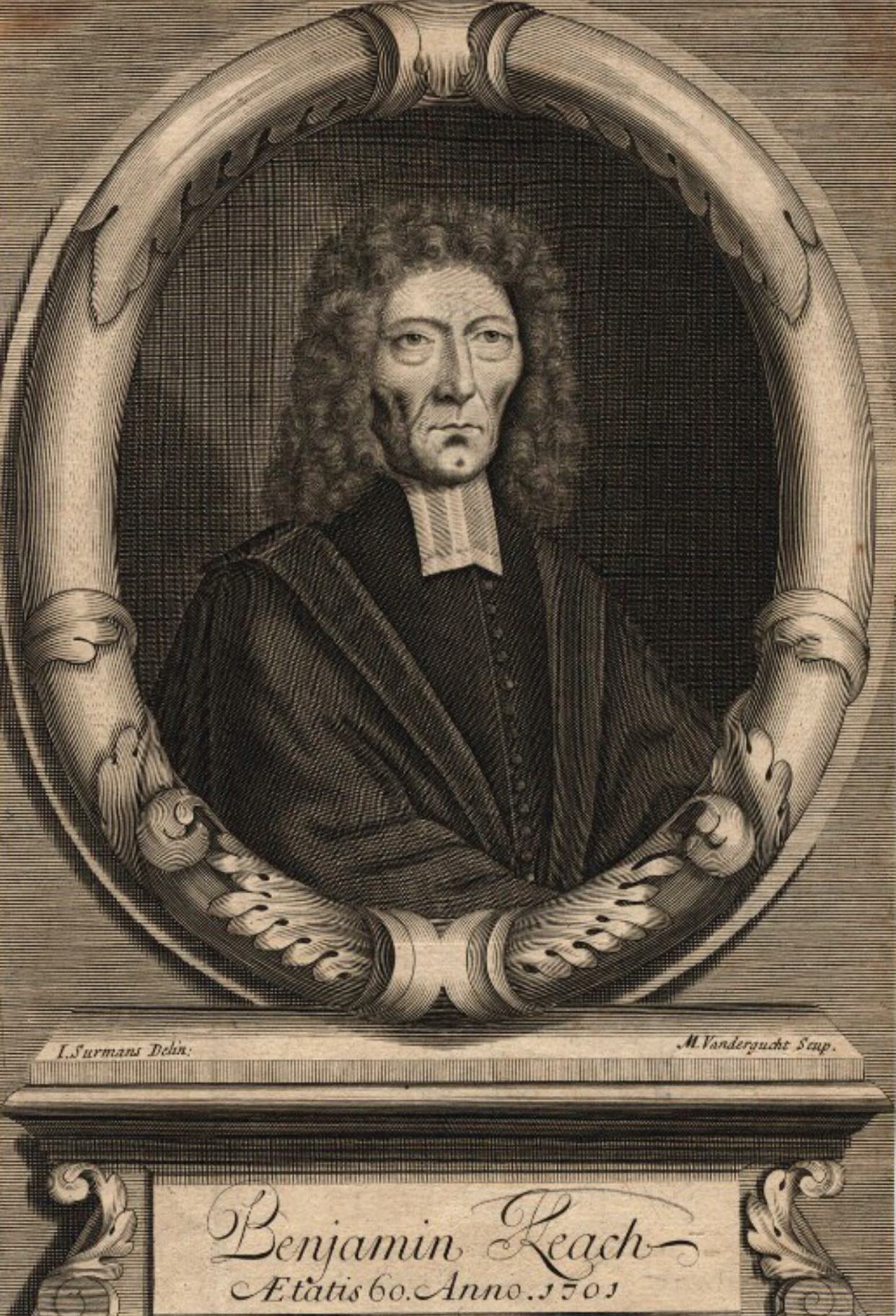
The article "The Church Called the City of God" by Benjamin Keach explores the metaphorical understanding of the Church as a "City," drawing upon various scriptural references. Keach argues that the Church, akin to Zion and Jerusalem, is established by Christ as a spiritual habitation for God's people, protected by His providence, and enriched through its divine trade in spiritual commodities such as grace, truth, and the Gospel. Scripture passages such as Psalm 87:3 and Hebrews 12:22 are utilized to illustrate the Church's elevated status as God’s chosen dwelling place, signifying its glory and privileges. The significance of this metaphor underscores the Church's resilience against opposition and the rich spiritual blessings available to its inhabitants, encouraging believers to embrace their identity as citizens of God's kingdom.
Key Quotes
“The Church is built by Christ for a habitation for God.”
“As Jerusalem was renowned above all Cities, so God's Church is now above all people and societies in the world.”
“The Church hath a common stock or storehouse belonging to it, called the unsearchable riches of Christ.”
“Let it be your delight to prefer her above your chiefest joy.”
What does the Bible say about the Church as the City of God?
The Bible describes the Church as the City of God, highlighting its glory, security, and divine protection.
Psalm 87:3, Isaiah 26:1
How do we know the Church has divine protection?
The Church is divinely protected by God's providence, angels, and Christ's presence.
Job 1:10, Psalm 125:2, Psalm 34:7, Zechariah 2:5
Why is the Church important for Christians?
The Church is vital for Christians as it represents God’s dwelling, community, and source of spiritual wealth.
Ephesians 2:22
What privileges do members of the Church receive?
Members of the Church enjoy privileges such as forgiveness, fellowship, and access to divine resources.
Isaiah 33:24, 1 Corinthians 3:22-23
THE CHURCH CALLED THE CITY OF GOD
"Glorious things are spoken of thee, O City of God, Selah" Ps 87:3.
"There is a river, the streams whereof shall make glad the City of God, the holy place of
the tabernacle of the Most High," Ps 46:4.
"We have a strong City" &c., Isa 26:1.
"Look upon Zion, the City of our solemnity," &c., Isa 33:20.
"And they shall call them the holy people, &c. And thou shalt be called a City sought out, not forsaken," Isa 62:12.
"Ye are a City set on a hill, that cannot be hid" Mt 5:14.
IN these places of the holy scriptures, Sion, or the Church of God, is called a City. Sion was a fort or mount in Jerusalem, and the temple was built upon it; hence the church of the Jews was called, as some conceive, by this name Zion, because there they assembled: but after, it was a name or title given to the Church, whether Jews or Gentiles. "Ye are come to mount Sion, to the City of the living God, the heavenly Jerusalem," Heb 12:22.
God's people may be called by the name of Sion, or Jerusalem.
1. Because we were naturally like Jerusalem, the forts of the Jebusites, viz., sinners and enemies to God.
2. Because by grace we are overcome and conquered, like as Jerusalem was, by the true David.
3. Because the Church is fortified by the Almighty for his own use, and chief place and residence in this nether creation.
4. In respect of her renown and glory. As Jerusalem was renowned above all Cities, so God's Church is now above all people and societies in the world.
5. Because it is viewed and gazed upon by all strangers; she may well be compared to a looking-glass, as Zion signifies.
6. In respect of her laws; for as the law and public worship were at Jerusalem; so Christ's laws and public worship are maintained in the Church. Hence God is said to love the gates of Zion, more than all the dwelling-places of Jacob, Ps 87:2.
Observe. The saints, or Church of God, is the city of God, or may fitly be compared to a City.
In opening of this metaphor, we shall show the nature, trade, government, privileges, and glory of the City of God.
METAPHOR
I. A City is a place built by men, for a people to inhabit, or dwell in.
PARALLEL
I. The Church is built by Christ, for a habitation for God: "Upon this rock will I build my Church," &c., Mt 16:18. "In whom ye are builded together for an habitation of God through the Spirit," Eph 2:22.
METAPHOR
II. A City is usually compassed about with walls, that it may thereby become more safe and secure to dwell in, and some cities have two or three walls, to make them more impregnable.
PARALLEL.
II. The Church of God hath strong walls about it. "We have a strong city; salvation will God appoint for walls and bulwarks," Isa 26:1. The Church hath a threefold wall about it.
First; The Wall of God's providence. "Hast not thou made a hedge (or wall) about him?" Job 1:10, "As the mountains are round about Jerusalem; so the Lord is round about them that fear him," &c., Ps 125:2.
Secondly; The protection of the holy angels: "The angels of the Lord encamp round about them that fear him," &c., Ps 34:7.
Thirdly; God in an extraordinary manner, is as "A wall of fire round about her," Ec 2:5; every one of his attributes is a gracious defence to the Church.
METAPHOR
III. Some Cities are bravely situated, they are built upon a hill.
III. The Church of God is famous upon this account: "Beautiful for situation, the joy of the whole earth is mount Zion; on the sides of the north, the city of the great King," Ps 48:2. "Ye are as a City set upon a hill," Mt 5:14.
METAPHOR
IV. A City is built of many materials, and in it are many buildings or houses, set in rare uniformity, curiously joined and compacted together.
PARALLEL
IV. The Church of God is built up of many living stones, consisting of divers particular societies, or spiritual houses. "Now therefore ye are no more strangers and foreigners, but fellow-citizens with the saints; and of the household of God: and are built upon the foundation of the apostles and prophets, Jesus Christ himself being the chief Corner-stone: in whom all the building fitly framed together, groweth to an holy temple in the Lord: in whom ye also are builded together for an habitation of God, through the Spirit," Eph 2:19-22. "Jerusalem is builded as a city that is compact together," Ps 122:3.
METAPHOR
V. A City hath its particular laws, institutions, and customs by which it is governed.
PARALLEL
V. The Church of God also hath special laws, institutions, and customs, belonging to it, (by which it is in all things governed,) which are contained in the holy scripture, the great charter and statute book of the Church.
METAPHOR
VI. A City hath a supreme governor in it, who rectifies all disorders and confusions, that otherwise would be therein, considering the multitude of its inhabitants.
PARALLEL
VI. The Church of God is not without a good government, and a supreme magistrate, viz., the Lord Jesus Christ, who is the chief Judge and Law-giver, or Head of this spiritual corporation.
METAPHOR
VII. A City hath, besides the chief governor and principal magistrate, divers inferior officers for administration of justice, and well-governing thereof.
PARALLEL
VII. So the Church of God hath inferior officers under Jesus Christ, which the citizens by the appointment of Christ are required to substitute and ordain, to govern and keep all things in good order. "And he gave some apostles, and some prophets, and some evangelists, and some pastors and teachers," &c., Eph 4:8-12.
METAPHOR
VIII. A city hath some special trade belonging to it, by which its inhabitants are enriched.
PARALLEL
VIII. The Church or City of God hath a spiritual trade belonging to it, which all the citizens do and always ought to follow, by which they are also greatly enriched.
METAPHOR
IX. The saints or citizens of Zion are all merchants, who trade daily to heaven; they fetch their blessed merchandize from thence; "Our conversation is in heaven," Php 3:20. Hence the Church is by Solomon compared to merchant's ships. See Merchant's ships. Saints have, like other merchants, their correspondent Jesus Christ, who makes glorious returns of all they venture, or send to heaven: for every duty rightly performed, he makes returns of mercy; for tears of godly sorrow, he returns them the oil of joy. "Thou wilt," saith holy
David, "put my tears into thy bottle." By which means the spiritual citizens grow rich in faith, hope, experience, &c. See the Parable of the Merchant-man.
Now touching the trade, traffic, or merchandize of this city, upon which its wealth and prosperity doth wholly depend, take what follows:
First. Their trade is heavenly. "Wherefore, holy brethren, partakers of the heavenly calling, consider the Apostle and High-priest of our profession, Jesus Christ," Heb 3:1-2.
2. And as they are all merchants, and use one trade, so they all deal with one and the same Benefactor, from whom they have quick returns; they fetch their goods from afar. Something touching the excellency of the trade of the city of God, I shall hint in a few particulars.
Secondly. As touching her commodities, or the merchandize which her citizens deal in.
First, Negatively.
1. They are not prohibited goods.
2. They are not counterfeit goods.
3. They are not temporal and corruptible goods.
Secondly. Affirmatively, and more directly, they are,
1. Soul-enriching commodities, things that are of very great worth and value. "The merchandize of wisdom is better than the merchandize of silver, and the gain thereof than fine gold," Pr 3:14.
2. They are needful things, such things as we cannot be without. Some things that merchants of a city deal in, and fetch from afar, though they are of great value, yet we may very well submit, and live comfortable without them, as pearl, and precious stones, &c. But there is an absolute necessity of all those things the citizens of this city trade in and for.
3. They are such commodities as will make the nations and persons that buy them happy for ever; and indeed there is no true happiness without them.
Quest. "What is the traffic of this city of God?
Answ. The first thing that I shall mention, is the truth; this she offers to sale: "Buy the truth, and sell it not," Pr 23:23. The Church is called "The pillar and ground of truth," 1Ti 3:15. Truth is only to be found in this city, or in the warehouses of the citizens of Zion, viz., the word of God, and the hearts of believers.
The second thing, is a soul-converting Gospel, and blessed ordinances, "The law goeth forth of Zion, and the Word of the Lord from Jerusalem," Mic 4:2.
The third thing they deal in, are the gifts and soul-enriching graces of the Spirit, hope, love, humility, &c. Things of very great worth.
The fourth is justification; every true sinner makes it his business to get this precious treasure.
The fifth thing is the peace of God, which passeth all our understanding, one of the rarest commodities in the world.
The sixth thing is, union and communion with God. "That which we have seen and heard, declare we unto you, that ye also may have fellowship with us; and truly our fellowship is with the Father, and with his Son Jesus Christ," 1Jo 1:3.
The seventh thing is, peace of conscience: "Herein do I exercise myself, to have always a conscience void of offence, towards God, and towards men," Ac 24:16.
The eighth thing is, sanctification, or a holy life; they who trade not in this commodity, are none of the true sons and citizens of Zion.
Ninthly. The pearl of great price, worth more than ten thousand worlds.
Tenthly. The last thing that I shall mention is, eternal life, a crown of glory that fadeth not away, 1Pe 1:4.
METAPHOR
X. A City whose commerce lies principally in a foreign trade or merchandizing, hath usually a navigable river belonging to it, by which means their commodities, or those goods they deal in, are brought home to their very doors; as we see by experience. What infinite profit doth the river Thames yield this famous City! and what would its trade be worth, were it not for it?
PARALLEL
X. The City of God, whose trade lies in spiritual merchandize fetched from afar, hath a most glorious river belonging to it, which may indeed be said to run through every street thereof, viz., the Holy Spirit, and Word of God. The Spirit in several places of Scripture is called a river, and by means of these blessed streams are all divine and sacred commodities, which the godly deal in, brought home to their very doors, viz., gifts, graces, pardon, peace, and joy in the Holy Ghost, &c., which are very excellent merchandize. And were it not for this river, what would become of this City? we should soon be impoverished and undone. It is the Holy Spirit that enriches and cheers the hearts of all gracious souls. "There is a river, the streams whereof make glad the City of God, the holy place of the tabernacle of the Most High," Ps 46:4. It may not be amiss here to consider,
1. From whence this river comes. See River, under the third Head of Metaphors.
2. The nature of the waters.
3. The divers streams thereof.
First; The river comes, 1. From a rock, Nu 20:8,11. This rock was first smitten, and then the water came out abundantly. 2. It comes from an infinite inexhaustible fountain; it is said to "proceed from the throne of God and the Lamb," Re 22:1.
Secondly; Touching the nature of this river; though we have spoken of it under the third Head of Metaphors, yet we will touch a little upon it here. It, hath besides other properties of spiritual water, these divers qualities,
1. It will heal all the diseases of the inward man; it will soften, and make very tender and pliable, and break in pieces a hard heart.
2. It will cure the soul of spiritual blindness; nay, it will open the eyes of him that was born blind.
3. It will infallibly cure all spiritual consumptions, that spiritual waste or decay of faith, love, zeal, hope, &c., which seizeth sometimes upon many Christians.
4. It will bring down the swelling of pride, and make a man very humble, and little in his own eyes; the more of the Spirit the more humble.
5. It will cure all manner of spiritual deadness or deafness, making a man very lively and diligent to hear good counsel and instruction, as Lydia experienced, Ac 16:14.
6. It is good against the tremblings of the heart, and will make a man bold and courageous in the cause of Christ, in evil times. "We cannot but speak the things which we have both seen and heard," Ac 4:20.
7. It is an excellent remedy to purge out all noxious and evil humours of the soul, from whence many distempers flow, making a man sound at heart, and holy in life.
8. It will effectually restore a lost appetite, and make a man relish well the food of God's Word, causing it to be sweeter to him than honey, or the honey-comb, Ps 119:103.
9. It will preserve from the plague of sin, of what sort soever it be, though a Christian be amongst infected persons every day.
10. It will revive a fainting and drooping spirit.
11. It will set and make whole all broken bones, as David and thousands others have found by experience.
12. It will cure the leprosy, and all old running ulcers, and also all fresh wounds of the soul, though ever so deep, stinking, and loathsome.
13. It is good against weakness of the hands, and feebleness of the knees, 1Th 5:14.
14. It is sovereign good against spiritual barrenness, making the godly to bring forth much fruit, 2Pe 1:9.
15. It will clear the sight, and make a man see afar off.
16. It infallibly cures the sleepy disease, or the spiritual lethargy of the soul, so that they shall not sleep as others do, 1Th 5:6.
17. It cures all diseases of the tongue and mouth, and an unsavoury breath, that common sign of a foul stomach, Jas 3:5-6.
18. It cures all spiritual lameness; it causeth a lame man to leap as an hart, and never halt any more between two opinions, Isa 35:6.
19. It perfectly cures all distempers of the head, occasioned by error, and erroneous principles, that corrupt the understanding.
20. It is water of life, he that drinks of it shall never die, Joh 4:14.
Thirdly; this river hath three special streams. 1. The stream of ordinances. 2. The stream of heavenly graces. 3. The stream of divine promises. Sinners come to these waters, O! come before the stream be turned another way. See River and Water of Life.
METAPHOR
XI. In a glorious City usually is the king's palace, or his chief place of residence, which tends much to its honour and renown.
PARALLEL
XI. The Church is the habitation of God. "The Lord dwelleth in Zion, in Judah is God known; his name is great in Israel, in Salem also is his tabernacle, and his dwelling place in Zion." This is for the everlasting honour and renown of the Church. "The Lord dwelleth in Zion. Sing praises, for the Lord hath chosen Zion, he hath desired it for his habitation. This is my rest for ever," Ps 9:11; Isa 8:18; Ps 76:1-3, and Ps 132:13-14. "Though he be the high and lofty One that inhabiteth eternity, yet he dwelleth with them that are of an humble and contrite spirit," Isa 57:15. The special and most gracious presence of God is with his people.
METAPHOR
XII. A City hath some certain privileges, freedoms, and immunities belonging to it, which strangers have nothing to do with; foreigners may not dwell within the walls of some Cities.
PARALLEL
XII. So the Church of God hath many glorious privileges and immunities belonging to it, which unconverted sinners have no right to.
The first privilege, or part of that freedom that belongs to the city of God, is pardon of sin. "The inhabitants shall not say, I am sick; the people that shall dwell therein shall be forgiven their iniquity," Isa 24:1. This is a glorious privilege and freedom, if we consider the abominable and heinous nature of sin, which is opened under the third head of metaphors. 2. Because of that which is couched and comprehended under the blessing of pardon; when God absolves a poor sinner, he not only forgives, but also forgets, their sins and iniquities he remembers no more. 3. Because it is a freedom from the guilt of it. 4. Because it is a freedom from the power and dominion of it, Ro 14:5. It is a freedom from the punishment of it, Ro 8:1; John 5:24. 6. Because it is a purchased freedom, it was obtained by a great sum, viz., the sum of God's great love and grace, with the sum of Christ's blood. Remission is through Christ's atonement. 7. Because it is a sealed freedom, it is made over to the soul by the king's own seal, the Spirit of God, that great seal of heaven, Ephesians 1:13-14. 8. Because it is a lasting freedom; the sins of believers are forgiven for ever, they shall never be laid to their charge.
The second privilege of this city is, Gospel-fellowship, free access to the Lord's table, and communion with the saints: "They are made to sit down together in heavenly places in Christ Jesus," Eph 2:6.
The third privilege is right to the ministry; they may all lay claim to the ministers and ministry of the word: "Whether Paul, or Apollos, or Cephas, all are yours," 1Co 3:22-23. They, and all their gifts and gracious endowments, are the saints.
The fourth privilege is, their undoubted right to the City-stock, or the Church's patrimony.
1. The stock of prayers; sincere souls have a right to all the prayers of the Church.
2. To that store and spiritual provision, viz., the bread of life, &c., that is laid up in her. "God will bless the provision of Zion, and satisfy her poor with bread," Ps 132:15.
3. The stock of promises. God hath promised to bless, comfort, strengthen, beautify, build up, and save Sion, and consequently every saint and member thereof; for all those, and many more like promises, are directly made to every sincere soul or citizen of Sion.
The fifth privilege is, free access to the throne of grace, Eph 2:18.
Sixthly, a dwelling-place there. There is a glorious privilege; they dwell near the King, behold him in the galleries every day; they dwell in God's courts, nay, in his house: "Blessed are they that dwell in thy house, they will be still praising thee, Selah," Ps 84:4. "They that are planted in the house of the Lord, shall flourish in the courts of our God, they shall bring forth fruit in old age," &c., Ps 92:13.
1. It is a strong and sure dwelling-place: "He shall dwell on high, his place of defence shall be the munition of rocks," Isa 32:18; 33:16.
2. It is a rich and glorious dwelling-place.
3. It is a pleasant dwelling-place.
4. It is an honourable dwelling-place.
5. It is and shall be a peaceable habitation. "Look upon Zion, the City of our solemnities: thine eyes shall see Jerusalem, a quiet habitation, a tabernacle that shall not be taken down; not one of the stakes thereof shall ever be removed, neither shall any of the cords thereof be broken," Isa 33:20.
Seventhly, They have a right and privilege to choose their own officers; every free Citizen hath his voice at every election. No minister, bishop, or deacon, may be imposed upon them without their own free consent.
Eighthly, They have a right to all the blessings and privileges of the river, the streams whereof make glad all the inhabitants, the nature of whose water you have heard.
Ninthly, They have a right to the City-guard, which also attends them, whithersoever they go, or whatsoever they do, when they are about their proper work, which are the good angels.
Tenthly, The last privilege I shall mention is, sonship. "But to as many as received him, to them gave he power, [or privilege.] to become the sons of God," Joh 1:12. "Because ye are sons, God hath sent forth the Spirit of his Son into your hearts, crying, Abba, Father," Ga 4:16.
METAPHOR
XIII. Some cities have a common stock in them, out of which the poor decayed citizens are often supplied and helped in their distress, and thereby delivered from utter beggary.
PARALLEL
XIII. The Church hath a common stock or storehouse belonging to it, called the unsearchable riches of Christ, out of which all poor decayed Christians have their wants supplied, Eph. iii, 8. That grace that is treasured up in Christ, is always ready to be given forth to his poor children; and by this means they are kept from ruin, and being utterly undone. "My God shall supply all your needs, according to his riches in glory, by Christ Jesus," Php 4:19.
METAPHOR
XIV. A City hath also a strict watch appointed to keep the gates, and to see that no accident happen in it, to the hurt and detriment thereof.
PARALLEL
XIV. The Church, or City of God, hath also a strong and faithful militia, or spiritual watch, which are the holy angels. These are called watchers, or watchmen, Da 4:23; and in other places, the Lord's host, or the armies of
heaven, who are mighty in power, one of them being able to destroy all the Church's enemies. These keep the saints day and night; they encamp about them, and see that no evil come unto them. Besides them, God is said to watch over his people continually, who is called, "the Watchman of Israel, and the Saviour thereof in the day of trouble." "Unless the Lord keep the city, the Watchman waketh but in vain," Ps 127:1-2. Besides, there are the ministers of the Gospel, who are called watchmen. See the sixth Head of Metaphors.
METAPHOR
XV. A great and famous City hath towers and battlements belonging to it, not only for ornament, but also for strength, and security from evil.
PARALLEL
XV. The City of God is famous in respect of its towers, and places of security. "Walk about Zion, and go round her; mark well her bulwarks, consider her palaces, that ye may tell it to the generation following: For this God is our God for ever and ever, and he will be our guide until death." "The name of the Lord is a strong tower," &c. Ps 48:12-14. Every one of the blessed attributes of God are as so many towers of safety to his Church. See Strong Tower in the first head of metaphors.
METAPHOR
XVI. In a City, notwithstanding the many noble and honourable personages, or worthy patrons, that dwell therein, yet there are some ill and unworthy members that get a being there, which tends much to its blemish and reproach.
PARALLEL
XVI. So the City of God, notwithstanding all the holy and eminent saints and servants of God who dwell therein, yet hath in him some wicked and ungodly ones, who by craft and hypocrisy get a being there, though when known they be turned out, as the incestuous person, 1Co 5 "Hymeneus and Alexander" were, 1Ti 1:20. "For there are certain men crept in unawares, who were before of old ordained to this condemnation, ungodly men, turning the grace of God into lasciviousness, and denying the only Lord God, and our Lord Jesus Christ," Jude 1:4. These ill and loose professors bring a great reproach upon the Church of God; but there is a day coming, when the Church shall be freed of them. "There shall be no Canaanite in the house, or City of God," Ecclesiastes 14:21.
METAPHOR
XVII. The Citizens of a great and glorious City are much affected with, and highly esteem and love the City where they dwell.
PARALLEL
XVII. So the Citizens of Zion have an honourable respect, and high esteem for God's Church, as appears particularly in David: "If I forget thee, Jerusalem, let my right hand forget her cunning; if I do not remember thee, let my tongue cleave to the roof of my mouth, if I prefer not Jerusalem above my chiefest joy," Ps 137:5-6. Many reasons may be given, why the godly are so much taken with Zion.
1. Because it is the place of their birth; they were born, or rather born again in her. "And of Zion it shall be said, this and that man was born in her, and the highest himself shall establish her. The Lord shall count, when he writeth up his people, that this and that man was born there, Selah," Ps 87:5-6.
2. Because it is the City of their Father, and so their blessed inheritance; all the glorious immunities thereof are theirs.
3. It is a City redeemed or purchased by Christ's most precious blood, he gave himself for it. "Ye are bought with a price," 1Co 6:20.
4. It is built by God, and for God; it is the place that he hath chosen, he esteems highly of it. "He is said to rejoice in Zion, he loves the very gates thereof, more than all the dwelling-places of Jacob," Ps 87:2.
5. It is a splendid and most glorious City; her foundation is laid with precious stones, yea, the choicest sapphires; her streets are paved with that which is more rare than the purest gold.
METAPHOR
XVIII. Some citizens who are industrious, grow very rich, and attain to great honour among their neighbours; and those are quickly known, and taken notice of; they may be discovered in divers respects.
PARALLEL
XVIII. So some of the citizens of Zion, who are diligent and industrious in the improvement of grace, and the means of godliness, grow very rich in faith and good works, rich in spiritual and divine knowledge, rich in heavenly experience. The diligent hand maketh rich, with the blessing of God. And these rich saints are also soon discovered, and taken notice of, Pr 10:22.
METAPHOR
1. Rich men, wealthly merchants, can trust or stay a great while for their own, when poor men must have all presently paid down. The clearest promises or firmest covenant, will not serve their turn, without some considerable part presently paid.
PARALLEL
1. So those who are spiritually rich, Jas 2:5; rich in faith, rich merchants of mount Zion, the City of God, can trust, they can stay patiently in expectation of the good of the promise, as Abraham, who was strong or rich in faith, when others cannot rely upon a bare promise, or take God's single word for the accomplishment of this or that, Ro 4:20.
METAPHOR
2. Rich citizens have a great stock lying by them.
PARALLEL
2. So those who are rich citizens of Zion, rich in grace, have a stock of blessed experience, as David had. They have a stock of faith, much faith, when others have but a little; a stock of good works, having done much for God, and for his Church, &c.
METAPHOR
3. Rich citizens have abundance of precious things, rare merchandizes to delight in, as gold, silver, and many other rich commodities.
PARALLEL
3. So rich citizens of Sion have abundance of rare and precious things in their warehouses, viz., their hearts, as love, peace, and joy in the Holy Ghost, Ga 5:22.
METAPHOR
4. Rich men do not live upon their labour, as poor men do. Some rich men work, and take as much pains as the poorest man in the City; but their work is pleasant, and more delightful to them, than the labour of one that is very poor.
PARALLEL
4. So rich citizens of Sion, though they work hard for God: "I laboured more abundantly than they all," 1Co 15:10, yet their work is sweet and pleasant to them, because they work not for life, or for a livelihood; they rest not upon the doing, but live by faith, Ga 2:20. But poor saints live more upon doing than believing; they have but little of that, or any other grace.
METAPHOR
5. Rich men go finer, or are generally more richly adorned, than the poor; you may know a rich citizen by his costly ornaments, by his rich robes, and chains of gold about his neck.
PARALLEL
5. So rich saints are more adorned with garments of humility, "With the ornament of a meek and quiet spirit, which is in the sight of God of great price," 1Pe 3:4. They can deny themselves, are patient under sufferings, endure all things contentedly for Christ's sake; they have much wisdom, as "An ornament of grace upon their head, and chains of gold about their neck," Pr 1:9.
METAPHOR
6. Rich citizens do usually bring up their children more nobly, and give them more learning, and better education, than the poor generally do or can.
PARALLEL
6. So rich saints, such as have much grace, up their children more nobly, and who are great dealers, and have got much by trading in spiritual things, bring up their children more virtuously, and give them better education; they give them better counsel, better examples than others; they train them up in the fear and admonition of the Lord, taking God for a pattern herein, who maketh the Word and rod a blessing to his children, Ge 18:19; Eph 6:4; Ps 94:11-12.
METAPHOR
7. Rich citizens live high, keep a good table, in comparison of what the poor do, or are able.
PARALLEL
7. So those who are spiritually rich, have many precious morsels, yea, blessed variety of choice things; they are often feasted by Christ, and are with him in the house of wine, and delight themselves in fatness; their good conscience is to them a continual feast, Song 2:4; Pr 15:15.
METAPHOR
8. Rich citizens can bear burdens, taxations, and losses, better than the poor.
PARALLEL
8. So those who are spiritually rich, can best bear up under cross providences, persecution, and losses for Christ's sake.
METAPHOR
9. Rich men can do for others; poor men can do but little for their poor friends or neighbours, when the rich can do much.
PARALLEL
9. So those that are rich, in spiritual experience, in faith, and good works, can do much for weak Christians by prayer, by advice, and good counsel. Moses did mighty things by prayer for Israel, Ex 17:11. "The fervent prayer of a righteous man availeth much," Jas 5:16.
METAPHOR
10. Rich men can best strive with difficulties, and live in years of scarcity, when others who have but just from hand to mouth, are in such times in danger of starving, or being reduced to great extremities.
PARALLEL
10. So those who are strong, and very rich in faith, and all other graces, are helped to bear up and pass through difficulty, in time of want and scarcity, better than weak or poor Christians will; only God hath for their comfort and encouragement promised to supply their wants, and will if sincere, also relieve them, that they shall not faint or perish in the years of famine, Php 4:19; Ps 84:11.
METAPHOR
XIX. Some Cities, though rich, yet are in a comparative sense but small, but little Cities.
PARALLEL
XIX. The City of God, in comparison of great Babylon, is but a small City, notwithstanding all her glory, grandeur, and greatness, (as you have heard) she is but little: "There was a little City, and but a few men in it," Ec 9:14; Lu 12:32. This City is the Church of God, &c. Babylon is a great City. In comparison of the wicked, Christ's flock is but a handful of people, as it were, Re 17:18.
METAPHOR
XX. A City, though very strong, yet is sometimes besieged, and hath many enemies.
PARALLEL
XX. The City of God, this little City, is besieged; "The daughter of Zion is left as a cottage in a vineyard, as a lodge in a garden of cucumbers, as a besieged City," Isa 1:8, and marvellous it is, so small a City should hold out so bravely unto this day, especially considering what mighty enemies have and do besiege her.
Object. But here it may be objected, hath it not been overcome? Is it not said, that "The holy City was trodden under foot?" Re 11:2.
Answ. It is only the outward court. God hath had his Church in all ages, though forced for a time to fly into the wilderness, from the face of the dragon, Re 12:6.
Quest. By whom is this City besieged?
Answ. 1. By the devil, called a great king, and the king of the bottomless pit.
2. By antichrist, the first-born of Satan. He hath for above twelve hundred years laid siege against it, using all manner of engines, craft and cruelty, to batter her down, and finally to destroy her, Re 12.
3. She is besieged by the world, by wicked men, men of earthly and carnal principles, who abhor Zion, and say, "let her be defiled, raze her, even the foundation thereof," Ps 137:7.
4. She is besieged by sin, and the flesh, a secret enemy, who fain, in a clandestine way would betray her; this enemy doth her the most mischief.
5. She is besieged by a multitude of false teachers; these likewise have done great hurt and damage to the Church of God, who labour by evil doctrine to poison all her inhabitants, 2Pe 2:1-2.
6. And besides all this, there have been sad divisions within her also: she has been as a City divided, and yet she stands.
7. There have been sad breaches made in her wall, so that many have been let in that way, who would have been kept out.
8. Many that seemed to be for her, have deserted her, and joined with the enemy, and yet still she holds out.
9. And, which is worst of all, few of those who have been in the City have bravely acquitted themselves, by zeal and holiness, to defend her, and yet she holds out still.
Quest. From whence is it that she is helped to bear up against all these sore and grievous assaults, batteries, and calamities?
Ans. 1. This City, as you have heard, is built upon a rock, it has a sure foundation, which cannot be removed, Mt 16:18.
2. The Lord of Hosts hath fought for her; it is he that hath been on her side, he hath defended Mount Zion, and the hill thereof; he hath taken part with her, and doth at this day, Ps 125:2; Isa 31:4-5.
3. She holds out, because God hath decreed her standing, and that her enemies shall not prevail, Ec 12:8-9.
4. She is defended, because she is the place which the Lord loveth, and hath purchased with the blood of his own dear Son, Ps 74:2.
5. Because it is the place where God's honour dwells; "I have loved the habitation of thy house, the place where thy honour dwells," Ps 26:8.
6. Again, she still remains, because she is, though a little City, yet a strong City: "We have a strong City." She hath strong fortifications, strong walls and bulwarks, Isa 26:1.
7. It is, because God's own habitation, as you have heard, is in her; God is "A wall of fire round about her, and the glory in the midst of her," Ec 2:5; Ps 135:21.
8. She is defended by reason of the strong tower she hath in her; so long as her tower stands, how can she be battered down? Ec 2:5. And her tower is impregnable. The enemy may sooner pull the sun out of the firmament, than undermine or batter down, deface or demolish the tower of Zion, which is the name of the Lord, Pr 18:10. See strong Tower.
9. She is defended, because in her are the laws, statutes, ordinances, and holy institutions of her King, the Lord Jesus, where he is worshipped and adored in spirit and truth, Isa 2:3.
INFERENCES.
I. Hence all that dwell in Zion may be provoked to a diligent improvement of their great privileges, to the end they may be enriched with all those spiritual riches, and dignified with that honour that appertaineth to a true denizen thereof.
II. Take comfort and encouragement also, whatever the attempts of the enemies are, yet about all her glory shall be a defence. All those whose feet stand within her gates, may read honour, safety, and salvation as it were written upon her walls, Isa 4:5.
III. Let it be your delight to prefer her above her chiefest joy; as she is called the holy City, so be ye also holy, that you may declare yourselves unto what City it is you do belong, Ps 137:6.
IV. How may this call home all those that are gone astray, and invite all that profess good will unto Sion, to let their feet stand within her gates, for the Lord hath desired it for his habitation. Holy David made this his one thing desirable, viz., to dwell in God's house, to be a denizen of this City; and why should not you? Ps 27:4.
V. Let it be a warning to all Sion's enemies, to take heed how they lift up their hands against her; or reproach God, and them that dwell in heaven; let them lay down their arms, and fight against her no more. "The Lord shall roar also out of Zion, and utter his voice out of Jerusalem, and the heavens and the earth shall shake: but the Lord will be the hope of his people, and the strength of the children of Israel. So shall ye know that I am the Lord your God, dwelling in Zion, my holy mountain," &c. Joe 3:16-17.

Comments
Your comment has been submitted and is awaiting moderation. Once approved, it will appear on this page.
Be the first to comment!