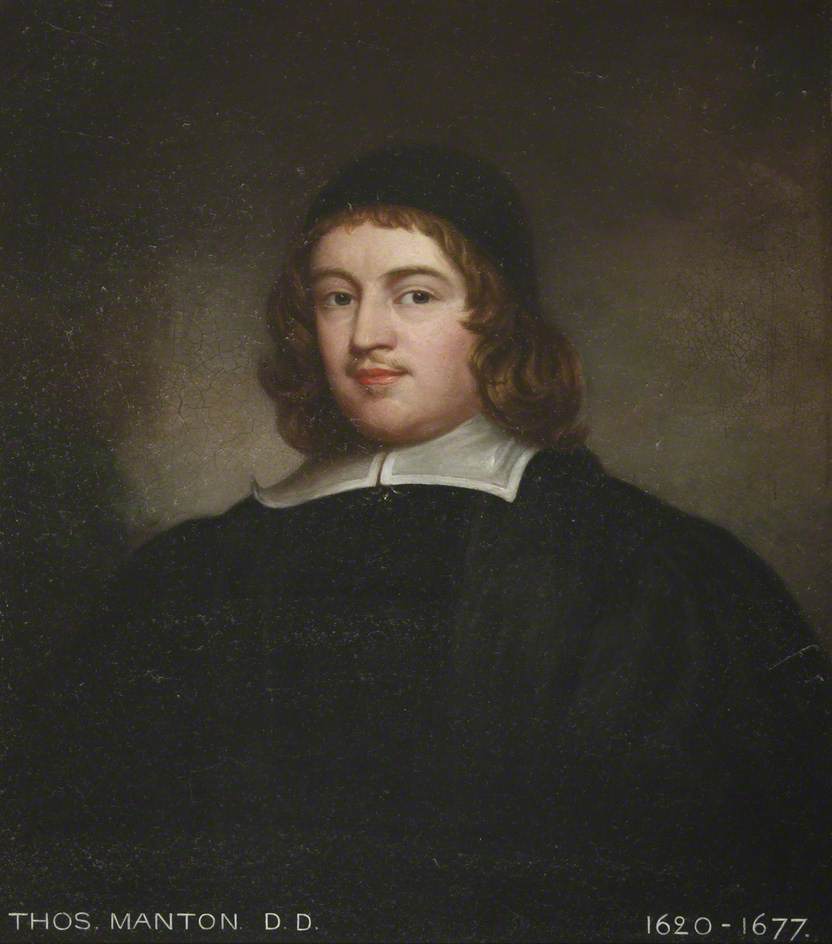
The main theological topic discussed by Thomas Manton in his commentary on James 5:12 is the prohibition of swearing oaths, emphasizing the seriousness of using God's name lightly. Manton highlights the scriptural foundation for this admonition, citing Exodus 20:7, which forbids misuse of God's name, and references Matthew 5:33-34, where Jesus criticizes the prevalent swearing practices among the Pharisees. He argues that swearing stems from impatience and a lack of reverence for God's name, making it a serious offense that undermines the integrity of a believer's word. The practical significance of this teaching lies in the call for Christians to be truthful in their speech such that simple affirmations or negations suffice, thereby reflecting the sanctity of God's name in their lives and avoiding the risk of condemnation for rash utterances.
Key Quotes
“Above all my brothers do not swear—not by heaven or by earth or by anything else.”
“A great sin to swear lightly and without thinking... the LORD will not hold anyone guiltless who misuses his name.”
“An excellent way to prevent swearing is always to be truthful in our speech then we need not introduce an oath.”
“If duty does not move you I think you would be startled at the danger and punishment.”
What does the Bible say about swearing oaths?
The Bible warns against swearing oaths lightly, emphasizing that our speech should be true and straightforward.
James 5:12, Exodus 20:7, Jeremiah 4:2
How do we know the importance of truthfulness in communication?
Truthfulness is essential in communication as it reflects God’s character and builds trust among believers.
James 5:12, 2 Corinthians 1:18-19
Why is swearing considered a sin in the Bible?
Swearing is considered a sin because it often reflects a lack of trust in God and diminishes the sanctity of His name.
James 5:12, Exodus 20:7
Aboveall,mybrothers,donotswear—notbyheavenorbyearthorbyanythingelse.Letyour “Yes” be yes, and your “No,” no, or you will be condemned.
As for the context, some people say this is what connects the previous matter and the present verse. People in affliction are usually impatient, and impatience betrays itself by oaths and curses—something very injudicious and no way complying with the apostle’s meaning. We need not labor at method and connection; it is the usual practice of James and the other apostles to turn from one matter to another, according to the need of the times, without concerning themselves with the rules of method. In this verse there is an admonition not to swear, in which you may note:
(1) The vehemence of the warning—above all.
(2) An instruction:
a. Negatively: donotswear; and here some particular forms of swearing are specified: notby heaven or by earth or by anything else.
b. Positively: Let your “Yes” be yes, and your “No,” no.
(3) He gives a reason: or you will be condemned.
Aboveall. The phrase has suffered various interpretations; it actually means “before all things.” Lyra interprets the apostle like this: “Do not swear before all things; before every word or promise.”
This interpretation would be plausible if the order of the words were “My brother, do not swear before all things”; but it is “Before all things, my brothers …” Therefore, I prefer to take it as a form of emphasis and earnestness, which is frequent in the apostles’ letters: “Above all, love each other deeply” (1 Peter 4:8). But you will say, “Why does he press this above all things?” The question is important. I will give some reasons, which will occasion a note in each case.
Note 1. Because it is a great sin to swear lightly and without thinking; this is specially forbidden in the Ten Commandments: “the LORD will not hold anyone guiltless who misuses his name” (Exodus 20:7). Of all things, God is sensitive about his own name.
(1) This is a great sin in respect to the subject: God’s name ought to be sacred; every thought and mention should be accompanied with reverence. All sin is against God, but this is formally and directly against God. Even people are most sensitive about their reputation.
(2) It is a great sin in respect to the occasion: there is no temptation to do it except (the height of wickedness) choosing to sin because it is fun to do evil. Other sins have an external bait; here there is nothing but glorying in our own shame (Philippians 3:19). Or it may be an obstinate pride. It is a daring of God; they will sin because they want to. It is usually found in ruffians who have lost all sense of awe. Oh, let us beware of this sin of rash swearing, of every tendency that way, any irreverent use of the name of God in sudden outcries: “O God!” “O Lord!” etc., or any vain joking with oaths. Those who swear in jest will go to hell in earnest. The Jews were so sensitive about the name of God that they would not pronounce “Jehovah” in the law but read “Adonai,” except for the high priest once every year.
Another reason why the apostle says Aboveall…donotswear is because it was a sin familiar to the Hebrews, as appears by various passages in Scripture; see Matthew 5:33-34 and 23:16-22. It was a sin very common among them.
Note2. Common and well-known sins must be opposed with all earnestness. The apostle says, Aboveall…donotswear; such things are to be pressed more than any other. Usually the truths that concern the present age are disliked when we reflect on the guilt of the times. People would not have us preach Christ and the general doctrines of faith and repentance, which is nothing but a vain objection masked by a pretense of religion. When the preaching of Christ was the main truth proclaimed and the apostles applied themselves to it, the Corinthians cried for wisdom, meaning doctrines of civil prudence, and the softer strains of morality. That is why Paul said, “I resolved to know nothing while I was with you except Jesus Christ and him crucified” (1 Corinthians 2:2). This was the doctrine that most scandalized them, and so he resolved to take notice of no argument as much as that in his ministry.
The work of the ministry is not to contend with ghosts and outdated opinions but the errors and sins of the present time. It is the duty of Christians to exert their indignation on the main sin with which they are tempted: “I … have kept myself from sin” (Psalm 18:23). In the same way, ministers must concentrate their efforts against present guilt. If we were only providing for ourselves, we might read elegant lectures in divinity and entice others into a fool’s paradise with words as soft as oil, never examining their wounds and sores. But our commission is, “Shout it aloud, do not hold back” (Isaiah 58:1).
Note3. This is a custom that is abandoned with difficulty; therefore, aboveall, be careful about swearing. Augustine argues, “Why does the apostle say ‘Above all’? Is it worse to swear than to steal? Worse to swear than to commit adultery? Worse to swear than to kill someone? No, but the apostle wants to strengthen us as much as he can against a pestilential custom.” Certainly once we have got into this habit, it is hard to stop; any physical object that is often moved in the same way becomes easier to move in that direction, and the tongue is the same when it is used to swear. Habit has so great a power over us that the word is uttered before the mind can stop it. It takes longer to commit other sins such as murder, lust, or theft because other parts of our body are not as quick as the tongue. We can control our hand more easily than our tongue. So then, people who have learned to swear or use vain, idle expressions must watch with all the more care; a habit is soon acquired either by our own practice or by constantly being with people who have it. Be very careful; your habit will not excuse you. If it is your custom to sin, remember that it is God’s custom to destroy sinners.
Do not swear—not by heaven or by earth or by anything else. About the opening of this passage, we may ask:
(1) Are all oaths forbidden? Many people have thought so. The Essenes thought all oaths as bad as perjury, as Josephus tells us. Jerome says the Pelagians held the same opinion. The Anabaptists have been uncertain on this point, sometimes being against all oaths and at other times saying they were only against rash oaths. Many modern writers of great note seem inclined to prohibit all oaths as inappropriate to the faith and simplicity that should be among Christians. However, oaths in themselves are lawful if taken “in a truthful, just and righteous way” (Jeremiah 4:2)—that is, without fraud, in a lawful matter, and on an important occasion. The apostle says an oath is “an end to all argument” (Hebrews 6:16). In the Old Testament any doubtful case that could not be settled in any other way was to be “settled by the taking of an oath before the LORD” (Exodus 22:11). The commandment itself allows some freedom: “You shall not misuse the name of the LORD your God” (Exodus 20:7), which implies there is a lawful use of God’s name. In the New Testament, the apostle Paul in important matters often swore and called God to witness; see Romans 1:9 and 9:1; 2 Corinthians 1:23; Philippians 1:8 (“God can testify”).
(2) What oaths are condemned? Our Saviour and the apostle James only counter that wicked custom introduced by the Pharisees, that a person might swear by the creatures if there was no mention of the name of God or things offered to God, as appears in Matthew 5 and 23. The Jewish nation was guilty of three things: frequent swearing; swearing by the creatures; and breaking these oaths as not binding and valid. These sins were rife in the apostle’s days, and the prohibition of the text must be chiefly applied to them. Sodonotswear—notbyheavenorbyearth must mean the forms that they had invented to evade the law; for the Jews thought they were safe if they omitted the great oath of ChiEloah. Philo said that it was “a sin and a vanity” to “run to God, the Maker of all things, and to swear by him,” but that it was “lawful to swear by our parents, by heaven and the stars.” Similarly, it is said that some of the ancient Greeks did not readily swear by the gods but by the creatures and things before their eyes, and then that there was no harm and no solemn obligation in these oaths—vain pretenses and excuses, for though the name of God was not mentioned it was implied (Matthew 23:20-22 and 5:34-35), the creature being God’s creature, and in an oath made by them God’s name being implicitly called upon to be God’s instrument of vengeance in case of perjury. The other clause, or by anything else, means other oaths of that kind.
Swearing by the creatures is unlawful; swearing is an act of worship, and therefore it must only be done in important matters by the name of God: “Fear the LORD your God … and take your oaths in his name” (Deuteronomy 6:13). The prophet reproved those who “swear by the shame of Samaria,” meaning an idol (Amos 8:14). In such oaths we use the creature instead of God, whether by way of assertion as when we say, “as sure as there is light in heaven,” or by way of execration as in “let heaven blast me or earth swallow me up,” “the devil take me,” etc. In all these coarse sayings there is a double evil—a rash oath, and an oath made by the creature instead of God. And yet what is more common than such forms among us?
Letyour“Yes”beyes,andyour“No,”no. Some people think this is the same as what our Saviour says in Matthew 5:37, which implies that a Christian in his ordinary speech should content himself with simple affirmations or negations, that he may abstain from all appearance of an oath. “Yes” and “no” were the usual words. Now the apostle says, let your yes always be yes and your no always no; that is, let your affirmations and negations be plain and firmly grounded in simple truth. Paul said his preaching of the Gospel was not “Yes” and “No” but always “Yes” (2 Corinthians 1:18-19), and here we have letyour“Yes”beyes. The first “Yes” refers to the promise, the second to the action; let there be “Yes” in the promise and “Yes” in the action. And in this the apostle seems to strike at the root, falsehood being the cause of wrong oaths.
An excellent way to prevent swearing is always to be truthful in our speech; then we need not introduce an oath. The trustworthiness of what we say will be enough. Oaths make us suspicious that a person is false and flippant. If people were serious and sincere in what they said, their word would be equivalent to an oath, and their very affirming would be swearing; whereas others in doubtful cases are hardly believed even if they swear ever so much, because they swear as a matter of course. They have prostituted the highest and most solemn way of assurance to every little thing and have nothing left with which to establish a controverted truth.
Or you will be condemned. This alludes to what the law says about swearing: “The LORD will not hold anyone guiltless who misuses his name” (Exodus 20:7). Here not only perjury but rash oaths are forbidden.
Rash and false swearing will bring sure judgment; because of oaths, people and nations mourn (Hosea 4). If duty does not move you, I think you would be startled at the danger and punishment. If you are not afraid to sin, it is strange you are not afraid to burn. All sins are threatened with death but this more explicitly. God has promised that he “will not hold anyone guiltless”; they are usually brought to trial quickly: “I will be quick to testify” (Malachi 3:5). Judgment marches against them swiftly—the “flying scroll” (Zechariah 5). Certainly there is no sin that more wearies God’s patience, because there is no sin that banishes the fear of God out of our hearts as much as this one does.

Comments
Your comment has been submitted and is awaiting moderation. Once approved, it will appear on this page.
Be the first to comment!