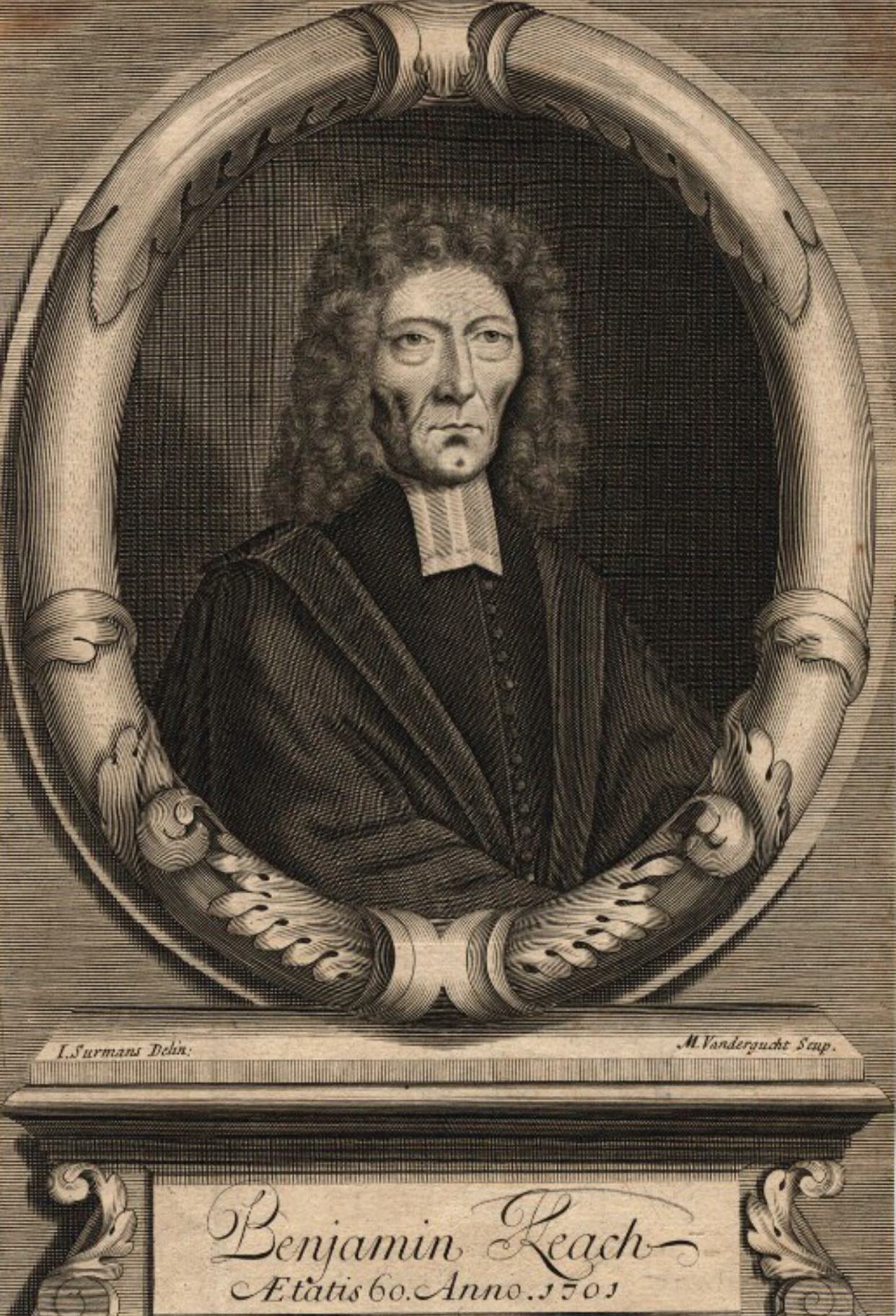
In "Sermon VIII," Benjamin Keach addresses the theological concept of the Covenant of Peace, asserting that it is fundamentally a Covenant of Grace made in eternity with Christ as the representative head of the elect. He argues that this covenant commenced after humanity’s fall and was fully realized through Christ's fulfillment of the Covenant of Works. Key Scripture references include Isaiah 54:10, which emphasizes God's unyielding mercy, and Galatians 2:21, highlighting the importance of grace over law. Keach emphasizes the unconditional nature of this covenant, requiring only faith in Christ for sinners to partake in its blessings, thus illustrating the gracious and sovereign nature of God's redemptive plan. The practical significance lies in affirming the believer's security and access to peace with God through Christ's work rather than human merit or conditions.
Key Quotes
“The Covenant of Peace is the Covenant of Grace... it is wholly of God's Free Grace because as our Peace was made without us... the Application of the Blood of Atonement are not Conditional Promises.”
“The One puts Men upon working or doing for Life the other puts them upon believing and working from Life.”
“The Covenant of Grace runs thus in the Tenure of it, i.e., Believe and be saved; Believe on the Lord Jesus Christ and thou shalt be saved.”
“There is no Condition saith Reverend Cotton before Faith but a Condition of Misery a lost Condition.”
What does the Bible say about the Covenant of Peace?
The Covenant of Peace, as declared in Isaiah 54:10, assures that God's kindness will not depart from His elect.
Isaiah 54:10
How do we know the Covenant of Grace is true?
The truth of the Covenant of Grace is grounded in God's Infinite Love and the work of Christ as our Surety.
Jeremiah 31:33
Why is the Covenant of Grace important for Christians?
The Covenant of Grace is essential as it exemplifies God's free choice to redeem sinners through Christ.
Galatians 3:18
For the mountains shall depart, and the hills be removed; but my kindness shall not depart from thee, neither shall the covenant of my peace be removed, saith the LORD that hath mercy on thee. - Isaiah 54:10
Shewing when the Covenant did Commence; also the Nature of the Covenant opened.
Neither shall the Covenant of my Peace be removed, saith the Lord that hath mercy on thee.
Doct. THAT there is a Covenant of Peace, made or agreed on, and stands firm in the behalf of all God's Elect.
The next thing under the General Head I am upon, I shall as it were but mention, which is the Sixth thing proposed, viz.
Quest. When did the Covenant of Peace Commence, and who are included in it, and what is required in order to their actual Possession of the Peace, and Blessings thereof?
1. The Covenant was made in Eternity, but the time of its first Commencement, was after our first Parents had violated the Law of the first Covenant.
2. But it did not so fully commence in the actual dispensation thereof, until Christ put an end to the Covenant of Works; then it was (as you have heard) established; He took away the first, that he might establish the second.
II. As to those who were included in it; they were all the Elect, or all the Seed of Christ, or all that he, as a publick Head, represented, and no more. True, the whole World receives many external Blessings by virtue of it, (for the Elect sake;) for Jesus Christ is their Great Landlord, and Glorious Sovereign. The World is upheld by a new Title, i. e. from Christ as Mediator; for had not he interposed between God and it, the whole visible Fabric doubtless had been dissolved, and the whole Race of Mankind lost for ever.
III. That which is required, in order to actual Interest in, and Possession of the Sacred Blessings of this Covenant, and the Peace thereof, is Union with Christ: I will cause you to pass under the Rod, and bring you into the Bonds of the Covenant. Under the Rod, God brings Sinners under Convictions, that wounds like a Rod, and makes them pass under the Yoke, i.e. he Marries them to his Son, and so brings them into the Covenant. Sinners, by Faith, take hold of this Covenant, and Christ being given to them, they also give themselves to him, to be his, and no more their own, but the Lords; they take God to be their God, and Christ to be their Saviour, and so come to possess the Blessings of the Covenant, and the Peace thereof.
But no more as to this, I shall proceed to the third General Head.
Thirdly, My Business and Work is now to open the Nature of the Covenant of Peace.
1. I shall, God assisting, shew you what a kind of Covenant it is, or explain the Properties of it.
2. Apply it.
I. The Covenant of Peace, is the Covenant of Grace: But pray observe, that the Covenant of Peace may be considered as twofold, or a mixt Covenant.
1. As it refers to Christ, or to his part, and Work therein; and as thus it was a Conditional Covenant, Christ receives all for us, wholly upon the account of his own Desert, or Merits.
2. But whatsoever we receive by virtue of this Covenant, it is wholly in a way of Free Grace and Favour, through his Merits, or through that Redemption we have by his Blood: But take it either ways, 'tis of Grace.
First, As to the Rise, Spring, or Efficient Cause thereof, it was God's Infinite Love, and Free Grace to his Elect: This moved the Father to send his Son to be our Mediator, and to accept of him as our Surety, to do, and suffer for us, and in our stead. I have before shewed, God was no more obliged to enter into a Covenant of Peace with Christ for us, or any of Adam's Off-spring, than he was to reconcile himself to the Fallen Angels, for they were his Creatures, and more glorious in their first Creation than Mankind were. The Surety of the Covenant was alone of God's finding, he procured him; He hath devised means that his Banished might not for ever be expelled from him; For the Lord hath ransomed Jacob, and he sent Jesus: What could be an Act of higher, or greater Grace and Favour, than for God to vouchsafe, or provide such a Mediator and Surety for his Enemies? One so Great, Glorious, Worthy, and Able, and one so willing to undertake to make our Peace, and bring us again home to God.
Secondly, And then as to us, this Covenant God entered into with Christ for us, must needs be of God's Free Grace: For as I have before hinted,
I. It was not of Constraint, I mean, there was no Necessity laid on God, or Jesus Christ thus to Love, Redeem, and Save us in respect of Motive; there was nothing in Man I say, that could move the Affections of God thus to do; and much less was there any thing in us, in respect of Merit; we deserved no such Love, either absolutely, or comparatively, because we were not only undeserving, but an ill-deserving; nay, Hell deserving Creatures, being Rebels to God, Vile, Contemptible, and Base Creatures, even as loathsome as filthy Worms: What is Man, that thou art mindful of him? What is his Deformity, his Pollution, his Filthiness? And O! What Cursed Enmity was there in our Carnal Mind? Yea, how much like to the Devil were we by Nature?
II. In that God hath manifested his Love and Mercy to so many, this shews his Infinite Grace to us-ward.
Object. May be you will say, Why not to more? Nay, Why not to all?
Answ. I answer, Why to so many? Nay, why to any at all? Or, Why to such that are called? Why to us, and not rather to those that are lost? We being all naturally as vile and as bad as they; nay, perhaps there are some Sinners in Hell, that were not so bad as some of us once were, which he has magnified his Sovereign Grace and Favour unto.
III. The Covenant of Peace is alone of God's Free Grace, because, as our Peace was made without us, not purchased by our Money, nor by any thing done by us; so the Promise of our having interest in the Blessings of this Peace, or the Application of the Blood of Atonement, are not Conditional Promises: I say, not on Conditional Promises, depending upon the corrupt and depraved Will of Man to perform, but they are alone free and absolute; I will put my Law in their inward part, and write it in their Heart; and will be their God, and they shall be my People; they shall all know me from the least of them to the greatest; I will forgive their Iniquity, and will remember their Sins no more—I will sprinkle clean Water upon them:I will give them a new Heart; I will take away the Stone out of their Heart, and will give them a Heart of Flesh—Are these Promises made upon any Conditions to be performed by the Creature, or on previous Qualifications to prepare us for Grace; no, they are all free Promises, I will, and they shall; God it is that opens our Eyes, that works Faith in us, that makes us willing to accept of that Peace he has made for us: By the Blood of thy Covenant I have sent out the Prisoners out of the Pit, wherein there was no Water. My Brethren, the Covenant of Peace from hence appears to be the Covenant of Grace, it was with Christ for us on hard Conditions, but to us in him, only by way of Free Promise.
IV. That this Covenant is the Covenant of Grace, appears not only because it is wholly, or alone of Grace that we are brought into the Covenant, but also because by God's Free Grace we are kept in this Covenant, or preserved in a State of Peace with God unto the end: They shall not depart from me; my Sheep hear my Voice, and they follow me, and I give unto them Eternal Life—and they shall never perish.
V. But to proceed, 'Tis the Covenant of Grace in opposition to the Law, the Inheritance is not of the Law. (1.) For if they which are of the Law be Heirs, Faith is made void, and the Promise made of none effect. Again, saith Paul, For if the Inheritance be of the Law,it is no more of Promise, but God gave it to Abraham by Promise. What is the Inheritance but God himself, in the Covenant, &c. and this is not by our Obedience to the Law, but by Christ's Obedience thereto: 'Tis not, my Brethren, by our Obedience to any Law, not to the Gospel as a Law, for that would tend as much to make the Promise of God void, as the other: For had there been a Law given that could have given Life, verily Righteousness should have been by the Law; —And then also Christ is dead in vain, Gal. 2.21.
(2.) In opposition to any after-Service which we could do, in order to make God, or Christ, any Compensation, or Return, by way of Gratitude for making our Peace, sometimes Men shew great Favour to the Poor in Distress, and pay their Debts upon the Condition that they shall Work it out, or make a Compensation that way; but so it is not here, for when we have done all we can do, we are but unprofitable Servants: Can Man profit God? Whoever gave any thing unto him?
VI. The Covenant of Peace is wholly of Grace to us, because we are Quickened, Justified, Called, Pardoned, Regenerated, Adopted, have Faith, a new Heart, Repentance, Sanctification, and all things else whatsoever, by Virtue of this Covenant, in a way of Free Grace, or all is freely given to us of God.
Let me give you two or three Reasons of this.
1. Because God will have all the Honour to himself of our Salvation, he alone will have the Glory, and abase the Creature.
2. Because his Design herein is to Exalt and Magnify his own Son, our Lord Jesus Christ.
3. That Man might have no cause left him to boast nor Sacrifice to his own Drag, But that he that glorieth should glory in the Lord.
4. Because God will have the Covenant of Peace to be sure to all the Seed, i. e. to all his People; but if it were not of Grace alone, it would not be sure, but an Uncertain and Mutable Covenant, or on such Conditions that might, or might not be performed.
Secondly, I shall shew you, that the Covenant of Peace, is the Covenant of Grace as compared with, or in opposition to the Covenant of Works: My purpose herein is to shew you the vast difference betwixt the Covenant of Grace, and the Covenant of Works.
I. The Covenant of Works was made with Man, or betwixt God and the first Adam: Adam was set up as the common Head, or Representative of all his Seed, and he was obliged to perform all the Conditions in his own Person in that Covenant.
But the Covenant of Grace primarily was made with our Lord Jesus Christ, or betwixt God the Father, and God the Son as Mediator, in the Name and behalf of all God's Elect, he being set up from Everlasting, as their Covenanting Head.
II. The Covenant of Works was made with Man, without a Surety; Adam, in his own Person, for himself, and for all his Seed, being obliged to perform perfect Obedience, or live and sin not; yet had he none to engage to God, or to undertake for him that he should thus do: But the Covenant of Grace and Reconciliation was made solely upon the Undertaking or Suretiship of our Lord Jesus Christ; true, he was obliged to perform perfect Obedience to the same Holy Law of God, which Adam (and we in him) was required to do; yet it is said, That Christ was made a Surety of a better Covenant; and that not only in respect of the Promises thereof, which are better Promises, but also in regard of the Oath of God, which renders this Covenant firm, together with Christ's Ability, and Faithfulness to perform all the Conditions thereof, and it being a full and free Covenant, and also ratified by the Death of Christ.
III. The Covenant of Works was a Conditional Covenant, as made with Adam: It was made upon mutual Restipulation between God and him; and in the second Addition of the said Covenant to the whole House of Israel, God promised them, that upon their keeping this Covenant of perfect Obedience, he would be their God, and they should be his People, Thou shalt have no other Gods before me; and if thou keep my Laws, and obey my Voice, then thou shalt be a peculiar People unto me. And this also they Undertook, Promised, and Covenanted to do; All that the Lord our God speak unto thee, we will hear it, and do it. But what saith the Lord to them? O that there was such an Heart in them! He knew well their great Inability and Averseness to do whatsoever he required.
But the Covenant of Grace is an absolute Covenant as to us; as I have, and shall further shew you by and by .
IV. The Covenant of Works, tho it required perfect Obedience, Personally to be performed by the Creature; yet it gave no strength to perform what it commanded.
1. But in the Covenant of Peace whatsoever God's Law required of us to our Justification in his Sight, Christ covenanted and performed it
for us, and we in him. Hence the Apostle saith, That the Righteousness of the Law might be fulfilled in us: In us, Christ and Believers are here represented but as one Person; because what he did, we are said to do in him; Paul can't refer in this place to our inherent Sanctification, for so no Believer can fulfill the Law, because his best Works and Sanctification are imperfect.
2. Moreover, whatsoever Duties God requires of us as to our actual Justification, in our own Consciences, and as to our Sanctification-also, he hath promised to give us his Spirit to perform and work in us.
1. He commands us to Believe—and he hath promised to give us Faith so to do; For Faith is not of our selves, it is the Gift of God, to you it is given not only to believe, &c.
2. He hath commanded us to make us a new Heart, and he hath promised to give us a new Heart,and to put a new Spirit into us.
3. He commands us to love him, &c. and he hath promised to Circumcise our Hearts so to do, &c.
V. The Covenant of Works laid all that broke it under God's denounced Wrath and Curse, and admitted of no Mercy, of no Forgiveness, Heb. 10.28.
In the Covenant of Grace, Christ hath born that Wrath and Curse; He hath Redeemed us from the Curse of the Law, being made a Curse for us: No doubt but under the Law he that was Hanged on a Tree, was not made a Curse only Politically, but also Typically, as signifying that Curse Christ should be made on the behalf of the Elect.
And by being made a Curse for us, he bore the Punishment due to us for our Sins, and satisfied Divine Justice; so that all our Sins, who do believe in Jesus, are in the Covenant of Grace forgiven for ever.
VI. The Covenant of Works, as to the Tenure of it runs thus, i. e. Do this and live; but the Covenant of Grace runs thus in the Tenure of it, i. e. Believe and be saved; Believe on the Lord Jesus Christ, and thou shalt be saved.
The One puts Men upon working, or doing for Life; the other puts them upon believing, and working from Life.
The first promises Rewards for the Creatures Obedience, and threatens Wrath and Death for the Creatures Disobedience.
The second promises Rewards of Grace to Believers, for what Christ hath done, or through his Merits; and threatens Wrath for not believing, or for non-receiving of Free Justification through Christ's Obedience, or for refusing the only Remedy, or for neglecting that great Salvation purchased and merited by the Lord Jesus.
VII. The Covenant of Works represents God an Angry God, an Incensed Judge, or as a Consuming Fire.
But the Covenant of Grace represents God in Christ, a Reconciled Father; This is my Beloved Son, in whom I am well pleased; Fury is not in me: There is no Fury in God, no Wrath, no Condemnation to any that believe, or that are in Jesus Christ.
VIII. The Covenant of Works consisted all in Precepts, in Commands which were partly Moral, and partly Ceremonial; the latter being numerous, some speak of more than three Hundred Precepts that were enjoined on the People; for tho the Ceremonial Law shadowed the Gospel, yet Paul counts it part of the first Covenant: See Heb. 9.1. Yet I deny not, but that there was much Grace held forth in it.
But the Covenant of Grace, as to us, consisteth only of Free Promises. Hence the Elect are called, The Children of the Promise—Unto Abraham, and his Seed, were the Promises made: Now we Brethren, as Isaac was,are Children of the Promise. And hence the Covenant of Grace is called, The Covenants of Promise.
Note, 'Tis called Covenants, in respect of the divers Revelations, or Declarations of it, as to Adam, Abraham, David, &c. and as revealed in the Gospel, tho it is but one and the same Covenant: True, it may differ in some Accidents, but in Substance it was the same, viz. Jesus Christ promised, and Free Justification through him, Is the Law against the Promises? That is, Is the Law, as given in Mount Sinai against the Covenant of Grace? No, but given in Subservience thereunto; or as leading to it by discovering the Evil of Sin, and the absolute Necessity of Christ's perfect Obedience thereunto in our stead.
IX. The first Covenant required perfect Obedience to the Law in every Man's own Person, in respect to their Justification at God's Bar, by which means, through Man's Weakness, and Inability to perform it, 'tis called, The Killing Letter; The Letter kills—for Sin taking occasion by the Commandment, deceived me, and by it slew me— Sin revived,and I dyed: That is, as to any hope of Life by the Law.
But the Covenant of Grace admits of a Substitute, or of a Surety, to keep the Law for us; and God accepteth of his Obedience and Suffering as imputed to us, to our free Discharge and Justification in his Sight: And hence the Gospel is called, The Ministration of the Spirit,and Life.
Thus the Covenant of Peace, is the Covenant of Grace.
(1.) As considered in it self. (2.) Comparatively, or in opposition to the first Covenant, or Covenant of Works.
Thirdly, The Covenant of Peace, is the Covenant of Grace, appears in that 'tis an absolute Covenant.
I. It is not made on Conditions to be performed by us, i. e. which being performed, gives us a Right unto the Reward promised thereupon; because our Right and Title to Heaven, is only by the Righteousness of Christ through his perfect Obedience to the Law, &c.
The Nature of the Covenant of Grace (saith a Worthy Divine) is Absolute, or a Covenant of Promise, notwithstanding all the Conditionality contained therein. (1.) In respect of the Original Proposer of this Covenant, it came from the Free and Absolute Will, Grace, and Purpose of the Father, 1 Tim. 1.9. The Covenant of Peace was not purchased by Christ; I mean, the Covenant it self, tho the Blessings in it were Christ's Purchase. (2.) The Covenant is Free and Absolute as to the Elect Personally considered; because the whole of the Federal Conditions lay upon their Head, as undertaking for them.
II. If we consider the Covenant (saith he) in respect to its Application, or its being actually applied to the Elect in time; this is done absolutely in God's bestowing Grace, and the Gifts of the Promise to dead Creatures (or to Sinners, as Sinners.) In whom (as saith our Worthy Author) there is an absolute Impossibility of performing the least entitling Act to the Promise. There can be nothing freer than Life to a dead Creature; neither doth Life give a Title to Action, but it is the Principle of Action.
III. All the Promises of the Covenant in the Promulgation of it, in its Original Nature, and as respecting us, expresses the Tenor of it as most Free and Absolute: Thus it was to Adam, to Abraham, to David; and to us; I will be your God, and you shall be my People: It is not you shall have Peace upon the Condition that you do this or that, ye shall be Pardoned, or then be Justified; No, but quite otherwise; But he that worketh not,but believeth on him that Justifieth the Ungodly: 'Tis not by our Obedience, or Duties, but by the Promises that we partake of the Divine Nature. 2 Pet. 1.4. &c. All is given absolutely of Free Grace. True, there are in the Covenant, Conditions of Connection; if a Man believes, he shall be saved; But who gives that Faith? Is it not God? Pray observe that Jesus Christ hath made our Peace, and Faith to receive the Atonement is given as an absolute Promise: Is not the Spirit so given? And pray, doth not God give the Spirit, before Faith can be exerted by us? Is not Faith the Fruit of the Spirit? And doth not the Fruit proceed from the Seed, and the Act flow from the Habit? Brethren, beware of them that Preach Peace to you, upon a Conditional Covenant; the Condition they speak of, is your Repentance, Faith, Regeneration and Obedience.
And alas, who is able to perform these hard Conditions? Besides, this is to turn the Covenant of Grace, into a Covenant of Works; you must work for Justification and Peace, if you will have it; nay, and you shall be no further Justified, nor have Peace, than you are Sanctified, if you believe these Men’s Gospel.
But we say that Peace is made, and God hath promised that he will give the Spirit, even pour it out upon Sinners; he first pours out the Spirit of Grace, and then the Sinners believe or look to him whom they pierced, and receive the Blessing of Peace, or have the Manifestation of it to their Consciences. There is no Condition (saith Reverend Cotton) before Faith, but a Condition of Misery, a lost Condition: These Men render God like Pharaoh's Taskmasters, who would have their Tale of Brick, but find the Israelites no straw.
They will not have Sinners to have Peace, without doing that for it, which indeed no Man is able to do; But O! let poor lost Souls look up to Christ, wait on him, attend on his Word, cry to him who hath received Gifts for the Rebellious also, i. e. the Gift of the Spirit, the Gift, (or rather) the Grace of Faith, the Gift of Righteousness.
Will you have a Righteousness wrought out of your own Bowels, or by doing, or have none at all? Will you be saved by Works, and not by Grace? But to proceed.
5. The Absoluteness of the Covenant (saith this Author) appears as to us, in that all the Federal, Entitling Conditions contained in it, are found in another, i. e. in Christ, and not in us, neither wrought in us, nor by us; for, whatsoever is wrought in us, is of Free Grace.
My Brethren, Doth a Child contribute any thing to its own Formation in the Womb? Alas, What is in us before we are Born again? And of his own Will begat he us, &c.
Object. But doth not the Gospel require Faith and Repentance, as the Condition of Justification, and Eternal Life?
1 Answ. I told you but even now, there are Conditions of Connection by way of order and dependence of things one upon another:
As in Logic (saith the same Reverend Divine) if a Creature be a Man, he is a Rational Creature; or if God be the first Cause, he is the Creator of all things: And in this sense (saith he) Creation is a Condition of Salvation; if a Man be Saved, he must be Created: So if a Man believe he shall be Saved, believing is a Condition of Connection, a State of Grace is thus a Condition to a State of Glory, by way of Connection in the Promise; but one is not the Federal Condition of another, but both come in as the Gift of Grace; in this sense the Covenant contains all the Conditions of Order and Dependence in the Exhibition and Performance; the hearing the Word is the Condition of Faith, but hearing is not a Federal Condition; so the giving the Spirit is the Condition of Union to Christ and Faith, and Faith the Condition of receiving of Pardon, and living in Holiness and the giving of Pardon the Condition of receiving it, and Holiness the Condition of seeing God, and of having Eternal Happiness; but these kind of Conditions are not Federal Entitling Conditions to the Promise, but are contained in the Promise, and denote the Connection and Dependence of one promised Benefit upon another.
2. God requires Faith and Repentance of them that shall be saved; but (1.) Not that the Creature can do either of these of himself, but to shew he will work Faith and Repentance in all whom he will save, or as he hath ordained the End, so he hath also ordained the Means.
(2.) But not that either of these are procuring, or Federal Conditions of the Covenant blessings, or of Salvation, because all the Graces of the Spirit are contained in the Covenant as part of it; therefore neither Faith, Repentance, Regeneration, as the Creatures Part or Work, can be Conditions of it: These Men call Faith, &c. such a Condition, that the Mercies granted are suspended till we perform the Condition. It is therefore, saith he, no more than an Act of ours. True, we have a good Bargain, as a Man that gives but Twenty Guineas of his own, Purchases an Hundred Pounds per Annum.
Brethren, (as our Author observes) We must distinguish of the Ministry of Reconciliation, in respect of the Letter of it, and the Spirit of it, 1 Cor. 3.6. in the Letter of it, or mere external Dispensation it kills, because the Sinner looks upon all these Conditions of dependence, Federal Conditions, but the Spirit in its Ministry is absolute, according to the Original Contract, and the fullest Discovery in its highest freedom; therefore the Apostle says, The Spirit giveth Life. The believing Corinthians, are said to be the Epistle of Christ, written and transcribed from the Original-Covenant Contract; Not with Ink, but with the Spirit of the Living God. Therefore From hence we must distinguish between the Covenant in its Absolute Tenure, and the Ministry thereof, which is Conditionally dispensed, according to the Connection, Order, and Dependence of good Things contained in the Promise to a mixed People: The Effects of the Ministry will either soften or harden, it will either work effectually by the Ministry of the Spirit, according to the Nature of an Absolute Promise, and unto such it becomes a Savour of Life, unto Life, or else it works only in the Letter, and unto such it Kills, or is a Savour of Death unto Death, or an Aggravation of Death and Condemnation: But all its Divine Efficacy is according to the Purpose, Will, and Good Pleasure of God. But having occasionally spoken much before of the Absoluteness of the Covenant, I shall say no more, but Conclude at this Time.

Comments
Your comment has been submitted and is awaiting moderation. Once approved, it will appear on this page.
Be the first to comment!