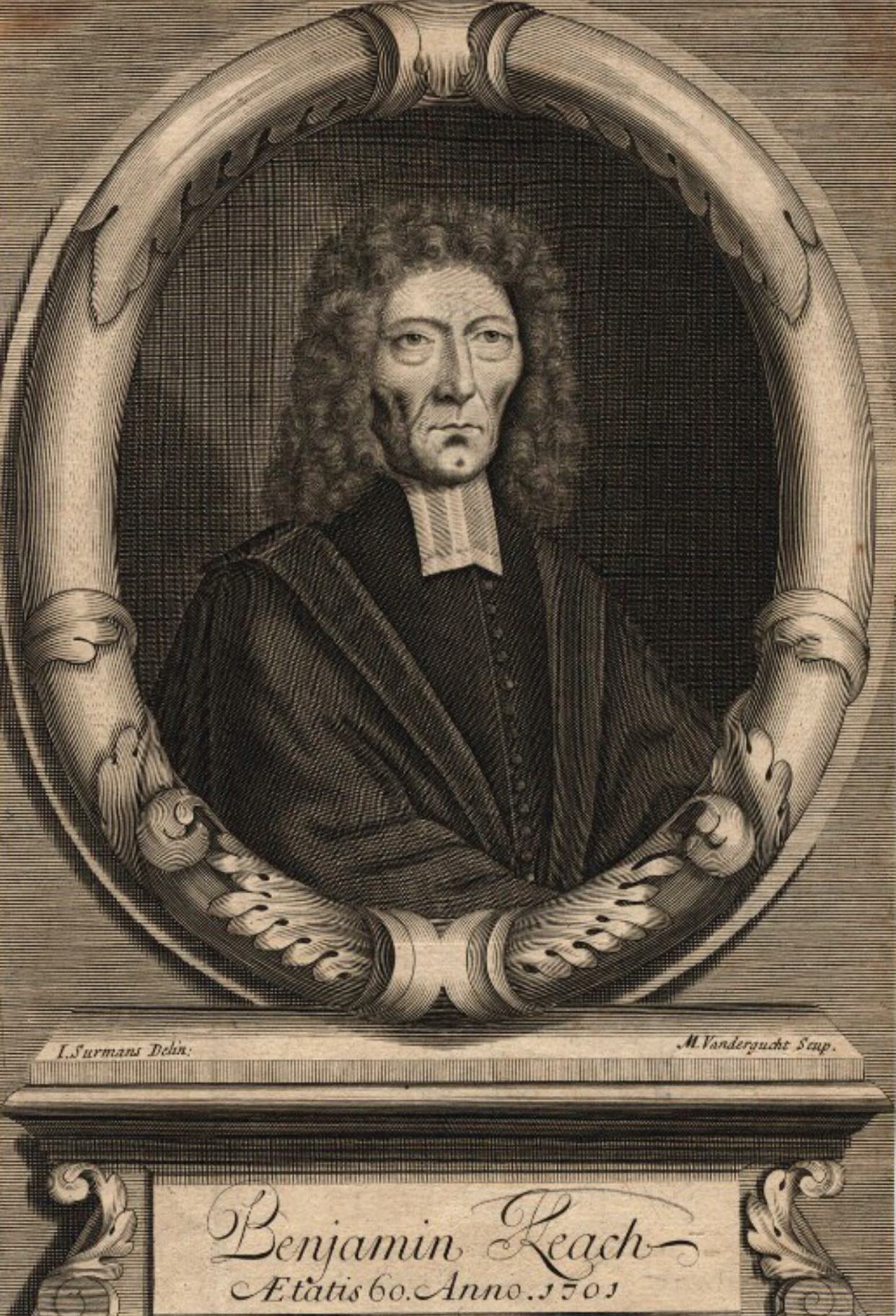
In Benjamin Keach's "Sermon X," the primary theological topic addressed is the nature and significance of the Covenant of Peace, which Keach argues is a singular, comprehensive Covenant that encompasses both the Covenant of Grace and the Covenant of Redemption. He asserts that this Covenant provides absolute assurance to all believers, citing examples from biblical figures such as Adam, Abel, and the apostles who found it to be a reliable foundation for salvation (Hebrews 11). Specific Scripture references include Isaiah 54:10, which emphasizes the unchanging nature of God's kindness and commitment, and Titus 1:2, highlighting the promise of grace made in Christ before time began. Keach’s exploration accentuates the practical significance of the Covenant as both a source of comfort for believers facing trials and as an enduring promise of reconciliation between God and His people through Christ’s mediatorial work, thus aligning with key Reformed doctrines on grace and salvation.
Key Quotes
“The Covenant of Peace is a tried Covenant...all the faithful Children of God venture their Souls and their Salvation upon it and never failed any one of them.”
“This Covenant is a Covenant of Consolation of strong Consolation...all the Water of Life flows down to us through this Covenant.”
“It is an everlasting Covenant...As it was made from everlasting so it will abide to everlasting.”
“If the Covenant of Redemption be not the Covenant of Grace...then it will follow that our Peace is made with God or God is reconciled to us by a Covenant of Grace which we enter into with him.”
What does the Bible say about the Covenant of Grace?
The Covenant of Grace is an everlasting promise from God, providing peace and reconciliation through Christ.
Isaiah 54:10, 2 Timothy 1:9
How do we know that the Covenant of Grace is true?
The Covenant of Grace is affirmed through the testimonies of Scripture and the experiences of believers throughout history.
Romans 8:28-30
Why is the Covenant of Grace important for Christians?
The Covenant of Grace is essential for Christians as it assures them of their salvation and God’s unwavering love.
Hebrews 8:6
For the mountains shall depart, and the hills be removed; but my kindness shall not depart from thee, neither shall the covenant of my peace be removed, saith the LORD that hath mercy on thee. - Isaiah 54:10
Shewing the Covenant of Peace, is a tried Covenant; that it is but one Entire Covenant, viz. That the Covenant of Grace and Redemption, are not Two distinct Covenants as some lately affirm, but only one and the same Covenant: That it is a Covenant full of the Strongest consolation, and lastly an Everlasting Covenant.
Neither shall the Covenant of my Peace be removed, saith the Lord that hath mercy on thee.
I AM upon the opening the nature of the Covenant of Peace, or to shew you what kind of Covenant it is, I have passed thro an Induction of Nine Particulars already; shall proceed.
Tenthly, It is a Tried Covenant.
I. All the faithful Children of God venture their Souls and their Salvation upon it, and never failed any one of them; Adam no doubt ventured his Soul and Salvation thereon, did Abel, Enoch, Noah, Abraham, Isaac and Jacob, and all the Holy Patriarchs, and all the Holy Prophets, and the Apostles of Jesus Christ together with all the Saints both in the times of the Old and New Testament, and they all found it, having tried it, a Sure Covenant.
II. Multitudes of Souls departed this Life are already made Perfect in Heaven, by the Grace and Blessings thereof, they find it to their own unspeakable Joy and Comfort a sum and happy Covenant: For it was by the Merits and Righteousness of Jesus Christ, or blood of the Everlasting Covenant, they are all gone to Heaven.
III. Never did any person venture Soul upon Jesus Christ, by virtue of this Covenant, by Believing truly on him; but found it a Firm and saving Covenant: how many have tried and found it so to be.
IV. Satan that great enemy of Believers and of the Souls of Men, hath often tried and endeavoured to shake the hopes of Believers, and break this Covenant; but he to his shame and confusion sees that he cannot break the bonds thereof.
Eleventh, It is one entire Covenant, i. e. the Covenant that was made with Christ from Eternity, is the Covenant of Peace and reconciliation, or the Covenant of Grace; as well as of Redemption. For,
1. Was it not made with him as our Covenanting Head, and so in him with all Gods elect and for them? Some of late times would have this Covenant to be a Covenant of Redemption, and not the Covenant of Grace and Reconciliation; but a distinct Covenant, and so plead for Two Covenants, besides the covenant of Works, which we read no where of in the Holy Scriptures.
2. Was it not wholly of the Free Grace of God; yea, and the highest Act and Demonstration thereof, that he was pleased to enter into that Covenant with his own Son, as our Surety and Mediator?
3. Was not all the good which we receive in time promised to us in Christ before the World began? See Tit. 1.2. Nay, was not all grace given Federally to us in Christ in that Covenant? See 2. Tim. 1.9. Who hath saved us and called us, not according to our works out according to his own purpose, and Grace which has given to us in Christ before the World began.
4. Was it not that Covenant that was made betwixt the Father and the Son, that Christ was made the Mediator and Surety of, and Confirmed by his death? and did not he undertake to Die for all Gods Elect when the Fulness of time was come? Or was not God in Christ, in and by virtue of that Covenant from everlasting a reconciling the World to himself? And if so, Was not the Covenant made with Christ of Redemption, a Covenant of Peace and Reconciliation also? Was it not representatively made then for us in Christ, and actually made with us by Application; and that it might be thus Applied to us in time, did not Christ engage to see it done for us before time in that Holy Covenant then agreed on?
5. Is there any one Promise, one Blessing, or one Privilege which we received which was not Primarily granted to Christ for us in that Covenant, viz. That our Acceptation should be in Christ, that our Justification should be in him, and our Sanctification should be in and by him, &c?
6. Was not the Covenant of Redemption made with Christ as a Publick Person, a Second Adam: And if so, was it not made in him with all his Seed?
Take here what a Reverend Author hath Asserted in this case.
That Scripture, Isa 53.10, 11, 12. Is (saith he) a place wherein this Covenant is clearly described between the Father and the Son, and it holds forth the Covenant of Grace fully & clearly, yea the promise of all Grace and Benefits that are contained in the said Covenant of Grace. And the Apostle tells us expressly, that this Covenant agreement was the Will, by which Will we are Sanctified, thro the Offering the Body of Jesus once for all.
— He further argues,
2. That Covenant that contains in it the whole matter and form in Conditions and Promises of the Covenant of Grace, doth not Essentially differ from it; but the Covenant of Redemption doth contain in it the Conditions and Promises of Grace, yea, all things that pertain to Life and Godliness: And it contains in it all conditions upon which we may be partakers of any Promises, i. e. Christ's Person, Offices, Sacrifice, Righteousness active and passive; there's no Covenant condition of Atonement, Propitiation or Satisfaction unto the Justice of God: But it is here, Christ is the great fulfiller of the Law and satisfier of it; and he is the end of the Law for righteousness to every one that believeth.
3. From the veiled dispensation of the Covenant of Grace (saith he) before the coming of Christ, their Sacrifices and Ceremonial Administration held forth in a Figure, that it was made with Christ and confirmed in him as the great Offering and Atonement; Christ is there exemplified and set forth as the fulness of the Covenant of Grace, both in respect of Promises and Conditions.
4. When we plead (saith he) for any thing of the Covenant of Grace, it is the Promises of Life made to us in Christ, as Yea, and Amen; and to us in him, in respect of obtaining and performing to us.
5. Our Justifying acts of Faith is fixed on Christ as the Sum of the Covenant of Grace, as satisfying for our Sins; and as to whom the Promises were made, and the great things promised, as the Fountain and Meritorious cause of all Blessings: He is given to us as the Covenant.
6. There is (saith he) all Grace to be had in this Covenant, Frustra sit per plura quod fieri potest per pauciora. There is no Grace but is given forth and received by us, by the Covenant between the Father and the Son, the gift of the Spirit, the Grace of Faith, Justification by his Blood; by him came all Grace, yea, all other supposed Grace that came not from the Father, and through Christ is no Grace, and will not profit us.
7. Where the Covenanters Conditions and Promises are all from Free Grace and Love to us, there's a Covenant of Grace; but in that Covenant they call a distinct Covenant of Redemption, the Covenanters, the Conditions and Promises are all of Free grace and Love to us; God the Father from his Free grace and Love to us called his Son to this Undertaking and Covenanting with him; God the Son in our Persons (or in our behalf) from his Love and Free grace Covenanted with the Father, he came and freely offered himself to perform the Covenant Conditions; the condition of this Covenant, in all mediatorial perfections and performances, is freely promised and bestowed upon us; the promise of Eternal life.
All Grace and Glory are promised, and given in this Covenant: that is a Covenant of Grace, wherein God is to us a God of all Grace.
8. If the Covenant of Redemption be not the Covenant of Grace, then there is more Covenants than the Covenant of Works and the Covenant of Grace for Life and Salvation; but there is no more Covenants for Life and Salvation, but that of Works, and that of Grace, the Minor I think hardly any will deny — If Church Covenants be alleged they add nothing to this Grand Covenant, but are the accomplishments of the promises thereof to whom it doth belong, it being promised that they shall be Gods People; in this Covenant Christ stipulates and we in him as we did in the first Adam, then; And when we stipulate being moved thereunto from the grace of the Promise, and enter personally into this Covenant, embracing that Covenant which was made for us in Christ, 'tis called a laying hold of it: it is solemnly also owned, professed and restipulated to, when we enter into Church Fellowship: the repeating and restipulating, and renewings of the same Covenant may be without changing the Covenant: For we find God often repeating this Covenant, and renewing it with his people in Revelation and Establishment, as with Adam, Noah, Abraham, Isaac and Jacob, &c. yet it was the same Covenant: So are Gods Children excited and encouraged thereunto from the Free-grace of the said Covenant.
Thus this Author.
1. Now let me add one or two arguments more to what this worthy Author hath said, viz. If the Covenant of Redemption, be not the Covenant of Grace, or Covenant of Peace and Reconciliation, which God calls his Covenant; The Covenant of my Peace shall not be removed saith the Lord: Then it will follow, that our Peace is made with God, or God is reconciled to us by a Covenant of Grace, which we enter into with him, which Covenant Christ Merited for us in his performing the Covenant of Redemption; and if it be so, how is it Paul saith God was in Christ reconciling the world to himself? Indeed as far as I can see, this notion of two distinct Covenants of Redemption and of Grace, seems to be defended of late, on purpose to favour the grand Errors of our new Methodists viz. In the Covenant of Redemption, say they, Christ made God amends for our breach of the Law of perfect obedience, by himself alone, and for himself only, that so he might be a fit Mediator, and Merit a new Law of Faith and sincere Obedience; (for their Covenant of Grace is a Law of Obedience) which Law or Covenant he Confirmed by his Death. So that now God, say they, enters into a Covenant with mankind, and if they perform the Conditions of it, or so far as they do, so far they shall be justified, and shall have Eternal life provided they continue unto the end; and thus (as before I have hinted) Christ is our legal righteousness in the Covenant of Redemption, he fulfilled the Law of Works, or the strict Law of perfect Obedience: by giving God a satisfying recompence, And so he hath abolished the Law of perfect obedience; but our Faith, Inherent-righteousness, Gospel-holiness and Sincere obedience, is our Evangelical Righteousness; or that which justifies us at Gods Bar or in his sight: Now this dangerous Error, I say, seems to follow the allowing of two distinct Covenants.
2. There is no distinction between the Covenant of Redemption and the Covenant of Grace; because Redemption presupposes Peace and Reconciliation, and not only Gods Reconciliation to us, but our reconciliation to him; for Redemption is not from the Curse of the Law and Wrath of God only, but also from Sin, or a vain Conversation, and out of the Power and Kingdom of Satan, which Christ (by his Blood as poured forth, and in applying it) undertook to do in the Covenant of Peace; which is called Christ's Covenant. As for thee by the blood of thy Covenant,I have sent forth the Prisoners out of the Pit, wherein there was no water.
Reverend Charnock says, Christ is the surety of the Covenant of Grace, but the Covenant of Redemption had no surety, the Father and the Son trusted one another; the Covenant of Redemption was not Confirmed by Blood, &c.
Answ. Had God only entered into Covenant with Christ, as a single Person and for himself, there had been no need of a surety; but since he entered into that Covenant as a publick person, and that for broken and fallen mankind, whom God regarded not, their Credit being for ever gone; there was a necessity of Christ's suretiship in that said Covenant, in respect had to those things, which Christ was to do for us, and also work in us; which he then engaged to the Father to perform, and if the Covenant of Redemption from Sin and Wrath was not confirmed by the Blood of that Covenant, one grand part of our safety and security is gone for ever.
My Brethren, Our Lord Jesus Christ when he first entered into the Covenant with the Father, agreed to be the Mediator and Surety thereof; also evident it is, that there are some Transactions where suretiship is required, which a Surety must undertake to do, and readily agree unto; even all such things which the Creditor requires and the nature of the Covenant calls for: So that there are some things that peculiarly belong to him as surety, even so and in like manner it was here about the complete accomplishment of the Covenant of Grace entered into between the Father and the Son in behalf of the Elect. Yet all the good we receive through the applicatory part of the said Covenant, are but the effects, fruits or product of the same Covenant as it was made with Christ for us, as our Surety—Also among Men those things and Covenant Transactions betwixt the Creditor and the Surety which peculiarly appertain to him to perform and answer (though the poor debtor nevertheless is mainly concerned therein) they being such things that must be performed by the Surety for him, or the Debtor can have no benefit by it; yet the free grants to the Debtor in the said Covenant upon the Sureties engagement is never called a distinct Covenant in it self, but (as I said before) 'tis one and the same Covenant, our Covenant therefore is but a branch of Christ's Covenant with God the Father, in which he engaged to Spouse and Marry us to himself for ever: Therefore I know not what these Men’s nice distinctions signifies, unless it be to amuse the world, or except it be for the worser purpose just now hinted.
Brethren, The distinction lies not in two distinct Covenants Essentially differing from each other, but in the distinct parts of the said one entire Covenant.
I. One part as it refers to Christ, viz. he is the Surety and we the Debtors whom he engaged for; his money and not ours pays all, and makes satisfaction to God. Christ is the Redeemer in this Covenant, and we the Redeemed. Christ is the Saviour, and we the Saved.
II. That part that appertains to Christ was upon conditions of what he was to do and suffer, he hath obtained all for us wholly by Desert and Merit, and we have all, every way of mere grace and favour particularly in the applicatory part thereof: Moreover, let it be noted that there is a difference in respect of the time of the making of the Covenant, and of the Revelation, Execution and Application thereof.
Christ in the Covenant first Articled with the Father to be Mediator and Surety, &c. and in the execution of the Covenant actually discharges those Offices, and all things that appertains to them, one thing being his bringing of us home to God, or into the bonds of his Covenant.
Moreover, Take here what the Reverend Assembly of Divines have said about the Covenant of Grace, viz. Q. 30.
Doth God leave mankind to perish in a state of Sin and Misery?
Answ.
God doth not leave all mankind to perish in a state of Sin and Misery, into which they fell by the Breach of the first Covenant, called the Covenant of works; but of his mere love and Mercy delivereth his Elect out of it, and bringeth them into a state of Salvation, by the second Covenant, commonly called the Covenant of Grace.
Q. 31.
With whom was the Covenant of Grace made?
Answ.
The Covenant of Grace was made with Christ as the second Adam, and in him with all the Elect as his Seed: Thus that Learned Assembly.
From hence it doth appear, that this opinion of two distinct Covenants was not received by that Assembly; they own but two Covenants i. e. that of Works and that of Grace, and I am sure the Scriptures bear witness of no other Covenant of Redemption, but that of Grace and Reconciliation, which includes Redemption and all Covenant-Blessings. My Brethren, That very Covenant made between the Father and the Son, was hidden or kept secret as to the clear manifestation of it till Christ came, and then it was manifested, and the clear revelation of it is in the Gospel, which shows how God manifests the grace of this Covenant by offering Pardon and Peace to sinners, by revealing of Christ who is called the Covenant, and offering him to them for Life and Salvation; so that this Covenant contains all Grace, Mercy and Redemption.
Moreover, Remarkable it is to see how that Learned Person that wrote the Book called The Ark of the Covenant, (who too boldly asserts the Covenant of Redemption a distinct Covenant from the Covenant of Grace) doth in divers places contradict himself herein, take some of his words, viz.
So that I take(saith he) the meaning of these words, This is my Covenant with them, my Spirit that is upon thee, &c. to be, This is my Covenant that I have made with thee upon their account, and for their behoof; or the Covenant that I have made with them: to wit, virtually when I Covenanted with thee, and made promises to thee for their behoof.
He confesseth that the Covenant of 〈◊〉 was made with Christ primarily, and representatively, and with the Elect in him; and all promises of Grace was made to us in Christ in that Covenant: And what do we say more? but this is to overthrow his own Notion of two distinct Covenants.
Nay, the same Author confesseth, that the grand thing he argues for, is to prove, that there is nothing spoken of Christ's Seed, as parties with whom God deals in this Covenant, and upon whom he layeth any Commands.
Answ. We say so too, Christ is only the Covenanting party for us, and on our behalf; and all the doing and suffering work is laid upon him, he is substituted Mediator, Surety, Saviour and Redeemer; 'tis enough we were to be the Saved, and Accepted and Justified in and by his Obedience and Merits: Moreover, all Commands concerning us are given to us from God in Christ as Mediator, but not to bring us into the Covenant, but as being his Redeemed People, as he is our King, we ought to obey and serve him.
Again, he saith, In this Covenant Christ received his Offices, Employment, Trust, Powers and Authority. A great truth! (and in the next place he says) Christ is Lord Mediator of the new Covenant, &c.
Answ. Is not the New Covenant the Covenant of Grace, this they Confess; and he affirms Christ was chosen Mediator of the Covenant of Grace, let me infer upon him viz.
If Jesus Christ in that Covenant he entered in with the Father, was constituted Mediator of the New Covenant, and he is Mediator of the Covenant of Grace, How can that Covenant be distinct, or Essentially differ from the Covenant of Grace?
Moreover, 'tis observable how this great Author, and Reverend Charnock differ one with the other, yet both assert the Covenants are distinct.
This Man says, that Christ was surety of the Covenant of Redemption; the other denies it, and says, The Covenant of Redemption had no surety, but the Father and the Son took each others words.
True, we say none was a surety for Christ to God in this Covenant, nor for God to us; but Christ in this Covenant was our surety to God, he undertook on our behalf; one says Christ is Mediator (King, Priest and Prophet) of the Covenant of Redemption:
The other says Christ is Mediator of the Covenant of Grace, but not the Mediator of the Covenant of Redemption.
The mistake, I humbly conceive, lies in this, viz. They distinguish not between Christ's part and work in the Covenant as our Covenanting head, and the Blessings we receive as the effects of his Mediation.
But again, our Scottish Author saith,
Christ is the Covenant of Grace comprehensively, he is the very compound, or there is an abridgment of the Covenant; in the Mediators Person, there is the little sum, or the whole Covenant—Consider this, how the Parties Articles, Mutual Stipulations, Promises, Proportion, and Blessings of the Covenant, are all some way abridged in Christ, and summed up in his Person.
1. Christ is all the Parties of the Covenant of Grace, or rather both the Parties are comprehended in the Mediator's Person; he is both the Parties in three respects. (1.) Because of the Union of the two Natures in his Blessed Person, he is God-Man, God made manifest in the Flesh. (2.) Because the Person who is Mediator, is upon both sides of the Covenant, as being one with the Father and Holy Ghost, he is on God's part, Joh. 5.7. 2 Cor. 9.13. And as he is one with us, he is on our side, Heb. 2.11.13. For both he that Sanctifieth, and they that are Sanctified, are all of one—(3.) He is not only upon both sides of the Covenant, but he contracts for both the Parties.
2. Christ obtains the Consent of both Parties, p. 459.
3. The everlastingness of the Covenant is comprised in Christ, he is God everlasting, yea, an everlasting Mediator, he was set up from everlasting, p. 462.
Now these things being granted by our Author, what cause he hath to affirm, That the Covenant of Redemption, and that of Grace, are two distinct Covenants, I will leave to all Men’s Considerations.
But further, to confute this Notion, take what another Reverend Writer hath written on this Subject.
The Covenant of Grace was made and established not only with us, but jointly with Jesus Christ, and with us in him; so that both are but one and the same Covenant: For the great Transactions with Jesus, yea, even the giving and sending of him, and his accepting the Office of a Redeemer, and undertaking for us, are all of Grace, as well as what is promised to us through him; therefore the Covenant of Grace must take in all that conduced (otherwise than a mere Decree) to our Restoration, and eternal Salvation.
1. There is (saith he) no Scripture Evidence for making these to be two Covenants, (one of Redemption with Christ, and another of Grace and Reconciliation made with us) that distinction which some use, is improper, for the Parts are coincident, seeing that which was made with him, was of mere Grace also, Joh. 3.16. and it is promised, that he should be given for a Covenant, Isa. 42.6. therefore it's of Grace we are Redeemed by him, 2 Tim. 1.9. There was Grace before the World was, and that must needs be in the Covenant as with Jesus Christ, which was for reconciling the World to the Father, 2 Cor. 5.18, 19. Col. 1.20, 21. It is true Christ only is our Redeemer and Surety, not we in our own Persons; and Christ hath some peculiar Precepts and Promises appropriated to him, which are not afforded to us in the same manner and degree; yet this hindereth not the Oneness of the Covenant with him and us.
2. The Covenant of Grace was made with Christ as a publick Person, a second Adam, and therefore with all his Seed in him.
3. All in the Covenant as with us, is undertaken for, and promised in the Covenant between the Father and the Son, and so together make but one Covenant.
4. All Covenant Blessings are primarily granted to Christ: Thus this Great and Worthy Person. See also the Everlasting Covenant: A Sweet Cordial for Drooping Souls, p. 10. to 18.
But because in my two Sermons Preached and Published on the Everlasting Covenant, I have answered the Reverend Mr. S. C's Eight Arguments, to prove the Covenant of Redemption a distinct Covenant, I shall refer the Reader to that small Tract, and say no more to this at this time.
Twelfth, The Covenant of Grace, is a Covenant of Consolation, of strong Consolation.
1. Considering what is contained in it, and also the Nature of it.
2. In that it is all our Hope and Salvation, all the Water of Life flows down to us through this Covenant.
3. In that also it affords us Comfort in all Times, States and Conditions, both in Life, and at the Hour of Death; and this was that which was David's Dying, or Sick-bed Cordial. For Consider,
Art thou afflicted, or tempted? Look into this Covenant; His Seed will I make to endure for ever: If his Children forsake my Law— then will I visit their Transgressions with the Rod, &c. but my loving Kindness I will not take away, from him nor suffer my Faithfulness to fail. See 1 Cor. 10.13. Or,
Art thou Backslidden from God? See what God saith; I will heal their Backslidings, and love them freely.
Do thy Sins grieve thee? thy Soul? Look into the Covenant; I will be merciful to their Transgressions, and their Sins and Iniquities I will remember no more. Or,
Art thou deserted? God is faithful, he remembers his Covenant, he will return again.
Dost fear thou shalt some time or another depart from God? Read the Covenant Promises; I will put my fear in their Hearts,and they shall not depart from me.
Dost thou fear thou shalt suffer want, yea, want Bread? See the Covenant; He will give Grace and Glory, and no good thing will he withhold from them that walk uprightly.—If therefore there be any Consolation in Christ, if any Comfort of Love, if any Fellowship of the Spirit, if any Bowels and Mercies, 'tis all in this Covenant.
Lastly, It is an everlasting Covenant; He hath made with me an everlasting Covenant: As it was made from everlasting, so it will abide to everlasting; 'tis compared to God's Covenant of the Day and Night, Jer. 33: 20. Thus saith the Lord, If my Covenant of the Day and Night, and that there should not be Day and Night, then may also my Covenant be broken with David my Servant. Covenant Love is everlasting Love, Christ's Covenanting Obligation was an everlasting Obligation, Covenant Espousals are everlasting Espousals; I will betroth thee to me for ever: Covenant Redemption is eternal Redemption, and Covenant Salvation is an everlasting Salvation; Israel shall be saved in the Lord,with an everlasting Salvation—But my Salvation shall be for ever.

Comments
Your comment has been submitted and is awaiting moderation. Once approved, it will appear on this page.
Be the first to comment!