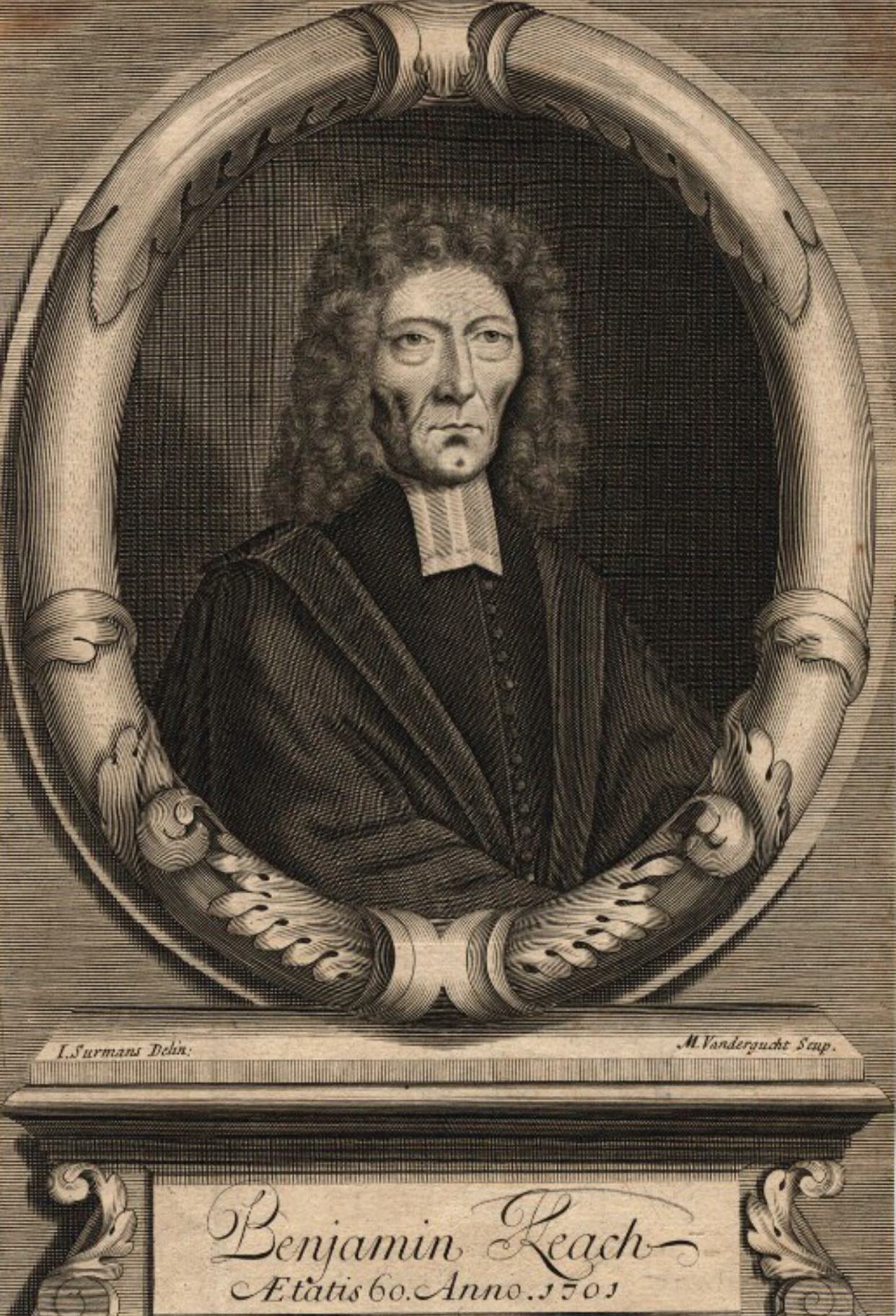
In "Christ the Captain of Our Salvation," Benjamin Keach expounds on the theological significance of Jesus as the divine leader of believers, employing military metaphors to illustrate His qualifications, commission, and authoritative actions. Keach argues that Christ exemplifies the perfect Captain by voluntarily undertaking the role, being faithful, courageous, and skilled in His mission to redeem humanity. Scripture references such as Hebrews 2:10 and John 8:42 are utilized to affirm Christ's authority and voluntary sacrifice, reinforcing the idea of Him as both Commander and Savior. The implications of this doctrine extend to the assurance of believers in their spiritual battles, emphasizing the importance of adhering to Christ's leadership for ultimate victory.
Key Quotes
“A Captain is supposed to be a man qualified for his place to which there are these things necessary... Jesus Christ, the Captain of our salvation had not only these four but all other honourable and necessary qualifications that made him fit to be a Leader.”
“Christ hath the power of listing spiritual soldiers under his command to serve in the wars of the soul.”
“Jesus Christ, like a most valiant Captain, made good his ground against all the force and artillery of hell in a glorious manner even to the death of the cross.”
“It is the best for Christ's followers to keep close to their Leader; not to forsake their own Captain; they can never choose one like him.”
What does the Bible say about Jesus as the Captain of our salvation?
The Bible describes Jesus as the Captain of our salvation, emphasizing His leadership and qualifications to guide His people.
Hebrews 2:10, Isaiah 63:5, John 8:42
How do we know that Jesus is a faithful Captain?
We know Jesus is a faithful Captain because He never wavered in His commitment and always fulfilled His Father's will.
Revelation 3:14, John 6:38
Why is it important to recognize Jesus as our Captain?
Recognizing Jesus as our Captain is vital because it assures us of His leadership in our spiritual battles.
Matthew 10:5, John 10:3, Matthew 28:20
What does the term 'the Lamb's book of life' mean?
'The Lamb's book of life' refers to the record of those who are saved and will dwell eternally with Christ.
Revelation 20:12, Revelation 21:27
CHRIST THE CAPTAIN OF OUR SALVATION
"To make the Captain of our Salvation perfect through sufferings," Heb 2:10.
THIS is a military term, the Greek 'Hgemwn, a Captain, being derived from which signifies to lead: and apxuv also, a Captain, derived from arxwn which signifies beginning, chief, or government, denoting in a borrowed sense from military commanders, the rule, dominion, and principality of Christ over all, and that he leads his spiritual militia safe through all perils in their Christian warfare. Being to enter upon a military subject, and the chief of that rank, we shall consider Captain in a threefold respect.
1. In respect of his qualifications.
2. In respect of his place and office.
3. In respect of his progress or actions.
METAPHOR
I. A Captain is supposed to be a man qualified for his place, to which there are these things necessary. 1. That he be free and willing to take that work and office upon himself; it is not meet he should be forced to do it. 2. It behoved him to be one faithful in all things to his sovereign. 3. A Captain must be valiant and courageous, not easily dismayed, though he meet with never such hard and difficult service. 4. He ought also to be well skilled in the work and duty of his place and office.
PARALLEL
I. Jesus Christ, the Captain of our salvation had not only these four, but all other honourable, and necessary qualifications, that made him fit to be a Leader. For, 1. Jesus Christ was free and ready, had no force put upon him, but came voluntarily and of his own free will to undertake this office, &c., he looked round about, and saw that there was none to help or to undertake this work, then said he, "Lo, I come to do thy will, O God," Isa 63:5; Heb 10:7; 6:2. Jesus Christ was faithful over his own house, called the faithful and true Witness, he never so much as thought in the least of betraying of his trust. It was impossible indeed he should be unfaithful, who was without sin, the holy and immaculate Lamb of God. 3. Christ was valiant and resolute, the danger of death, and threats of an ill-natured king, could not make him retreat, when he had entered the field, slighted his enemies' high words and vain flourishes. "Go, tell that fox that I work miracles this day and to-morrow, and the third day I shall be made perfect," Lu 13:32. The contempt of his enemies, or persuasion of his friends, could not at all abate his valour, he knew he must, and resolved he would, be about his Father's business, Luke 2:49. 4. Christ, was fitted with wisdom and understanding, he is called the wisdom of God, 1Co 1:24.
METAPHOR
II. A Captain is made so by his commission, which is his authority to act in this capacity.
PARALLEL
II. Christ was commissioned by God, after his qualifications did commend him to this place; for though he offered freely to accept, yet he acted not of himself, but by command and authority from the Father. "I came not of myself, the Father sent me. I received commandment from the Father," Joh 8:42.
METAPHOR
III. A Captain hath the power of listing soldiers under his command to serve in the king's war.
PARALLEL
III. Jesus Christ hath the power of listing spiritual soldiers under his command, to serve in the wars of the soul, the battle of the Lord of hosts. He took the names of Nathaniel, Zaccheus, Cephas, Peter, James, and John, who listed themselves under his command; with many others we read of in the Gospel.
METAPHOR
IV. A Captain by virtue of his place and office doth nominate his officers, and appoint them their proper work, gives out his orders, beyond which they are not to venture.
PARALLEL
IV. Jesus Christ doth appoint saints their proper work, and gives forth his orders, beyond which they are not to pass. He nominated the twelve apostles to be the next to himself, and gave orders that they should not march beyond the confines of Judea, but tarry at Jerusalem till fresh supply of strength came in. "Go not to Samaria, nor to the cities of the Gentiles, Mt 10:5, "But tarry at Jerusalem till you be endued from on high." Add not to his word, &c.
METAPHOR
V. A Captain hath the keeping of muster-rolls, wherein all the names of his under-officers and soldiers are entered, by which he calls them over, and knows them all by name.
PARALLEL
V. Christ hath a book wherein the names of his saints and faithful followers are recorded, called in scripture, "The Lamb's book, or book of life; whose names are in the book of life; the book of life of the Lamb, slain from the foundation of the world," Re 21:27, and Re 20:12. He calls his own sheep by name," &c., Joh 10:3.
METAPHOR
VI. A Captain leads his soldiers out into the field to be exercised and disciplined, to be made fit for service against the day of battle.
PARALLEL
VI. Jesus Christ leads his saints to the seaside, to the mountains, to the desert, to exercise and make them fit for service against the day of battle, by which he taught their hands to war, as it were, and their fingers to fight against the devil, the flesh, and the world, Mt 4:1; 13:1.
METAPHOR
VII. A Captain makes a speech to his soldiers to encourage them in the way of their duty, and shows them the dangers of neglect and remissness.
PARALLEL
VII. Christ made large speeches to all his followers (see his sermon on the mount) to encourage them in the way of their duty, and show them the great dangers of neglect and remissness. "Blessed are they that hunger and thirst after righteousness," &c. "Blessed are the meek," &c., Mt 5:4-6. "But except your righteousness shall exceed the righteousness of the Scribes and Pharisees, ye shall in no wise enter into the kingdom of heaven," Mt 5:20. "Ye that have abode with me in my temptations, I appoint you a kingdom," &c. With a multitude of such like speeches which are contained in the holy Gospel, which he uttered, to encourage and animate all his disciples in their spiritual warfare.
METAPHOR
VIII. A Captain hath power to cashier, can take in or shut out, as he seeth cause.
PARALLEL
VIII. Jesus Christ takes in and shuts out, as he sees cause; he cashiered Judas, Demas, Hymeneus, Philetus, and Alexander, and takes in Paul, Barnabas, and Apollo into his company, 1Ti 1:20.
METAPHOR
IX. A Captain is the Head of a company, commander over a band of men
PARALLEL
IX. The Lord Jesus is the Head of all true Christians, and Commander of the Church militant in chief, all the bands of the white regiment march under his banner; "He is the Head of his body the Church;" "given to be a Leader and Commander to the people," Isa 55:4; Eph 1:21-22.
METAPHOR
X. A Captain when he hath taken his place, marches in the head of his company, runs the greatest hazard, deserts not his men for fear of danger.
PARALLEL
X. Christ when he was baptized by John, took his place in the ministry, as the Leader of his Church, and ran the greatest hazard, yet deserted not his followers for fear of danger; he not only loved them to the end, but did bear them company, and abode with them to the last, even till he suffered for their sakes, the bitter death of the cross, &c., and is spiritually with them always "To the end of the world,'' Joh 13:1; Mt 28:20.
METAPHOR
XI. A Captain gives the word of command to his soldiers, which they are carefully to learn and observe.
PARALLEL
XI. Christ gives the word of command to his saints, which they are to observe. If any man will serve me, let him follow me, Joh 12:26. "Teach them to observe all things that I command you," Mt 28:20.
METAPHOR
XII. A Captain by his place is engaged to war, both offensive and defensive, as occasion shall require.
PARALLEL
XII. So is Christ by being the Captain of our salvation for war, not originally from his own disposition, for he is for peace; but by the resolved opposition that is in the hearts of his enemies against him. "I came not to send peace on the earth, but to bring a sword," Mt 10:34.
METAPHOR
XIII. A Captain meets with enemies to try his skill and courage.
PARALLEL
XIII. Jesus Christ met with enemies, not only flesh and blood, Eph 6:12, yea, potent flesh and blood, men in power and high-places, such as Herod, Pontius Pilate, and the rulers of the Jews, but principalities and powers, no less than Beelzebub himself, and all his train, whom he fairly engaged with eminent success, Mt 4:5-7.
METPHOR
XIV. A Captain makes use of armour and weapons, of which there is no small need in the day of battle.
PARALLEL
XIV. Jesus made use both of armour and weapons; he saw no small need for it, viz., 1. "The breast-plate of righteousness," Eph 6:14,17. "When Satan, and wicked men, by their temptations would have drawn him from his allegiance, by great offers of power and glory.[1] 2. "The sword of the Spirit," by which he cut down the devil, and the wicked Jews, in all their assaults: "It is written, it is written," &c. 3. "The shield of faith," when he came to the last and most bloody battle of all: "For the joy that was set before him, he endured the cross, despised the shame, and sat down at the right-hand of the majesty on high," Heb 12:2.
[1] See the nature of the Christian armour under the head of Metaphors, relating to the graces of the Spirit.
METAPHOR
XV. Captains are commonly stout men, and will make good their ground against an enemy, scorn to yield till they die.
PARALLEL
XV. Jesus Christ, like a most valiant Captain, made good his ground against all the force and artillery of hell, in a glorious manner, even to the death of the cross.
METAPHOR
XVI. A good Captain takes care for his men to preserve and secure them, whether he lives or dies himself.
PARALLEL
XVI. Christ took great care of his saints, to preserve and secure them, however it fared with himself. 1. He left them good orders to observe in his absence, the rules of the holy Gospel. 2. He took care to send them a good guide for their conduct, no less than the Holy Ghost, the Comforter. 3. He prayed for them on earth, and he prays in heaven, to engage the protection of Almighty God for them: "Father, keep through thine own name those that thou hast given me," &c., Joh 14:16; 17:11-20.
METAPHOR
XVII. A Captain hath the power to prefer his men to office, that he approves of to be fit and worthy.
PARALLEL
XVII. Jesus Christ prefers his saints and followers, whom he finds worthy: "He gave some apostles, some prophets, some evangelists, pastors, and teachers, for the work of the ministry," &c., Eph 4:11. "I thank Christ Jesus, who hath put me into the ministry," 1Ti 1:12.
METAPHOR
XVIII. A wise Captain puts the best men into the greatest service; he makes not young and unexperienced men, commanders of companies, and leaders of parties, lest the work should miscarry in their hands.
PARALLEL
XVIII. Christ made not novices, and inexperienced Christians, ministers and pastors of churches, and leaders of societies; he set Peter, James, and John to be apostles and leaders in the first place; and Paul, Sylvanus, and Timotheus, stout and brave commanders, to bring up (as it were) the rear: "God hath set forth us the apostles last of all, as it were, appointed to death," 1Co 4:9.
METAPHOR
XIX. A Captain in weighty affairs is joined with the council of war, without whom there is nothing of grand importance transacted.
PARALLEL
XIX. Jesus Christ, in all weighty affairs, is joined with the Father and Holy Spirit, the great council of heaven; and without him who is called Wonderful, Counsellor, there is nothing of grand importance transacted either in heaven or earth, Isa 9:6. Nay without him was nothing done at first; "All things were made by him, and without him was not any thing made that was made." When commission was given to creatures of all kinds to act in their proper sphere, Christ was there. See Counsellor.
METAPHOR
XX. A Captain's place is a place of honour, where the subject is justly worthy of it, and the army legally raised.
PARALLEL
XX. Christ's place is a place of honour, because he was worthy, Re 5:3-4, and the army that he hath raised is not a rebellious army, but legally raised, and behave themselves well; they are kept under good government and discipline, not one debauched person in the army is continued in the muster-rolls, but presently turned off, blotted out, and delivered up to Satan, when discovered by his inferior officers to be such. "Have no fellowship with the unfruitful works of darkness: from such turn away, Deliver such over to Satan," 1Co 5:5. Turn him into his own kingdom. "Because thou hast loved righteousness, and hated iniquity, therefore God, even thy God, hath anointed thee with the oil of gladness above thy fellows," Heb 1:9. "That all men might honour the Son, even as they honour the Father," Joh 5:23.
METAPHOR
XXI. A valiant and noble-hearted Captain offers terms of peace to the enemy, before he fall upon them and fight them, to prevent effusion of blood if possible.
PARALLEL
XXI. Jesus Christ offers terms of peace and reconciliation, because he would prevent their ruin, if possible, before he fall upon them and fight against them with the sword of his mouth. "Turn at my reproof," Pr 1:23. "How often would I have gathered thy children together," &c. "Into whatsoever place you enter, say, peace," &c. "I gave her space to repent of her fornication, but she repented not," Re 2:21. "I will kill her children with death," &c.
METAPHOR
XXII. Captains when their favour is refused, put men to the sword, and make slaughtering work in the world.
PARALLEL
XXII. Jesus Christ, when his grace and offers of mercy are refused, hath, and will make slaughtering work in the earth. O what work was made upon Jerusalem! not long after the refusing the terms of peace, and offers of grace and favour by Jesus Christ. See the lamentable story in Josephus, &c. And what work will shortly be made with bloody Rome, in the day of death. "Mourning and famine that is coming on apace, when she shall have blood given her to drink, and shall be utterly burnt with fire," Re 16:5-6. And what devastation will be made by this great Captain, who is red in his apparel, and his clothes like them that tread in the wine-press, at the battle of Armageddon, when the vast armies of the beast shall be slaughtered and destroyed, by the sharp sword that goes out of his mouth, "And blood shall come forth to the horses' bridles, for a thousand six hundred furlongs," Re 14:19-20. "The fowls of heaven shall be filled with their flesh, there shall be burying work for multitudes, seven months," Eze 39:12. "By fire and sword shall he plead with all flesh, and the slain of the Lord shall be many," Isa 66:15-16.
METAPHOR
XXIII. A Captain doth not only come off a conqueror, but improves his conquests and victories to many degrees of advantage. 1. To the discouragement of adversaries. 2. In spoiling their forts and strength. 3. In the erecting trophies. 4. In disposing the prey, to gratify and reward his soldiers that engaged with him in the war.
PARALLEL
XXIII. Jesus Christ at his first coming did weaken the kingdom of Satan, spoiled principalities, set up trophies of his victory, made a show of them openly, led captivity in triumph, and will complete the work of his second coming, Eph 4:9; Col 2:15. Will take the old dragon and bind him for a thousand years. And at the end of the thousand years, cast the dragon, the beast and the false prophet, into the perpetual dungeon, Re 20:2,10. He will then give a reward to all his prophets, and saints, both great and small, make them rulers over cities, over all nations, to bind kings in chains, and nobles in fetters of iron; and dash them in pieces like potters' vessels, Ps 149:8-9; give the upright dominion over them in the morning; place them upon thrones with palms in their hands; make them kings and princes in all the earth, to reign with him "Till he deliver up the kingdom to the Father," 1Co 15:24,28, which puts a final end to all the wars: but retains the honourable title of being the Captain of our salvation, for ever, even for ever, Amen.
INFERENCES.
I. From hence we may infer what great danger Christ's enemies are in, and the certainty of their being spoiled if they stand out against him. "The enemies of the Lord shall be broken to pieces," 1Sa 2:10. "The Lamb shall overcome them," Re 17:14.
II. That it is the best for Christ's followers to keep close to their Leader, not to forsake their own Captain; they can never chose one like him: with him there is safety, and certainty of victory. Let us say to him, as Peter did," "Whither shall we go? (thou art on the strongest side) for thou hast the words of eternal life."
III. That it is the interest of all his enemies, to submit to him whilst terms of peace are offered to them, there is no standing out against him. Can thy heart endure? Can thy hands be strong in the day that he (the lion of the tribe of Judah) shall deal with thee? Many, even of the mighty, have fallen under him, the dragon and his angels could not stand before him. "How much less then man, that is a worm; and the Son of man, which is a worm?" Job 30:6.
See metaphors, Consuming Fire, Ambassador, and Man of War.

Comments
Your comment has been submitted and is awaiting moderation. Once approved, it will appear on this page.
Be the first to comment!