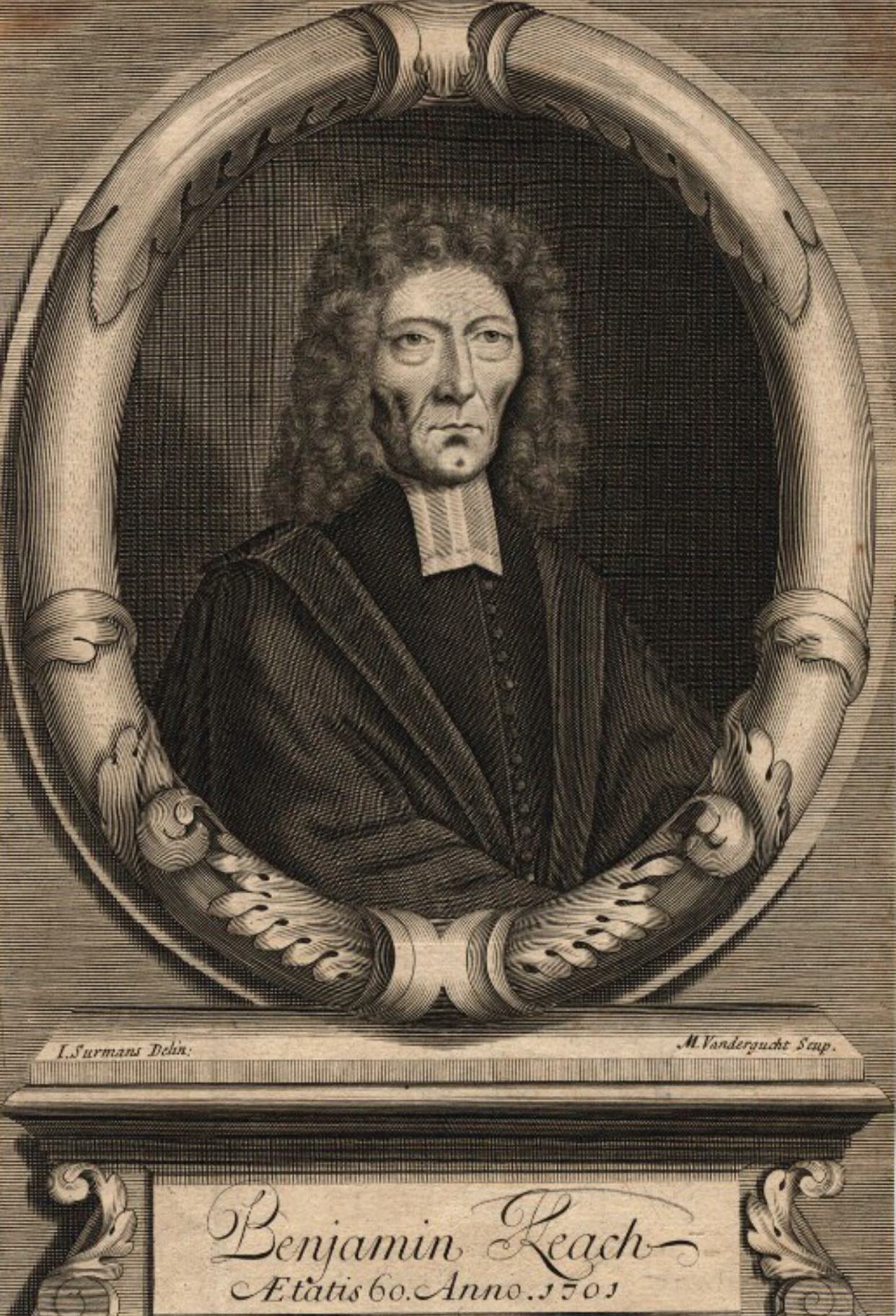
The article "The Word of God Compared to Fire" by Benjamin Keach explores the multifaceted nature of God's Word and Spirit through the metaphor of fire. Keach presents various metaphors indicating that like fire, the Word of God serves to illuminate, warm, purify, consume, and transform the souls of believers. He supports his arguments using Scripture references such as Jeremiah 20:9, Isaiah 33:16, and 1 Corinthians 3:11-15, highlighting how the Word ignites spiritual fervency, separates true believers from sin, and ultimately leads to spiritual maturity. The article emphasizes the importance of not quenching the Spirit (1 Thessalonians 5:19) as it can lead to a loss of grace and a stagnant Christian experience. It further illustrates that believers must maintain the fire of the Spirit to experience spiritual vitality and effectiveness in their walk with God.
Key Quotes
“Is not my Word like as Fire?” - Jeremiah 23:29
“The entrance of it gives Light; by it the eyes of our understanding are enlightened.” - Psalm 119:130; Ephesians 1:17-18
“When the Spirit loses the vigour of his operations… this is like slaking the heat of the burning of Fire.”
“If the word and Spirit be compared to Fire, let us bless God for kindling this Fire in our hearts and nation.”
What does the Bible say about the Word of God?
The Bible presents the Word of God as both illuminating and purifying, akin to fire that enlightens the eyes and consumes sin.
Jeremiah 23:29, Psalm 19:8, Psalm 119:130
How do we know the importance of the Holy Spirit in our lives?
The Holy Spirit is essential as our Comforter, guiding us and providing spiritual life, making it necessary for Christians to rely on His influence.
John 14:16-17, Ephesians 2:1
Why is it important to not quench the Spirit?
Quenching the Spirit hinders spiritual growth and denies believers the power and comfort essential for their faith.
1 Thessalonians 5:19
THE WORD OF GOD COMPARED TO FIRE
"His Word was in mine Heart, as a burning Fire" &c., Jer 20:9.
"Is not my Word like as Fire" Jer 23:29.
"Quench not the Spirit,"' 1Th 5:19.
THE Holy Spirit and word of God, is, and may be fitly compared to Fire.
METAPHOR
I. Fire is of an illuminating or enlightening quality.
PARALLEL
I. The Word and Spirit is Light. "The commandment is a lamp, and the law is Light; enlightening the eyes," Ps 19:8; Pr 6:23. "The entrance of it gives Light," Ps 119:130. "By it the eyes of our understanding are enlightened:" by which we know the riches of his glory, Eph 1:17-18. See metaphor Light.
METAPHOR
II. Fire is of a warming and heating quality; there is not only illumination, but calefaction.
PARALLEL
II. The Word and Spirit of God, give heat and warmth to the benumbed soul of a poor sinner; they give zeal and fervency, that is, heat of spirit to serve the Lord.
METAPHOR
III. Fire will burn any combustible matter it can seize upon, separating metal from rust and dross; it discovers whether metals be of a current or counterfeit base alloy. Whatever Fire seizes effectually upon, it converts it into a flame.
PARALLEL
III. The Word and the Spirit of God burns and consumes all that is fit fuel for it; when thoroughly kindled upon the souls and consciences of men, it destroys the hay, stubble, word, chaff, &c., of sin and corruption; and leaves no metals in the building unconsumed save what is built upon the foundation Jesus Christ, who like gold, silver, and precious stones, will endure the Fire, 1Co 3:11-15. It also causes the soul to burn in love to Christ, to be lifted up with transported ardency of affection after him, and desiring to be united to him also, Lu 24:32. All men are to be tried whether with respect to doctrines or practices by God's word; and what disagrees with this standard, or will not bear touch with this touch-stone, is to be rejected as counterfeit, and of no value.
METAPHOR
IV. Fire is of an ascending quality, greedily mounting to its proper seat, and will not rest till it incorporate with its own elements. Earth and water incline to their own centres, though sometimes artificially made to ascend.
PARALLEL
IV. The Word of God when it hath by the Spirit kindled the soul of a sinner, it immediately causes his affections and desires to ascend and mount up to heaven, as to its centre and only place of satisfaction, leaving, as the Fire only leaves ashes, his dreggy and impure part behind; the soul seems to be then on the wing wholly for heaven, too pure and refined for communion with corrupt things. "They shall dwell on high," Isa 33:16.
METAPHOR
V. Fire is of a melting and softening quality; iron, and other metals are made pliable by it, fit to receive any figure whatsoever, as wax keeps the impression of the seal.
PARALLEL
V. The Word by the Spirit, softens the hard and stony heart, and makes it a heart of flesh; disposes the soul, and makes it fit to receive or and take the seal or heavenly impression, and image of God. See Seal.
METAPHOR
VI. Fire hath a vivifying, enlivening, and quickening quality; it refreshes and restores that heat and warmth, which the prevailing cold deprives us of.
PARALLEL
VI. The Word and Spirit quickens the soul of a sinner; nay, raises to life those who have been, in a spiritual sense, "Dead in sins and trespasses," Eph 2:1. "It is the Spirit that quickens, the flesh profits nothing," Joh 6:63. "The law kills, but the Spirit gives life," Ro 8:2.
METAPHOR
VII. Fire is of a comforting and consoling quality and nature.
PARALLEL
VII. The Spirit of God, called the Comforter, administers the greatest, nay, the only consolation to the soul of believers: O what comforts have some dejected Christians received from the gracious promises of God's word! Joh 14:16-17.
METAPHOR
VIII. Fire is of a penetrating or piercing nature, there is no pore or secret passage of the body thrown into it, but it pierces it.
PARALLEL
VIII. The Word and Spirit of God searches all the faculties and powers of the soul; it penetrates not only the head but the heart, judgment, affections, conscience, will, &c. It leaves no corner unvisited, no secret place undiscovered, Heb 4:12.
METAPHOR
IX. Fire is of an assimilating quality, that is, it changes all materials into its own nature, or sets them on Fire.
PARALLEL
IX. The Word and Spirit of God makes the soul spiritual, transforms the carnal mind, and makes it partaker of its own divine nature; it sets it in a flame of love and spiritual zeal for Christ and his blessed truth, Joh 3:6; 1Co 2:15; 6:17; 2Pe 1:4.
METAPHOR
X. Fire is a very profitable element, there is a necessity for it; many trades cannot be followed without it, nor can men and women live without it.
PARALLEL
X. The Word and Spirit of God is of such absolute necessity, that saints cannot live one moment without it. Hence the Spirit of Christ is called, "The Spirit of Life," Re 11:11. Moreover, the Word of God was esteemed by Job, above his necessary food, Job 23:12; and by David, "Above thousands of gold and silver." "Man lives not by bread alone, but by every word that proceedeth out of the mouth of God," Mt 4:4. A Christian can perform no duty aright acceptable to God, without the divine help and influences of the Spirit of God.
METAPHOR
XI. Fire is sometimes quenched, and in a great measure put out, to the damage of those for whom it was kindled.
PARALLEL
XI. So is the divine Fire many times quenched, and put out in great measure, to the hurt and damage of Christians. "Quench not the Spirit," 1Th 5:19.
METAPHOR
I. Fire is an external element, and only useful for the profit and comfort of the outward man.
DISPARITY
I. The Spirit of God and his Word are divine, sacred, and heavenly; profitable to the soul of man.
METAPHOR
II. Fire is a bad master; when it has got to a head and violently breaks out, it doth much mischief, and destroys wonderfully.
DISPARITY
II. The Word and Spirit of God never hurts or injures those that it gets the mastery and victory over; if it destroy it is only sin, and such things that would ruin and spoil the soul; happy are those, in whom the Word of God and his Spirit doth reign and predominate.
INFERENCES.
IF this be so, take heed you do not quench the Word or Spirit of God; which you may be said to do:
1. By abating of the Spirit's heat in its operations, or by diminishing or lessening the graces and good motions thereof, when the Spirit loses the vigour of his operations, as when zeal decays, convictions wear off, and affections die; this is like slaking the heat, and lessening the burning of Fire.
II. When men do not only diminish and lessen the burnings and operations of the Spirit in the graces, influences, and motions thereof, but yield to sin and the devil, so far as to put the Fire quite out: the common motions and operations of the Spirit may be quite extinguished. "Give us of your oil, for our lamps are gone out," Mt 25:8. We read of some twice dead, plucked up by the roots."
Quest. Which way may the Spirit and the Word of God be quenched?
Answ. By withholding of Fuel. "Where no wood is, the Fire goes out," Pr 26:20. We feed that Fire which we would not have extinguished; we labour to add fit matter to it, that we may keep up the heat and burning of it. Persons may be said to quench the Spirit, when they neglect the means which God hath appointed for the keeping, feeding, and preserving of it in its full vigour, heat, and operations in the soul; when they neglect prayer, reading, hearing of the Word, meditations, the Fire of the Spirit, zeal and fervency soon decays.
2. The Spirit of God may be quenched, by neglecting to stir it up. Paul exhorts Timothy "To stir up the gift that was in him." If Fire be not stirred and blown up, it will soon lessen its burning, and go out. "No man stirreth up himself to take hold of thee," Isa 64:7. It is not enough to pray, read, and hear the Word; but to stir up ourselves to do these duties of religion fervently: if there be never so much wood on the fire, yet, if it be not blown and stirred up, the dead ashes will obstruct the burning. So in like manner, though men be never so much in the performance of religious duties, yet if they let the ashes of formality and deadness remain upon their hearts, the Fire of the Spirit decays.
3. Fire is quenched by opposing somewhat of a contrary nature and quality to it, a water, or the like. Fire and water are contrary the one to the other, by reason of their contrary qualities; a little water will weaken and lessen the burning of Fire, and if a man pour in much of it, it will soon quite extinguish it: so in like manner the Word and Spirit, by suffering a little sin and corruption to remain in the heart or life, will soon decay in its operations. Sin is unto the Spirit, as water to the Fire. "The flesh lusteth against the Spirit, and the Spirit against the flesh, and these two are contrary the one to the other," Ga 5:17.
But now, if a man yield to some sins, to some heinous sins, or once lay the reins loose as it were upon the neck of his lusts, plotteth and premeditates sin; regards it, likes it, and watcheth an opportunity to sin; this will soon, like much water, quench the fire; also sin reiterated and often committed, though not so notorious or scandalous, hath the like effect. The frequent acting of sin, is like a continual dropping upon the Fire, nothing more dangerous than a trade in sin.
That you may escape this great evil, of quenching the "Word and Spirit, observe these following particulars:
(1.) Consider, it is a Divine spark, which is kindled in your souls, it is heavenly Fire it is a holy and sacred thing; men know not what they do when they quench the motions of the Spirit, and will not suffer the "Word to kindle in them.
(2.) Consider, who it is that hath kindled this Fire in thee, or strives to do it; is it not the Almighty, the ever blessed God? Wilt thou adventure to put out the Fire which the Majesty of heaven and earth hath kindled in thee?
(3.) Consider, how much pains God hath taken to kindle it; how long was it, and what means did the Lord make use of before he could cause (to speak after the manner of men) the Word to take hold of thee? Did he not send a spark upon thee at one sermon, and then blow upon it, that it might break out into a flame? and then send another spark, another sermon, and then another, and another, and may be after all, he brought thee into affliction, and used many ways to effect this great and good work of his own Spirit and grace upon thy heart; and wilt thou adventure to mar and spoil this work, and quench this Fire? Which is thus of the Lord's kindling. If a father, mother, or any eminent superior should take much pains, and be at great charge to kindle a Fire, and a child should know this, and yet adventure to throw water upon it, and put it out; or yield to a cursed foe of theirs so to do, would it not be judged a notorious offence?
(4.) Consider the gracious design of God in kindling this divine Fire in the soul; it is that he might raise thee to life, give thee light, melt thy hard heart, and make it fit to receive an heavenly impression; it is to cement and unite thy heart to himself, that thou mightest glorify him, enjoy him, and be glorified with him for ever.
(5.) Consider, if this Fire go out, thou canst never kindle it again; it is beyond thy skill and wisdom. If thou quench another Fire, it may be thou mayest kindle that again, and make it burn as before; but it is not in thy power to make this Fire burn. "Of his own will begat he us, with the Word of truth," Jas 1:18. "As many as received him, to them gave he power to become the sons of God, even to them that believe on his name: who were born not of blood, nor of the will of the flesh, nor of the will of man, but of God," Joh 1:12-13. He is said, to begin this good work in us, "He is the Author and Finisher of our faith," Php 1:6. "Lord, thou wilt," saith the prophet, "ordain peace for us, for thou also hast wrought all our works in us," Isa 26:12.
(6.) Consider, thou knowest not whether God will ever set about this work again, or no, shouldest thou hearken to thy lusts and Satan's temptations, to quench the Spirit and put out those good motions and desires that are in thy mind; remember that word, "My Spirit shall not always strive with man," Ge 6:3. And also what our Saviour in the Gospel spake concerning Jerusalem, "O! that thou hadst known, even thou at least in this thy day, the things that belong. to thy peace, but now they are hid from, thine eyes," Lu 19:42.
(7.) Consider, it is grievous to the Spirit to be quenched, the Spirit is thy great Friend, thy Comforter; the Spirit helps thee at every dead lift, "And maketh intercession for thee with groanings, which cannot be uttered," Joh 16:17; Ro 8:26. And therefore do not grieve him; wilt thou quench and put out the motions of such a friend? "Grieve not the holy Spirit of God, whereby ye are sealed to the day of redemption," Eph 4:30.
(8.) Consider, the Spirit is thy Light, put out the Spirit, and thou wilt become a dead man; or lessen his burnings and gracious operations, and thou wilt become a dying man: wouldst thou not have thy eyes out of thy head nor thy life out of thy body? then do not quench the Spirit, the eye and life of thy soul.
(9.) Consider, what the cause and reason is, men quench the Spirit.
1. Is it not because they would be indulged in their sins, and lie down on the bed of sloth and carnal security? Men put out their Fire when they have a mind to go to bed.
2. Is it not because the Fire burns too hot for them? it hath kindled such a Fire in their consciences, that scorcheth them so sorely, that they know not how to endure it; and from hence wickedly go about to quench the Spirit. Thus it was with Felix, he heard Paul preach of righteousness, temperance, and judgment to come, and he trembles, his conscience smote him; but now to quench the Spirit and he might find within, he sends away Paul: "When I have," saith he, "a convenient time, I will call for thee."
3. Is it not because this Fire of the Word and Spirit is too chargeable and costly for them? They, like men, grudge that which the Fire consumes, or will, if it be kept burning. The young man in the Gospel was not willing to sell his possession, and part with all for Christ. When men see they must part with so much to the minister, "God having ordained that they who preach the Gospel, should live of the Gospel," and as much to the poor saints, and besides all this be exposed to suffer the prosecution of such and such penal laws: this great charge they see already fall upon them, and what further they know not may fall upon them by keeping up the Fire of the Word and Spirit, the thoughts of which they cannot bear; and from hence wickedly go about to quench the Spirit.
4. Do not men quench the Fire, or lessen its burning when it makes the pot boil over, when they fear that all that is in the pot or vessel will be lost? Even so some men, when the Fire of the word and Spirit is so hot and strong, that it is like to boil out a beloved lust which they have prized for its profitableness, like a right-hand, or for pleasure, like a right-eye, then they hasten to lessen the Fire; and like Judas, think there needs not be so much waste. Now what a vile thing, saith one, is this, to quench the fire of the Spirit,[1] rather than the scum and filthiness of sin should be worked and boiled out thereby? See how God threatens such, Eze 24:6, "Woe to the pot whose scum is therein, and whose scum is not gone out of it?" Therefore saith God, Eze 24:11, "set it empty upon the coals, that the brass of it may be hot and may burn, and that the filthiness of it may be molten in it, that the scum of it may be consumed. She hath wearied herself with lies, her scum shall be in the Fire. In thy filthiness is lewdness." Her obstinacy was such, that though God had made use of means to purge her, she refused to be purged. And therefore God pronounced that dreadful threatening against her, "Thou shalt not be purged from thy filthiness any more." Some are not willing to part with their sins, they would keep the poisonous liquor and scum in the vessel, and for this the vessel and scum must be burnt together, and shall never be parted.
[1] See Theophilus Palwhele, of quenching the Spirit, page 33.
5. Do not men quench the Fire, and put out their candle when it is like to expose them to danger, when thieves and cursed enemies are abroad? Out of fear they keep all close,
and are not willing any should see Fire-light nor candle-light, nor any thing that should discover them. So out of fear in time of common danger, some men quench the Fire of the word and Spirit; the word like a candle, is thrust under a bushel or under a bed, and the motions of the Spirit for a public testimony are put out.
6. Men quench the Fire, saith the same author, when it is like to set the house on Fire; so some professors quench the Spirit, when they see what fiery trials they are like to pass through, if they continue in the heat of their zeal.
7. Some men quench the Fire when they are warm enough without it; they warm themselves by the spark of their own kindling, these, saith God, "shall lie down in sorrow," Isa 50:11. They conclude their own righteousness, and their old ways and conversation will be sufficient, and so "Turn with the dog to his vomit, and with the sow that was washed, to her wallowing in the mire," 2Pe 2:22.
8. Some men let the Fire go out, saith he, through a multitude of business; their minds being taken up with other things, they forget it: so some men forget the word, Spirit, and religion, being like Martha, "troubled about many things." Now what a wicked thing is it from all, or any of these causes, to quench the Spirit, Lu 10:11.
(10.) Consider, it is by the Spirit thou must "mortify the deeds of the flesh," which thou must do or be damned, Ro 8:13. And how canst thou do that, when the Spirit is quenched? It is no marvel if corruptions prevail, when the Spirit is put out that should burn them up.
(11.) Consider, it is by the Spirit and word, which is called the sword of the Spirit, by which you should wrestle, and resist all the temptations of Satan; but when the Fire of the Spirit is quenched, it puts an opportunity into Satan's hand, to kindle the Fire of pride, malice, and lust of concupiscence in thy heart; when the Spirit is quenched, and the sword thrown away, what execution can be done upon this spiritual enemy.
(12.) Consider, it is by the help and influence of the Holy Spirit thou mast perform all duties of religion, or they will never be accepted of God; and how can that be done when the Spirit is quenched, and the motions and operations thereof cease?
If the word and Spirit be compared to Fire, let us bless God for kindling this Fire in our hearts and nation, and pray that he would be pleased to blow more and more upon it that it may burn up all the chaff and dross of our corruptions, and inflame our souls with a greater degree of love to God, and zeal to religion.
And let us take heed we do not quench the Spirit in others. Wicked men would fain put this Fire quite out; what unwearied attempts have they made from time to time in this and other nations, to extinguish the light of the word? Ungodly Papists cannot endure the heat of this Fire, they are not more ready to kindle other Fires, to the spoiling and impoverishing of the kingdom, than they are to put out this: they will not suffer it to burn in themselves, so they, as much as in them lies, endeavour to quench it in others; like those men whom our Saviour reprehended in the days of his flesh, who would not go into heaven themselves, nor suffer them, who would go thither, to enter in.
But in the last place, let them, and all other wicked persons, take heed how they quench this divine Fire; for if it burn not up their sins and corruptions, and kindle grace and holiness in them, they must burn one day in hell: for either this Fire must be suffered to burn in them, or they be condemned to eternal burning for quenching of it.

Comments
Your comment has been submitted and is awaiting moderation. Once approved, it will appear on this page.
Be the first to comment!