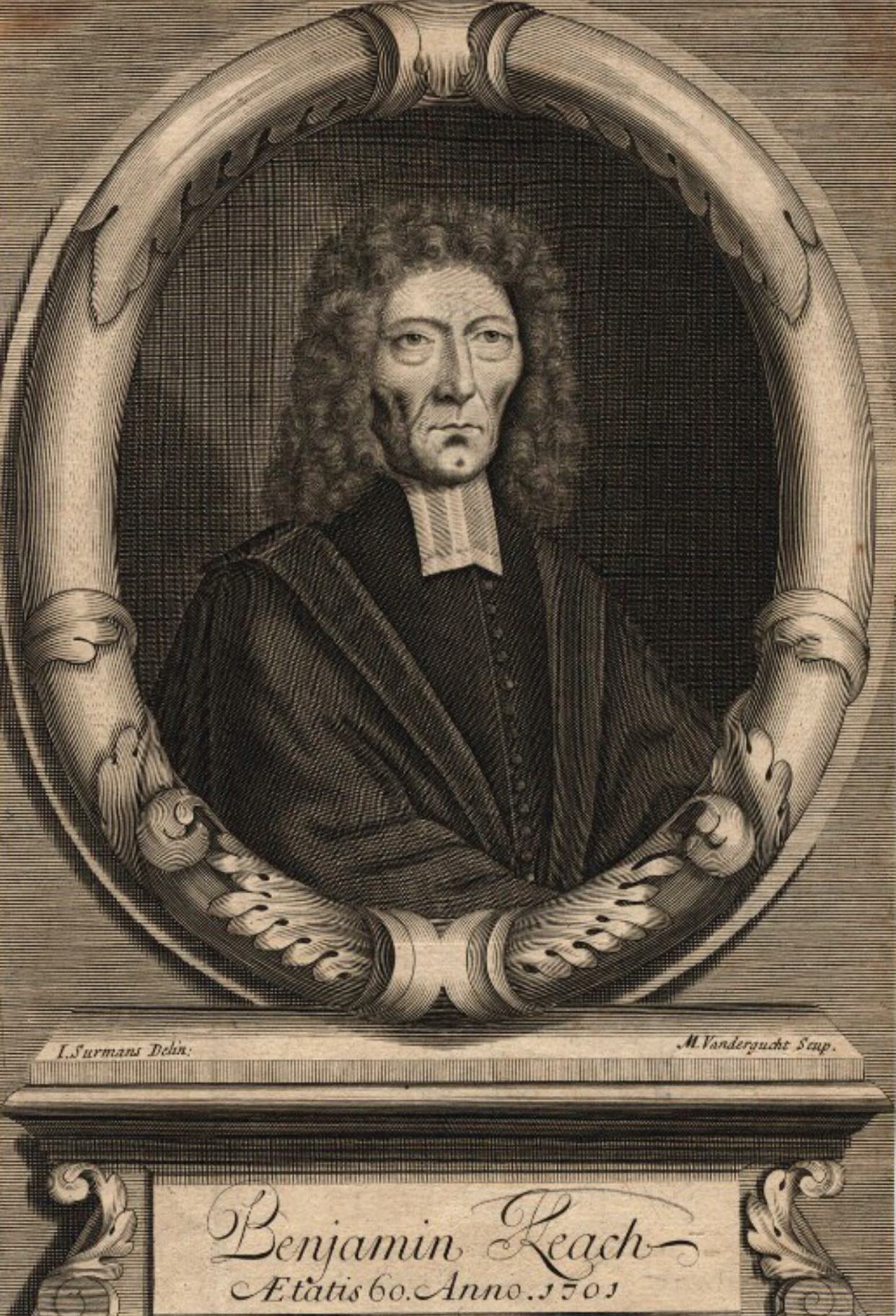
The article "The Breast-Plate of Righteousness" by Benjamin Keach addresses the theological doctrine of righteousness, particularly in the context of spiritual warfare as described in Ephesians 6:14. Keach distinguishes between moral, legal, and evangelical righteousness, asserting that salvation requires an evangelical righteousness that is both imputed and imparted through Christ's work and the Holy Spirit. He cites Matthew 5:20 and Philippians 3:9 to emphasize that self-derived righteousness is inadequate for entering the kingdom of heaven. The significance of the breastplate metaphor illustrates the necessity of holiness for safeguarding believers' souls against spiritual adversaries, highlighting the importance of maintaining both a sound doctrine and a godly life as integral to one's testimony and witness to the world.
Key Quotes
“All our Righteousness viz that which flows not from faith or from a renewed principle of the Spirit is but as filthy rags.”
“Righteousness is so necessary for every believer that he ought not cannot be without it; there is no engaging an enemy of the soul without a principle of holiness be wrought in him.”
“Without holiness no man shall see the Lord.”
“Woe to him that is alone; for the Spirit will not be his strength.”
What does the Bible say about the Breast-plate of Righteousness?
The Bible describes the Breast-plate of Righteousness in Ephesians 6:14 as essential armor for Christians, symbolizing both the imputed and imparted righteousness that comes from faith in Christ.
Furthermore, this righteousness is not merely legal or moral; it is evangelical and transformational. It is essential for engaging in spiritual battles correctly, as it preserves the soul, much like a physical breastplate protects vital organs during combat. Thus, maintaining a heart of holiness is imperative for a believer, not only for their safety but as a testimony to the world of God's redeeming work in their lives.
Ephesians 6:14, Matthew 5:20, Philippians 3:9, Galatians 5:22, Ezekiel 36:26-27, 2 Corinthians 1:12, Romans 8:1
How do we know that righteousness is important for Christians?
Righteousness is vital for Christians as it serves as their spiritual armor, protecting them from sin and enabling them to live in accordance with God's will.
Moreover, maintaining righteousness is key to witnessing the truth of the Gospel. The lives of Christians reflect their beliefs and serve as a testimony to others. When believers exemplify holiness, they demonstrate the transformative power of Christ's work in their lives. This is not only important for their personal relationship with God but also crucial for impacting the world around them, fulfilling the call to be salt and light. Without such righteousness, a believer risks forfeiting communion with God and diminishing their witness to a watching world.
Ephesians 6:14, Matthew 5:14-16, 1 Peter 3:1-2, 2 Corinthians 1:12
Why is imputed righteousness significant in Christianity?
Imputed righteousness is significant because it is the basis by which believers are justified before God, allowing them to stand blameless before Him.
The power of imputed righteousness reassures believers of their standing before God, granting them the confidence to approach Him without fear of condemnation. This doctrine not only emphasizes the grace of God in the act of salvation but also underscores the assurance that those who are in Christ Jesus are no longer condemned (Romans 8:1). Thus, imputed righteousness is essential for understanding both justification and the assurance of salvation, which are central themes of Reformed theology.
Philippians 3:9, Romans 8:1, Ephesians 2:8-9
THE BREAST-PLATE OF RIGHTEOUSNESS
"And having on the Breast-Plate of Righteousness,"' &c., Eph 6:14.
1. There is a moral, legal, and evangelical Righteousness.
Now a moral or legal Righteousness will not save or defend the saint, or spiritual soldier of Jesus Christ, from his enemy: "Except your Righteousness exceed the Righteousness of the Scribes and Pharisees, ye, can in no wise enter into the kingdom of heaven," Mt 5:20. Paul valued not his own righteousness that was of the law. All our Righteousness, viz., that which flows not from faith, or from a renewed principle of the Spirit, is but as filthy rags. Therefore that cannot be the Righteousness here intended.
II. Evangelical Righteousness is two-fold:
1. Imputed.
2. Imparted.
First, The Righteousness imputed is that which was wrought by Christ for the believer in the days of his flesh, by his active and passive obedience to the law of God, which is put upon the soul by faith, called "the Righteousness of God by faith," Php 3:9.
Secondly, the Righteousness imparted is that which is wrought by Christ in the soul; it is a supernatural work, or a new life planted in the heart of every believer, by the powerful operations of the Holy Ghost, whereby he is made holy, and enabled to approve himself to God and men, in all purity of life and conversation.
By the Breast-plate of Righteousness in the text, we understand the Righteousness of sanctification is principally intended; for otherwise this piece of Christian armour would interfere with the shield of faith, which comprehends the Righteousness of justification. See Shield. It is, we say, a principle of new life, which the Spirit works in the heart of a believer; hence the several graces of holiness are called "The fruits of the Spirit," Ga 5:22. Man by the fall had a double loss; first, the love of God; secondly, the image or likeness of God: Christ restores both to his children; the first, by his Righteousness imputed; the second, by his Spirit imparting the lost image of God to them, which consists in Righteousness and true holiness. Who but a man can impart his own nature and beget a child like himself? So who but the Spirit of God can make a creature like God, by causing him to partake of the divine nature?
1. This is that principle of new life, viz., an inward disposition, and divine qualities, sweetly, powerfully, and constantly stirring up and inclining to that which is holy, and spiritually good.
2. The work of the Spirit in this respect was not to recover what was dying, but to work life de novo in a soul quite dead; hence called a creating, quickening, forming, and renewing work.
3. It is a supernatural principle, by which we distinguish it from Adam's righteousness, which was co-natural to him, as sin is to us. Holiness was as natural to him, as health was to his body; they both resulted ex principiis recte constitutis, from principles pure and rightly disposed.
Why Righteousness is called a Breast-plate, will appear by the following parallel.
METAPHOR
I. A Breast-plate is a main and principal piece of armour, that belongs to a soldier.
PARALLEL
I. Righteousness in like manner is a principal thing belonging to all Christians, who are called soldiers of Christ: "Endure hardness as a good soldier," &c., 2Ti 2:3.
METAPHOR
II. A Breast-plate is a piece of armour that every soldier ought to have on when he engages his enemy; he must not come into the field without it.
PARALLEL
II. Righteousness is so necessary for every believer, that he ought not, cannot be without it; there is no engaging an enemy of the soul without a principle of holiness be wrought in him.
METAPHOR
III. A Breast-plate preserves the principal part of the body, viz., the breast, where the very vitals of a man are closely couched together, and where a shot or a stab is more deadly, than in other parts, that are more remote from the fountain of life. A man may outlive many wounds received in the arms or legs, but a stab in the heart is a certain messenger of death.
PARALLEL
III. Righteousness and holiness preserve the principal part of a Christian, viz., his soul. Satan aims to hit him there where he may dispatch him soonest. A wound in a man's credit, estate, relations, &c., hazard not the life of his soul; but sin exposes it to imminent danger. This is that dart, that "struck the young man through the liver, as a bird hasteth to the snare, that knoweth not it is for his life," Pr 7:23. And this is that which Satan strives to tempt, entice, and draw a saint to yield unto. Hence he should be careful to put on his Breast-plate of Righteousness, which whilst he has on, he is safe from the deadly stab of the enemy.
METAPHOR
IV. A Breast-plate is made and prepared for a soldier, before he puts it on. It is not his own work, but the work of a skilful artist.
PARALLEL
IV. Righteousness, which is the saint's Breast-plate, is wrought in him by the Holy Spirit, who is a most wise and skilful workman. Our own Righteousness is good for nothing, hence called dead works, because they are works from one dead in sin, and spring not from a principle of inward spiritual life.
METAPHOR
V. A Breast-place much emboldens a soldier, and makes him fearless, that as he cannot be easily killed, so hereby he cannot be soon cowed. When a soldier sees himself unarmed, he begins to tremble; but when he hath on a good helmet, and a plate of proof on his breast, he is not quickly dismayed, but adventures upon the point of the sword.
PARALLEL
V. Thus Righteousness defends and animates the soul and conscience, when a man in the midst of the greatest danger can lift up his hands without spot. Holiness fills a soul with courage, so that he can look in the very face of grim death; whereas guilt, which is the nakedness of the soul, puts the stoutest sinner into a shaking fit of fear. "The wicked flee, when no man pursueth; but the righteous are as bold as a lion," Pr 28:1. No sooner did Adam see his Breast-plate was off, and that he was naked, but he was afraid, and ran away, to hide himself from God.
METAPHOR
VI. The Breast-plate and girdle were both joined or buckled together.
PARALLEL
VI. So Righteousness and truth must meet, and be joined together in every Christian which is held forth by the copulative And, "Stand therefore, having your lions girt about with truth, and having on the Breast-plate of Righteousness," Eph 6:14. Which is taken twofold, as hath been showed: first, for the truth of doctrine, or a good and orthodox judgment; all the principles of true religion, that are essential to salvation. Secondly, grace, or sincerity of heart. In both these respects, truth must be clasped to, or joined with Righteousness, and a holy life. Solomon saith, "two are better than one:" so may I say here, a good doctrine with a good conversation, is better than a good doctrine without a good conversation, or a good conversation without a good doctrine; as a man must have the one, so he must not be without the other; "woe to him that is alone," for the Spirit will not be his strength. An evil and corrupt doctrine may be of as dangerous a nature as an evil and debauched life. See 2Pe 2:1-2, "Who privily bring in damnable heresies, even denying the Lord that bought them, and bring upon themselves swift destruction," &c. In vain is a man's outward holiness, or moral sincerity, if he be tainted with heretical and damnable principles; and as vain is it for a man to hold the true doctrine of the Christian religion, if he be not sincere, and live a holy life.
INFERENCES.
THIS may inform us, what need there is for every Christian to get and keep on the Breast-plate of Righteousness; not only to get a renewed principle of grace in his heart, but also to maintain the power of godliness in his life and conversation. This he ought strenuously to labour after, and that for several reasons.
First, In regard of God, whose main design in giving grace, and implanting a divine principle in his people, is to make them holy; to this end he hath put this Breast-plate upon them.
1. In regard of the design he hath to bring them into union with himself, and in marrying them to Jesus Christ, which is, that they might bring forth fruit to God.
2. They are regenerated by the Spirit, that they might be holy: "A new heart, and a new Spirit will I put within you, and cause you to walk in my statutes, and keep my Judgments, and do them," Eze 36:26-27. "We are his workmanship, created in Christ Jesus unto good works, which God hath before ordained that we should walk in them," Eph 2:10.
3. It is the design of God in all his ordinances. The word of God is both seed to beget, and food to nourish holiness begotten in the heart. Every part of it contributes to this design abundantly. The preceptive part affords a perfect rule of holiness; the promises present us with admirable encouragements, to entice and allure us thereunto; the threatenings, are to deter and keep back from that which is contrary to it.
4. It is the design of God in all his providences, to make his people more holy. The afflictions he brings upon them, are to refine and purify them: "This is the fruit of all, the taking away of your sin." See Refiner.
5. Saints are called God's witnesses; they should from hence endeavour to shine forth in their testimony for him. What he speaks in his word, touching his justice, holiness, and utter hatred of sin and ungodliness, they ought not only with their lips, but also with their lives, to bear witness unto.
Secondly, In regard of Satan, whose great design is against the holiness of the Saints. How doth, it behove them to walk with all circumspection, since they are continually besieged and assaulted by so strong an enemy? As God's great design is to further and prompt to holiness; so Satan's great design is to hinder and obstruct it: and what should be our chief care to defend, but that which our adversaries' thoughts and plots are most laid to assault and storm?
Thirdly, saints should labour to have this Breast-plate on, viz., be holy, in regard of the world: "Ye are the light of the world. Let your good works so shine before men," &c., Mt 5:14,16.
1. If these lights become darkness, or are darkened, no marvel if men stumble: ""Woe unto the world because of offences; but rather woe to him by whom the offence cometh." "Ye are the salt of the earth;" But if the salt have lost its savour, it is no wonder if the world stink and be unsavoury.
2. Wicked men, saith a worthy minister, know not the principle by which you walk, they cannot possibly discern the excellency of that way and religion which you profess; but they can discern and make some judgment of your conversations; nay, and their eyes are upon you, they watch to see your failings. Spots are soon espied in your coats; for though they love not holiness themselves, yet they expect that those that profess themselves to be saints should be holy. How should this teach you to get on this Breast-plate!
3. This may greatly work upon the ungodly, with whom you live and daily converse; nay, those that will not be won by the word, possibly may, and many times have been, won and converted this way, 1Pe 3:1-2.
4. This will however convince them, that you are the servants of God, and heaven-born souls; it will silence them, and stop their mouths; "That whereas they speak evil of you, they may be ashamed that falsely accuse your good conversation in Christ," 1Pe 3:16.
5. This will leave the world without excuse in the great day.
Fourthly, You should labour after holiness, in regard of the Gospel itself which you profess. That will this way gain much credit in the world. Nothing brings religion into greater contempt, or causeth it to be more slighted by the ungodly, than the loose, carnal, and unholy lives of those who profess it.
Fifthly, You ought to labour after a godly life, in regard of the sincere and holy ministers of the Gospel, and other faithful saints and soldiers of Christ. What can comfort and delight their souls more than the holy, humble, and fruitful lives of believers? The saints, those excellent ones, were all David's delight, Ps 16:3, and Paul accounted them his joy and crown. But if they be proud, peevish, covetous, carnal, and walk like other Gentiles, what wounds and grieves them more! This made David weep, yea, "Rivers of water to run down his eyes;" and Jeremiah to "Wish his head were water, and his eyes a fountain of tears, that he might weep day and night," Jer 9:1. "Many walk, saith Paul. of whom I have told you often, and now tell you weeping, they are enemies to the cross of Christ; whose end is destruction, whose God is then: belly, whose glory is in their shame, who mind earthly things," Php 3:18-19.
Sixthly, Christians, in regard of themselves, ought to labour after Righteousness, and true holiness; for this only will be the best evidence to them of the truth of grace received, and of their interest in Jesus Christ. What will all other attainments and privileges signify if they be not holy?
1. By this means they will be able to hold up their heads in the day of trial: "For our rejoicing is this, the testimony of our conscience, that in simplicity and not by fleshly wisdom, but by the grace of God, we have our conversation in the world," &c., 2Co 1:12.
2. These are the men it will go well with, whatever comes: "Say unto the righteous, it shall go well with them," &c. Isa 3:10.
3. These shall have peace in Christ, though they shall have trouble in the world; peace whilst they live, and peace when they die: "Mark the perfect man, and behold the upright; the end of that man is peace," Ps 37:37.
4. These need not fear the assaults of Satan, they have armour of proof on, a Breast-plate, that will preserve their souls from death: "There is therefore now no condemnation, to them that are in Christ Jesus, who walk not after the flesh, but after the Spirit," Ro 8:1.
Seventhly, Christians should labour to have on this Breast-plate of Righteousness, in regard of the excellency of it. It is that which God himself is clothed with; it is that which makes angels to shine gloriously in heaven. A man is hereby capacitated to have communion with God: "Shall the throne of iniquity have fellowship with thee?"&c. Ps 94:20.
Eighthly, and lastly, in regard of the necessity of it: for "Without holiness no man shall see the Lord."
Quest. How should we put on the Breast-plate of Righteousness?
Answ. 1. In heart; we must be inwardly holy, holiness must begin there. First "make the tree good," &c.
2. In life. Negative holiness doth not only consist in the leaving all gross sins, but in abstaining from all appearance of evil, and to leave and abstain from it from right principles; and not only to leave it, but to loath it.
Again, it consisteth in keeping up all holy and religious duties, viz., reading, hearing, praying, distributing to the poor, conforming to all moral and positive precepts; to be holy at home, in the family, in the church, in the world, to exercise a good conscience towards God, and towards men, Ac 24:16. This is to put on the Breast-plate of Righteousness.
I might give many directions about putting it on, and also show some of Satan's cunning stratagems, in endeavouring to make useless this blessed piece of the Christian's armour, in laying discouragements in the way of true piety; or by persuading persons they have this Breast-plate on, when it is a counterfeit one. He persuades men, that moral Righteousness will serve their turn, and sufficiently preserve them from eternal death. But this shall suffice in this place.

Comments
Your comment has been submitted and is awaiting moderation. Once approved, it will appear on this page.
Be the first to comment!