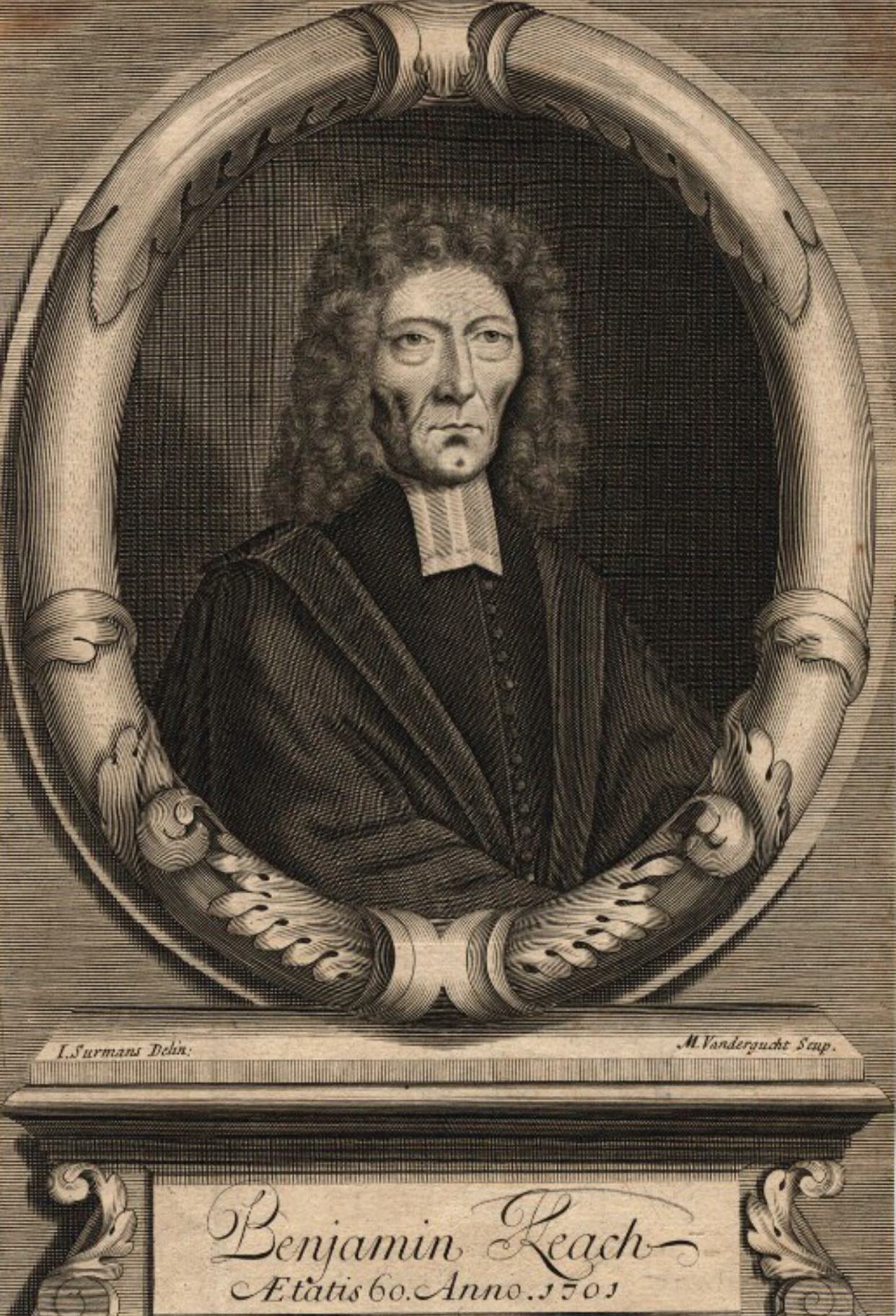
The article "Hope Compared to an Anchor" by Benjamin Keach explores the theological significance of hope as a foundational aspect of the believer's faith. Keach argues that this hope should not be rooted in earthly wealth, health, or longevity, but rather in a "patient and well-grounded expectation" of what God has promised through Jesus Christ. He supports his argument with Scripture, particularly referencing Hebrews 6:19-20, which describes hope as an anchor of the soul that is steadfast and secure. The article emphasizes the practical implications of this hope, as it serves as a source of strength and assurance for believers during trials, affirming that their standing in Christ guarantees eternal salvation and prevents spiritual shipwreck.
Key Quotes
“Hope in God through Christ is a most excellent stay for the soul of a believer in a day of trouble and persecution.”
“If their Hope was not firm or were there any danger of its being lost or broken the saints of God were in a sad condition.”
“Therefore the saint's Hope of heaven is no fancy but like an Anchor that is both sure and steadfast.”
“The love of God is a sure ground of the saint's Hope.”
What does the Bible say about hope as an anchor for the soul?
The Bible describes hope as the anchor of the soul, emphasizing its role as a steadfast assurance rooted in God's promises (Hebrews 6:19).
Hebrews 6:19
Why is hope important for Christians?
Hope is vital for Christians as it provides assurance and sustains the soul in trials and tribulations (Romans 5:3-5).
Romans 5:3-5
How do we know God's promises about hope are true?
God's promises about hope are trustworthy because they are grounded in His immutable nature and faithfulness (Hebrews 6:16-19).
Hebrews 6:16-19
What is the relationship between hope and faith?
Hope and faith work together, as faith lays hold of God's promises while hope looks forward to their fulfillment (Hebrews 6:19).
Hebrews 6:19
HOPE COMPARED TO AN ANCHOR
"Which Hope we have as the Anchor of the Soul, both sure and steadfast," &c., Heb 6:19.
HOPE is not only compared to an Helmet, but also to an Anchor, as the Soul is compared to a ship, which metaphor is opened under its proper head.
Quest. What is this Hope that is called the Anchor of the soul?
Answ. 1. Negatively. It is not a Hope of being rich, great, and mighty in the world. They esteem not things below at such a rate, as to make them their Hope. "If I have made gold my Hope, or have said to the fine gold, thou art my confidence," &c., Job 31:24. Gold is put here, by a synecdoche of the part for the whole, for all earthly things; so that whereas Job saith, "If I have made gold my Hope," his meaning is, if I have made any good things on earth my Hope.
There is great difference, saith Mr. Caryl, between hoping for gold, and making gold our Hope: we may hope for worldly good things, but we must not make any thing of this life our Hope. And further he saith,
To make gold, either gotten, or to be gotten, our Hope, implies these four things:
1. An high estimation of it, as that which can do great things for us, or stand us instead, beyond any other thing, to make us happy.
2. A longing desire after it. There is always so much desire of that we hope for, that the thing hoped for is sometimes expressed by the desire. Hope deferred maketh the heart sick; but when the desire, that is, the thing hoped for, "cometh, it is a tree of life," Pr 13:12.
3. Utmost and unwearied endeavours to obtain it. That which a man makes his Hope, he will make his work, and never ceaseth working till he hath attained it, or is convinced there is no possibility of attaining it.
4. To make gold our hope, implieth much trouble and anxiety of mind, when once we see our endeavours ineffectual and unsuccessful about the attaining of it. "If Hope deferred make the heart sick," as was hinted before, then when Hope dies, or as Zophar speaks, Job 11:20, is as the giving up of the ghost," the heart must needs die too.
2. It is not hope of length of days: "If I wait, the grave is my house," &c.
But then, 2. Positively, it is a patient and well grounded expectation of the accomplishment of what God hath promised. Faith sees the promise, and beholds it though afar off: "Abraham saw my day," saith Christ: but then in comes Hope, and keeps the soul alive, in a well-grounded expectation of the fulfilling and accomplishment of it. See the description of it where faith is compared to an Helmet.
Why hope is compared to an Anchor, may appear by what followeth.
METAPHOR
I. An Anchor is a good stay and security to a ship in a storm. What would the mariner do, had he not an Anchor to cast out of the ship, when he is in danger of rocks and sands?
PARALLEL
I. So hope in God, through Christ, is a most excellent stay for the soul of a believer, in a day of trouble and persecution. "They suffered joyfully the spoiling of their goods, knowing in themselves, they had in heaven a better and enduring substance," Heb 10:34. "We are saved by Hope," &c. It stays the soul, as an Anchor does the ship.
METAPHOR
II. An Anchor takes hold of some thing which is out of sight.
PARALLEL
II. So Hope, the Anchor of the soul, takes hold of something which is not seen with carnal eyes, which is within the veil, &c.
METAPHOR
III. An Anchor, when it takes hold of a rock, or firm ground, fastens and stays a ship more steadily, preserving it from suffering shipwreck.
PARALLEL
III. So Hope, the Anchor of the soul, taking hold of Christ, who is called a Rock, stays the soul in a perilous time most firm and steadily, so that it is safe from spiritual shipwreck.
METAPHOR
IV. An Anchor would be of no use without the cable to which it is fastened.
PARALLEL
IV. So Hope without faith is of no use, nor can avail the soul any thing in time of need; those two graces always co-operate, and work together for the help and succour of a believer.
METAPHOR
V. An Anchor, that it may be of advantage to a ship, requires skill rightly to cast it.
PARALLEL
V. Hope, the Anchor of the soul, must be rightly cast, or else it will not profit a saint any thing in the day of trouble. It must be "Cast within the veil, whither the Forerunner is for us entered, even Jesus," &c., Heb 6:19-20.
METAPHOR
I. An Anchor is cast down into the sea, river, &c.
PARALLEL
I. Hope, the Anchor of the soul, is cast upward; the saint's Hope is in heaven.
METAPHOR
II. An Anchor may let go its hold, or be broken, and so become useless to a ship, by which means the ship may be lost.
DISPARITY
II. Hope, the Anchor of the soul, is both sure and steadfast; hence it is said, "Hope maketh not ashamed." If their Hope was not firm, or were there any danger of its being lost or broken, the saints of God were in a sad condition, and
they might turn away with their faces ashamed. If their Hope should fail them, they would have no refuge left. If Hope hold, all holds: but if Hope be gone, all is gone. Neither is it to be thought, that the Hope of holy Job, Heman, and others, who in trouble spake of their "Hope being gone, and perished from the Lord," was indeed utterly lost and perished, but that it was only so in their own apprehension, they being in great depths of despondency, and under sad desertion of spirit. Like as the Church was, when she said, "My God hath forsaken me, my God hath forgotten me;" which God himself graciously answers, it was not so, nor could be so. A saint's standing in Christ is firm; the covenant is ordered in all things, and sure. But to confirm this glorious truth, and make it yet more clear, and that I may leave no room for an objection, that Hope is both sure and steadfast, &c., consider the many strong bars that are cemented together, as so many bars of iron, hammered by the Spirit, to the making of this blessed Anchor of the soul both sure and steadfast.
First, The love of God is a sure ground of the saint's Hope. "I have loved thee with an everlasting love," &c., Jer 31:3. "If his children forsake my law, and walk not in my judgments; if they break my statutes, and keep not my commandments: then will I visit their transgressions with the rod, and their iniquity with stripes. Nevertheless my lovingkindness will I not utterly take from him, nor suffer my faithfulness to fail: my covenant will I not break, nor alter the thing which is gone out of my lips," Ps 89:30-34. "The Lord thy God in the midst of thee is mighty; he will save, he will rejoice over thee with joy, he will rest in his love, he will joy over thee with singing," Zep 3:17. "I am persuaded, that neither death, nor life, nor angels, nor principalities, nor powers, nor things present, nor things to come, nor height, nor depth, nor any other creature, shall be able to separate us from the love of God, which is in Christ Jesus our Lord," Ro 8:38-39. If the love of God be from everlasting to everlasting to them that fear him; if he rest in his love; if he will not remove his lovingkindness from them, notwithstanding their sins and infirmities; if nothing can separate them from the love of God, which is in Christ Jesus our Lord; then the Hope that believers have in God is both sure and steadfast.
Secondly, God hath chosen, elected, and predestinated believers in Christ unto eternal life. "For whom he did foreknow, he also did predestinate, to be conformed to the image of his Son. Moreover, whom he did predestinate, them he also called; and whom he called, them he also justified; and whom he justified, them he also glorified," Ro 8:29-30. The same persons that are predestinated, are called; and the very same that are called, are justified; and the very same who are justified, are, or shall be glorified: therefore the Hope that believers have, is both sure and steadfast.
Thirdly, Christ's death is a sure ground of Hope. "Who is he that condemneth? It is Christ that died." "I lay down my life for my sheep."Christ in an especial manner laid down his life for those which the Father gave to him, with an absolute purpose and intention eternally to save them: and he shall not lose his purchase, nor miss of the merit of his most precious blood; therefore the saint's Hope is both sure and steadfast.
Fourthly, Christ's resurrection is a sure ground of Hope. Christ rose again from the dead, to justify all those who truly believe in him. "Who shall condemn? It is Christ that died, yea, rather that is risen again."---"Who was delivered for our offences, and was raised again for our justification," Ro 8:34; 4:25. Thus Christ, by his resurrection, doth actually justify all that believe in him; therefore the saint's Hope is both sure and steadfast.
Fifthly, The intercession of Christ is a sure ground of Hope. "Who is he that condemneth? It is Christ that died, yea, rather that is risen again, who is even at the right hand of God, who also maketh intercession for us," Heb 7:25, "Seeing he ever liveth to make intercession for us." "Father, I will that those also whom thou hast given me, be with me where I am," &c., Joh 17:24. "I have prayed for thee, that thy faith fail not," Lu 22:32; 1Jo 2:1-2, "If any man sin, we have an Advocate with the Father, Jesus Christ the righteous." Christ prays the Father, that all his children may be kept from falling, that their faith fail not, that they may have their sins pardoned, and may be where he is, &c. And he is always heard and answered by the Father: "I know thou hearest me always." Therefore the saint's Hope is both sure and steadfast.
Sixthly, The covenant of grace is a sure ground of Hope. "Although my house be not so with God, yet he hath made with me an everlasting covenant, ordered in all things, and sure; for this is all my salvation, and desire, though he make it not to grow," 2Sa 23:5. "For the mountains shall depart, and the hills be removed; but my kindness shall not depart from thee, neither shall the covenant of my peace be removed, saith the Lord that hath mercy upon thee," Isa 54:10. The covenant stands in Christ, it was made in him, he undertook to perform the conditions of it by his Spirit, in behalf of all true believers, as their Surety. We stand not in Christ in the new covenant, as we stood in Adam, in the old. Adam was a person, that might, or might not stand, it was in his own power to stand or fall; but the covenant of grace is more firm and sure in many respects, especially in regard of the excellency, power, ability, and immutability of Jesus Christ, who as the second Adam, and public person, hath undertaken for all his seed. If our standing was in the new covenant, as Adam's was in the old, doubtless we should not continue in our steadfastness one moment; for if he was overcome by Satan, that had no evil or depraved nature in him, for Satan to fasten a temptation upon, how should we escape him, that have such a body of sin and death in us, even the seed or root of all corruption, our hearts being like tinder, ready to take with every spark of the devil's kindling. "I will make an everlasting covenant with them, that I will not turn away from them, to do them good: but I will put my fear into their hearts, that they shall not depart from me," Jer 32:40. As God will not turn away from us, so he will not suffer us to depart from him. This is not like the covenant he first made. Therefore the saint's Hope of salvation is both sure and steadfast, an Anchor that will hold, and cannot be broken.
Seventhly, The fulness of grace which is treasured up in Christ for believers, is a sure ground of Hope. "It pleased the Father, that in him should all fulness dwell," Col 1:19. "And of his fulness have we all received, and grace for grace," Joh 1:16. Hence it is that all the wants of believers are supplied: "But my God shall supply all your needs, according to his riches in glory by Christ Jesus," Php 4:19. Insomuch that whenever any, though the meanest and weakest saint, is in need of support or help, in time of great and imminent danger, he may not only have supply in one respect, but a full and complete supply in all respects, answerable to the various exercises that believers meet with in their Christian course, to the end they may not miscarry, or suffer shipwreck; for that in Christ they have a fulness of wisdom to instruct and counsel them, a fulness of love and care to guide them, a fulness of power and strength to hold them up, that they may be safe, and to stay them from sinking, as he did Peter, who, when under the fear of miscarrying, cries out to Christ for help; a fulness of pity and compassion, to commiserate them in all their distresses; and a fulness of grace and mercy, to pardon and fully blot out all their sins and failings, and be with them in all their sorrows and sufferings. Therefore the saint's Hope of salvation is both sure and steadfast.
Eighthly, The mercy of God is a sure ground of Hope. If the mercy of God can fail, the saint's Anchor may fail; but the mercy of God endureth for ever. "Behold, the eye of the Lord is upon them that fear him, upon them that Hope in his mercy," Ps 33:18. "I trust in the mercy of God for ever and ever," Ps 52:8. "Where is the sounding of thy bowels, and thy mercies towards me? Are they restrained?" Isa 63:15. The saints of God, as appears from hence, trust in the mercy of God, and that endureth for ever and ever. His bowels to his people can never fail. "Can a woman forget her sucking child, that she should not have compassion on the son of her womb? Yea, she may, but I will not forget thee." Therefore the saint's Hope is both sure and steadfast.
Ninthly, The promise and oath of God are a sure ground of hope. "For men verily swear by the greater, and an oath for confirmation is to them an end of all strife. Wherein God willing more abundantly to show unto the heirs of promise, the immutability of his counsel, confirmed it by an oath: that by two immutable things, in which it was impossible for God to lie, we might have strong consolation, who have fled for refuge, to lay hold upon the Hope set before us: which Hope we have as an Anchor of the soul, both sure and steadfast," Heb 6:16-19. "In Hope of eternal life, which God that cannot lie promised, before the world began," Tit 1:2. "As God hath said, I will dwell in them, and walk in them, and I will be their God, and they shall be my people," 2Co 6:16. If the promise and oath of God be not enough to assure believers of their safe and firm standing in Christ, and of their assurance of heaven, nothing is. Therefore the saint's Hope is both sure and steadfast.
Tenthly, That relation which believers stand in unto God, is a sure ground of Hope. He is the Father, and they are his dear children; he is their Husband, they his spouse: will a dear father suffer his dear children to perish, and be torn in pieces, if he hath power to help? Or the dear husband his dear wife? The love of God to his saints exceeds the love and pity of either father, or husband; therefore Hope, the Anchor of the soul, is both sure and steadfast.
Eleventhly, The power of God is a sure ground of Hope. "My sheep hear my voice, and follow me, and I give them eternal life, and they shall never perish, neither shall any pluck them out of my hand. My Father that gave them me is greater than all, and none is able to pluck them out of my Father's hand." Joh 10:27-29. "Who are kept by the power of God, through faith, unto salvation." If the power of God be sufficient to keep believers from falling, and preserve them to his heavenly kingdom, then their Hope is both sure and steadfast.
Obj. But it is through faith they stand, and their faith may fail?
Ans. Christ, as I showed before, hath prayed, that their faith fail not; and besides he is the Author, Increaser, and Finisher of it. "He that hath begun a good work in you, will perform it unto the day of Christ," Php 1:6.
Twelfthly, Regeneration is a sure ground of Hope. "That which is born of the flesh, is flesh; that which is born of the Spirit is Spirit," Joh 3:6. "Being born again, not of corruptible seed, but of incorruptible," &c., 1Pe 1:23. Such as is the seed, such is the product of it: the seed being immortal, by which the saints are regenerated; sure this may be sure ground of Hope, that they shall not perish. There is in them an holy and divine principle, so that they cannot sin unto death, or lose eternal life.
Let us now put all these together, and then doubtless we shall conclude, that the saint's Hope of heaven is no fancy, but like an Anchor that is both sure and steadfast.
INFERENCES.
FIRST, examine yourselves, what Hope you have; there is a false Hope, as well as a true. What is the ground of thy Hope?
1. Some ground their Hope of heaven upon outward prosperity. This is the worldling's Hope. They conclude God loves them, and will give heaven to them, because he hath given them so much of the earth, not remembering, that God gives some men their portion in this life: "Remember, son, thou in thy lifetime receivedst thy good things," &c., Lu 16:25.
2. Some ground their Hopes of heaven upon civility, and external righteousness; they live sober and honest lives, and are not guilty of any gross sins. This is the moral man's Hope, the Pharisee's, the young man's in the Gospel; the foolish virgins had this Hope, and yet lost heaven.
3. Some ground their Hopes of heaven upon the merits of their own works. This is the Papist's Hope; for though they place some Hope in Christ, yet they put confidence in their own works. Now this is to cast Anchor on the sands. First; that which merits must be our own; but none of our good works are our own. They are our own subjective, because wrought in us, and they are ours in regard of the benefit of them; but in respect of the original they are none of ours, they are the fruits of the Spirit; it is God hath wrought all our works in us. Secondly; they must be complete and perfect, or not meritorious: but the best works performed by us are both impure and imperfect, more dross than gold. Thirdly; that which merits must not be due upon any other account; paying debts is not meritorious: now there is nothing that we do, or can do, but it is due, it is a debt we owe to God; we owe him all we have, are, or can perform: therefore saith Christ, "When you have done all, say, you are unprofitable servants."
Secondly, It shows, that the Hope of believers is a glorious Hope, the apostle saith, a blessed Hope, that is the stay or Anchor of the soul, &c., Tit 2:13.
Thirdly, All those that have not this precious grace, are at present in a Hopeless condition.
Quest. How may a man know whether he hath a true and well-grounded Hope?
Answ. 1. If thou hast a lively Hope, thou art born again; the new birth entitles to a new Hope. What Hope can a man have of heaven, if he be not converted? "Unless a man be born again, he cannot see the kingdom of God," 1Pe 1:3; Joh 3:3.
2. A true and well grounded Hope is attended with a train of other graces. "Tribulation worketh patience, and patience experience, and experience Hope, and Hope maketh not ashamed, why? because the love of God is shed abroad in our hearts by the Holy Ghost," Ro 5:3-5. Those that have the grace of Hope have the graces of faith and love, and all other fruits of the Spirit, more or less, in them.
3. Hope purifies the heart. "He that hath this Hope in him, purifieth himself, even as he is pure," 1Jo 3:3. If thou hast an unsanctified heart never boast of thy Hope; it makes not only the heart holy, but the life also.
4. Hope of salvation is grounded upon the promises of God. The promises give interest, and upon interest ariseth Hope; therefore he that hath not taken hold of God's promise by faith, is destitute of Hope, the Anchor of the soul. "Remember thy word unto thy servant, upon which thou hast caused me to Hope," Ps 119:49.
5. Hope, keeps the soul in a steady and sure expectation of the good promises, under affliction and sufferings; a saint is hereby stayed and quieted, whilst he is exposed to the loss of all other things for Christ's sake. "They took patiently the spoiling of their goods, knowing in themselves, they had in heaven a better and more enduring substance," Heb 10:34.
6. True Hope makes a Christian very lively, and valiant for Christ, and his truth; it fills the soul full of spiritual activity; it is called "a lively Hope;" it makes him bold, and not ashamed of the cross, &c.

Comments
Your comment has been submitted and is awaiting moderation. Once approved, it will appear on this page.
Be the first to comment!