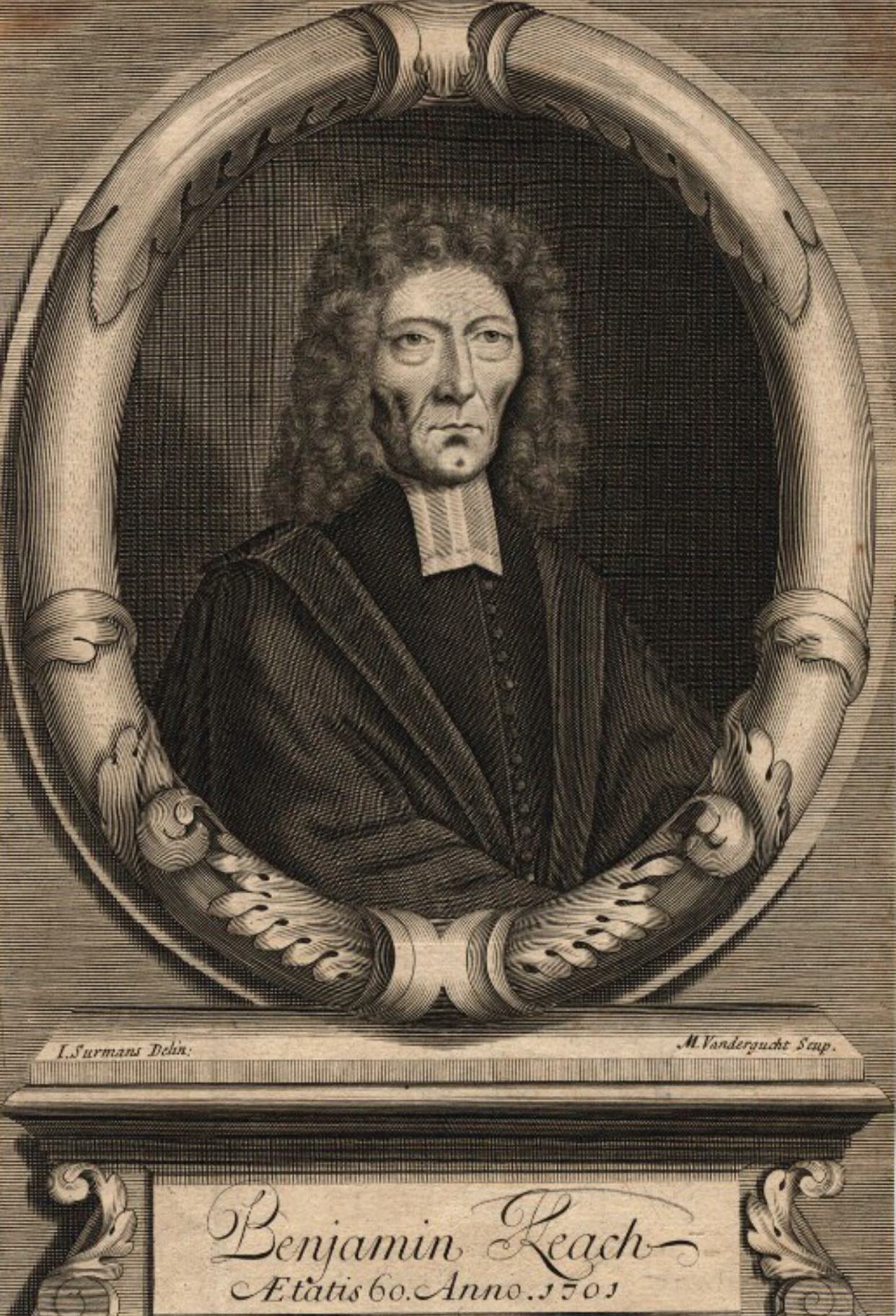
In Benjamin Keach's work "The Soul of Man Compared to a Ship," he explores the profound theological doctrine of the nature and value of the human soul, particularly in the context of the believer's journey through life. Keach uses the metaphor of a ship to illustrate various aspects of the soul’s makeup and its relationship to God, emphasizing that the soul is a unique creation, intricately crafted by God, and invaluable because of the great price paid for its redemption (1 Peter 1:18-19). He argues that the soul, like a ship, requires careful stewardship, has a destined voyage towards eternal life, and is subject to the dangers of temptation and sin (Ecclesiastes 12:1). Central to his argument is the assertion that hope, likened to an anchor (Hebrews 6:19), provides stability amidst life's turbulent seas. This metaphorical framework holds significant doctrinal implications, highlighting the importance of understanding one's spiritual state and the necessity of reliance on Christ as the guiding pilot through life's challenges.
Key Quotes
“The Soul of a believer is a very rare and curious piece of God's workmanship.”
“Whatever she seems to be above deck... if her bottom be nought and defective she will never make the voyage.”
“The Soul hath its anchor hope... both sure and steadfast.”
“The price paid for it was no less than the precious blood of Christ.”
What does the Bible say about the soul of man?
The Bible teaches that the soul of man is a unique creation of God, valuable and eternal, and capable of communion with Him.
Ecclesiastes 12:1, Romans 1:20, Matthew 16:26
How do we know salvation by grace is true?
Salvation by grace is affirmed in scripture, particularly through the atonement of Christ and the work of the Holy Spirit in the believer's life.
Ephesians 2:8-9, Romans 5:1-2
Why is hope important for Christians?
Hope is vital for Christians as it anchors their souls amid trials, pointing them to the eternal promises of God.
Hebrews 6:19, Romans 8:18
THE SOUL OF MAN COMPARED TO A SHIP
"Which hope we have as the Anchor of the Soul," &c., Heb 6:19.
HERE observe two doctrines; one implied, the other expressed:
Doct. 1. The Soul of a believer, in the judgment of some divines, is and may fitly be compared to a Ship.
Doct. 2. Hope, that noble and precious grace of the Spirit, is and may fitly be compared an Anchor.
METAPHOR
I. A Ship is a rare and curious piece of workmanship; it shows forth the excellent wit and invention of man.
PARALLEL
I. The Soul of a believer is a very rare and curious piece of God's workmanship. The body and face of a man doth magnify the wisdom and glory of the Creator; but what is the body without the Soul? it is but the cabinet without the jewel.
METAPHOR
II. A Ship is a very costly thing; a little will not build, rig, and fit out a Ship to Sea, especially if it be designed for a long and profitable voyage, as to the East Indies, or the like.
PARALLEL
II. The Soul of a believer is a very costly and chargeable thing: God hath parted with much treasure in building, or rather rebuilding and fitting of it out, to sail through the ocean of this world, to the haven of eternal happiness; and parted with his Son, with his Spirit, his grace, his Gospel, &c., 1Pe 1:18-19.
METAPHOR
III. Some Ships are built for noble and eminent service, and are very profitable to the owners.
PARALLEL
III. The charge that God hath been at in building and rebuilding the Soul of a believer, is for renowned and eminent service, viz., the glory of God, and everlasting happiness.
METAPHOR
IV. He that builds and owns a Ship, doth usually commit the care and charge of her to another, who is to sail in her.
PARALLEL
IV. So doth God Almighty commit the charge and care of our Souls to us. We are employed but as stewards, or deputy-owners, and must be accountable to God, if our Souls are lost. De 4:9; Pr 4:23.
METAPHOR
V. A gallant Ship that is bound for India, or for some noble and eminent service, is richly freighted, hath divers rare commodities m her, &c.
PARALLEL
V. So the Soul of a believer, that it may make a blessed and glorious voyage, is most richly stored and freighted with the precious gifts and graces of God's Holy Spirit, &c.
METAPHOR
VI. A Ship ought to have a good bottom, or the danger is very great. Whatever she seems to be above deck, though never so stately and lovely to look upon; yet if her bottom be nought and defective, she will never make the voyage.
PARALLEL
VI. So ought the Soul of a Christian to have a good foundation. If not built upon Christ, if not sincere and firm at heart, what profession he may make, though never so glorious, will prove fruitless and vain; the soul is in danger, and will for ever unavoidably be lost.
METAPHOR
VII. A Ship cannot sail without wind or tide.
PARALLEL
VII. The Soul of a believer cannot sail heavenwards in any service, duty, or suffering, without the sweet movings and gales of God's Spirit.
METAPHOR
VIII. A Ship ought to have a wise and skilful pilot.
PARALLEL
VIII. So ought the Soul of a believer; for if it hath not Christ to guide and steer its course for it, it is impossible to escape the danger of the sea of trouble and temptation.
METAPHOR
IX. A Ship needeth often to be repaired, being very subject to spring a leak.
DISPARITY
IX. So doth the Soul of a Christian need often to be repaired by prayer and repentance, or else it will fall under sad and fearful decays. The Soul is likewise compared to a leaking vessel, Heb 2:l.
METAPHOR
X. A Ship is tossed upon the rough and tempestuous waves, and has its ups and downs; and seldom hath rest or quiet, till she has made the voyage.
DISPARITY
X. Thus it is with the Soul; it is often tossed upon boisterous and tempestuous seas of temptations, sometimes transported up into heaven, and then by and by down again to the depths, and all the billows of God's wrath seem to run over it, Ps 107:23,28.
METAPHOR
XI. A Ship is in danger of being lost, and that many ways, viz., by rocks, by sands, by the raging waves, and by springing of a leak, &c.
DISPARITY
XI. The Soul also is in great danger. Never was Ship in more eminent hazard than the Soul of a Christian, and that many ways, viz., by the rocks and mountains of great opposition, the sands of despair, and raging waves of persecution, besides, the leaks occasioned by indwelling sin, Ec 4:7.
METAPHOR
XII. A Ship hath a compass by which she is steered from place to place, without which no man can or dare go to sea.
PARALLEL
XII. So likewise the Soul must have a compass, unto which we are with care and diligence to look, and to be well-skilled in all the points thereof, viz., the Word and Spirit of God, 2Pe 2:19.
METAPHOR
XIII. A Ship is exposed to great danger of being robbed, by pirates, of all her treasure.
DISPARITY
XIII. So is the Soul of a believer by that cursed pirate Satan, who sometimes transforms himself into an angel of light, and to trepan the Soul puts out false colours: 2Co 11:15: pretends himself a friend, when his whole design is blood and slaughter, and treacherously to ruin and spoil the Soul. The flesh is another secret sea-thief, and the world: yea, and sin is as arch a pirate as any.
METAPHOR
XIV. A Ship often meets with sudden storms; and a good mariner doth not only look for them, but also provides and prepares for them.
DISPARITY
XIV So must the Soul expect to meet with a dreadful tempest or hurricane. The winds will rise, and a storm will come upon the Ship where Christ is. David was aware of these dangers, and saw how to prevent and escape sinking, Ps 55:8.
METAPHOR
XV. It is a rare thing to see a Ship sail along before a fresh and prosperous gale.
DISPARITY
XV. It is a rare and lovely thing to see a Soul carried swiftly along in the work and service of God, being under the powerful influences of a fresh and prosperous gale, or wind of the Spirit.
METAPHOR
XVI. A Ship is sometimes becalmed.
DISPARITY
XVI. So, alas! it is too often with the Soul of a poor Christian.
METAPHOR
XVII. It is a wonder to see a Ship to live in a tempestuous and boisterous sea.
DISPARITY
XVII. It is a wonder of mercy to see how the Soul of a saint should live, be preserved, and abide with its head above water, in such a disquiet and tempestuous world as this is.
METAPHOR
XVIII. Some Ships suffer shipwreck, are lost, and sink down to the bottom.
DISPARITY
XVIII. So doth the Soul of many a professor, that sets out with much seeming hopes of heaven, suffer spiritual shipwreck, and sink down to hell, 1Ti 1:19.
METAPHOR
XIX. A Ship must be well looked to, and kept very clean within and without, or she will not sail with any speed.
DISPARITY
XIX. So must the Soul be washed, and kept exceeding clean, within as well as without, or it will go but slowly or heavily towards the haven of future happiness; the mire and the clay, or scum and filth of this world, is so apt to obstruct its way, as it passes heaven-ward.
METAPHOR
XX. A Ship hath its anchor, and if in the midst of a storm it be rightly cast, and takes good hold, the Ship is safe.
DISPARITY
XX. The Soul hath its anchor, hope. "Which hope we have as the anchor of the Soul, both sure and steadfast," Heb 6:19. This Anchor been rightly cast upwards, within the vail, in the midst of the greatest danger, the soul is safe.
METAPHOR
I. A Ship is a lifeless thing built of timber, &c., by Man.
DISPARITY
I. The Soul of Man is a spirit created by the Almighty: "He hath formed the spirit of Man within him," Ec 12:1.
METAPHOR
II. A Ship is a thing visible to corporeal eyes.
DISPARITY
II. The Soul of Man is an invisible substance, i.e. it cannot be seen with fleshly eyes.
METAPHOR
III. A Ship may utterly be destroyed, nay, and cannot continue long.
DISPARITY
III. The Soul of Man cannot lose its being; that will live when the body is dead, either in joy or misery; it can never be destroyed, so as to die, and lose its being, or suffer annihilation, Mt 10:28.
METAPHOR
IV. A Man that has a Ship, may lose it, yet may not be undone; he may have his loss repaired, and may get another Ship better than the former.
DISPARITY
IV. That Man that loses his Soul is undone for ever. No Man hath more than one Soul, and he can have no more: that being cast away, he is eternally ruined; there is no reparation for him, no making up his loss.
METAPHOR
V. A Ship, though it have ever so good a pilot, may miscarry, and be cast away; such winds and storms may arise, or by means of unknown rocks, sands, and shoals it may hit upon.
DISPARITY
V. The Soul of a believer that hath Christ for its pilot cannot miscarry; the sea and the winds obey him; "he makes the storm a calm, so that the proud waves are still;" he will carry it through all the dangers it meets with, and bring it to its desired haven, Ps 107:28-30.
INFERENCES.
I. Is the Soul compared to a Ship, that passeth through the troublesome ocean, or tempestuous seas? then this shows us, that the life of a Christian is attended with many difficulties, and imminent dangers, and that we must expect to meet with sudden storms in our passage to our eternal port. Every believer must resolve to sail through the strait's mouth, and expect to meet with those cursed Algerines, those mortal enemies of Christians, I mean the spirits of darkness, if ever he would arrive at the holy land.
II. Let it be the care and endeavour of every Man and woman, to set out in this voyage for eternity, whilst the wind of the Spirit blows. "My Spirit," saith God, "shall not always strive with Man."
III. Caution. And let each Man from hence take heed of his Soul, this spiritual Ship, lest it be lost. He is but entrusted with it, and must give an account to the great Owner. Besides the Soul is of very great worth, far beyond all the Ships that sail on the ocean; nay, what value may be compared to the Soul of Man, the excellency of which we shall briefly hint here, to caution all to take heed.
1. It is capable of divine meditation and contemplation, by which means we come to know there is a God. "For the invisible things of him, from the creation of the world, are clearly seen, being understood by the things that are made, even his eternal power and Godhead," &c., Ro 1:20. "I am fearfully and wonderfully made, marvellous are thy works; and that my soul knoweth right well," Ps 139:14. By prying into the nature and glory of the work, the Soul findeth out the being, nature, and glory of the Workman.
2. It is capable of divine inspiration. "But there is a spirit in Man, and the inspiration of the Almighty giveth him understanding," Job 32:8. Also of comfort and delight, and that when multitudes of thoughts are or would be disturbing the mind.
3. It is capable of divine impression, to receive the image of God, as it is rebuilt in Christ Jesus, Ps 94:19.
4. It is capable of divine union and communion with God.
5. Nothing save God himself can satisfy it. The Heathen by this found out the excellency of the Soul.
6. The Soul must needs be excellent, if we consider the excellency of the body, which is but the house or tabernacle of the Soul. If the cabinet be of so great a value, and so curiously wrought; then of what transcendent value must the Jewel be!
7. The price paid for it was no less than the precious blood of Christ, the redemption of the soul is therefore precious; its value and excellency from hence is beyond comparison, Ps 99:8-9.
8. The robes it weareth are a demonstration of its great worth and excellency. O what cost and charge is God at, (to speak with a holy reverence,) in clothing and adorning of it he puts on robes of righteousness, and garments of salvation, and adorns it with ornaments of grace, and divine virtue.
9. From the charge given us to look to it, and keep it: "Only take heed to, and keep thy Soul diligently," De 4:9.
10. From Satan's hunting after it, to destroy it.
11. That it is exceeding excellent, appears, in that the martyrs parted with all, rather than they would wrong, defile, and lose it for ever.
12. It is more worth than all the world; "What shall it profit a Man to gain the whole world, and lose his own Soul?" Mt 16:26.
13. It is immortal; it cannot die, or be annihilated. "Fear not them that kill the body, but cannot kill the Soul," Mt 10:28.

Comments
Your comment has been submitted and is awaiting moderation. Once approved, it will appear on this page.
Be the first to comment!