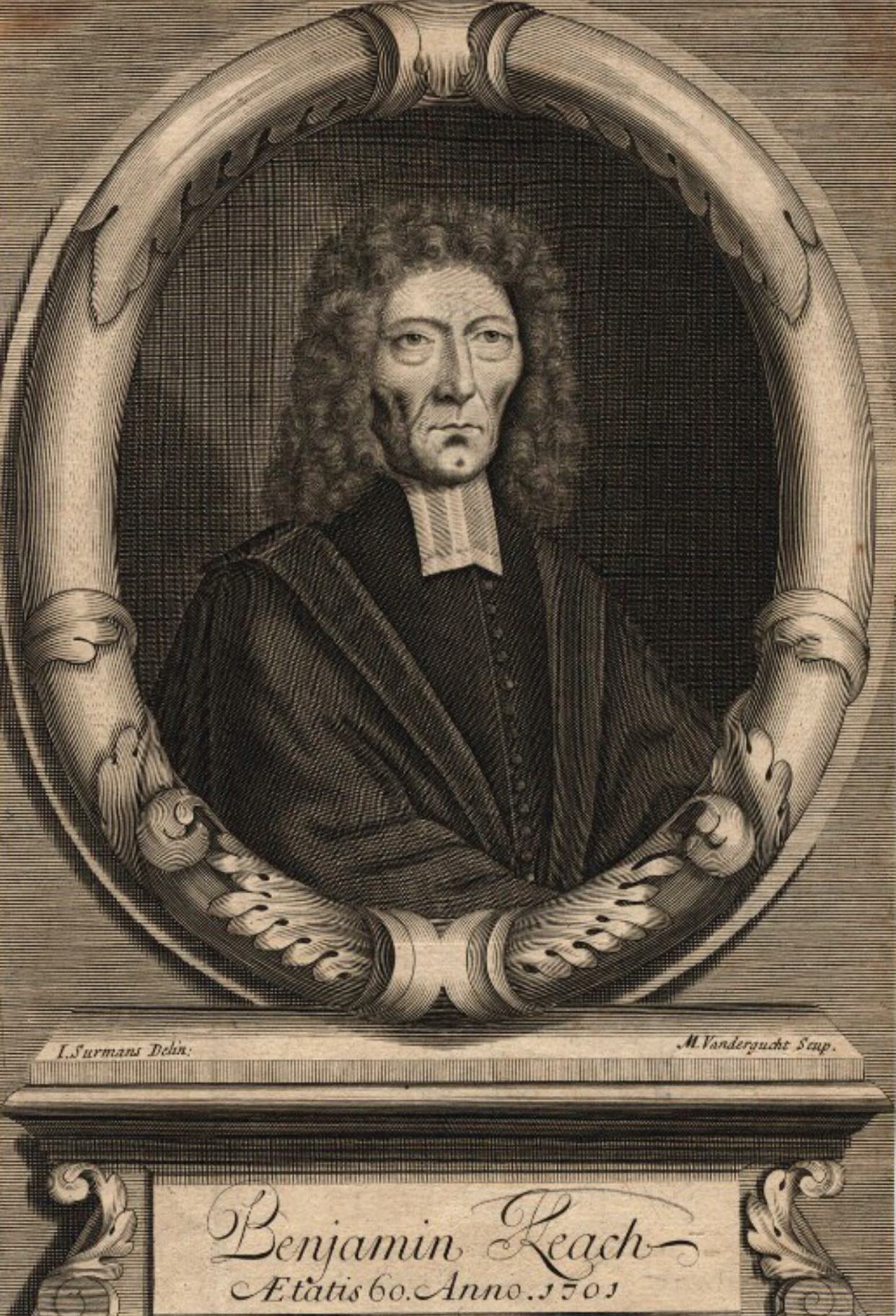
The article "The Church Compared to a Lily" by Benjamin Keach examines the nature and identity of the Church, comparing it to a lily amidst thorns as referenced in Song of Solomon 2:2. Keach articulates several key points: the Church's beauty and purity before Christ, its fruitful growth despite opposition, and the protective care of God over His people. He supports these points with various Scripture references such as Ephesians 5:25-27, where Christ's sacrificial love for the Church is emphasized, and Hosea 14:5-6, which illustrates the Church's growth and vitality. The significance of this metaphor serves to encourage believers to appreciate God's grace and to aspire towards holiness amid a corrupt world, reminding them of their unique status as the beloved of Christ.
Key Quotes
“As the Lily among the thorns so is my love among the daughters.”
“Thou art all fair my love; there is no spot in thee.”
“The dew of heaven, the heat of the sun and fatness of the soil make it fruitful.”
“God taketh great care of his people... he himself is as a wall of fire on every side.”
What does the Bible say about the Church as a Lily?
The Bible compares the Church to a Lily among thorns to illustrate its beauty and purity amidst a wicked world.
Song 2:2, Ephesians 5:25-27
How do we know the doctrine of the Church's purity is true?
The doctrine of the Church's purity is affirmed through Scripture, which states the Church is cleansed and presented holy by Christ.
Ephesians 5:25-27
Why is it important for Christians to understand the Church's role as a Lily?
Understanding the Church's role as a Lily emphasizes its beauty, purity, and the believer's identity as part of this spiritual flower.
Song 2:2, 1 Peter 2:9
THE CHURCH COMPARED TO A LILY
"As the Lily among the thorns, so is my love among the daughters," Song 2:2.
CHRIST calleth his Church his love, and compareth her to a Lily among thorns. By daughters are meant, as some conceive, other Churches, who pretend they are the spouse of Christ. Daughters, saith the learned Wendelin, are either nations, strangers to the Church of Christ, which nevertheless are joined to us by the common ligaments of humanity, and descend from the same Creator, and therefore called daughters; or else such as profess their names among the citizens of Zion, the Church of Christ. But as the Church is compared to a Lily; so, with the greatest elegancy, the daughters are compared to thorns.
SIMILE
I. A Lily is a very sweet flower, so fragrant, that naturalists tell us, a man's senses will be easily turned with the strength thereof.
PARALLEL
I. So there is nothing sweeter to Christ, than the Church, the spouse: "Thou art all fair, my love, there is no spot in thee. The smell of thy ointment is better than all spices, spikenard, and saffron, calamus, and cinnamon, with all trees of frankincence, myrrh and aloes, with the chief spices," Song 4:7,10,14. The Church and faithful children of God, are unto Christ a sweet savour. And it is said, "Noah built an altar to the Lord, and took of every clean fowl, and offered burnt-offerings on the altar; and the Lord smelled a sweet savour." Ge 8:20-21.
SIMILE
II. A Lilly is an exceeding white flower; nothing more pure, nothing wither, saith the same author, than a Lily.
PARALLEL
II. So nothing is more fair and white, or purer in Christ's sight than the Church. "My undefiled is but one, she is the only one of her mother, she is the choice one of her that bare her. Thou art all fair, my love, and there is no spot in thee." Hence said to be "clothed in fine linen, clean and white." Christ, her blessed bridegroom, gave himself for her, "that he might sanctify and cleanse her, with the washing of water, by the word; that he might present her to himself a glorious Church, not having spot, or wrinkle, or any such thing; but that she should be holy, and without blemish," Eph 5:25-27.
SIMILE
III. The Lily is a very fruitful flower; one root, saith Pliny[1] , often yielding fifty pods. The dew of heaven, the heat of the sun, and fatness of the soil, make it fruitful.
[1] Plin. lib. xxi. cap. 5.
PARALLEL
III. The Church is fruitful; nothing more fruitful, saith Wendelin; the which being planted in the field of one Jerusalem, in the days of old, watered by the apostolic men, with the dew of the Word, and miracles; the Sun of Righteousness shining upon it, and infusing of
his divine heat into it, Mal 4:2. In what part of the world, in the space of a few years, hath it not taken root? in the former after ages, the Roman winters of the Alpine snow had for some ages depressed this flower, and reduced its leaves to admirable pancity, insomuch that they were scarcely visible to the world, and had circumscribed its roots into a narrow space, how great and swift were the increasings of it, the heavens, which before seemed shut, again bedewing of it! Then that word, saith he, we saw fulfilled, which was promised in times past to Israel: "I will be as the dew unto Israel, and he shall grow as the Lily, and cast forth his roots as Lebanon. His branches shall spread, and his beauty shall be as the olive-tree, and his smell as Lebanon," Ho 14:5-6. Germany, England, France, Italy, Spain, Poland, Hungary, Denmark, Sweden, hath, and what country of Europe hath not, within a few years, seen the roots and branches thereof spread, and smelt its odour! The Popish waves, flames and axes, could neither suffocate, burn, not cut up the flower, leaves, nor root of this Lily. The shadow of the Highest hath restrained the flames; his Spirit bound up or constrained the waves; his right-hand with-held the axes, that grinning and grinding dragon, that the beast and false prophet could do nothing, &c.
SIMILE
IV. The Lily is a very tall flower; few flowers, as Pliny observes, are higher than the Lily.
PARALLEL
IV. So the Church and people of God are the tallest or highest people in the world," they dwell on high," Isa 33:16. Christ's spouse is secure in that most high and heaven-threatening rock, Mt 16:18, not to be overthrown by any of the enemies battering rams, nor to be reached by any power of the dragon. This is, that "chosen generation, royal priesthood, holy nation, peculiar people," 1Pe 2:9, who are said to dwell on high: and though they now seem to creep low upon the ground, and wander is it were in darkness; yet dwelling in God, they rest secure, &c., and shall in due time be exalted above the hills, and the highest mountains of the earth, Mic 4:1-2.
SIMILE
V. The Lily is a flower most gloriously adorned, and lovely to look upon; so that our Saviour saith, "Solomon in all his glory was not adorned like one of these." It is furnished with beauteous accomplishments; its form is excellent, with six leaves curiously set, and within are seven grains, and all within of the colour of gold, hanging down their head; much of the glory of the Lily is inward.
PARALLEL
V. The Church and spouse of Christ is very glorious; her clothes are said to be wrought gold, "She shall be brought to the king in raiment of needle-work," Ps 45:14. Hence said to be as fair as the moon, as clear as the sun. The Church, with every sincere soul, is gloriously adorned, furnished with beauteous accomplishments: (1.) with the imputed righteousnes of Christ, a transparent and sparkling ornament. (2.) The gifts of the Holy Spirit, which may answer to the leaves of the Lily. (3.) The graces of the Spirit which may answer to the grains within the Lily, which, as St. Peter layeth them down, are seven, 2Pe 1:5-8. Yet notwithstanding all this glory, with which Christ's spouse is adorned and beautified, she is not proud; but, as taught by the seven grains of the Lily, or graces of the Spirit, doth humbly hang down her head. Her chiefest beauty is internal: "The king's daughter is all glorious within," Ps 45:14.
SIMILE
VI. The Lily is a plant that, as naturalists tell us, doth shoot up suddenly, nay, and that it doth grow very much in the night.
PARALLEL
VI. So God's Church, when his blessing is upon it, thrives marvellously in a short time. To make this appear, consider in the primitive time, when the dew of grace fell upon the Christian world, what abundance of Lilies sprung up suddenly; three thousand converted by St. Peter at one sermon, Ac 2:41.
SIMILE
VII. The Lily is among thorns; thorns are things of little worth, low and base things, in comparison of Lilies.
PARALLEL
VII. The Church of God grows in the field of this world, amongst base and vile sinners, who are compared to thorns and briars, Isa 27:4.
SIMILE
VIII. The Lily growing among thorns, is hurt thereby. That being a tender flower, the thorns coming up with it, which are of a rough and pricking nature, the Lily receives much injury, not only in its growth, but also they tend to spoil its beauty.
VIII. The Church, like the Lily, growing amongt the ungodly and persecuting world, are greatly wronged thereby. The inhabitants of Canaan, that Israel drove not out were said to be "pricks in their eyes, and thorns in their sides," by which they were sorely perplexed and vexed, Numb, 33:55. There is a time coming, when the Lily, the Church of God, shall be injured by these cursed thorns no more: "There shall be no more a pricking briar to the house of Israel, nor any grieving thorn," Eze 28:24. Moreover, the Church should be as Lilies among thorns for beauty and purity; they ought to out-do and excel the ungodly, as far as the Lily doth the thorn: as beautiful as a Lily among thorns, saith Mr. Ainsworth, as innocent as Doves among ravenous birds.
SIMILE
I. A Lily is a natural plant, and flower of the field.
DISPARITY
I. The Church is a heavenly or supernatural flower, a plant of God's right hand planting.
SIMILE
II. There is no care taken of the Lily that groweth among thorns: any are suffered to pluck them up.
DISPARITY
II. God taketh great care of his people, he has made a fence about them, nay, he himself is as a wall of fire on every side, and doth keep his Church, and water it every moment, Ec 2:5. "He keepeth it night and day,' lest any should hurt it," Isa 27:3. "Not one hair of your heads shall perish," Mt 10:30.
SIMILE
III. A Lily is a flower that soon fades and withers away, and is at last cast into the oven, Mt 6:30.
DISPARITY
III. The Church's beauty and glory is increasing: "The path of the just is as the shining light, which shineth more and more unto the perfect day," Pr 4:18. Her glory shall never fade, but she shall be made an eternal excellency.
INFERENCES.
I. THIS may teach all true Christians to admire and exalt the free grace of God, in making so great a difference between them, and the wicked amongst whom they live.
II. It shows also what care he taketh of them, in preserving them whilst they grow among thorns, who do not only prick them by persecution, but would utterly root them up.
III. They are hereby called upon, not to rest satisfied with the name of Christians only, but to be earnest with the Lord, that whilst the wicked, do daily manifest themselves to be as thorns, they may be as Lilies, holy and heavenly-born souls, growing up more and more in grace and holiness.

Comments
Your comment has been submitted and is awaiting moderation. Once approved, it will appear on this page.
Be the first to comment!