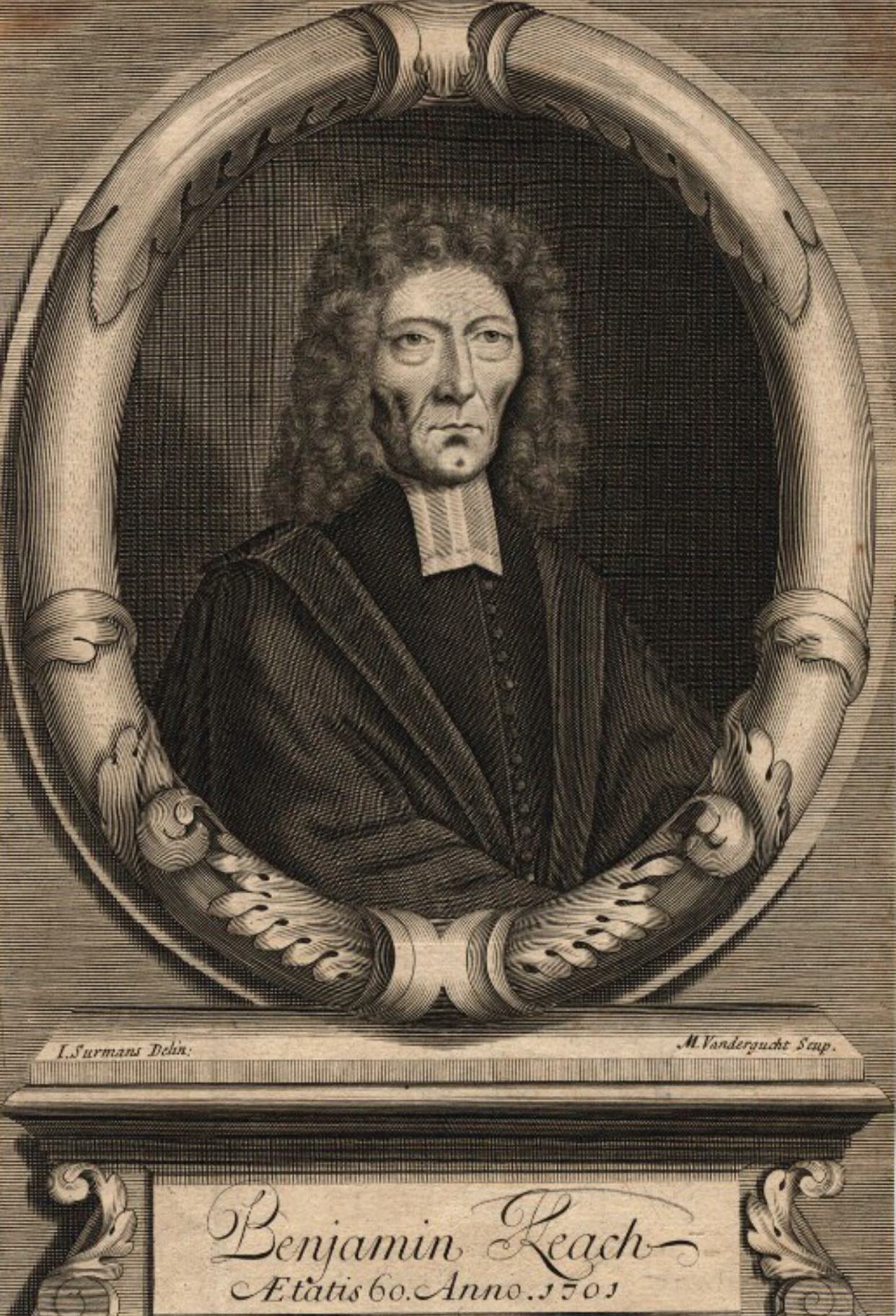
In "Saints Compared to Soldiers," Benjamin Keach explores the metaphorical comparison between Christians and soldiers, emphasizing the shared characteristics and duties inherent in their roles. He argues that all believers, not just ministers, are called to engage in spiritual warfare under the leadership of Christ, the Captain of their salvation. Key Scriptural references, such as 2 Timothy 2:3-4, Ephesians 6:10-16, and Romans 8:37, underline the necessity of preparedness and endurance in the Christian life, illustrating that believers must forsake worldly distractions and fight against their spiritual enemies. This metaphorical framework conveys significant implications for believers’ lives, calling them to actively pursue holiness, arm themselves with spiritual virtues, and remain steadfast in obedience, thereby fostering a deeper understanding of their faith and the realities of spiritual warfare.
Key Quotes
“A Soldier is taken in scripture either properly or metaphorically... So every true Christian listeth himself under the command of Jesus Christ who is the Captain of our salvation.”
“No man that warreth entangleth himself with the affairs of this life that he may please him that hath chosen him to be a Soldier.”
“A good Soldier of Christ will not turn his back to fly from the enemy or utterly depart from the truth whatsoever befal him.”
“The goodness of his cause... administereth more life and zeal to a Saint than the consideration of that holy cause which in the strength of Christ he stands up for and is set to defend.”
What does the Bible say about Christians being soldiers?
The Bible compares Christians to soldiers, indicating they are to fight the good fight of faith under the command of Jesus Christ (2 Timothy 2:3-4).
2 Timothy 2:3-4
Why is self-denial important for Christians?
Self-denial is crucial for Christians as it reflects the sacrifices needed to follow Christ fully (Matthew 16:24).
Matthew 16:24
How can Christians prepare for spiritual warfare?
Christians prepare for spiritual warfare by donning the whole armor of God as described in Ephesians 6:10-17.
Ephesians 6:10-17
What does it mean to follow Christ as a soldier?
To follow Christ as a soldier means to obey His commands and live out the faith courageously and committedly (Luke 9:23).
Luke 9:23
SAINTS COMPARED TO SOLDIERS
"Thou therefore endure hardness, as a good Soldier of Jesus Christ" 2Ti 2:3.
A SOLDIER is taken in scripture either properly, sratiwthj, or metaphorically. Properly, it is understood of a person that is employed in military affairs, one that bears arms, and is under military command, Mt 8:9.
Metaphorically, it is to be understood of a Christian, that is engaged to fight the good fight of faith, under the command of Jesus Christ, against the enemies of the soul. This title is not appropriated only to ministers, it is not a discriminating title, only to distinguish them from other Saints, as the title of Ambassador, Pastor, Watchman, &c., but a title that belongs to every Christian, and professor of Christ. So that Timothy is not called a Soldier, merely because he was an evangelist, but as he was a disciple, &c.
Saints are compared to Soldiers; every true Christian is a spiritual Soldier of Jesus Christ.
METAPHOR
I. A Soldier is listed under some captain or commander; he gives up his name to him, and enters himself into his service.
PARALLEL
I. So every true Christian listeth himself under the command of Jesus Christ, who is the Captain of our salvation: he gives up his name to him, to serve him in all uprightness, as becometh a faithful Soldier to do, making a solemn covenant with Christ, and his people, to be on their side; and this is visibly done in baptism.
METAPHOR
II. A Soldier leaves all other worldly affairs and incumbrances, to follow that particular employ. "No man that warreth, entangleth himself with the affairs of this life, that he may please him that hath chosen him to be a Soldier," 2Ti 2:4. They ought not, like Reuben, to abide among the sheep-folds, to hear the bleating of the sheep, Jg 5:16.
PARALLEL
II. So a true Christian forsakes all, and follows Christ; be becomes dead to this world; he is crucified to it, and that many times to him. His heart is not set upon things below, but upon things above; he looks upon religion and godliness, as his great work and business. Col 3:1,25 "They that are after the flesh, do mind the things of the flesh; but they that are after the Spirit, the things of the Spirit," Ro 8:5.
METAPHOR
III. A Soldier, after he is listed, and entered into his company, is armed, and put into a fit posture for that work and service he is called to.
PARALLEL
III. So a true Christian also is no sooner converted, listed and entered into Christ's company, viz., his Church, but he is armed likewise. He puts on the whole armour of God, hath his loins girt about with truth, and hath the breast-plate of righteousness, his feet shod with the preparation of the Gospel of peace, the shield of faith, the helmet of salvation, and the sword of the Spirit, which is the word of God, Eph 6:10-16. And because most of those parts or pieces of a Christian's armour are spoken to and opened under that head of metaphors respecting the graces of the Spirit, we shall speak no more of it here.
METAPHOR
IV. A Soldier is known by his habit, armour, and weapons from other men; they put off their own clothes, and put on the king's, especially if poor and ragged when they are listed.
PARALLEL
IV. So a true Christian is known by the clothes he hath on, from the wicked and ungodly of the world. He is clothed with the garment of holiness and humility, and hath on all the precious graces of the Spirit, as armour of proof, fast girt to him by the girdle of sincerity; and this shows him to be one of Christ's Soldiers.
METAPHOR
V. Soldiers many times are Clothed at the king's charge; and it is greatly for the honour of a captain to have all his men bravely clothed and glittering in their armour.
PARALLEL
V. So Christ clothes all his Soldiers, and they are all attired alike, clothed in white. Their robes cost dear, viz., the price of his own most precious blood; and it greatly tends to his honour to have them kept clean, and without spot or stain, all glittering in their spiritual armour, viz., adorned with the blessed graces of the Spirit.
METAPHOR
VI. It is a reproach to Soldiers to be merely mercenary, to fight for money, and to mind their own private advantage more than the credit and glory of their sovereign, and honour of their captain.
PARALLEL
VI. So it is a reproach to a Christian, to aim at self in all he doth in religion. Many men care not to do any thing for the honour of God, further than it makes, as they conceive, directly for their own interest and advantage. Tell some men of this or that ordinance and command of Christ, they presently object, may I not be saved without it? Is it necessary to salvation? These men only make religion as a bridge to carry them to heaven; mere mercenary souls! Alas! A true Christian obeys and serves Christ sincerely, that he may glorify and honour his holy name, knowing he deserves more at his hands, than he is ever able to perform, not doubting his labour shall ever be in vain in the Lord; the very work is wages to him. Paul was resolved, "Christ should be magnified in his body, whether it were by life or by death," Php 1:20.
METAPHOR
VII. A Soldier hath his warfare appointed him, and his enemies discovered to him, and orders to fight.
PARALLEL
VII. So a Christian hath his warfare appointed him, his grand enemies are made known to him, and he hath received commission also to enter the combat with them, whosoever they are, whether foreign or domestic, whether external or internal, secret or open.
First; his foreign or external enemies are these:
1. The devil, called the king of the bottomless pit, prince of the power of the air, the great dragon, the captain general of the black regiment, and of the hellish militia, that makes war against the Lamb, and his followers. Every Christian is commanded to enter the list, and to fight against these principalities and powers, Eph 6:11-12.
2. The world; this is another, grand, potent, and subtle adversary; many have been overcome and subdued by it.
(1.) The things of the world, viz., the pleasures, honours, and profits of the world. These, as one well observes, have their hooks and snares hid under their pleasant baits, they usually prevail by craft; their flatteries and allurements are very dangerous. By this part of the world Satan set upon our blessed Saviour, Mt 4:8.
(2.) The men of the world, who are the subjects of the prince of darkness, and hia Soldiers, the militia of hell, and the auxiliaries of Satan, the seed of the old serpent, who are filled with enmity against the woman's seed. "He that is born, after the flesh, persecuteth him that is born after the Spirit," &c., Ga 4:29. "Ye are of your father the devil, and the lusts of your father ye will do." These continually oppose the truth, and hate godliness, and those who profess it.
(3.) The worships of the world. Saints have been often exposed to great dangers, for opposing the ways, inventions, and superstitions of men, the worship of the beast, and cursed fornications of the great whore: but whilst they are able to stand, or have life in them, they must oppose and resist all false ways and worshippers, such as strive to make void the doctrine of Christ, and the commands of God by their traditions.
(4.) There are also the lusts of the world, the lusts of the eye, and the pride of life, which Saints are engaged to fight against, and oppose, 1Jo 2:16.
Secondly; They have their domestic enemies:
1. Sin, which is a wretched and treacherous inmate, and cursed adversary.
2. The flesh. These two made the holy apostle to cry out, 'O wretched man that I am, who shall deliver me," &c., Ro 7:24. Hence we are exhorted, "As strangers and pilgrims, to abstain from filthy lusts, that war against the soul," 1Pe 2:11.
METAPHOR
VIII. A Soldier expects, and therefore ought to prepare to meet with his enemies; he knows he is chosen, listed, and placed under the command of his captain, on purpose to fight.
PARALLEL
VIII. So a Saint expects, and therefore ought to make ready to meet with spiritual opposition from the enemies of the soul, as soon as ever he is listed, and entered into Christ's service. As it fell out with the Captain himself, who no sooner was baptized, but presently "he was led into the wilderness, to be tempted of the devil," Mt 4. So a Christian must always be prepared and resolved to engage and fight them, "Whom resist steadfastly in the faith."
METAPHOR
IX. A Soldier goeth not on a warfare at his own charge; his prince bears the expense of the war, and furnisheth him with whatsoever is necessary for that achievement.
PARALLEL
IX. A believer goeth not out in the spiritual warfare at his own charge. Christ furnisheth him with clothes, armour, weapons, and with all things needful and necessary, all is managed by his gracious and blessed Spirit.
METAPHOR
X. A Soldier ought to be expert, and well-skilled in martial discipline, to know all the postures of war, particularly the word of command, and to obey presently: he must not dispute the matter, nor make the least pause. Those Soldiers that were under the centurion, were very tractable upon this account as himself confessed: "I say to one, go, and he goeth; and to another, come, and he cometh," Mt 8:9.
PARALLEL
X. So a saint ought to be well-skilled in all things necessary for a Christian Soldier; it requires much wisdom and experience; he must understand the word of command, and be ready to obey his Captain, as soon as ever the word is given. David had learned this part well: "I made haste, and delayed not to keep thy commandments," Ps 119:60. And Paul saith, "He immediately obeyed the heavenly vision," Ac 26:19. It is a very unbecoming thing in Christians, to stand, or make a pause about their obedience to Christ, in those things they are to be convinced to be their indisputable duty; it argues they have but little regard to the honour of their Captain, the Lord Jesus Christ. Shall Soldiers be so careful and ready to obey their earthly leaders, who are but men? And shall not we be as ready and forward to obey the Lord Jesus Christ, our heavenly Leader, who is the most wise and blessed God?
METAPHOR
XI. Soldiers must know their places, how to keep both rank and file. Military discipline hath appointed every officer in the army his proper place, and every private Soldier to abide in the same rank and file, or place where he is set by his commander; and none may alter their station, or change their postures upon their own private account; they must not break their order upon their peril; for that is a dishonour to the captain, and standers-by will laugh and reproach him; besides, if it be in a time of battle, he exposeth himself and others to great danger. If an army or body of men be once broken, and in confusion, they are soon rooted by their enemies.
PARALLEL
XI. So must a Saint know his place and particular station, where he is set by his Captain, the Lord Jesus. If he be set as a file leader, or made an officer to lead a party, it is needful for him to see to his proper work and business; he may not quit his command when he pleaseth. The Commander in chief may prefer or degrade his Soldiers, as seemeth good to him; but he may not, he cannot dispose of himself. Pastors must keep their places, deacons keep their places, members of each Church keep their places, and not when they please withdraw themselves, and get into another company, but must abide under particular command, where Christ hath set them. Shall any one think, that God, who hath placed such order in other creatures in heaven and earth, is not strict touching that holy order set and appointed in his Church? If the sun, moon, and stars keep in their own sphere, and move in their own orbs; if the sea hath its bounds and limits set, beyond which it must not go; can it be imagined, that the Church of Christ should be a more disorderly piece, than the inanimate and irrational creatures; "God is the God of order, and not of confusion in all the churches of the Saints," 1Co 4:21. Therefore if any Christians, that are of this or that particular company or church, do break the holy order, and regard not to keep in their stations, or neglect their proper work; what a reproach is it to them, and to religion itself! Besides the danger they are exposed to; if saints neglect prayer, or hearing the word, or the Lord's Supper, or are divided amongst themselves, it is very great: unless they rally the sooner, and unite again, and keep their ranks, they are in danger of being utterly routed and undone by Satan. Many hence have been enticed by the subtlety of the devil, to desert their general, and fly from their colours.
METAPHOR
XII. Soldiers must follow their leader; this is one word of command.
PARALLEL
XII. So must every Christian follow Jesus Christ, he ought to have his eye upon him; how often hath he commanded us to follow him! Shall any list themselves under his command, and refuse to be subject to his holy laws and authority? or follow him for a time, and then grow weary? "If any man will be my disciple, let him take up his cross daily, and follow me," Mt 16:24. We read of a great and famous army, consisting of "One hundred and forty-four thousand," a certain number put for an uncertain, "that follow the Lamb whithersoever he goeth," Re 14:1-4. We must follow Christ in every ordinance, follow his doctrine, and follow his example, in every one of his gracious qualifications, viz., in his patience, (how contented was he in the midst of his greatest poverty!) in his lowness of mind, and deepest humility; in his tenderness, bowels of compassion towards those that deserved nothing; how kind, loving, and merciful was he! Follow him in his reproaches, afflictions, and indignities; follow him in all difficulties and dangers; with Peter, follow him to prison, and to death itself, when he calls us thither. "Be ye followers of me, as I am of Christ Jesus." "My sheep hear my voice, and they follow me," Joh 10:27.
METAPHOR
XIII. It behoveth a Soldier to be well-skilled in all the stratagems of war, for that conduceth much to his just and needful accomplishments; policy having many times out-done power, and human strength.
PARALLEL
XIII. So a Christian ought to be well-skilled and expert in all divine wisdom and policy, in the management of the spiritual war against the enemies of the soul. Christ's counsel is, be ye as wise as serpents, but as innocent as doves. And indeed nothing is more necessary for spiritual Soldiers than wisdom and policy, in the carrying on of the war against their internal adversaries, because of their craft and subtlety. Their adversary the devil is compared to a serpent upon this very account; and in other places we read of his devices and wiles Eph 6. "That ye may stand against the wiles of the devil." Meodeiav tou diaBolou, properly the methods of Satan; meqodeia meqodX, which signifies that art and order one observes in handling a point; we say such an one is methodical. Now because it shows ingenuity, and acuteness of wit, so to compose a discourse; therefore it is transferred to express the subtlety of Satan, in laying of his plots against a Christian." Indeed the expert Soldier hath his order, as well as the scholar; there is method in forming an army, as well as in framing an argument. The devil is a subtle enemy, and Saints are most endangered by his craft and policy; he hath always got the greatest advantage upon Christ's Soldiers by tuis means. It was the way he took when he set upon man at first, and if he overcame him when he was in his perfect state, no marvel if he prevail upon him in his depraved and maimed state. And therefore wisdom is needful, and more especially to discover his stratagems: "We are not ignorant," saith the apostle, "of his devices," 2Co 2:11. Some of which I shall note here for the spiritual Soldier's profit and observation, with respect to his drawing men and women to sin.
First, He shows his subtlety, in choosing the most proper and advantageous season for tempting, An hundred Soldiers at one time may turn a battle, and save an army, when thousands will not do it at another. Satan knows when to make his approaches, and the time when he is most likely to prevail. The time he takes to tempt in, is:
1. When newly converted. No sooner is the child of grace, the new creature born, but this dragon pours a flood of temptations after it.
2. ' When a saint is beset with some great affliction; this is a blind lane, or solitary place, fit for this thief to call for his purse.
3. When a Christian is about some notable enterprise for God's glory, then Satan will lie like a serpent in the way: "An adder in the path, that biteth his horse's heel; so that his rider shall fall backward," Ge 49:17. Thus he stood at Joshua's right-hand, to' resist him, Ec 3:1-3. The right-hand is the working hand, and his standing there, implies his desire to hinder him, and his enterprise. Indeed the devil was never a friend to temple-work, and therefore that work is so long a doing. What a handsome excuse doth he help the Jews unto? "The time is not come," Hag..i. 2. When our Saviour was baptized, and was just entering upon his ministry, then Satan set upon him, Mt 4:1-2.
4. When he hath the presence of some object to enforce his temptation. Thus he took Eve, when she was near the tree, and had it in her eye.
5. After great manifestation of God's love, then the tempter comes. Such is the weakness of grace sometimes in a believer, that he can neither well bear smiles nor frowns from God. When Paul was exalted with the abundance of revelations, then was the time that Satan set upon him with strong temptations, 2Co 12:1-3,21.
6. At the hour of death; Satan knows, that if he cannot prevail then, he ne^ 7 er can. It is the last onset, and therefore he resolves to try his skill. If he cannot break his head, so as to keep him out of heaven; yet he will, if possible, bruise his heel, and send him limping thither: I mean, fill a Saint full of fears and doubts about his eternal state.
Secondly, He hath many other stratagems to deceive by temptations.
1. He hangs out false colours, and comes to a Saint in the disguise of a friend; he transforms himself into an angel of light; master, pity thyself.
2. He strives to get intelligence of a Saint's affairs. This, saith my author, is one great wheel in this great politicians's clock, to have spies in all places, by whom they are acquainted with the counsels of their enemies. He labours to find out what sin it is that most easily besets a person, or that he is most prone to, Heb 12:1.
3. In his gradual approaches to the Soul. When he first comes to tempt, he is modest, and asks but little, knowing he may get that at many times, which he should be denied, if he should ask it all at once. A few men are let into a city, when an army, coming in a body, would be shut out. Remember, he draws to sin by little and little: first it may be the thought of this or that evil is darted into the mind, and after awhile lodged quietly there, and then a little after further advances are made in sin, &c.
4. Satan, like a cunning warrior, hath his reserves; like a wise captain he hath some fresh troops at hand, if need be; so that if one temptation will not prevail
he hath a second, nay, a third and fourth, nay multitudes. What fresh and new attempts did he use, when he set upon our Saviour.
5. Another stratagem of his is this: he will in a political way retreat, as sometimes you shall have an enemy fly as overcome, when it is on a design of overcoming. "We read not only of Satan's being cast out, but of the unclean spirit's going out voluntary; yet be sure it was with a purpose to return more strong than before.
6. He will strive to make use of fit instruments to carry on his temptations to the riun of the soul. I might proceed, but by this all may see, that it is needful for the Christian Soldier to be well instructed in the stratagems of war.
METAPHOR
XIV. A Soldier ought to know the distinct beats of the drum, and sound of the trumpet; an alarm, a call, a march, a battle, &c.
PARALLEL
XIV. So a Saint must understand the distinct and different sounds of the Word of God daily ministered by his servants; for a preacher is a spiritual trumpeter: "Lift up thy voice like a trumpet," Isa 58:1. And as it greatly behoves a trumpeter to be well skilled how to blow his trumphet, for if it give an uncertain sound, who shall prepare himself for the battle? so it doth a minister, rightly and distinctly to preach the word of God, that a Christian, like a Soldier, may have an alarm sounded in his ears, when danger is near, or any enemy coming upon him; as also a call to duty, to prayer, to fasting, mourning, and sackcloth, when the day requires it, &c. A good Soldier of Christ will observe the distinct sound of the spiritual trumpet; sometimes it sounds out reproof, sometimes counsel, sometimes comfort; all is carefully observed by a sincere and wise Christian, Isa 22:
METAPHOR
XV. A Soldier ought to be a man of courage, bold and resolute, not soon daunted nor dismayed by the threats, malice, or strength of an enemy. He ought, as God bid Joshua, to be strong, and very courageous.
PARALLEL
XV. So a Saint ought to be of a courageous spirit, not timorous, faint-hearted, or soon dismayed, but a man of an undaunted heart, not fearing the worst that men can do unto him: "Though I walk, saith David, through the valley of the shadow of death, I will fear no evil," Ps 23:4. "The wicked flee when none pursue, but the righteous are bold as a lion, Pr 28:1. There are three, or four things, which tend to embolden, and increase courage in a spiritual Soldier, in the midst of the greatest danger, when nothing but death and misery seems to stare him in the face.
1. The goodness of his cause. Nothing administereth more life and zeal to a Saint, than the consideration of that holy cause, which in the strength of Christ he stands up for, and is set to defend.
2. The consideration of the power and strength of that God who hath engaged to stand by him, help and aid him in all his conflicts with the worst of his enemies, "Fear not, worm. Jacob, and ye men of Israel; I will help thee, saith the Lord. Fear not, for I am with thee; be not dismayed, for I am thy God, I will strengthen thee," &c. Isa 41:10,14. "Ye are of God, little children, and have overcome them, because greater is he that is in us, than he that is in the world," 1Jo 4:4.
3. A good call. Every Christian, in all his enterprizes, must see to his call; let him see that whatsoever he doth in religion, both in matter and manner, be what God hath enjoined him. He that undertakes any work or cause, that is not warranted by God's word, hath cause to tremble. And also let him see he be the man that God approves of, and hath employed in and about that work and duty, whatsoever it be; and when he sees that his call is undeniably good, this will add courage to him.
4. A good conscience. This made Paul so bold in the presence of his incensed adversaries: "Men and brethren, I have lived in all good conscience before God until this day," Ac 23:1. A Soldier who hath much guilt upon him, cannot, if his conscience be at all awakened, engage an enemy with that courage as another man may, in the place of the field, when he knows not but the next moment he may be sent into another world. It is innocency and uprightness that puts life and magnanimity into a Christian. "Having a good conscience, that whereas they speak evil of you as evil-doers, they may be ashamed, who falsely accuse your good conversation in Christ," 1Pe 3:16.
5. Lastly, The assurance he hath of victory. A Saint knoweth he shall have the day, and come off a conqueror: before he enters upon the conflict, his Captain hath told him, he shall overcome at last, and have the crown of life, Re 2:10.
METAPHOR
XVI. A Soldier must expect to endure hardness, and therefore prepares himself for it. It is a life attended with many hardships and difficulties; they often lie in the field, and fare hard, when others know the want of nothing.
PARALLEL
XVI. So the Saints of God must expect to endure hardness. A Christian's life is attended with many difficulties and afflictions, which they must endure as good Soldiers of Jesus Christ. He is no good Soldier, that cannot endure hardness. But here it may not be amiss to enquire, What is that hardness that the Saints do and must endure?
First, They must endure all that hardness, that either their sins, or the profession of the Gospel, may expose them unto.
1. Saints are exposed to hardships by means of their sins; their own iniquities bring great sorrow and trouble upon them. It made David many times cry out, and water his couch with tears.
2. Sin is not sweet to a Saint in the committing of it. He is overcome sometimes to do that which he hates, and his own conscience afterwards sorely lashes and wounds him for it. Sin brings not only hardships upon the soul, but many times sore distress upon the body and family, and a blast upon a man's outward estate.
Secondly, A Saint meets with the hardship of self-denial; he bears the pain of having a right hand lust cut off, and a right eye lust pulled out; he parts with the best, the nearest, and choicest of his outward enjoyments. "Unless a man deny himself of father, mother, brethren, sisters, children, house, and land, &c., for my sake, he is not worthy of me." This hardness, some cannot endure; the young man could not bear it: "When he heard this doctrine, he went away very sorrowful," &c., Mt 19:22.
Thirdly, They endure the hardness of mortification, or of crucifying the flesh, with the affections and lusts. Circumcision was painful to the body, and let me tell you, the circumcision of the Spirit is more hard and difficult to a Saint to undergo; "Which is made without hands; cutting off the foreskin of the heart, or putting away the body of sin by the circumcision of Christ." "Mortify your members which are upon the earth." The killing of sin, is as the killing or destroying the members of the body.
Fourthly, Saints endure hardness from men.
1. By hard words. All the cruel reproaches, slanders, reviliugs, tauntings, scoffings, backbitings, &c., that the sons of Belial can invent, they are forced to endure. "They bend their tongues like their bow for lies, and their tongue is as an arrow shot out," Jer 9:8. The tongues of some men are like cruel weapons; "As with a sword in my bones, my enemies reproach me," &c., Ps 42:10. The sword in the flesh is painful, but the sword in the bone is much worse. Mockings are ranked amongst the great sufferings of the godly: "Others had trials of cruel mockings," Heb 11:36. The archers this way shot hard at Joseph; and what a poisonous arrow did the Jews let fly upon Christ! "Behold a drunkard, a wine-bibber, a friend of publicans and sinners." "He casteth out devils by Beelzebub, the prince of devils." "As for this fellow, we know not from whence he is." Paul was accused for being "A pestilent fellow, a mover of sedition, and a ringleader of the sect of the Nazarenes," &c. These things are hard to bear.
2. There is the hardness of men's hands, as well as of their tongues. Wicked men, saith a learned divine, have iron hands, which many times fall heavy upon the Soldiers of Christ. How heavy was the stroke of Cain upou his righteous brother! And what heavy hands did Pharaoh lay upon the Israelites in Egypt! What hardships did the primitive Saints endure, under the heathen emperors, in the ten persecutions! And what sore sufferings, and cruel torments, hath the woman's seed borne and endured under the Papal power! What burnings, roastiugs, and flayings alive! All along, from the beginning to this day, the Saints have endured great hardness from wicked men. See Heb 11:35, to the end. "They were tortured with scourges, bonds, and imprisonments; they were stoned, they were sawn asunder, tempted, slain with the sword; they wandered about in sheep-skins, and goat-skins, in deserts, and mountains, and in dens and caves of the earth, being destitute, afflicted, tormented."
Fifthly, Saints endure hardness from Satan. He comes out with open mouth against them, like a roaring lion, seeking to destroy them. Christ's Soldiers encounter with devils, they wrestle with principalities and powers; Satan daily lets fly his fiery darts against them, Eph 6.
Sixthly, They meet with some hardness and trouble by the withdrawings of God himself. Some afflictions come more immediately from the hand of God. Job complains of the arrows of the Almighty; David cries out, as if the Lord had broken his bones. Yet God in all the afflictions and trials he brings upon his people, designs their profit: "When, he hath tried me, I shall come forth as gold," Job 23:10. It is that we may be partakers of his holiness. Yet nevertheless the strokes and chastisements of the Almighty are hard to be borne.
Seventhly, Christ's Soldiers meet with hardness, whilst they attend upon their proper work, in their particular places and stations unto which they are called. Some have harder service than others; as the forlorn hope, and the van, saith one, may meet with harder service than the main body of the army: the frontiers, and file-leaders, may meet with more difficult service than the rear; and the watchmen that lie perdue, and stand sentinel, with harder duty than those that abide on the guard. But though some endure more hardness than others, yet all must take what befals them in the place and station where they are set. The ministers of the Gospel, likely, are the men mostly exposed, and yet sometimes others suffer as hard things as they; yet every one must see to discharge his duty in his respective place. The sentinel must not quit his watch, because, it is cold, or danger approaches; the file-leader must not face about, and fall back in the rear, because of the hardness of the service; the leaders must not bid the private Soldiers fall on, and themselves run away; the colours are most aimed at, yet the standard-bearer and ensign must stand by them, and display them in the face of the enemy. So whatever comes, ministers must preach, and people must hear, and the public worship of God must be maintained, the banner of the Word must be displayed, saints must keep their ground and station, where they are set by Jesus Christ. "Necessity is laid upon me; and woe is me, if I preach not the Gospel," 1Co 9.
METAPHOR
XVII. A good Soldier exposeth himself to endure hardness voluntarily, patiently, courageously, constantly, and sincerely.
PARALLEL
XVII. So the faithful and good Soldier of Jesus Christ is not haled, dragged or forced to his duty, and to undergo difficulties for the Gospel-sake; but freely and with a ready mind engages in the work. "I am ready not to be bound only, but also to die at Jerusalem, for the name of the Lord Jesus," Ac 21:13. Christ cares not for pressed Soldiers, his are all volunteers: when the Gospel-trumpet sounds, come away, come up hither, immediately they are upon their feet.
2. They endure patiently, taking their Captain for their example: "When reviled, they revile not again." "In patience possess ye your souls."
3. They endure the hardness of their service courageously: "They took joyfully the spoiling of their goods," Heb 10:34. "The wicked flee when none pursue, but the righteous are as bold as a lion," Pr 28:1. Shall such a man as I fly? was the saying of a brave Soldier of this Captain's. When Modestus, the emperor's lieutenant, threatened Basil with confiscation of goods, banishment, and death, how courageously did he bear it! 'If you have anything else, threaten it; for these things are nothing.' This was somewhat like that of Paul; notwithstanding bonds, imprisonments, and death were threatened against him, yet saith he, "None of these things move me, neither account I my life dear unto me," &c., Ac 20:24. "We glory in tribulation," Ro 5:3.
4. Saints endure hardness constantly; the whole life of a Christian is a time of warfare: till this life be done, his warfare is not done, "The righteous shall hold on their way, and he that hath clean hands, shall grow stronger and stronger," Job 17:9. A Saint must never cease being a Soldier; godliness must be his trade as long as he lives. As Satan will never have done tempting, so he must never cease from resisting his temptations.
5. And then all this is done sincerely; he hath holy aims and ends in what he doeth.
XVIII. A good Soldier spares none of the enemy, when he hath such a command given him: and Saul, for not complying with the requirement of God in this respect, lost his kingdom, viz., in sparing Agag the king, and the fat of the cattle, when the word of command was "Go, smite Amalek, and utterly destroy all that they have, and spare them not; but slay both men and women, infant and suckling, oxen and sheep, camels and asses," &c., 1Sa 15:3.
PARALLEL
XVIII. So a Saint, or good Soldier of Jesus Christ, spares not one lust: every sin like the cursed Amalekites, must be put to the sword. He is no sound Christian, that suffers any sin to abide quietly in his heart or life unmortified. If there be any one darling lust spared, it is a palpable sign of hypocrisy. Some men are ready to excuse their evil lusts, as Saul did: they will cover their covetous designs under the pretence of doing good, and distributing to the necessities of the poor; but alas, this will not do, Obedience is better than sacrifice. A saint must kill all, put all his sins to the sword, or die to them. One sin spared, as Agag was, will exclude thee the kingdom of heaven: "If ye live after the flesh, ye shall die; but if ye mortify the deeds of the body, ye shall live," Ro 8:13.
METAPHOR
XIX. A good Soldier will keep with his colours. It is punishable by martial law, for a Soldier to lie behind his colours; and death without mercy to depart quite from them.
PARALLEL
XIX. So a good Soldier of Christ will keep and abide with the banner of truth. The Gospel, saith Ainsworth, is the Saints' ensign: "And he will lift up an ensign to the people," &c., Isa 5:26. Christ will lash such as lie behind. Peter was made to weep bitterly for straying from his colours. And it will be death without mercy to those that quite depart from the truth, and embrace heresy or idolatry. And here let me caution all Christians to take heed, lest they be deceived by their enemies. Satan, like a cunning pirate, sometimes transforms himself into an angel of light, he puts out false colours, comes with a seeming banner or ensign of truth; he can make use of scripture, when it will make for his purpose to deceive.
METAPHOR
XX. A good Soldier will not turn his back upon the enemy, to the dishonour of his captain: though his life be in danger, he will not fly, nor cowardly betray his trust.
PARALLEL
XX. So a good Soldier of Jesus Christ will not turn his back to fly from the enemy, or utterly depart from the truth, whatsoever befal him; such is his love to the Lord Jesus, and zeal for his glory. And besides, he knows, if he do, the great danger he exposeth his own soul to thereby: for among all the armour that Christians should take unto them, we read of no back-piece; for if they turn their back, they are gone and undone for ever: "If any man draw back, my soul shall have no pleasure in him, Heb 10:38.
METAPHOR
XXI. A Soldier is greatly animated and encouraged in all his encounters and sharp conflicts with the enemy, by considering the reward and honour he shall receive, if he manfully hold out, and gets the victory.
PARALLEL
XXI. So a Saint is carried on with much zeal and courage, by the consideration of the eternal reward he shall receive in the end. This made Moses despise the glory of Egypt, and refuse to be called the son of Pharaoh's daughter. He saw him who was invisible, and had an eye to the recornpence of reward, Heb 11:26; Christ himself this way animates his followers, and faithful Soldiers: I appoint to you a kingdom. "Be you faithful unto death, and I will give you a crown of life," Re 2:10. "I have," saith Paul, "fought the good fight, and finished my course, and kept the faith: and henceforth there is laid up for me a crown of righteousness, which God the righteous Judge will give me at that day, and not to me only, but to all them that love Ms appearing, 2Ti 4:7-8.
METAPHOR
XXII. Some Soldiers of an army are now and then singled out as champions, to engage an enemy alone. Though every champion be a Soldier, yet every Soldier is not a champion. A captain will not chose any soldier to this work, but such only as he knows are men of courage and experience, &c.
PARALLEL
XXII. So Christ sometimes calls forth one of his spiritual army, to engage the enemy alone, and as a champion of the truth, to sacrifice his life in the behalf of it. "What greater honour can be conferred upon a Christian than this? Such a champion was St. Stephen, Antipas, &c., who were brave men, saints of undaunted courage and resolution; "who loved not their lives unto death, Ac 7; Re 2:13.
METAPHOR
I. No earthly Soldiers know what the event or issue of their wars will be; they cannot tell whether they shall over come, and get the victory, or not; though they be ever so valiant and courageous in their service, and faithful and true to their captain and leader.
DISPARITY.
I. But a true Christian knows, and is assured that he shall overcome, and obtain the victory. He fights not at an uncertainty, the issue of the war being made known unto him by Christ in his Word. And although a Christian may sometimes doubt Of the truth of his own sincerity; yet being sincere, he doth not doubt of obtaining the conquest.
METAPHOR
II. Earthly Soldiers many times lose their limbs and precious lives in fight; and it is not in the power of the wisest captain in the world, to repair or make up that loss again.
PARALLEL
II. But Christ's Soldiers never engage their enemies to the loss of limbs or life itself in his cause, but he can restore it with great advantage. "He that loveth his life, shall lose it; but he that hateth his life in this world, shall keep it unto life eternal," Joh 12:25.
METAPHOR
III. Soldiers are armed with carnal weapons, and fight with men like themselves, and yet many times are overcome, and lose the victory.
DISPARITY
III. But Saints fight with spiritual weapons, and not only with men like themselves, but with the devil, and his infernal crew; and yet through Christ their Captain they get the victory. "For the weapons of our warfare are not carnal, but mighty through God," &c. "For we wrestle not against flesh and blood, but against principalities and powers," &c.,Eph 6:12; 2Co 10:4.
INFERENCES.
These things being so, let all true Christians take heart, and be valiant, and fear not the face of enemies.
1. Consider the worth and dignity of your Captain. Christians have the best Captain and Leader in the world.
(1.) He is of a most honourable extraction, of a most high and noble descent, the heir of all things, the Father's first-born, the express image of his person: he is King of kings, and Lord of lords; and he is, saith one, Generalissimo of all his majesty's forces in heaven and earth.
(2.) Consider his strength and valour: he hath an omnipotent arm, and is of a most valiant, undaunted, courageous, and heroic Spirit. What was Samson, Gideon, David, Alexander, Julius Caesar, Scanderbeg, or any other mighty warrior, to the Lord Jesus? This is he who cuts in pieces the gates of brass, and breaks asunder the bars of iron; that hath the keys of death and hell; that slew Eahab, and wounded the dragon; who is terrible to the kings of the earth, and will come upon princes as upon mortar. This is he that is the terror of devils, the dread of mortals, who will make other captains tremble, and cry out to the rocks and mountains to hide them, in the day of his wrath, Isa 51:9.
(3.) Consider his wisdom. His skill and policy far exceed the craft and subtlety of all the machiavellian politicians in the world. He knows how to assault and harm his enemies, and to carry on, and bring off, to preserve and defend his people, and faithful Soldiers. Let men and devils be ever so skilful and politic, Christ knows how to outwit them, and over-reach them all. He knows where all their mines are digged, where all their forces, and ambuscades do lie: he knows their plot, and how laid this day against his interest, Gospel, and covenant people, in this and other nations. He knows how to confound them, and catch them in their own craftiness, and to bring them to shame. He is wonderful in counsel, and mighty in working. He hath an omniscient eye, as well as an omnipotent hand. He makes his countermines, and blows them up, or burieth them in the pit they have digged. He outshoots the devil and the wicked in their own bow. He will bring down the beast, and whore, and all their abettors, and make them ashamed of their hope. Mark the issue of this present dispensation. See Captain, and God a man of War.
2. Consider the excellency of your cause, which is just and righteous.
3. The goodness of your call, against which nothing can be objected.
4. For your further encouragement, consider the strength of your fortifications: they are all impregnable, and impenetrable, of most invincible strength. Your outworks, your walls, your bulwarks, your forts, and towers, all your defence is admirable. "The name of the Lord is a strong tower." "Salvation will God appoint for walls and bulwarks," Pr 18:10; Isa 26:1. how formidable and terrible are the attributes and threatenings of God to his enemies!
5. Consider. Though your number be the fewest, yet your side is the strongest; God is for us, and on our side: "With them is the arm of flesh, but with us the Lord our God, to fight for us." How many, said Antigoner, will you reckon me for? Poor mortal! How many then may we reckon God, Christ, the Holy Ghost for? The whole Trinity is engaged for us.
6. Consider. Though your service he hard, and conflict sharp, yet it will be short. It is but a little while, and your enemy shall trouble you no more. "Our light afflictions which are but for a moment," &c., 2Co 4:17.
7. Consider. The devils, and all other enemies, though ever so potent, cruel, and malicious, yet they are all conquered and spoiled: "Having spoiled principalities and powers, he made a show of them openly, triumphing over them in it," Col 2:15. The Romans were wont in a triumphant manner to carry those they had conquered about with them, and to brandish their swords, and display their colours, and carry their arms in open view, as trophies and emblems of victory: so the Lord Jesus, having conquered Satan, and the powers of hell, rode as it were in triumph through their kingdom, the air, and made a show of them openly, as a glorious victor. 2. Again, the world is subdued; "Be', of good cheer," saith Christ, "I have overcome the world," Joh 16:33. And we through him are hereby made more than conquerors. Come tribulation, distress, persecution, &c., with all their blackness, darkness, threats, and terror; what will they do? "Who shall separate us from the love of Christ?" or hinder us of eternal life. 3. Death is subdued, Christ hath got the victory over that. 'What joy and comfort is this to believers, to hear that all their enemies are conquered; your Captain-general hath broken them, all to pieces, Ro 8:35.
8. The enemy cannot hurt you; the worst you can meet with will work for your good, Ro 8:28.
9. Consider. Though you meet with hard things, Christ can and will make them, easy to you. All your wounds he can heal, and all your broken bones he can set. The more you suffer for Christ, the greater your reward will be.
10. Consider what great and glorious pay you shall have in the end. Is not a kingdom, a crown of glory that fadeth not away, worth fighting and striving for?
11. Look to Christ, remember what he hath done and suffered for you; and consider what many saints have endured for his sake before you, that were most precious in God's sight. Is it not better to suffer here, than to suffer in hell? What is the pain and sorrow of the godly in this life, to the everlasting pains and torments of the damned in the world to come? Get much faith, and provide yourselves with all your armour, and the right use of it, the nature of which is opened under the fifth head. Get your hearts loose from the world: "No man that warreth, entangleth himself with the affairs of this life," 2Ti 2:4. Labour for much love to God. It was a notable saying of Mr. Bland the martyr, when he was at the stake: "This death," saith he, "is more dear to me than thousands of gold and silver; such love, Lord, hast thou laid up in my breast, that I hunger for thee." Take heed you consult not with, carnal reason; rely wholly upon Christ, and never consult thy present strength with thy future sufferings. Take heed you do not overvalue your lives. Alas! you cannot live long; what if you die a little sooner than you might do according to the course of nature? Also consider, is it not better if God call you to it, to glorify him by dying, than to die otherwise? Rernember, you are not your own; let God therefore make what improvement of you he pleases.
Lastly; pray continually, pray always, for this is the way to overcome. Prayer hath done wonderfully. And this is one great thing that is enjoined on the Christian Soldier.
"Praying always with all prayer and supplication, in the Spirit, and watching thereunto, with all perseverance, and supplication for all saints, and for me," &c., Eph 6:18.
Here are two things to be noted:
I. A duty enjoined, prayer.
II. Blessed directions about it, viz.,
1. The time-- always.
2. The kinds-- all prayer and supplication.
3. How, viz. (1.) In the Spirit. (2.) With diligence. (3.) Constantly.
4. For whom; (1.) For all Saints. (2.) More particularly for the preachers of the Gospel.
Note. Soldiers of Christ ought to pray, to be much in prayer, to pray always, to pray in the Spirit, to pray for themselves, and to pray for others also.
First; though we are to pray always: yet there are some special times for this duty. Prayer is twofold, 1. Ordinary. 2. Extraordinary. We must in some seasons more especially be at this duty, to pray hard, to pray mightily, &c.
Quest. What is meant by praying always?
Answ. 1. It is as much as to say, "Pray in every thing," according to that word, Php 4:6, "In every thing, by prayer and supplication, let your requests be made known to the Lord." Some pray in nothing they do. "In all thy ways acknowledge him."
2. In all conditions, in a full state, in a naked state, in poverty, in plenty, in sickness, in health, in prosperity, and in adversity.
3. For every thing we need, for spirituals, for temporals, so far as God seeth them good for us.
4. Daily, frequently, morning, and evening. David said to Mephibosheth, "Thou shalt eat bread at my table continually," 2Sa 9:7. He cannot mean, thou shalt do nothing but eat, he would not have him to be such a cormorant, but commonly, every day, &c.
5. To have a heart always for this duty, to be always fit and ready for this sacred ordinance.
Quest. What are those special times and seasons for prayer? or when is extraordinary prayer to be made?
Answ. 1. When a Saint hath any great work to do for God, or eminent business, and service for his Church. See Ne 1:5; Ac 4:2,9. When Abraham's servant had special work to do for his master, he was much in prayer.
2. When a Saint is in the dark concerning any one truth of God, and cannot get satisfaction, then it is a time for extraordinary prayer. When Daniel was at a loss about the time of deliverance out of captivity, how much did he give himself to prayer, Da 9:1,2,3, &c.
3. When a gracious soul is under any sore and grievous affliction. David in his distress and affliction cried mightily to God. "Is any afflicted? let him pray;" that is, let him be more abundantly in that duty, Jas 5:13.
4. When sin abounds, or in a day of great rebuke and blasphemy: when hell seems to be let loose, or the flood-gates of wickedness opened wide in a nation, then it is a time for the godly to be much in prayer, Jer 14:19; Isa 37:23.
5. In times of great distress upon the Church; when the danger is imminent, as at this day; this is a time for extraordinary prayer. See Isa 22:When many nations came up against Judah, then Jehoshaphat cried mightily to heaven, 2Ch 20:12. When Haman plotted to destroy all the Jews, and cut off Israel at once, and the writings were sealed and sent forth, then Esther and the godly ones prayed mightily. Thus did Jacob, when his brother was coming to meet him, fearing he would cut off the mother with the child; how did he then wrestle with God! Ge 32.
6. In times of temptation. When Christ was assaulted, and his hour was come, he prayed hard, he spent a whole night in prayer, Mt 26:44. And what saith he to his disciples? "Watch and pray, that ye enter not into temptation," verse 41. When Paul had that thorn in the flesh, the messenger of Satan to buffet him, he besought the Lord thrice, that it might depart from him, 2Co 12:8. That three times, as some conclude, might be threescore times.
7. Lastly; in a time of great expectation, when great things are near, and much looked for. When Daniel expected great things, understanding by books, deliverance to the Church was at hand, he set himself to seek God, Da 9:2-3.
Secondly; Consider, prayer is a great ordinance. And that doth appear,
I. In respect of God; it gives him the glory of three great attributes.
(1.) Of his omnisciency: We hereby acknowledge, that he knows our wants and necessities. "All my desires are before thee, and my groanings are not hid from thee," Ps 38:9.
(2.) His omnipotency. We acknowledge, in our crying to God, and relying upon him in this duty, that he is able to help us, and supply all our wants.
(3.) It gives him the glory of his goodness: "thou that hearest prayer." A Saint knows, and confesseth hereby, if he pray aright, that God is willing and ready to help and save him.
2. Prayer is a great ordinance, if we consider the power and prevalency of it. Luther ascribed to prayer a kind of omnipotency. It hath prevailed over fire, water, and earth; It hath stopped the sun in its course. It hath prevailed over evil angels, it hath cast the devil out, and broken his kingdom. It hath had power over the good angels, as appears in the case of Elisha; it fetched them from heaven to be his guard and protection, 2Ki 6:16-17. Nay, it hath prevailed with Christ himself, the Angel of the covenant, as appears in Jacob's case. "As a Prince, thou hast wrestled with God, and hast prevailed." It hath healed the sick, raised the dead, stopped tbe lion's mouth, and hath subdued and put to flight the armies of aliens; hath opened the prison doors, and broken in pieces chains, gates, and bars of iron and brass, Heb 11. There is none of the battering rains, or artillery of hell can stand against it. It is like an engine, as one observes, that makes the persecutors tremble; and woe to them that are the buts and marks that it is levelled at, when it is fired with the fire of the Spirit, and discharged in the strength of faith. It is said, Mary Queen of Scots dreaded more the prayers of Mr. Knox, than an army of twenty thousand men; she had more cause, than an army of ten hundred thousand. It is said of the witnesses, that "They have power to shut heaven, that it rain not in the days of their prophecy; and have power over waters, to turn them into blood, and to smite the earth with plagues, as often as they will," Re 11:6. How do they do this, but by prayer?
3. That prayer is a great ordinance, will appear, if we consider the promises made to it, Ps 1:6; Mt 21:22; Job 15:7.
4. That it is a great ordinance, will appear, if we consider how it co-works with all other ordinances and duties, to make them effectual, whether moral or evangelical. Every thing is sanctified by the word of God and prayer.
5. That prayer is a great ordinance, doth appear by the influences it hath over all our graces. (1.) It is the means for getting grace; hereby a Soldier of Christ obtains his armour. (2.) And for the increase of grace, in order to the acting of it. (3.) For the evidencing of grace. It is that which brings the soul into God's presence, and fills it with divine joy and peace in believing.
6. It is the divine breath of the soul; can a man live longer than he breathes? A Saint dies, when he quite ceaseth praying.
Quest. What hinders or obstructs the answer of the saint's prayer?
Answ. (1.) When we pray not according to God's will; God's will must be the rule of our prayers. "And this is the confidence that we have in him, that if we ask any thing according to his will, he heareth us," 1Jo 5:14.
2. When the end or aim of a man is not right: "Ye ask, and receive not, because ye ask amiss, that ye may consume it on your lusts," Jas 4:3.
3. When we pray not in faith; unbelief hinders the answer of prayer. "But let him ask in faith, nothing wavering," James 1:6, &c.
4. When endeavours after the things we want, are not joined with our prayers. As we have a mouth to beg, we must have a hand to work, Ps 27:4.
5. When any one sin resteth in the bosom unrepented of. "If I regard iniquity in my heart, the Lord will not hear me," &c., Ps 66:18.
6. When we are not fervent. Prayer must be with affection unto God.
7. When we pray not in spirit. Our spirits must pray; and not only so, but if the Spirit of God do not act and assist our spirits, our prayers will not prevail.
8. When we are not constant in the duty. We must be importunate and constant, pray always, and not faint, if we would have our prayers heard, Lu 18:1.
9. When we come not to God in the name of Christ, the door is shut. We must ask in Christ's name, and come to God by him, if we would be heard and accepted by him.

Comments
Your comment has been submitted and is awaiting moderation. Once approved, it will appear on this page.
Be the first to comment!