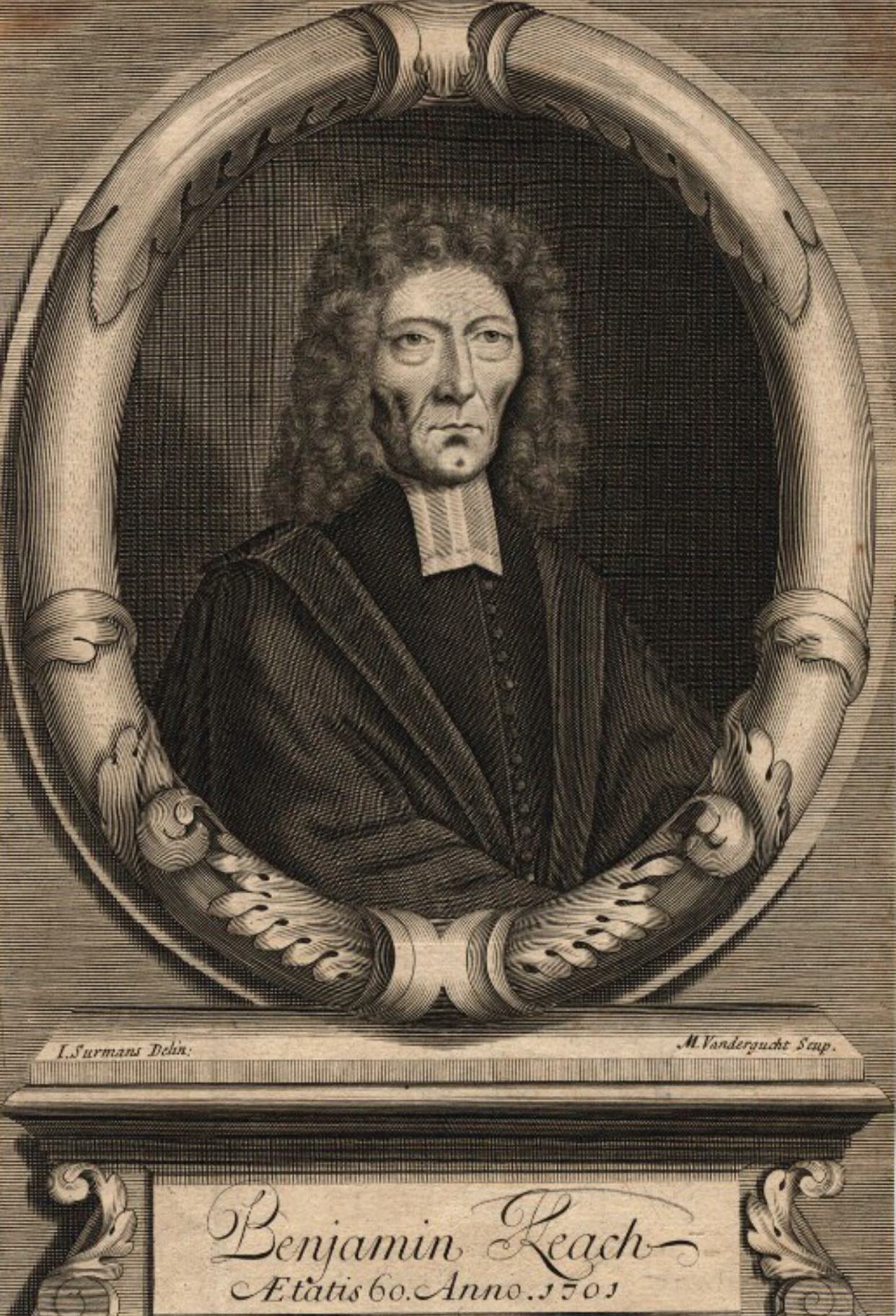
In Benjamin Keach's article "Saints Compared to Pilgrims," the primary theological topic is the spiritual journey of believers, portrayed as a pilgrimage in contrast to earthly existence. Keach systematically illustrates key points through biblical references, notably Hebrews 11:13 and 1 Peter 2:11, emphasizing that saints are spiritual sojourners who should renounce earthly entanglements and prioritize their heavenly home. Each simile contrasts a pilgrim's challenges and experiences with the believer's spiritual journey—addressing the need for guidance, perseverance through trials, and the importance of community with other believers. The article underscores significant themes in Reformed theology, including the sufficiency of Christ for salvation, the necessity of holiness, and the transient nature of earthly life as preparatory for eternal life, urging believers to remain vigilant on their journey to the New Jerusalem.
Key Quotes
“The Saints of God are spiritual travellers they are far from their Father's house; heaven is their everlasting home.”
“A Pilgrim that sets out in a long journey takes care to free himself of all manner of weights and unnecessary burdens.”
“So a Saint is often attended with spiritual distempers... by the help of the Spirit and serious meditations of the excellency of the country to which he is travelling, he is soon quickened again.”
“Ye are not of this world.”
What does the Bible say about being a pilgrim in this world?
The Bible describes saints as pilgrims, highlighting that they are strangers in this world, traveling towards their eternal home in heaven (Hebrews 11:13).
Hebrews 11:13, 1 Peter 2:11
How do we know our hope in heaven is true?
The assurance of hope in heaven is grounded in God's promises and the redemptive work of Christ (John 14:6).
John 14:6
Why is self-denial important for Christians?
Self-denial is vital for Christians as it aligns them with Christ’s teachings and prepares them for eternal life (Matthew 16:24-25).
Matthew 16:24-25
What challenges do pilgrims face on their spiritual journey?
Pilgrims face various trials such as persecution, temptations, and worldly distractions that aim to hinder their spiritual progress (Psalm 73:2).
Psalm 73:2
How should Christians view their current life in relation to eternity?
Christians should view their current life as a pilgrimage, seeking the eternal city that God has prepared for them (Hebrews 13:14).
Hebrews 13:14
SAINTS COMPARED TO PILGRIMS
"They confessed, that they were strangers and Pilgrims on the earth'' Heb 11:13.
"I beseech you, as strangers and Pilgrims, to abstain from fleshly lusts, that war against the Spirit," 1Pe 2:11.
Note. The Saints of God are in these Scriptures compared to strangers and Pilgrims.
SIMILE
I. A Pilgrim is one that travelleth from one place to another, and is far from home.
PARALLEL
I. The Saints of God are spiritual travellers, they are far from their Father's house, heaven is their everlasting home, and thither they are going. All the holy patriarchs and prophets confessed they were Pilgrims on the earth. Jacob said, "the days of the years of my Pilgrimage," rather than the days of my life, because of the uncertainty of his abode here, and in respect of his removing from place to place, Ge 47:9.
SIMILE
II. A Pilgrim that sets out in a long journey, takes care to free himself of all manner of weights, and unnecessary burdens, and whatsoever else may tend to weary, or unfit him for his journey.
PARALLEL
II. So the spiritual Pilgrim, when he first sets out in the ways of God, lays aside every weight, and the sin that doth so easily beset him, Heb 12:1. It greatly behoves him so to do; for one sin carried in the bosom, or the inordinate love to anything or person of this world, will prove of dreadful consequence to him. The young man in the Gospel had gone a great way, seemed to be a very zealous Pilgrim; but he had such a cruel burden upon his shoulders, that he tired before he came to the end of his journey. Covetousness, or an unsatisfied desire after the things of this world, is compared to a burden, or load of thick clay: "Who enlargeth his desires as hell, and cannot be satisfied," &c. "Woe to him that increaseth that which is not his; how long? And to him that ladeth himself with thick clay," Hab 2:5-6. Would not a man that hath a long journey to go, be laughed at, should he carry with him a heavy burden of dirt and rubbish? Such fools are many professors. See Runner.
SIMILE
III. A Pilgrim in his travels goes up-hill and down-hill; sometimes he meets with good way, and sometimes with bad way: sometimes he passeth over stiles, and through dirty lanes; and then again through green fields and pleasant pastures, and delightful paths, till he come to his desired place.
PARALLEL
III. So the Pilgrim that would travel to the New Jerusalem, meets with various ways and passages. 1. He must go out of the horrible pit of profaneness; that is work enough for the first day's journey. 2. Through the brook of sincere repentance, or true contrition, for every one that leaves open profaneness, is not truly penitent. 3. Down the valley of self-denial, a very difficult passage. 4. Over the mountains of opposition; for the devil and all will straightway make head against him. 5. Over the style of carnal reason: "Immediately I consulted not with flesh and blood." 6. Into the pleasant ways of the New Covenant. 7. So upon the top of the rock of ages, and there he may take a prospect of his own country.
SIMILE
IV. A Pilgrim, that hath a long and difficult way to travel, is very thoughtful how to find the right way, being a Stranger in that country through which he must pass. And besides, being told there are many cross ways and turnings, and hard difficult passages to find, he takes care therefore to get a good and skilful guide, lest he should lose his way.
PARALLEL
IV. So the spiritual Pilgrim spares no costs, omits no study, to get the best information imaginable, of the ready way to the land of promise. He ceaseth not to enquire of such as pretend themselves to be guides, and such as know the way; but finding them to be short-sighted, and ignorant of the way themselves, he seeks further. And as he goes along, one cries, this is the way, another, that, Mt 24:23. Some bid him believe as the Church believes, and he shall never go astray. Others bid him conform to the laws of men, and do whatever the supreme authority of the nation doth enjoin in matters of faith and religion. Others call upon him to be led wholly by the light of his conscience, and that will bring him unto the land of promise, the place he longs for. And at last he meets with another, that seems yet to differ from them all, and greatly to slight and condemn one grand fundamental God's word holds forth, under plausible pretences. He cries up holiness, and just living, which all confess is required; but in the mean time strives to persuade him to cast off the satisfaction of Jesus Christ, and trust to his own righteousness, or to refined morality, rendering faith in Christ crucified little more than a fancy; and that the main design of Christ in coming into the world was, only to be a pattern of holiness and humility. But he perceiving the danger great upon this account, and that none of these pretenders could give any convincing evidence why they should be believed, and their counsel followed, above others, he rejected all their directions, and resolved to be led by none of them, further than their doctrine agreed with a certain directory, which through the grace of God he hath obtained, namely the written "Word of God; and that tells him plainly, "the way is Christ," Joh 14:6. viz., Christ, as a Priest, dying for him, to appease the wrath of God, and make atonement for his sin, fulfilling the law, and bringing in everlasting righteousness. Christ, as a King, to subdue his sin, and to rule and reign over him, according to those blessed and wholesome laws, ordinances, and institutions, given forth by him and left in his word, Da 9:24. Christ, as a Prophet, to teach and instruct him. Christ, as a holy pattern and example, to imitate and follow, so far as by the help of grace he is able. [See Surety, sin a Debt, the Word compared to Light, the Spirit to a Teacher and Guide.] He hath learned of Christ to be holy, and is helped therein by, the Holy Ghost to excel his neighbour, and denies all his ungodliness, and worldly lusts; and yet casts himself only on Christ, relying upon his merits, labouring to be like him in all things, as the apostle observes: "He that hath this hope in him, purifieth. himself even as he is pure," 1Jo 3:3. He lets his sins go, nay, loathes that which is evil; he lives a mortified life unto the world, and yet trusteth not to any thing that he hath done, or can do, for eternal life, knowing there is no salvation but by Christ alone, Ac 4:12. He is as godly as any Socinian in the world, and yet magnifies the riches of God's grace, and Christ's merits, so as not to expect justification any other way.
SIMILE
V. A Pilgrim often meets with trouble, and great difficulties in his way, by winds, storms, and tempests, hard weather, cold, frost, and snow, deep and bad ways, and many dangers, which he narrowly escapes.
PARALLEL
V. So the spiritual Pilgrim is also exposed to many difficulties in his journey heavenwards. Terrible storms sometimes arise, winds of persecution and temptation blow so hard, that he is scarce able to stand upon his legs. "My feet were almost gone, my steps had well nigh slipped," &c. Ps 73:2. He is often beset with crosses and afflictions, that he is as a man in the mire, and can hardly get out.
SIMILE
VI. A Pilgrim is a stranger in the country through which he passeth; and being not known, he is much gazed on, and sometimes abused by the rude rabble; all which he takes with patience, and makes no resistance.
PARALLEL
VI. So the godly are strangers in this world: -- "And confessed, that they were strangers and Pilgrims on the earth," Heb 11:13. David breaks forth, "Hold not thy peace at my tears, for I am a stranger with thee, and a sojourner, as all my fathers were," Ps 39:12. Hence they are made oftentimes a gazing-stock to men, by reproaches and afflictions, Heb 10:33. And how grievously have they been abused by the wicked rabble of the earth, as Jesus Christ himself testifieth: "If ye were of the world, the world would love its own; but because ye are not of the world, but I have chosen you out of the world, therefore the world hateth you. All these things will they do unto you, because they know not him that sent me." Joh 15:19,21.
SIMILE
VII. A Pilgrim is a man that stayeth not long in a place where he comes; he is but a sojourner for a night, and is gone; his heart is upon his journey.
PARALLEL
VII. So the Saints of God have here "no continuing city, but seek one to come," Heb 13:14. This is not their rest; their abode is here but as in a strange land, and therefore they go forth on their spiritual progress towards that city, that hath foundations, "whose builder and maker is God," Heb 11:9-10.
SIMILE
VIII. A Pilgrim is not always in the same good disposition of body and mind, fit and necessary for his journey, but sometimes may be distempered, or grow dull and heavy, and out of heart, upon the account of the great difficulties that attend him, which when he is delivered and eased of, it much rejoiceth his heart.
PARALLEL
VIII. So a Saint is often attended with spiritual distempers; his heart is out of frame, and in a very unfit disposition for any duty; the troubles and incumbrances of this life dull and deaden his fervent desires after God, and make him go on heavily, nay, ready to tire him, and cause him to faint in his mind: yet by the help of the Spirit, and serious meditations of the excellency of the country to which he is travelling, he is soon quickened again, and gets fresh strength and resolution. He expostulateth the case with himself after this manner: shall wicked men pursue after the vanities of this world with such pains and unweariedness! and shall I be ready to faint, that have assurance of a crown of glory at the end of my journey? O how disproportionable are their labours to their gains! blush, O my soul, at thy own neglects! and be astonished either at their diligence, or at thy own sloth! do they labour in the fire for very vanity? and wilt thou show such a sottish, dead, and unbelieving frame of heart, as not to pursue with more zeal and diligence after that glorious country, and endless felicity before thee? Is not heaven worth striving for, and travelling to?
SIMILE
IX. A Pilgrim is glad when he meets with good company in the way, especially other Pilgrims, such as are travelling to the same place to which he is going himself. What is more desirable to a traveller, than a faithful friend and companion? "This makes, saith one, evil things little, and good things great; by this sweet society our griefs are divided, and all our joys are doubled. What calamity is not intolerable, without a friend, a companion? and, what society is not ungrateful, if we have none to share with us in it? We suffer not so much, when we have some to condole and suffer with us; and we rejoice the more, when our felicity gives a pleasure not only to ourselves, but to others also. If solitude, and want of company, be so horrid, so dreadful a thing, it is not to be understood of the want of men, but of the want of friends, (meet company) for it is a good solitude, not to dwell with those that do not love us; and a man would choose such a hermitage, where he might not be troubled with them who bear no benevolent affection to him. But for my part, I cannot think that man to be happy, which hath no friend to participate in his pleasures. A man may more easily bear the hardest calamity with his friend, than the greatest felicity alone, &c.
PARALLEL
IX. So a Saint, or spiritual Pilgrim, is glad when he meets with good and gracious companions in his journey to the land of promise. "They that fear thee, will be glad when they see me, because I have hoped in thy word." "I am a companion of all them that fear thee, and of them that keep thy precepts," Ps 119:63,74. What sweet fellowship have God's children one with another! how much doth their heavenly converse and communion refresh and cheer each other's hearts, under all their sufferings and hardships, which they meet with in their spiritual pilgrimage? "We took sweet counsel together, and walked unto the house of God in company," Ps 55:14. If earthly society be so desirable, how pleasant is the society of saints, or communion with those we shall dwell with for ever! Christian pilgrims have great advantage in their journey, by travelling together. If the one be poor, and the other rich, the one relieves his fellow; or if the one be weak, and the other strong, the one can take the other by the hand, and afford some help to him, when they meet with bad way, or go up-hill. "Two," saith Solomon, "are better than one; for if they fall, the one will help up his fellow," Ec 4:9-10. Most travellers have found by experience, how comfortable it is to have good company in a long journey. They very much strengthen and encourage each other, and by this means the way seems not so long and tedious, as otherwise it would. They will, if one be sad or cast down, enquire what the matter is, and often ask how each other do; and thus it is with believers. Paul's great care was, to know the state of the Saints to whom he wrote, and with whom he conversed.
SIMILE
X. A Pilgrim sometimes meets with enemies, such as strive to persuade him to go back, telling him the danger would be great, and the difficulty such, that the advantage he expects at the end of his journey to receive, would not make a recompence for his pains and labour.
PARALLEL
X. So a spiritual Pilgrim meets with divers enemies in his journey towards heaven, who strive to discourage him, and turn him back, like as the evil spies served the children of Israel, Nu 13:32. Time would fail me to tell you all their names, nevertheless I shall discover some of these enemies to you, that so you who are bound for the holy land, may avoid the pernicious counsel they frequently give, and be strengthened against the discouragements they lay in the way of true piety.
1. The first is fear. This is a very dangerous enemy; he saith, there is a lion in the way, a lion in the streets, and many other evil beasts, who will devour him, and tear him in pieces, if he proceed on his intended journey. "There we saw the sons of Anak, the sons of the giants," &c.
2. The second is Unbelief: "I shall now one day perish by the hands of Saul," 1Sa 27:1. This adversary suggesteth to the soul, that it is doubtful whether there is any such glorious land, or heavenly country that he talks of, or no: or if there be, yet, saith he, it is not possible for you to find it; and that certainly you will fall short of it, and faint, before you come to the end of your journey; your sins, saith he, are so great, that God will not forgive them.
3. The third is Sloth, a lazy companion, that would have him sleep and slumber away his precious time, and not trouble his head with religion, but please his sensual appetite, telling him, that heaven may be had with good wishes, and formal prayer, by crying, Lord, have mercy upon us, and, Christ, have mercy upon us, &c. And if he have but time, a little before he breathe out his last, on a death bed, but to cry unto God after this manner, it will be sufficient. Though God's word saith, "The soul that sinneth, it shall die," Eze 18:20. And, "Except a man be born again, he cannot see the kingdom of God," Joh 3:3. And, "Without holiness no man shall see the Lord," Heb 12:14. It is only a holy life, that is attended with a happy death.
4. The fourth is one worldly-wise, a person much in request in these days, whose counsel many are ready to follow. What! saith he, art thou such a fool, to expose thyself to such a great sorrow and suffering for heaven, when thou mayest have it without half the ado. Pity thy wife and children, save thyself out of a prison, and hazard not thy estate: for my part, I came into the world raw, and I will not go out roasted; I will be of that religion that is in fashion, and set up by the supreme law of the nation. Are you wiser than every body? you meddle with things too high for you, &c. Christ saith, "Whosoever comes after me, and doth not deny himself, and take up his cross, cannot be my disciple," Mt 16:24-25, and that his Saints in the world shall have tribulation. But this man, would fain make the cross of Christ to cease. Come popery, and what will, by this argument he must and will conform to it; he will be of that religion that is uppermost. And thus he renders the apostles and primitive Christians, and all the holy martyrs, fools and fanatics; nay, worse rebels, because they did not conform to the religion of their superiors.
5. The fifth enemy is one Moralist, a very honest man, but that ignorance and blindness of mind has got such rule in him. He saith, it is sufficient, and no more is required of us, but to do as we would be done unto, and pay every man his own; and that if a man Can but get out of the deep ditch of sensuality, and fleshly debauchery, and lead a spotless life towards man, he need not doubt of heaven, nor trouble himself about faith in Christ, and regeneration. Though our Saviour expressly saith, "Except your righteousness exceed the righteousness of the Scribes and Pharisees, ye shall in nowise enter into the kingdom of God," Mt 5:20. And Paul saith, that he accounted his own righteousness, and all other external privileges and attainments, that he once thought gain to him, but dung, for the excellency of the knowledge of Jesus Christ; and that he desired nothing more, than to know Christ and him crucified,' Php 3:8-10; 1Co 2:1-2. If a man could be saved by his own righteousness, Christ came into the world, and died in vain, and the law, which was a perfect rule of righteousness, had then been sufficient to bring men to heaven: besides, how do we come to be delivered from the curse, "Cursed is every one that continueth not in all things that are written in the book of the law, to do them?" Ga 3:10.
6. The sixth adversary is Presumption, a bold confident fellow, that cries, cast yourself upon the mercy of God in Christ, the Lord Jesus died for sinners; trouble your head no more, you shall be saved. Though I am a sinner, and am now and then drunk, and let fly an oath sometimes before I am aware, yet I doubt not but it will go well with me; my heart is good, and Christ died for such as I am. This man sins because grace hath abounded, and forgets that Christ came to save men from their sins, and not in their sins; and that that faith that justifies, is attended with good fruits, and purifieth the heart and life of him that obtains it, Ac 15:9; 1Jo 3:3.
7. The seventh enemy is Vain-glory. If Satan cannot ensnare the soul by any of the other ways, he strives to puff it up with pride and self-conceit. Now vain-glory is a deadly enemy, therefore take heed of him. It becomes Christians to be lowly minded: "Learn of me, saith Christ, for I am meek and lowly in heart; and ye shall find rest to your souls," Mt 11:28-29.
SIMILE
XI. A Pilgrim is glad when he comes at last to his desired place, and forgets all his former trouble and afflictions, which attended him in his way.
PARALLEL
XI. So a saint, when he comes to heaven, or hath obtained the end of his hope, viz., the salvation of his soul, greatly rejoiceth, and forgets all the sorrow and trouble he met with in this world, 1Pe 1:9. "They shall return, and come to Zion with songs, everlasting joy shall be upon their heads. They shall obtain joy and gladness, and sorrow and sighing shall flee away," Isa 35:10; 51:11.
INFERENCES.
I. This may serve to inform God's people, what their state and condition is, and will be whilst they remain in this world. "This is not your rest," &c., Mic 2:10, "Here we have no continuing City, but we seek one to come," Heb 13:14.
II. Therefore it sharply reprehends those Christians, that settle themselves as inhabitants and dwellers here below, like other people. Alas! sirs, ye forget that ye are strangers and pilgrims, and but sojourners as it were for a night. Why do ye seek great things for yourselves, and seem to be so much taken with the pleasures and profits of this life? "Ye are not of this world," Joh 15:19. Let such as regard no higher things, take their fill here, and delight themselves in their portion, for it is all the good they are ever likely to have; but let them remember those dismal sayings of our blessed Saviour: "Woe unto you that are rich, for ye have received your consolation; woe unto you that are full, for ye shall hunger; woe unto you that laugh now, for ye shall mourn and weep! woe unto you that all men speak well of," &c., Lu 6:24-26.

Comments
Your comment has been submitted and is awaiting moderation. Once approved, it will appear on this page.
Be the first to comment!