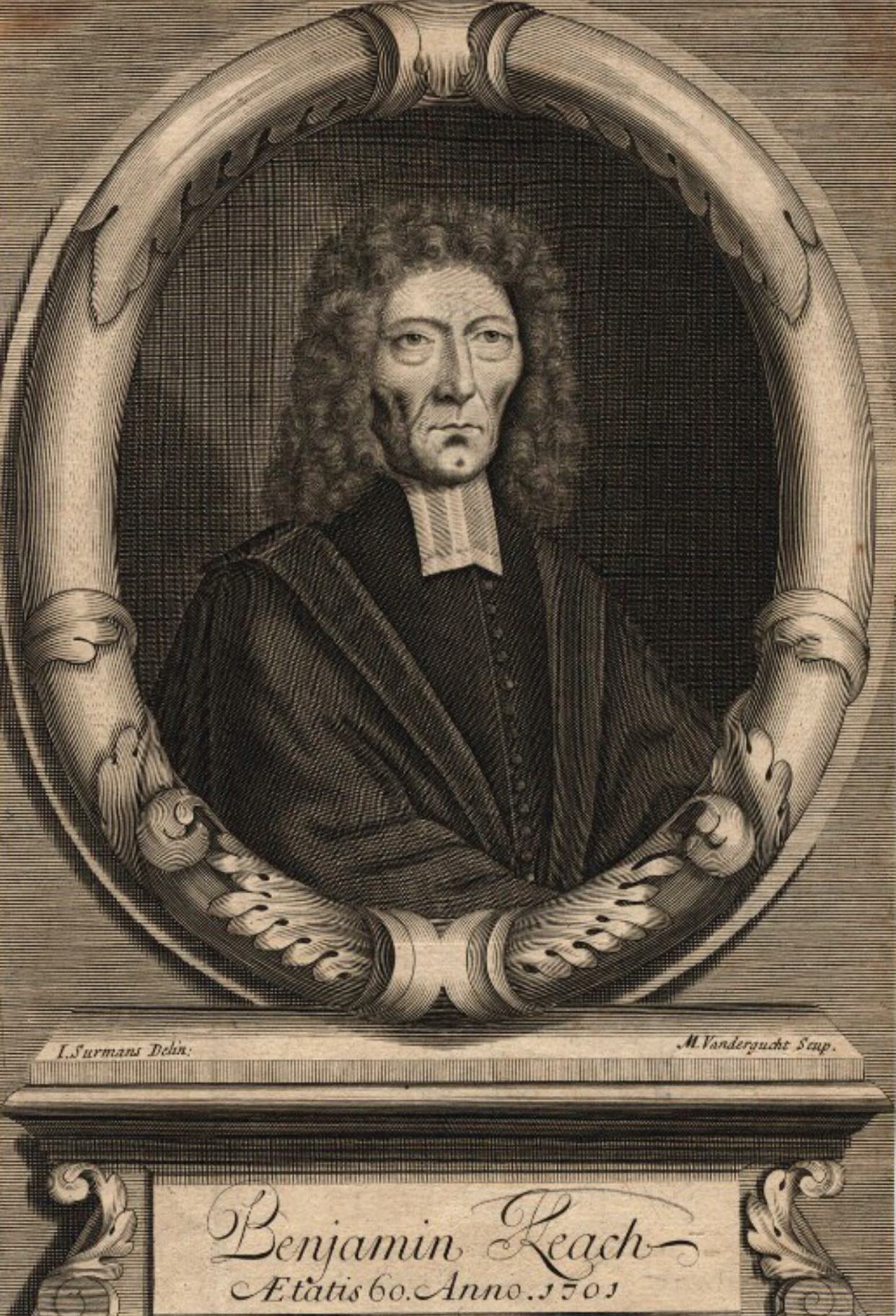
The article "The Saints God's Jewels" by Benjamin Keach explores the theological concept of believers as God's treasured jewels, emphasizing their rarity and value in His sight. Keach employs metaphors to illustrate how saints are formed and shaped by God, akin to precious jewels that require time and care to perfect. He supports his points through various Scripture references, including Malachi 3:17, Philippians 1:6, and 2 Corinthians 8:23, to demonstrate God's commitment to completing the work He has begun in His people. The significance of this teaching lies in the assurance it provides believers of their worth to God, safeguarding against despair amid adversity and encouraging a lifestyle of continued growth in grace.
Key Quotes
“The Saints are in this place called Jewels; they are God's choice Jewels.”
“God carries on the work of grace gradually... He that hath begun a good work in you will perform it to the day of Christ.”
“God takes great care of his Saints, esteems them as his chiefest treasure and will not lose one of them.”
“Are we God's Jewels or not?... Do we excel others? Is there a real or only a seeming worth and excellency in us?”
What does the Bible say about God's people being His jewels?
Malachi 3:17 states that God's people are His jewels, emphasizing their value and preciousness in His sight.
Malachi 3:17, 2 Corinthians 8:23
Why is it important that believers are seen as God's jewels?
Believers being God's jewels signifies their unique value and the divine affection He has for them.
Philippians 1:6
How do we know that God's work in believers is true?
Philippians 1:6 assures us that God will complete the good work He begins in believers.
Philippians 1:6
THE SAINTS GOD'S JEWELS
"They shall be mine in that day when I make up my Jewels" Mal 3:17.
THE Saints are in this place called Jewels, they are God's choice Jewels: there is nothing so excellent in the eyes of men, but God's people are as amiable in his sight; and why he calls them Jewels, is opened in the following parallel.
METAPHOR
I. JEWELS are rare and excellent things, made by the hands of curious workmen; they are made of precious Stones, set in gold and silver.
PARALLEL
I. THE Saints are to God most choice and excellent ones: "The king's daughter is all glorious within," Ps 45:13. These Jewels are made up of a complication of all the precious graces of the Holy Spirit.
METAPHOR
II. Some Jewels are long in making; they are not made near so soon as some others are. They carry on their work gradually, every day's work adds to their beauty and richness; yet having begun, they resolve to go forward, and never cease till they have finished them, and made them up, quite fit for the cabinet.
PARALLEL
II. So some of the Saints are not so soon made up and fitted for heaven, as others are; God carries on the work of grace gradually. All persons, as soon as ever they are converted, are not made fit for heaven, but they must go from one degree of grace to another. Yet God hath promised to perfect the work he hath begun; he will never cease, until he hath made up the Jewels he hath begun to make. "He that hath begun a good work in you, will perform it to the day of Christ," Php 1:6.
METAPHOR
III. Jewels are a most rare and excellent ornament, nothing richer; and are therefore worn only by rich and noble persons, in which they take great delight.
PARALLEL
III. So believers are the glory of Christ: "Whether any do enquire of Titus, he is my partner and fellow-helper concerning you; or our brethren be enquired of, they are the messengers of the churches, and the glory of Christ," 2Co 8:23, which agrees with that in Isa 62:3, "Thou shalt also be a crown of glory in the hand of the Lord, and a royal diadem in the hand of thy God;" and hence called "Hephzibah, the Lord delighteth in thee." No prince esteems more of his crown, Jewels, and royal diadem, than God doth of his people. The high-priest under the law was to have the names of the children of Israel engraven on the breast-plate. See Ex 28:29. "And thou shalt make the breast-plate of judgment, the work of cunning workmen, &c. And thou shalt emboss in it embossments of stones four rows: the first, a row of sardius, a topaz, and a smaragd; the second row a chalcedony, a sapphire, and sardonyx; and the third row, an hyacinth, a chrysophraso, and an amethyst; and the fourth row, a chrysolite, a beryl, and a jasper. And they shall be set in gold in their embossments, and the stones shall be with the names of the sons of Israel," &c. Ex 28:15-21. Also in the ephod there was two beryl-stones, and on them was engraven the names of the children of Israel. Now the high-priest was a type of Christ, and his having the names of the children of Israel engraven with precious stones upon the ephod which was upon his shoulders, and upon the breast-plate, signifies not only Christ's bearing his Saints upon his shoulders, and as it were, upon his heart, but also what an ornament Christ looks upon his Saints to be unto him; for those precious stones were a wonderful ornament to the priest, both on his shoulders and breast. Take Mr. Ainsworth's annotations on the 11th verse. The engraver, stone-cutter, or Jeweller, thus engraving in precious stone, and that like a signet, the names of the children of Israel, signified the firm and perpetual love, memorial, esteem, and sustentation of the Church. And to this the spouse alludes, Song 8:6, "Set me as a signet upon thy heart, as a signet on thy arm, &c."
METAPHOR
IV. A man takes great care of, and exceedingly values his rich and choice Jewels; he will not lose one of them, if he can possible keep them.
PARALLEL
IV. So God takes great care of his Saints, esteems them as his chiefest treasure, and will not lose one of them. "All that the Father hath given me, have I kept, and none of them are lost," &c. That God highly prizes, esteems, and takes great care of his people, doth appear many ways
(1.) By the price he paid for them; he gave up that precious and invaluable Jewel of his heart, viz., the Lord Jesus, to be broken in pieces, that so he might thereby make unto himself many thousand choice and precious Jewels. (2.) By the great pains he hath used in forming and fashioning them for himself: "We are his workmanship," &c. (3.) By his making of such a firm and sure covenant with Christ in their behalf, that none of them might be lost. (4.) By the charge he gives to the wicked not to hurt them. "He suffered no man to do them wrong: yea, he reproved kings for their sakes, saying, touch not mine Anointed, and do my prophets no harm," 1Ch 16:21-22. (5.) By his declaring, that "they that touch them, touch the apple of his eye." He pities them as a father pities his children. (6.) By his bestowing so many precious graces and good gifts upon them, to make them shine, and gloriously set forth their lustre. (7.) By executing wrath and displeasure upon their enemies. (8.) By his defending, saving, and preserving them in the midst of so many great and imminent dangers. (9.) In hiding them in a secret and secure place, out of the reach of adversaries. (10.) Lastly, by providing such a glorious place for them after death, that they may be with him for ever.
METAPHOR
V. Jewels are subject to many casualties whilst they are making, and are often marred, or receive much detriment, which without much labour and cost are not repaired and made good again.
PARALLEL
V. So God's Jewels are subject to sustain great detriment, and are often much marred, whilst he is about making of them up, by sin and Satan, and through their own carelessness, which is not soon nor easily repaired. Though God graciously by his Word and Spirit renews his work again upon their souls, as in the case of David, Peter, and divers others.
METAPHOR
VI. When a man hath quite made up his Jewels, he puts them into a rich cabinet.
PARALLEL
VI. So when God hath quite made up his spiritual Jewels, he puts them into heaven; that is the rich and glorious cabinet which he hath provided for all his choice and goodly Jewels.
METAPHOR
VII. A person that hath many rich and choice Jewels, shows them, as he sees occasion, to his friends, and also to others, declaring his right to them, and setting forth the worth and excellency of them.
PARALLEL
VII. So God in the day to come, when he hath made up all the Jewels he intends to make, will reveal, show, or make known his Saints to angels and men. Hence the day of Christ's coming is called "The day of the manifestation of the sons of God." "They shall be mine," saith God. He will say in that day, these are mine, these that you ungodly ones abused, hated, and persecuted, and thought not worthy to live, but accounted the off-scouring of all things, behold now what rare and lovely ones they are! These are the delight and joy of my heart, whom I value as my choicest treasure, and I will spare them, whilst you shall bear the fierceness of my wrath and indignation for ever. "Then shall ye return, and discern between the righteous and the wicked, between him that serveth God and him that serveth him not," Mal 3:18.
DISPARITY.
I. Other Jewels may be lost: but God will lose none of his Jewels.
II. He that makes other jewels may not be the proper owner of them, nor wear them for an ornament himself: but God who makes all his spiritual Jewels, is the proper owner of them: "This people have I formed for myself." They are also made for his own glory.
III. Other Jewels may be quite spoiled, broken to pieces, and become good for nothing; the best and richest Jewels shall at last pass away, and perish for ever: but God's Jewels shall never utterly be spoiled; for though they may receive some damage by Satan's temptations, and the pollution of sin; yet God will perfect that which is wanting concerning them, and make them at last so glorious, that they shall be out of danger, and shall abide and shine in beauty and glory to eternity.
INFERENCES.
I. From hence we may infer, what horrid iniquity the enemies of God and his church are guilty of, and what a dreadful account they have to give for endeavouring, and with the greatest rage and malice, and unwearied attempts, contriving all ways imaginable to spoil, break in pieces, and utterly destroy all God's choice and precious Jewels, which he is as tender of as the apple of his eye; what will they do in the day of vengeance?
II. It speaks forth much comfort to the godly. O how are they esteemed, prized, and valued by the Almighty! They are his Jewels, his special and peculiar treasure.
III. This may inform all men, what the reason is God is so much concerned for the good and well-being of his own people, and so often appears to vindicate their innocency, and defend them from the rage and cruelty of wicked men.
IV. Let us enquire, whether we are God's Jewels, or not. (1.) Are we regenerated ones? Have we the pearl of faith, love, humility? &c. (2.) Are we holy, sincere, and faithful in all things to God? (3.) Do we excel others? Is there a real, or only a seeming worth and excellency in us? "What do we more than others? (4.) Do we grow in grace? Doth the work of God go on upon our hearts? Are we more fit for heaven today, than we were yesterday? A Jewel in the hand of a jeweller is every day nearer finishing. "The righteous shall hold on his way, and he that hath clean hands shall grow stronger and stronger."

Comments
Your comment has been submitted and is awaiting moderation. Once approved, it will appear on this page.
Be the first to comment!