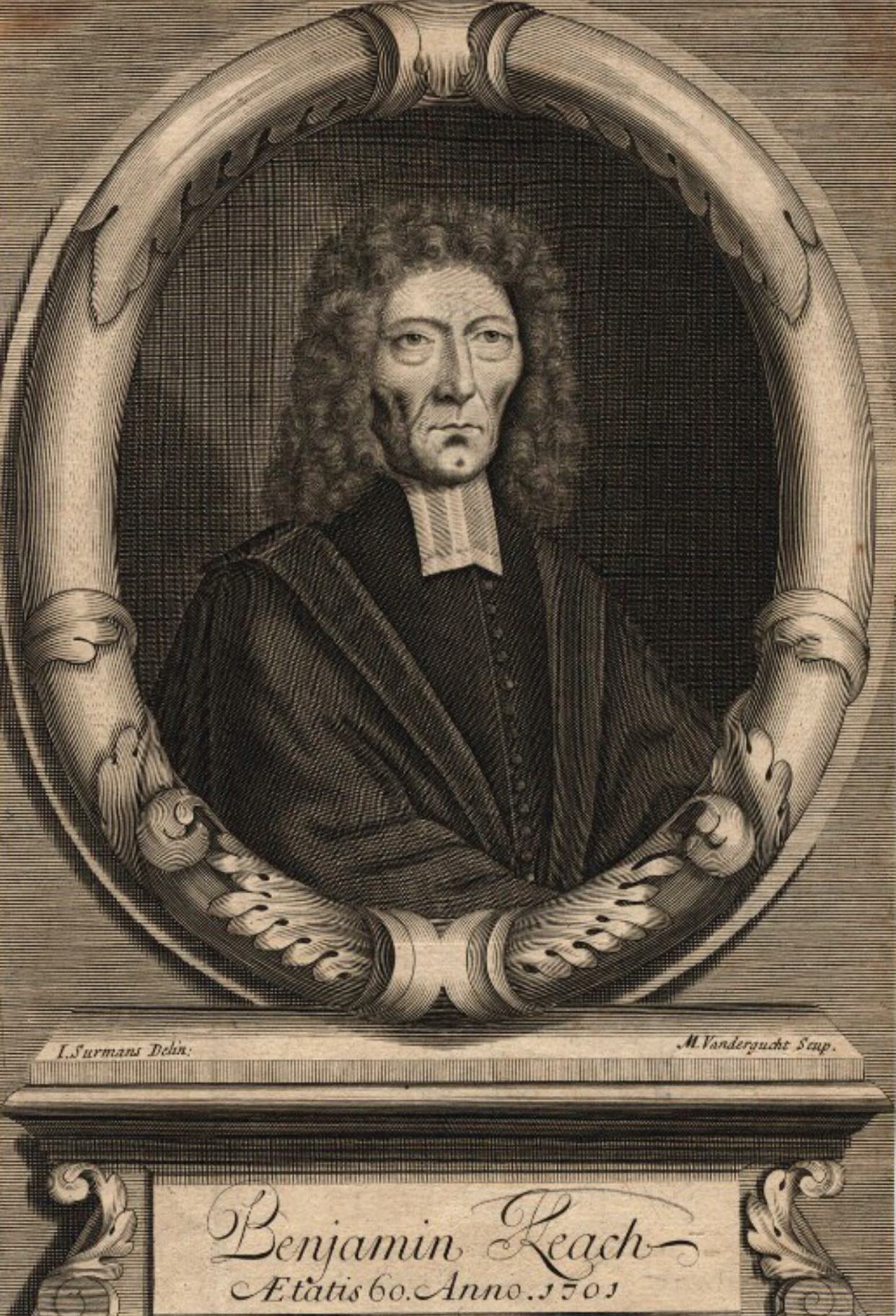
The article "Wicked Men Sluggards" by Benjamin Keach addresses the theological concept of spiritual slothfulness, specifically contrasting the diligence expected of believers with the complacency characteristic of the unregenerate. Keach identifies various forms of sluggards, including those physically idle, spiritually careless, and those who once showed zeal but have fallen into lethargy. He emphasizes the danger of such complacency by invoking Scripture, notably Proverbs 6:9—"How long wilt thou sleep, O sluggard?"—and Ephesians 5:14, which calls the sleeper to "awake from the dead." The practical significance of this doctrine lies in its urgent call to self-examination for both believers and non-believers, urging them to awaken from their spiritual nap and pursue a vigorous faith that produces fruit, lest they risk eternal separation from God.
Key Quotes
“The way of the sluggard is as a hedge of thorns but the way of the righteous is plain.”
“The soul of the diligent shall be made fat; but the desire of the sluggard killeth him.”
“There is grace offered you, pardon offered you, peace offered you...will not this stir you up?”
“If your house were all on fire...you would conclude they were without all bowels of humanity. Sinner, this is thy condition; thy soul is on a flame.”
What does the Bible say about spiritual sluggards?
The Bible warns against spiritual sluggards, describing them as people who are idle and neglect their spiritual responsibilities.
Proverbs 6:9, Ephesians 5:14
How do we know that laziness is a sin according to the Bible?
The Bible teaches that laziness leads to ruin and neglect of one's duties, both physically and spiritually.
Proverbs 24:30-31, Proverbs 21:25, Proverbs 13:4
Why is it important for Christians to wake up from spiritual slumber?
Christians must wake from spiritual slumber to avoid eternal ruin and to actively pursue godliness.
Matthew 25:1-7, Jeremiah 8:20
WICKED MEN SLUGGARDS
"How long wilt thou sleep, O Sluggard? When wilt thou arise out of thy sleep?" Pr 6:9.
"How long wilt thou sleep? Sleep is taken variously in the holy scripture.
1. For the binding or closing up the senses, to give the body rest: "The same night Peter was sleeping between two soldiers," Ac 12:6. This is a natural sleep.
2. It is taken metaphorically.
(1.) For death. Hence it is said, "David, after he had served his generation according to the will of God, he fell asleep." "For now shall I sleep in the dust, and thou shalt seek me in the morning," &c., Job 7:21. This is a mortal sleep.
(2.) For a dead or senseless state in sin. i.e., sin ruling and over-ruling in Men's hearts before conversion, "Awake thou that sleepest, and arise from the dead and Christ shall give thee life," Eph 5:14. This is a spiritual sleep.
(3.) For a drowsy and slothful frame of heart, which often attends the godly: "I sleep, but my heart waketh," Song 5:2.
Thou Sluggard, or slothful person. There is a three-fold Sluggard.
1. One that is idle, loving ease and bodily rest, neglecting his worldly concerns. "I went by the field of the slothful," &c., Pr 24:30.
2. One that is spiritually idle, wholly careless and negligent of his soul, and the great concernments thereof: "The Sluggard saith, there is a lion in the way."
3. One that hath been formerly awakened in a spiritual sense, and is fallen into a cold, drowsy, and negligent state again.
I shall run the parallel with respect had principally to that description Solomon gives of a Sluggard.
SIMILE
I. A Sluggard is a person that makes excuses: "The slothful Man saith, there is a lion without, I shall be slain in the street," Pr 22:13.
PARALLEL
I. So the Sinner, or spiritual Sluggard, hath many excuses; if I should arise, saith he, and follow Christ, I shall suffer in my name, be reproached, suffer in my estate; nay, it may come to pass, saith he, that such as are religious indeed may be put to death. There are many Romish lions without, persecuting and devouring beasts of prey, that I fear will fly upon me in the street; and hence he resolves to keep himself in a whole skin.
SIMILE
II. A Sluggard, Solomon saith, is like a door that turneth upon its hinges: "As a door turneth upon its hinges; so doth the slothful man upon his bed," Pr 26:14.
PARALLEL
II. So a Sinner, or a spiritual Sluggard, seems to move this way, and that way. He reads God's word, and hears sermons, and perhaps prays too, but still is where he was; he is not renewed in his inward Man, no change hath passed upon him, he is one that loveth his lusts, this and the other sin, and is not taken off his old hinges; he is still in the state of fallen Man, not taken off of the old root, and transplanted into Chirst.
SIMILE
III. The Sluggard is a Man of desires, but not of endeavours. The Sluggard desireth, and hath nothing; but the soul of the diligent shall be made fat, Pr 13:4, compared with Pr 21:25. The desire of the Sluggard killeth him, because his hands refuse to work.
PARALLEL
III. So the wicked Man, or spiritual Sluggard, is full of desires; he, with Balaam, desires to die the death of the righteous, he desires to be saved, and hath many faint desires to be forgiven; he cries out sometimes, when conscience flies in his face, and rebukes him, God forgive me, the Lord help me, &c., but never strives with all his might against his sin, and the temptations of the devil. Hence his desires are said to slay him, Nu 23:10. Desires without endeavours will deceive the soul, nay, eternally ruin and damn the soul. What avails a Man that is hungry, to wish for bread, when he never labours for it? The promise runs to the diligent and industrious person; "he shall be fed, but the Sluggard shall suffer hanger, and pine away," Pr 10:4.
SIMILE
IV. The Sluggard neglects his vineyard, and lets his field run all over with nettles and weeds. "I went by the field of the slothful, by the vineyard of the man void of understanding, and lo, it was all grown over with thorns, and nettles had covered the face thereof, and the stone wall thereof was broken down," Pr 24:30-31.
PARALLEL
IV. So the sinner, or spiritual Sluggard, neglects his soul, and the souls of his family; though he provides for the body, and takes care what he and his shall have to eat, and what to put on; yet his soul, and the souls of such as are about him, are neglected; nothing but weeds and corruption grow there; sin and filthy lust predominate, pride, passion, covetousness, and every evil work, Jas 3:16.
SIMILE
V. The way of the Sluggard seems to be barred or hedged up, that he cannot go on, he cannot find the path. "The way of the slothful Man is a hedge of thorns: but the way of the righteous is plain," Pr 15:19.
PARALLEL
V. So the sinner's way, is as it were, hedged up: for like as a hedge obstructs or hinders a Man sometimes in his way, that he cannot pass along; so the wicked by one temptation, obstruction, or another, are hindered from going on in the ways of God. Perhaps the snares that attend their trade, are as a hedge to them; or the fear of displeasing a father, or uncle, or some other relation, lest they should be left out of their will, or dispossessed of an estate; or a landlord, or some great Man or neighbour, by whom they may possibly have their livelihood, may be as a hedge or bar to obstruct them in their following of Christ, and by this means is the spiritual Sluggard discouraged.
SIMILE
VI. The Sluggard doth not enjoy the good that is in his hand: "The slothful Man roasteth not that which he took in hunting," Pr 12:27; that is, when he hath got food, he doth not prepare it, nor make it meet to be received, nor feed upon it.
PARALLEL
VI. So the spiritual Sluggard doth not enjoy the heavenly good things that seem to be in his hand: "Wherefore is there a price in the hand of a fool to get wisdom, seeing he hath no heart to it?" Pr 17:16. Some men hunt, as it were, after knowledge; go from one place to another, will hear this worthy minister, and that worthy minister, and at last when they have found the venison, I mean, come to understand the will of God, they do not subject to it. They know what the threatening is, but fear it not, and know what the precept is, but obey it not; and know what the promise is, and yet believe and apply it not. And thus they roast not that which they have taken in hunting; they feed not upon the word; they are "forgetful hearers, and not doers of the word, and thereby deceive their own souls," Jas 1:22. '
SIMILE
VII. The Sluggard is one that loves not to encounter with difficulties; he cannot abide to think of enduring a little hardship. "The Sluggard will not plough by reason of the cold," Pr 20:4.
PARALLEL
VII. The spiritual Sluggard loves his ease. If religion cannot be owned, professed, and stuck to, unless a Man offer some force, as it were, unto himself, and expose the flesh to some hardships, he presently grows weary of it. He cannot in the morning go to prayer, because his worldly business calls for him, or perhaps it is cold, or he is indisposed, &c. And perhaps he cannot pray at night, because it doth not agree with the flesh; the body is weary, and would fain go to bed. And he cannot go to church to hear the word of God, because the wind blows, or it rains; or he hath wearied himself the day before, and so cannot rise early enough; or it is a great way, and the ways are bad, &c., yet he knows in his conscience, that if there were but a good bargain to be bought, or some worldly advantage to be had though it were not above the value of half five pound, all these obstructions would be nothing. But perhaps some sluggards may get over these things; and yet if there lie other difficulties in the way, they cannot hold the plough of the Gospel; if there is a blast of persecution feared, he knows not how to encounter with that. And thus the Sluggard discourages himself.
SIMILE
VIII. The Sluggard, though he is so slothful, as to hide his hand in his bosom, and is grieved to bring it again to his mouth, yet he is wise in his own eyes. "The Sluggard is wiser in his own conceit, than seven Men can render a reason," Pr 26:16.
PARALLEL
VIII. So the spiritual Sluggard, though he is monstrous idle, prays as if he prayed not, and reads as if it were a burden to him, and hears the word with no delight, his heart is asleep, and perhaps his eyes too; yet he is very wise in his own conceit. Notwithstanding he is such a poor, carnal, worldly wretch, he hath high thoughts of himself, and cries out, when reproved, I know as much as you; mind your own matters; every tub shall stand upon its own bottom; why do you trouble yourself with me? Thus "every man is right in his own eyes, but the Lord pondereth the heart," Pr 21:2.
SIMILE
IX. The Sluggard is a man that seems to desire but a little time and then he will awake: "Yet a little sleep, yet a little slumber, yet a little folding of the hands to sleep," &c. As much as if he should say, Let me alone yet a little, I will sleep but a little longer; let me have a little more sleep, &c.
PARALLEL
IX. So the spiritual Sluggard seems also to desire but a little time to gratify his flesh, and please his sensual appetite, to walk in the ways of vanity, and sin against God. I will, saith an ungodly person, repent, or it is my purpose to reform my ways; but let me alone a little longer, it is time enough yet. It is a great while to day, saith the Sluggard, when one comes to awake him early in the morning: so saith the sinner, it is a great while before Christ will come, or before old age and death will come; in his heart therefore he is resolved to continue in his evil and ungodly courses a little longer: "Yet a little sleep, yet a little slumber, yet a little folding of the hands to sleep." Pray observe, how sweet sleep seems to be to a sluggard; so the ways of sin and vanity seem sweet to an unconverted man: and as hard labour is grievous to such a person; so is godliness, I mean strict and real godliness, godliness in the power of it, to an unsanctified heart.
SIMILE
X. Lastly; A Sluggard cannot abide to be disturbed: O let me lie, let me sleep; what ado you make! is the voice of a slothful man.
PARALLEL
X. A sinner, or spiritual Sluggard, cannot endure to be disturbed: the thoughts, of death are to him like the hand-writing on the wall, Da 5.: he loves not that conscience should call upon him to awake him, nor ministers, nor any friends he hath; nay, such as would, or do strive to rouse a sinner, are the unwelcomest people in the world to him. Repent! repent! what ado is here, saith the graceless soul, can you not let me alone? pray do not trouble me. You know who sent away Paul, being unwilling to hear any more at that time.
INFERENCES.
I. This shows what a sad and dangerous condition sinners are in; they are not only asleep, but in a dead sleep, and know not how near eternal ruin they are.
II. We shall endeavour therefore to awaken the sinner out of his deep sleep.
1. Sinner, God calls aloud upon thee: "Awake thou that sleepest, and arise from the dead. How long wilt thou sleep, O Sluggard?''
2. God hath called not only loud, but long, upon you. Consider what danger you expose your souls unto; you put an opportunity into the Devil's hands to destroy you. How easy is it for a weak enemy to destroy a mighty champion, when he is asleep? Jael, a woman, soon destroyed Sisera when he was asleep.
3. May I not say, sinner, the Philistines are upon thee, and thy soul is in danger of being made a prey for ever.
4. Many ways hath God used to awaken thee: he hath employed his ministers, he hath set conscience on work, he hath brought forth many dreadful judgments, and all to awaken thee; and shall all means fail and be insufficient?
5. Thou losest many choice blessings by lying thus asleep in thy sin.
6. There is grace offered you, pardon offered you, peace offered you; and will not this stir you up? Nay, more than all, Christ is offered you, heaven offered you, a kingdom and crown of endless glory is offered you: soul, rouse up, and look about, consider the opportunity that is now in your hands; will not life and light, pardon and peace, God and Christ, heaven and happiness, do you much good?
7. It is harvest-time. "Go to the ant, thou Sluggard, consider her ways, and be wise. She provideth her meat in the summer, and gathereth her food in the harvest," Pr 6:6-8, and shall such a small and contemptible animal be wiser than you?
8. The harvest will soon be gone, the day of grace be over, and then it will be too late. "The harvest is past, the summer ended, and we are not saved," Jer 8:20.
9. If you will not sow now because it is cold, you are like to beg in harvest, and have nothing, viz., at the end of the world: and then you will say, "Lord, Lord, open unto us; and he will say, verily, verily, I know you not, depart from me ye workers of iniquity."
10. Let me tell thee, thou art just ready to drop into hell, thou sleepest in a dangerous place; awake, sinner, or thou art damned! If thy house were all on fire, and thy neighbours should not cry out to thee to save thyself, thou wouldst conclude they were without all bowels of humanity: Sinner, this is thy condition, thy soul is on a flame; see what sin, that evil spark, hath done; I can do no less than cry out, fire, fire; wilt thou sleep, and be burnt for ever? The Lord awaken thee.
III. Let saints bless God they are awakened out of their sleepy state.
IV. Let not: Satan, this world, nor any other enemy lull you asleep again. Let us not sleep, as do others. Christians are subject to fall into a spiritual drowsiness; see Mt 25:1-7. O cry therefore with David, "Lord, open thou mine eyes, lest I sleep the sleep of death."
Quest. Some may say, from whence doth it arise, that the saints are so subject to be overtaken with spiritual drowsiness?
Ans. 1. From the weakness and dulness of the flesh: "The Spirit indeed is willing, but the flesh is weak."
2. By being slothful, negligent, and out of employment, when we grow indifferent and careless, and neglect our work, neglect prayer, reading and hearing God's word, no marvel if we soon fall asleep: "Slothfulness casteth into a deep sleep," Pr 19:15.
3. By being amongst sleepy folks: this is apt to make a wakeful person in a little time drowsy, and subject to nod too; a sleepy family, a sleepy church, a sleepy ministry, usually have bad effects upon this account upon a spiritual Christian, therefore prize a soul awakening ministry.
4. By means of long watching, "Whilst the bridegroom tarried, they all slumbered and slept."
5. A black, dark, and gloomy day is subject to cause one to grow drowsy, as most men can experience.
6. By an apprehension it is a long while to day, time enough, saith the Sluggard, to arise. Men think of living long, and that it will be a great while before the Lord comes, &c.

Comments
Your comment has been submitted and is awaiting moderation. Once approved, it will appear on this page.
Be the first to comment!