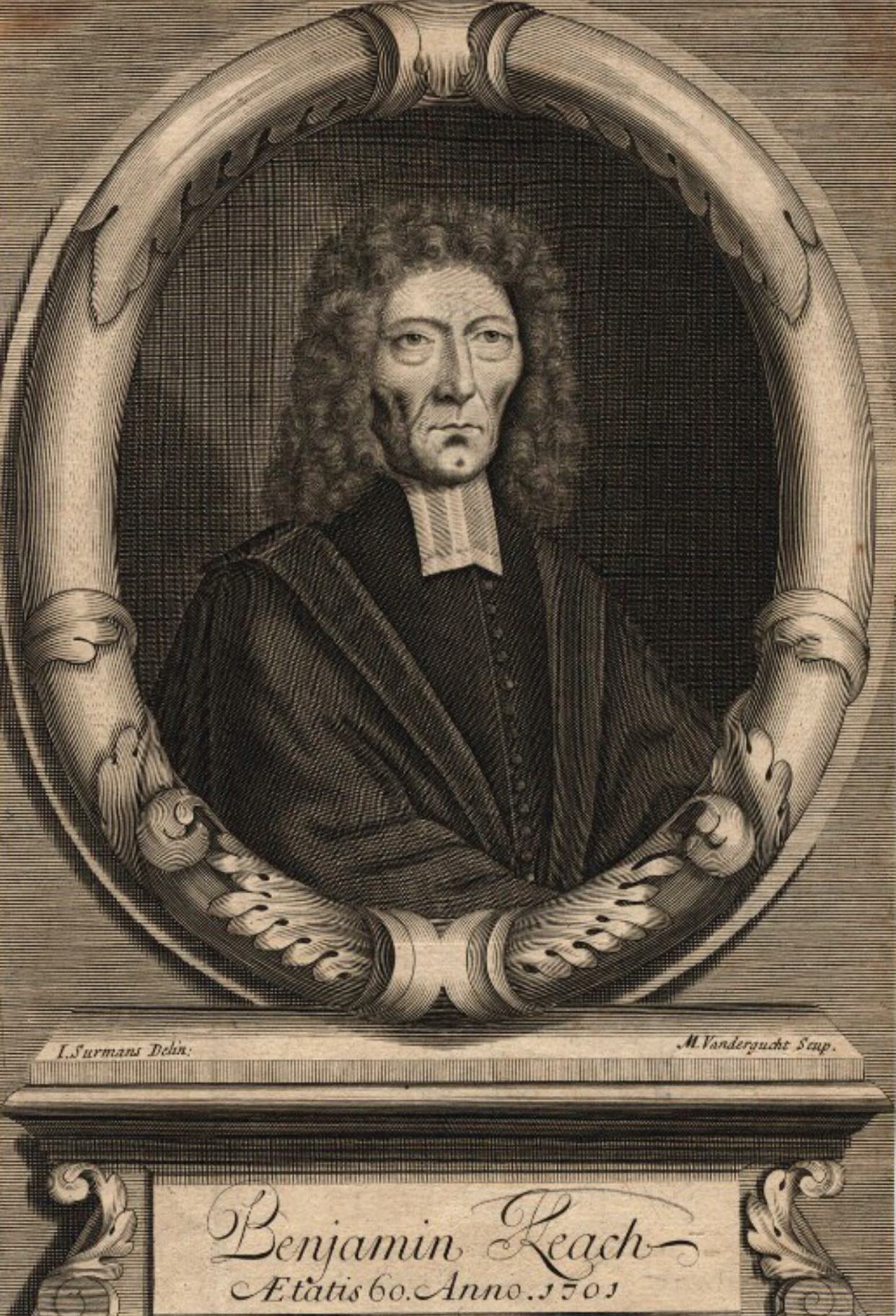
The article "Wicked Men Debtors" by Benjamin Keach examines the doctrine of sin as a debt, arguing that sinners are indebted to God for their transgressions against His law. Keach draws on Matthew 5:25-26 and 18:24-28, illustrating that sin incurs a monumental debt that humanity cannot repay. He emphasizes the metaphorical implications of being a debtor, depicting sinners’ unwillingness to acknowledge their debts and the shame they experience as a result of their guilt. The scriptural support highlights both the urgency of reconciling with God before judgment and the severity of the eternal consequences for unrepentant sinners. The practical significance of this doctrine lies in its call for redemption through Christ, offering believers assurance of forgiveness and motivating them to share this message of hope with others.
Key Quotes
“A Debtor is one that oweth money duty &c to his neighbour also one that is a trespasser an offender or guilty person.”
“Sinners are so far in Debt to God that they are not able to make him satisfaction; they owe ten thousand talents and have not one farthing to pay.”
“The soul of the wicked that abhorred him...their conscience being awake, See Sin a Debt.”
“How much more doleful is that cry of the rich glutton in hell for a drop of water to cool his tongue and none is given to him.”
What does the Bible say about sin as a debt?
The Bible compares sin to a debt that must be accounted for, highlighting our obligation to God and the seriousness of our transgressions.
The debt we owe as sinners extends beyond mere actions to encompass our very being, as everything we possess is ultimately entrusted by God. Romans 8:12 emphasizes that we are in debt to live according to the Spirit. The seriousness is accentuated as failing to repay this debt leads to eternal consequences, which aligns with the teachings of Jesus about unrepentant debtors being cast into prison until their debts are fully paid (Matthew 5:25-26). This reinforces the urgency for individuals to seek reconciliation with God through Christ, who offers to forgive and bear our debts.
Matthew 5:25-26, Matthew 18:24, Romans 8:12
How do we know that God's forgiveness of sin is true?
God's forgiveness is affirmed in Scripture through the atoning sacrifice of Jesus Christ, demonstrating God's justice and mercy.
Additionally, the metaphor of sin as a debt strengthens our understanding of this forgiveness. Just as a debtor can be forgiven by their creditor through grace, God, as our ultimate creditor, is willing to forgive those who repent and trust in Him. The teaching found in Psalm 103:1-3 reminds believers to praise God for His merciful forgiveness. Therefore, the assurance of forgiveness is not just a hope but a profound reality grounded in the redemptive work of Christ as presented in the New Testament.
Ephesians 1:7, Psalm 103:1-3
Why is understanding sin as a debt important for Christians?
Understanding sin as a debt emphasizes the seriousness of our sins and the need for God's grace and mercy through Christ.
Moreover, this metaphor serves as a powerful reminder of the eternal consequences of unrepentant sin. The imagery of being cast into prison until the utmost farthing is paid (Matthew 5:25-26) evokes a profound urgency for believers to share the message of salvation with others. It inspires compassion for those still under the weight of their unacknowledged debts. Ultimately, grasping this concept deepens our gratitude for the grace of God, promoting a life shaped by gratitude, worship, and witness.
Romans 3:23, Matthew 5:25-26
WICKED MEN DEBTORS
"Agree with thine adversary quickly, whilst thou art in the way with him; lest at any time the adversary deliver thee to the judge, and the judge deliver thee to the officer, and thou be cast into prison. Verily, I say unto thee, thou shalt by no means come out thence, till thou hast paid the uttermost farthing," Mt 5:25-26.
"And when he had begun to reckon, one was brought unto him, which owed him ten thousand talents," Mt 18:24.
IN both these places sin is called a Debt, and the sinner a Debtor: the reason of which is showed under the head of metaphors concerning sin, where sin is compared to a Debt; unto which we refer you.
METAPHOR
I. A Debtor is one that oweth money, duty, &c., to his neighbour; also one that is a trespasser, an offender, or guilty person. A man may be a Debtor by office, Ga 5:3; by duty, Ro 8:12; by the law of charity, Ro 15:27; by trespassing or offending, whether God or man, Mt 6:12.
PARALLEL
I. Man oweth all that he is, hath, or can do, unto God; he having received his very being, and all other good things that he enjoys, from God, as so many talents lent him, which he must be accountable to God for in the great day, &c., Mt 25:19. Man is a trespasser, an offender, or a guilty person, having broken the law, the penalty of which is eternal death; so that as a traitor, or flagitious person, by his heinous crimes he is become a Debtor to everlasting punishment.
METAPHOR
II. An evil Debtor is unwilling to be called to an account; nothing is worse to him, than to hear the news, "Give an account of thy stewardship." Hence it is said, "One was brought that owed ten thousand talents;" Mt 18:24, as if it were by force; he was haled before his master to reckon with him.
PARALLEL
II. So wicked Men do not love to think upon the day of judgment, care not to hear of those large bills and hand-writings that are against them. How grievous will that voice from heaven be to ungodly men, "Give an account of your stewardship," Lu 16:2. "Arise ye dead, and come to judgment!" Give an account of all the oaths you have sworn, the lies you have told, the times you have been drunk, the days of grace you have neglected; give an account of all the hard and reproachful words you have spoken against your godly neighbours, and of all the wrongs and injuries you have done them; give an account of all those talents that were lent you; what improvement have you made of your knowledge and parts, your seasons and Sabbaths, and of those many years you have had in the world? This, I say, is grievous to Wicked Men to think upon. "They shall be brought forth in the day of wrath," Job 21:30, they will not come willingly, but shall therefore be as it were haled before the Judge of heaven and earth.
METAPHOR
III. Ill Debtors are attended with shame. Ambrose speaketh of some, who for the shame and distress thereof, have made away with themselves, fearing more opproprium vitae, than mortis periculum, the reproach of life, than the punishment of death.
PARALLEL
III. Sinners are such vile Debtors, that they are attended with great shame, and therefore Adam-like, hide their sins, do not love, nay, they are ashamed any should know how black and notorious in wickedness they are: they have got many ways to cover their iniquity.
METAPHOR
IV. Some great and ill Debtors have many shifts and delays to put off their creditors; it is a common custom amongst men far in Debt, to contrive ways to excuse themselves, and make vain apologies, and all to shift and put off farther trouble.
PARALLEL
IV. So sinners have many ways to excuse themselves: have you not heard some speaking to this purpose, I was drawn in before I was aware; I had not done such or such a thing, had it not been for such or such an one; but all are guilty of human infirmities, I shall do better; when God gives me more grace, I intend to reform: and thus they put off God and conscience by trifling delays and excuses, and repent not of their evil deeds, nor go to God through the mediation of Jesus Christ for pardon and forgiveness.
METAPHOR
V. Some Debtors hate their creditors; leve aes alienum debitore facit grave inimicum, saith Burges, a little money borrowed makes a Man Debtor, but a great deal an enemy; so the more they owe, the more they hate. Nay, Aristotle saith, Debtors wish their creditors to have no being, wish they were dead, so that they might thereby be freed from their Debts.
PARALLEL
V. Wicked men hate God, they are often set out in scripture as haters of him, because they fear him as an angry Judge, who will severely demand satisfaction to the last farthing; they care not whether there were any God or no, to call them to an account for all their wickedness which they daily commit against him; hence the apostle saith, "The carnal mind is enmity against God," Ro 8:7; nay, and the Lord positively saith of the wicked, that "their soul abhorred him," Ec 11:8.
METAPHOR
VI. Some Debtors are so far in Debt, that they owe much more than they are worth, or are able to pay, or make a compensation for.
PARALLEL
VI. Sinners are so far in Debt to God, that they are not able to make him satisfaction, they owe ten thousand talents, and have not one farthing to pay: the aggravation of sin lieth in this, viz., that it is against God; therefore that offence that is against Man is compared to an hundred pence, but that which is against God to ten thousand talents. "And when he had begun to reckon, one was brought unto him which owed him ten thousand talents. And because he had nothing to pay, his lord commanded him to be sold, and his wife, and children, and all that he had, and the debt to be paid. The servant therefore fell down, and worshipped him, saying, lord refrain thine anger towards me and I will pay thee all. Then the Lord of that servant had compassion, and loosed him, and forgave him the debt. But the same servant went out, and found one of his fellow-servants which owed him an hundred pence, and he laid his hands upon him, and took him by the throat, saying, pay me that thou owest," &c., Mt 18:24-28.
METAPHOR
VII. An ill Debtor, that is very far in debt, does not love to see nor meet his creditor, he will go some byeway, or go much about, rather than come near him, or meet with him.
PARALLEL
VII. So sinners who are notoriously guilty before God, love not to meet with him, nor hear of him. If God comes near them by the reproofs of his word, or by the checks of conscience, or by the rebukes of the rod, how are they startled? As in the case of Felix, who, when he found that God had met with him by Paul's preaching, "Who reasoned of righteousness, temperance, and judgment to come," it is said, "he trembled," Ac 24:25. But mark his answer to the apostle; was he pleased with that doctrine? Alas no, he could not bear it; therefore cries out, "Go thy way for this time, when I have a convenient season, I will call for thee."
METAPHOR
VIII. A Debtor that is far in debt, is oftentimes afraid of an arrest, and much perplexed and troubled in his mind; the thoughts of a prison being grievous to him.
PARALLEL
VIII. So guilty sinners are afraid of the serjeant, death; if they perceive death is approaching, how troubled are they for fear of the prison of utter darkness? provided their consciences be awake. See Sin a Debt.
METAPHOR
I. A Debtor among Men, upon the non-payment of his debts, is exposed but to external punishment, suppose it should be the highest punishment that we read of in scripture or history; we read under the law they were bound to sell their children, yea, themselves to become slaves or bondmen; it was a sore punishment to have children sold for parent's debts, Ex 21:7; 2Ki 4:1. I have read that Valentinian the emperor, would have such put to death that were not able to pay their debts; but especially that law mentioned by Mr. Burges,[1] was the severest of all, that provided that he who was in debt and could not pay it, the creditors might take him, and cause him to be cut into as many pieces as they pleased.
[1] Burges on Justification, p. 130.
DISPARITY
I. But the ungodly and guilty sinner is exposed to eternal punishment; such who obtain no forgiveness or pardon of sin, through the atonement of the cross, of satisfaction made by Jesus Christ, shall be cast into the lake of fire and brimsome; it is not wife nor children, father or brother can make a compensation, or keep them from the place of punishment; "They shall be tormented day and night; they shall drink of the wrath of God, which is poured out without mixture, into the cup of his indignation, and they shall be tormented with fire and brimstone in the presence of the holy angels, and in the presence of the Lamb. And the smoke of their torment ascended up for ever and ever; they have no rest day nor night," &c., Re 14:10-11. "They shall be cast into a furnace of fire, there shall be weeping and gnashing of teeth," Mt 13:50.
METAPHOR
II. A Debtor among Men may escape an arrest, or fly from the hand of justice; or if he be taken, death will free him from all miseries, nay, if he dies in prison, his debt is paid.
II. But it is impossible for sinners to escape the wrath of God, who live and die in their sins, death will come, there is no escaping the hands of this grim serjeant; and when they are thrown into hell, that strong and fearful prison, they shall by no means come out thence till they have paid the uttermost farthing.
INFERENCES.
I. How may this humble sinful mortals? What little cause have any of the children of men to boast of their riches? Alas! they are, whether they know it or not, exceedingly in debt, they are worth nothing; and whether they believe it or not, death will convince them of it.
II. It may stir up the hearts of the godly to pity sinners, when you see poor prisoners that are in prison for debt, crying out of the grates, bread, bread for the Lord's sake! how ready are you to pity them; but how more doleful is that cry of the rich glutton in hell for a drop of water to cool his tongue, and none is given to him?
III. It speaks much comfort to believers, who have through that redemption that is in Christ, obtained the forgiveness of all their debts: Oh! what a blessing, these things being considered, is pardon of sin! Let thy soul, with David, "Bless the Lord, and all that is within thee, praise his holy name, who forgiveth all thine iniquities, who healeth all thy diseases, who hath freed thee from thy sins and the punishment of them," Ps 103:1-3.

Comments
Your comment has been submitted and is awaiting moderation. Once approved, it will appear on this page.
Be the first to comment!