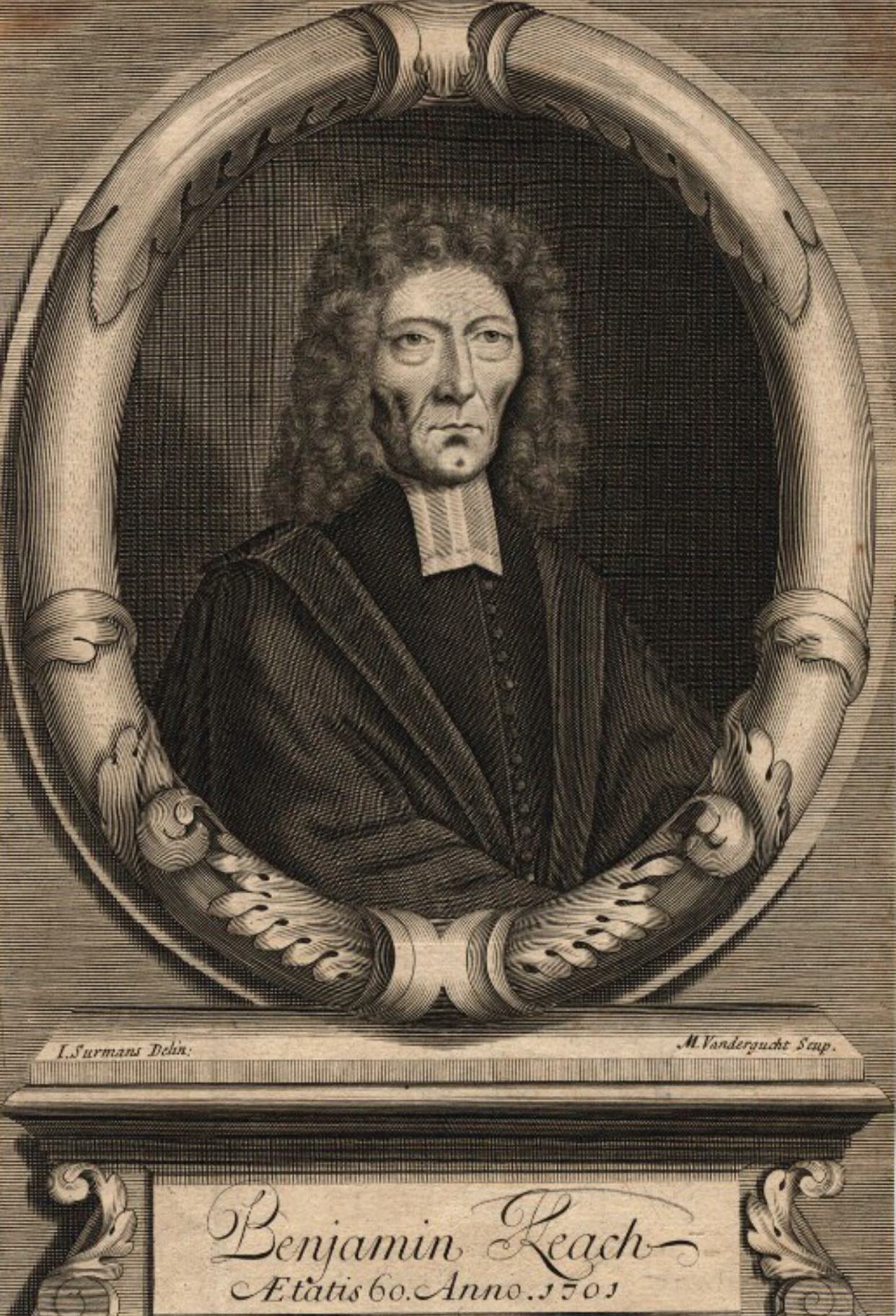
In "Ministers Compared to Watchmen," Benjamin Keach explores the theological metaphor of ministers as watchmen, drawing from scriptural references such as Isaiah 62:6 and Ezekiel 3:17. The primary argument is that ministers are called to a significant responsibility, charged with guarding the souls of their congregation and preaching the unadulterated truth of God's Word. Keach discusses specific duties of ministers, including the accurate delivery of Scripture, administering the sacraments rightly, and the spiritual oversight of their congregants, citing 2 Timothy 4:1-2 and Acts 20:28 as foundational texts. The practical significance of this doctrine emphasizes the importance of ministerial vigilance and integrity, as ministers are accountable to God for their flock, highlighting the weightiness of their calling and the necessity of their unwavering commitment to spiritual oversight.
Key Quotes
“They watch for your souls... Ministers are called Watchmen.”
“They must see they preach nothing for doctrine but what is the direct and undeniable truth and mind of God.”
“If the Watchman seeth the sword coming and blow not the trumpet... his blood will I require at the Watchman's hand.”
“Many endeavour to avoid coming upon the watch... Ministers must not come in their own names but in Christ's name.”
What does the Bible say about ministers as watchmen?
The Bible compares ministers to watchmen, which signifies their responsibility to guard the souls of the flock and faithfully teach God's Word.
Isaiah 62:6, Ezekiel 3:17, Hebrews 13:17, 1 Timothy 6:13-14
How do we know the doctrine of predestination is true?
The doctrine of predestination is rooted in Scripture, particularly in Ephesians 1:4-5 and Romans 8:28-30, emphasizing God's sovereignty in salvation.
Ephesians 1:4-5, Romans 8:28-30
Why is the role of a minister important for Christians?
Ministers are crucial for Christians as they guide, teach, and protect the flock, ensuring adherence to God's Word and the proclamation of the Gospel.
Acts 20:28, 2 Timothy 4:1-2, 1 Peter 5:2-3
MINISTERS COMPARED TO WATCHMEN
"I have set Watchmen upon thy wall, O Jerusalem" Isa 62:6.
"I have made thee a Watchman" &c., Eze 3:17. [1]
[1] Greenhill on Eze 3:17
"They watch for your souls" Heb 13:17.
Ministers are called Watchmen.
METAPHOR
I. Watchmen have a charge committed to them, and they ought to take heed they do not betray their trust.
PARALLEL
I. Ministers have a great charge committed to them, which they ought to see to, and so to be have themselves, that they may have their accounts to give up with joy: for,
1. They are entrusted with the word, the faithful Word and doctrine of God is committed to them; they must see they preach nothing for doctrine, but what is the direct and undeniable truth and mind of God; they must not corrupt the Word, nor intermix it with the traditions of men. "I gave thee charge in the sight of God, who quickeneth all things, and before Christ, who before Pontius Pilate witnessed a good confession, that thou keep this commandment without spot, unrebukeatle, until the appearing of our Lord Jesus Christ," 1Ti 6:13.
2. They have received the charge of preaching God's word; they must preach, whoever forbid them. "I charge thee therefore before God, and the Lord Jesus Christ, who shall judge the quick and the dead at his appearing, and his kingdom; preach the word, be instant in season and out of season, reprove, exhort, with all long-suffering and doctrine," 2Ti 4:1-2.
3. They have the charge of God's ordinances, or the holy sacraments of baptism and the Lord's Supper. "Go therefore, teach all nations, i.e., make disciples, baptizing them in the name of the Father, and of the Son, and of the Holy Ghost," &c., Mt 28:19-20. "For I received from the Lord that which I also delivered unto you." I had it in charge as if he should say, from Christ himself, "that the same night in which he was betrayed, he took bread, and blessed it, and said, take, eat, this is my body which is broken for you; this do in remembrance of me: after the same manner he took the cup," &c., 1Co 11:23-24. They must not corrupt the ordinances, nor administer them otherwise than the plain rule, left in the Word of God, directeth.
4. They have the charge of the Church and flock of God: "Take heed therefore unto yourselves, and unto the flock over which the Holy Ghost hath made you overseers, to feed the Church of God, which he hath purchased with his own blood," &c., Ac 20:28.
5. They must know the state of the flock, and be examples to the flock. "Feed the flock of God which is amongst you, not by constraint, but willingly; not for filthy lucre, but of a ready mind; neither being lords over God's heritage, but being examples to the flock," 1Pe 5:2-3.
6. Lastly; they have the charge of men's souls: "Watch for your souls, as such that must give an account," Heb 13:17. These things are part of these Watchmen's charge.
METAPHOR
II. Watchmen are not to sleep, nor give way to slumber! they must be awake when others sleep, to see what dangers are near.
PARALLEL
II. So the Ministers of the Gospel must not be sleepy and slothful; they are to be upon the watch-tower, to see what danger approacheth, or is coming upon the Church and people of God.
METAPHOR
III. Watchmen are to give warning, if they see evil coming: hence they ought to have a good eye-sight; a blind man is not fit to be a Watchman.
PARALLEL
III. So Ministers, or Christ's spiritual Watchmen, must give warning, when they see danger approaching, and therefore had need be men of knowledge: they are called seers; if they have no eyes, they cannot be called seers. Ministers had need be like Argus, whom poets say had an hundred eyes; they should be full of eyes, like the living creatures about the throne, to see before them, and behind them, that so they may perceive clearly every thing that is evil or hurtful to the souls of men, or Church of God, and give warning of it; and not like those foolish Watchmen the prophet speaks of, "His Watchmen are blind, sleeping, lying down, loving to slumber," Isa 56:10. "If the Watchman seeth the sword coming, and blow not the trumpet, and the people be not warned; if the sword come and take away any person from among them, he is taken away in his iniquity, but his blood will I require at the Watchman's hand," Eze 33:6-7.
They are to give warning to sinners, that they repent, and be converted, for wrath is gone out against them from the Lord; if they live in one sin, they must perish: they are to warn them of the danger of unbelief, to warn them of the danger of the hardness of their hearts, to warn them of the danger of pride, covetousness, and all other sins; to give warning of the danger of idolatry, and all false worship and heresy; of the danger of apostacy, the danger of the inordinate love of the world, or of any thing short of Jesus Christ, &c.
METAPHOR
IV. Watchmen are made and constituted such by others, and called forth to stand upon the watch.
PARALLEL
IV. So Ministers are made or constituted Watchmen by the Lord: "Son of man see, I have made thee a Watchman to the house of Israel," Eze 33:7. It is Christ's prerogative to appoint Watchmen, &c.
METAPHOR
V. Watchmen are not for themselves, but for the flock, for the whole flock, town, parish, or army, where they are set as Watchmen.
PARALLEL
V. So a Minister is appointed to watch not only himself, but God's flock, the whole flock that is committed to his charge; yea every member of the Church: he is to look after the poorest, as well as the richest; and not seek theirs, but them, 2Co 11:28; 12:14.
METAPHOR
VI. Watchmen are to give an account of the time of the night. Men go to the Watchman to enquire; he says, it is such or such an hour: "Watchman, what of the night?" &c. "The morning cometh, and also the night," Isa 21:11-12.
VI. So Christ's faithful Ministers are to give an account of the night; they ought to be well-skilled in the times, to show what Israel ought to do. O that our Watchmen had more knowledge upon this account! That they could but tell how long! Paul told the Romans, "The night was far spent, and the day was at hand," Ro 13:10-11. Our Watchmen begin to speak after the same manner: "The morning cometh," the morning of that longed-for day of Christ's kingdom; and the night," that eternal night of Babylon's ruin.
METAPHOR
VII. Watchmen are exposed to danger, and much hardship; they are oftentimes set upon, and basely abused in the night, whilst they are upon their duties, by evil, quarrelsome, and mischievous persons, and endure many cold blasts.
PARALLEL
VII. So the Ministers of the Gospel are often set upon whilst they are upon the watch. See how it befel Peter and John, Ac 4., and Stephen, Ac 7, and the great Minister of the Gentiles, St. Paul himself, Ac 16, whilst he was preaching Christ: "The magistrates rent off their clothes, and commanded them to be beaten; and when they had laid many stripes upon them, they cast them into prison," &c., Ac 16:21-23.
METAPHOR
VIII. Watchmen many times, through their care and diligence, by discovering approaching evils, prevent much danger and misery from falling upon men. Some by this means have been delivered from being burnt in their beds, when a violent fire hath broken out suddenly in the night; they cry out, fire, fire, to awaken people when they are asleep.
VIII. So Christ's Ministers, by opening the state and miserable condition of poor sinners to them, and of the necessity of speedy repentance in turning to the Lord, and closing with Jesus Christ, have prevented great danger that was near them, I mean, as instruments in the hand of God. By this means, many poor souls have been delivered from eternal burnings in hell. Ministers cry out, fire, fire, hell is exceeding hot, to rouse secure sinners.
INFERENCES.
I. WE may infer from hence, that God takes great care, and shows much pity to the sons of men, in that he hath provided his faithful Ministers to watch over them.
II. It also shows, that all true Ministers are Ministers of God's making: "Son of man, I have made thee a Watchman," &c., Eze 33:7. There are many that God never made Ministers, nor doth he approve of them.
III. It shows what the work and office of a Minister is; also that their work is hard: a Watchman's work is a hard and difficult work. Many endeavour to avoid coming upon the watch, shifting it off to others, and rather choose to pay their money, than serve in their own persons; Watchmen are upon duty, when others are asleep in their beds. "Thou shalt give them warning from me," Eze 3:17. Ministers must not come in their own names, hut in Christ's name. As they came with God's word, they came in his name, in his authority, to reprove, admonish, comfort, &c. Ministers must learn as well as teach: "What I received from Christ, I delivered it to you," &c. "Thou shalt hear the word at my mouth." They must not come with man's word, or warn people to be subject to the traditions, inventions, and doctrines of men. "I will stand upon my watch, and set me upon the tower, and will watch to see what he will say unto me," Hab 2:1.

Comments
Your comment has been submitted and is awaiting moderation. Once approved, it will appear on this page.
Be the first to comment!