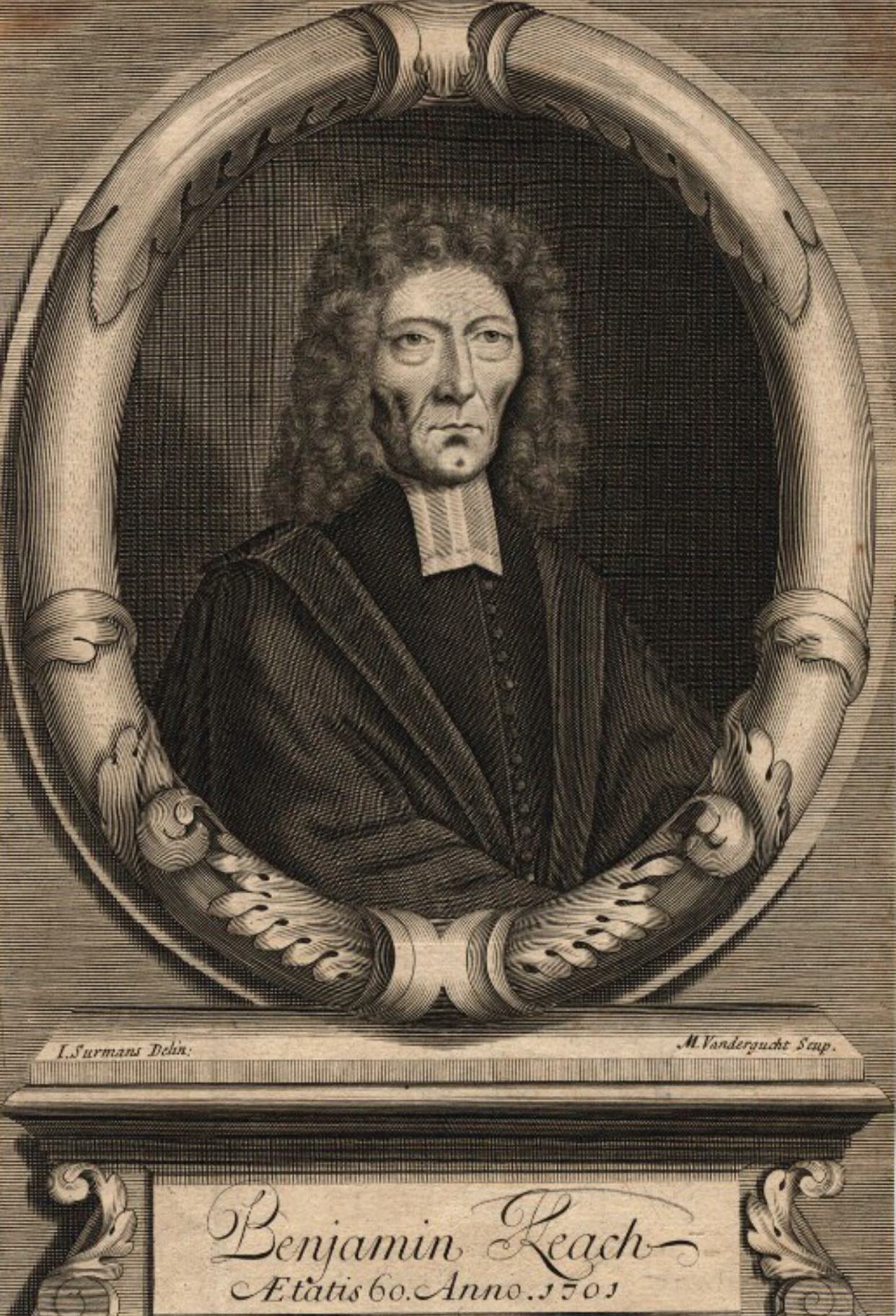
In Benjamin Keach's article "Melchisedec a Type of Christ," the focus is on the figure of Melchisedec as a prefiguration of Christ, highlighting several theological parallels. Keach asserts that Melchisedec's designation as "king of righteousness" and "king of Salem" connects directly to Christ's identity as the "Prince of Peace," referencing Isaiah 9:6 to illustrate that Christ embodies both kingly and priestly roles. The author further discusses Melchisedec's unique origin—being "without father, without mother," as described in Hebrews 7:3—which serves to underscore the eternal and divine nature of Christ, who likewise lacks earthly genealogical ties. Finally, the article emphasizes that Melchisedec's priesthood differs from that of Aaron, establishing Christ’s eternal priesthood, with God as His sole authority, highlighting its significance for understanding the unchangeable nature of Christ's mediatorial work. This typology serves to affirm the Reformed view of Christ's unique qualifications and eternal priesthood, thereby enhancing the believer’s understanding of grace and God's covenant.
Key Quotes
“Melchisedec signifieth king of righteousness; Christ Jesus is the only King of righteousness.”
“He was king of Salem - king of peace; so Christ was called the Prince of Peace.”
“His Priesthood passed not to other men; for as he received it from none, so he passed it not to any other.”
“He alone that blesseth all the true seed and heirs of promise.”
What does the Bible say about Melchisedec as a type of Christ?
The Bible portrays Melchisedec as a type of Christ, symbolizing His priestly and kingly roles.
Furthermore, Melchisedec’s lack of recorded genealogy signifies a deeper spiritual truth, representing Christ's eternal priesthood. Hebrews 7:3 states he is 'without father, without mother, without descent,' mirroring the fact that Christ's divine nature is without origin. This unique characteristic highlights the superiority of Christ’s priesthood, which is not derived or passed down like the Aaronic priesthood, but established directly by God. Consequently, Melchisedec serves as an essential figure that points us to the person and work of Jesus Christ, who is the ultimate High Priest.
Hebrews 7:3, Isaiah 9:6
Why is Melchisedec important for understanding Christ?
Melchisedec is crucial in understanding Christ as both king and priest, foundational to His eternal priestly role.
Moreover, the dual office of Melchisedec as both king of Salem and priest of the Most High God offers a profound insight into the nature of Christ Himself. It illustrates that Jesus not only reigns in righteousness but also intercedes for His people. That Melchisedec blessed Abraham (Genesis 14) shows that the greater blesses the lesser, affirming Christ’s greatness as the ultimate source of blessing for his people. Understanding Melchisedec thus enriches our comprehension of how Christ fulfills the roles of both king and priest, underlining His sovereignty and His mediatorial work on behalf of humanity.
Hebrews 7:3, Genesis 14
How do we know Jesus is our eternal High Priest?
Jesus is recognized as our eternal High Priest based on His divine appointment and His unique priesthood compared to Melchisedec.
Moreover, Jesus’ ability to mediate between God and humanity is unmatched. He abides forever as our High Priest, fully God and fully man, providing a clear and unhindered access to the Father. Consequently, believers can approach the throne of grace with confidence because of Christ’s continual intercession on their behalf (Hebrews 4:14-16). Thus, His role as our eternal High Priest is central to the assurance of our salvation and right standing before God.
Hebrews 5:5-6, Hebrews 4:14-16
"Made like unto the Son of God" &c., Heb 7:3.
PARALLELS.
I. THE notation of his name Melchisedec, signifieth king of righteousness: Christ Jesus is the only King of righteousness.
II. In his office he was a Type of Christ: (1.) He was king of Salem---king of peace: so Christ was called "the Prince of peace," not only a peaceable Prince, but Prince of peace, one that commands peace at his pleasure in the world, in the Church, and in the souls of men, Isa 9:6. (2.) Christ is not only Prince of the world, but peculiarly Prince of Salem, Prince of Jerusalem, viz., the true Church of God. (3.) Melchisedec was not only a king, but also a prince, yea, a priest of the Most High God: so Christ is both King and Priest.
III. Melchisedec was a Type of Christ in his original: "Without father, without mother, without descent, having neither beginning of days, nor end of life," Heb 7:3, that is, there is no mention of these things concerning him in the holy Scripture; we have not his genealogy, or story of his life; though none doubt, but he had both father and mother, and descent, &c.; but God on purpose would have all these concealed, that he might be a more express Type of Christ, who was truly without father, in respect of his manhood, or human nature; and without mother, in respect of his Godhead: "And who can declare his generation?" &c., Isa 53:8.
IV. Melchisedec blessed Abraham, and doubtless the lesser is blessed of the greater; he was a most eminent and renowned person. Some do conclude he was the patriarch Shem, who was without beginning of days, in respect of the world after the flood, and without end of days in respect of the world before the flood; but since God hath concealed who he was, let us be satisfied. But in this, doubtless, he was a Type of Christ, who is greater than all that went before him, great in power, office, and sovereignty, and is sent to bless his people; it is he alone that blesseth all the true seed, and heirs of promise.
V. Melchisedec was a priest, not after the order of Aaron; he was not anointed with material oil, nor received his Priesthood from_any other, but only so declared by the mouth of God. His Priesthood passed not to other men: for as he received it from none, so he passed it not to any other: nor did any, as we read of, succeed him; so Christ received his Priesthood from none but God himself, and was not anointed with material oil, but with the oil of gladness only: and as he received his Priesthood from none, so he passeth it not to any other;' he hath none that can succeed him, but abideth a Priest for ever in his own person in heaven.

Comments
Your comment has been submitted and is awaiting moderation. Once approved, it will appear on this page.
Be the first to comment!