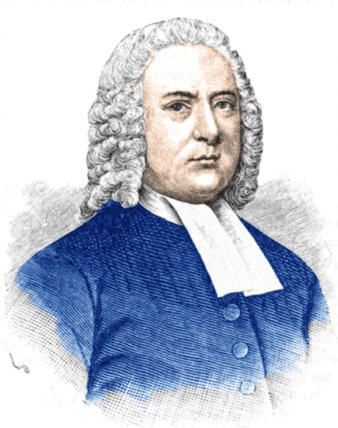
John Gill argues that God's eternity is fundamentally non-successive and exists outside temporal distinctions of moments, hours, days, and years. Drawing on Isaiah 43:13, Hebrews 13:8, and Revelation 1:4, Gill contends that God's duration—both past and future—is simultaneous and unchanging, with all points of time existing together in His presence like hours surrounding the fixed gnomon of a sundial. He demonstrates that God's immutability, immensity, and perfection require non-successive duration, and that God's omniscience (knowing all things past, present, and future at once) proves He experiences no temporal succession, making Him eternity itself rather than merely existing through time.
What does the Bible say about the eternity of God?
The Bible teaches that God is eternal, existing from everlasting to everlasting without any succession of time.
Isaiah 43:13, Job 10:5, Daniel 7:13, Hebrews 13:8, Revelation 1:4
How do we know God's eternal nature is true?
God's eternal nature is supported by biblical revelation that depicts Him as existing beyond time.
2 Peter 3:8
Why is understanding God's eternity important for Christians?
Understanding God's eternity is crucial for Christians as it reassures us of His unchanging nature and unwavering sovereignty.
Hebrews 13:8
The Eternity of God, or his being from everlasting to everlasting, is without succession, or any distinctions of time succeeding one another, as moments, minutes, hours, days, months, and years: the reasons are, because he existed before such were in being; Before the day was, I am he, Isaiah 43:13, before there was a day, before the first day of the creation, before there were any days, consisting of so many hours, and these of so many minutes; and if his eternity past, may it be so called, was without successive duration or without succeeding moments, and other distinctions of time, why not his duration through time, and to all eternity, in the same manner? Should it be said, that days and years are ascribed to God; it is true, they are; but it is in accommodation and condescension to our weak minds, which are not capable of conceiving of duration but as successive: and besides, those days and years ascribed to God are expressly said not to be ours, Job 10:5, He is indeed, called, The Ancient of Days, Daniel 7:13, not ancient in days, or through them, as aged persons are said to be in years, and well stricken in them; not so God: the meaning is, that he is more ancient than days; he was before all days, and his duration is not to be measured by them. And it may be observed, that the differences and distinctions of time are together ascribed to God, and not as succeeding one another; he is the same yesterday, to day, and for ever; these are all at once, and together with him; he is he which is, and was, and is to come, Hebrews 13:8; Revelation 1:4, these meet together in his name, Jehovah; and so in his nature; he co-exists, with all the points of time, in time; but is unmoved and unaffected with any, as a rock in the rolling waves of the sea, or a tower in a torrent of gliding water; or as the gnomon or stile of a sundial, which has all the hours of the day surrounding it, and the sun, by it casts a shade upon them, points at and distinguishes them, but the stile stands firm and unmoved, and not affected thereby: hence it is that one day with the Lord as a thousand years; and a thousand years as one day, 2 Peter 3:8. But if his duration was successive, or proceeded by succeeding moments, days, and years; one day would be but one day with him, and not a thousand; and a thousand days would answer to a thousand days, and not be as one only. Besides, if his duration was measured by a succession of moments, &c. then he would not be immense, immutable, and perfect, as he is: not immense, or unmeasurable, if to be measured by minutes, hours, days, months, and years; whereas, as he is not to be measured by space, so not by time: nor immutable; since he would be one minute what he was not before, even older, which cannot be said of God; for as a Jewish write well observes, it cannot be said of him, that he is older now than he was in the days of David, or when the world was created; for he is always, both before the world was made, and after it will cease to be; times make no change in him. Nor perfect; for if his duration was successive, there would be every moment something past and gone, lost and irrecoverable; and something to come not yet arrived to and obtained; and in other respects he must be imperfect: the knowledge of God proves him without successive duration. God knows all things, past, present, and to come, that is, which are so to us; not that they are so to him; these he knows at once, and all together, not one thing after another, as they successively come into being; all things are open and manifest to him at once and together, not only what are past and present, but he calls things that are not yet, as though they were; he sees and knows all in one view, in his all-comprehending mind; and as his knowledge is not successive, so not his duration. Moreover, in successive duration, there is an order of former and latter; there must be a beginning from whence every flux of time, every distinction proceeds; every moment and minute has a beginning, from whence it is reckoned, so every hour, day, month, and year: but as it is said of Christ, with respect to his divine nature, so it is true of God, essentially considered, that he has neither beginning of days, nor end of life, Hebrews 7:3. In short, God is Eternity itself, and inhabits eternity; so he did before time, and without succession; so he does throughout time; and so he will to all eternity. (John Gill, The Eternity of God, pp. 97-98)

Comments
Your comment has been submitted and is awaiting moderation. Once approved, it will appear on this page.
Be the first to comment!