again, chapter 10. And as I indicated
this morning, I want to continue basically from where I left off
this morning. I tried to get through the first
10 verses and not giving a full exposition, but kind of at least
hitting the main thoughts of these verses. Now this evening
I want to focus on verses 11 through 14. And my subject is
One Sacrifice for Sins Forever. One Sacrifice for Sins Forever. Let me read these verses to you,
these four verses. Hebrews chapter 10 verse 11,
And every priest standeth daily ministering and offering oftentimes
the same sacrifices which can never take away sins, but this
man. After he had offered one sacrifice
for sins forever, he sat down on the right hand of God from
henceforth expecting till his enemies be made his footstool. For by one offering he hath perfected
forever them that are sanctified. Let's ask God to bless his word
again this evening. It is with a great sense of our
need And Lord, with a sense of urgency, that we would speak
to you once again about the task that is before us. My task being
to preach of these verses that I believe that the Spirit of
God has led me to, and then the task for these folks to listen and
to pay attention. And Lord, there's another task
that needs to be worked, and that is the ministry of your
spirit. For nothing that I do and nothing
that these folks can do will be of any benefit to anybody
unless the Spirit of grace, that Spirit of truth, meets with us
and takes the things of the Lord Jesus and then reveals them unto
us. Lord, be pleased to meet with
us, therefore. And we shall thank you and praise
you with our hearts and with our minds. We'll give you the
glory. And we ask that you would forgive
us for the sinfulness of our worship. And it is with gratitude that
we say, thank you, Lord, that our worship, my preaching, these people listening, our worship,
our prayers, the sinfulness that is within us that affects all
that we do. Lord corrupts. our worship, but
we're thankful that we have a mediator, and he takes all of our worship
and washes it in his blood, puts the fragrance of his own righteousness
upon all that we endeavor to do, and then he presents them
to you. so that both ourselves and our
worship is acceptable, O God, to you. We bless you for such
a Redeemer, for such a Savior. We bless you, O Father, for all
that you have covenanted within the Godhead to do for us unworthy
and undeserving sinners. We thank you so much. For Jesus'
sake, amen. What is the purpose of the book
of Hebrews? Well, very simply and very briefly,
it is to set forth the majesty and the glory and the excellence
of the Lord Jesus over all things and over all people. This is
the key to understanding the book of Hebrews, and really it's
the key to understanding all of the book of God. And this
is the key for us to be spiritually enriched by all the treasures
of this book, that it's all about the glory of the Lord Jesus Christ,
It's about his person. It is about his work. It is about
his redemption that he accomplished. And it is about his exaltation
in his resurrection, in his ascension, in his coronation, in his reign. and in the second coming of our
savior and the judgment of which he is the head of. It's all about
emphasizing and presenting to us this one who is the son of
God, who is the son of man. And all of the Bible sets forth
his superiority over everything and everybody. And that is in
jest what the whole Bible is about. And as we look specifically into
the book of Hebrews, we find the excellence of our Lord Jesus
being set forth in the book of Hebrews. First of all, he's presented
as being more excellent or better than, more superior than in him
the prophets. Go back to the first chapter
of Hebrews, if you would. Hebrews chapter one. Our Lord
Jesus, He is superior to all of the prophets. In Hebrews chapter
1, it begins this way. God who at sundry times and in
divers manners spake in time past unto the fathers by the
prophets. Our Lord Jesus is more excellent
than any of the prophets of God. We read later in the book of
Hebrews about Moses. Well, he's greater than Moses. He's greater than all of the
Old Testament prophets. He is excellent. Now, we might
raise this question as far as the Old Testament prophets at
this point, what did God have to say by means of his prophets? And we know that they spoke,
they spoke as God moved them. They spoke as God spoke to them. And some of them just preached
and there was some of them who wrote. But what did they speak
about? You think of all the Old Testament
prophets and their ministry. What was their ministry? What
was their message? And their message was the Lord
Jesus. Look with me, I've got another
reference I want you to look with me at, Acts chapter 10.
Look at Acts chapter 10, verse 34. This is Peter, and he's speaking
in the house of Cornelius, who's a Gentile. And Peter has this
to say in Acts chapter 10, look at verse 34, and Peter opened
his mouth. Then Peter opened his mouth.
He said, of a truth I proceed that God is no respecter of persons,
but in every nation he that feareth him and worketh righteousness
is accepted with him. The word which God sent unto
the children of Israel, preaching peace by Jesus Christ, he is
Lord of all. That word, I say ye know, which
was published throughout all Judea and began from Galilee
after the baptism which John preached. how God anointed Jesus
of Nazareth with the Holy Ghost and with power, who went about
doing good and healing all that were oppressed of the devil,
for God was with him. And we are witnesses of all things
which he did, both in the land of the Jews and in Jerusalem,
whom they slew and killed or hanged on a tree. Him God raised
up the third day and showed him openly, not to all the people,
but under witnesses chosen before of God, even to us who eat and
drink with him, who did eat and drink with him after he rose
from the dead. Now verse 42, and he commanded
us to preach unto the people and to testify that it is he
which was ordained of God to be the judge of quick and dead. To him give all the prophets
witness. All of the prophets gave a good
report of Jesus of Nazareth, that is of the Son of God who
was coming. You remember that Isaiah wrote
and he spoke in Isaiah chapter 53, he said, Lord, who hath believed
our report? He had the report and he gave
the report and all of the prophets of God gave the report concerning
the Lord Jesus Christ. And he says to him, give all
the prophets witness that through his name, whosoever believeth
in him, they preached him as the savior. They preached him
as the redeemer. They preached him as the only
mediator between God and men. And everybody who believes in
him shall receive the remission of sins. That's the message of
the prophets. It's not like all the Old Testament
prophets had a different message. No, they had the same message
we have. The only difference was they said, He's coming. He's
coming. And they preached the need of
remission by the blood, remission of sins by the blood. They preached
the sacrifice. They preached the sovereignty
of God. They preached this man who was going to come into this
world, unto us a child is born. The prophet Isaiah said, unto
us a son is given. The government shall be upon
his shoulders. And Isaiah said, his name shall
be called Wonderful Counselor, the Mighty God, the Everlasting
Father, the Prince of Peace. Their message, the message of
all of the prophets was the Son of God and His entrance into
this world. That was their message. We find
in the book of Matthew, Mark, and Luke also the reference to
the Lord coming on the mount, the Lord appearing on the mount
of transfiguration with his disciples, and then he revealed to them
his glory, his glory. And especially in Luke, I love
the way Luke speaks of this, and you can read it later at
your leisure, but as Peter, James, and John were on the Mount of
Transfiguration with the Savior, they saw him as his garments
became white and glistering. And there was a brightness to
him, brighter than the noonday sun. He manifested his glory
to them. And then there appeared with
him two men, Moses and Elijah. Moses represented the law, Elijah
representing all the prophets of God. And they spoke of his
decease. They spoke of his death, which
he would accomplish at Jerusalem. And the disciples are so overwhelmed
by this sight. Moses and Elijah with our savior,
with our master. And Peter says, let's just build
some tabernacles for all three of them. It should be great. And then all of a sudden, here
come this big cloud overhead. and a voice spake out of the
cloud that said, this is my beloved son in whom I'm well pleased. When that cloud went away, they
saw no man but Jesus only. You see, all of those Old Testament
prophets, Moses and Elijah included, they were just men. But our Lord
Jesus is their Lord. He's their master. He's their
God. He's their savior. And he was
their subject for all of their preaching and all of their writing. Go back to the book of Hebrews.
Go back to chapter one again of Hebrews. Let me show you something
else. So he is superior, Christ's superior to all of the prophets. Secondly, he is superior to the
angels. To the angels. Look at verse
four of chapter one. Speaking of the Lord Jesus being
made so much better than the angels, as he hath by inheritance
obtained a more excellent name than they. All of the hosts of
the angels. Angels unnamed. Millions of them. He has a more excellent name
than any of them. All the seraphim, all the cherubim. They're glorious creatures, but
that's what they are, is creatures. But our Lord Jesus, he's the
creator. In fact, that has already been
stated in the second verse here in chapter one, by whom also
he made the world. He's the creator. They're his
creatures. They serve him. They wait on
him. In fact, later in the first chapter,
it says they're ministering spirits sent forth to those who shall
be the heirs of salvation. but they're not the savior. You
must not worship them, you must not adore them, be thankful for
them, but don't give them any adoration,
they don't deserve that. No creature deserves worship
and adoration, only the creator, that's God himself. And the Lord
Jesus is God himself, so worship him. Read on, look at verse five. For unto which of the angels
said he at any time, thou art my son, this day have I begotten
thee? Which of the angels ever heard
those words? None of them. And again, I will
be to him a father and he shall be to me a son. Did the father
ever say that about any of the angels? No. And again, when he
bringeth in the first begotten into the world, he saith, let
all the angels of God worship him. And of the angels he saith,
who maketh his angel spirits and his ministers a flame of
fire? But unto the sun he saith, thy
throne, O God. is forever and ever. A scepter
of righteousness is the scepter of thy kingdom. Thou hast loved
righteousness and hated iniquity. Therefore God, even thy God,
hath anointed thee with the oil of gladness above thy fellows. And thou, Lord, Lord Jesus, In
the beginning, thou hast laid the foundation of the earth and
the heavens are the works of thy hands. They'll all perish,
he says. But thou remainest, and they
shall all wax old as doth a garment. And as a vesture shalt thou fold
them up, and they shall be changed. But thou art the same, the Lord
Jesus, he's the same. And thy years shall not fail.
But to which of the angels said he at any time, sit on my right
hand until I make thine enemies thy footstool. He is vastly superior
to all of the angels. And by the way, On this idea
and on this point of don't give adoration to the angels, maybe
we all look at a couple of references in the book of Revelation while
we're at it, because there's so much angel worship today,
angel worship. Look at Revelation, if you would,
chapter 19. I give you two references here. Revelation chapter 19. There's
no question but what John received unusual revelations of things
that are not yet happened. It's called the revelation of
Jesus Christ. And things were spoken to him
by the son of God and by a messenger from God whom John identified
as an angel. And so we read, now we're in
chapter 19, I wanna read here first, verses nine and 10. And
he said unto me, here's an angel that said to me, write. Do you
have your pen, John? I have my pen. You got your parchment? I got my parchment. Write these
words. Blessed are they which are called
unto the marriage supper of the land. And he saith unto me, these
are the true sayings of God. Now watch verse 10. And I fell
at his feet to worship him. And he said unto me, see thou
do it not. Don't you worship me, I'm thy
fellow servant. one of thy brethren that have
the testimony of Jesus. Worship God. That's what he said. Don't worship me, worship God.
Don't worship the creature, worship the creator. For the testimony
of Jesus is the spirit of prophecy. The message of the Lord Jesus
is the very life, is the very soul, is the very spirit of prophecy. And then another reference, just
turn over a page, chapter 22. Look at verses eight and nine. 22, eight and nine. And I, John,
saw these things and heard them. And when I had heard and seen,
I fell down to worship before the feet of the angel which showed
me, manifested these things to me. Then saith he unto me, He
says, see thou do it not. And you'll notice the words thou
do it are italicized. Literally, don't do that. Stop,
get up. For I'm my fellow servant and
of thy brethren the prophets and of them which keep the sayings
of God. Worship God. Worship God. And I think I'll add to this
while I'm on this particular subject, don't worship angels,
don't worship men either. Don't bow down before men either.
In fact, go back to, I got you busy turning in the scriptures
here tonight. Look at Acts chapter 10. Go back
to that passage. Go back to Acts chapter 10. Here
is Peter, he's going to the house of Cornelius, and there he's
gonna preach. Acts chapter 10, look at verse
24. And the Mara, after they entered
into Caesarean, and Cornelius waited for them, and he had called
together his kinsmen and near friends, his family and lots
of his friends. And as Peter was coming in, Cornelius
met him and fell down at his feet and worshiped him. Verse
26, but Peter took him up saying, stand up. I myself also am a
man. You know, the RCC church, they
say that Peter was the first Pope. which we know that's not
true. But they can learn something
here. If, as they say, he was the first pope, when Cornelius
fell down before Peter at his feet, Peter said, get up, stand
up, I'm just a man. That man over there in Rome who
allows people to bow down before him and kiss his feet and kiss
his ring and bishops and cardinals and priests and so forth, and
any preacher, don't you bow down before anybody except the Lord
Jesus Christ. He's the only one worthy of your
worship. And to do otherwise is idolatry. But Jim, they're so well-meaning,
people are so sincere. I don't question that. I don't
question that there's a lack of sincerity there, but they're
sincerely wrong. I mean, here's Simon Peter. And
when a man falls down before him, he says, don't do that.
Don't do that. Get up. But let me show you this. Go
to Mark chapter five. More verses. Mark chapter five. Look at verse 22. Mark 5, 22. And behold, there cometh one of the
rulers of the synagogue, Jairus by name, And when he saw him,
he fell at his feet, he fell at the feet of the Lord Jesus
and besought him greatly saying, my little daughter life at the
point of death, I pray thee, I beg of you come and lay thy
hands on her that she may be healed and she shall live. And
he wasn't rebuked. He wasn't rebuked for doing that.
On one occasion later in the book of Acts, somebody fell down
before the apostle Paul and he rebuked him. He said, stand up,
don't do that. John fell down before an angel,
stand up. The angel said, don't do that.
But here's a man with a great need and he falls down at the
feet of Jesus of Nazareth and he is not rebuked. The reason
he was not rebuked was because he was bowing down at the feet
of the only one who deserves such adoration. This is the Lord
of glory. And this man understood that.
And if we had the time, I could take you to other references.
In Revelation chapter one, when John saw the exalted Son of Man,
In his majesty and in his glory, he said, I fell at his feet like
a dead man. He wasn't rebuked, but he did hear the words, fear
not. But he worshiped the one who's
deserving of worship. So go back to Hebrews chapter
one. So our Lord Jesus, he's superior to the prophets, he's
superior to the angels. And here's the third thing, he's
superior to all the high priests of Israel. All of the high priests of Israel.
I said chapter one, go to Hebrews eight. Hebrews chapter eight. He is superior to all the high
priests of Israel. Look at verse one, Hebrews 8
verse one. Now, the things which we have
spoken, this is the sum. In other words, this is the main
point. We have such a high priest. Oh,
the specialty of our high priest, who is set, who is fixed on the
right hand of the throne of the majesty in the heavens. What
kind of high priest is he? Back up to chapter seven, look
at verse 26. Number one, he's a sinless high
priest. For such an high priest became
us who is holy and harmless and undefiled and separate from sinners. That couldn't be said of Aaron.
That couldn't be said of any of the other high priests of
Israel. only of our savior. He's the sinless high priest.
Secondly, since he was sinless, he did not have to offer a sacrifice
first for himself and then for the sins of others. Look at verse
27 of chapter seven. Who needeth not daily as those
high priests to offer up sacrifice first for his own sins and then
for the people's. I mentioned to you this morning
about the day of atonement, how that Aaron, Aaron had gotten
a bullock and a ram and two goats. And the bullock was offered for
his own sins and the sins of his family. In other words, Aaron
couldn't minister for all of Israel to, first of all, he had
offered a sacrifice for his own sins. Because that high priest,
the first high priest of Israel, like every other high priest
of Israel was a sinful man. But our Lord Jesus didn't have
to offer a sacrifice for himself. He didn't have any sin. He had
none whatsoever. Thirdly, the sacrifice of the
Lord Jesus was offered once for all. That last statement of verse
27, for this he did once when he offered up himself, once. See, here's what's wrong with
the mass, the Catholic mass. And you have friends who are
Catholics. I have friends who are Catholics.
And they're nice people, wonderful people, most of them that I know.
but they're just ignorant of the gospel. And they go to mass. Well, here's what the mass is.
It's the killing of the Lord Jesus all over again. That's what, really, that's what
it is. They kill him all over again, which is absolutely contrary
to the word of God. This he did once when he offered
up himself. You know, through the Old Testament,
rivers of blood flowed. Sacrifices after sacrifices. God only knows how many thousands
upon thousands of sacrifices were offered to God on Jewish
altars. But this man offered one sacrifice
for sins forever. And that did the job. Once. He's never gonna suffer
again. He's not gonna die again. He did the job assigned to him. And then other high priests had
their infirmities because they were sinful men, but not our
Lord Jesus. He had no infirmities. He was
the consecrated Son of God. Look at verse 28. For the law
maketh men high priests which have infirmity. But the word
of the oath, which was since the law, make it the son who
is consecrated forevermore." He's the superior high priest. He's superior to all the prophets. He's superior to all the angels.
He's superior to all the other high priests. And I'll tell you
forthly, his offering was superior to all their offerings. We studied
this morning there in Hebrews chapter 10 about all these, the
blood of bulls and goats, all of these sacrifices, which could
never put away sin. It didn't answer the demands
of God. It didn't give anybody any peace.
It didn't give peace to the conscience. You see, those of us who have
looked to the Son of God, looked to Him by faith, we trust the
Lord Jesus Christ. We know He is the sacrifice for
sin. God sent Him to die, the just
for the unjust, to bring us to God. And when the Spirit of God
gives us the gift of faith, the gift of repentance, and we turn
our backs on every other, all the false gods and all the false
gospels, and we believe the Lord Jesus Christ alone, we have peace
in the conscience. Everything's done according to
God's perfect will. Our God is satisfied. And that
gives me peace because my confidence is in the one that God trusted
me to. God trusted my soul to the Son
of God. And he paid my debt. I don't
have any debt. My conscience is clear. His offering
perfected forever. all them that were sanctified.
All right then, with that lengthy introduction, go back here to
verse 11 of chapter 10. And I'll just ask some questions
real briefly. Number one, what were the weaknesses
of the Old Testament offerings? Look at verse 11. And every priest,
we're back to chapter 10, now every priest standeth daily,
ministering and offering oftentimes the same sacrifices, which could
never take away sin. What was the weakness? Well,
the weakness was they couldn't take away sin. Sin's the problem,
sin's the issue. All the transgressions, all the
iniquities of all of Israel, that's the issue. But all of
the offerings that they brought could not put away sins, couldn't
take any sins away. The issue is the sin. The weaknesses
of the Old Testament method of worship was this. Here's the
weakness. It couldn't get the job done.
You'll notice it says here, every priest standeth daily ministry. And we were all pretty much acquainted,
I think, with the fact there was no chair in the tabernacle. It's seven pieces of furniture.
And they all pointed to the Savior, either his person or some aspect
of his work. But that which really stands
out, as you studied those seven pieces of furniture in the tabernacle,
that which really stands out was this. They didn't have a
place to sit down. There was no chair. And that's
why the Spirit of God had the writer specifically to write,
every priest standeth, standeth daily. The reason there was no
chair, because his work was never done. It was never settled. All the work that the priests
did, and the priests were divided into several courses, several
groups of priests. They finished their duties, and
then another set of priests come to work, come on duty. And they'd finish working and
then another course would come in. Was it 24 courses, I think,
of priests. They never finished their work.
They'd finish their hours and go home. See y'all later. I'm
going home. Another group of priests come
in and say, okay. And they couldn't sit down either
because the work was never done. The weakness, the weakness of
the sacrifices of the Old Testament. And then notice this, secondly,
look at verse 12. Here's another question. First
question, what was the weakness of the Old Testament offering?
I couldn't put away sin. Because that's the issue, that's
what I wanna know. That's what stands between me
and God. That's what God said to Israel,
your sins and iniquities, they stand between you and me. Well,
then I want to know, did all of those sacrifices of the Old
Testament, did they take the sin away? And the answer is no. Wow, what a weakness then. Second
question, we get to verse 12. Who is this man? whose death
did secure forgiveness and put away sin and satisfy God. Look at verse 12. But this man,
oh, what a man. But this man, after he had offered
one sacrifice for sins forever, he sat down on the right hand
of God. Now we know our savior was God.
He's always God. He never ceased to be God. All
of the attributes of deity belong to Him. He remained God over
all, blessed forever. Hebrews chapter one talks about
Him being the heir of all things, by whom God made the worlds.
Talked about Him being the brightness of the Father's glory, the express
image of His person, who when He had and he upholds all things
by the word of his power, who when he had given his life a
ransom, when he had sacrificed himself to God, he purged our
sins and he was therefore exalted. He's the very image of God. This
is the one who did all of that. You remember, Philip asked the
Savior one time, he said, would you show us the Father and we'll
be satisfied? Sure would like to see God. Like
to see God. And the Lord Jesus said, Philip,
have I been with you all this time? And you don't understand.
If you've seen me, you've seen God. You understand that? And we know that all of God we
will ever see is the Lord Jesus Christ because it pleased God
that all the fullness of the Godhead dwelled in Him bodily. So when we get to glory and we
see that one who's seated upon the throne of glory, we'll be
seeing the Father, the Son, and the Spirit, all of the Trinity
manifested in the Son of God. We'll see Him. Face to face,
the scripture says. This is the master. This is our savior. Here's the
third thing I wanna ask you. What has he done? Again, in verse
12, what has he done? He offered one sacrifice for
sins forever. He faithfully discharged his
duty to God. What did that consist of? Obedience
unto death, even the death of the cross. God loved his people
with an everlasting love. He gave us to Christ Jesus in
covenant grace. He joined us to him. But we fell in Adam. I'll tell
you some good news even in that. Though we fell in Adam, we never
fell out of Christ Jesus. God put us in Christ Jesus, but
God had already made provision for the fall. So the Savior came
and he put away the defilement that separated us from God. And
his was a full atonement. It was a blood atonement. It
was a just atonement. It was a definite atonement.
And it was a successful atonement. He died for his people and he
put our sins away. That's what he's done. He offered
one sacrifice for sins forever. What did it take for God to put
away my sins? Well, it took the death of the
Son of God. That's what it took to satisfy
justice. Here's a priest, unlike any other
priest, because he purged us of our sins. Now, here's another
question, where does he sit? Well, scripture says he sat down
on the right hand of God. That expression denotes the highest
possible glory, the widest possible dominion, and the greatest possible
power that God can confer. There's a glory that cannot be
conferred by God, and that's his essential glory. but he gave
to this man Christ Jesus everlasting glory, a glory he already had
as God, but he earned it as man. He earned it as man. God conferred it on him. And
when our Lord Jesus went back to heaven, the father said, sit
here in my right hand until I make you enemies of your footstool.
He's the exalted Son of God. He sat there. He sat there. Think of this. There is a man
in glory. We've got several men here tonight. There's a man in glory. He is
the perfect man and he's got a body. and He is exalted to the highest
heaven. There's a man in heaven, one
like unto us. There's a man who's been glorified. There's a man who's been honored. There's a man before whom the
angels bow. There's a man whose commands
the angels obey. There's a man in heaven who represents
us to God. He's the God man. There's a man
in glory. There's a man who governs all
things. Oh, how can I ever comprehend this? Well, you know, you don't have
to comprehend this. Just believe, just believe. The scripture says, the Lord
said unto my Lord, sit thou at my right hand until I make thine
enemies thy footstool. I used to hear preachers years
ago talk about how sad Jesus was that you don't let him save
you. Jesus is shedding tears in heaven. He's leaning over the banisters
of heaven. He's so disappointed in men and
wondering where did things get derailed. But now wait a minute,
he's at the right hand of the Father. And you know what the
Scripture says in Psalm 16, 11? Thou wilt show me the path of
life. In thy presence is the fullness
of joy, not sadness. The fullness of joy. And then it says, at thy right
hand are pleasures evermore. And that's where he's at. There
are pleasures evermore. While he's the king, he's enthroned,
nothing troubles him. All things move at his command.
He opposes all things by the word of his power. His will is
being executed by his friends and his enemies. by the elect
angels and the fallen angels, by those who believe him and
those who don't believe him. This is the king. Well, what's
his expectation? Here's another question. What's
his expectation? His expectation is in verse 13,
from henceforth expecting till his enemies be made his footstool. That's what he's expecting. Now
there's a sense in which that's already happened. because he's
defeated all of his enemies by substitutionary death upon the
cross of Calvary. But there is coming a day when
all of his enemies will be gathered together and brought before him,
and he'll make them all bow. See, his friends in this life,
we bow now. We confess his lordship now.
We adore him now. We worship him now. But in the
end, all of his enemies, he sits there on his throne in patience,
in contentment. He hadn't lost control. Don't
you worry about anything. Your best friend, your brother,
the one who sticks closer than a brother, Your elder brother,
he's governing all things to fulfill God's will and to work
things for the good of his people. He sets their governing. I think it's of note there when
Stephen was being stoned, he said, I see it in standing. That's
what he said, I see him standing. Do you reckon he stands to receive
each one of his elect, redeemed children come home to glory?
I believe he does. He says, welcome. Welcome home. Hugs us. There's no social distancing
in glory. The Son of God, I think he embraces
every child of God when they come home. and kisses him on
the cheek. It's a kiss of love. It's a kiss
of sonship. Welcome, welcome. And he's expecting that day when
all of his enemies will be gathered up and brought before him and
be made to bow and be made to confess he's the Lord. This is
the Lord. That man sitting on the throne,
This is what so fired up the high priest when our Lord Jesus
stood trial before him. He said, hereafter, you'll see
the Son of Man standing at the right hand or sitting at the
right hand of God. And he's gonna judge you. And
they just, oh, the high priest, he ripped his clothes. He just
had a fit. He just threw a tantrum right
there in the temple. He said, you hear that blasphemy?
What are we gonna do with him? They said, kill him. But you
see, the Savior was sovereignly in control even then. They were
just executing his will because it had been ordained from before
the foundation of the world that he die, and he died by being
hung on a tree. Cursed is everyone who hangs
on a tree. Our Lord Jesus had that law written
because he was cursed by God himself. when all the sins of
his people were charged to him. And then here's the last thing.
The sixth question. What was his accomplishment?
Verse 14. For by one offering. How come he's seated? For this
reason, that word for means because. because by one offering he hath
perfected forever them that God set apart." He said, boy, I don't
feel perfect. Well, you're not in yourself. You're very imperfect. But in
the Lord Jesus Christ, you're perfect. You're perfect. You're approved of God. How perfect
has a man gotta be before God will receive him? Well, he's
gotta be absolutely perfect. No defect whatsoever. In myself,
I'm still a sinner, but in the Lord Jesus, I'm a saint. And you are too. You are too. Well, may the Lord bless the
word to all of our hearts. Let's pray. for the privilege of reading
the word of God, and to do so with some degree of understanding,
and to be given the gift of faith to believe this book, to believe
the record that you have given to us of the Lord Jesus Christ
and his successful sin-atoning work of redemption. and of his
glorious resurrection and his enthronement, seated at the right
hand of God. Oh my, there's a man in glory,
bone of our bone, flesh of our flesh, a man who once walked
on this earth, a man who lived in obedience to God, A man who
died at the hands of his enemies, but according to the will and
purpose of God. A man who died to put away our
sins, to answer every demand of divine justice. A man who
gave up the ghost. A man whose dying words were,
it is finished. Into thy hands I commend my spirit. A man with a body and soul. His soul went to paradise, then
came back to join with that body, a glorified body, the first glorified
body. And then 40 days later, that
man left this earth and he ascended back to heaven. And the angel
of God said, why stand ye You men, why do you stand here gazing
up into heaven as though you'll never see him again? This same
Jesus shall so come again in like manner as you've seen him
go. And someday he's coming back.
Either in His second coming, we'll go with Him then, or He's
gonna come back for us in our death. But either way, even so,
come, Lord Jesus, and take us home to be with you. And we look
forward to seeing the great Savior and feeling the warmth of His
loving embrace. And when He plants the kiss upon
our cheek, the kiss of sonship, And we see Him, our Master, our
Savior, our God, our King. And we shall spend the rest of
eternity making the Lord our boast, praising Him, that one
who of God was made unto us wisdom, righteousness and sanctification
and redemption and then we shall glory forever only in him. Feed your sheep, do us good,
encourage our hearts and meet the needs of those who are hurting,
those who are suffering, those who are being tested in the fiery trials of
life. Lord, encourage their hearts
tonight. Thank you for all things. For
Jesus' sake I pray, amen.
About Jim Byrd
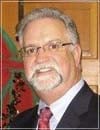
Jim Byrd serves as a teacher and pastor of 13th Street Baptist Church in Ashland Kentucky, USA.
Comments
Your comment has been submitted and is awaiting moderation. Once approved, it will appear on this page.
Be the first to comment!