Bootstrap
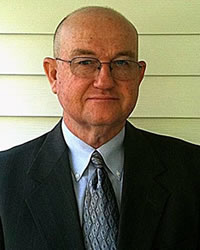
Gary Shepard

The Seed of Christ 1

Psalm 30
Gary Shepard November, 14 2008 Audio
0 Comments
Gary Shepard
Gary Shepard November, 14 2008
13th Street Baptist Church Conference

Sermon Transcript

Auto-generated transcript • May contain errors

100%
Someone said a few minutes ago
that they had heard that a couple of country boys were going to
be here to preach, and they thought they'd come. I said, I don't
know about one, but you sure call that right about the other
one, me. But I can say for this country
boy that there's no place I'd rather be. And no people that
I cherish any more and am thankful for than this people. And for
the Lord's grace to you and for His kindness to me through you.
And I'm thankful for your pastor and for his faithfulness and
for the gospel that he preaches. The courage that God has given
to just stick and hoe his own row and preach the Lord Jesus
Christ. I want you to turn tonight to
Psalm 22. In this psalm we hear many cries from the experiences
of David. And I have a feeling that that's
the way it is with every believer. And I know that his cries are
often my cries. But more than that, we hear the
cries of the Messiah. And most especially here, we
hear his cries from the cross, just like our brother has just
been talking about. One of those cries, look there
in verse 1. See if you can hear his words. My God, my God, why hast thou
forsaken me? Does that sound familiar? That
is a cry of the Lord Jesus from the cross. Look down at verse
6. But I am a worm and no man, a
reproach of men and despised of the people. All they that
see me laugh me to scorn. They shoot out the lip. They
shake the head, saying, He trusted on the Lord that he would deliver
him. Let him deliver him, seeing he
delighted in him. And all through this psalm, we
hear the cries of this suffering Savior. We hear the abandonment
of God as He turns His eyes away from His beloved Son. We hear
the wickedness of men. And we hear the Savior as He
praises God Himself. And then as we go on through
this psalm, which is well worth your reading and study, we begin
to hear God speak concerning His Son. And in verse 23, down
through verse 26, we begin to see the consequences of His death. As Tim said, he's not waiting
for you and I or anybody else to determine the consequences
of his death. God has already done it. He begins to hear in these verses
the reward of his suffering and the success and the victory of
his work. Verse 23, Ye that fear the Lord,
praise him. All ye the seed of Jacob, glorify
him, and fear him, all ye the seed of Israel. For he hath not
despised nor abhorred the affliction of the afflicted, Neither hath
he hid his faith from him, but when he cried unto him, he heard. My praise shall be of thee in
the great congregation. I will pay my vows before them
that fear him. The meek shall eat and be satisfied. They shall praise the Lord that
seek him. Your heart shall live forever. And then he gets down to that
30th verse, and he makes this statement. He says, a seed shall serve him. It shall be accounted to the
Lord for a generation. God, in light of the sufferings
of His Son, has assured Him that in reward
to His obedience unto death, that particular death, the death
of the cross, He not only has highly exalted Him, but He promises
Him a seed. This one who never married, this
one who never knew a woman, is promised a seed. Hold your place and turn over
in Isaiah chapter 53 where we find the same thought. Isaiah 53 And look at what it says in this
tenth verse. He says, Yet it pleased the Lord
to bruise him. He hath put him to grief. When thou shalt make his soul
an offering for sin, he shall see he shall see his seed, he shall
prolong his days, and the pleasure of the Lord shall prosper in
his hand." Let me read you some verses in Psalm 89. In Psalm
89, in verse 3, it says, I have made a covenant with my
chosen. I have sworn unto David my servant,
and he's certainly talking about Christ. He says, thy seed will
I establish forever and build up thy throne to all generations. That is what God says to his
Son. Thy seed will I establish forever. And if you look a little further
in Psalm 89, beginning in verse 27, he says, Also I will make
him my firstborn higher than the kings of the earth. That has to be our sovereign
Lord Jesus Christ. My mercy will I keep for Him
forever, and my covenant shall stand fast with Him. His seed also will I make to
endure forever, and His throne as the days of heaven. If his children forsake my law
and walk not in my judgments, if they break my statutes and
keep not my commandments, then will I visit their transgression
with the rod and their iniquity with strifes. Nevertheless, my
lovingkindness will I not utterly take from him, nor suffer my
faithfulness to fail. My covenant will I not break,
nor alter the thing that is gone out of my lips. Once have I sworn
by my holiness that I will not lie unto David. His seed shall
endure forever and His throne as the Son before." You see,
the living God has promised His Son, on the basis of His covenant
sufferings, a seed. That is, a generation of children,
an offspring, and a posterity. that as he says here, he calls
not only a seed, but also a generation. Look again in Isaiah chapter
53, in that eighth verse, because what he has promised and what
he has purposed And what he has said seems so utterly contradictory
to what happens to his son. And so the word goes out in verse
8. He was taken from prison and
from judgment, and who shall declare his generation? For he was cut off. out of the
land of the living? For the transgression of my people
was he stricken." In other words, in light of what will happen
to and what did happen to the Lord Jesus Christ, how can this
promise ever be fulfilled? How could it ever be said that
he would actually have a seed or a posterity or a generation? Because this is exactly what
is said here, though he dies, the death of the cross. And so our God says of his darling
son and the savior of his people, a seed shall serve him. And certainly that is exactly
what he's talking about. He's talking about a people and
a prosperity. As a matter of fact, in Matthew,
it says that Moses said, If a man die having no children, his brother
shall marry his wife and raise up seed unto his brother. To this one who he sends to die,
our God says that a seed will surely serve him. And they are
spoken of all throughout the Old Testament and described in
various ways, also called in many cases, the seed of Abraham. Listen to what it says in Genesis
13, And the Lord said unto Abram, After that lot was separated
from him, lift up now thine eyes and look from the place where
thou art northward and southward and eastward and westward, for
all the land which thou seest, to thee will I give it and to
thy seed forever." I know that there is a sense
in which that was a fulfilled literal promise to Abram. But more so, it is a fulfilled
promise to the Lord Jesus Christ, who is truly that Father, that
everlasting Father that Isaiah spoke of, and he says, and I
will make thy seed as the dust of the earth, so that if a man
can number the dust of the earth, then shall thy seed also be numbered. In other words, in such places
as that, while He tells us that they are a number which no man
can number, that doesn't mean that God can't number them, and
it doesn't mean that He hasn't numbered them, but they are a
multitude. They are such a seed and people
as to bring glory to the one that is himself called that everlasting
Father. And the promise here is that
Jesus Christ shall never lack or be without a seed, a posterity,
a generation. And there will always be a people
to perpetuate his worship in this world, and who will be used
to advance his kingdom. He will always have a seed. There will always be this seed,
and you can read Psalm 22 yourself, there will always be a seed to
proclaim the gospel of his glory, and all of his people, every
one of them together, over the ages, as one, shall be called
a generation and a seed, not of the Jews only, but also of
the Gentiles, a people among both, who he will make willing
in the day of his power." In Hebrews chapter 2, he says
this, and again, quoting out of the Old Testament itself,
I will put my trust in him, and again, behold, I am the children
which God hath given me. Turn over to Romans chapter 11. Romans chapter 11. And the Apostle
Paul lived in a day just like we live in. He lived in a time
of such awful wickedness and religious idolatry so that it
appeared out the outside that almost every purpose of God and
promise of God surely would fail. But listen to him here in Romans
11 and verse 1. I say then, hath God cast away
his people? Because that nation Israel was
called his people. He says, God forbid, for I also
am an Israelite of the seed of Abraham, of the tribe of Benjamin. God hath not cast away his people,
which he foreknew. which he foreloved, which he
foreordained. What ye not watch the scripture
saith of Elias, how he maketh intercession to God against Israel,
saying in his day virtually what was being said in Paul's day,
and certainly in our day. They have killed thy prophets,
and dug down thine altars, and I am left alone, and they are
trying to kill me." Have you ever said that, Preacher? I have. About every other week,
it seems like. But notice, but what saith the
answer of God unto him? What did he say in Elijah's day? He said, I have reserved to myself
7,000 men who have not bowed the knee to the image of Baal. And Paul says, even so then,
at this present time also, there is a remnant according to the
election of grace. Do you know what grace is? He
says, and if by grace, then it is no more of works, otherwise
grace is no more grace. But if it be of works, then it
is no more grace, otherwise work is no more works. What then? Israel hath not obtained that
which he seeketh for, but the election, the seed. the generation hath obtained
it, and the rest were blinded." You see, in contrast to what
the Lord Jesus Christ heard and saw from those who crucified
God says that Christ will from his throne hear the words of
love and praise from that people that he redeemed and saved from
their sins by the sacrifice of blood. A people will serve him, and he will see his glory in
their faces as they worship him, worlds without end. Now, I want
you to turn back to Genesis and the fifth chapter. Genesis chapter 5, and listen
to what it says here. Verses 1 and 2, this is the book
of the generations of Adam. In the day that God created man,
in the likeness of God made he him, male and female created
he them, and blessed them, and called their name Adam, in the
day when they were created. You see, he shows here how God
views us with regard to Adam. And it says that God blessed
them and called their name Adam. Did you notice that? He called
their name Adam. He called everyone from Adam,
Adam. And it is here that we begin
to see something about what has been called federal headship. And we find in this book that
God has only viewed all the people in this world in two persons,
the first Adam and the last Adam. And God viewing and dealing with
all of these people, all these many in the one, it shows that
he blessed them by this principle of representation and federal
headship and substitution as the great blessing to that people
in the last Adam. It is so clear. Paul says in
1 Corinthians 15, For since by man came death, by man also came
the resurrection of the dead. For as in Adam all die, even
so in Christ shall all be made alive. And every time he says
that, speaking of Adam, the first Adam, he says, all those who
are in Adam will thus be thus, and all those who are in Christ
will thus be thus. He says, and so it is written,
the first man Adam was made a living soul, the last Adam was made
a quickening spirit, Howbeit that was not first which is spiritual,
but that which is natural, and afterward that which is spiritual,
the first man is of the earth earthly." The second man. Is that Cain? No. He's that other
federal head. that other representative man. He said, the second man is the
Lord from heaven. You see, the word generations
is used many times in the scripture. And here it is not speaking of
the origin of Adam, but he is talking about that which comes
forth from Adam. These are the generations of
Adam. And so we go from Adam to Seth
and Seth to Noah and his family so that every person in the present
world descended from them since they were the sole survivors
of the flood. Did you catch that big news flash
from modern science? not all that long ago when they
have finally determined that we all descended from a common
ancestor. Surprise, surprise. We are all in the natural sense
in all of these generations. But in the midst of all that,
God preserved a spiritual life. You see, when he says this is
the book of the generations of Adam, this points forward and
follows all that flows out of Adam. This is the story, or this
is the book of the story, and the word book here. means a document, but not just any document. It
means a document, whether long or short, as long as it is complete
in itself. This is the book of the generations
of Adam. And this particular phrase is
found only in this place in the Old Testament, and everywhere
else it is, these are the generations. But it is also found one time
in the New Testament. Turn over to Matthew's Gospel
and the first chapter. And this is exactly what God
is talking about there in Psalm 22 and all these other passages
that we've read, because look here in the first verse. What does he say this is? The
book of the generation, singular, of Jesus Christ. You see, this has to do with
that seed. Christ is never separated from
that seed. He will have this generation,
he will have this people, this seed to glorify him and praise
him and set forth his gospel in every age. These are the generations
in Adam, but there is a generation in Jesus Christ. There is a book. that is called
the Lamb's Book of Life. And as the old writers said,
their names were written in that indelible ink of Jehovah's blood
before the world ever began. He is the Lamb slain from the
foundation of the world. And this generation is contrast to another generation. Turn over and look in Luke's
Gospel in Luke 11. Listen to what is said, and the
only way this can ever make any sense is to see that you and
I are either in one generation or another. Verse 50. Or verse 49. said the wisdom of God, I will
send them prophets and apostles, and some of them they shall slay
and persecute, that the blood of all the prophets which was
shed from the foundation of the world may be required of this
generation." You think he was talking there about simply those
folks that actually crucified the Lord Jesus? No, he is talking
about every person, that the blood of all the prophets, the
testimony of all the prophets will rise up in judgment and
speak against everyone in that generation. And that is everybody
who is outside of the Lord Jesus Christ. That is every one that
is not spoken of here when the Apostle Peter said, but you are
a chosen generation, a royal priesthood, a holy nation, a
peculiar people, that ye should show forth the praises of him
who hath called you out of darkness into his marvelous light. This is the generation, this
is the seed that Jesus Christ went to that cross in fulfillment
of that everlasting covenant and redeemed by his blood. As a matter of fact, the very
thing that is set up as being totally contradictory, it seems,
to all natural logic, that since he is slain and crucified, then
nobody can therefore declare his generation. That's the basis
upon which this generation is born. You see, this generation. This seed is the consequence
of his successful work. They are the consequence of his
complete victory. And they are for his glory, both
now and forever. And they will, every one, be
brought unto him. But I'll tell you this. It means
something to them, too. Now, you want to know what it
means to them? Turn over to 1 John and the 3rd chapter. Now, I'm like Ken. I don't know
any Greek. And call me a country preacher
if you want to. That's exactly what I am. But
since I don't, and since I don't believe the knowledge of the
language will in any way cause you to have the spiritual knowledge
of what's said, because most of the Greek scholars who lived
in this world died in their sin. But I want you to listen now.
Here in 1 John, the third chapter. Now, I know, and I fully, totally,
completely believe in the new birth. That many times in this
book, in the New Testament, it talks about our being born spiritually
reborn of God. Don't go and say I didn't say
it. I just don't believe it means it here. All right, look down in verse
9. is born of God doth not commit
sin, for his seed remaineth in him, and he cannot sin, because
he is born of God." Now, if that is the new birth in the sense
of regeneration, it cannot mean but one thing, and that is truly
born-again people in that sense do not commit sin. Now, where does that leave you?
I'll tell you where it leaves me, the same place it leaves
you. But I don't think that's what
it's talking about. In this Bible, in this verse,
the word seed here is sperma. And it is in this New Testament
42 times. Now, like I said, I don't know
anything about Greek. But I found out that about the
safest way to study the Scriptures is to go and find out how many
times something is said or how many times a word is used and
seeing how God uses the word. That will throw a lot of light
on what it means in every place. That word is translated 37 times
to mean something like offspring, seed in the sense of a generation,
a posterity. So rather than saying something
that we have to study and study and try to figure it out to say
what we want it to say or what Dr. so-and-so said that it said,
you know what, it's a blessing when you find out what it says.
So what does it say? Whosoever is born of God. Now, if you go back and look
in verse 2, it says, Beloved, now are we the sons of God. How
did we get to be there? Through regeneration? No. He
bestowed it upon us. He said, Behold what manner of
love the Father hath bestowed upon us, that we should be called
the sons of God. What does that mean? That means
they are born of God. Begotten of God. But look at
our verse. Whosoever is born of God, doth
not commit sin, for his seed," who's that? That's the seed of
Christ. That's that seed that the psalmist
is talking about. "...his seed remaineth in him."
You're never going to take them outside of Jesus Christ. Do you hear that? His seed is
not what he puts in them, but it's how he has made them to
be in him. And you ain't going to find any
good news other than the fact that God has put us in Jesus
Christ. Now, look back, before we go
much farther, look back in verse 5. Now, this is all in the context. And you know that he was manifested
to take away our sins. Isn't that what he just talked
about? What's that next line say? And
in him is no sin. And my friend, I'm over here
to tell you tonight, that's the only place where there's no sin.
Is that right? That's the only place where there
is no sin in Jesus Christ. And men can mock this what they
call a positional view, but isn't that what this book is all about?
Isn't that what Paul says, that we are in Christ Jesus? You better believe it. And that's why he said, a seed,
you serve him. You may not. I may not. But you can put it down. Somebody
is going to serve him. And they are going to delight
and they are going to rejoice because they know that they are
in Christ Jesus and in him. is no sin and his seed, they
remain in him. They ain't going to ever be anywhere
else. I'll tell you, you can fight
that verse until it whips you to the ground and ties a knot
in you until you believe just what it says. He cannot sin. I can't sin. Why? Because I remain in Him.
You see, sin is only before God. You know, everything we are unable
to do to kind of cover up what we really are in this flesh. Paul said, I know that in me
that is in my flesh dwells no good thing. and all the grace that God gives
us to restrain it, and I sure hope he gives me more. But it won't change the fact
that I cannot sin in his sight, because the blood of his Son
has taken all my sins away, and he has made me long before the
world was his seed, and I am to serve him forever in the light
of free grace. and full pardon and full and
eternal salvation. Whosoever is born of God doth
not commit sin, for his seed they remain in him. God has given you light, grace,
His Spirit, if any man have not the Spirit, they are none of
his. But it is not what he does in
us that is our salvation. It is what the Lord Jesus Christ
did for us. Now, I know I am not minimizing
the fact that what the Spirit of God does in us is an essential
part of our salvation. But the ground. And the only
ground that it could ever be said that we don't sin is in
Jesus Christ. His seed remains in him. And he cannot sin because he
is born of God. That's a wonderful thing. That's
a marvelous thing. A seed shall serve him." How
do you think you could serve God in any sense with sin? John said, if we walk in the
light as he is in the light, we have fellowship with God.
Somebody said, if you are not living right, then you are out
of fellowship with God. I'm afraid that's what it takes.
I ain't never been in fellowship with God, because I never lived
right. What's the light he's talking about? He's talking about
gospel light, the light of the gospel, the light of Jesus Christ,
who is the light. And he says, if we're in the
light, we have fellowship with the Father. Anybody that says they don't
sin, In this sense, they are a liar. I hope that will help you in
some way. God bless you. A seat will serve you. I'll try
to give you part two tomorrow.
Gary Shepard
About Gary Shepard
Gary Shepard is teacher and pastor of Sovereign Grace Baptist Church in Jacksonville, North Carolina.

Comments

0 / 2000 characters
Comments are moderated before appearing.

Be the first to comment!

Joshua

Joshua

Shall we play a game? Ask me about articles, sermons, or theology from our library. I can also help you navigate the site.