Bootstrap
Gary Shepard

The Life Given For the Sheep

John 10:11
Gary Shepard September, 9 2012 Video & Audio
0 Comments
Gary Shepard
Gary Shepard September, 9 2012
John 10:11 I am the good shepherd: the good shepherd giveth his life for the sheep.

Sermon Transcript

Auto-generated transcript • May contain errors

100%
I'm always glad to come, always surprised at
the invitation. I want you to turn to the Gospel
of John in the 10th chapter. John chapter 10. I'll begin by reading one verse. I love this 10th chapter of John. Verse 11. Christ says, I am the good shepherd. The good shepherd giveth his
life for the sheep. I sometimes hear men say, that Christ had to die. I hope I understand what they're
saying. I understand this. His death was necessary if he
was to save us from our sins. I understand that his death was
necessary if he does God's will, if he keeps the covenant promises. I understand that his death was
necessary if he was to stand as our surety,
if he was to die as the substitute for sinners. And I understand that his death
was necessary if he represents us before divine
justice. But there's something that we
need to be sure that we understand. And that is that this necessity was bound upon him only by himself. Any expressions that we might
have whereby we say that Christ had to die, we need to make sure that we
understand that he is bound in that way only because he wanted to be. I know that in order to save
men, Christ became a man. He is described as the man Christ
Jesus, the man Christ Jesus. And in order to be the sacrifice
for our sins, to be the substitute who died
in our place, to be the savior of men, this one who is the eternal son took into union with his own
divine self, humanity, a body, a real body. In Hebrews 10, it says, Wherefore,
when he cometh into the world, he saith, Sacrifice an offering
thou wouldest not, but a body hast thou prepared me. Again, in Hebrews 10, he says,
By the which will We are sanctified through the offering of the body
of Jesus Christ once for all. Not a phantom, not some kind
of mystical being. It says that the word was made flesh. This is part of that great mystery
of godliness Paul speaks of. God was manifest in the flesh. And Paul says in Romans 8, for
what the law could not do in that it was weak through the
flesh, God sending His own Son in the likeness of sinful flesh. In the likeness of sinful flesh. That is, when men looked at Him
in this body, He looked from the outside by
the natural eye just like every other person. He was made in the likeness of
sinful flesh. And for sin, He condemned sin
in the flesh. He couldn't have done that if
he had been sinful flesh. No, he's made in the likeness
of sinful flesh. And he took that body, that human
nature, into his divine nature and he
is one person. One person. What kind of body did the Holy
Spirit prepare? He said, a body thou hast prepared
me. Well, it was not a mortal body, but an immortal body. we have
mortal bodies. But if you remember when the
angel spoke to Mary, he said, The Holy Ghost shall come upon
thee, and the power of the highest shall overshadow thee, therefore
that holy thing which shall be born of thee shall be called
the Son of God, that holy thing. I believe he says thing there
so that we will know that there is real substance, a real body. but at the same time holy substance,
a holy nature, holy flesh. That is, this body by the Holy Spirit, as some old
theologians have said, is impeccable, immortal, holy, capable of dying, but not tainted with seeds of sickness or sin
or death. Some seem to say that the believer
has two natures and they actually use Christ as the very way in
which it can be. They say he has two natures,
the divine nature and the human nature. But where their reasoning falls
apart along that line is that his human nature, not like our
human nature, we're fallen. Our human nature is a sinful
nature. And so the apostle when he writes
in Hebrews and tells us that since his children, that he came
to die for, since they were flesh and blood, that he likewise took
upon himself flesh and blood. But he says, for such an high
priest became us. What does that mean? Suited us. Fitted us as far as our need
is concerned. My wife used to tell me that horizontal stripes did not become
me. When I weighed about 230, she
said, horizontal stripes, they don't become you, they just make
you look wider. And so they did not fit my situation. And so the Apostle is saying
that since we are men and women, since we are human flesh, Christ became such a high priest
to us who is holy, harmless, undefiled, separate from sinners,
and made higher than the heavens. He has this body. He is this
real man. He is that real priest that all
these other priests typified. But at the same time, because
our need is such, he's altogether different. The apostle again in Hebrews
4, he says, for we have not a high priest which cannot be touched
with the feeling of our infirmities, but was in all points tempted
like as we are. One difference, yet without sin. He suits our need. He's bone
of our bone and flesh of our flesh. He's the man Christ Jesus
to die for me. But he is without sin. And what I want you to think
about this morning is this. Had he at any time sinned, or had he in any way been a sinner
in any sense, or at any time become a sinner
before God, he could not have been our Savior. He could not have done what the
scriptures say that he did. You see, had that happened, had
he in any way been such, his sacrifice, his work, his
death would not have been voluntary. It wouldn't. No, it would have been required. He would not have laid down his
life. It would have been taken. That's a fact. Look back here in our 10th chapter
of John. And I choose this simply because
it seems to emphasize it more than any other place. Back again
at that 10th verse. This is what the Good Shepherd
says. I am the good shepherd. The good shepherd does what? He gives his life for the sheep. He gives it. He gives it. Look down in verse 15. As the Father knoweth me, even
so know I the Father, and I lay down my life for the sheep. I give my life for the sheep. I lay down my life for the sheep. And if you look on down in verse
17, he says, therefore doth my father love me because I lay
down my life that I might take it again. I laid down my life
that I might take. No man takes it from me. but I lay it down of myself. I have power to lay it down and
I have power to take it again. This commandment have I received
of my father. I have the authority, I have
the right to lay down my life and I have the authority and
the right to take it up again. You see, we look to Christ as
our Savior and we praise Him for His great sacrifice for our
sins as the one who gave Himself freely willingly, voluntarily
for us. When those men who in one way
picture the justice of God, those men that were sent by Pilate,
when they went to the garden, And they sought out Jesus of
Nazareth. And they were about to lay hold
on him. And he identified himself. They
said, we're after Jesus of Nazareth. He said, I'm he. They immediately lay hold on
him. It says when he said that, everyone
fell backwards. They were helpless to take him.
They were unable to take him. Because he is God, manifest in
the flesh, and what he actually says to them is the expression
of himself, I am. And they all fell down. Why? Because he lays down his life.
He gives his life. And the apostle in Hebrews 9
in verse 14, he tells us this. In other words, he says that
he offered up himself. That is, voluntarily. And there's
more here than just him being that offering. It's the sense
of him giving or offering up himself voluntarily without spot to God. That's what we find all over
this book. And if Christ not only had sinned or at this
point was in any way considered by God to be a sinner, justice would not have waited,
justice would have laid hold on Him It would have been a necessary
thing that he be taken and slain rather than him giving his life. There's a big difference. I hear people who quote others old preachers and such, who said things like this, that
Christ was the greatest sinner. What was it? The sinner Maximus? If he had been the greatest sinner,
then his life would have been taken But he said, I give my
life. Only one who is sinless and perfect
and holy in every sense can of his own will lay down
his life. Lay down his life. Give his life.
And this is exactly what we read everywhere in the scriptures.
Let me read you some verses. Luke 23 says that when Jesus
had cried with a loud voice, he said, Father, into thy hands
I commend my spirit. And having said thus, he gave
up the ghost. We're all going to die one day. And the way that people will
know we died is that our spirit will leave our body. And you can count on it. Since
the wages of sin is death, we won't be voluntarily commending
our spirit. No. We can't. Because we're sinners. But this one who it says died
for sinners, In that hour when he hung there on that cross,
it says that he cried out to the Father in the full exercise
of his faculties and strength and dominion into thy hands,
I commend my spirit. Why? Because he would. Christ died for our sins because
He would. And it says here that He yielded
up or He gave up the gust. Every expression of His death,
what is said concerning Him is this, that He willingly and freely
gave His life. Matthew 27, Jesus, when he had
cried again with a loud voice, he hadn't been beaten down. He hadn't been brought to the
point that he couldn't even whisper. He had in some respects, but
when it came to this matter of actually dying, He's in full
control. And he gave up the ghost. He yielded up the ghost. You see, he did so as our great priest. The priest had to be the one
appointed of God. He was the only one who could
go in and represent the people before God. And he had to have
a sacrifice. And Peter says that Christ is not only the priest who does
this work, he's the sacrifice too. He's the lamb without blemish
and without spot. And you see him taking that lamb
there into the courtyard of the tabernacle. They've examined him, they've
watched him, they know that he has no blemish and such. And you just watch him there
as they deal with him and scrutinize him and look him over. And then
all of a sudden, at the priest's command, the knife goes in him
and his life flows out. Christ is the priest and He is
the sacrifice. He lays down His life and the
life that He lays down is one without blemish and without spot. Why? Because God won't have anything
else. You can't offer sin for sin. You can't offer the life of a
sinner for sinners. Not only will God not accept
it, but in the fact that this one, if he be a sinner, he can't
even die for himself. The apostle says, that the one that God raised
up, that he saw no corruption. No corruption. Not at any time,
not in any way. You say, what did he do then?
He died. He died. One day I started looking. This
is a lot came out of what we were talking about, Mark. About the obedience of Christ.
And so I started looking at all these scriptures that had anything
to do with the cross work or the obedience, anything that
had to do with his cross death and all that. And all these other
things that I saw that men joined to his death. They weren't in the scriptures
at all. I read where it says, who shall
lay anything to the charge of God's elect? It is God that justifies. Next phrase, it is Christ that
dies. He died. And the only way that that death
could be the death by which we're redeemed, he dies a perfect, flawless,
sinless man. He can only, only do that if
he does so voluntarily. Like I said, if he had become
what some men say he was made to be, well, justice just lays
hold of him and any aspect of a voluntary death's gone. He's
laying down a perfect life. He's laying it down willingly
and freely and voluntarily. And I don't think that we hardly
can imagine this. Not only that the son of God
would become a man that is a sinless, holy, incorruptible, immortal
man and die in our place before God's justice, but also that
he did it willingly. He did it lovingly. He did it voluntarily. One man said when he had finished
the work which his father gave him to do, so that he could say,
it is finished, he bowed his head. The head did not decline
of itself, weighed down by death, but he himself, full of life
and immortality, bowed it, and then by a voluntary act, he gave
up the ghost." That means he breathed out his life. This is what this book says.
You see, sometimes men, I don't know. I guess it's to be sensational
or it's to find out something that nobody else has ever preached
or I don't know what it is. I guarantee you that every error
that is preached in our day, it's already been preached. We're
trying to get away from that. This is what the Bible says.
Matthew 20 and verse 28, even as the son of man came not to
be ministered to, but to minister and to give his life a ransom
for many. John 6. Verse 51, he said, I
am the living bread which came down from heaven. If any man
eat of this bread, he shall live forever. And the bread that I
will give is my flesh. And I will give it for the life
of the world. John 15, he said, greater love
hath no man than this, that a man lay down his life for his friends. Now if that's a sinful life,
just like every other sinful life, God will take it. God,
the righteous judge, takes it. No, he said, I lay down my life. Galatians 1, Paul, being the
object of God's grace and mercy, along with all the other people
of God, says to them, who gave himself for our sins, he gave
himself, his holy self, for our sins. that he might deliver us
from this present evil world according to the will of God
and our Father. Through the Ephesians, he says.
and walk in love as Christ also hath loved us and hath given
himself for us, an offering and a sweet sacrifice to God as a
sweet-smelling savor. Hereby perceive we the love of
God. Because he laid down his life
for us. He said, nobody takes my life. I have the power to lay it down.
I have the power to take it up. And the great example is in Philippians
2. Turn over to Philippians 2. You see, if Christ became what some say
he became, then he couldn't have become
what he said he was. He couldn't have laid down his
life. Divine justice would have taken his life. The life he laid
down, willingly and freely, that sinless, holy, perfect flesh,
that body, is the only thing God will accept
in the place of a sinner. Listen to him in Philippians
2. Verse 5, Paul says, let this
mind be in you which was also in Christ Jesus, who being in
the form of God, thought it not robbery to be equal with God. But he made himself of no reputation. and he took upon him the form
of a servant and was made in the likeness of men and being
found in fashion as a man, he humbled himself and became obedient unto death,
even the death of the cross. humbled himself. You see, Christ's
death as our substitute must be a voluntary death as was pictured
in the willing bombslayer. Now he said before he ever came,
he said, the Lord hath bored my ear. What does that mean? That was
what was done to the willing bond slave who was free to go,
who had no charge against him. But he said, I love my master
and I love my family and I will not go out. He stayed and he served Because
he wanted to. He wanted to. And rather than being, as some would almost be it, seem
for it to be, rather than his death being something like a
suicide, In other words, here's a man who's driving by on the
street and there's a house on fire and there's nobody in the
house and he just runs in that house and is burned up. That's
suicide. He's on his way home and he sees
his house on fire. And he runs into that house to
save his children. That's quite a bit different.
He did that voluntarily, willingly, freely. I thought about it in Zachariah
where we have that prophecy wherein it says, Awake, O sword, and
smite the shepherd. Who said that? But it would seem like from all
these other references in scripture, Christ the shepherd himself must
have said it. You see, it's important that
we keep in view that Christ's death was his own voluntary act. And whatever of all external
forces that were brought to bear to accomplish that, he died because
he chose to. He died because he chose to. And when you read in scripture
where it says in those verses like, he said, into thy hands
I commit my spirit. Just go up sometime and look
where you find that word commit, that same word used elsewhere.
And it always has to do with a conscience active deed. I commit my spirit. When Pilate sent the soldiers to finish off
those three men hanging on the cross, he got a surprise. Because part of that death by
crucifixion was the intent to torture. And sometimes Men would
hang on the cross for days. That was the design of it, to
inflict torture, to make them endure a long time of suffering. And so the Jews wanted him, because
the Sabbath was near, to go out and get these people off the
cross, kind of wash their hands of it. And they went out there
and they found that the other two men are still alive, The one on the middle cross was
already dead. Why? Because he was the only
one that had absolute control of his death. He had already, when they got
there, given up the ghost, breathed out his life. I cannot imagine this, that the perfect, holy Son of
God wanted to die for me, willingly died for this sinner. voluntarily laid down his perfect
life for me. He said to some, thinkest thou
that I cannot now pray to the Father and he shall presently
give me more than twelve legions of angels? Death cannot claim him. Justice can lay no hand on him. But since he's come to die as
the substitute, since he's taken the responsibility
of the sins of his people, Since he's the good shepherd
of the sheep, he lays down his life for them. Had he not been sinless, had he in any way been a sinner
in himself before God? He couldn't have done that. He could not have done that. And the Bible says He did.
Gary Shepard
About Gary Shepard
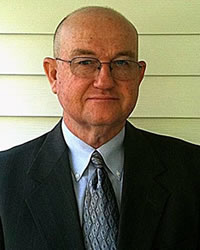
Gary Shepard is teacher and pastor of Sovereign Grace Baptist Church in Jacksonville, North Carolina.

Comments

0 / 2000 characters
Comments are moderated before appearing.

Be the first to comment!

Joshua

Joshua

Shall we play a game? Ask me about articles, sermons, or theology from our library. I can also help you navigate the site.