Bootstrap
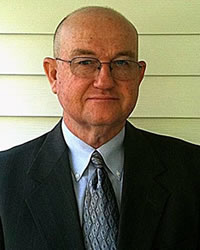
Gary Shepard

Command & Comfort for the Little Children

1 John 2:1
Gary Shepard September, 16 2012 Audio
0 Comments
Gary Shepard
Gary Shepard September, 16 2012

Sermon Transcript

Auto-generated transcript • May contain errors

100%
1 John and the 2nd chapter. I call this message, Commands
and Comfort for the Little Children. And I'll begin by just reading
that first verse in chapter 2 of 1 John. These things write I unto you,
that ye sin not. And if any man sin, we have an
Advocate with the Father, Jesus Christ the Righteous." This letter,
this first epistle of John, is without a doubt for our day."
John wrote this letter, I'm sure not knowing, that he, as every
other Bible writer was, was being moved by the Spirit of God. And so what he writes in that
verse has come from the heart and the mind of God. Paul says,
all Scripture is given by inspiration of God. That literally means
God breathed. And is profitable for doctrine. You say, I can understand that.
We get our doctrine from the Word of God. But being in the
shape that we're in, it also says for reproof, for correction,
for instruction in righteousness." And in this verse, as in all
of Scripture, John writes in such a way as some have said
that they neither might presume to sin nor despair if they did. It's a guard against presumption. and a guard against despair.
Some, in their efforts to emphasize one aspect or one doctrine of
the Scriptures, they wind up doing so at the exclusion or
the diminishing of other aspects and doctrine of the Scriptures. But you never find that in the
Bible. They are often again and again set forth clearly with
none contradicting the others, but all that God declares being
in a perfect harmony. And many, many times, Ron, it's
in the same verse. It's so contradictory to human
logic. Contradictory to our natural
way of thinking. But it's so often right there
in the same verse. Things that seem to contradict. And that's the way it may be
in this verse to us. But I want us to note some things
this morning, and the first one that I would think we ought to
notice is these to whom He speaks. He describes them as little children. If you were here on Wednesday
night, Brother Allen identified them in so many ways. These are
the children of God. These are those who are redeemed
by the blood of Christ. These are the elect, true believers. And one reason why they're called
little children is because of what our Lord said in Matthew
18. He said, "'Barely, I say unto you, except you be converted
and become as little children, receptive, teachable, dependent,
totally as little children, you shall not enter into the kingdom
of heaven." A little child is dependent on his father and mother
for everything. But they're called little children
also because they're set in contrast here also to the children of
the devil. Some say we're all in this universal
family, all under the universal fatherhood of God. But Christ
said to the Pharisees, He said, you are of your father, the devil. These are not the children of
the devil, He writes to. They're the children of God.
And they are those also whom John may speak of also as their
spiritual father. John may well have been their
father in the faith. Paul writes to Timothy and he
says unto Timothy, mine own son in the faith. That's the language
of this spiritual birth and life. As a matter of fact, in another
place, Paul says that to these Corinthians, he said, you're
like my children because I've begotten you through the gospel. The Spirit of God gave them life,
which was evidenced in their believing the gospel that Paul
preached. And he uses this language maybe
out of concern for them, out of compassion for them, out of
love for them. And if you look here also in
this second chapter in verse 12, he uses that term and description. He says, I write unto you, little
children, because your sins are forgiven you for His namesake. These are people who are forgiven.
He's not writing to get them forgiven. He's writing to them,
he says, because God has forgiven them. He's put away their sins
through the sufferings of Christ. And then also in verse 13, he
says, I write unto you fathers, because ye have known him that
is from the beginning, I write unto you, young men, because
you have overcome the wicked one. I write unto you, little
children, because ye have known the Father." Some may have had
different levels of spiritual maturity. Some could be viewed
as fathers in the faith. And these might be spoken of
as little children in the faith, still with great immaturity. But if you look down also in
verse 8, he says so that we might remember the time and age in
which these little children lived. Little children, it is the last
time. And as you have heard that Antichrist
shall come, even now are there many Antichrists whereby you
know that it is the last time. Don't get to riding too high
and thinking too highly in yourself and too independent. This is
a day in which as far as what's going on in deception and idolatry,
he said, you're like little children, and it's the last time, and there
are many antichrists. Then look at verse 28. He says,
"...and now little children abide in him." Where do little children
need to be kept close to? Their parents. He said, abide
in Him, abide in Christ, that when He shall appear, we may
have confidence and not be ashamed before Him at His coming. He is our confidence. And we're
to abide in Him, have no other. Look over in chapter 3 and verse
7. "'Little children, let no man
deceive you. He that doeth righteousness is
righteous, even as he is righteous.'" What is it to do righteousness?
It's to believe on the Lord Jesus Christ. It's to trust Him alone. And then if you look down also
in verse 18 of 1 John 3, he says, "...my little children, let us
not love in word, neither in tongue, but in deed and in truth."
If we say we love and we don't, It's just like sounding brass
and tinkling cymbals. Love is always manifested in
action and deed. Look over in chapter 4 and verse
4. Here it is again, "...ye are
of God little children, and have overcome them, because greater
is He that is in you than he that is in the world." All deception, all the tricks
of Antichrist, all that deception which would be so strong, so
intense, that if it were possible, it would deceive even the elect. He says, in Christ, we've already
overcome. And sometimes I wish as a little
child I could remember this more than I do. Greater is He that
is in you than he that is in the world. I'm not greater, I'm
not stronger, but He is. Our Lord is. And then if you
look one more place over in chapter 5, 1 John 5, look down at verse
21. He says, little children, Keep
yourselves from idols." Must be a danger happening there.
He said, little children, keep yourselves from idols. So this is who He's talking to.
He's talking and writing to the Lord's people. And if you notice
also in this, notice the method that God uses to convey His Word. He says, these things write I
unto you. God uses His written Word. And while the written Word falls
on the ears of an unbelieving world, they find nothing in them
for them, He says here, these things write I unto you. This book is a letter to God's
people. These things are written, in
other words, what John is led to write is God's Word, so that
no man can receive any message, any extra-biblical revelation
from God that is contrary to the written Word of God. Here
people say, the Lord told me last night. And it's usually
one of two things. something that He's already said
in His Word so plain it can't be missed, or something that
He obviously has not said in His Word and should not be heeded. He's written something to us. If you look back over in 1 John
chapter 5, in verse 13, he says to these little children, "...these
things have I written unto you that believe on the name of the
Son of God." You see, this message has to be received by faith that
God gives. I write these words to you that
believe. You believe on the name of the
Son of God, that you may know that you have eternal life, and
that you may believe on the name of the Son of God. He writes
to them who do believe, He writes unto them that they may know
that they have eternal life. Why? Because they believe what
God has said. I don't believe that I have eternal
life because I earned it, or I deserve it, or that some way
I can work to attain it. I could not believe it had God
not given me faith and told me so in His written Word." And
he said, it goes on, "...and that you may believe on the name
of the Son of God." He gives us His Word, not only that we
might believe at the first, but that we also might continue to
believe and be more assured from the fact, this is what God says. This is His means. Paul said,
"...for whatsoever things were written aforetime were written
for our learning, that through patience and comfort of the Scriptures
we might have hope." Somebody says, I don't have much hope.
But if you don't read what's written, if you don't hear it
from the mouth of God Himself, if you don't find it by thus
saith the Lord, you have no reason to have hope. It is written,
John says. And the amazing thing is that
Peter and James and John, They actually, there on the Mount
of Transfiguration, they beheld the glory of Christ transfigured
there. His glory manifest in a greater
way so as to be assured that He is God the Son. But then Peter would write later
in recounting that very event. He'd say, but we've got a more
sure word of prophecy. More sure than beholding with
our natural eyes the glorious Christ? He said, a more sure
word of prophecy. whereunto you do well that you
take heed as unto a light that shineth in a dark place until
the day dawn and the day star arise in your hearts." That day
star is Christ. He is the Son of Righteousness.
And the Spirit of God causes us to see and behold Him by that
faith that He gives as we are brought to this more sure word
of prophecy, more sure than actually seeing Him with our natural eye,
and that's the Scriptures. That's the Gospel. That's the
method God uses to convey His message, His written Word. And that's all through this book.
And if you notice here also, another thing that I want us
to note is that as he writes this, he declares one more time
an unchanging standard. God's got the same standard for
His creation in every age. So John says, my little children,
these things write I unto you, that you sin not. Don't sin. You say, well, but we believe
in salvation by grace. Yes, we do. But God still says
to His people, all of whom have been saved from their sins, sin
not. And those who would blind, those
who would lower that standard, They evidently neither know God
and are yet blind." Because God is unchanging. He says that the
soul that sins shall surely die. And this is not the opinion of
a man, but this is the plain command of the unchangeable God
who is eternally and immutably holy. There's some things I'm
not sure of about God. There's one thing I'm pretty
sure of. If He has those created beings in His presence, day and
night, to shout out and to declare His greatest glory, His unchanging
throne, I know He's holy. His Word's holy. The Holy Spirit
is the Holy Spirit. Everything about God is holiness
and justice, and grace, sweet as it is, is never an excuse
or license to sin. We might excuse our sin, but
all we're doing is deceiving ourselves. We may go on and do
things that we know that even to a redeemed people, God says
for us not to do. But it won't change anything.
He says to these little children, I write unto you little children
that you sin not. Sin is never acceptable with
God. Sin is never little in His sight. And sin, even forgiven sin, has
a natural consequence. Say, what do you mean a natural
consequence? Well, a man goes out, he gets
drunk, he gets in his automobile, he starts driving down the road,
he's a child of God. He fell in that error like Noah
did. He drives down the road, he wrecks
his car, crushes his arm, they have to take his arm off. Think
the Lord will forgive him? He already has, but he's lost
an arm. There's a natural consequence
to sin. And if you remember David, the
word to David from Nathan was, he said, God has put away your
sin, but the sword will abide at your house. He said, you've
given the enemies, given occasion for the enemies of God to blaspheme. It's a reproach to God. It's
a display of an attitude of ungratefulness and unthankfulness to what God
has done for us in saving us. There are so many things that
if we can continue to look lightly on sin, we don't know anything
about grace. He said the grace of God teaches
us. to forsake all these things.
And we may just take that position many have and say, well, I'm
in this unchangeable state of being righteous before God and
so I'll just go out and I can really do anything I want to.
If that's our attitude, I'm afraid we're not. We don't know what
the cost of our redemption is. We don't know the reality of
that sacrifice made by the Lord Jesus Christ. How can I, being
motivated by thanksgiving and love to Him who first loved us,
how can I be a reproach to His name? He says, sin not. That
goes from the least command we find. And by the way, We have
lots of commands. We don't live by the Ten Commandments
as a rule of life, but as a rule of grace and love for Christ. We have lots of commands. And
you can't read this book without seeing it. But we don't obey
Him to be saved. Our obedience to God is because
we are saved. He saved us. And this doesn't
ever change. This is an unchanging standard.
This is an unending command. then not. But then John also,
being, as I said, led by the Spirit of God, taught by the
Spirit of God, he also deals with the reality of what we will
do as sinners. He says, and if any man sins,
or and when any man sins. You know, there are people who
view such what appear to be contradictory things in God's Word, they view
them in this light so as to either think that they are sinless or
to excuse their sins. They say, well, God would never
command us to do what we can't do. Really? Well, do you suppose
that God, when He was giving the Ten Commandments to Moses
on that Mount, Do you suppose he didn't have a clue as to what
was going on at the foot of that mount at that very moment when
Aaron and those people were casting gold and calves to worship? Your inability and my inability
does not diminish our responsibility. Sin not. But he says here, he
says, and if any man sins, or when any man sins, And the reality
is, everything we do is tainted with sin. Everything. Years ago,
when I used to be in law enforcement, they had that old fingerprint
ink. They'd roll your finger in the
ink, and you had to do it, and you got more on your hands than
the guy that you were fingerprinting did, and everything you touched
left a mark. left your fingerprint on. That's
the way we are as sinners. We sin because we are sinners. In ourselves, we are still in
our sins. And if you look back in the first
chapter, in the verses that precede these words, John says in verse
8, if we say that we have no sin, He's talking to lost people. No, He's talking to the little
children. If we say that we have no sin, we deceive ourselves
and the truth is not in us. If we confess our sins, He is
faithful and just to forgive our sins and to cleanse us from
all unrighteousness. But if we say that we have not
sinned, We make him a liar, and his word is not in us. We sin. And that's what Paul
is talking about, in part, in Romans chapter 7. If you'll turn
back to Romans chapter 7, this is the language of an apostle. This is the language of the man
that God used to write the greater part of the New Testament. This
is a redeemed, regenerated believer. And there are some who would
say, Paul is talking about back when he was lost. Now you just
listen to the language here. It says what it says. Beginning in verse 14. He says,
for we know that the law is spiritual, but I, me personally, I am carnal,
sold under sin. For that which I do, I allow
not. For that I would, that do I not. But what I hate, that I do. Now
wait a minute, Paul. Are you two people here? No, you're one people. Have you
got two natures here? No, not really. He said, I am
carnal. So, as a regenerated man, this
conflict, comes not by something that is done for him to enable
him to not want to do, but this conflict is now because of the
Spirit of God who indwells him. That's all he names in Galatians.
He said, the flesh warreth against the Spirit. This isn't a bunch of that old
black dog, white dog kind of logic. Got two dogs fighting
inside of me, black dog and a white dog. Black dog wants to do wrong,
white dog wants to do good. That's not what he said. Because
there is no conflict in us at all until we are born of God's
Spirit. There's no opposing what we are
in the flesh until we're born of God's Spirit. Someone says,
well, God fixes us to where we don't sin much anymore. I'm serious. There are many commentators who
view such a passage as this, saying that Paul was talking
about when he was lost, and now the Spirit of God keeps us from
sinning. Well, I thank God He does, son.
If He didn't, what would we be? But we will not be until we be
glorified in a body with no tendency and potential to sin." You think
about it. If there was no possibility or
no tendency, why would John have been led by the Spirit to write
such things? You don't warn where there is
no possibility of a problem, he said, when any man sins. Now
listen to Paul. Verse 16, "'If then I do that
which I would not, I consent unto the law or a principle that
is good. Now then it is no more I that
do it, but sin that dwelleth in me. For I know that in me
that is my flesh dwelleth no good thing.'" I can tell you
this. If as a believer you think that
there's no possibility of you sinning anymore, or if you think
that in some way you have been totally kept from sinning, you'll
never have a moment's peace. God deals with us in truth. He
paints, as old Cromwell said, He paints His people warts and
all. We're still in this flesh. We
don't walk after the flesh in the matter of salvation. We walk
after the Spirit. But we are still in this body
of flesh. He says, "...in my flesh dwelleth
no good thing, for to will is present with me, but how to perform
that which is good I find not." For the good that I would do
not, for the good that I would, I do not, but the evil which
I would not, that I do." Somebody says, well, you people that believe
grace, you believe that you can just go sin all you want to.
I sin more than I want to. I sin much more. I don't want
to sin, but I do. Now if I do that I would not,
it is no more I that do it, but sin that dwelleth in me. I find
then a law that when I would do good, evil is present with
me. For I delight in the law of God
after the inward man, but I see another law in my members, warring
against the law of my mind, and bringing me into captivity to
the law of sin which is in my members. O wretched man! that I used to be." Is that what
it says? Now, he's writing by inspiration of God's Spirit. that I am. Who shall deliver
me from the body of this death? I must think that every day of
my life. He says, I thank God through
Jesus Christ our Lord. So then with the mind I myself
serve the law of God, but with the flesh the law of sin. I am. I'm another man in Christ,
but in myself. I'm still a wretched man." Then
John notes this for us. He says, and if any man sin,
we have an advocate. When any man sins, we have an
advocate when we do. He didn't say we have some advocates
we can look to and go to. He said we have an advocate.
That's one. And it's not a priest. It certainly
is not Mary. And it is not a preacher. The priestcraft lives in our
day, but it's not all Catholicism. It's in every one of these so-called
evangelical churches where men can get a conscience eased by
walking up and shaking the hands of the preacher, coming to rededicate
your life. That's just coming to another
advocate other than Christ. And this advocacy is simply the
pleading of one's cause. Do we have anybody, when we do
sin, to plead our cause? We have an Advocate, Jesus Christ. We have continual intercession
on our behalf by Him. In Lamentations, this very thought
is conveyed in a verse, O Lord, Thou hast pleaded the causes
of my soul. I have no confidence in a nada. If you'll lie on my behalf, you'll
lie to me. I'm telling you the truth. Well,
that's what I believe. Will you believe the same thing
without that $1,000 fee? Believe. O.J.C. Philpott said
the figure, the figure of this advocacy is taken from a lawyer
pleading the cause of a criminal and using his best endeavors
to bring him off uninjured." He said, but there could be two
problems. He said, such an advocacy may
fail for two reasons. Number one, the incompetency
of the advocate. He said, or the other. the terrible
cause, the terrible bad of the One He's representing. It says,
He ever lives to make intercession for us. And I'll just throw this
in also. This pleading of the cause, this
word advocate here, is the same word we have in John 14 and John
15 and John 16 wherein the Holy Spirit is spoken of as So there's
with this notion of Him interceding for us, that as He intercedes
for us, He does so in such a way that He comforts us. You see,
He says, we have an advocate. In other words, this advocacy
is based on relationship. Our advocate is our elder brother. Our advocate is the one we're
joint heirs with. Our advocate Before God is God
Himself. I think He'll have any, as we
say, pull with Him. I remember hearing a story, you
may have heard this story, but this football player in, I believe
it was the University of Georgia, he was having lots of problems. Lots of problems. And he needed
to see the coach, but he couldn't get in to see the coach. The
receptionist wouldn't let him by. The coach was in a meeting
and all that kind of stuff. So he just, in his despair, he
sat down on the steps of that big university. A little old
boy came up and sat down. What's wrong, mister? I said,
you don't need to know. You couldn't help me. He said,
well, but tell me. I might can. He said, all right.
He said, I'm on the football team. I've got some bad grades. I've got some problems at home.
I've got some financial difficulties. And I can't get in to see the
coach. He's in a meeting and the receptionist
won't let me in. And if I don't see him quickly,
I'm out of here. He said, well, come on along
with me. He said, son, you can't. He said, come on with me. Just
follow me. And he walked right in that building. He walked right
by that receptionist there. He walked right to those double
oak doors. He turned the handle, threw the
doors open. He said, Daddy! This boy needs
to talk to you. Everything is based on it. He
is the Son of God. He is our justification, our
sanctification, and He is our continued intercession. And John closes it out with the
unchanging basis of his advocacy. He says, Jesus Christ, We have
an Advocate with the Father, Jesus Christ the Righteous. He Himself is the basis of His
advocacy on our behalf. He is our Advocate because He's
alive, the One who died for us, rose from the dead. And He is
able, according to the Apostle, to save them to the uttermost
that come unto God by Him, seeing He ever liveth to make intercession
for them." He is not going to die again. He is raised from
the dead. He is seated at the right hand of the Majesty on
High. He is near. He is God the Son. Someone said, He pleads for us
on the ground of justice or righteousness as well as mercy. Though He can
say nothing good of us, He can say much for us. It is His righteousness
or obedience unto death, His endurance of the full penalty
of our sin in our place on which He grounds His claim for our
acquittal, or he is our advocate by virtue of the fact that he
is righteous, contrasted to the fact that we're sin. We can't
be our advocate because we're nothing but sin. He is our advocate
because he's nothing but righteousness. Let me read you a verse quickly.
You know this verse, these verses. What shall we then say to these
things, if God be for us? Who can be against Him? That's
what the resurrected Christ is now. He's God for us. But if
you look in verse 33 of Romans 8, it says, "...who shall lay
anything to the charge of God's elect? It is God that justifieth. Who is He that condemneth? It is Christ that died." Yea,
rather, that is risen again, who is even at the right hand
of God, who also maketh intercession. He's our God. John in the preceding
chapter says that he's faithful and just, who forgives us. Our
forgiveness has two aspects. One is this aspect. Before divine
justice, Christ our substitute has accomplished for us Forgiveness. We are in Him forgiven of all
our sins before God. But forgiveness also has another
aspect or element and that is the experience of it. in us,
in our conscience. We pray. Let me say first, John
Paul said, in whom we have forgiven. Yet our Lord teaches us to pray,
Father, forgive us our sins. We need the witness of your forgiveness
in our conscience. If it's been settled in the court
of heaven, if we've been forgiven at the throne of God, Cause us
to know it, to remember it. We've sinned again. Cause us
to know it by Your Spirit in the world. Why? Because He's
the Lord our God. That's the name whereby He is
called. That's the name whereby She,
His people, His church, We have an Advocate with the Father,
Jesus Christ the Righteous. And His advocacy is based on
the fact that He is also our propitiation. And He is the propitiation
for our sins. And not for ours only, but also
for the whole world. It doesn't say the sins of the
whole world. The commentators added that. But the whole world
being that the barrier between Jew and Gentile has now been
taken down so that whether Jew or Gentile, all of God's people
in Christ, whether they be one or the other. He's our propitiation.
God's wrath against their sin is turned away and He is turned
to us in favor. And on this ground He can stand
up as our surety and our representative and plead with the Father that
He has suffered in our place. and on the firm and solid ground
of satisfied justice and equity. He can plead our case. He gives
commands to us. But he gives comfort to us. Father, this day we pray that
you'd bless your word to our hearts. Help us to hear and to
heed as we receive grace that instruction to sin not. Lord, when we fail and fall,
as we will. Help us to be reminded and give
us confidence in our Advocate, the Lord Jesus Christ. We thank
you for your gospel good news. We pray you a rich blessing be
upon your people because of what Christ has accomplished. You
made Him to be sin for your people that we might be made the righteousness
of God in Him. So our Advocate can say, the
righteous one can say, that they're righteous in me. Lead our call. Get honor and glory unto yourself. Take that which has been said
and cleanse from every mind anything and everything less than you
would have said. And bless your word to be received
by every heart as the absolute truth and basis for our hope. Help us, we pray, for we ask
it in Christ's name. Amen.
Gary Shepard
About Gary Shepard
Gary Shepard is teacher and pastor of Sovereign Grace Baptist Church in Jacksonville, North Carolina.

Comments

0 / 2000 characters
Comments are moderated before appearing.

Be the first to comment!

Joshua

Joshua

Shall we play a game? Ask me about articles, sermons, or theology from our library. I can also help you navigate the site.