Mark 9:2 And after six days Jesus taketh with him Peter, and James, and John, and leadeth them up into an high mountain apart by themselves: and he was transfigured before them. 3And his raiment became shining, exceeding white as snow; so as no fuller on earth can white them. 4And there appeared unto them Elias with Moses: and they were talking with Jesus. 5And Peter answered and said to Jesus, Master, it is good for us to be here: and let us make three tabernacles; one for thee, and one for Moses, and one for Elias. 6For he wist not what to say; for they were sore afraid. 7And there was a cloud that overshadowed them: and a voice came out of the cloud, saying, This is my beloved Son: hear him. 8And suddenly, when they had looked round about, they saw no man any more, save Jesus only with themselves. 9And as they came down from the mountain, he charged them that they should tell no man what things they had seen, till the Son of man were risen from the dead. 10And they kept that saying with themselves, questioning one with another what the rising from the dead should mean.
Sermon Transcript
Auto-generated transcript • May contain errors
100%
Years ago I read a verse in the book of Proverbs
that has scared me many times since. It says something like this,
it says, the fool is known in the multitude of his words. And
sometimes I have a multitude of words amounts to more foolishness
than I would like. But I'm thankful to be here this
morning. I'm thankful to the Lord for
this church, for all of you individually, and for the Lord's mercy, and
for your fellowship in the gospel
of his son. And I want you to turn this morning
to the book of Mark. to Mark's Gospel and the ninth
chapter. And I'm going to begin reading
in the second verse. And after six days Jesus taketh
with him Peter and James and John and leadeth them up into
a high mountain apart by themselves, and he was transfigured before
them. And his raiment became shining,
exceeding white as snow, so as no fuller on earth can wipe them. And there appeared unto them
Elias with Moses, and they were talking with Jesus. And Peter
answered and said to Jesus, Master, it is good for us to be here,
and let us make three tabernacles, one for thee, and one for Moses,
and one for Elias. For he wished not what to say,
for they were sore afraid. And there was a cloud that overshadowed
them and a voice came out of the cloud saying, this is my
beloved son in whom I'm well pleased, as it is in another
place, hear him. And suddenly when they had looked
round about, they saw no man anymore save Jesus only with
themselves. And as they came down from the
mountain, he charged them that they should tell no man what
things they had seen till the Son of Man were risen from the
dead. And they kept that saying with
themselves, questioning one with another what the rising from
the dead should mean. Now it's always amazing to me,
especially with my own self, amazing how much we can see with
the natural eye and still not see the Lord Jesus Christ for
who he really is. Even to this point, In this gospel
account here in Mark, they had seen the Lord Jesus do many things. They had seen miracles and things
that you and I, I'm sure, would imagine that we would have liked
to have seen. And yet, they're still in a state
in need of the revealing work of God. If you look down in that
fifth verse, there's a great evidence in this. It says, and
Peter answered and said to Jesus, master. And that word master
there simply means rabbi or teacher. And it is actually the same word
that Nicodemus used in speaking to the Lord Jesus Christ in John
3. And not only does he simply call
him master, But he also suggests that they build or erect at that
place and at that time three tabernacles or three tents, if
you will, one for Christ, one for Moses, and one for Elijah. And that tells us that they regarded,
at least Peter and I'm sure most likely the rest, they were regarding
the Lord Jesus Christ as simply being basically equal to Moses
or equal to Elijah, being prophets like they were. And they had
not at this time seen the glory as to who Christ really was and
is. And you see, it is essential
for us. It is essential for everyone
that the Lord saves. that we see and be brought by
God to some degree of understanding as to who Jesus of Nazareth really
was and is. And I say that because the only
way we can have any confidence in that work which he did, which
is our salvation, is first of all, if he is who he said he
was. And if he is this glorious person
that the prophets such as Elijah and Moses and others were led
of God to say that he is. And after he describes him as
rabbi, or as he's caught up in all of that which is going on,
if you look down in verse 2 and 3, it says that the Lord Jesus
Christ was transfigured. Transfigured. And it says that
his raiment became shining, exceeding white as snow, so as no launderer,
as that word fuller is, so as no launderer on earth could make
them. And actually what is taking place
on this occasion is what has to happen and what does happen
when God the Spirit reveals to his people just who the Lord
Jesus Christ really is. You see, that word transfigured
here is the word from which we get the word metamorphosis. I don't remember a lot about
what my elementary science teacher tried to teach me about metamorphosis,
but I do remember it had something to do with that process or whatever
it is by which that worm or caterpillar turns into a butterfly. I always was amazed at that transition. But the word metamorpho means
something like to transform or to change. And it's the same
thought that Paul uses when he speaks of the Lord's people in
Romans 12 when he says, and be not conformed to this world,
but be ye transformed by the renewing of your mind that ye
may prove what is that good and acceptable and perfect will of
God. And this is set in direct contrast
both concerning Christ himself and the people of Christ. It's
set in direct contrast with Satan and the people of Satan. Listen to these words that Paul
writes in 2nd Corinthians. He says, and no marvel, for Satan
himself is transformed into an angel of light, therefore it
is no great thing if his ministers also be transformed as the ministers
of righteousness, whose end shall be according to their works. But it is a different word that's
translated, transformed than the word in our text. In other words, what is taking
place on what we call the Mount of Transfiguration is the Lord
Jesus Christ is making manifest this change or this transformation
is simply a revelation or manifestation of who he really is. But the transformation that Paul
writes about concerning Satan and therefore his ministers,
that means to transfigure or disguise. It is a self-transformation. It is a self-transfiguration
or a self-disguise. wherein they both seek to appear
as they really are not. And so there is a great difference
in the transformation that the scripture speaks about concerning
Christ and his people with regard to Satan and his ministers. They try to appear as they really
are not. They try to disguise themselves
as angels of light or truth. but the Lord Jesus Christ on
this occasion, so that not only Peter and James and John, that
they not only know that he was not one whose equals were such
as Moses and Elijah, great as they might be, but he is none other than God
himself. He is the Son of God. And it's when we are brought
by God himself to know something about who this man Jesus of Nazareth
really is, that he is absolutely God in our nature, sin excluded,
which is absolute perfection as is demonstrated in how even
his garment shined. You remember when Saul of Tarsus
was on the road to Damascus? And Christ revealed himself to
him on that occasion and he shone with such brightness and glory
as God the Son that it blinded him. That's the picture that we have
before us and here he is, God manifest in the flesh. quite
unique and distinct from every other, from Moses all the way
down to the apostles. He is none other than Jesus Christ,
the Son of God, holy, perfect, and in every way possessing every
attribute of God. And there is only one way I don't
know, I think it was Old Pink who said something like this.
He said, God manifested in the flesh. Ain't nobody but a fool
or a Christian going to believe that. You see, Peter called him
rabbi, but he's more than a teacher. He's more than a martyr. He's more than all that could
be ascribed to him as a man. He is the God-man. And if he isn't, then all he
did and all he claimed is a lie. Here he is, God manifested in
the flesh. And when he did that, when that
happened and Peter beheld that, Peter proved just like we all
do, like all men, we have this tendency to speak even though
we're ignorant of things. I've learned in this world that
as far as fallen humanity is concerned, ignorance is no hindrance. to a willingness to speak, not
one bit. And so Peter answers him and
he says, Jesus, Master, it's good for us to be here. Let's
build three tabernacles, one for Moses and one for Elijah
and one for you. And what does that show us? That
shows us the necessity of divine revelation. That shows us that
the only way that we will ever in truth not only know who he
is, but believe on him as he is, is if God reveals it to us. I like that old hymn that says
something like this, all is vain unless the spirit of the Holy
One come down. And if there's ever a picture
of this, it's right here on this occasion. not only after these
disciples had walked with Christ and seen the miracles and beheld
what he had to say and listened to his teaching and now see him
even transfigured or manifesting glory as God. And yet Peter, and James and
John or you or me or my children or my friends, we will never
ever know him except he reveal himself to us and in us. And sometimes When I think about
that, I look at it almost in a negative
sense. I look out like at my children
or these people that I minister to or these friends I might have
in various places where I've tried to bear a faithful witness
to the gospel to them. And I look at it and I say, well,
they'll never believe. They'll never know the truth
except God reveal it to them. Instead of looking at it and
realizing That's just what he does. He does that very thing
to every one of his people. He does that to every one of
these that he loved and chose in Christ before the world began. To every one of these that Christ
came into this world to suffer and to die for. That is exactly
what he does. He makes manifest Himself. And He does it in much the same
way that we have on this occasion. Not by the manifestation of this
glory, this outward shining and all that, but look at what it
says in verse 7. It says, and there was a cloud
that overshadowed them. Now that cloud seems to me like
that that's the same cloud that was the Shekinah glory cloud
that was always in the Old Testament associated with God. The cloud
that covered the top of Mount Sinai and the cloud that was
demonstrated there between the cherubims on the mercy seat.
The cloud that filled the temple at the dedication of the temple
which manifested the presence of Almighty God. But what came out of that cloud
was a word. They didn't see God. They didn't look at him face
to face in that sense. But the Father spoke audibly
from heaven, as he did on another occasion at least, and he said,
this is my beloved son." This is not
just another Moses. This is not just another prophet
like Elijah. This is my beloved son. This is him. And he said, this is my beloved
son, as I said, in another place in whom I am well pleased. The Apostle Paul, who the Lord used to write most
of the New Testament epistles, He wore that phrase out. In whom? Or in Christ? He speaks of our being chosen
in Christ. Over and over again, he speaks
of being in him, possessing his righteousness. But I really like
the way the Father says it. He said, in whom I am well pleased. Now is there any way that any
of us in ourselves could ever by the farthest stretch of our
imagination, could we ever stand on our own feet before God, based
on our own merits, our own imagined righteousness, and say, God,
I know you're well pleased with me. I can tell you this, there are
a whole lot of folks in this world that are mighty well pleased
with themselves. But there is a ground upon which
a sinner fallen in Adam, sinner by nature, sinner by every deed,
thought, word, can stand before God as well-pleasing. You might as well say that the
Father audibly spoke the gospel from heaven. This is my beloved
son in whom I am well pleased. Well, the other side of that
coin is I'm not well pleased with anybody else except all
those who are in him. Now I know there's so much said
in this book with regard to details and descriptions and so many
other ways of expressing this, but for a poor sinner like me,
a poor ignorant country boy from North Carolina, that says it
about as well as it can be said. That every sinner in Christ is well-pleasing in the sight
of God. In whom? Not in what, but in
whom I am not just pleased, but well-pleased. And Paul had just,
in Romans 8, he'll just say the very truth concerning that. He
says, so then they that are in the flesh, they cannot please
God. Just cannot. And yet here is
a whole world of religion trying to tell you and me and everybody
else what they can do to gain the favor of God. He said, in
the flesh. Nobody can please him. And then notice what he says
next. This is my beloved son. Hear him. I suppose if there was one thing
to this generation that I would be so glad if I could convince
him of and bring home to them is this very thing, God saying
of his son, hear him. Here's a preacher over here and
he wants everybody to hear him. And another one over here, and
he wants everybody to hear him. And another one over here, he's
been trained, thinks he knows something, or she thinks she
knows something, hear him, hear her. But the God of glory says, this
is my beloved son, hear him. You know, I'd just be glad, I'd
just be glad that everybody that I know, let's just confine it
there, to everybody that I know, if they would sit down, take
the Bible in their hand and read John chapter 10 and hear him. Be no question about
who the shepherd is, be no question about who the sheep are, be no
question about the shepherd's death, there'd be no question
about the atoning death of the Lord Jesus Christ, there'd be
no question about safety or security or calling or anything else, if he would enable us to just
hear him. Because to hear him is to hear
his word. You say, I wish I could have
been Peter on that occasion. I wish I could have seen what
took place with the Lord Jesus Christ. I wish I could have heard
the Father speak from heaven. But you know, just to combat
that very thing, Guess who God uses as an example to make sure
we don't do that? Turn over to 2 Peter. 2 Peter in the first chapter. 2 Peter chapter 1 and look down
at verse 16. Now Peter joins himself with
the other apostles here in saying, For we have not followed cunningly
devised fables when we made known unto you the power and coming
of our Lord Jesus Christ, but were eyewitnesses of his majesty. For he received from God the
Father honor and glory when there came such a voice to him from
the excellent glory, this is my beloved Son in whom I am well
pleased. And this voice which came from
heaven we heard when we were with him in the holy mount."
He's making reference to this very occasion. But he doesn't even call upon
that occasion to be an example for them. But notice what it says in the
next verse. We have also a more sure word
of prophecy. Somebody said, if Christ would
show me a sign like that, I'd believe. I think I could have
confidence. Or if God the Father would speak
from heaven, say that concerning this gospel, I believe I could
believe it and rest in it. Well, what about if He gives you something
even better? Something better than that? Well,
he calls it a more sure word of prophecy. Where unto you do well that ye
take heed as unto a light that shines in a dark place until
the day dawn and the day star arise in your hearts. What's the day star? Have you
seen the day star today? Well, sure. The day star is the
sun. But the sun he's talking about
here is the one that's described in the Old Testament as the son
of righteousness. The Lord Jesus Christ. And he said, the light is not
shining in the man Christ Jesus standing on the earth at this
present time, and the light is not shining through the Father
speaking audibly from heaven at this time, but he has given
us the light of the word of the truth of the gospel. And he said,
you do well to take heed to it. until He makes that light to
shine in your hearts. When can we say that the light
of God has shined in our hearts? When He has revealed to us the
Lord Jesus Christ in all His saving, redeeming, keeping, justifying
glory as everything. Well, it says here that the Lord
Jesus Christ, He's there transfigured Peter's been saying, Rabbi, let's
build three tabernacles and thinking of him as equal with Moses and
Elijah, and then all of a sudden he looks up. Moses is no more. Elijah is no
more. They were just simply representations
of the law and the prophets. Which the scriptures say, the
law and the prophets were until John. John the Baptist. But what happened then? Christ
came. And so they look up and here
is Jesus only. Jesus only. Well, in Luke, giving reference
to this very thing, it says that Moses and Christ and Elijah We're
talking. You say, boy, I'd sure love to
have heard that conversation. Well, if you turn over to Luke's
gospel, chapter 9, and look down in Luke chapter 9 at verse 30
where he makes reference to this, it says, and behold, there talked
with him two men, which were Moses and Elias, who appeared
in glory and spake of his decease which
he would accomplish at Jerusalem." What were they talking about? They were talking about the coming
death of Jesus Christ. They spake of his decease, or
as that word is, something like exodus. His departure from this world,
which would be accomplished through and by his suffering and death
on the cross. And they clearly knew, as Peter, James, John, Paul,
and all the Lord's people are made to know, that the dying
of Jesus Christ was an accomplishment. Do we know that? Most people view it as an attempt
or a possibility, or an offering in the sense of making something
available. But all who truly know something
about the death of Jesus Christ on the cross, they know it was
an accomplishment. It accomplished the will of God. It accomplished a fulfillment
of all the prophecies concerning the Messiah. It accomplished
and fulfilled the complete salvation of all those he came to die and
represent. It accomplished everything necessary to glorify God and save every
one of his people from their sins. Sometimes as a preacher trying
to preach, I just get older and older and
realize more and more what a failure I've been and can't look back
and see anything that I've accomplished. But I rest in what he accomplished. He accomplished that work of
righteousness. by which he saves all his people
from their sins, and there made the very righteousness of God
in him." God is well pleased with all in his Son and with
what he accomplished for them.
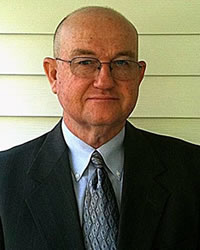
About Gary Shepard
Gary Shepard is teacher and pastor of Sovereign Grace Baptist Church in Jacksonville, North Carolina.
Pristine Grace functions as a digital library of preaching and teaching from many different men and ministries. I maintain a broad collection for research, study, and listening, and the presence of any preacher or message here should not be taken as a blanket endorsement of every doctrinal position expressed.
I publish my own convictions openly and without hesitation throughout this site and in my own preaching and writing. This archive is not a denominational clearinghouse. My aim in maintaining it is to preserve historic and contemporary preaching, encourage careful study, and above all direct readers and listeners to the person and work of Christ.
Brandan Kraft
Joshua
Joshua
Shall we play a game? Ask me about articles, sermons, or theology from our library. I can also help you navigate the site.
Bible Verse Lookup
Loading today's devotional...
Unable to load devotional.
Select a devotional to begin reading.
Bible Reading Plans
Choose from multiple reading plans, track your daily progress, and receive reminders to stay on track — all with a free account.
Multiple plan options Daily progress tracking Email reminders
Comments
Your comment has been submitted and is awaiting moderation. Once approved, it will appear on this page.
Be the first to comment!