Psalm 23:1 The LORD is my shepherd; I shall not want.
2 He maketh me to lie down in green pastures: he leadeth me beside the still waters.
3 He restoreth my soul: he leadeth me in the paths of righteousness for his name's sake.
4 Yea, though I walk through the valley of the shadow of death, I will fear no evil: for thou art with me; thy rod and thy staff they comfort me.
5 Thou preparest a table before me in the presence of mine enemies: thou anointest my head with oil; my cup runneth over.
6 Surely goodness and mercy shall follow me all the days of my life: and I will dwell in the house of the LORD for ever.
Sermon Transcript
Auto-generated transcript • May contain errors
100%
Well, that's good. I appreciate
your help. Good to see everybody here this
morning. As we attempt to preach God's word,
you pray for me as I seek to deliver this word in truth and
set forth Christ as the shepherd of his sheep. That's the title
of my message this morning, My Shepherd, taken from the 23rd
Psalm. I'm not going to be able to finish
this whole psalm this morning, although it's only six short
verses, but there's a lot of truth in this little psalm, so
let's look at it this morning. In John chapter three, John wrote
about a man of the Pharisees named Lazarus. I mean, a man
of the Pharisees who came to Jesus by night and said, We know
that thou art a teacher come from God for no man can do the
things you do except God be with him. And this man Nicodemus was
speaking prophetically because Jesus is that great teacher that
came from God. And as such, he was the master
of metaphors. He taught a lot of things in
metaphors. And we're gonna see that today. He taught in figurative
language about the new birth. He told this Pharisee, You must
be born again, Nicodemus. He talks about a new birth. He
talks about vineyards. He talks about wineskins, the
sower and the seed, and many other such metaphors in his Lessons
for Life series that he taught those who heard him during his
day and us today. And the most familiar and numerous
are those of the pastoral city, of a sheep and a shepherd. The
23rd Psalm is such a metaphor written by David, Depicting the
life of a shepherd and his sheep now. We know that the Lord was
not literally a shepherd and we're not literally sheep The psalmist under the inspiration
of the Holy Spirit as did other Old Testament writers represented
Christ and his people in a rural city and Isaiah was another such
writer of the Old Testament in Isaiah chapter 40 in verse 10.
Let's read these verses. I Behold, the Lord God, we're
talking about the Lord God here now, will come in with a strong
hand and his arm shall root for him. Behold, his reward is with
him and his work before him. He shall feed his flock like
a shepherd. He shall gather the lambs before
him with his arm and carry them in his bosom and shall gently
lead those that are with young. The psalmist said the same thing
in Psalm 100 in verse three, know ye Know ye that the Lord,
he is God. It is he who hath made us and
not we ourselves. We are his sheep. We are his
people and the sheep of his pasture. And Christ said this himself
in Matthew chapter seven and verse 15, beware of false prophets,
which come to you in sheep's clothing, but inwardly they're
raven and wolves. Well, many of Christ's teachings
were reflective of real life situations and he used metaphors
and parables. and illustrations very effectively
in his teaching. And David does the same for us
in Psalm 23, depicting himself as a sheep and the Lord, his
shepherd. And in this man, he reflected
the characteristics of one experienced not only as a sheep, but as a
shepherd. David was both. And as I was
preparing this lesson, I thought about, you know, when I was a
young boy, I was born and raised on a farm, and I had the opportunity
as a young boy to observe firsthand the life of a shepherd, a modern
day shepherd, because my next door neighbor bought a flock
of sheep, maybe 50 sheep, and discovered right away that he
was not able to take care of those sheep. He was inexperienced
in the care of these sheep. Inexperienced in their ways and
physically unable to care for them, he had to depend on his
neighbors in order to take care of these and manage them. And
though his pasture was fenced, if you know anything about sheep,
you know they have the ability to leap, and they can jump a
fence, which they did almost every day. And they would get
into the neighbor's crops, including ours, and destroy them, which
is, you can figure a herd of 50 sheep or more going through
a cotton patch or a peanut patch, they make havoc out of it. So
to the sheep's benefit, which was not receiving proper care,
and to our delight, to my brothers and me, we were glad when he
sold them, and he did eventually get rid of them. And I thought
about, you know, in the scriptures, This pastoral scene is demonstrated
over and over. Though hirelings were a dime
a dozen, and still are, a good shepherd was hard to find. One
qualified and experienced in shepherding was a valuable asset
to the owner of the sheep. And the best shepherd was the
one who owned the flock, one who had a personal interest in
the sheep. And we see this in the 23rd Psalm, as David wrote,
of the shepherd. Speaking from experience as a
shepherd of his father's sheep and a sheep himself of God's
pasture, David exalted the position of the shepherd of God's fold
above all shepherds. He knew from experience his own
needs as a sheep, and he knew personally the shepherd who,
according to Philippians 4.19, could supply all our needs according
to his riches in glory by Christ Jesus. And he would readily agree,
David would, with the prophet Isaiah, who said in 53, six,
all we, like sheep, have gone astray. We've turned every man
into his own way, and the Lord hath laid on him, our shepherd,
the iniquity of us all. And David knew from experience
the sinner's contentment to remain in this way, because that way
seems right to a man by nature. But David also knew the good
shepherd made the sheep to see that the ends thereof that way
are the ways of death according to Proverbs 16, 25. So David
the shepherd acknowledged in this 23rd Psalm who is his shepherd
and what every sheep and the shepherd foal comes to realize. Three things I want us to look
at this morning that David talks about here. Number one, my shepherd
is the Lord. Secondly, my shepherd is the
light. First of all, my shepherd is
the Lord. There are many false shepherds. There are many hirelings,
but there's only one shepherd. My shepherd is the light. All
others are in darkness and lead in darkness. And thirdly, my
shepherd is the light. Everything else and everyone
else leads only to death. So let's look at these for a
few minutes this morning. First of all, my shepherd is
the Lord. Look at verse one, the Lord is my shepherd, I shall
not want. What a bold statement to make.
How can an ungodly sinner with no life in him, no good in him,
say the Lord is my shepherd? You know, this is what most religionists
make. All religionists make this statement.
And most of them don't even know, don't know a thing in the world
about who God is or what he's like or what he says or what
he does. They don't follow the one true
shepherd of the sheep and yet they say the Lord is my shepherd.
Well, who is the shepherd of God's sheep? Our pastor, former
pastor spent a lot of time on this this morning in our Sunday
school message. He talked about who the shepherd
is. Well, the Lord is my shepherd,
Jehovah. is his name, the sovereign creator,
Lord over all, without equal, fitly described in Isaiah chapter
45 as a just God and a savior. Well, how and when did he become
my shepherd? The scripture says the Father
gave me to him. All that the Father giveth me,
Jesus said, the shepherd said, all that the Father giveth me
shall come to me. So when did he become my shepherd?
He's always been my shepherd. There never was a time he was
not my shepherd, nor I his sheep. In the everlasting covenant of
grace, as the object of God's love, he chose me in Christ,
he gave me to Christ, and he conditioned all my salvation
on Christ. As the good shepherd which giveth
his life for the sheep, John 10 verse 11, Christ satisfied
the law's demands against every sheep in God's fold. As the great
shepherd of the sheep brought again from the dead through the
blood of the everlasting covenant, Hebrews 13, 20, he was raised
again because of our justification. God raised him out of that grave
because he saved his people, he saved his sheep. As the chief
shepherd, according to 1 Peter 5 in verse 4, he shall appear
to crown his sheep with glory and honor that fadeth not away. So of this lump of clay called
humanity, and this is another metaphor, we're called a lump
of clay. God fashioned his sheep, vessels
under honor, not based on who we were, what we might do, or
what he might enable us to do, but simply out of his sovereign,
free, will, and choice. My shepherd is no respecter of
persons. Sheep never choose their shepherd
unless and until he chooses them. The truth is, sheep never choose
to be sheep. They either are or they aren't
based on the sovereign pleasure of the shepherd who is the Lord. A goat cannot become a sheep.
A sheep can't become a goat. The sovereign, omnipotent, omniscient
God over all is the shepherd of his sheep. He is the shepherd
who separated the sheep in eternity past in election and he will
do so again at the judgment. Matthew 28 tells us about that
judgment when he will gather all nations and he'll divide
the sheep from the goats. He'll put one on his right hand
and one on the left. He separated the sheep and the
goats in election in eternity past, and he'll do that again
at the judgment. So, my question to you is, is
this your shepherd? Is this God I've just described,
is he your shepherd? Have you heard his voice? Do
you follow this shepherd? To a man, by nature, we say,
I won't have this God to rule over me. But Jesus said, my sheep
hear my voice. and I know them, and they follow
me, and I give unto them eternal life. It's one thing to make
the boast, my shepherd is the Lord, but what is my proof? How can I tell if this shepherd
is my shepherd? Well, I would think we would
want to know the answer to that question. I know I do. I want
to know for sure if this is my shepherd. Well, here's how you
know. I can tell you this. God tells
us in this little psalm here how to know. The shepherd feels
the want of his sheep. Is your want filled? The Lord
is my shepherd. I shall not want. Well, if your
want's been filled, you have every right to say, my shepherd
is the Lord. Well, if my shepherd is the Lord,
the one that I just described to you, then secondly, my shepherd
is the light. What will satisfy the wound of
every sheep in God's fold? I'll tell you, a revelation of
and acceptance of what their shepherd has accomplished on
their behalf. That's what we want to know.
That's why my shepherd, the Lord, is also my shepherd, the light.
In John 1 verse 9, the shepherd is called the true light which
lighted every man that cometh into the world. And in John chapter
8 and verse 12, Jesus said this, then spake Jesus again unto them
saying, I, the shepherd of the sheep, am the light of the world. He that followeth me shall not
walk in darkness, but shall have the light of life. What is it
about light? Light reveals. It uncovers that
which is hidden by darkness. And by nature, we're all in darkness. We don't walk in the light, we
walk in darkness. Light shows us what is the most
pressing need of lost sheep, and that is to be found and restored
by the good shepherd. It is to be enlightened to see
and believe what the shepherd has done for his sheep. That's
what the shepherd does for his flock. If my shepherd is the
Lord, I shall not want. In other words, I will lack for
nothing Why? Because the scripture teaches
us that he'll leave the 99 and he'll go find that one lost sheep
and fill the needs of that sheep. Well, I shall not want. Is there anything you don't want?
We want for everything. We want stuff all the time. We
never stop wanting. But there are some things God's
sheep won't not. What does every sheep of God's
fold possess in full measure, so full that we have no more
need or want of anything? Well, I want us to look at four
things this morning that this little psalm tells us God gives
us without measure. The shepherd of God's flock has
provided without measure, first of all, the rest of God. I shall
not want for rest. Why? because he maketh me to
lie down in green pastures. So the first realization of every
sheep in God's fold is that God has provided for him a resting
place. Now let's look at this rest.
First of all, this rest is objectionable to the natural mind. He maketh
me. Notice what it says. He maketh
me. Thank God he does. Left to ourselves, we would never
lie down. But the psalmist said in Psalm
110, verse three, thy people shall be willing when God makes
us in the day of his power. By nature, even God's sheep reject
grace and opt for works, religion. Jesus told his shepherds, you
will not come to me that you might have life. We won't by
nature. He maketh us. Who maketh thee
to differ? Have you come to the shepherd?
If you answer yes, who maketh you to differ? He made you to
lie down. So this rest is objectionable
to the natural mind. Secondly, this rest is unconditional.
He maketh me to lie down. Now what does lying down imply? It implies a ceasing from labor. It is a position of rest. When
we get tired, we lay down. Men will cease from their labor
to be accepted before God when they see the work finished by
another. Until then, we'll work, we'll labor, we'll strive. But
when we see that that work has been finished, we'll lie down.
I remember vividly when God made me to lie down. I was wandering,
wandering in the wilderness of legalism and self-righteous religious
works by the way, where there is no spiritual life to be found. I was seeking to be accepted
by God based on my works, and then I heard him say, come unto
me, all ye that labor in the heavenly land, and I'll give
you rest. You won't have to earn it, I'll give it to you. So this
rest is unconditional. It's objectionable, it's unconditional,
and thirdly, this rest is eternal. He maketh me to lie down in green
pastures, What is this? What are green pastures? They're
places where everything necessary for life is in abundance. God
will have his sheep lie down only where there is provision,
protection, and peace. In green pastures, there is provision.
Green indicates an abundance of water and food, the necessities
of life for our sheep. Pastures were fenced areas. They were not open plains. open
range, and as fence places, they shut the sheep in and they shut
the wolves out. So green pastures are God's rest. So what am I talking about here?
We're talking about sheep in a pasture. I'm interested in
me. What about my rest? I don't wanna
lay down in a green pasture. I want eternal rest. Where do
we find that? In Genesis chapter two, verses
two and three, God talks about a rest. Martin spoke about this
in his last message, talking about Joshua entering into the
rest of Israel. But in Genesis chapter two and
verse two, God talks about a rest. Let's read that verse. And on
the seventh day, God ended his work which he had made, and he
rested on the seventh day from all his work which he had made.
And God blessed the seventh day and sanctified it because of
that. In it he had rested from all his work which God created
and made. The Hebrew word rested here is
sabbath. That's what it means, sabbath.
Meaning put an end to. God finished the work in which
he was engaged. Look back at that verse two.
On the seventh day, God ended his work. Creation was complete. God wasn't tired. God didn't
have to rest. It simply means that God finished
the work. He ended the work of creation. He was satisfied with what he'd
done. Well, in Hebrews chapter three and four, God speaks of
another rest. And here he reminds us of the
awful results of failure or refusal to enter into this rest. And
he uses the nation of Israel as an example. As Mark told you
a couple of weeks ago, Israel left Egypt in the Exodus about
650,000 fighting men above the age of 25. And including the
women and children, there were estimates of over two million
people, Israelites, that left the Exodus. Of this number, all
of those men, 650,000 fighting men, over 25 years of age, died
in that wilderness. Only Joshua and Caleb, entered
the rest of God. Why? Well, Hebrews chapter 3
tells us why they died in the wilderness. Let's read that.
Hebrews chapter 3 and verse 7. Wherefore, as the Holy Ghost
said, today if you will hear his voice, harden not your hearts,
as in the provocation in the day of temptation in the wilderness,
when your fathers tempted me, proved me, and saw my work forty
years. Wherefore, I was grieved with
that generation and said, they do always err in their heart
and they have not known my ways. They have not known the ways
where God makes his sheep to lie down in green pastures. They
don't know that way. So I swear in my wrath, they
shall not enter into my rest. Why? Well, look at Hebrews chapter
three and verse 19. Here's why they could not enter
in. So we see they could not enter in because of unbelief.
What did they reject? Hebrews chapter four and verse
nine tells us, there remaineth therefore a rest to the people
of God. For he that is entered into his
rest, that is Christ, he has also ceased from his own works
as God did for his. Let us labor therefore to enter
in. In other words, let us lie down in green pastures, enter
in his rest, as lest any man fall after the same example of
unbelief. Christ rested from his labors when he cried from the cross,
it's finished. His resurrection from the grave is God's declaration
that satisfaction was made to his Lord and justice by the death
of Christ and no other work was needed or accepted in the justification
of God's people. If I'm trusting in the shepherd
who is the Lord and the shepherd who is the light, I have all
of the only rest I need. God's sheep lie down in green
pastures. They don't pass through, they
lie down. The only rest, once you enter
into his rest in green pastures, the barren wasteland and the
desert of legalism and worse religion hold no interest to
God's sheep. If I am trusted in the shepherd
who is the Lord and the shepherd who is the light, he is my rest. That's all I need. The only rest
into which the good shepherd leads his sheep is Christ's finished
work of redemption. We labor to enter. Look back
up there in Hebrews 411. Let us labor. How do you labor
to enter into that rest? Well, I'll tell you, when we
see no other hope, no other need, and have no other desire to rest
in or by any other than Christ. When we come to that place, he
has filled our womb. Our cup runneth over for rest. We don't need rest. We don't
need any more. We got all God has. So the shepherd of God's
flock has provided us, first of all, without measure, the
rest of God. Secondly, the righteousness of God. He's furnished us a righteousness.
that we need. I shall not want, the Lord is
my shepherd, I shall not want for righteousness. That's what
David is saying here. Not only does God provide redemption,
a rest for his sheep, he provides a robe for our sanctification. How does he do this? Where do
we get a righteousness? He leads me beside the still
waters. That's where I get my righteousness.
What are still waters? They are waters that the Lord,
the shepherd of the flock, has steeled himself. You know, water
is one of those phenomenons of life like fire and wind with
multi-potential. Unleashed, it is a destructive
torrent. Controlled, water is one of life's
greatest blessings. Uncontrolled, it destroys everything
in its path. Harnessed, it becomes one of
life's greatest benefits. Swift water is a source of destruction. Still water is a source and substance
of life. So what are we talking about
here? Let's see what the scripture says. Water is used figuratively
in the scriptures as the word of God. Look at Ephesians chapter
five and verse 25. Here we see water depicted as
the word. Husbands, love your wives. even
as Christ loved the church and gave himself for it, that he
might sanctify and cleanse it with the washing of water by
the word. In 1 Corinthians chapter six,
Paul wrote, and such were some of you, but you are washed, you
are sanctified, you are justified in the name of the Lord Jesus
and by the spirit of God. And in Hebrews 10 and verse 22,
the writer said, let us draw near with a true heart in full
assurance of faith. having our hearts sprinkled from
an evil conscience and our bodies washed with pure water. So water
is used figuratively in scripture as the word of God, but it's
also used for the judgment of God. Look at Hosea 5 verse 10. The princes of Judah were like
them that removed the bound. In other words, they moved the
corner post of the property. Basically what they did, they
changed the standard. That's what men by nature do.
They change the sand. That's what Hosea is talking
about here. The princes of Judah were like them that removed the
bound. Therefore, I will pour out my wrath upon them like water.
And in Matthew chapter 7 and verse 27, Jesus speaking of the
man who built his house on the sand said this, and the rains
descended and the floods came. and the wind blew and beat upon
that house and it fell, and great was the house fall of it. But
the greatest demonstration of water judgment is the flood.
Save eight souls and those species on the ark, this world was destroyed
in judgment for sin by water. So we see water as a friend or
a foe. It washes the filthy clean or
it will wash away the guilty, one or the other. He who is the water of life will
destroy the wicked, but he'll deliver the righteous. Well,
the word of God is the water of life. You remember what Jesus
told the woman at the well? If you knew who you were talking
to, you'd ask the man, I'd give you living water. There is no salvation without
water or God's word. God's word consists of the law
and the gospel. It's that two-edged sword that
Hebrews 4.12 speaks of. The word of God is living and
powerful, sharper than a two-edged sword. It knows the law, first
of all, is an extension of a holy God. It knows only obedience
or death. The law says do and live, disobey
and die. That's all it can say, nothing
else. It can demand no less than life
to the obedient, and it can demand no less than death to the disobedient. The gospel, on the other hand,
declares that righteousness by Christ and imputed by the Father
demands life to every recipient thereof. The gospel is a just
God and Savior's declaration that he has justified the ungodly
and remained just and holy based on the person and work of the
Lord Jesus Christ, who established that righteousness that satisfies
law and justice for all he leads besides still water. It is the
gospel that reveals God's remedy for the broken law. The law alone
is a raging torrent which will sweep away the sinner's refuge
of lies who finds himself under its judgment. The gospel answers
the demands of the law and reduces that torrent to still water.
It always points to Christ. The law is designed to show sinners
the utter impossibility of salvation by works of the law. The gospel
answers every charge of the strict law and inflexible justice of
a holy God by declaring Christ's righteousness imputed to be the
satisfaction needed to fulfill and honor the law. The end product
of righteousness is the possession of it by imputation of every
sheep God's shepherd Christ leaves beside
the still water. They have all of the righteousness
God requires for salvation. That's how David could say in
Psalm 119, 97, oh how I love thy law. It is my meditation
all the day. He saw the judgment pronounced
upon sinners by the law. Then he saw the judgment satisfied
in the gospel. He saw that where sin did abound,
like an overflowing scourge, Grace did much more bound. That's
why he wrote in Psalm 85 and verse 10, mercy and truth are
met together. Righteousness and peace have
kissed each other. Here we see the strictness of
the law answered by the mercy of the cross. Therefore, I shall
not want for righteousness. Christ has still the raging water
of judgment for his sheep. He has answered every charge
against every sheep in Christ's fold. And if he is leading you,
it is always by the still waters of the gospel. Does your shepherd
lead you beside the still water? Is your shepherd that one who
stilled the water? You remember the story of Jesus
still in the water, calm in the sea. He is the only one that
can still that water. The shepherd of God's flock has
provided us without measure the rest of God and the righteousness
of God, and thirdly, the reconciliation of God. Look at verse 3. I shall
not want for reconciliation. Why? Because he restores my soul. This word restore means to revive
or quicken. The soul is the innermost part
of a man. It's the seat of our emotions.
It's our mind, our affections, and our will. It's everything
we are. And God is not content just to remove the guilt and
defilement of our sin, but he is interested in restoring our
soul to the fellowship that we lost in the fall in Adam. And
Psalm 119 says this, I have gone astray like a lost sheep. Seek thy servant, for I do not
forget thy commandments. This is the cry of one who needs
reconciliation. God's sheep are prone to wander.
We know that from experience. If the shepherd does not seek
us out and restore us, it's simply because we're not his sheep.
You see people living in sin, and you think, why doesn't God
do something with them? Probably it's not because they're
not his sheep. But he does bring, he does recover,
he does restore his sheep. In the preaching of the word,
sinners are shown the extent of the law and their inability
to meet its demands. The gospel revealed one who did
meet that command, to meet the commands and work out a righteousness
by which God is pleased. These revelations and the power
of the Holy Spirit brings us to faith and repentance in the
new birth. Our soul, then, is made to fear not them which kill
the body, but which are not able to kill the soul, but rather
fear him which is able to destroy both body and soul in hell. This
is a one-time miracle of regeneration and conversion by grace, and
it's not of works. And since it's not of works,
there's no possibility, no need for its repeating. Based on the
righteousness by the death of the shepherds imputed, all the
sheep of God's fold are placed in an unchangeable standing of
justification before God. And that's evidenced by the eventual
repentance and turning from dead work and former idolatry. But
restoration is an ongoing thing. It is a daily experience of the
sheep. The verb tense of restore, is
imperfect, meaning an action or condition not complete. It's
something ongoing. Daily, our shepherd, the Lord,
has to recover his sheep from wandering in sin's pathway. I
shall not want for restoration. My God stands reconciling where
sin draws me away into something else. And you know he must do
this. All that the Father giveth me,
he said, shall come to me, and him that cometh to me I'll not
cast out, I'll not lose. Christ can't lose one of his
sheep. He must reconcile them, and he does, and he does this
daily. But we shall not want for reconciliation
because it's sure and certain to come, and it's to be ministered
to everyone the Father has given him. It's not always pleasant
when this chastening comes, but it is for our benefit. And God
would not be a good shepherd if he lost one of his sheep. The Father's glory and Christ's
preeminence is at stake in this matter. If the Lord is my shepherd,
I shall not want for reconciliation. He will reconcile me. So, my
shepherd the light reveals the rest of God, the righteousness
of God, the reconciliation of God, and last of all, the righteous
paths of God. Look at verse three again. He
leadeth me in the paths of righteousness for his namesake. In other words,
he leads me in right paths. He leads me in the paths where
I shall not want for good direction in the way of life. He will lead
me in righteous paths, not the broad way that leads to destruction.
He will lead me to enter in at the straight gate. Jesus said,
I'm the door. By me, if you enter in, you'll
find rest and pasture. If we walk in other paths than
those of righteousness, we're not following the shepherd. What
are those paths? I give you three to consider.
First of all, the path of justice. Jesus first leads in the path
of justice. This one who knew no sin, who
was made sin in order that the justice of God could be satisfied
by his substitutionary death on the cross, establish the righteousness
God requires and sinners need to walk in paths of righteousness.
By amputation, he was made sin that by amputation we might be
made the righteousness of God in him. God was just in this
transaction. Jesus himself blazed the trail
of justice. He died the just for the unjust
when sin was charged to him. We who are justified by his blood
walk justly when we seek salvation only by the imputed righteousness
of Christ. The second path is that of mercy.
Jesus walked the path of mercy. His whole ministry was a mission
of mercy. knowing the holiness of his father
and the sinfulness and ungodliness of his sheep, his love for us
and the father's glory, motivated him, who is our mercy seed, who
himself is our faithful and merciful high priest, to offer himself
without spot, in other words, without sin, to God. Has God been merciful to you,
the sinner? The third path is faith. Jesus
walked the path of faith. He had every confidence that
his father would honor his promise to Christ to save every sinner
he redeemed and restore him to his rightful place in glory.
Even his cry from the cross, my God, my God, why hast thou
forsaken me, was not a cry of doubt, but a resolution to the
work that he should perform to satisfy a holy God, fully confident
that his death would satisfy his father. Christ walked in
faith. and not sight. Look at one other
verse, Micah chapter six in verse eight. This is a summation of
the whole thing. He has showed the old man what
is good and what does the Lord require of thee but to do justly,
to love mercy and to walk humbly with thy God. Walk these paths. God's sheep do justly when they
look alone to Christ's righteousness for all their salvation. God's
sheep love mercy when they see how a holy God can justify them
and remain holy and just. God's sheep walk humbly when
they see their deservingness of eternal death and God's gift
of grace. Let me say this in closing. No
sinner begins his walk in righteous paths until he sees justice satisfied. The good shepherd leads no one
in righteous paths who is not righteous. Until he sees and
believes how God is just to justify him, righteous paths are off-limits
to the sinner. Until he sees how God would be
just to condemn him, the sinner, based on his best obedience,
he can't walk in right paths. Until he sees how God is just
to render him not guilty, based on a suitable substitute and
surety, he walks a broad way, not righteous paths. David said,
he leadeth me in paths of righteousness for his name's sake, for his
sake, for his glory, for the glory of the Father. Second Corinthians
4.6, but God who commanded the light to shine out of darkness
has shined in our hearts to give the light of the knowledge of
the glory of God in the face of Jesus Christ. The shepherd
leads us to his Father. He saves us for his glory. I
shall not want. Why? Because my shepherd is the
Lord. My shepherd is the light. And
as we'll see in the next segment of this little psalm, my shepherd
is the life.
About Winston Pannell
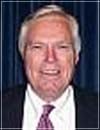
Winston Pannell was born in 1937 in rural Alabama. At the age of fifteen he became interested in religion and was baptized in the Armenian faith, as was Patricia, his wife to be and subsequently their three daughters. In 1985 the Lord confronted him with the true gospel and brought him to faith in God and true repentance from dead works and idolatry. It has been his passion to learn more of a Just God and Savior and his propitiatory work on behalf of his people given him by the Father in the Everlasting Covenant of Grace. The pulpit of Eager Avenue Grace Church in Albany Georgia has afforded him the opportunity to deliver this gospel of God’s free and sovereign grace in Christ, based on his righteousness imputed and received by faith as the whole of the sinner’s salvation. His desire is to deliver this gospel to the hearing of as many as the Lord shall save.
Pristine Grace functions as a digital library of preaching and teaching from many different men and ministries. I maintain a broad collection for research, study, and listening, and the presence of any preacher or message here should not be taken as a blanket endorsement of every doctrinal position expressed.
I publish my own convictions openly and without hesitation throughout this site and in my own preaching and writing. This archive is not a denominational clearinghouse. My aim in maintaining it is to preserve historic and contemporary preaching, encourage careful study, and above all direct readers and listeners to the person and work of Christ.
Brandan Kraft
Bible Verse Lookup
Loading today's devotional...
Unable to load devotional.
Select a devotional to begin reading.
Bible Reading Plans
Track your daily Bible reading with a structured plan. Choose from several options and let us keep track of your progress.
Comments
Your comment has been submitted and is awaiting moderation. Once approved, it will appear on this page.
Be the first to comment!