Isaiah 28:13 But the word of the LORD was unto them precept upon precept, precept upon precept; line upon line, line upon line; here a little, and there a little; that they might go, and fall backward, and be broken, and snared, and taken.
14Wherefore hear the word of the LORD, ye scornful men, that rule this people which is in Jerusalem. 15Because ye have said, We have made a covenant with death, and with hell are we at agreement; when the overflowing scourge shall pass through, it shall not come unto us: for we have made lies our refuge, and under falsehood have we hid ourselves: 16Therefore thus saith the Lord GOD, Behold, I lay in Zion for a foundation a stone, a tried stone, a precious corner stone, a sure foundation: he that believeth shall not make haste. 17Judgment also will I lay to the line, and righteousness to the plummet: and the hail shall sweep away the refuge of lies, and the waters shall overflow the hiding place. 18And your covenant with death shall be disannulled, and your agreement with hell shall not stand; when the overflowing scourge shall pass through, then ye shall be trodden down by it. 19From the time that it goeth forth it shall take you: for morning by morning shall it pass over, by day and by night: and it shall be a vexation only to understand the report. 20For the bed is shorter than that a man can stretch himself on it: and the covering narrower than that he can wrap himself in it. 21For the LORD shall rise up as in mount Perazim, he shall be wroth as in the valley of Gibeon, that he may do his work, his strange work; and bring to pass his act, his strange act.
Sermon Transcript
Auto-generated transcript • May contain errors
100%
I'm glad to see each and every
one of you, glad to be here, thankful for the hospitality
that I've been shown. I hate to repay you like I'm
going to have to repay you. I've never had a vision that
I know of like a lot of preachers claim to have had a vision, I
think I might have had a vision that maybe the Lord might be
moving your pianist to eastern North Carolina. I'm not sure
about that. I'm praying her family might
start packing right away. It's a blessing. I just thrill
at hearing it. If you'd turn with me this morning
to the book of Isaiah. Isaiah chapter 28. I want to
try to talk to you this morning about God's strange work, or God's
strange act. I'll begin reading in Isaiah
28 and verse 14. Wherefore, hear the word of the
Lord, ye scornful men, that rule this people which is in Jerusalem. Because you have said, We have
made a covenant with death, and with hell are we in agreement,
when the overflowing scourge shall pass through, it shall
not come unto us. For we have made lies our refuge,
and under falsehood have we hid ourselves. Therefore thus saith
the Lord God, Behold, I lay in Zion for a foundation, a stone,
a tried stone, a precious cornerstone, a sure foundation. He that believeth
shall not make haste. Judgment also will I lay to the
lion, and righteousness to the plummet. And the hail shall sweep
away the refuge of lies, and the water shall overflow the
hiding place. And your covenant with death
shall be disannulled, and your agreement with hell shall not
stand. When the overflowing scourge
shall pass through, then ye shall be trodden down by it. For the
time that it goeth forth it shall take you, for morning by morning
shall it pass over, by day and by night, and it shall be a vexation
only to understand the report. For the bed is shorter than a
man can stretch himself on it, and the covering narrower than
he can wrap himself in it. For the Lord shall rise up, as
in Mount Perizim. he shall be wroth as in the valley
of Gibeon, that he may do his work, his strange work, and bring
to pass his act, his strange act. Now therefore be ye not
mockers, lest your hands be made strong. For I have heard from
the Lord of hosts a consumption even determined upon the whole
earth. give ye ear and hear my voice,
hearken and hear my speech. I am become very weary with hearing portions and phrases out of verses. which are given and used out
of context to support the various positions and presuppositions
of men. It is like this is what I believe,
and this phrase is why I believe it. And whole religions have
been made and built on such notions. But the Bible says that no scripture
is of any private interpretation. There is not a verse, there is
not a phrase in this book that stands by itself. And it is all to be seen in the
context not only of the verse, it is to be interpreted in the
context of the chapter and of the book and also of the Bible
as a whole. And part of this twenty-first
verse has been used many times by men to suggest that judgment
is strange to God's character. or that judgment is not really
what God wants to do. They say it is His strange work
in the sense that He really doesn't want to do it. He does so hesitantly. But judgment and justice cannot
be foreign to a just God. That just absolutely cannot be. Justice and judgment cannot be
strange to a God who is characterized by holiness and righteousness. And I can't help but believe
that men do this. They use such things as this.
to kind of make God more palatable to the natural religious man. And to use such a phrase to suggest
such or support such a false notion as that is plain dishonesty,
because God is not moved by fallen emotions such as we are. As a matter of fact, in the book
of Job, I believe we read some important words because it says
that he is of one mind and who can turn him and what his soul desires, even
that he does. In other words, if we want to
really know what God has desired to do, all we have to do is look
at what he has done, because what he desires to do That's
what he does, and what he's done, that's what he really desired
to do. And the acts of God that we find
recorded, especially in the Old Testament, they show that such
notions as this, that they cannot be true, because God exercised
judgment and justice many times to the destruction of multiplied
thousands, millions of people. Could it ever be said in some
way that judgment is strange to God in light of what he did
in the flood, destroying most every living soul on the face
of the earth? Or could it ever be said that
judgment is strange to the God who rained down fire and brimstone
out of heaven and destroyed all the cities in the plain such
as Sodom and Gomorrah and all the inhabitants, for the most
part, that lived in those places? Could it be said that judgment
is strange to God in the light of what He did when He passed
over Egypt and slew a multitude of people? or how all the armies
of multiplied hundreds of peoples and nations just in the Old Testament
record alone, they were slain their soldiers by the thousands
such as in one night or battle? What about all the Canaanites
that dwelt in the land of Canaan who were dealt with and run out
and multiplied, thousands of them slain? Or how about Herod
when God just simply smote him in an instant so that he died
when he glorified himself rather than God? What I believe these things show
me is that the God of the Bible has a reputation for judgment. that we cannot make him more
palatable to the natural man who has absolutely neither understanding
nor appreciation for God in who he is or what he has done. And so when I come to this verse,
as I have many, many times, when I come to this verse, finally
it dawned on me one day In order to find out what he means in
this 21st verse, we are going to have to go somewhere else. Listen to what he says in verse
21. For the Lord shall rise up as
in Mount Parazim, he shall be wroth as in the valley of Gibeon,
that he may do his work, his strange work, and bring to pass
his act, his strange act." Now, I don't know about you, but I
wasn't really all that familiar about what the Lord did in Parazim
or in the Valley of Gibeon. And so I had to begin searching. What did he do? Because something
he did there is done in comparison to that, and it is called his
strange work or his strange act. So hold your place right there
and turn back to 1 Chronicles 14. 1 Chronicles 14. In the eighth verse it says,
And when the Philistines heard that David was anointed king
over all Israel, all the Philistines went up to seek David, and David
heard of it and went out against them. And the Philistines came
and spread themselves in the valley of Rephraim. And David
inquired of God, saying, Shall I go up against the Philistines? And wilt thou deliver them into
mine hand? And the Lord said unto him, Go
up, for I will deliver them into thine hand. So they came up to
Baal-perazim, and David smote them there. Then David said,
God hath broken in upon mine enemies by mine hand like the
breaking forth of waters. Therefore they call the name
of that place Baal-perazim. And when they had left their
gods there, David gave a commandment, and they were burned with fire. And the Philistines yet again
spread themselves abroad in the valley. Therefore David inquired
again of God, and God said unto him, Go not up after them, turn
away from them, and come up upon them over against the mulberry
trees. And it shall be when thou shalt
hear a sound of going in the tops of the mulberry trees, that
then thou shalt go out to battle, for the Lord is gone forth before
thee to smite the host of the Philistines David therefore did
as God commanded him, and they smote the host of the Philistines
from Gibeon even unto Gaza. And the fame of David went out
into all lands, and the Lord brought the fear of him upon
all nations." Now, I believe that the reference
in Isaiah 28 and verse 21 is a reference to something that
took place on this very occasion recorded for us in this chapter
of 1 Chronicles. But what really did happen here? And why is it said to be what
it is in light of verse 21? And especially, what does it
have to do with the Lord Jesus Christ? Because if you remember,
he has told us that these things that happen, these Old Testament
things, they happen for our admonition. They happen for us, those of
us upon whom the end of the age shall come. And not only that,
but after the resurrection, when he revealed himself first to
those disciples on the road to Emmaus and then to others at
a later time, it says that he opened their understanding to
the scriptures And he took and he showed them how that out of
every part and portion of those Old Testament scriptures he spoke
concerning himself. So what happens on this occasion
here in this particular mount and then just a little later
in this particular valley? Well, what happens here is simply
this, and that is, in one act, using David, God destroyed his
enemies and saved his people. And you can go back all throughout
the Old Testament, especially in the history of this nation
of Israel, and see that this happened over and over again,
not only by David, but by various ones such as Joshua and others,
where in all these various battles or situations, God did in this
same thing this business of destroying all of his enemies, and at the
same time saving his people. And so we have this man, David,
and I don't know if you noticed it or not here in that chapter
in 1 Chronicles, David is the only one mentioned. He doesn't
talk about David and his thousands of men, or David and the valiant
soldiers, or David or one thing or another as we might read in
some places. We know that the people were
with David. I think that's understood. But
it is David himself that is spoken of Because the victory of his
people was given to David by God, and David is in that a picture
and a type of the one who is described himself as David. And he is the one who also has
a people. And as Paul says, thanks be unto
God who gives us the victory through our Lord Jesus Christ. And God has also done the same
things by one greater than David, and this one that David is a
picture and a type of the Lord Jesus Christ who is described
as David's Lord and David's Son. You remember Christ said to those
Pharisees. He had a few questions for them
as well as they having some questions for him. They said, Who is this
Christ? They said, David's son. He said, well, how is it that
David himself, and speaking as a prophet, if you would, how
is it that David would speak of his son and at the same time
call him his Lord? I can tell you this. If God ever
brings you to begin to understand how this man, Jesus Christ, is
at the same time David's son and David's Lord, you may be
well on your way to understanding the gospel of Jesus Christ. Because David in who he is, and
especially as how he speaks of the coming Christ, is a type
of that unique person, the God-man, Jesus Christ. He is not half-man and half-God. He did everything he did on the
behalf of his people as one being, as one particular and unique
person. And by the way, I'll just throw
this in, no charge. One of the problems that men
have in talking about Jesus Christ and his being made sin, and various
things related to that, is because they cannot get a grip on, and
neither can anybody really get a grip on, what it is for a man
to be a sinless man. We are not talking about common
folks here. We are talking about the one
greater than David, the God-man, Jesus Christ. In another place in Isaiah, God
says this, �Wherefore, it shall come to pass that when the Lord
hath performed his whole work,� He is talking about the Lord
performing His whole work. When he shall perform his whole
work upon Mount Zion and on Jerusalem, he says, I will punish the fruit
of the stout heart of the king of Assyria and the glory of his
high looks. What's he going to do? He's going
to do a whole work. That sounds very positive, doesn't
it? And yet at the same time, he
says, in this whole work, I'm going to destroy the proud looks
of such as the king of Assyria. So this strange act or this strange
work is simply a picture of that Word that God has wrought in
the Lord Jesus Christ, and this word strange has reference to
the fact that it is God's Word, and this act of God in Christ
is strange to the wisdom of men. It's not the way we would have
done it. As a matter of fact, it's not
the way that we by nature want to do it. It's not the way that
seems right to us. You remember in Proverbs he says
a number of times, there is a way that seems right to a man, but
the end thereof is the ways of death. In other words, every
way, and there are many ways of men, all of which amount to
ways by their will and ways by their works, but all the ways
of men, they are simply that one way that seems right to a
man, and they all end in death, eternal And so God's work and God's act
is strange to us. You see, it is strange to the
natural man who receives not the things of God. As a matter
of fact, Paul writes to the Corinthians and he says, the preaching of
a crucified Christ, the preaching of the cross is foolishness to
them that are perishing. That's a strange gospel. Why? Because it involves a strange
work. And this word strange means also
something like mysterious. That is, it's mysterious to us
and it must be revealed to us. As a matter of fact, a number
of times in Scripture in the New Testament, the gospel is
called a mystery. Somebody says, well, yeah, that
gospel you folks preach is mysterious, all right. That's not what it
means. A mystery in the New Testament simply means that not only which
heretofore has not been revealed, but it means also that which
must be revealed to us. We don't see it by nature. We don't understand it in our
natural logic. It is a strange act, a strange
word, a strange gospel that God has to reveal to our heart. He
has to reveal it to us in His gospel and in us by His Spirit. It's always strange to us. He
has to give us an understanding. As a matter of fact, the very
word gospel means something like this, glad tidings or good news. And it is a strange gospel. It is a strange gospel because
of this strange work to us. And that's why the gospel, the
true gospel, comes to every sinner as news. Has it ever come to you as news? Somebody said, well, that's what
I've always believed. If you've always believed it,
You've always believed a lie. Why? Because it comes to us as
news. It's a mystery. that God must
reveal to us. It's plain and clear written
in the indelible ink of the gospel. It's clear and plain in the counsels
and purposes of God. It's clear and plain in the face
of Jesus Christ. But He has to reveal it to us
in order for us to know something about this strange world. And the work of Christ, which
is also called the work of righteousness, is a strange work because it
is the wisdom of God. And it is strange, it is the
wisdom of God in this. It is strange to us that God
can at the same time and in the same person save all his people
from their sins and at the same time deal justly with us. We got such a distorted view
of what justice is, and rightly so in our country. We used to
have a judge in our county, and all the policemen, they all had
a name for his court. They called it, Let's Make a
Deal. And all it was is, you know, the lawyers got together
and the judge got together, and no offense to anybody if you're
a lawyer, you know. But they made deals. They called
it, let's make a deal. And so everybody viewed the court.
They said, well, now, well, he got free. He got free. But justice
wouldn't really serve with it. God didn't work like that. And
that's why the fact that he is inflexibly just. That's why he
is the absolute righteous God. And by the way, that's what righteousness
has to do with. It has to do with justice. When God spoke to Israel, He
said to them this, He said, in all of your dealings, He told
the judges that He appointed, He said, you make sure that in
all the dealings among the people, in all your counseling and judging
the people, you make sure if a man sells a man a bushel of
wheat, that he gets a bushel of wheat. You take the measurements
and you enforce strict standards of weights and measurements money
and all that kind of thing. He said, because I am God, the
righteous God. And so it's a strange work to
us. It's a strange gospel to me. It comes as news to us, news
that we would never believe. Just like Job said in his question,
how can a man be just with God? Judgment is not strange to God. Judgment in the matter of sin
is absolutely not strange with God. And a salvation that has
at its foundation the very fundamental foundation of justice is strange
to us. But he said, I'm first of all
a just God and a Savior. I used to hear some preachers
say, you know, God, He's a just God, but He's a Savior. No, that's
not what it says. It says that He is a just God
and a Savior. And the fact that God can be
a just God and, at the same time, a Savior of sinners who are no
different in themselves than any other sinner is, that is
a strange work. But I'll tell you what, that's
the only strange work that makes peace with God, and that's the
only strange work that will give peace to your heart. Over in Isaiah 32, the prophet
is led by the Spirit of God to say this, ìAnd the work of righteousness,
and the work of righteousness shall be peace, and the effect of righteousness, quietness and assurance forever.î
I know what these people say, you know, well, you just trust
the Lord. Won't you just trust the Lord? Why don't you just lay your little
sweet head in his lap, you know, in the little Jesus boy's lap,
and you just, everything will be all right. You know that.
That's not what he said would be peace. You see, if peace is
not established in the court of heaven, it will never be in
the court of conscience. And so he says, for that reason,
that this work, this really strange work to us, not strange to God,
but the wisdom of God, the work of righteousness shall be peace
forever. Why? Because he made peace by
the blood of his cross. The work of righteousness shall
be peace, and the effect of righteousness will be quietness and assurance
forever. You see, it is through this work
that Christ did. It is through this work of righteousness
that he did, which is this strange work. It is through this work
that he has established this peace and reconciled all his
people to God. And when we are enabled to look
to him and look to Christ and trust his blood and his righteousness,
the effect of that is quietness and assurance forever. forever. In Romans 9, Paul quotes
Isaiah, and he says, ìIsaiah also cried concerning Israel,
ìThough the number of the children of Israel be as the sand of the
sea, a remnant shall be saved.î Well, how will they be saved?
They are not all going to be saved evidently, but he said
a remnant is going to be saved. Who are they? They are that remnant
according to the election of grace. There is a remnant according
to the election of grace from amongst the Jews and a remnant
according to the election of grace from amidst the Gentiles. They all make up the remnant
according to the election of grace. And he says they will
be saved. Why? will finish the work. Who? God. For He will finish
the work and cut it short in righteousness, because a short
work will the Lord make upon the earth. And as Isaiah said
before, except the Lord of Sabaoth had left us a seed, we had been
as Sodom and been made like unto Gomorrah." He said if he hadn't done that strange
work, we'd have been wiped out totally under the judgment of
God and the justice of God, just like the inhabitants of Sodom
and Gomorrah, but he left us a seed. What happened in that
strange work? Something happened to the seed. You see, the strange part of
God's salvation is not so much that he brings forth his judgment
against sin, but that he has found a means. He has found a
ransom. by which he can save his people
in Christ. Now, turn over to Romans chapter
5. Romans chapter 5. And look down at the 19th verse. I'm not going to get too far
into this, but I want us to see one thing. He says, For as by one man's
disobedience many were made sinners, so by the obedience of one shall
many be made righteous. Now, I'm sure here that he is
talking about representation, whatever else he might be talking
about. And he might not be talking about some of the things that
some people think he's talking about. But I'm sure of this,
he's talking here, he has been talking about these two representative
men, one man, Adam, and the other man, Christ. As a matter of fact,
God has only ever dealt with two men. Do you know that? One
of them is called the first Adam, and thank God, the last one is
called the last Adam, the Lord Jesus Christ. And what this verse
actually says, you can go and study and look for yourself,
get your dictionaries out and all that, is this, by one man's
act of disobedience, the many he represented, they
were made sinners. What was that? How did we come
to be sinners? Well, it's through that one man,
Adam. And he didn't go to lying and
cheating and stealing and running around on Eve. There wasn't any
other woman in the garden. I don't think that he even had
any booze to drink or no cigarettes to smoke or nothing like that.
What happened there? He ate of that tree in the midst
of the garden. You say, that must have been
some bad fruit, preacher. No. God doesn't even bother to
say what kind of fruit it was. Because all that one tree in
the midst of the garden, all it was, was a figure, a symbol
of God's right to be God. His right to tell His creature
what He can do and what He can't do. And by that one act, that's
what it says, by that one act, the many, who all he represented,
which was all of his descendants, you and me and everybody else,
they were made sinners. All right? This is a parallel
thing here. He says, likewise, so, or in
like manner, by the obedience of one shall many be made Well,
what does that mean? It says the same thing, by this
one act of obedience. Well, I thought the Lord Jesus,
I thought he obeyed God in every way. He did. He did. I thought he kept the law in
every jot and tittle, in every precept. Well, yes, he did. But my friend, if he had done
that, and then at that time, having lived a perfect life in
this world, if he had ascended back into heaven as a perfect
man, you and I would die in our sins. Because he wouldn't have done
this act. What was it? What was this act
of obedience? Well, Paul describes it as his
coming and as one who is equal with the Father and one who has
humbled himself and become as a man in human flesh that he
came obedient unto death, even the death of the cross. So Paul says, by this one act
of obedience, the many that he represented were made righteous. Why? Because as strange as it
may seem to us, and as strange as it may make God to the natural
It is by this strange act, this strange work, that he showed
himself a just God and a Savior. That he acted in righteousness
and made us righteous. That Jesus Christ, in his suffering
and in his death on that cross, He is the Lord our righteousness. When Paul talks about their being
justified or declared righteous before God, he says it is God
that justifies, and then he doesn't go tell us a whole lot of things
that Christ did. He just says, and it is Christ
that died. Because that's the only thing
that can satisfy God. Adam's act took place in the
garden. Christ's act took place on the
cross. And in Christ's death, God judged
the sins of his elect in Christ, and the sword of his inflexible
justice rose up and slew God's Son who is their substitute. Do you know what God did on the
cross? He judged a sinless man. He did. And he had already said a long time,
if you put a man to death falsely or wrongly, or if God himself
acts in that way, he is not just anymore. As a matter of fact, did you
ever stop and think about this? were to send one person to hell
that Jesus Christ actually died for, he would no longer be a
just God. But the other side of that coin
is, if he sent one person to hell that Christ did die be the same thing. But since
he is just, that won't ever happen. Heaven will be populated, whatever
it is, whatever glory is there, it will be populated by everyone
that Christ died for because his death, that strange work
has satisfied the justice of God on their behalf in the matter
of their sins. He says, hanging on that cross. I just don't understand the logic
of some. I'm just telling you, these days,
the more I hear, the more it blows my mind. Here is Christ
hanging on that cross. Here he is, the Bible says, being
made sin for his people. Do you hear him cussing anybody
out? Do you hear him spit down on
the soldiers or anything? Do you hear him speak in terms
of idolatry and blasphemy? What evidence is there of sin? He says, My God, My God, why hast thou
forsaken me? He didn't say that to question
the Father. He said that so you and I could
hear it. Think about that. Here is this sinless man who
even in that hour is still reeking, if you will, with that sinlessness. Even under this hand of God and
His justice being brought to bear on Him, He is still calling
Him, My God, My God. But when He says that, we know
because He is the sinless One that the fact that He dies means
that he was dying for sins not his own. Isn't that something? Would we ask that question? Why
was he dying? Why was the perfect Son of God,
why was the only perfect man that has ever lived on this earth,
why was he dying under the judgment of God? Because the Lord had laid on
him made him accountable as their surety all the sins of his people. And he dies on their behalf. He dies in their place. And the
only way that we know what it is to be made sin in that way
is in the fact that he died. if he died, since there was no
sin in him. He had to die for the sins of
all who he brings to believe on him. I mean, this is real. People talk about, they call
a substitutionary atonement. the death of Christ as we know
it to be. They call it a mercantile redemption. You mean this is
just a matter? You guys are just talking about
a matter of a legal matter. What is justice but a legal matter
with God? No, don't pat me on the back
if I owe a million dollars and it's due tomorrow and pat me
on the back and say everything's going to be alright, don't worry
about it son, I'll take care of it. No, lay the receipt in
my hand where you have taken care of it. And when I see it
satisfied. when I see the legal document,
when I know that justice has been done, when I know the payment
has been made. And that's what the gospel is.
It's the announcement of a payment made by the Lord Jesus Christ. I can rest. Oh, I thought it was, if you
do good, everything will be all right and you'll go to heaven.
That's what we start out teaching the children. Don't you want
to go to heaven? Well, if you do, you better straighten
up, boy. You see, we teach them what's
natural to us, what's natural to them, this idea that somehow
by a fear of threat or a promise of reward, we're going to be
moved toward God. You see, this work is strange
is because it excludes every human work, and it is a work
by Jesus Christ. It is a work. It is a transaction
between the Father and the Son on that cross so that the darkness
cover the land and every man will shut out except the ones
involved in the transaction. You see, the judgment of this
world has already taken place. Do you know that? All that's left is for the sentences
to be publicly announced. He that believeth not is condemned
already. That doesn't mean if he'll believe,
the sentence will be changed. No. If he doesn't believe, that
just shows that he's condemned already. And one day the sentence is going
to be passed. He says in Matthew 25, Then the
king shall say unto them on his right hand, Come, ye blessed
of my Father. Come, you good workers. Come,
you good Baptists. Come, you good clean livers.
No. Come, ye blessed of my Father,
and inherit. You know, there's one thing good
about that word inherit. You can't do anything to deserve
it. Don't just make you mad when some couples worked all their
life hard, slaved and saved their money, built up a business maybe,
and all of a sudden they die and they leave it to that sorry,
no good son of theirs who can't do nothing but drink and run
around, play and goof off, and he squanders the whole thing. Say, well, he sure didn't deserve
it. You don't deserve an inheritance. It comes by relationship. The truth of the matter is, you
and I don't deserve anything either. But he says he made us the heirs
of God, the heirs in Christ Jesus, who is the heir of all things. Come, ye blessed of my Father,
inherit the kingdom prepared for you from the foundation of
the world. But there's another group. He'll
say to them also on the left hand. Depart from me, ye cursed,
into everlasting fire prepared for the devil and his angels." The devil and his messengers. All right, now think about this.
I'll try to help you. When you look back at the flood,
there's a strange work going on. Because in the midst of all that
chaos and turmoil and flooding, and here's a multiplied millions
of people, we can't even fathom what it involved, but here are
all these people dying under the judgment of God, and yet
at the same time, here are eight souls Eight souls who are going through
the same judgment, but they are being saved. Why? Because they are in the ark.
That picture and type of Christ, they are in the ark. God called
them in the ark. God prepared the ark for them.
God named a man before that flood by the name of Methuselah. His
name means this, when he is gone, it will come. What? The flood. And to show his mercy
to sinners like we are. Winston, he calls that man to
live longer than anybody else, 969 years. You talk about long
suffering and mercy. And so when that flood began
to rise up and judgment came on the face of the earth, the
Bible says, oh, everybody was destroyed except everybody who
was in the ark. Well, that's strange, isn't it?
At the same time, God destroys all these people in his judgment,
but he shows mercy to eight. Well, we go a little bit farther.
Here is fire and brimstone that is starting to fall out of heaven,
and Sodom and Gomorrah is on fire, and everybody is dying
and screaming, and judgment has come on the earth, real judgment. And yet, God has sent an angel
in there who takes a man by the name of Lot and leads him out,
and the apostle Peter describes him later as righteous Lot. Why was Lot not destroyed with
the rest of that bunch? And most especially, how could
he ever be described as righteous Lot? Because through the dying
and suffering of the coming one, and that strange act he would
perform, not only was Christ made sin, but Lot was made the
righteousness of God in him. You look back at Egypt, God sends
the death angel in, which is none other than God himself. He said, when I pass through.
But what he did, here's the firstborn in every household in Egypt. The firstborn in every household.
You say, well, but it didn't happen in the homes there in
the land of Goshen where those Israelites lived. Oh, yes, it
did. Judgment fell on – you see, they were no different in themselves
than the Egyptians. Judgment fell on them just like
– but it fell on that lamb that had already been slain, that
Passover lamb which pictured Christ And Paul says later, Christ
our Passover was what? Sacrificed for us. So judgment
took place. But God judged their sins in
the substitute. I will pass through the land
of Egypt this night, and I will smite all the firstborn in the
land of Egypt, both man and beast, and against all the gods of Egypt
I will execute judgment. Why? I am the Lord. Did he? And was he just to deliver those
Israelites? Yes, because the judgment had
already fallen on the land. He said, and when I see the blood, I'll pass over you. That word
pass doesn't mean Passover. It doesn't mean just like, I'll
kind of look by you. I'll look over you. That's not
what it means. The Hebrew word means something like this, I'll
brood over you, I'll cover you. Why? Because I'll see the blood. Which
is what? Just to satisfy. As a matter
of fact, turn back to our text chapter, Isaiah 28, and I'll
close. But right in the midst of all this, look back at verse
16. right in the midst of all this.
He said, Therefore thus saith the Lord God, Behold, I lay in
Zion for a foundation, a stone, a tried stone, a precious cornerstone,
a sure foundation. He that believeth shall not make
haste. Who is that? Where can you be
safe from the judgment of in this stone, on this foundation,
Christ crucified. Peter quotes this, and it's quoted
elsewhere, he that believes, he makes us to know it's a person,
he that believes on him will never be confounded. Another
place, he that believes on him, they'll never be disappointed. And that sinner whose sins are
worthy of the highest judgment will never be disappointed, never
be ashamed, never be confounded, who trusts in Jesus Christ and
him crucified. Because in his cross, God's justice is not only exercised,
but also satisfied. And it's a strange work. But
thank God for his strange work for his people, that in Christ
he saves every one of them from their sins. And by this same
man who he raised from the dead, he's appointed him that judge
who will exercise the judgment, the sentence, on all his enemies. Thank you.
About Gary Shepard
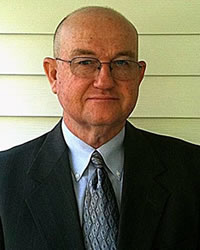
Gary Shepard is teacher and pastor of Sovereign Grace Baptist Church in Jacksonville, North Carolina.
Pristine Grace functions as a digital library of preaching and teaching from many different men and ministries. I maintain a broad collection for research, study, and listening, and the presence of any preacher or message here should not be taken as a blanket endorsement of every doctrinal position expressed.
I publish my own convictions openly and without hesitation throughout this site and in my own preaching and writing. This archive is not a denominational clearinghouse. My aim in maintaining it is to preserve historic and contemporary preaching, encourage careful study, and above all direct readers and listeners to the person and work of Christ.
Brandan Kraft
Joshua
Joshua
Shall we play a game? Ask me about articles, sermons, or theology from our library. I can also help you navigate the site.
Bible Verse Lookup
Loading today's devotional...
Unable to load devotional.
Select a devotional to begin reading.
Bible Reading Plans
Choose from multiple reading plans, track your daily progress, and receive reminders to stay on track — all with a free account.
Multiple plan options Daily progress tracking Email reminders
Comments
Your comment has been submitted and is awaiting moderation. Once approved, it will appear on this page.
Be the first to comment!