Bootstrap
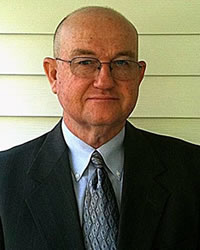
Gary Shepard

The Talking Blood

Hebrews 12:24
Gary Shepard August, 26 2009 Audio
0 Comments
Gary Shepard
Gary Shepard August, 26 2009

Sermon Transcript

Auto-generated transcript • May contain errors

100%
Tonight I want you to turn in
your Bibles to the book of Hebrews, Hebrews chapter 12. And I want to read some verses
here in Hebrews 12, beginning in verse 18. He says, For ye, and I would
remind you that this book is the book of God to His people. It says, For ye are not come
unto the mount that might be touched, and that burned with
fire, nor unto blackness and darkness and tempest, and the
sound of a trumpet, and the voice of words, which voice they that
heard entreated that the word should not be spoken to them
any more. For they could not endure that
which was commanded, and if so much as a beast touched the mountain
it shall be stoned or thrust through with a dart. And so terrible
was the sight that Moses said, I exceedingly fear and quake. But ye are come unto Mount Zion,
and unto the city of the living God, the heavenly Jerusalem,
and to an innumerable company of angels, to the General Assembly
and Church of the Firstborn, which are written in heaven,
and to God the Judge of all, and to the spirits of just men
made perfect, and to Jesus, the Mediator of the new covenant
and to the blood of sprinkling that speaketh better things than
that of Abel." Now, I've called this tonight,
The Talking Blood. And just like we find almost
everywhere here in the book of Hebrews, The apostle is led by
the Spirit of God to compare, in one sense, and then also to
contrast, in one sense, things that are old and things that
are new. As a matter of fact, one of the
words we find often in this book is that word, better. We know
that what came first by way of revelation was good because it
came from God. But he tells us here that in
Jesus Christ, he says we have better things. And he contrasts
on the one hand two mountains. That is, one that is physical,
and that mountain was Mount Sinai, where God gave the law to Moses. And the other one is spiritual,
and that is the Mount Zion, or the heavenly Jerusalem, the church
of the Lord Jesus Christ. And also, he contrasts two people. and earthly people, those Hebrews,
and a spiritual people, all of God's elect and believing people
in Christ. He also contrasts two covenants. He speaks of that which is old
and that which is new. And we know if we study the Bible,
That covenant which is called the new covenant is called new
simply because it is the latest in revelation. It is actually
in many places called the everlasting covenant. It was before the law. And then he contrasts and talks
about two mediators. That is, on the one hand, that
man Moses, who acted as a mediator to that earthly people, and also
the Lord Jesus Christ, who is the true mediator, the one mediator
between God and men, the man Christ Jesus. And then he talks
about two bloods. That is, a blood that he speaks
of in association with a man by the name of Abel, who was
the first man slain on the earth, and also the blood of Jesus Christ. And as he does this, he speaks
of this great contrast, and the blood of Jesus Christ is spoken
of in verse 24 as speaking better things. Or as speaking better things. He says, and to Jesus, the mediator
of the new covenant, and to the blood of sprinkling that speaketh
better things than that of Abel." Now, it is called here not only
the blood of Jesus Christ, but it's called the blood of sprinkling. What does that mean, the blood
of sprinkling? Well, this goes back to the sprinkling
of that blood that was sprinkled on the mercy seat there in the
Holy of Holies when the high priest would go in once a year
by himself into that holy place And there, taking that little
piece of shrub called hyssop, take the blood of that sacrifice
and sprinkle it there on the mercy seat. And so, in some light
manner, in some picture, and some type, that sprinkling of
blood there on that mercy seat was a representation of the work
and the sacrifice and the priesthood of the Lord Jesus Christ. In some way, that work, that
blood, that sprinkling pictured the person and the work, the
sacrifice of the Lord Jesus Christ. And two times here in the New
Testament, This word, mercy seat, appears, and the mercy seat is
called the propitiatory, and the sacrifice of blood that was
sprinkled on that propitiatory is also the propitiatory sacrifice. Now, what does that word propitiatory,
or as we find it, propitiation, mean in the Bible? Well, it means
to turn away wrath and at the same time restore favor. It is a means of reconciling
men to God. And so in Hebrews 9, speaking
of this very mercy seat, he describes it as the cherubims of glory
shadowing the mercy seat. And then also in Romans 3, he
speaks of it in this way. In other words, we have a reference
to that which was the shadow And we have also a reference
to it in its actual substance in Christ. Here's what Paul says
in Romans 3 and verse 25. He says, Speaking of Christ,
whom God hath set forth a propitiation through faith in his blood, to
declare his righteousness for the remission of sins that are
passed through the forbearance of God." In other words, if we
have any doubt, let it be put aside that just as the high priest
went in once a year on the behalf of the people and offered that
sacrifice God had appointed of blood, sprinkling it on that
mercy seat, the Lord Jesus Christ has in reality gone into the
very Holy of Holies in heaven and by His own blood reconciled His people to God. But not only was the blood sprinkled
on the mercy seat, the blood was sprinkled also on individuals
too. If you listen to the words that
we find in Exodus 24, with another sacrifice, it says, And Moses
took half the blood, and put it in basins, and half of the
blood he sprinkled on the altar." Not a lot unlike what took place
in that Holy of Holies. He sprinkled that half a basin
of blood on the altar. But then it says, and he took
the book of the covenant and read it in the audience of the
people, And they said, all that the Lord has said will we do
and be obedient. Did they? No. If they could have, there would
be no need for this picture and type and shadow of blood being
shed and blood being sprinkled on the altar And God, knowing
that, commands Moses further, it says, and Moses took the blood
and sprinkled it on the people. Why? Because they had just lied
to God. They would, before the instant
pass, prove that there was no way that they could obey God
in what He commanded, Not that he wouldn't allow it, they couldn't
perform it. He sprinkled it on the people
and said, Behold the blood of the covenant. In other words,
the blood of the covenant is the basis upon which every covenant
blessing is ratified and goes to his people, and certainly
not by the obedience and works of those people. He sprinkled
the blood on the people and said, Behold the blood of the covenant,
which the Lord hath made with you concerning all these words." All the promises in the covenant,
most especially that everlasting covenant, this new covenant that
the Apostle is talking about, those covenant promises are yea
and amen in Jesus Christ. They're ratified, that testament
that he talks about here in this book, that last will and testament,
if you will, which is what a covenant is wherein everything is promised
to these who are described as the heirs of God. What made it
come into effect? It was the dying of Jesus Christ. As long as He lives, there can
be no carrying out of this covenant. But when He dies, when He dies
and the sacrifice is offered, every blessing in that covenant
cannot be withheld from each and every one he dies for. But look back here in verse 24. He said, We are come to Jesus,
the Mediator of the new covenant, and to the blood of sprinkling
that speaks better things than that of Aphel. Now, there is a difference of
opinion here among men. as to whether on the one hand
the apostle is talking about the blood that Abel offered up
as a sacrifice to God, or is he talking about Abel's own blood
which was shed at the hand of his brother Cain? I was talking
to somebody recently And I told them that oftentimes I find people
coming to portions and parts of Scriptures and where it may
seem one way and then you read it, it may seem another way,
all of a sudden they feel like they've got to take a position
on it. They say it's got to be either
or. Let's think about it like this.
If you look in verse 24, the last three words of that verse
and statement, if you notice the words, that of, are in italics. What does that mean? It means
that they were added by the translators who thought the addition of them
might give greater clarity or make what is being said by God
a little more plain. Not that it always does. But if you take those two words
out, it says, to the blood of sprinkling that speaketh better
things than able. Now, turn back and look in chapter
11, chapter 11 of this book of Hebrews,
and look down at the fourth verse. He says, by faith, and that's
what that whole chapter is about, by faith, able, If you remember,
Abel was the son of Adam and Eve. He and his brother Cain,
they went before God. Abel offered the sacrifice of
blood as God had required. Cain offered the sacrifice of
his own hands and works, the fruit of his ground that he tilled.
And God was wroth with Cain and refused his sacrifice, but he
accepted Abel's sacrifice. I'll never forget the first time,
or at least one of the first times, the Lord began to show
me the difference. Because I heard a Sunday school
teacher say, concerning that very situation, he said, now
the problem was Cain's attitude. If he had offered that sacrifice
of the fruit of the ground, those vegetables or fruits or whatever
it was, if he had offered those things in a right attitude, God
would have accepted him. Absolutely not. And as ignorant
as I was at that very moment, somehow the Spirit of God witnessed
to me in my heart that was not right. The difference was, Cain
did not offer that sacrifice which God provided, and which
God commanded, and which God had already said was the only
sacrifice he would accept. And so Cain rose up and slew
his brother, and the very first death, the very first argument,
the very first situation where man's blood was shed on this
earth was over this matter of whether salvation is all of grace
and by the blood or whether it's by works. You read 1 John, and in 1 John
it says that Cain rose up and slew his brother And he did so
because his own works were wicked and his brothers were righteous. He says, by faith, able, offered
to God. You know it would do us well
to always remember the one that we're going to offer something
to. This is God. And it's not God like you've
been told He is. It's not God like you think in
your mind naturally He is. He's not the God of the Bible
storybooks and all the ideas and notions of men. He is the
God of this book, holy, infinitely pure and just, righteous, who
must punish sin, who will not clear the guilty. We're not talking about a myth,
or we're not talking about a mere historical figure. We're talking
about the living God. All right? By faith, Abel offered
to God a more excellent sacrifice than Cain, by which he obtained
witness that he was righteous. He didn't obtain a witness by
what he did that he, by his doing, was righteous. No. By what he offered to God, it
was a witness that he was trusting one outside of himself one that
God would provide, one that would come and suffer and die, the
one of which this blood was a picture and a type of His work. And the reason He was doing that?
The reason why he was going forth with this action was because
God had already given him faith to believe God and to believe
in this promised coming One, to believe in this One who is
the angel and the mediator of the everlasting covenant. He says, "...by which he obtained
witness that he was righteous, God testifying of his gifts,
and by it he being dead yet speaks." Now, there's two times here now
that Abel is said to still, to this very day, speak. But rather, it is not only Abel
who by this testimony is speaking, louder than him and greater than
him is the blood speaking. You see, when Abel, believing
God, believing not only His command, but also His promises, His sacrificing
of blood is saying to every one of us who have followed Him,
this is the only way God can and will forgive sin. He's saying by what He did, by
that sacrifice that He offered, He's saying that this is the
one way that God has appointed and ordained by which He puts
away the sins of His people. As a matter of fact, what he's
saying And what this blood is saying
is this is the only way a sinner can worship God. You know how many times in this
book, in the Old Testament, It says that maybe Abraham or somebody
like Abraham, they went to a certain place, pitched their tent, and
the very first thing they did was they raised up an altar of
stone, and they slew that sacrifice on that altar, and it says that
they called on the name of the Lord. What does that mean? It means that they worshipped
God, and in their worshipping God through this sacrifice as
He commanded, they were acknowledging God as He is, and they were acknowledging
before God and men the one singular way that God's worshipped. Worship isn't about how you feel
or the music we provide. It's not about whether or not
we have a lot of stuff around, you know, to cause somebody to
have an idea that they're going to worship or how you feel when
you leave. Worshipping God is simply acknowledging
God to be who He is. And in believing on Christ, which
is the highest worship of God, we acknowledge that He can only
be worshipped and we can only be received and accepted in Jesus
Christ and Him crucified. It's the only way. And so, the
blood of Jesus, this blood of sprinkling, this blood as was
typified in Abel's sacrifice, it speaks better things. It is the superior blood. It is the better blood. It is
the blood of the everlasting covenant. So, if this is what
that means, that Abel was speaking by his sacrifice, by the blood
that he offered, if he was in that picture and type of Christ
speaking the better things, that's true. That's true. Or, if he is contrasting the
cries of Abel's own blood and that of Christ with regard to
God's justice. That is what they both demand
and require from God as a just God since that blood has been
shed. That's true, too. Hold your place
right here and turn back to Genesis chapter 4 quickly and look in
Genesis chapter 4 and verse 9 when the Lord is speaking to Cain. He says in verse 9, And the Lord
said unto Cain, Where is Abel thy brother? You think the Lord
didn't know? Well, sure He knew. But he came just like every one
of us as sinners. We don't know, or rather we don't
want to admit how things really are. He says, where is thy brother? And he said, I know not. Am I
my brother's keeper? And he said, what hast thou done? of thy brother's blood cries
unto me from the ground." What does that mean? It means that God, being a just
God, this God who must punish sin, it means that the The very blood
of Abel is said here, who died at the hand of Cain. It called
out to God for vengeance. It called out to God for a just
dealing with Cain. That's right. You see, back here in Hebrews
12 and that 23rd verse, God is also described there as the Judge
of all. See how that's in capital letters? To God, the Judge of all. And just as Abel's blood spoke
to God for justice, so does Christ's blood speak,
and speaks better things concerning those who are in Christ, those
he died for. Now, you think about this. Here
is that blood sprinkled on the mercy seat. What does that mean? A sacrifice has been offered. And if the priest came out of
that holy of holies alive, You know, he had those little golden
bells sewed in the hem of that garment. And as he moved, those
little bells rang. And the people outside, those
other priests outside, they could hear him moving. That meant he
was still alive. If they stopped, that meant God
had not accepted the sacrifice. He had slain that priest. But when that priest came out
alive, That meant God had accepted the offering, the sacrifice.
And my friend, when Jesus Christ, having died on that cross and
poured out his blood on the behalf of his people, and that's who
he died for, he said, I laid down my life for the sheep. And so now, after God has accepted
his sacrifice, which was borne witness to in the fact that he
raised him from the dead, he came out from the grave, the
living Christ, and so now the divine justice that required
that he die if he pay the price for our sin, that same justice
now speaks and requires. that everyone he died for be
saved. You say, I thought he died for
everybody. It says he died for the sheep. It says he died for
the church. It says he saves his people from
their sins. And we won't ever know the truth
until the Spirit of God brings us to look in this book and to
see what God said, rather than seeing all the time what men
say about what God said. In Isaiah 53, he says, For the
transgression of my people was he stricken. When they came to get the Lord
Jesus Christ in the garden, you remember? Well, they said, he said, who
are you looking for? They said, Jesus. And he said,
I am. That's all he really said, I
am. And when he said that, that whole bunch of soldiers fell
back. There he asked him again, we're
looking for Jesus, Jesus of Nazareth. And so he said, if you take me,
if you take me, you've got to let these go free. You would have thought that these
soldiers would have said, you know, these guys, they're a ragtag
bunch of hoodlums and they're part of the problem, let's take
all of them in. And I used to be in law enforcement.
That's what we'd do. I mean, if we got to a place
where everybody was fighting and cursing and blaming everybody
else, we'd say, all right, everybody, come on. jailhouse till we get it all
sorted out." He said, no, he said, if you take me, let these
go free. Why? Because that's the picture
of what justice is about. God, in Christ, satisfied in
the matter of the sins of His people, and now that justice
that required that He be punished if He be their substitute and
Savior, that same justice now requires that they go free. You see, if you're a debtor and
brought before the court and you owe and you can't pay or
won't pay, then justice is in no way your friend. If you go before that court and
you've got that receipt that's marked by the creditor, paid
in full, justice is your friend. Because that same justice requires
you go for it. Go for it. The Bible calls that justification
unto life. And that is the blood of Jesus
Christ, the blood of sprinkling, that blood. Because of what is
involved in that everlasting covenant between the Father and
the Son, it requires now in His death the communication of every
covenant blessing to them. There won't be any empty seats
in heaven, and there won't be any second-class citizens there.
Everything a sinner receives, he receives by grace. And he receives in Christ, and justice guards that. And you know what? There is another
blood of sprinkling. I don't have time to go into
it tonight. But all of them show the effect of Christ's death
for His people. And that blood of sprinkling
was when they took the red heifer. And after having slain the red
heifer, and that blood was sprinkled, it was then after the sacrifice
was burned that they were To gather up a clean man, the Bible
says, Numbers 19, you can read it, was to gather up the ashes
that were left after the sacrifice was burned. What are ashes in that sense? They represent a completed, finished
sacrifice. Do they not? You just read where
Isaiah said, you know, he said, I just said, woe is me. And then
that living creature came from the altar where there was nothing
left but burning embers of a sacrifice offered and received and purged
his lips. So here is the Lord Jesus Christ,
that one sacrifice for sins forever. And here is that blood of the
red heifer, that sacrifice. These ashes now are gathered
up, and they're saved. Why did they save them? Bloodshed and the blood sprinkled
showed satisfaction made, and the sinner made right with God.
But it says that after that, if a man were to come in contact
with a dead body, or if he was to come in contact with a leper,
he would be ceremonially unclaimed. And so they would take the ashes
of that red heifer, sacrifice, and mix it with clean water and
sprinkle it on. And you see, the Lord Jesus Christ,
He offered one sacrifice for sins forever. And every sinner
forgiven because of the blood of Jesus Christ, they're forgiven
of all their sins. But they still sin. And when their heart is burdened
because of their own sinfulness and failures and wretchedness,
and they begin to question whether or not they even know God, whether
or not they even have any hope in Christ, or whether or not
they could ever have any peace, the peace of God. The Spirit of God sprinkles the
conscience, purges our conscience, because in those hours we begin
to move by nature to do those things we think can gain God's
favor again, but they won't. And so, He purges our conscience
from dead works to serve the living God. Who's that? The resurrected
Christ. The sacrifice is already offered. And his blood is still talking. Talking. It still speaks to God. John said, I saw as it were a
lamb newly slain. It still speaks when the Gospels
preach to his people. And it still speaks when the
Spirit of God brings it home to our conscience and brings
us to the experience of that peace again. And oh, how it does, this blood
of Christ, bring us to these, to much better. I've heard people
say so foolishly, oh, I wish I'd lived in Abraham's day, or
I wish I'd lived in Moses' day. You know not what of you say. Because he says in verse 22,
but ye, you're not come to law and legalism and that mountain
that was so frightful that they just stood there and shook and
quaked in their boots. And it was so much alive with
God, so unapproachable that if a beast even got close to it,
he would be thrust through with a spear. Smoke and fire. But he said, you've come to Mount
Zion. That's not an earthly mountain. That's a heavenly people in Christ. And unto the city of the living
God, and the heavenly Jerusalem, and to an innumerable company
of angels. to the General Assembly and Church
of the Firstborn, which are written in heaven, and to God, the Judge
of all, and to the spirits of just men made perfect, and to
Christ, to the Lord Jesus Christ, to the Mediator Himself. And you can't get any better,
and you can't get any higher, and you can't get any more righteous,
and you can't be any more secure, and you can't have any more hope
than that which is in Him by His blood. That's why Paul said, I'm not
going to preach anything to you, but Jesus Christ and Him crucified. Oh, my friends, I thought about it today, what
the bridegroom says concerning the bride. The law can say nothing, You're
condemned. You're a sinner. Nobody and nothing but Christ
and his death can give you hope. But in the gospel of our Lord
Jesus Christ, he says to his bride, Thou art all fair, my love. There is no spot in thee." That's better, isn't it? The law said, do or die. In the gospel of Christ crucified,
he says, you're all fair. My love. There is no spot. Why? Because the blood of Jesus Christ
cleanseth us from all sin. The blood of Christ is still
taught. Our Father, tonight we give you
praise and glory and thank you for your darling son and the
sacrifice of his perfect being, God manifest in the flesh. We praise you tonight for such
free grace and sovereign mercy. that you will have mercy on whom
you will. And Lord, we thank you that you
have had mercy on us. Fix our eyes upon the crucified
one. Grant to us faith to believe
those promises that you make yes in him. We give you thanks and we praise
you in Him. Amen.
Gary Shepard
About Gary Shepard
Gary Shepard is teacher and pastor of Sovereign Grace Baptist Church in Jacksonville, North Carolina.

Comments

0 / 2000 characters
Comments are moderated before appearing.

Be the first to comment!

Joshua

Joshua

Shall we play a game? Ask me about articles, sermons, or theology from our library. I can also help you navigate the site.