Exodus 23:20 For mine Angel shall go before thee, and bring thee in unto the Amorites, and the Hittites, and the Perizzites, and the Canaanites, the Hivites, and the Jebusites: and I will cut them off. 24Thou shalt not bow down to their gods, nor serve them, nor do after their works: but thou shalt utterly overthrow them, and quite break down their images. 25And ye shall serve the LORD your God, and he shall bless thy bread, and thy water; and I will take sickness away from the midst of thee.
Sermon Transcript
Auto-generated transcript • May contain errors
100%
Turn back to Exodus 23, the scriptures
that Michael read for us. We're going to be looking mainly
at the first five verses that he read there, but in the context
through verse 33. The New Testament is a biography
of Jesus Christ, which is according to 1 Peter 121, written by holy
men of old who spake as they were moved by the Holy Ghost.
The four Gospels set forth his birth, his life, his death, his
resurrection, and his ascension to the right hand of the throne
of the Father in glory. The Acts of the Apostles set
forth an establishment of the early church in Jerusalem, Judea,
Samaria, and to the outermost parts of the earth. The Epistles
set forth the doctrines of grace Christ established by his perfect
obedience to law and justice and his death on the cross. And
the revelation of John sets forth those things which must shortly
come to pass when all things are fulfilled. And God's purpose
in all this is what? That we might behold the glory
of God in the face of Jesus Christ. God the Holy Spirit has filled
the pages of the New Testament with the words and the works
of Jesus Christ. But what about the Old Testament?
Where does Christ fit in prophecy? Well, we know that all prophecy,
pictures and shadows and types, is person and is work in salvation.
We also know that this God-man, who is co-equal with the Father
in every attribute of deity, always is and ever will be. According to Hebrews chapter
13 and verse 8, he is the same yesterday, today, and forever. In Revelation chapter 22, he
is declared to be the Alpha and the Omega, the beginning and
the end, the first and the last. But how did he impact life preceding
his incarnation? Well, much in every way, and
we'll see that today. That's the focus of my message
this morning. We have God's testimony in John
chapter 1 and verse 1 that in the beginning was the Word and
the Word was with God and the Word was God. The same was in
the beginning with God. All things were made by him and
without him was not anything made that was made. Christ was
engaged in his creation. He's engaged in providence and
he's engaged in the salvation of his elect. He began this engagement
in the everlasting covenant of grace when he entered with his
father into that covenant to save a people. As the eternal
unchanging God, he took on himself the surety ship of his people
in that covenant, making it necessary that he come in time to satisfy
all the conditions laid out in that covenant of grace made before
time. He was not silent. nor inactive
since he established that everlasting covenant before time until his
incarnation in time, but was actively engaged in all things
pertaining to the Father's work and His glory from the very beginning. For instance, in Exodus chapter
3, he encounters Moses through a burning bush. You remember
the story of how the bush burned, but it was not consumed. And
Christ said, take off your shoes, Moses, you are on holy ground.
So we have him encountering Moses through a burning bush. 1 Corinthians
10 and verse 4 declares him to be the rock from which Israel
drank water in the wilderness. That rock is Christ. He overshadowed
the tabernacle in the wilderness with his Shekinah glory manifested
by a pillar of cloud by day and a pillar of fire by night. By
that cloud, he led the children of Israel for 40 years in the
wilderness. When the cloud moved, Israel
broke camp and moved with it. When it stopped, Israel rested. You can read about that in Exodus
chapter 40. There are many pre-incarnate
manifestations of Christ in the Old Testament. One such is recorded
for us in Exodus 23, and we're going to be looking at that today.
So look back at Exodus 23 and verse 20. God is speaking to the nation
of Israel here, and he says, Behold, listen to me. Listen up. I've got something
important to say. Behold, I send an angel before
you to keep thee in the way and to bring thee into the place
which I have prepared. Beware of him and obey his voice. Provoke him not, for he will
not pardon your transgressions. For my name is in him. And that's
why I titled my lesson this morning, My Name is in Him. What is God
speaking of here when He says, My name is in this angel that
I will send before you? He says, My glory is what He's
speaking of. My glory is in this angel. God
is saying, I've entrusted my reputation, everything I am as
a just God and a Savior, in His name, in this person. Well, what is God's name? Jehovah
Sidcanu, the Lord our righteousness. God says this is my name and
this is the name that I am in him. Jeremiah chapter 23 and
verse 6 says this of Christ in his days Judas shall be saved
and Israel shall dwell safely and this is his name whereby
he shall be called the Lord our righteousness. This name God
put in this angel is the Lord our righteousness, who himself
is the Lord our righteousness. Exodus 23, 21 is the Old Testament
equivalent of 2 Corinthians 4, 6, which says, God who commanded
the light to shine out of darkness has shined in our hearts to give
the light of the knowledge of the glory of God in the face
of Jesus Christ. Here we are told that God's name
is in this angel. In John chapter 10 and verse
38, Christ claims this, the Father is in me, and I am in him. This angel is Christ, for only
in Christ is the Father known. Jesus said, if you know me, you
know him that sent me. You can't know him without knowing
me. This angel is Christ because he alone do we owe obedience. To him alone are we to obey.
Look at verse 21. Obey his voice, provoke
him not, for he will not pardon your transgressions, for my name
is in him. But if you shall indeed obey
his voice, and do all that I speak, then I will be an enemy unto
thine enemies, and an adversary unto thine adversary. What does
Peter say in Acts chapter 5 verse 29? We ought also to obey God
rather than men. This angel is Christ, for only
God can forgive sins. He said in verse 21, he will
not pardon your transgressions. Only God can forgive sin. This
man is God. But if we shall indeed obey his
voice and do that which I speak, obey this angel for us, You'll
be doing what I speak, that's what God is saying here, that
I'll be an enemy to your enemies and an adversary unto your adversaries.
In other words, when you obey this angel, you obey God, for
he is God. Malachi 3, verse 1 says this,
Behold, I will send my messenger, and he shall prepare the way
before me, and the Lord whom you seek shall suddenly come
in his temple, even the messenger of the covenant. Whom ye delight
in, behold, he shall come, saith the Lord of Hosts." The Hebrew
word messenger here in Malachi is the same word angel in Exodus
23. So what God is saying here to
the Israelites and to us, Behold, I send Christ before you, in
whom is my name, my power, my glory, my righteousness. And
he will do three things for us. He will deliver my people, He
will defeat my enemy, and He will defend my honor. This is
the work of this angel. This is the work of Christ. So
let's look at these for a few moments. First of all, my name
is in Him who will deliver my people. Verse 20 and 21 that
we just read. The setting for this experience
of Israel in the wilderness is in the wilderness of Sinai. God
had destroyed the armies of Egypt as they pursued Israel through
the Red Sea. Two months into their journey,
Israel was already murmuring against Moses for the discomfort
of the wilderness life that they were experiencing. It was here
that God gave Moses the Ten Commandments and the Covenant Laws whereby
Israel were to be governed and concluded in these scriptures
that we're looking at this morning with a promise and a threat.
So let's look first of all at the promise. In verse 20, the
promise is twofold. He says, Behold, I send an angel
before thee to keep thee in the way. The first promise that God
has is to keep his own in the way. What way? Well, Matthew
chapter 7 and verse 13 and 14 describes two ways in this world. He says, Enter ye in at the straight
gate, for wide is the gate, and broad is the way, that leadeth
to destruction, and many there be which go in thereat. Because
straight is the gate, and narrow is the way, that leadeth unto
life, and few there be that find it. Proverbs chapter 14 and verse
12 describes a way which seemeth right unto a man, but the ends
thereof are the ways of death. In Isaiah 53, verse 6, God describes
us as sheep gone astray. We have turned every man to his
own way. And at the disciple's question
in John 14, verse 6, how can we know the way, Lord? Jesus
answered, I am the way. I am the truth and the life.
No man cometh unto the Father but by me. That God has made
a way And man another way is not debatable. God says, my ways
are not your ways. That all men are either in God's
way or in man's way is not debatable. That all men will either enter
God's rest or perish in the wilderness is not debatable. The question
for us today is, in which way am I? And how can I know which
way I am? Here in Exodus 23, In verse 20,
God promises to keep his people in Christ the way. And I emphasize
the word keep. What does the word keep mean?
It means to maintain a present possession. God does not have
to go out and possess a people to keep. He keeps a people that
he's always possessed. His people have always been in
Christ, kept by him, even in the fall. We didn't fall out
of Christ, but we were kept by him. Israel in the wilderness is a
type of spiritual Israel. According to Exodus chapter 12
and verse 38, the children of Israel journeyed from Ramses
to Succoth, about 600,000 on foot that were men besides children. And a mixed multitude went up
also with them, and flocks, and herds, even very much cattle. Some commentators estimate that
more than two million people Israelites left Egypt in the
Exodus. Men, women, and children. In
addition, it says here, a mixed multitude went up with them.
I believe this mixed multitude has reference to those God kept
in the way and those who were left to their own way. They were
mixed. Included in this mixed multitude
are those who witnessed and participated in the Exodus and yet failed
to reach God's rest in the promised land, which is a type of Christ. Turn with me, look at Hebrews
chapter 3 if you would, for a few moments. According to Hebrews
chapter 3, these who participated in the exodus, experienced the
exodus, but died in the wilderness are spoken of here in Hebrews
chapter 3 and verse 14 through verse 19. They all died in the
wilderness in unbelief. Look at verse 14, Hebrews 3 and
verse 14. Why did they perish? Why did
they die in the wilderness? Verse 14 says, For we are made
partakers of Christ if we hold the beginning of our confidence
fed fast unto the end. They died in the wilderness because
they failed to hold their confidence firm unto the end. What is it
to hold your confidence firm unto the end? Well, where is
your confidence? God's people's confidence is in Christ. They
fail to hold fast their confidence. They fail to keep looking to
Christ for all of salvation. They left Egypt in a blaze of
glory, verse 16, but provoked the Lord. Look at verse 16. For
some, when they had heard, did provoke, howbeit not all that
came out of Egypt by Moses. All didn't provoke, but most
did. What is it to provoke the Lord?
It's to not believe the Lord. Look at verse 18. And to whom
swear he that they should not enter into his rest, but them
that believe not. So they provoked the Lord. They
believed not. They escaped the physical bondage
of Egypt, but died in spiritual bondage of unbelief. They missed
the promised land. They missed Christ. Well, what
does that tell us today? that they are in all congregations
where the gospel is preached, both saved and lost sinners. The parable of the wheat and
tares in Matthew 13 proves this to be so, that there are tares
among the wheat. There were in the nation Israel
at the exodus those among the saved who were not saved. They
were not in the way, and we can expect that to be the case even
in our congregation. So let us heed God's warning
in Hebrews chapter 4 verse 1, lest we come short of his rest.
Listen to what he says in Hebrews chapter 4 verse 1. Let us therefore
fear, lest a promise being left to us of entering into his rest,
any of you should seem to come up short. So what is the way
in which some are kept? It is Christ, the way, the truth,
and the life. Well, what is it to be in Christ?
We use that term. Any man be in Christ, he's a
new creature. I'm in Christ. I believe in Christ. What is
it to be in Christ? It's to be one with Christ in
the view of God's law and justice. God's law and justice view Christ
as one cursed of God. when sin was imputed to him.
Galatians 3.13 says, Cursed is everyone who hangeth on a tree,
and Christ hung on that tree. Now it views him as holy and
righteous based on his perfect satisfaction to law and justice. Likewise, those who are in him
have perfectly satisfied law and justice by their surety Christ
Jesus the Lord. They have been freed from the
law and sin cannot be imputed to them because it has been imputed
to Christ. Not only can they not be charged
with sin, they cannot fail to receive all the benefits and
blessings of the whole inheritance of grace. Though guilty, defiled,
and deserving of eternal death based on their fall at Adam and
their own resultant personal sin, God would be unjust to withhold
any spiritual blessing from them. And he says as much in Ephesians
chapter 1 and verse 3, Blessed be the God and Father of our
Lord Jesus Christ, who has blessed us with all spiritual blessings,
not some, not a few, but all spiritual blessings in heavenly
places in Christ Jesus. One such blessing is to keep
us in that way. We are kept in that way, first
of all, by a representative. Christ stands as the representative
of a people chosen and given by the Father to him in the everlasting
covenant of grace, and he ever liveth to make intercession for
them. In other words, he is ever faithful as our representative. They are kept by a representative.
Secondly, they are kept by a redeemer, one who paid their sin dead in
full, and bore their sin in his body on that tree. His death
guarantees their life, the life for everyone for whom he died.
So they're kept by a representative, they're kept by a redeemer, and
they're kept by a righteousness which answers every demand of
God's law and justice against every sinner for whom it was
established and imputed. That righteousness which resides
in heaven in the person of word, and is freely imputed to sinners
here on earth. They are, to whom Christ is their
representative, redeemer, and righteousness, according to 1
Peter 1.5, kept by the power of God through faith unto salvation,
ready to be revealed in the last time. So God's first promise
is to keep them in the way. Secondly, God promises to bring
them into a place which he has prepared. Verse 20. Read it again. Behold, I sent an angel before
thee, to keep thee in the way, and to bring thee into the place
which I have prepared. God promised Abraham a land.
And he talks about that land here in verse 31 through 33 that
Michael read. Exodus 23, verse 31, he says,
I will set thy bounds from the Red Sea, even unto the Sea of
the Philistines, and from the desert unto the river. And I
will deliver then half of the land into your hands, and thou
shalt drive them out before thee. Look at verse 33. They shall
not dwell in thy land. God is already calling it their
land. So God promised Abraham a land, a specific land, and
he lays it out here. for us in the scripture. And
he says, They shall not dwell in thy land. Well, where is that
land? What is that land? What is that rest? It is Christ,
the rest of God. He is that rest. Most who participated
in the Exodus from Egypt failed to enter. It is that rest most
rejected and provoked the Lord forty years, thus invoking God's
threat. In verse 21, look back at verse
21. Beware of him and obey his voice. Provoke him not, for he will
not pardon your transgressions, for my name is in him. It is for they provoked the Lord
and would not enter his rest. And that's the reason most perish
today. They provoke the Lord, and they
will not accept the rest of God. And God says, I will not forgive
their transgressions. The transgression of provoking
the Lord. This provoking is an unpardonable sin. He says, I
will not forgive it. What is it to provoke the Lord?
Over and over they rejected Christ and His righteousness and sought
acceptance before God by their law keeping. They refused to
believe that all salvation is conditioned on Christ and His
blood and righteousness imputed. And God did not bring these into
His rest, but He brought some. Who did He bring? All that He
kept in the way. Jesus said this in John 14, 2
and 3, I go to prepare a place for you. And if I go and prepare
a place for you, I will come again and receive you unto myself,
that where I am, there you may be also. Where did Christ go
to prepare this place? He went to the cross to give
his life a ransom for many. And he said, I will bring you
to rest in my finished work alone. And that's where every justified
sinner is brought to look to Christ. So he says, my name is
in him who will deliver my people. He will keep us in the way and
bring us under a prepared way. Secondly, my name is in him who
will defeat the enemy. my enemy, verse 22 and verse
23. Let's look at those again. But
if thou shalt indeed obey his voice, and do all that I speak,
then I will be an enemy unto thine enemies, and an adversary
unto thine adversaries. For mine angel shall go before
thee, and bring thee unto the Amorites, and the Hittites, and
the Perizzites, and the Canaanites, and the Hivites, and the Jebusites,
and I will cut them off. This angel will defeat my enemy.
The possession of the Promised Land was never in doubt, never
in question for Israel. There was no possibility that
they would not possess it. There was no question but that
the enemy would be defeated. And in verse 23 here, God identifies
who the enemies of Israel were. And who are they? They are those
who would stand against Israel to prevent them from occupying
the Promised Land. Well, what keeps sinners from
the rest of God today? What keeps sinners from entering
in to the rest of today? The same thing that kept Israel
from entering in, unbelief. Unbelief that manifests itself
in ignorance, idolatry, self-righteousness, unbelief, self-love, religious
pride. That's what keeps a sinner from
entering God's rest today. Well, what will overcome this
enemy? Read the I wills. in this scripture right here,
verse 26, verse 27. Here's what will overcome it.
I will send my fear before thee. What is he talking about here?
I will send my fear before thee. The scriptures say that the nation
around Israel trembled when they heard of the mighty works that
God did in the Exodus. He brought Israel out of Egypt
He said, They shall hear of the awesome powers and wonders I
displayed, and shall fear. It says their hearts fainted
when they heard of these things. Many believe that if a sinner
could see God do a miracle, something like parting the waters of the
Red Sea, that they would believe. But God's testimony is the opposite. God's testimony is that most
of those who did see these great miracles died in unbelief. In
the salvation of a sinner, a greater wonder than the parting of the
Red Sea is revealed. It is the revelation through
the heart and mind of how God can justify the ungodly and remain
just in so doing based on the imputed righteousness of His
Son. And He says, I'll send His fear before you. God will send
his fear, a reverential respect for the honor of his redemptive
glory and salvation before every sinner who enters his rest. And
they shall fear him. Every one of God's elect who
he keeps in his rest, they'll fear the Lord. He'll see to it. So the question is, do you fear
the Lord? Do you have that reverence and
that respect for the honor of God's redemptive glory in Christ?
Verse 27 says, I will destroy all the people to whom thou shalt
come. Every enemy God says you encounter
will be destroyed. Self-righteousness, self-love,
and religious pride will give way to repentance, humility,
and gratitude in every sinner who enters into God's rest. The
question is, are you grateful? Do you have a heart of gratitude
for what God has done for you? He says, I will send my fear.
I will destroy all the people to whom thou shalt come. In verse 27, I will make all
thine enemies to turn their back. In other words, to flee, to run
from you, to cease their opposition. The unregenerate cannot withstand
the doctrines of grace. I think that's what he's talking
about here. They turn their backs on our doctrine, on our gospel,
on our Christ. And then verse 28, he says, I'll
send hornets. In other words, what he's saying
here, I'll remove every obstacle to the possession of this promised
land I promised to your fathers. And Christ has done that in his
death on the cross, when he suffered, bled, and died to satisfy law
and justice for those who would inherit God's rest. The righteousness
he established and God freely imputed to the justification
of his people ensures that every sinner for whom he died shall
enter into that rest. They're already in it, they just
don't know it. But they will be made to know it. The rest,
God will leave to their own devices and he will destroy them. And in verse 29 and 30 here,
let's read these. He says, I will not drive them
out before thee in one year. lest the land become desolate,
and the beasts of the field multiply against thee. But little by little
I will drive them out from before thee, until thou be increased,
and inherit the land." God here is reminding us that our walk,
our journey, is a lifelong journey. And each day brings new trials
and temptations that try our faith and show us daily our need
for Christ and His righteousness. The reason he doesn't drive out
enemy of the church is because it is to keep us looking and
depending and trusting in Christ and what he's done for us. And
it keeps us looking to Christ for all our salvation. These
are the trials that test our faith and will do so until we
be increased, he says, until we be increased, until our trials
be over and we inherit the land. And notice, he says, we possess
the inheritance, not earn it. we will inherit. Until we do,
ignorance, idolatry, self-righteousness, self-love, and religious pride
will follow us. But we hold fast our confidence
firm unto the end that Christ's righteousness is all of our salvation. My name is in him who will deliver
my people. My name is in him who will defend
my honor. Look at Exodus 23. And you shall serve the Lord
your God, and he shall bless your bread and your water, and
I will take sickness away from the midst of thee. This one who delivers my people
and defeats my enemies is the Lord our God, and he shall bless
our bread and our water." What's he talking about here? What's
bread and water? It's the sustenance of life. It is that without which
no man can live. Jesus said this in John 6.35,
I am the bread of life. He that cometh to me shall never
hunger, and he that believeth on me shall never thirst. And
we know by the testimony of Christ in John chapter 6, that all that
the Father hath given me shall come to me, and him that cometh
to me I will in no wise cast out. God will bless Christ who
is our bread. and our water, and he shall not
lose the one the Father trusted into his hands. Look at verse
26 of Exodus, chapter 23. There shall nothing cast their
young, nor be barren in the land. The number of thy days will I
fulfill. Christ will have no stillborn
children here. Every sinner for whom he died
shall be saved. His righteousness established
and imputed demands it and gives God warrant to justify and bring
to final glory every sinner chosen in him. No sickness of soul or
body will be able to separate God's sheep from the love of
God which is in Christ Jesus. Christ is the way. He has a people. He has kept in that way and will
bring them to final glory. to the rest that he has prepared. He has removed every obstacle
to their inheritance, and in his kingly office rules and reigns
to ensure their journey ends in victory. This end is sure
because God the Father said, My name is in him who shall deliver
my people, defeat my enemies, and defend my honor.
About Winston Pannell
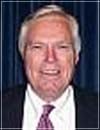
Winston Pannell was born in 1937 in rural Alabama. At the age of fifteen he became interested in religion and was baptized in the Armenian faith, as was Patricia, his wife to be and subsequently their three daughters. In 1985 the Lord confronted him with the true gospel and brought him to faith in God and true repentance from dead works and idolatry. It has been his passion to learn more of a Just God and Savior and his propitiatory work on behalf of his people given him by the Father in the Everlasting Covenant of Grace. The pulpit of Eager Avenue Grace Church in Albany Georgia has afforded him the opportunity to deliver this gospel of God’s free and sovereign grace in Christ, based on his righteousness imputed and received by faith as the whole of the sinner’s salvation. His desire is to deliver this gospel to the hearing of as many as the Lord shall save.
Pristine Grace functions as a digital library of preaching and teaching from many different men and ministries. I maintain a broad collection for research, study, and listening, and the presence of any preacher or message here should not be taken as a blanket endorsement of every doctrinal position expressed.
I publish my own convictions openly and without hesitation throughout this site and in my own preaching and writing. This archive is not a denominational clearinghouse. My aim in maintaining it is to preserve historic and contemporary preaching, encourage careful study, and above all direct readers and listeners to the person and work of Christ.
Brandan Kraft
Pristine Grace Research Assistant
Pristine Grace Research Assistant
Ask me about articles, sermons, or theology from our library. I can also help you navigate the site.
Bible Verse Lookup
Loading today's devotional...
Unable to load devotional.
Select a devotional to begin reading.
Bible Reading Plans
Choose from multiple reading plans, track your daily progress, and receive reminders to stay on track — all with a free account.
Multiple plan options Daily progress tracking Email reminders
Comments
Your comment has been submitted and is awaiting moderation. Once approved, it will appear on this page.
Be the first to comment!